Leverage or Reparations? What Is Behind Spain’s Decision to Grant Citizenship to Sahrawis?

This move has nothing to do with humanitarian or legal considerations.
In what observers described as a “new blow” to Spain-Morocco relations, particularly after the mass crossing crisis involving the Spanish-administered city of Ceuta, Spain’s Congress of Deputies has approved a bill aimed at making it easier for Sahrawis to obtain Spanish citizenship.
On September 10, 2026, the bill, introduced by Sumar, a small left-wing party that shares government with the Socialist Party, won 168 votes in favor, 31 against, and 145 abstentions.
Fueling the Dispute
The Spanish Socialist Party, its governing partner Sumar, and most of the government’s allied parties voted in favor of the bill. The conservative People’s Party and Junts abstained, while the far-right Vox voted against it.
The bill does not become law simply because it passed the lower house. It must still go through the remaining stages of the legislative process, including consideration by the Senate. If it receives final approval and is published in the official gazette, it will take effect four months later.
Immediately after the Spanish Congress of Deputies approved the bill on citizenship for Sahrawis, Morocco’s Foreign Ministry issued an official statement on the Ceuta crisis, denying any Moroccan involvement in the mass crossing and criticizing what it described as false accusations made by Spanish political figures.
At the end of July 2026, more than 70,000 people crossed from Morocco into Ceuta in an attempt to enter Spain irregularly, after calls to make the crossing spread on social media. The mass influx sparked mounting criticism of Rabat and Prime Minister Pedro Sanchez in Spain.
Ceuta lies on Morocco’s northern coast and is under Spanish administration. Rabat claims the city and seeks to regain control of it. Ceuta is also a major transit point for irregular migration from Africa to Europe.
Although Rabat’s statement did not explicitly mention the bill on Spanish citizenship for Sahrawis, it expressed regret that “Spanish legislative and judicial institutions are adopting misguided initiatives that fuel the dispute,” a reference that observers interpreted as pointing to the new legislation.
What the Bill Says
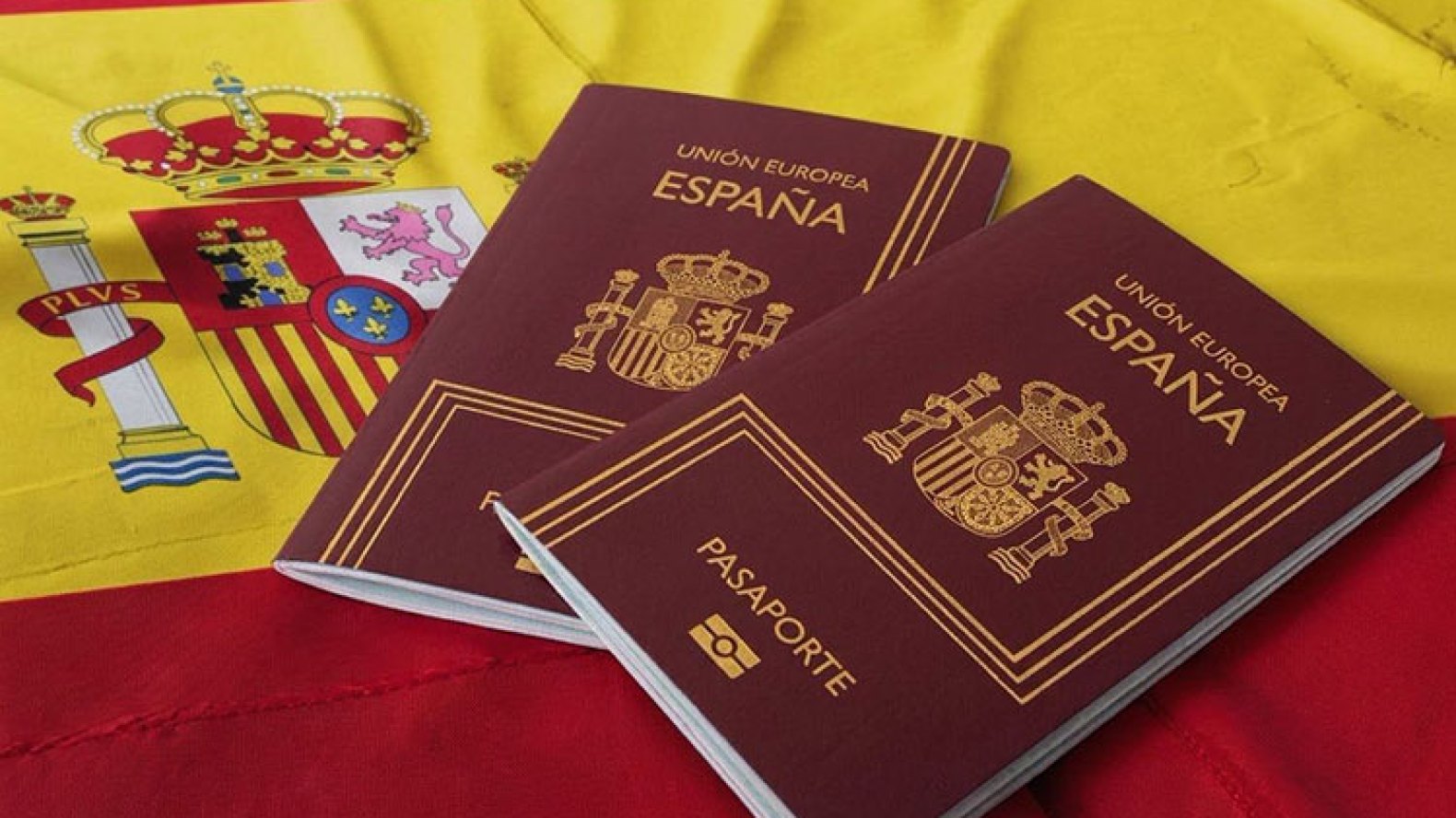
The bill would recognize “exceptional circumstances” as grounds for granting Spanish citizenship through a special naturalization procedure, known as Carta de naturaleza, to Sahrawis born in Western Sahara before September 29, 1977, even if they do not have legal residency in Spain.
Spain administered the territory from 1884 until it withdrew in 1975. The bill sets September 29, 1977, as the cutoff date for eligibility under the citizenship procedure.
Applicants would not be required to provide any one specific document to prove their connection to the former Spanish administration. Depending on the circumstances, they could use a Spanish identity card, even if it has expired, a birth certificate, a family record book, or documents showing that they worked for the Spanish administration in Western Sahara.
The bill would also give the first-degree children of eligible beneficiaries five years, starting from the date one of their parents is registered as a Spanish citizen in the civil registry, to apply for Spanish citizenship themselves.
It would also amend Spain’s Civil Code to reduce the legal residency requirement for eligible Sahrawis from the standard 10 years to two years. That would place them in the same category as nationals of countries that already benefit from a shorter residency requirement, including Latin American countries, the Philippines, Equatorial Guinea, Portugal, and Andorra.
There is no single official estimate of how many people could benefit from the naturalization bill. Estimates for Sahrawis born under Spanish administration range from roughly 70,000 to 110,000 people, with the potential pool expanding further if their direct descendants are included.

A Debt to Spain
Supporters of the bill in Spain argue that it is not about granting a new privilege but about addressing a historical injustice and restoring a right tied to the territory’s legal status during Spain’s colonial rule of Western Sahara.
Sumar lawmaker Tesh Sidi, who arrived in Spain from the Tindouf camps in Algeria in 2002 at the age of eight, said the bill would restore Spanish identity documents to Sahrawis who once held them or had a legal connection to the Spanish administration.
Speaking during a parliamentary session, Sidi recalled what it means to live without a nationality, saying, “The Sahrawi people have spent 50 years standing in migration lines. Minors end up being turned away by officials who tell them, ‘You do not exist.’”
Not all political forces in Spain view the measure the same way. The People’s Party abstained from the vote, saying it supports making it easier for Sahrawis to obtain Spanish citizenship but believes this should be done through the residency route rather than the exceptional procedure proposed in the bill.
Vox opposed the bill, arguing that Spanish citizenship should not be granted without sufficient safeguards and controls.
The Polisario Front, meanwhile, welcomed the bill, describing the Spanish Parliament’s vote as “an unfinished part of the great debt Spain still owes to its former colony.”
According to the Sahrawi Press Service, Bashir Mustafa Sayed, president of the Sahrawi National Council and a member of the Polisario Front’s National Secretariat, said the parliamentary vote was a politically and historically significant moment because it brought questions of memory and Spain’s historical responsibility toward “the Sahrawi people’s right to self-determination” back to the forefront of Spanish politics.
Sayed said the parliamentary debate showed that Western Sahara remains present in Spain’s political and public consciousness, adding that Spain’s historical responsibility toward the Sahrawi people is “a historical fact that cannot be ignored.”
He said Spain left Western Sahara in a tragic and chaotic manner, leaving the Sahrawi people without the ability to exercise their right to self-determination, despite the commitments and obligations associated with the decolonization process.
Sayed called on Spain to “turn this decision into a bold and unified political position” and use its influence within the European Union and internationally to defend international law, support the Sahrawi people’s right to self-determination and independence, recognize their state, and contribute meaningfully to the decolonization of Western Sahara.
Sahrawi supporters of the bill share a similar view, seeing the legislation as a first step toward addressing what they regard as Spain’s historic responsibility toward the Sahrawi people, while awaiting further political action from Madrid.
Sahrawi researcher Bashir Mohamed Lahsen of the University of Seville said the bill seeks to address the legacy of Spain’s colonial rule in Western Sahara and restore Spanish citizenship to Sahrawis.
Speaking to Deutsche Welle Arabic’s News Zoom, Mohamed Lahsen said the measure was a step in the right direction for Sahrawis because it recognizes their legal rights stemming from their ties to the former Spanish colonial administration.
“But it remains incomplete unless Spain also makes a political acknowledgment that it did not consult the Sahrawi people before leaving Western Sahara and did not hold a referendum on self-determination, as other colonial powers did,” he said.
Mohamed Lahsen added that Sahrawis view the legislation as an important legal step toward addressing their grievances but argued that it remains politically incomplete because Spain must also assume its historical and political responsibility toward the Sahrawi people.

A Politically Charged Move
While supporters of the bill, both Spanish and Sahrawi, have described it as “historic,” observers say its political significance goes beyond the legal question of citizenship, particularly given the highly sensitive state of relations between Spain and Morocco.
The vote comes amid an ongoing dispute between Rabat and Madrid over Ceuta, following the arrival of more than 70,000 migrants, most of them Moroccan, in the Spanish-administered city. The mass crossing left more than 141 people dead after drowning.
Journalist Taoufik Bouachrine said the Spanish Congress of Deputies vote on the bill granting citizenship to Sahrawis could be understood in the context of the Ceuta crisis. He questioned why the Socialist Party, which leads the government in Madrid, had shifted from opposing the legislation to supporting it.
In 2024, the governing Socialist Party opposed Sumar’s initiative, arguing that the proposal could not be implemented. But on September 7, 2026, Socialist Party spokesman Patxi López confirmed that the party would support the bill.
Speaking on the “Talk in Politics” podcast, Bouachrine questioned what had prompted the Spanish Socialist Party to reverse its position and back legislation it had previously opposed. He noted that, as the governing party, it could have blocked the bill from advancing.
Military expert Arbi al-Nass, a former member of the Polisario Front, rejected the idea that the proposed citizenship law should be linked to temporary circumstances or the current political climate.
Speaking to Hespress, al-Nass said the changes in the bill’s trajectory were primarily driven by “the internal balance of power within the Spanish government and political parties.”
He said the Socialist Party initially sought to take into account how the measure might affect Morocco but eventually came under pressure from its coalition partner Sumar, which it needed to maintain its parliamentary majority and remain in power.
The Spanish affairs expert said this created a “push and pull” behind the scenes, contributing to delays in the legislative process and causing it to move forward “at a slower pace.” He argued that subsequent developments point to the issue being driven more by Spain’s internal party dynamics than by the current political climate.
Although there is disagreement over how closely the bill is linked to the Ceuta crisis, there is broader agreement that it could have a negative impact on cooperation between Madrid and Rabat.
Khalid Chiat, a professor of international relations at Mohammed First University in Oujda, eastern Morocco, said the decision could prove damaging to Spain in the medium and long term because, in his view, it reflects an emotional response by Madrid rather than an approach based on objective considerations.
In an interview with Al-Estiklal, Chiat said the legislation could have a major impact on relations with Morocco, particularly economic cooperation between the two countries.
He argued that this move has nothing to do with humanitarian or legal considerations but instead reflects a single geopolitical calculation that Spain wants to keep as leverage over Morocco whenever it needs to exert pressure.
Chiat said the decision strikes at the foundations of normal relations between states, arguing that no country in the world opens a path to citizenship specifically for a group of people from another country.
He said the bill reflects what he described as a form of “colonial arrogance” in Spain’s dealings with Morocco and Moroccans, as though they did not have a nationality of their own and Spain were offering them one. He warned that the legislation could become a burden for Spain in the future.
Sources
- Another Blow to Ties With Morocco: Spanish Parliament Opens Path to Citizenship for Sahrawis [Arabic]
- 9 Facts About Spain’s Bill to Grant Citizenship to Sahrawis [Arabic]
- Granting Citizenship to Sahrawis Is an Unfinished Part of Spain’s Historic Debt [Arabic]
- Citizenship Bill Reveals New Dimensions of Madrid’s Disputes Over Western Sahara [Arabic]