Yemen: From Bab el-Mandeb to Aden, Is the Map of the War Shifting in the Houthis' Favor?
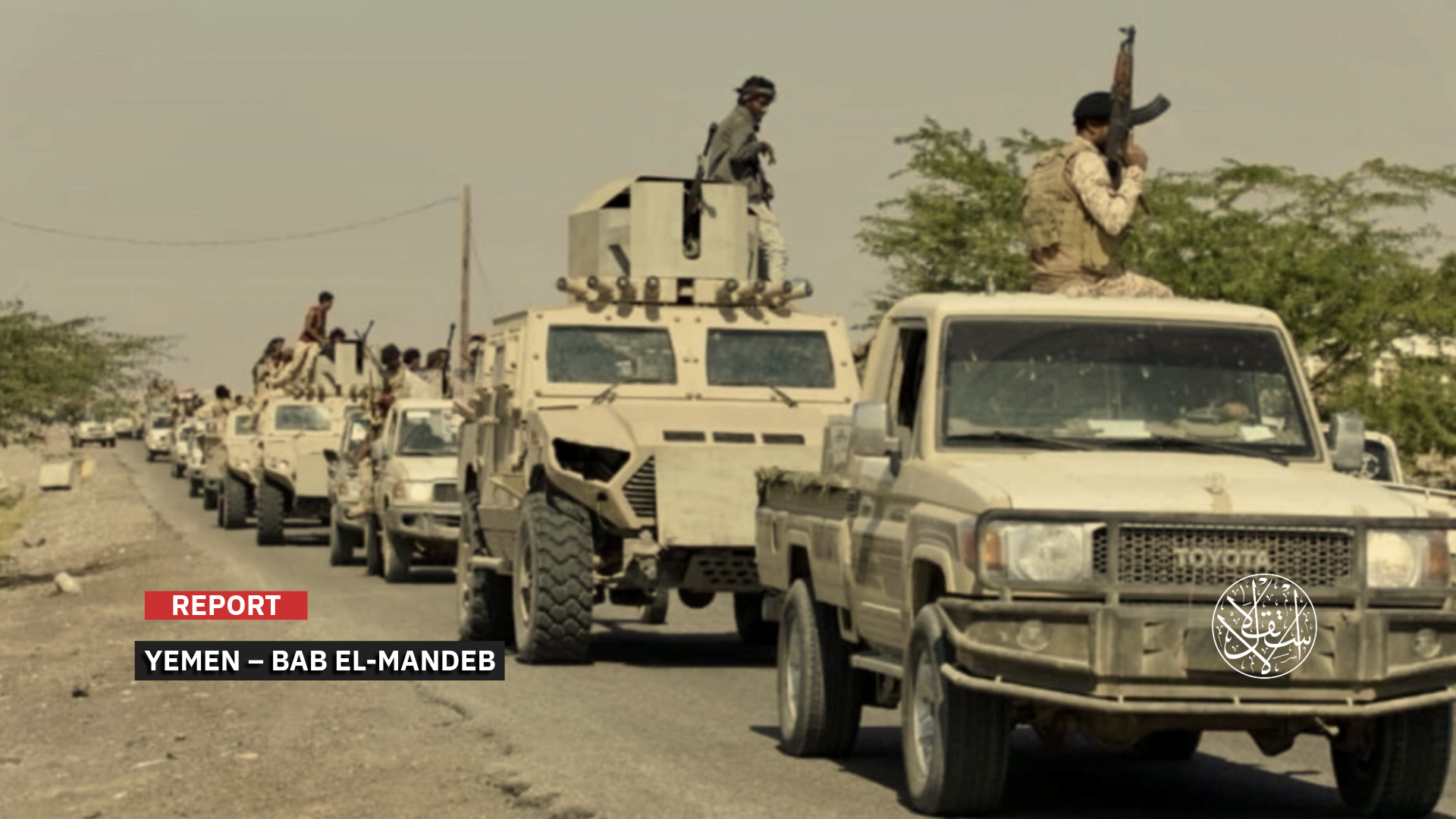
The evacuation of Dhubab Airport and other positions created a ground vacuum that the Houthis exploited.
On November 15, 2026, the Southern Armed Forces announced that they were repositioning their units from Dhubab Airport and positions around Bab el-Mandeb toward Aden.
The move allowed the Houthis to advance into positions that government forces had partly retaken in the preceding weeks.
The step came after about six weeks of fighting to recapture coastal positions. It coincided with mounting Houthi pressure on the Lahj and Taiz fronts and with missile attacks on Aden and Saudi Arabia.
The southern forces justified the decision by citing battlefield developments and the priority of securing Aden and neighboring governorates, while continuing efforts to break the siege of Taiz.
The Presidency endorsed the repositioning, describing it as a calculated step to protect Aden and reinforce the Lahj fronts.
Government forces spokesman Majed al-Nuzaili affirmed that the goal of liberating Bab el-Mandeb and the west coast still stands.
The Houthis, by contrast, described what happened as a withdrawal under pressure and a loss of positions and supply lines.
Reuters, meanwhile, saw the pullback as a setback for the Saudi-backed campaign that could end a counteroffensive that had lasted six weeks.
In a rapid development, the Houthi group announced on Tuesday, November 17, that it had carried out a military operation which, it said, allowed it to secure 10 districts in Taiz and Lahj covering 7,100 square kilometers and to destroy 12 military divisions belonging to the forces opposing it.
The group vowed to keep targeting what it called Saudi mobilizations and to escalate toward the Saudi heartland.
These developments raise questions that go beyond the justifications for the repositioning. Did the threat to Aden force the abandonment of the Bab el-Mandeb positions, or did the pullback expose the stumbling of the government campaign? And could the decision turn into a strategic gain that allows the Houthis to expand their influence and shift the balance of military pressure?

Repositioning: What Has Changed on the Ground?
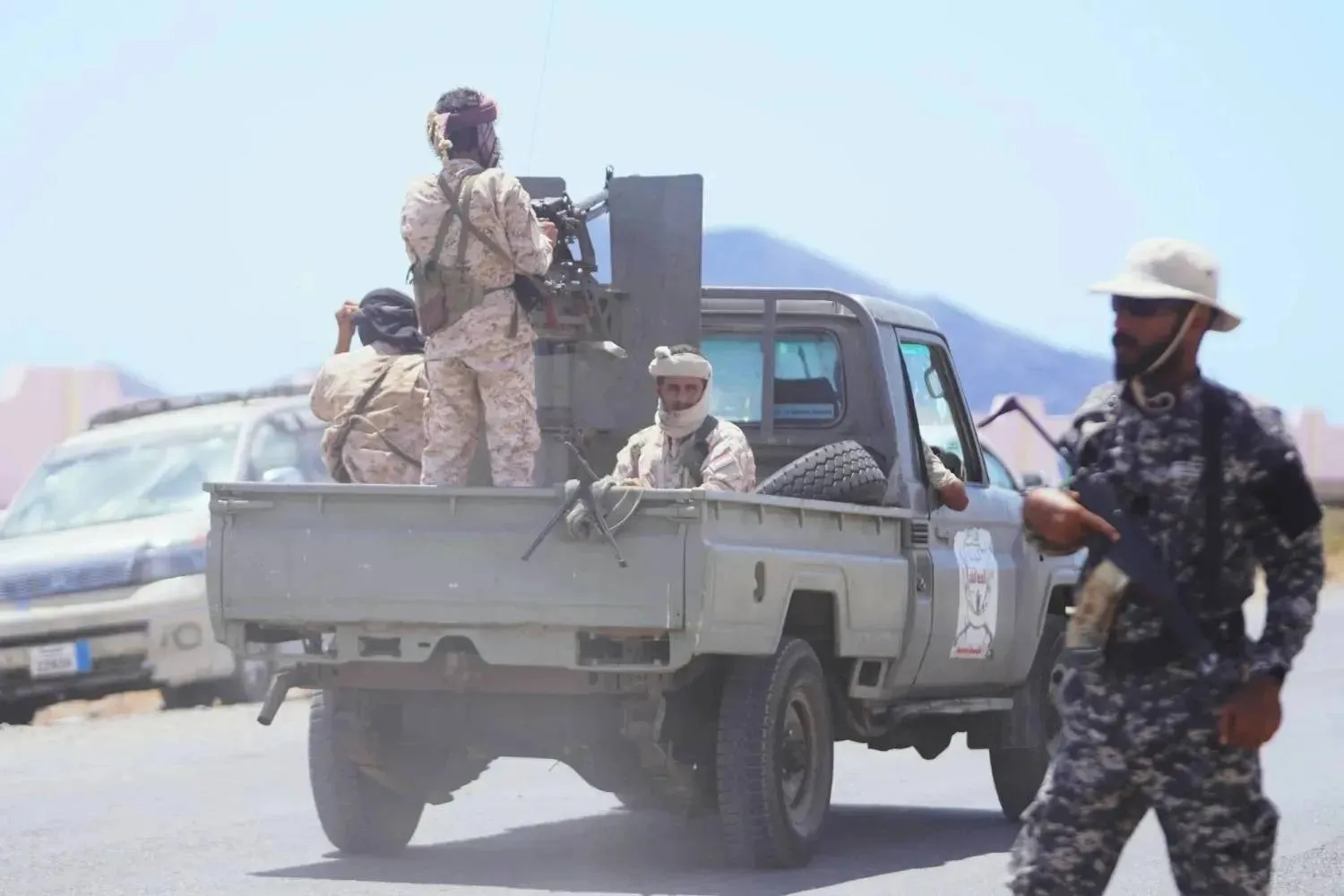
The Yemeni Presidency says the forces did not leave the front entirely. Instead, they moved to the al-Suqya area, six to eight kilometers from Bab el-Mandeb, to shift from the exposed coastal strip to better defensive positions.
According to Jaber Mohammed, the Presidency's media adviser, the heights surrounding Dhubab, Bab el-Mandeb and Kahboub are critical positions for surveillance, for controlling roads and for outflanking forces deployed in low-lying areas.
But the evacuation of Dhubab Airport and other positions created a vacuum on the ground that the Houthis exploited.
The repositioning did more than change where the forces were deployed: in some areas, the battlefield initiative passed to the Houthis, posing new challenges to the southern defensive lines.
These developments recall the withdrawal of the Joint Forces from their positions northwest of Hodeidah in November 2021.
Several positions were evacuated then, and the Houthis took control of them on November 12 and 13. At the time, the move was also presented as a redeployment, or repositioning, to reinforce the Shabwa and Marib fronts.
As events unfolded, the Yemeni government shifted from the goal of retaking areas the Houthis had seized to focusing on protecting Aden and Lahj.
This followed the withdrawal of its forces from positions near Bab el-Mandeb and the Houthi advance toward the southern coast.
The Houthis reached Khor Omeira, about 100 kilometers west of Aden, and came within about 25 kilometers of government lines in al-Qaawa.
This was accompanied by tightened security measures inside Aden amid residents' fears that the fighting was drawing closer.
On the west coast, the withdrawal of forces and their repositioning toward Aden and Lahj leaves the Houthis more room to advance south and opens the road toward Aden.
That puts the city under a direct military threat, especially as they continue to advance along the axes leading to it.
At the same time, this pullback heightens the dangers facing Taiz, which is under growing pressure on its fronts and supply routes.
Both cities thus face a simultaneous threat that could strengthen the Houthis' ability to expand their battlefield gains and impose a new military reality in southern Yemen.
Saudi Arabia and the Repositioning
Saudi Arabia occupies a central place in explaining the repositioning, as the Yemeni government's most important outside backer and the party with the greatest influence in supporting its forces with air power, money and logistics.
Asharq Al-Awsat quoted a source in the Yemeni Presidency as saying the step was taken with the backing of the Saudi-led coalition and aimed to protect Aden, reinforce the Lahj fronts and set the conditions for breaking the siege of Taiz.
This comes in the context of the shift in Saudi policy since 2022, as Riyadh entered into direct understandings with the Houthis through Omani mediation, exchanged visits with them, and eventually put forward a roadmap for a political solution.
These moves reflected a growing Saudi priority to end direct confrontation and secure its borders, vital facilities, and economic interests.
While this course does not necessarily mean abandoning support for the Yemeni government, it raises questions about the limits of that support and how well it fits the demands of the fight on the ground, especially after the recent retreat from strategic positions.
In this context came the royal order issued on November 16, 2026, assigning the chief of the Saudi General Staff, General Fayyad al-Ruwaili, to serve as commander of the Joint Forces in addition to his duties.
The order also moved the former Joint Forces commander, Lieutenant General Fahd al-Salman, to the post of adviser to the defense minister for military affairs.
Al-Ruwaili's appointment reflects a Saudi review of how military operations are being managed after the battlefield setbacks and the flaws they exposed in command and control and in the fragmentation of Yemeni forces.
But the success of the change will depend less on reshuffling the command than on revising the strategy and unifying the forces and their goals, so that the change becomes a real shift in the course of the battle rather than a mere command measure.
As for the repositioning, despite the successive setbacks suffered by forces loyal to the kingdom on various fronts, Riyadh still insists on marginalizing the national army and relying on armed formations outside it.
In this context, two military sources revealed that Saudi instructions had been issued to move Tareq Saleh's National Resistance forces from Lahj Governorate to Shabwa, as part of arrangements to redeploy them to other areas.
This step comes at a time when experience has shown the limited ability of those forces to confront the Houthis.
They have also kept withdrawing and handing over positions stretching from Bab el-Mandeb to Lahj Governorate, and their loyalties are scattered among domestic and foreign parties, despite the financial and logistical support they receive from Saudi Arabia.
This approach raises serious fears of a repeat of the scenario in which Bab el-Mandeb and areas of Lahj fell into Houthi hands, opening the way for them to expand again into the southern governorates.
The kingdom's approval of the repositioning of the forces loyal to it, and indeed its order to carry it out, according to a member of those forces, carries important signals about the consistency of its Yemen policy.
That policy, the argument goes, keeps the crisis intractable and complicates the scene, including by weakening the legitimate government and monopolizing its sovereign decision-making. It has neither freed Yemen from the coup nor allowed Yemenis to free it themselves.
By contrast, according to developments on the ground, this policy has led to more areas falling into Houthi hands and to their influence growing.
That raises the old yet recurring question: is Saudi policy still pursuing a project to divide Yemen? What interests does it seek to achieve by doing so? What does it mean to open the road for Houthi forces to advance on Aden? And more dangerous still, what do the latest Saudi instructions mean in moving Tareq Saleh's forces, which handed the west coast to the Houthis, to a new theater of operations in Shabwa?
Aden and Taiz: The "Dawn of Yemen" Test
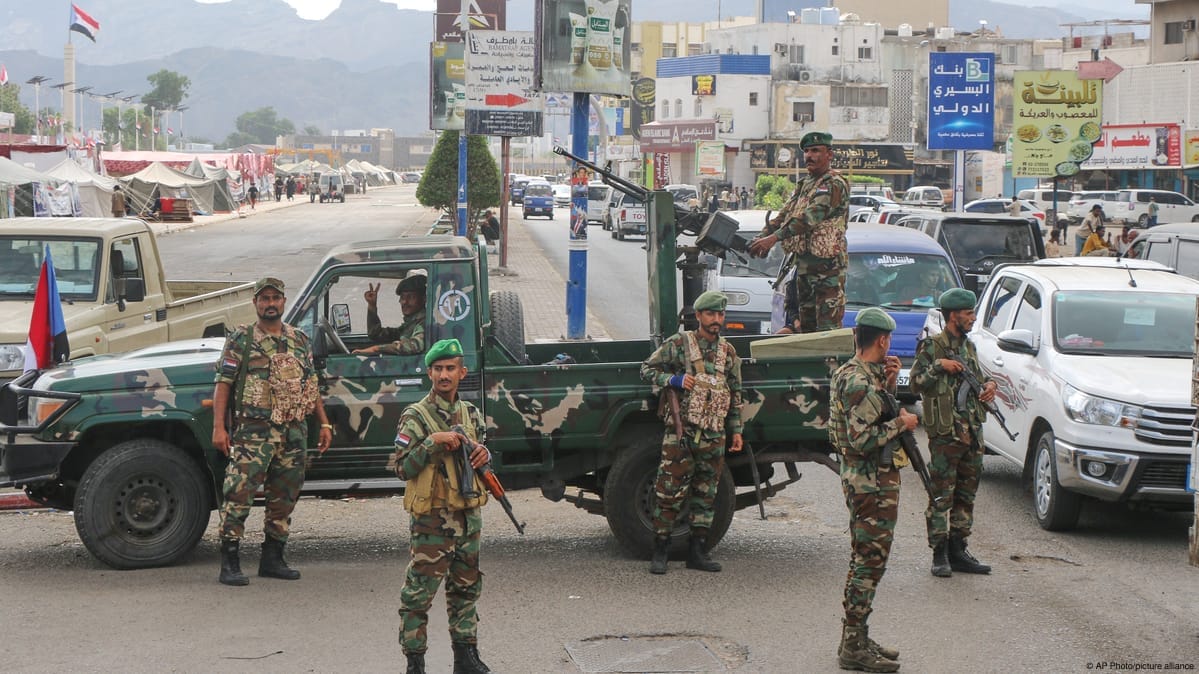
The pressure on Aden and Taiz shows that the consequences of the repositioning go beyond the loss of the Bab el-Mandeb positions, extending to the balance of defense around cities and vital roads.
In Aden, the Houthi threat has moved from ground pressure through the Lahj fronts to missile strikes on sites inside the city and around it.
On November 14 and 16, military sites came under fire. A government source told Anadolu Agency that the al-Qaawa camp in al-Buraiqa was hit by two missiles, while the Houthis announced that they had fired six missiles and claimed to have caused casualties. Similar attacks had previously hit Aden airport, the Maashiq Palace and government military camps.
In this context, The New York Times quoted Ahmed Nagi, a senior Yemen analyst at the International Crisis Group, as saying the Houthis are "very determined to reach Aden.
They don't want any area to remain under the control of the government or the Saudi side, and they are seeking at the moment to control everything."
Taiz, meanwhile, faces constant pressure on its communication and supply routes, along with the continuing siege and clashes around it.
A report by the Abaad Center, released on November 12, noted that the Houthis had intensified their operations in the southern and western countryside to isolate the city and consolidate their coastal gains.
This coincided with fighting around Jabal Han, the old airport, Wadi al-Dhabab, al-Wazi'iya, Maqbana and Jabal Habashi.
On October 28, Shura Council Speaker Ahmed Obaid bin Daghr had warned that the continuing threat to Taiz would expose Aden to greater dangers.
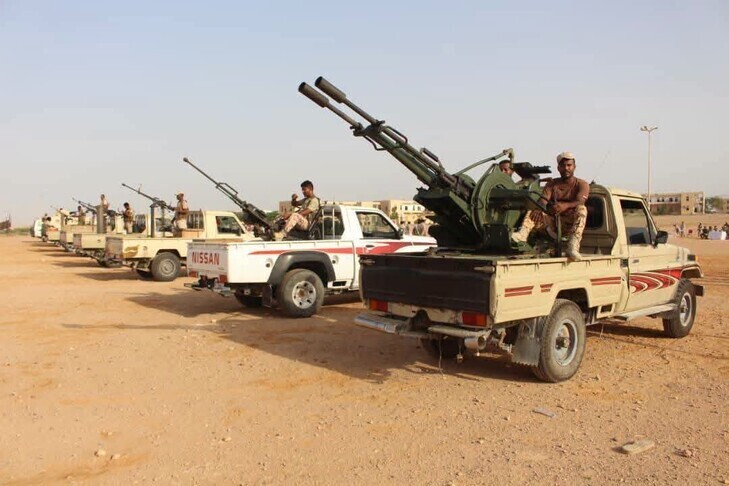
These pressures overlap with the problem of the multiplicity of anti-Houthi military formations, from the Giants Brigades and the Nation's Shield Forces to the National Resistance and government forces, with their different leaderships, structures, and sources of support.
The Royal United Services Institute notes that fragmented command and control and multiple decision-making centers are among the factors limiting these forces' effectiveness.
These flaws are reflected in the results of Operation "Dawn of Yemen," which was announced on October 5 with the aim of restoring state institutions, taking control of Sanaa and ending the Houthi coup.
On October 7, Defense Minister Taher al-Aqili explained that the operation consists of six phases and that the forces were still in the first.
That phase focuses on targeting Houthi military capabilities, securing Bab el-Mandeb and the coast, and breaking the siege of Taiz.
But after about six weeks, the forces had not been able to consolidate their control over the Bab el-Mandeb positions or lift the siege of Taiz, while the missile threat had extended to Aden.
Reuters described the withdrawal as a sign of the likely end of the counteroffensive that government forces had launched six weeks earlier to retake coastal areas near the Bab el-Mandeb Strait.
The Abaad Center concluded that, as of November 5, the campaign had not achieved a battlefield shift commensurate with the scale of its declared targets.
Sheikh of the sheikhs of Subaiha youth: The repositioning decision was made without the conviction or knowledge of the Subaiha tribes
Sheikh Saleh al-Awaji al-Subaihi, sheikh of the sheikhs of Subaiha youth and head of the Subaiha Youth Council, announced that the decision to reposition and withdraw was not made with the conviction of the Subaiha tribes, nor did it stem from their will. Rather, he said, it was imposed on them without their knowledge and without consulting them.
In a press statement issued today, Sheikh al-Awaji affirmed that the Subaiha tribes chose confrontation and steadfastness, not withdrawal or retreat.
He stressed that the youth of Subaiha were, and remain, fully ready to hold firm and defend their land with everything they have.
"We did not choose to withdraw. We chose confrontation. We chose to stay in our positions defending our land and our honor. But the sudden withdrawals that took place came as a stab in the back to the bravest of tribes," Sheikh al-Awaji said.
He added, "These sudden withdrawals threw the tribes' ranks into confusion and created a state of disarray and mistrust on the battlefield. Regrettably, they allowed the Houthis to walk smoothly into areas that the youth of Subaiha had been protecting with their blood and their lives."
The head of the Subaiha Youth Council explained that the Subaiha tribes have given martyrs and wounded and held firm in the most difficult conditions, and have never been tribes that withdraw or retreat.
He affirmed that what happened does not represent them or reflect their courage or their honorable history.
Sheikh al-Awaji called on those who made the decision to bear full responsibility for its consequences, demanding a clear and transparent investigation into the reasons for these sudden withdrawals and into who issued the orders for them without the tribe's knowledge.
He called on all the tribes and youth of Subaiha to close ranks and come together, and not to allow any individual decisions to divide them or weaken their position, affirming that Subaiha will remain unbowed and that its youth will stay in the front lines defending the land and dignity.
He concluded his statement, “Subaiha has not been broken and will not be broken. Whoever stabbed it in the back will not erase its history, and the Subaiha tribes will remain the impregnable shield and the unbreachable barrier.”
The repositioning, in the way it was carried out, makes Operation "Dawn of Yemen" look like a farce. It did not liberate Yemeni territory as promised; instead, it ended with more of it being handed to the Houthis, voluntarily, by the very forces that were supposed to defeat the group and retake the areas under its control.
This exposes flaws in planning, and it equally raises pressing questions about how serious Operation "Dawn of Yemen" was and how sincere the intentions of those behind it were.
The regrettable result of this failure is that the Houthi threat is no longer confined to Bab el-Mandeb but is now approaching Aden.
The group's forces have reached its outskirts and are advancing on the city in calculated steps while firing salvos of missiles at it, a development that suggests preparation for storming it.
The irony is that a government that aimed to retake Sanaa is now preoccupied with defending Aden.
At the same time, the sudden repositioning reveals that "Dawn of Yemen" did not keep its promises to besieged Taiz, which is still resisting on its own.
The operation's six announced phases, including the sixth phase said to be dedicated to breaking the city's siege, have come to nothing.
That reinforces the impression that it was nothing but an attempt to anesthetize public opinion and evade responsibility toward Taiz.
Developments on the ground have borne this out: military pressure on the city has increased, and Houthi control over the surrounding areas has expanded, amid continued and unjustified government neglect that raises the prospect of the city's imminent fall into the group's hands.
Major Powers: Protecting Navigation or Restoring the State?
The major powers do not appear ready to move from political pressure to broader military and economic pressure on the Houthis aimed at reducing their capabilities and changing the balance of control inside Yemen.
The United States and Britain put maritime security and curbing Houthi attacks on Saudi Arabia and civilian facilities at the top of their priorities, without any declared commitment to lead a military operation to retake the areas the government has lost.
A comparison between UN Security Council Resolutions 2216 (2015) and 2837 (2026) reveals a shift in international discourse.
In 2015, the Security Council demanded that the Houthis withdraw from Sanaa and the areas they had seized and give up the weapons they had taken from military and security institutions.
More recent positions, however, put a political solution and understanding with the group first, without placing the same emphasis on carrying out those demands or setting up a mechanism to compel the group to meet them.
This raises fears that negotiations could become a path that grants the Houthis political gains and entrenches their presence as a fait accompli, without their giving up their military control or the state institutions they have seized.
The positions of the major powers are in line with this approach. The G7 condemned the Houthi attacks and threats to navigation and called for de-escalation and a return to the political track.
The European Union affirmed Yemen's unity and sovereignty and condemned the attacks on Aden, Taiz and Saudi Arabia, but it stressed its rejection of a military solution.
On November 11, it announced stepped-up support for the coast guard, maritime security and efforts to combat arms smuggling, alongside the continuation of Operation Aspides.
In the Security Council, the U.S., British and French position pushes for tighter sanctions and monitoring of arms flows, while Russia and China are reluctant to expand the pressure and hold to a negotiated settlement, limiting the chances of forging a unified international position.
The British newspaper The Guardian quoted former U.S. envoy to Yemen Tim Lenderking as saying that the U.S. administration treats Yemen as a marginal issue.
He added that "the global powers do not realize how serious the current situation is," warning that "the problem will get worse because of indifference and lack of attention."
The United Nations, for its part, warns that the Houthi advance on the west coast threatens the security of Bab el-Mandeb and navigation.
But it focuses on protecting the sea lane, containing the escalation and resuming the political process, not on restoring government control over the coastal positions.
The risk lies in separating the protection of navigation from the battle to restore the state. If the major powers ensure that ships keep moving and are not hit by significant attacks, their motivation to apply broader pressure to change the balance of control on the ground may wane.
The Houthis would then remain in control of strategic positions, while demands to restore the state become an open-ended negotiating file.
Repositioning or the Start of a Wider Retreat?
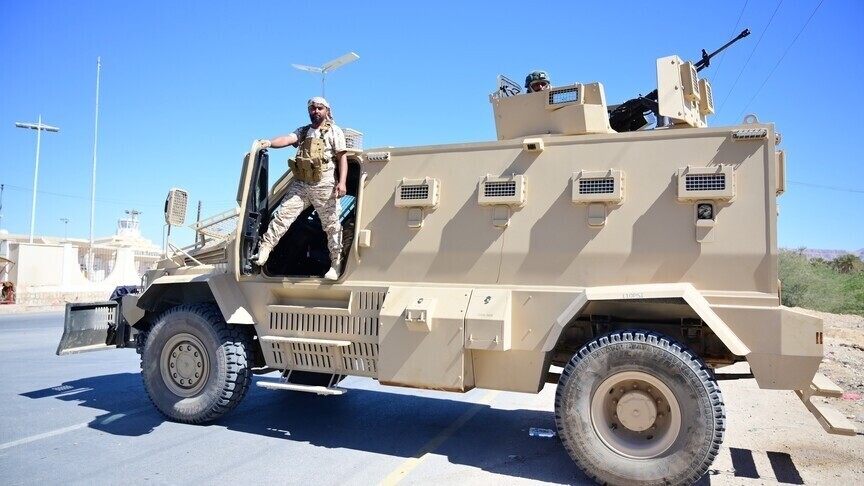
The developments show that the battle for the west coast is no longer separate from the fate of Taiz and Aden, and that the retreat from the Bab el-Mandeband Dhubab positions came as the government faces simultaneous pressure on more than one front.
The repositioning may have spared the forces the danger of encirclement or heavier losses, but it has not ended the Houthi threat. Nor has it yet offered evidence of an alternative defensive plan capable of protecting Aden, securing supply lines and regaining the initiative in Taiz.
The repositioning, carried out with the coalition's backing at the same time as Riyadh-backed forces pulled back from strategic positions, also raises questions.
They concern the limits of Saudi Arabia's commitment to restoring the Yemeni state, and how far it puts its direct security assessments and interests ahead of the demands of the confrontation with the Houthis.
The Houthis are likely to come out of these developments with gains that go beyond the positions they have advanced into.
Strengthening their influence on the west coast boosts their ability to threaten navigation, widens their leverage over Saudi Arabia and weakens the Yemeni government's negotiating position.
The risks of an ill-considered repositioning are not limited to squandering battlefield gains achieved earlier. They extend to exposing Aden and the southern governorates to a real Houthi threat, and to moving the theater of conflict from areas under the group's control to areas under the government's control, which is now losing parts of its territory one after another.
Saudi Arabia, for its part, finds itself under growing pressure from the Houthis after they tightened their grip on Bab el-Mandeb, amid what appears to be international indifference to this development and its consequences.
This requires the kingdom to review its political and military calculations in managing the Yemen file, in a way that serves its shared interests with the legitimate government and prevents the Houthis from expanding and seizing more territory.
If the repositioning does not become a coherent plan that reorganizes defenses, unifies command and ties the coast, Lahj, Taiz and Aden fronts into a single strategy, a decision taken to protect Aden could become a new link in a chain of wider battlefield retreat, one that redraws the map of the war in the Houthis' favor.