Bankruptcy and Debt: Is Germany's Economic Miracle Over?
“33 large enterprises with sales exceeding €50 million collapsed during the first half of 2026.”
The German economy currently faces its toughest test since the end of World War II. The hallmarks of the economic miracle—built over decades on a simple golden formula of cheap Russian energy flowing through pipelines and factories churning out high-quality products for global markets—have gradually faded.
However, the outbreak of war in Ukraine completely upended this landscape; the cutoff of cheap energy supplies caused operating costs to skyrocket. This coincided with the rise of the Chinese dragon, which transformed from a voracious customer for German machinery and automobiles into a fierce competitor, eroding Germany's market share even within Europe itself.
Furthermore, the global shift toward clean energy and industrial support policies in other nations sparked intense competition for companies and talent, prompting many major firms to relocate production lines or postpone planned expansions.
These developments were compounded by unprecedented social spending, an aging population straining the labor market, and internal political tensions that hindered the implementation of structural reforms.
These stifling pressures have taken a heavy toll on the ground; the crisis quickly translated into an unprecedented wave of bankruptcies across the business sector, surpassing the worst figures recorded during the 2009 global financial crisis.
As the machinery and automotive sectors falter under the weight of competition and production costs, Germany now finds itself compelled to completely reshape its industrial model if it is to avoid plunging into a deep recession.
Debt Crisis
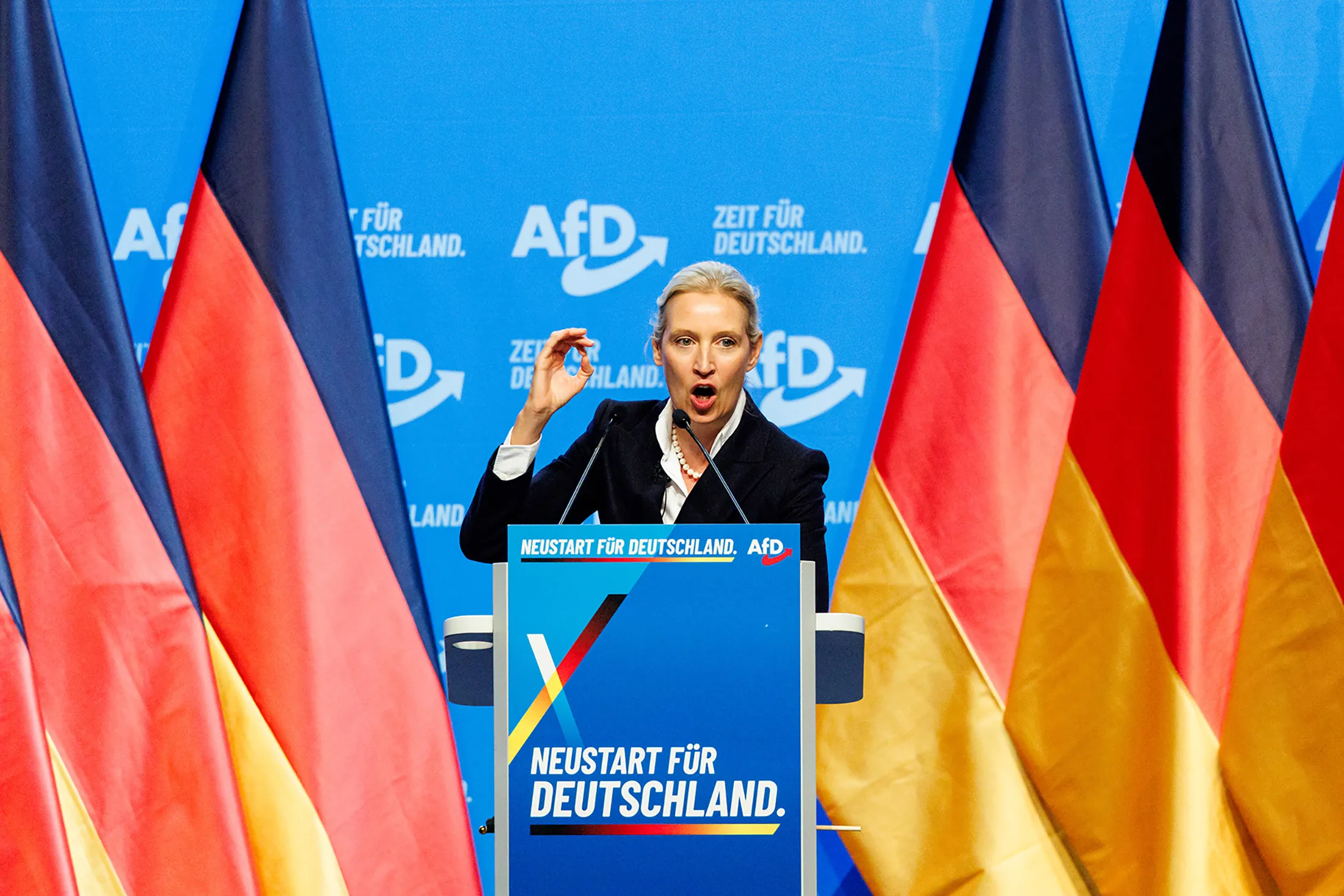
Alice Weidel, leader of the far-right Alternative for Germany (AfD) party, has argued that Germany is effectively in a state of undeclared bankruptcy due to mounting debt and the rising cost of servicing sovereign debt, noting that France, too, is suffering from a stifling fiscal deficit and an escalating debt crisis.
Weidel’s remarks this month came amidst a scathing attack on the economic and fiscal policies of both the German government and European Union institutions.
She sharply questioned who would bear the cost of what she termed a financial circus—or the expenses resulting from Brussels' policies—stressing that Berlin would be unable to continue acting as the European bloc's primary financier given its own deteriorating domestic situation.
She reiterated her party's skepticism regarding the viability of the single European currency (the euro), calling for the restoration of fiscal sovereignty, curbs on external spending, and a re-evaluation of Germany's commitments under EU agreements and joint support programs.
French public debt has reached high levels just as Germany prepares to increase public spending, fueling debate over the fiscal health of the Eurozone's two leading economies.
Observers note that the phrase 'France and Germany are bankrupt'—which recently sparked widespread controversy—does not imply bankruptcy in the strict economic or legal sense; rather, it reflects the mounting pressure on public finances across Europe.
In France, the public deficit reached 5.1 percent of GDP in 2025, while public debt rose to 115.7 percent of GDP—equivalent to €3.46 trillion.
As for Germany, debt levels remain significantly lower than in France, though its public finances are also facing mounting pressures.
The public deficit stood at 2.7 percent of GDP in 2025, with spending projected to rise, particularly in the areas of defense and investment.
Austerity Plans
Amidst an economic crisis of unprecedented complexity, an alarmist tone is rising within European economic and political circles, describing the financial situation in Germany—and specifically its capital, Berlin—as nearing the brink of structural bankruptcy.
While Germany, as a sovereign state, faces no risk of defaulting on its international obligations, indicators on the ground reveal a financial crunch and a sharp decline in the German economic model—a model that, for decades, served as the Old Continent's safety valve.
Unlike other European capitals that typically serve as key financial engines for their national economies, Berlin represents an exception, having long imposed a heavy financial burden on the federal treasury.
The state of Berlin is grappling with accumulated debt exceeding €60 billion, making it one of Germany’s most indebted states relative to its population size.
For years, Berlin has relied on the inter-state financial equalization system, under which wealthy states like Bavaria and Baden-Württemberg inject billions of euros annually to cover Berlin’s operating deficits.
However, with the revenues of these donor states declining, the system now faces the threat of political and legal collapse.
Berlin’s local government has been forced to adopt austerity measures and financial cuts amounting to billions of euros, affecting infrastructure projects, housing, transport subsidies, and cultural and social services.
Berlin’s ruling coalition faces a complex constitutional dilemma, as the German constitution mandates a strict rule prohibiting the government from exceeding a very low annual deficit limit (0.35% of GDP).
A Constitutional Court ruling—which invalidated the transfer of unused pandemic-relief funds to climate and industrial funds—created a €60 billion hole in the federal budget, paralyzing the state's ability to invest and inject liquidity into rehabilitating crumbling infrastructure.
Talk of a financial crisis in Germany is inextricably linked to the collapse of its traditional growth engine; the abandonment of cheap Russian energy supplies has caused production costs to double in the heavy industry, chemical, and automotive sectors.
Berlin is also grappling with deindustrialization, as major German companies increasingly favor expanding investments in the United States or China—attracted by abundant energy and investment incentives—thereby depriving the public budget of crucial tax revenues.

Financial Pressures
As part of a major financial shift away from the austerity approach that defined its policy for decades, Germany is moving toward increased public borrowing in the 2027 budget.
The 2027 budget is part of a medium-term financial framework extending to 2030; its draft allocates total spending of €555.4 billion, with total borrowing of €203.6 billion.
Germany plans to borrow €838.2 billion between 2027 and 2030—including €587 billion in new net borrowing—which will raise the public debt ratio to approximately 69.5% of GDP, with the deficit exceeding 4% of GDP.
Due to rising debt levels, interest payments are expected to nearly double, climbing from €41.9 billion in 2027 to €80.7 billion in 2030.
The new borrowing for 2027 comprises €118.7 billion in the core budget, €54.9 billion via the infrastructure fund, and €30 billion from a special defense fund.
Total investment is set to rise to €117.5 billion in 2027, supported by a €500 billion infrastructure fund and more flexible borrowing rules for defense. Core defense spending is set to rise to €109 billion by 2027.
The total figure reaches €130.1 billion when including support for Ukraine and other security-related expenditures.
Following Cabinet approval, parliamentary debates on the draft budget will begin in the coming days, with final adoption expected by year-end.
To alleviate pressure on public finances, the government plans to implement a broad package of fiscal and tax reforms starting in 2027.
These measures include raising taxes on alcohol and tobacco, introducing a new plastic tax, and cutting certain social welfare and housing benefits, as well as reducing climate transition subsidies and pension system support.
Widespread Bankruptcies
Since 2022, Germany has witnessed a steady rise in corporate bankruptcies—a trend that accelerated sharply in 2023, reaching levels unseen in over a decade.
The country—which drove Eurozone growth for decades and currently stands as the world's third-largest economy—is facing a perfect storm: prolonged recession, high energy costs, a new oil shock triggered by the conflict involving Iran, and the European Central Bank’s return to raising interest rates.
Recent economic indicators reveal a marked deterioration in Germany's business environment; approximately 1.065 million companies and business ventures have closed their doors over the past six years—an average of nearly 486 closures per day.
The wave of financial distress has not abated this year; A total of 14,500 companies filed for bankruptcy during the first seven months of 2026, with projections suggesting the figure could reach 24,650 by year-end—signaling potential wide-ranging repercussions for supply chains and growth levels across the Eurozone.
As for large enterprises—those with sales exceeding €50 million—33 cases were recorded in the first half of 2026, a 10% increase following a record 94 cases in 2025.
These figures represented more than just a temporary setback for Europe’s largest economy; they were the result of a stifling economic vice, formed gradually by the combination of US tariffs and the flood of Chinese products into global markets.
Two additional factors emerged in 2026: the first was an energy shock. Following the outbreak of war involving Iran, fuel prices surged, and inflation in Germany climbed to approximately 2.9%.
In April, the government lowered its annual growth forecast from 1% to 0.5%. The ifo Institute estimated a loss in purchasing power amounting to €34 billion over two years, driven by rising imported energy costs.
The German company Creditreform, one of the world's leading debt collection agencies, believes the oil and energy shock exacerbated an already fragile situation.
The second factor was interest rates; the European Central Bank raised the deposit rate to 2.25% in June and subsequently to 2.50% on September 10, citing energy-driven inflation.
This places a heavy burden on indebted companies struggling to secure new financing, as an increasing number of them find their operating profits insufficient to cover interest payments.

From plans to slash tens of thousands of jobs at giants like Volkswagen and BMW to the freezing of bonuses and incentives at Mercedes, it is evident that this upheaval has shaken every corner of the sector, placing the future of the entire automotive industry at a historic crossroads.
US tariffs are projected to cost the German treasury and industry nearly $200 billion over four years—with the automotive sector alone bearing an $18 billion share—on top of approximately $46 billion in direct losses resulting from the energy crisis over a two-year period.
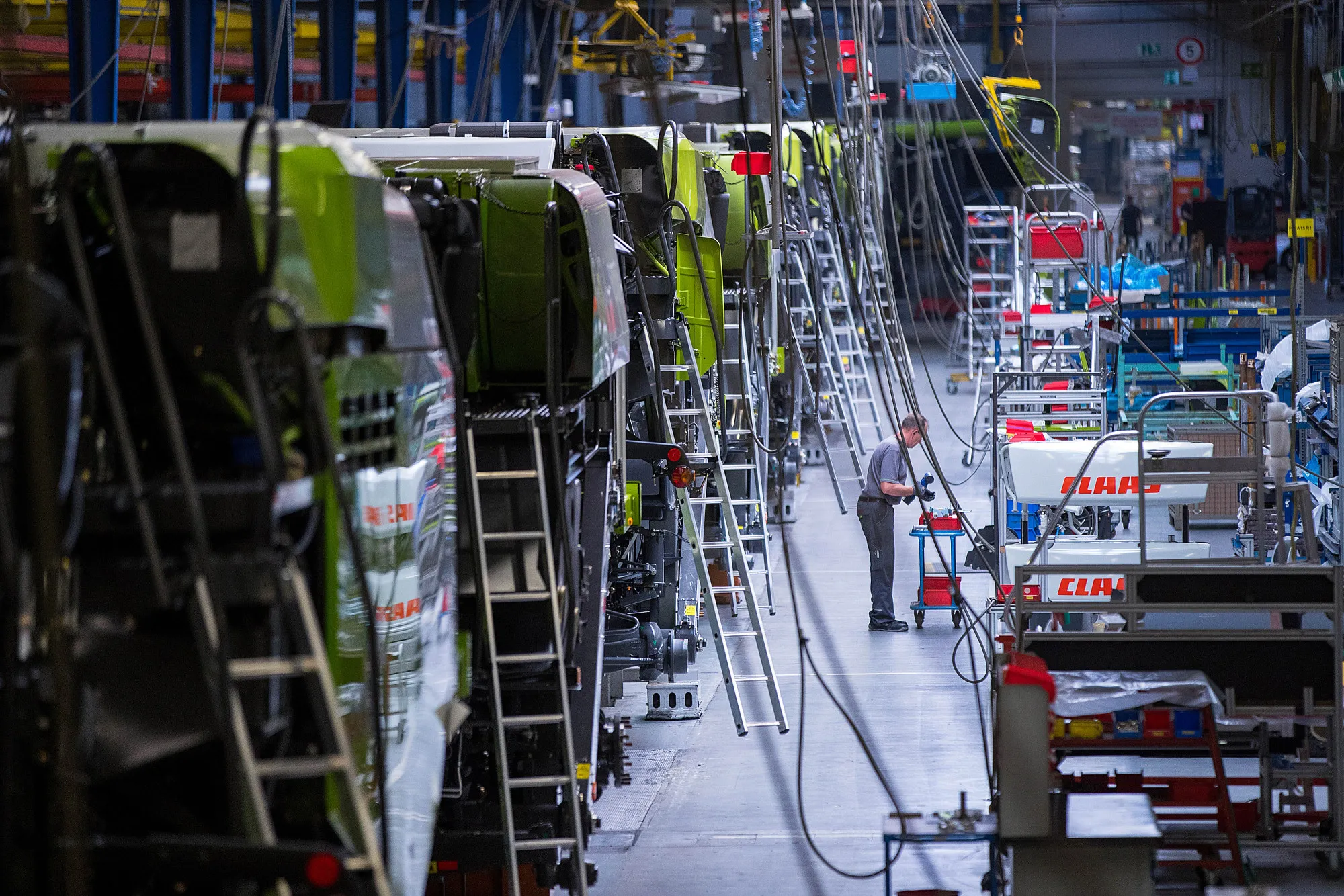
The industrial sector lost more than 127,000 jobs in the first quarter alone, while grim forecasts point to the potential elimination of another 125,000 jobs in the automotive industry by 2035.
Sources
- AfD Leader Weidel: "Germany Is De Facto Bankrupt"
- German corporate insolvencies hit 13-year high in first half
- Berlin’s hangover: a € 61 billion city debt
- Germany to borrow more than €800bn by 2030 for infrastructure and defence
- Germany Faces $200 Billion Hit to Economy. Why Asian Tariffs Are Especially Bad for the Country
- Germany Indicators
- Housing benefit, parental allowance, taxes: 2027 will be more expensive for many [German]