The AfD Nears Power in Germany: Why Is ‘Israel’ Wary of the Rise of the Far Right?
‘Israel’ is watching the rise of a political force that it has distanced itself from and is concerned about its positions on arms supplies to ‘Israel’ from Germany.
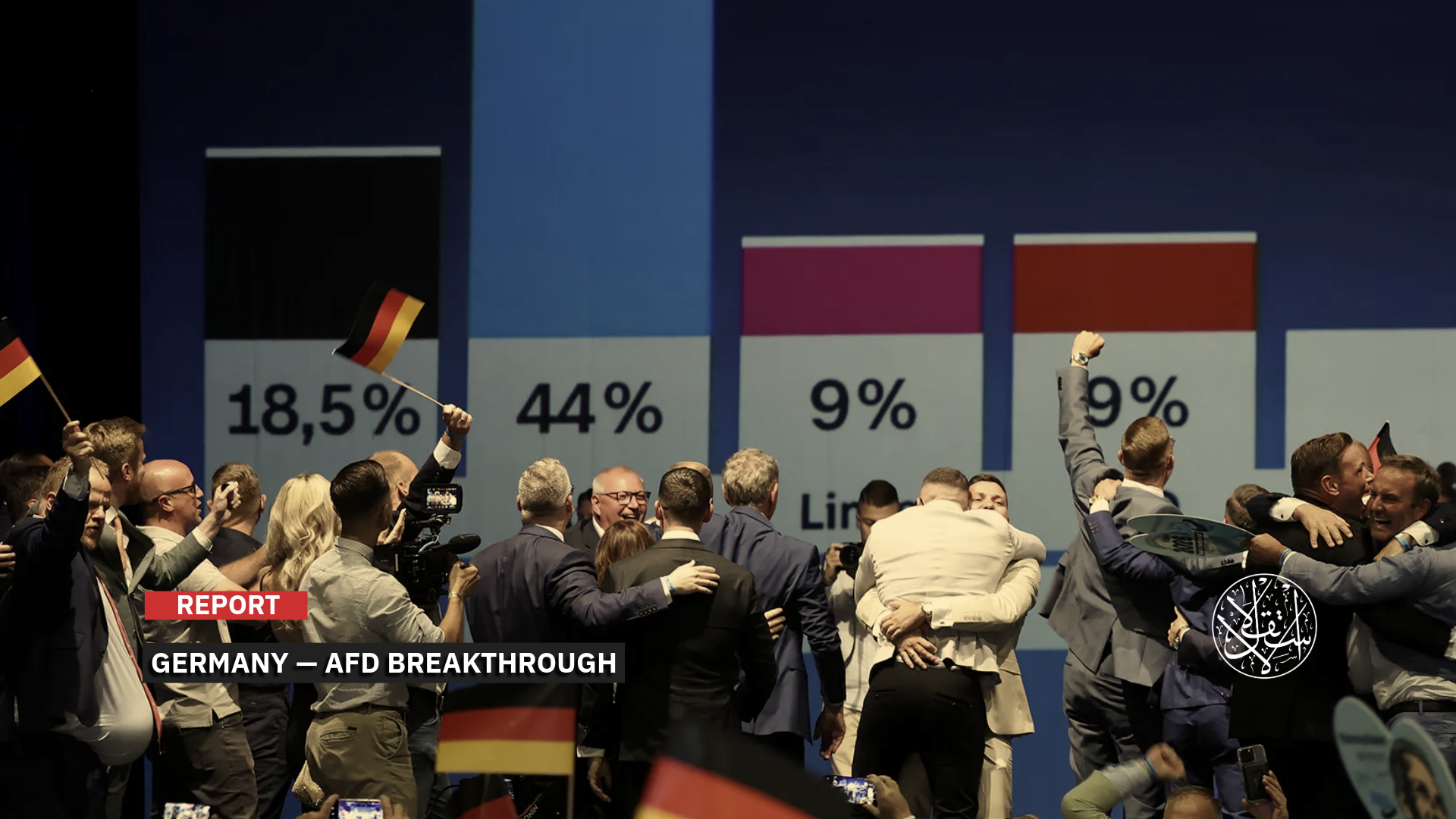
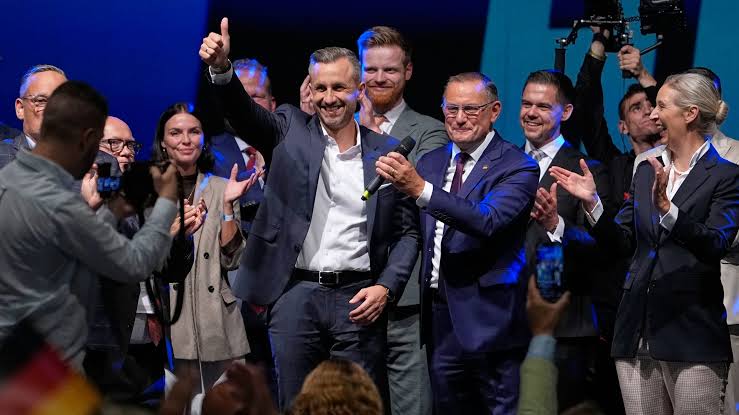
The Alternative for Germany (AfD) emerged as the clear winner of the Saxony-Anhalt state election, defeating the conservatives by a wide margin and achieving an unprecedented electoral breakthrough that brought it closer to the possibility of governing a German state for the first time. The result prompted concern in “Israel”, with an Israeli official describing it as a “real warning.”
While the far-right party made a historic breakthrough in the election, its ambition to take power has encountered political and legal obstacles, most notably the refusal of established parties to cooperate with it.
“Israel”, meanwhile, is closely watching the rise of a German political force that criticizes its policies, particularly over Berlin’s arms supplies to “Israel”.
The final results of the September 6, 2026 election showed the AfD winning 43.8 percent of the vote, up from 20.8 percent in the 2021 state election, while the Christian Democratic Union (CDU), the party of Chancellor Friedrich Merz, fell from 37.1 percent to 17.2 percent.
The AfD won 39 of the 83 seats in the state parliament, leaving it just three seats short of an absolute majority that would allow it to govern alone. However, its path to power remains complicated, as the major parties have refused to form a coalition with it or support it in forming a government.
Reasons for Israeli Concern
Yedioth Ahronoth quoted an unnamed Israeli official as saying that the Alternative for Germany (AfD) supports a ban on arms exports to “Israel”, adding that the party’s rise could pose a potential threat to Jews in Germany.
The official said “Israel” does not maintain contacts with the party, expressing concern that its rise could extend beyond Saxony-Anhalt and develop into a broader political phenomenon in Germany, amid the growing influence of other forces that “Israel” describes as hostile to it.
Israeli concerns over arms supplies are also linked to public positions taken by the party’s leaders. In August 2025, AfD co-chair Tino Chrupalla expressed support for the decision by Chancellor Friedrich Merz’s government to suspend part of Germany’s arms exports to “Israel”.
In an interview with German television, Chrupalla said his party’s position on arms exports to crisis and war zones was clear and that it opposed such exports.
At the same time, however, he stressed that “Israel” remains a partner of Germany and that the partnership does not preclude criticism of its policies.
He also described what is happening in the Gaza Strip as involving “crimes” and called for pressure to be placed on “Israel”, while emphasizing that his party considers “Israel” a partner and friend.
At the time, the Israeli government led by Benjamin Netanyahu accused Berlin of rewarding Hamas by restricting arms exports to “Israel”.
Netanyahu described Merz as a friend of “Israel” who had yielded to pressure from media coverage, while the German chancellor denied that public pressure had been behind his decision.
Merz said the restrictions imposed on some arms exports did not represent a fundamental change in his country’s policy toward “Israel”, at a time when the decision had sparked disagreements within the conservative bloc.
Israeli concerns regarding Jews in Germany are also linked to the party’s positions on the Nazi era and its educational and historical policies.
Yedioth Ahronoth reported that the party’s platform includes proposals to reduce the teaching of the Nazi era and cut funding for some Holocaust memorial institutions.
Josef Schuster, president of the Central Council of Jews in Germany, had warned ahead of the election against giving the party political responsibilities or moving closer to it, saying that the election represented a test for democratic forces.
Voter Anger Drives the Breakthrough
The victory in Saxony-Anhalt comes after a series of electoral gains made by the party at the federal and state levels.
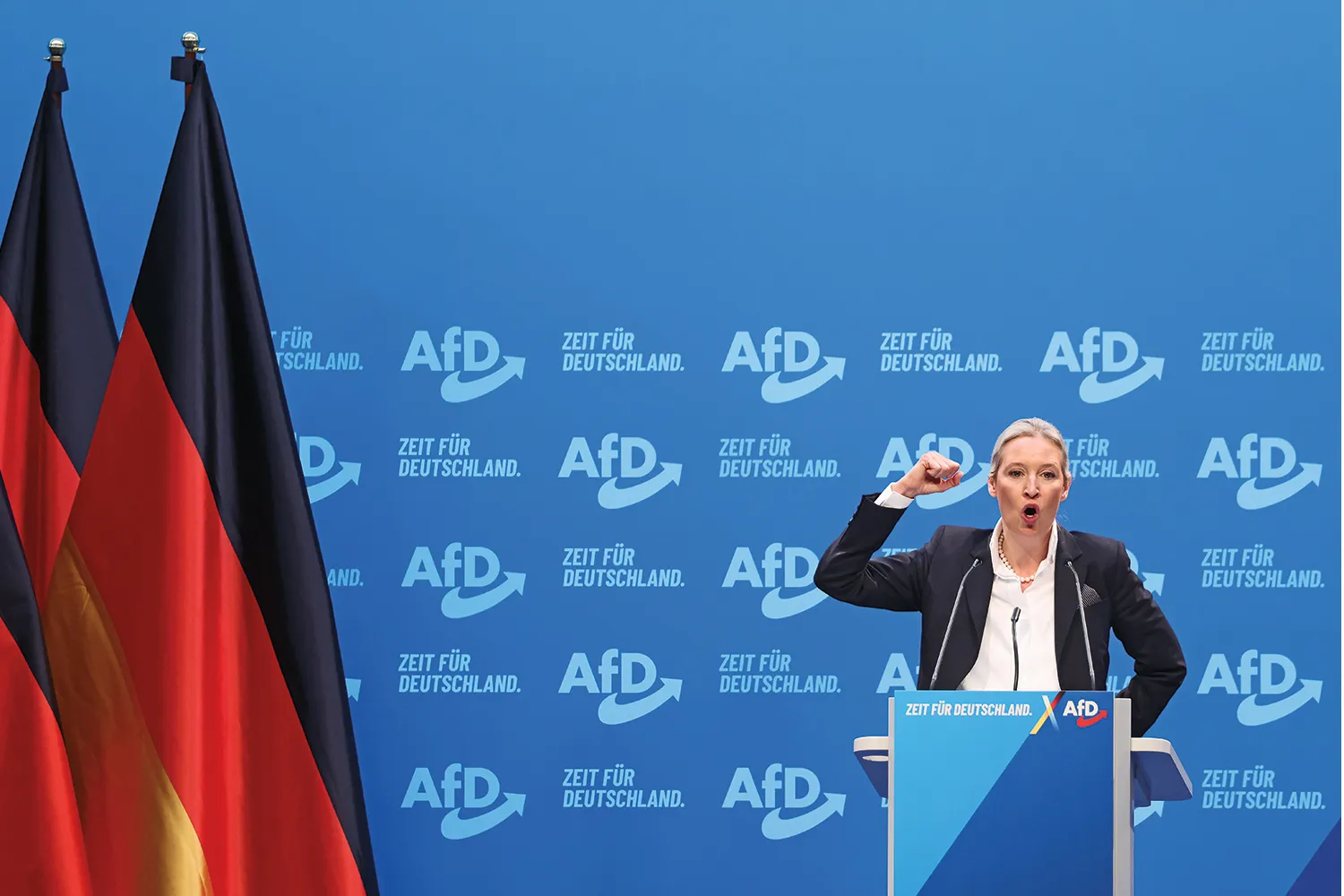
In the federal election held in February 2025, the Alternative for Germany (AfD) won 20.8 percent of the vote, finishing in second place. In July 2026, Alice Weidel and Tino Chrupalla were re-elected to lead the party.
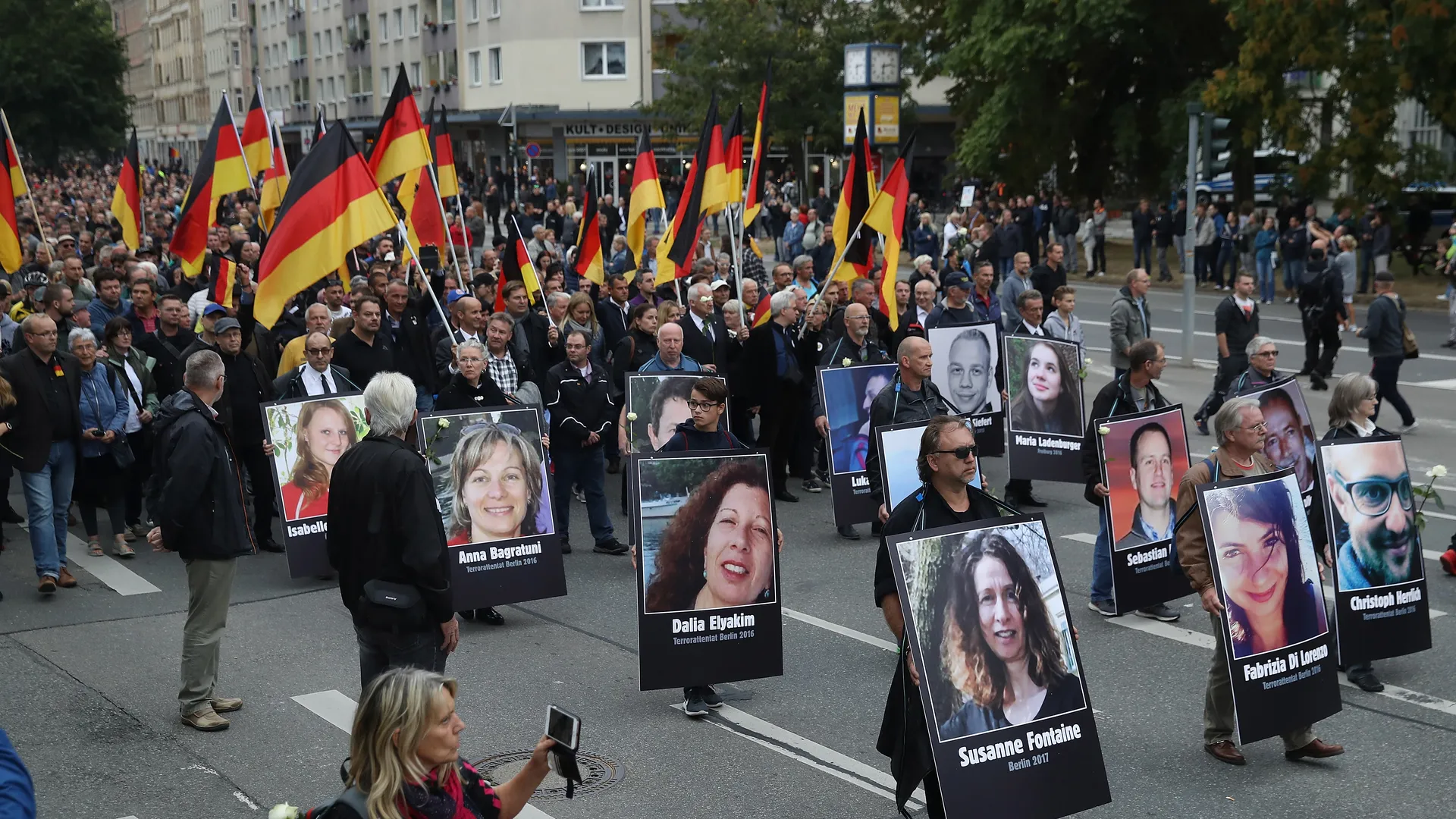
In Saxony-Anhalt, the party’s candidate for state premier, 35-year-old Ulrich Siegmund, led an election campaign that relied heavily on his personal profile and on capitalizing on public anger over the performance of the federal government and established parties.
The Polish Centre for Eastern Studies attributed the party’s success to Siegmund’s popularity, disappointment with the performance of the conservative government, and a desire for change, amid high levels of dissatisfaction with the federal government.
A poll conducted ahead of the election showed that 87 percent of voters in the state were dissatisfied with the performance of the federal government, amid complaints about rising prices and energy costs, as well as disputes over economic and social reforms.
According to electoral analyses, the party managed to attract around 170,000 voters who had previously abstained from voting, while its support among workers reached particularly high levels.
The Financial Times linked the party’s strength in eastern Germany to economic and demographic factors, including lower income levels, population decline, and weaker loyalty to established parties, as well as concerns about job losses and social status. These factors helped the party broaden its electoral base.
This comes within a broader context in which the Alternative for Germany has become the country’s most prominent opposition force, benefiting from dissatisfaction with the federal government and issues related to migration, the economy, energy, and security.
Support from Outside Germany
Despite the significant political and media pressure the party has faced both inside and outside Germany, it has received support or praise in recent years from prominent political figures and business leaders in the United States.
Ahead of the 2025 federal election, Alice Weidel met with U.S. Vice President JD Vance in Munich in a move that attracted considerable attention, particularly because Vance had criticized the “firewall” policy adopted by Germany’s established parties to prevent cooperation with the Alternative for Germany (AfD).
In a subsequent interview with Weidel on X, U.S. billionaire Elon Musk urged Germans to vote for the party and continued to support it after the election, saying that any attempt to ban it would constitute a serious assault on democracy.
U.S. Secretary of State Marco Rubio also criticized the German authorities’ decision to classify the party as a far-right extremist organization, saying that the designation gives German intelligence agencies broader powers to monitor the party and its activities. He warned that this could amount to a form of “disguised authoritarianism.”
The Political Firewall Barrier
Despite the major victory, the Alternative for Germany (AfD) cannot form a government on its own, as it needs three additional seats to reach an absolute majority.
Its efforts to form a government face a major obstacle in the Christian Democratic Union’s (CDU) refusal to cooperate with it, alongside the position of other parties that reject breaking what is known in Germany as the “firewall”, the refusal to form alliances or engage in political cooperation with the party.
The Sahra Wagenknecht Alliance (BSW) stands out as a party that could play a decisive role after winning 5.3 percent of the vote and five seats.
Despite significant ideological differences between the two parties, they overlap on issues including migration, criticism of the traditional political establishment, and positions on the war in Ukraine and relations with Russia.
The AfD, meanwhile, rejects forming a minority government, while its leaders insist that the election results give them a mandate to form the government.
Continued political deadlock could lead to lengthy and complex negotiations over government formation, or to the pursuit of other governing arrangements, including the possibility of holding a new election if a stable majority cannot be secured.
The obstacles facing the party are not limited to parliamentary arithmetic. The AfD is monitored by Germany’s domestic constitutional protection authorities, while the domestic intelligence service has classified the party at the state level as far-right.
Although the intelligence agency does not have the authority to ban a political party, such a classification could provide grounds for political and legal proceedings that could, under certain circumstances, ultimately reach the Federal Constitutional Court.
Under the German constitution, a political party can be banned if it is found to seek to undermine or abolish the free democratic basic order through means that are incompatible with constitutional principles.
Calls for a Ban
The election results have revived the debate over whether the German state should take additional steps against the party.
Andrea Lindholz, Vice President of the German Bundestag, said the Alternative for Germany (AfD) should not be treated as an ordinary political party, particularly when it comes to granting it chairmanships of parliamentary committees.
Serpil Midyatli, deputy leader of the Social Democratic Party (SPD), also called for moving forward with efforts to ban the party, stressing that the founding fathers of the German constitution sought to protect democracy from a repeat of the slide toward authoritarianism.
Daniel Gunther, Minister-President of Schleswig-Holstein from the Christian Democratic Union (CDU), likewise called for the ban process to be initiated, describing the AfD as a threat to social cohesion.
Michael Kretschmer, Minister-President of Saxony, by contrast, stressed that defending democracy begins within society, warning against relying solely on state instruments to counter the party’s rise.
The AfD is expected to challenge its classification as a far-right party in court. If the classification is upheld, the powers of security agencies to monitor the party’s activities could be expanded, including the use of surveillance measures and informants within the bounds of the law.
This could complicate the party’s political future, but at the same time, it does not appear sufficient to halt its electoral rise, as it continues to be a major force in opinion polls.
The election thus reveals a growing German dilemma: how to protect the democratic system from a political force that state institutions accuse of extremism, without turning measures taken against it into tools that could be used to restrict political pluralism and freedom of expression.
Founding and Ideology
The party was officially founded in 2013 by German politicians Alexander Gauland and Bernd Lucke. At its founding conference, Bernd Lucke, businesswoman Frauke Petry, and Konrad Adam were elected as its spokespersons.
At the time, the new party was characterized as a conservative right-wing movement combining economic liberalism with cultural nationalism, with a focus on protecting German sovereignty and identity.
Its early leaders described it as a liberal-conservative project critical of European integration and opposed to the euro currency.
However, since the 2015 refugee crisis, the party has shifted toward more hardline anti-immigration and anti-Islam positions, particularly after its founder, Bernd Lucke, and others from the moderate wing left the party in protest against what they described as an “anti-Western and pro-Russian orientation” within the party.
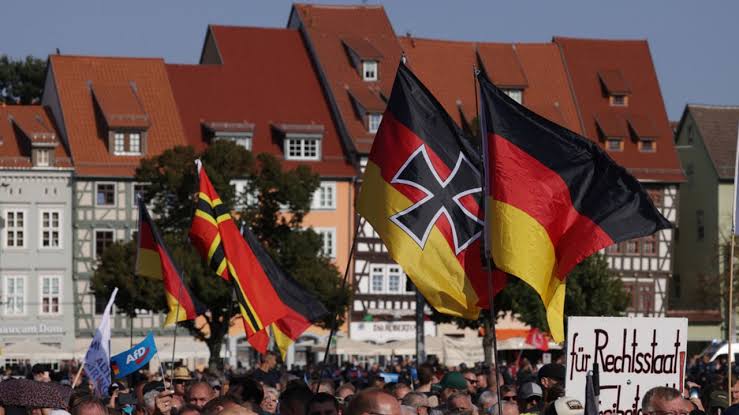
In subsequent years, ties between the party and far-right nationalist movements such as PEGIDA, the Identitarian Movement, and neo-Nazis grew stronger, fueling internal divisions over whether to accommodate these currents.
In 2020, Germany’s Federal Office for the Protection of the Constitution classified the party’s “Der Flügel” faction as far-right extremist, before the party as a whole was placed under surveillance in 2021 as a “suspected case,” in a move that sparked widespread controversy, particularly as the federal election approached.
Despite legal challenges, German courts upheld the intelligence authorities’ decisions in 2022 and 2024, finding that there were “sufficient factual indications” of efforts within the party directed against the constitutional order.
Islamophobia
The Alternative for Germany (AfD) adopts hardline positions on immigration and Islam, arguing that German national identity is under threat from immigration and the growing number of Muslims, immigrants, and refugees.
Frauke Petry, formerly one of the party’s most prominent leaders, expressed this position in March 2016, when she warned that large-scale immigration, particularly from Muslim-majority countries, could lead to changes in German culture.
At the time, she stressed that any demographic change should result from a broad democratic decision rather than unilateral decisions, in a reference to former German Chancellor Angela Merkel’s policy during the refugee crisis and her decision to open the borders to large numbers of asylum seekers.
In its political platform, the party calls for ending what it describes as “mass immigration” and limiting the admission of immigrants to small numbers of highly skilled people who are capable of integrating and mastering the German language.
The party also proposes policies aimed at encouraging German citizens to increase birth rates rather than relying on immigration to offset population decline.
These policies put the Alternative for Germany in direct confrontation with established parties over immigration, integration, and multiculturalism.
They are also among the main reasons for its popularity among segments of voters, while at the same time being among the principal reasons why its opponents and security institutions characterize it as a threat to Germany’s democratic order.
The Saxony-Anhalt election does not appear to be merely a shift in the political balance within an eastern German state, but rather a broader test of the future of the “firewall” that has kept the Alternative for Germany out of government participation since its founding.
The party now holds a large parliamentary bloc and has an electoral base extending beyond the state, while it has become a direct competitor to conservative parties at the federal level.
At the same time, its path to government remains fraught with obstacles, whether because of the established parties’ refusal to cooperate with it or because of the security and judicial scrutiny to which it is subject.
The latest election result, however, showed that politically isolating the party has not prevented its expansion. An increasing share of voters has instead begun using their votes for the party to express anger over the performance of established governments, immigration, the cost of living, declining public services, and economic conditions.
The next political battle in Germany, therefore, will not revolve solely around whether the Alternative for Germany can form a government in Saxony-Anhalt, but also around whether its victory will break the political firewall imposed on it and usher in a new phase in which the far right becomes a force that cannot be ignored in government formation, leading up to the next federal election.
In “Israel”, the issue appears even more sensitive, as the party’s rise has opened a debate over the future of Germany’s position toward “Israel” and arms exports to it, at a time when Berlin is seeking to balance its historical commitments toward “Israel” with growing political, legal, and humanitarian pressure over the war on Gaza.
The Alternative for Germany’s victory in Saxony-Anhalt thus becomes more than a local electoral result: it is a dual test, for Germany’s ability to protect its democratic system from extremism, and for “Israel’s” ability to maintain its traditional relations with a European power that may be undergoing a gradual shift in its political landscape.