Southern Syria Puts Jordan in the Face of Growing Israeli Influence: What Is Amman Worried About?
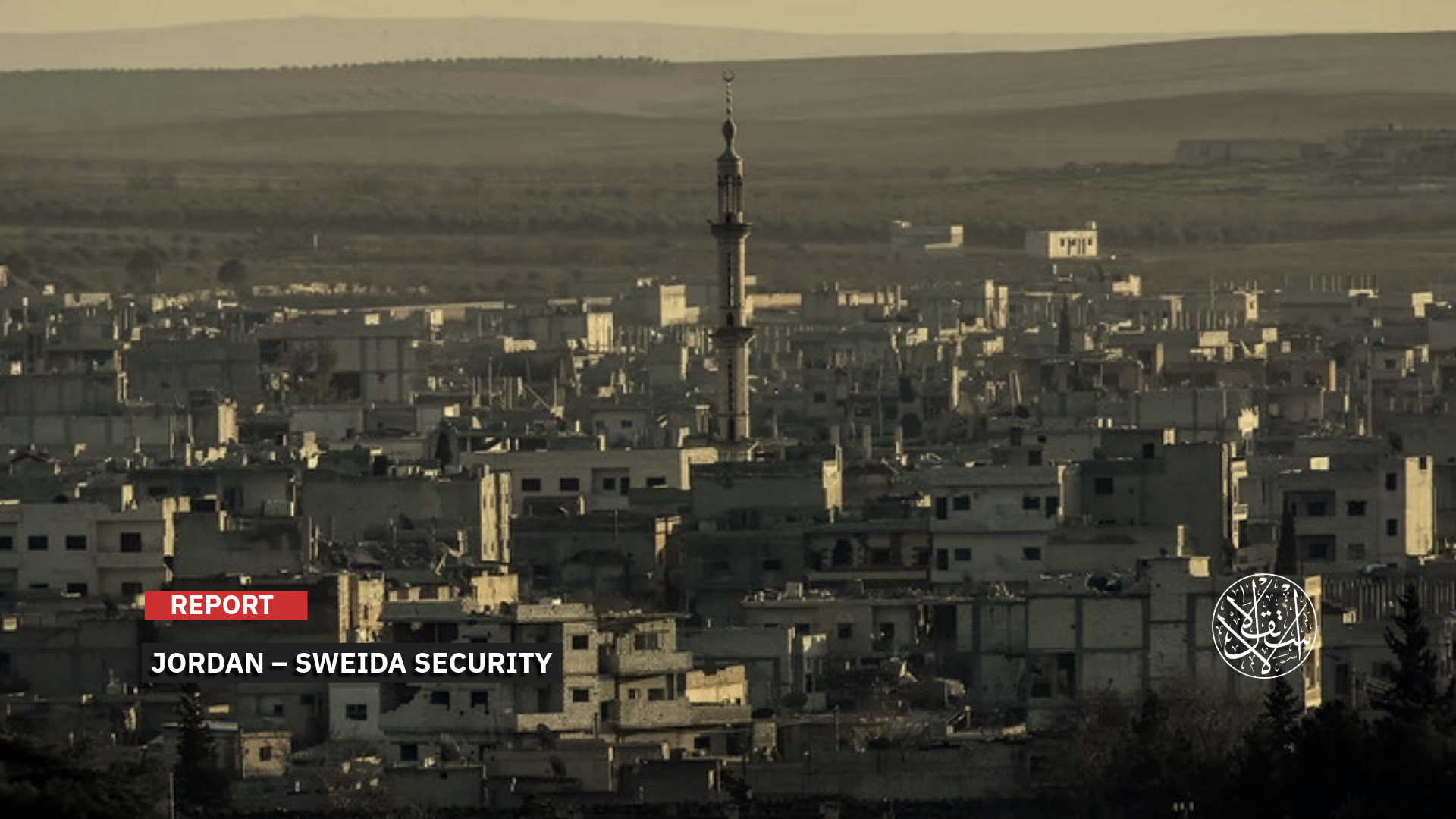
Al-Shibani said that his country is moving steadily ahead with the implementation of the tripartite roadmap.
Jordan views the rapidly unfolding developments in southern Syria as an issue directly linked to its national security, amid regional and international efforts to reshape security arrangements in the area and growing concerns that the expansion of Israeli influence in southern Syria could create a new threat along the kingdom’s northern border.
On September 7, 2026, Syrian Foreign Minister Asaad al-Shibani affirmed that his country was steadily moving forward with the implementation of the tripartite roadmap it had developed with Jordan, with the aim of establishing peace in Sweida Governorate and ensuring its stability.
Al-Shibani made the remarks during his address to the 166th session of the Council of the League of Arab States at the ministerial level. He stressed that the Syrian government was working to ensure the “integration of Sweida Governorate into its national fabric, and that members of this authentic component enjoy their full rights and fulfill their civic duties.”

Jordanian Leverage
The security meeting held in Amman on August 23 is of particular importance to Jordan, as the host country of the meeting that brought together Syrian Foreign Minister Asaad al-Shibani and Israeli Mossad chief Roman Gofman, under Jordanian sponsorship and with U.S. mediation.
Hosting the meeting reflects Amman’s desire to remain directly involved in any security arrangements concerning southern Syria, rather than allowing developments on the ground to affect Jordan without giving it a say in shaping their course.
On August 24, an official Jordanian source announced that the kingdom had hosted a meeting between Syria and “Israel” to discuss de-escalation and restoring calm following Israeli strikes on Syrian territory in the preceding days, according to Jordan’s official Petra news agency.
The source said, “At Syria’s request, Jordan hosted yesterday a meeting between Syrian and Israeli officials to discuss de-escalation and restoring calm,” following Israeli strikes on Syrian territory the previous week and escalating tensions in southern Syria.
On August 18, Israeli warplanes carried out eight strikes on the runway of the Abu al-Duhur military airbase in Idlib Governorate, northwestern Syria, damaging its infrastructure.
Jordanian political analyst Hazem Ayyad believes that Jordan has a number of “trump cards” that give it leverage in the Syrian file. Chief among them, he said, is its positive and balanced relationship with Damascus, which is developing politically and economically, as well as Syria’s need for Jordan economically and in strengthening its engagement with the United States and European countries.
Ayyad told Al-Estiklal that Jordan’s growing relationship with Turkiye represents another card, given that Ankara is one of the key actors in the Syrian file. He also pointed to Jordan’s geographic proximity to southern Syria, stressing that “no arrangements can be made in southern Syria, including in the Sweida area, without Jordan having a role in them.”
Intertwined Influence
According to Hazem Ayyad, Jordan’s relationship with the United States is another important card, particularly given Amman’s ability to influence the U.S. position and seek to moderate the level of its support for “Israel”.
The Jordanian expert warned that continued U.S. support could undermine Washington’s relations with countries in the region, including Jordan, jeopardize shared Jordanian-American interests, and affect prospects for developing U.S.-Syrian relations, as well as the level of trust in the U.S. position among the Gulf states.
Ayyad explained that Jordan was “one of the guarantors” of the agreement concerning Sweida, alongside an indirect U.S. and Israeli presence, making it a party that cannot be bypassed in arrangements for southern Syria.
He stressed that “Israel” had been unable to sideline Jordan’s role in the area because stability in the south is directly linked to Jordan’s national security.
The expert noted that the state of instability in Sweida carries security repercussions for Jordan, particularly in terms of smuggling, security disturbances, and attempts to breach the border, as well as links to criminal groups and gangs. He pointed out that the continuation of this situation “does not serve stability in the region.”
Ayyad argued that these factors strengthen the Jordanian and Syrian positions in confronting the Israeli narrative that Israeli Prime Minister Benjamin Netanyahu and Defense Minister Israel Katz are seeking to promote in southern Syria, assessing that this narrative ultimately leads to undermining security and stability.
He also noted that the United States’ need for Jordan at the current stage gives Amman an additional source of leverage and reinforces its position as a “key pillar of regional stability.”
This, he said, enables Jordan, in cooperation with Turkiye and Syria, to pressure Washington to push “Israel” to scale back some of its steps, or at least gradually contain the threats it poses in southern Syria.
Strategic Depth
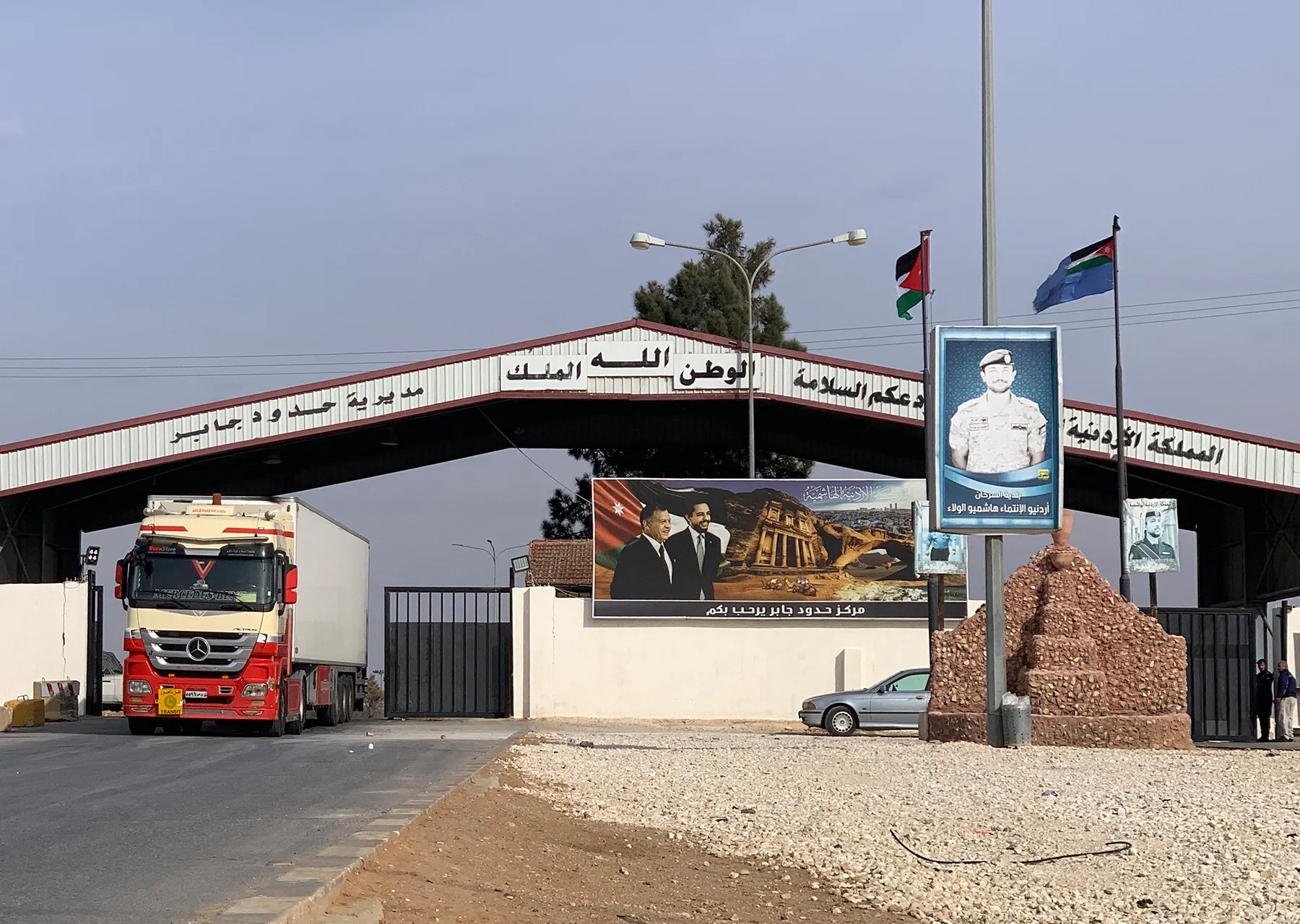
This view overlaps with Jordanian concerns that southern Syria could become a source of threats different from those the kingdom has faced in the past. Amman regards stability in the south as part of its border security, after years of confronting drug and arms smuggling operations that prompted it to carry out airstrikes inside Syria.
Although threats originating from Sweida have declined and smuggling operations have decreased, according to Jordanian assessments, concerns have not disappeared.
There is still the possibility that new security arrangements could emerge in the south or that local forces could establish ties with “Israel”, potentially forcing Jordan to deal with a new reality along its border.
In this context, researcher and professor of political sociology Badr al-Madi argues that Jordanian border security requires Amman to be “an integral part of any future security arrangements and understandings,” given the direct strategic depth that southern Syria represents for the kingdom.
Speaking to CNN Arabic on September 7, al-Madi warned of the strategic risks posed by Israeli moves, saying, “Israel’s control over, or expansion of its influence in, the south would effectively mean reconnecting Sweida Governorate with northern occupied Palestine.”
He explained that this course seeks to create a new geopolitical and security reality extending along Jordan’s borders, noting that it would inevitably lead to “geographically and security-wise encircling Jordan from its western and northern borders.” In his assessment, this represents an attempt to weaken Jordan and its security and political position on both the Syrian and Palestinian issues.
From another perspective, writer and analyst Muhammad Ali al-Zoubi said that Sweida is no longer merely an internal Syrian crisis, but has become “a real test of the shape of the region that will emerge along Jordan’s borders.” He believes that any change in the governorate’s social composition or security and political status would directly affect the kingdom’s security and northern borders.
In an article published by the Jordanian website Jafra News on August 24, al-Zoubi warned that the transformation of the idea of self-administration from a local demand into a secessionist project, coupled with its links to an external power with security and territorial ambitions in southern Syria, could open the door to a new reality adjacent to Jordan.
Al-Zoubi pointed to remarks by Hikmat al-Hijri in an interview with Israeli media, in which he said that the people of Sweida saw themselves as “an integral part of the system of Israel’s existence” and identified “Israel” as the party capable of guaranteeing future arrangements, alongside calls for Sweida’s independence. He said this raises concerns about the emergence of a new security reality in the border area adjacent to Jordan.
He explained that the danger does not necessarily lie in “Israel” directly annexing Sweida, but rather in establishing a sphere of influence that would leave the governorate effectively detached from Damascus and security-wise linked to “Israel”.
This could turn southern Syria, particularly Sweida, into an area of influence, a buffer zone, or a bargaining chip through which “Israel” could reshape the security environment surrounding Jordan.
Jordan has condemned Israeli attacks on Syria and called for “Israel’s” withdrawal from the occupied Syrian territories and respect for the 1974 Disengagement of Forces Agreement.
Al-Zoubi stressed that Jordan cannot treat Sweida as purely an internal Syrian matter because its location in southern Syria means that any security vacuum or fragmentation there could spill over into Jordanian territory, whether through disorder, smuggling, cross-border groups, or the expansion of external influence.
Therefore, according to al-Zoubi, the unity of the Syrian state represents a “strategic security necessity” for Amman, because the presence of a Syrian authority capable of controlling the south would serve as a barrier against the spread of instability into Jordan.
Economic Gains
Jordanian calculations in southern Syria do not stop at security and geography. Hazem Ayyad argues that Jordan’s interests in the area are “strong” and extend beyond security, geographic, and geopolitical considerations to the economic sphere, given the growing Jordanian-Syrian relations and the potential energy and trade interests that could develop between the two countries.
Ayyad added that stability in southern Syria could pave the way for greater openness toward Lebanon and provide economic alternatives through Turkiye and Syria, as well as new corridors and infrastructure linked to railways and transit routes. This would give Jordan additional options amid the deteriorating security situation in the Red Sea and the Arabian Gulf.
From this perspective, the Jordanian expert believes that stability in the south is linked to Amman’s ability to move from treating the area as a potential source of threats to viewing it as a space for security and economic interests.
According to Ayyad, however, this requires Jordan to have a presence in the political and security arrangements related to the south and to prevent arrangements from taking shape in a way that is detached from the kingdom’s interests.
This comes alongside Amman’s efforts to balance security with economic interests. Stability in southern Syria could pave the way for revitalizing trade, energy, and water cooperation, as well as facilitating the return of Syrian refugees. Around 220,000 Syrian refugees had returned to Syria by the end of July 2026.
In this context, Ayyad sums up the nature of Jordan’s stake by saying that Jordan is “indeed concerned with deploying all its diplomatic, political, and geopolitical capabilities” to influence the U.S. position and developments in southern Syria.
The Jordanian expert concluded that the region represents both a vital interest and a challenge for Amman, and that Jordan cannot relinquish the options that enable it to maneuver, advance its interests, and strengthen its position as a stable state in the region.