Ceuta Migration Between Disinformation and Political Conflict: Why Did Sanchez Accuse Israeli Occupation?
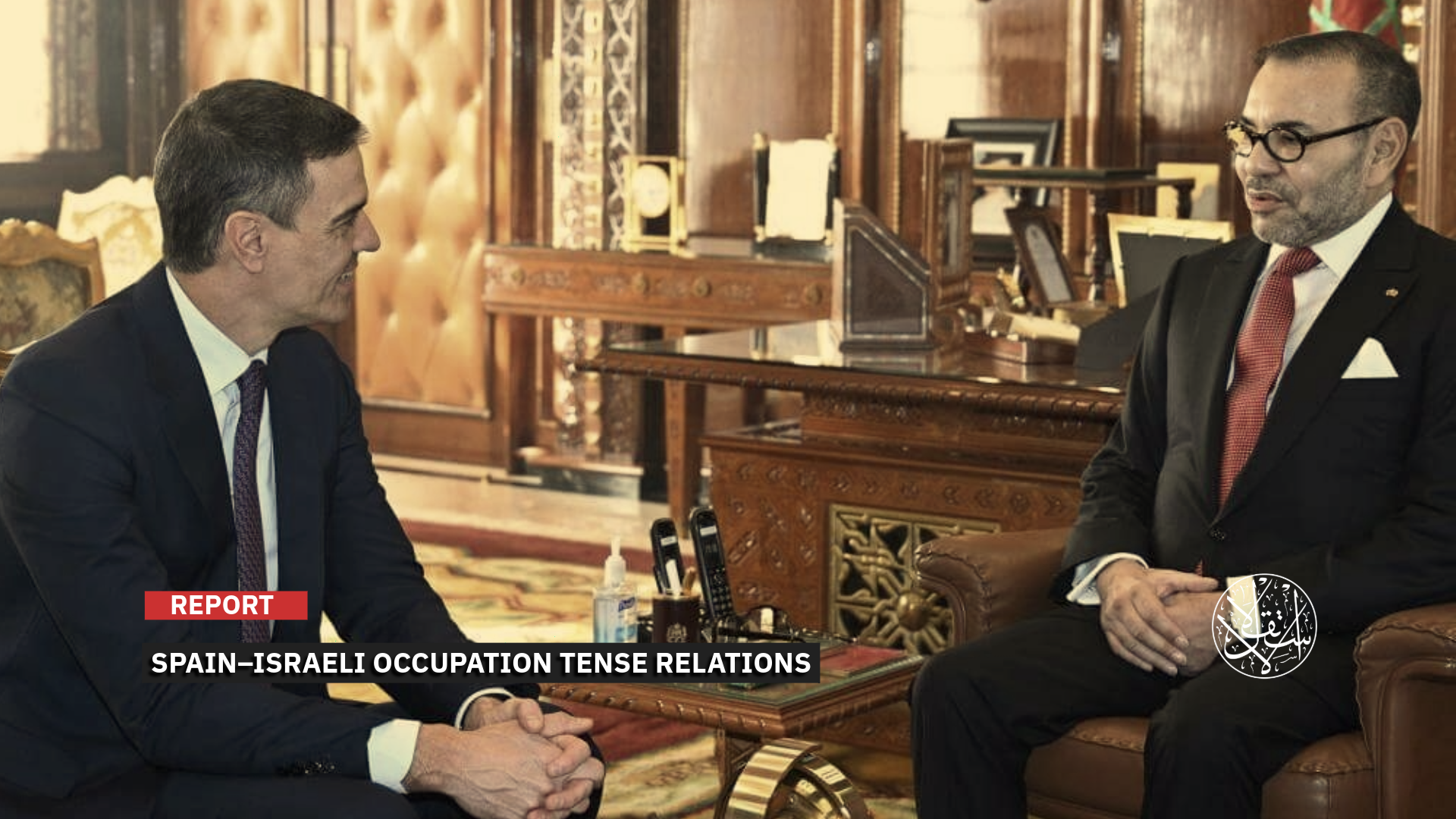
The Israeli Occupation now faces growing strain in its relationship with Morocco.
Spanish Prime Minister Pedro Sanchez’s remarks about Israeli involvement in the mass migration crisis involving Ceuta and Melilla have reopened a wider debate over the link between border tensions and the deepening political rift between Madrid and “Tel Aviv.” They have also raised questions about what role Israeli actors played in fueling the crisis and whether it was used for political leverage against the Spanish government.
Sanchez spoke as Madrid was dealing with one of the largest waves of mass crossings into Ceuta, while European criticism of its migration policies was mounting. The episode also came amid a sharp dispute with the Israeli Occupation over Spain’s position on the genocide in Gaza and its recognition of a Palestinian state.
While Sanchez said there was no evidence that Morocco had orchestrated the migration wave, he cited European information pointing to the involvement of Israeli actors in social media campaigns that allegedly misled people seeking to migrate. The Israeli Occupation strongly denied the accusation and accused the Spanish prime minister of “blatant lying.”
The dispute puts the Ceuta and Melilla crisis at the intersection of three questions: what actually happened along the Moroccan-Spanish border, whether foreign disinformation networks played a role in driving or exploiting the crisis, and what the episode could mean for Morocco’s relationship with “Israel,” amid growing criticism inside Morocco of normalization and concerns over its security and political consequences.
Clearing Morocco
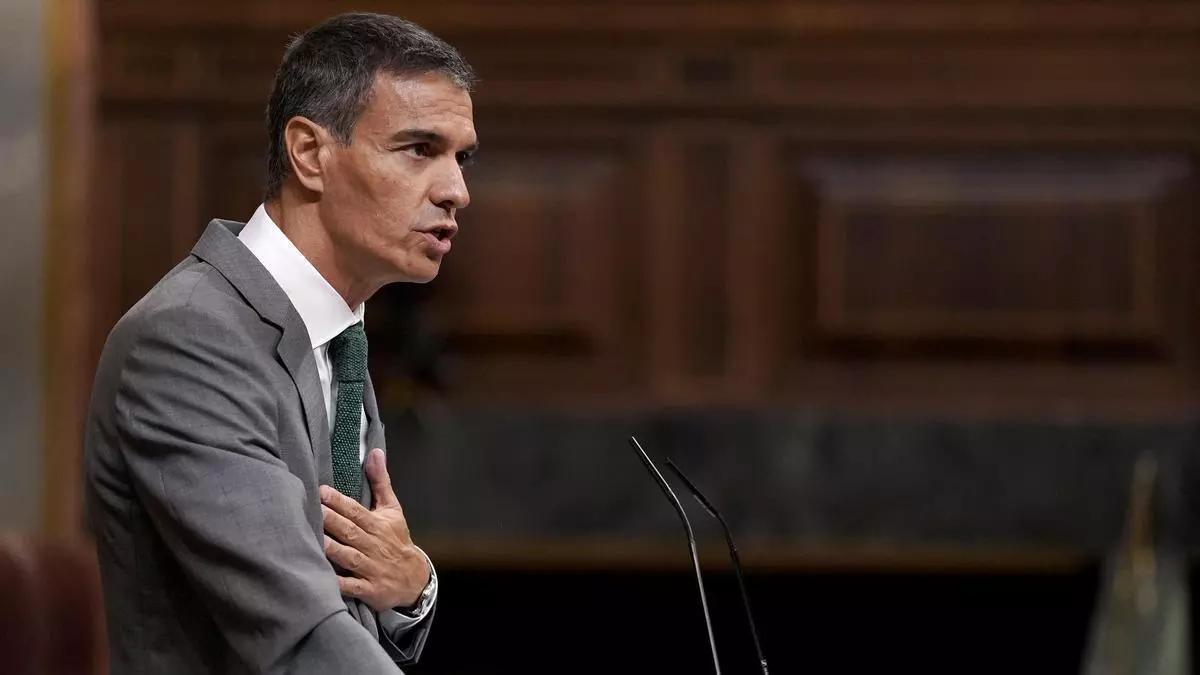
On September 3, 2026, Sanchez told Parliament that Morocco was not behind the events in Ceuta, saying Spain had found “no evidence” that the mass crossing of migrants from Morocco into the enclave in July, which resulted in deaths, had been planned or carried out by Moroccan authorities.
He added that no agency or international organization had provided the Spanish government with solid evidence that Morocco had planned or orchestrated the influx of migrants into Ceuta in late July 2026.
Sanchez laid out the events in chronological order, saying that on July 30, Moroccan gendarmerie forces allowed the border to be crossed for 10 hours. Spain, he said, chose to respond “humanely” to those arriving by sea to prevent a tragedy or people drowning.
He said Spain had to protect human lives, stressing that the security forces had acted properly, wisely, and democratically, and that their conduct was a source of pride.
Sanchez also outlined the measures Spanish forces took to stop the influx, including reinforcing the borders with neighboring European countries, installing a maritime barrier along the coast, and deploying additional fast military boats to prevent any “new crossings.”
He said Spain had managed to return more than 50,000 migrants to Morocco within 24 hours, accounting for 90 percent of those who had crossed, describing it as the largest expulsion operation in European history.
Sanchez also announced the deployment of 500 additional police officers and soldiers to Ceuta at the height of the crisis, along with more patrols and expanded medical and health services, particularly for migrant minors.
Addressing the slowdown in returning migrants to the places they had come from, Sanchez said they cannot treat people like sacks and throw them to the other side.
He added that Spain was a democracy and a socialist country, which meant it had procedures and international obligations to follow and had to act with dignity and respect.
Mass Migration
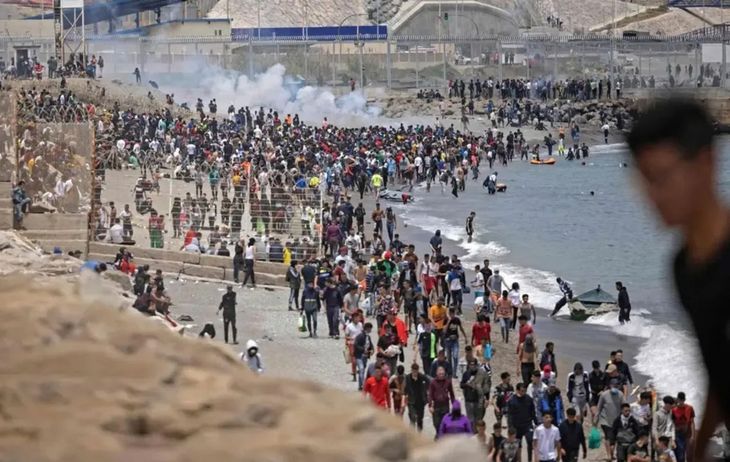
Spanish authorities estimated that around 60,000 migrants crossed into Ceuta on July 30 and 31, 2026, in one of the largest waves of mass crossings ever recorded along the European Union’s southern border.
The Spanish government later reported that around 72,000 migrants had entered Ceuta, saying it had returned most of them to the Moroccan side.
Sanchez has recently sharpened his political rhetoric toward the Israeli Occupation, opposing its aggression on Iran and Lebanon and calling for the suspension of the European Union’s association agreement with “Israel.” He has also stressed that such violations “must not go unpunished.”
The Israeli Occupation was quick to respond. Israeli Foreign Minister Gideon Sa’ar accused the Spanish prime minister of “blatant lying.”
“He lied again, surprisingly accusing Israel of spreading misleading information about the events in Ceuta,” he added. “This is a blatant lie.”
Dana Erlich, “Israel’s” acting ambassador in Spain, also responded in a post on X saying that “disinformation” must be fought. “Israel” cannot continue to be used as a smokescreen.
Sanchez has maintained that there is “no information” pointing to Morocco as the source of the crisis. Instead, he cited Russia and “Israel,” along with an international far-right group, as actors that had used migration to attack Spain and Europe.
The episode marks the latest round in an increasingly bitter exchange between the Spanish government and the government of Benjamin Netanyahu. Netanyahu recalled “Israel’s” ambassador to Madrid for consultations in May 2024 after Spain recognized a Palestinian state and has not appointed a replacement.
Spain also currently has no ambassador in “Israel,” with its highest diplomatic representation limited to the level of acting ambassador after Ambassador Ana Salomon was recalled for consultations in September 2025 and later dismissed in March 2026.
Different Reactions
Some commentators focused on what they saw as the broader implications of Sanchez’s remarks, particularly what they considered warning signs of the extent of Israeli penetration into Morocco.
Journalist and political activist Soulaiman Raissouni was among them, sharply criticizing what he described as the intelligence-linked press celebrating and “cheering” Sanchez’s remarks clearing Morocco of accusations that it had planned the mass migration episode.
“They fail to realize that Sanchez’s statement is like poison wrapped in honey,” he said, arguing that Morocco’s relationship with “Israel” had, in his view, gone beyond “equal normalization” toward full Israeli control over the kingdom.
He said Morocco’s sovereign institutions were effectively out of the picture, while “Israel” was doing as it pleased with Moroccans and on Moroccan territory without the country’s knowledge, in his words.
Aziz Hanawi, secretary-general of the Moroccan Observatory Against Normalization, said the one clear conclusion so far is that the Israeli Occupation has benefited significantly from the mass migration episode and the images it generated. However, he said it would be difficult to establish that “Israel” had planned the events in advance.
“The Israeli Occupation, together with its U.S. backer, sought to exploit the episode after the fact by attacking Sanchez’s government because of its political and moral support for the Palestinian cause and its opposition to the genocidal war in Gaza,” Hanawi told Al-Estiklal. “These are well-established positions that require little explanation.”
“The Zionist and U.S. sides sought to capitalize on the mass migration after it happened, mobilizing their propaganda and supportive media machinery to attack the Spanish government and back the Spanish right aligned with Israel and Donald Trump in an attempt to bring down the governing left,” he added.
Asked whether “Israel” had put Morocco’s national security at risk, if the Spanish account proved accurate, Hanawi said “Israel” had shown little regard for Moroccan national security despite the normalization agreement between the two countries. He argued that the Israeli Occupation was concerned only with its own interests.
He said this reinforced what Morocco’s civil society forces had long called for: ending normalization and all forms of cooperation with “Israel” because of the security, strategic, political, economic, and cultural risks the process poses to Morocco, amounting collectively to a direct threat to both the state and society.
The human rights activist also pointed to statements by some voices in “Israel” calling for Morocco to regain control of Ceuta and Melilla from Spain. While he acknowledged that this reflects a long-standing Moroccan demand for the two cities to return to Moroccan sovereignty, he argued that “Israel’s” position was driven by its dispute with the Spanish government rather than by a genuine commitment to that cause.
“Even if Israel really were defending Ceuta and Melilla as an integral part of Moroccan territory, Moroccans do not need this recognition or endorsement,” he said. “We cannot accept anything from this bloody, terrorist, and eliminationist entity because it is an enemy of the Moroccan and Muslim nations and of humanity as a whole.”
An Academic Reading
The Progress Center for Policies (PCP) argues that the mass migration crisis involving Ceuta and Melilla and its latest developments need to be examined from several angles. The first is Sanchez’s exoneration of Morocco, against the backdrop of his statements that there was no intelligence indicating Rabat’s involvement.
In a policy assessment published on September 2, 2026, the center said these statements represent a strategic choice aimed at protecting border coordination with Morocco and maintaining good relations between Madrid and Rabat, particularly on sensitive issues such as Ceuta and Melilla and Western Sahara.
This approach was reinforced by the presence of King Mohammed VI in the Strait region on the day the crowds began gathering, making any external accusation against Morocco more sensitive and turning Sanchez’s exoneration of Rabat into a diplomatic necessity to avoid an escalation with Morocco.
Second, the center said Sanchez’s accusations against Russian and Israeli networks were based on analyses by the European External Action Service (EEAS) concerning foreign information manipulation. However, European monitoring focused on Russian channels that began amplifying the story after the crisis had already erupted, rather than before it. This, the PCP argued, suggests that Russia’s role was to amplify and exploit the events in the media, rather than plan or carry them out.
It therefore argued that Russia would have an interest in amplifying any European border crisis to weaken Spain’s position within the European Union because of its support for Ukraine and to use migration as a source of division within the bloc.
On the accusation against the Israeli Occupation, the PCP said in its third observation that the issue appeared to be linked to the sharp dispute between Spain and “Israel,” stemming from Madrid’s description of the war on Gaza as genocide, its recognition of Palestine, its arms restrictions, and its refusal to allow Spanish bases to be used for U.S.-Israeli aggression.
This dispute made accusing “Israel” politically convenient for Sanchez, as it diverts attention from domestic shortcomings and portrays the crisis as an external hybrid war rather than an administrative failure.
The accusation, however, put “Israel’s” relationship with Morocco in a difficult position. Morocco is a security and economic partner of “Israel” following normalization, and any accusation that Israeli networks were involved in disinformation, even if denied by “Israel,” fuels public sensitivity and puts bilateral cooperation under greater scrutiny from opponents and critics, according to the PCP.
Fourth, the global far right, united around Trump, and Spain’s far right benefited from turning images from Ceuta into an electoral weapon against Sanchez, while Italy’s suspension of Schengen provided a model for attacking Spain’s migration policy.
The broader European dispute also came sharply into view as Italy, under populist right-wing leadership, led the criticism. Rome used the Ceuta crisis to suspend Schengen and impose selective controls, a move Madrid regarded as the politicization of border security.
The PCP also warned that Italy’s gas agreements with Algeria cannot be ruled out as a factor behind Rome’s confrontational stance toward Madrid, which could have further strained relations with Morocco.
Overall, the center concluded that Morocco emerged diplomatically less damaged than might have been expected because Madrid chose to highlight cooperation rather than confrontation, strengthening Rabat’s position on Ceuta and Melilla and Western Sahara in the medium term.
“Israel,” by contrast, now faces growing strain in its relationship with Morocco, particularly as leaks and accounts continue to point to networks linked to the Israeli Occupation, potentially affecting the course of normalization between the two countries.