How the Far-Right AfD’s Victory Threatens the Stability of Refugees and Migrants in Germany
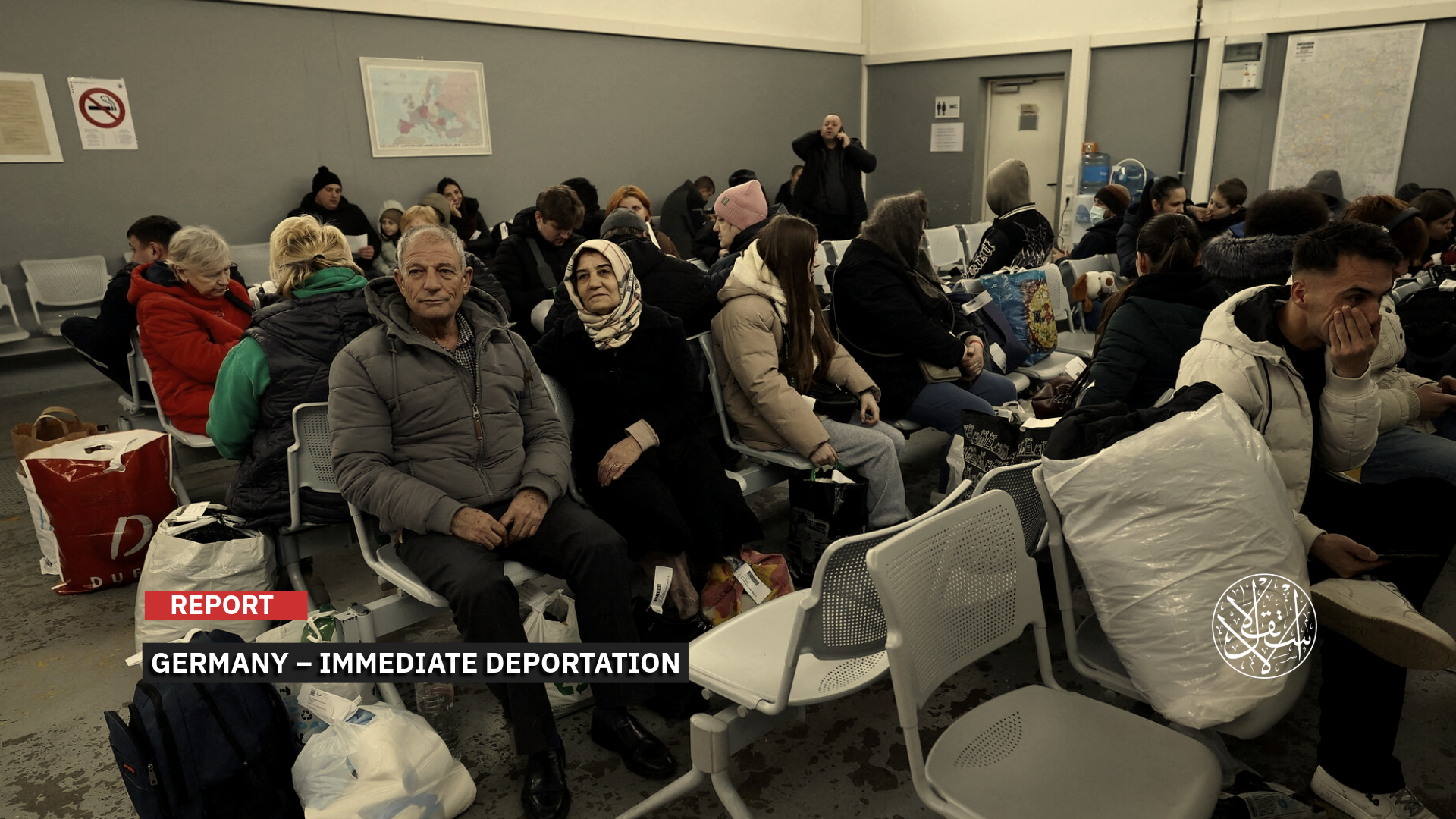
“The AfD has long campaigned for tighter immigration and asylum policies.”
The German political landscape underwent a radical shift following the announcement of election results in the eastern state of Saxony-Anhalt.
The Alternative for Germany (AfD) party achieved a remarkable victory—described by observers as turning the tables on established political forces.
The right-wing party secured 43.8% of the vote and 39 out of 83 seats, effectively doubling its electoral strength compared to previous elections—a development that has sparked widespread concern across political and social circles.
While this result does not grant the party an absolute majority to form a government on its own, it solidifies its position as a political force that cannot be ignored within the German landscape.
These results have directly heightened the anxieties of immigrants and citizens of foreign origin, given the party's hardline rhetoric regarding integration and asylum, as well as its hostile stance toward the presence of Islam in the country.
It remains unclear to what extent the party could implement its policies regarding immigrants if it were to assume power in the state, given that the federal government holds primary responsibility for immigration policy; however, analysts agree that the party could undoubtedly make life more difficult for immigrants within the state.
Far-Right Review
The strong showing by the AfD in the Saxony-Anhalt state elections on September 6 has ignited a broad debate regarding the party's future and the impact of its rise on the German political landscape, particularly concerning immigration and asylum issues.
Agence France-Presse (AFP) reported that the Refugee Council of Saxony-Anhalt has highlighted the social exclusion and racism faced by many foreign-born residents, noting that political rhetoric surrounding mass deportations has fostered an atmosphere of deep fear and uncertainty among this demographic.
The far-right party’s manifesto in Saxony-Anhalt places significant emphasis on immigration and asylum issues, proposing measures regarding deportation, voluntary return, and naturalization, while also adopting the concept of remigration.
The term 'remigration' originates in migration studies; however, when used by the far-right, it typically implies the departure of large numbers of people of foreign origin from the country, potentially under coercion.
The party has also pledged to abolish the right to asylum—arguing that entry into the state should only occur via a safe third country—as well as to eliminate the church asylum system and revoke the residence permits of foreign nationals convicted of crimes.
Furthermore, the party commits to mandating that recognized refugees work in waste management and public sanitation, reviewing citizenship grants, and utilizing prisons to detain individuals slated for deportation.
Additionally, the party seeks to tighten naturalization requirements, opposing the granting of citizenship to criminals and individuals deemed dangerous.
It also advocates for abolishing birthright citizenship in favor of a system based on lineage (jus sanguinis).
Regarding Ukrainians, the party proposes transferring them to the asylum-seeker benefits system while encouraging their return, and seeks to end their general recognition as war refugees.
Regarding European migration, the party seeks to curb what it terms poverty migration from the EU into social welfare systems by utilizing available legal avenues.
Although federal states play no role in foreign policy, the party can promote its policies more loudly from a position of authority.
Ulrich Siegmund, the party’s candidate for state premier, has pledged to deport all foreigners lacking legal status from the very moment he takes office.
Speaking to AFP on August 29 during an election event, Siegmund emphasized that his party aims to deport individuals present illegally who are required to leave the country, whereas regulated immigration based on strict criteria would pose no issue.
Regarding education, the party also seeks to alter curricula to reduce the emphasis on Germany's historical responsibility for Nazi crimes, focusing instead on the country's achievements.
In a heated parliamentary debate days after the state election, Chancellor Friedrich Merz stated that the mass deportation plans the AfD seeks to implement are tantamount to ethnic cleansing based on origin and skin color.
He warned that the millions of migrants working in Germany are essential to German society.
He continued: "If workers in Germany were forced to leave due to the deportation policy you are promoting, vital sectors would cease to function; no nursing home would remain open, no hospital could admit patients, and no restaurant could keep its doors open."
Party officials—including Siegmund—participated in a secret conference, later exposed by German journalists, held in the state of Brandenburg two years ago. The gathering discussed the mass deportation of migrants and individuals of migrant background.
At the time, the conference sparked a scandal and an internal outcry due to parallels drawn between it and a meeting held by the Nazis nearby—where they discussed what came to be known as the Final Solution, which led to the Holocaust.

Anti-Migrant Rhetoric
Fears are particularly evident among Syrians, who constitute one of the largest foreign communities in the state of Saxony-Anhalt.
According to the Central Register of Foreigners, approximately 192,000 foreign nationals—including more than 29,000 Syrians—were living in the small state at the end of 2025.
Following the announcement of the results, the Saxony-Anhalt Refugee Council reported widespread fear among migrants, while organizations representing people with immigrant backgrounds warned against exclusion and racism.
The core message from these organizations is that this demographic is no longer merely a transient group that arrived during the refugee crisis; rather, they have become an integral part of the state’s cities and towns—working, studying, establishing families and businesses, and actively participating in civil society institutions.
These concerns extend beyond the mere possibility of the AfD assuming the state premiership; some migrants interviewed by German and international media outlets stated they were already considering leaving Saxony-Anhalt, while others spoke of more concrete plans to depart.
Reuters reported that local employers have also begun to reconsider their future ability to attract and retain foreign workers.
A primary source of these concerns lies in the AfD’s own platform; the party campaigned in Saxony-Anhalt pledging to implement what it terms 'remigration', alongside stricter asylum and residency policies and the deportation of those without the right to remain.
Conversely, party leader Alice Weidel stated in an interview with the television channel AUF1 that anyone who contributes, works, is competent, pays taxes, and respects the law is welcome.
However, she called on Ukrainians residing in Germany—particularly men of conscription age—to return to their home country.
She expressed a similar view regarding Syrians living in Germany, arguing that they should return home once there are no longer grounds for their protected status.
The party added that, should it assume power, it would review the status of Syrians who have obtained German citizenship, citing serious doubts regarding whether some of them met the naturalization criteria.
However, migrant organizations believe the issue extends beyond the legal definition of who has the right to remain; the party has also engaged in political battles concerning German identity.
Far-right circles have coined terms such as passport Germans—a label that casts doubt on the belonging of German citizens of immigrant background, despite their possession of citizenship.
This is particularly significant for Syrians, as the wave of asylum-seeking that began over a decade ago has gradually evolved into permanent settlement and the acquisition of German citizenship.
In 2025 alone, 2,915 foreigners in Saxony-Anhalt obtained German citizenship, with Syrians topping the list for the sixth consecutive year, accounting for 1,013 naturalizations.
The statistical office attributes the recent rise in Syrian naturalizations to the fact that increasing numbers of those who arrived between 2014 and 2016 have met the requirements for citizenship.
For these individuals, an AfD victory does not imply the possibility of having their citizenship revoked or facing deportation by a state government decision; citizenship law and the core of immigration and asylum laws are federal matters, and constitutional rights cannot be overridden by a state government.
Nevertheless, holding a German passport does not eliminate the fear of a shifting social climate or the concern that the definition of German in public discourse might shift toward one based on ethnic origin.

Real Concerns
It is worth noting that the government of Saxony-Anhalt cannot abolish the federally enshrined right to asylum, rewrite German citizenship law, or deport a German citizen based on their Syrian or Arab origins.
Furthermore, the state government—regardless of which parties form it—remains bound by the German Basic Law, federal statutes, and judicial oversight.
However, this does not mean the state government lacks tools; German states possess broad powers regarding policing, education, administration, culture, and local agencies for the protection of the constitution. Their administrative bodies also participate in implementing federal laws concerning residency and deportation.
Consequently, an AfD-led government could shift enforcement priorities, adopt a stricter administrative approach toward asylum seekers and individuals subject to deportation orders, and cut back on integration programs as well as public funding for migrant associations, counseling centers, and anti-racism projects.
This is the source of the anxiety surrounding the organization Miteinander and other civil society institutions, as these organizations rely partly on public funding for projects combating right-wing extremism and assisting victims.
In contrast, the AfD has expressed a desire to halt or redirect portions of this funding. This implies not merely a change in immigration policy, but a weakening of the support infrastructure that migrants turn to when facing discrimination or assault.
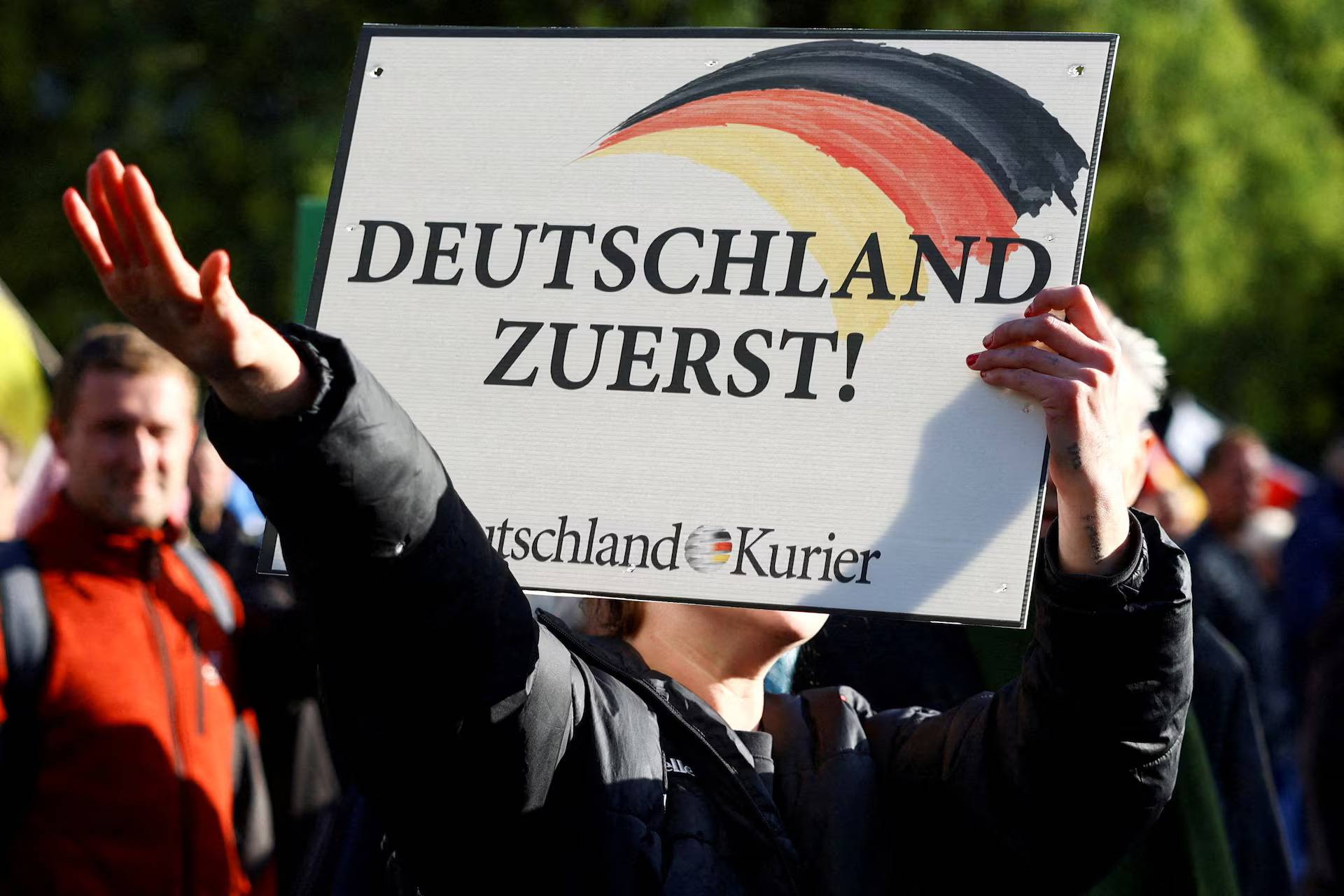
The second source of fear does not require waiting for the formation of a government; right-wing and racist violence is already a reality in Saxony-Anhalt.
Mobile Opferberatung—an organization specializing in assisting victims of right-wing violence—recorded 229 right-wing and racist attacks in 2025. These incidents directly affected 307 people, averaging four to five attacks per week.
Racism was the primary motive; 130 of the 229 attacks (57%) were racially motivated, affecting 185 individuals. At least 42 of the victims of racist violence were under the age of eighteen.
The recorded cases include incidents directly involving Syrians and Arabs. In February 2025, a twelve-year-old girl from a Syrian family in Magdeburg was subjected to racist insults; she was then struck in the face, shoved against a wall, and threatened with a knife in the presence of her younger siblings.
In June, two students speaking Arabic inside a restaurant in Merseburg were subjected to racist insults and subsequently assaulted.
An eighteen-year-old young man suffered a broken nose and a ruptured eardrum, injuries that required surgery and hospital treatment.
In Magdeburg, the organization recorded a wave of racist attacks linked to the December 2024 attack on a Christmas market.
In January 2025, an individual poured a substance smelling of chlorine over merchandise at a Syrian-owned grocery store.
A month later, two young men speaking Arabic were attacked with a knife while returning from work; one of them required surgery.
The organization also documented an assault on a 23-year-old man of Syrian origin, reporting that he was verbally abused, surrounded, and beaten with a club.
Concerns extend beyond the election results themselves; victim support organizations fear that an election victory securing 44% of the vote could make anti-migrant rhetoric more socially acceptable and open, and lead some extremists to believe that previously fringe views now enjoy widespread support.
Sources
- Mass deportations and separate schools for refugees: The far-right AfD’s vision for Germany
- The head of AfD proposes to return all Ukrainians and Syrians hosted in Germany
- ‘Are my family and I truly welcome here?’ In Germany, Syrians react to AfD’s rise
- Merz accuses AfD of ‘ethnic cleansing’ policy and cancels call with Trump
- Normalising “Remigration”: A Far-Right Playbook [Study]