Israeli Occupation Among the Biggest Losers From Houthi Control of Bab al-Mandeb: Why?
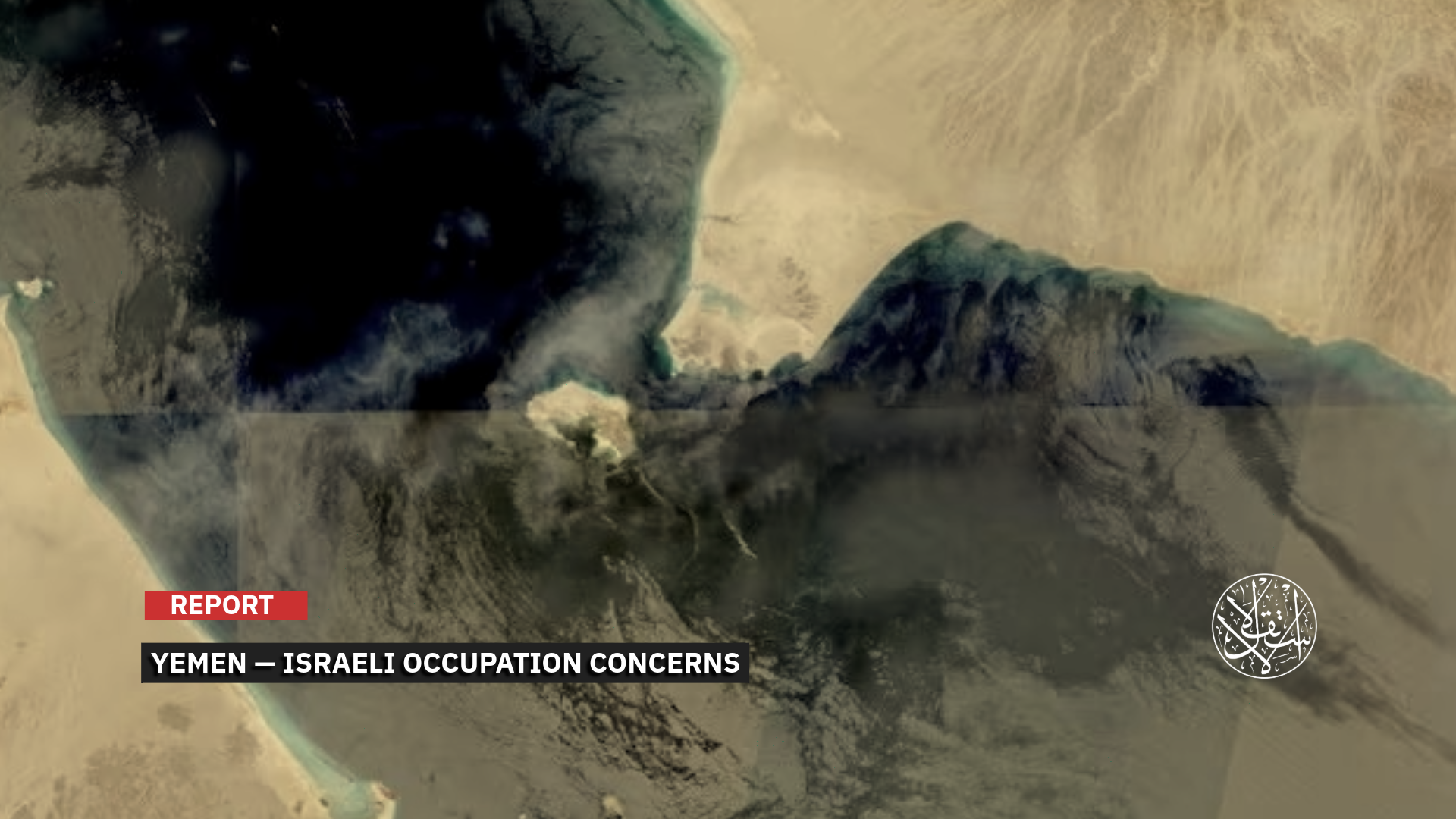
"Israel" is particularly concerned because the eastern channel of the Bab al-Mandeb Strait is only about 3 kilometers wide.
The Houthis’ advance along Yemen’s western coast, their arrival at the Bab al-Mandeb area, and their growing control over maritime traffic have triggered mounting concern in “Israel,” reflected in warnings from politicians, media figures, and research centers.
The concern stems in part from the fact that the eastern channel of the Bab al-Mandeb Strait is only about 3 kilometers wide, meaning passing ships can be monitored with the naked eye and that the Houthis could potentially block an Israeli vessel using relatively simple weapons.
The Bab al-Mandeb Strait is about 30 to 32 kilometers wide overall, but Perim Island, also known as Mayyun, divides it into two channels. The eastern channel is about 3 kilometers wide, while the western channel stretches roughly 25 kilometers.
That makes Bab al-Mandeb markedly different from the Strait of Hormuz, whose narrowest point is about 33 kilometers wide, making it harder to control. Iran, in particular, needs radars and advanced equipment to monitor and threaten maritime traffic there. Non-Israeli ships can also pass through the strait even when carrying goods destined for or coming from the Israeli Occupation.
“Israel” fears that Bab al-Mandeb could become a “Houthi Hormuz,” as the group’s control of Yemen’s entire Red Sea coastline and its vital chokepoints could give it the ability to choke “Israel’s” maritime access and replicate Iran’s pressure over the Strait of Hormuz, according to Israeli media.
The phrase “Houthi Hormuz” captures the heart of Israeli and regional concern. Just as the Strait of Hormuz has become a source of leverage over oil exports, Bab al-Mandeb could become a pressure point over Israeli trade, energy supplies, and maritime traffic.
Israeli research centers, including the Misgav Institute for National Security and Zionist Strategy and the Institute for National Security Studies, see the Houthi advance along the Red Sea coast and around Bab al-Mandeb as more than a threat to commercial shipping. They view it as a direct danger to one of “Israel’s” main maritime gateways: the port of “Eilat.”
Houthi pressure on Red Sea shipping had already effectively crippled the port, which has been largely out of operation since November 2023 after vessels heading to or departing from “Eilat” became vulnerable to Houthi attacks carried out as part of the group’s campaign in support of Gaza.
The first Israeli reaction to the Houthi gains therefore came on September 10, 2026, when Israeli Army Radio quoted Israeli generals as warning that the Houthis could blockade the port of “Eilat” after taking control of areas along Yemen’s western coast up to Bab al-Mandeb.

What Did They Say?
After the Houthis announced that they had taken control of Yemen’s Red Sea coast up to Bab al-Mandeb, with Houthi fighters appearing along the shoreline, Israeli Navy Commander Eyal Harel ordered a higher state of readiness across the command and control network.
Senior commanders also reinforced naval forces at sea in an effort to prevent any surprises in the maritime domain, according to Israeli media.
An Israeli official told “Israel’s” Channel 12 on September 10, 2026, that Houthi control of Bab al-Mandeb was more dangerous than Iran’s control of the Strait of Hormuz. The reason, he said, was “simple geography.”
The eastern shipping channel running alongside Perim Island is narrow, measuring only about 3 kilometers across. That means any ship passing through it can be seen with the naked eye from Houthi positions, without the need for radars or advanced surveillance equipment.
According to the Israeli official, this means that any Houthi fighter could use a relatively simple weapon, even an anti-tank missile, to stop, disable, or prevent a ship from passing, particularly an Israeli vessel.
The Strait of Hormuz, by comparison, is about 33 kilometers wide at its narrowest point. Iran needs radars, surveillance systems, and anti-ship missiles to threaten maritime traffic there.
At Bab al-Mandeb, however, any Yemeni fighter equipped with a guided anti-tank missile and positioned on Perim Island, which sits at the entrance to the strait and divides it into two channels, could hit a tanker simply by spotting it with the naked eye. No sophisticated weapon would be required, the Israeli official said, giving the Houthis “enormous power.”
Israeli analyst Elisha Ben Kimon wrote in an analysis published by Yedioth Ahronoth on September 13, 2026, that the Houthis’ rapid gains around Bab al-Mandeb had put “Israel” on alert over the growing danger in the Red Sea.
He said “Israel” was strengthening its naval defenses after the Iranian-backed Houthis seized the strategic waterway because of fears that they could disrupt global trade with missiles and explosive boats, threatening Israeli security.
The concern within “Israel’s” war establishment is that if the Houthis succeed in tightening their grip on Bab al-Mandeb, a more cohesive and powerful regional alliance led by Iran could emerge, potentially requiring Israeli intervention, particularly after U.S. President Donald Trump said he would not intervene.
The maritime landscape has undergone sweeping changes, from Iran’s control of the Strait of Hormuz to the Houthis’ latest gains around Bab al-Mandeb.
Commenting on the developments, an Israeli official told Yedioth Ahronoth that “Tel Aviv” was closely monitoring the situation in Bab al-Mandeb but would not intervene unless it came under threat.
The official said that, for now, the issue was not “Israel’s” war but a Saudi matter, noting that Riyadh had signed a defense alliance with Turkiye and Pakistan.
The comments came after the right-wing Israeli newspaper Israel Hayom claimed on September 13, 2026, that Saudi Crown Prince Mohammed bin Salman had sought “help” from countries in the region to confront the Houthis.
As part of the Saudi request to other Gulf states and Egypt, bin Salman also made an indirect request to “Israel,” through U.S. Central Command, for intelligence and support to prevent the Houthis from closing the Bab al-Mandeb Strait, according to Israel Hayom.
The Israeli financial newspaper Globes reported on September 11, 2026, that the development had put “Israel” before a threat different from the Strait of Hormuz crisis. It quoted an Israeli official as saying that the situation at Bab al-Mandeb could be worse than Hormuz.
A study by “Israel’s” Institute for National Security Studies (INSS), published on June 22, 2026, had already examined the possibility of the strait being closed. It warned that Bab al-Mandeb is a strategic chokepoint for global trade and that Houthi attacks had demonstrated their ability to disrupt international shipping through the vital passage.
The Houthis themselves released a video that implicitly illustrated the point, capturing the issue more clearly than any analyst could. It showed a Houthi commander explaining to his fighters why Bab al-Mandeb is so strategically important and why controlling ships passing through it is relatively easy.
His message echoed the comments of the Israeli official cited above: the Houthis no longer need drones or missiles. They could simply position artillery “here and there” along the coast and fire in all directions at ships passing through the strait, allowing them to control 99% of it.
What Role Is Iran Playing?
What concerns Israelis most is Iran’s role in the developments and the possibility that Houthi control of Bab al-Mandeb could lead to a wider Iranian foothold in the Red Sea.
Israeli media, most notably The Jerusalem Post, reported on September 10, 2026, that Iran had played a direct role in directing the Houthis to seize Yemen’s western coast up to Bab al-Mandeb. Such control could give Tehran a dual grip over the two strategic waterways, the Strait of Hormuz and Bab al-Mandeb, allowing it to use both as leverage in negotiations with Washington.
The Israeli newspaper cited “intelligence and maps” pointing to an Iranian Revolutionary Guard Corps plan to advance toward and seize Bab al-Mandeb through the Houthis, with the aim of redrawing the region’s strategic map.
It also quoted military sources as saying that the latest Houthi advance came as a result of direct Iranian guidance and assistance aimed at opening a new front in “the war with the United States.”
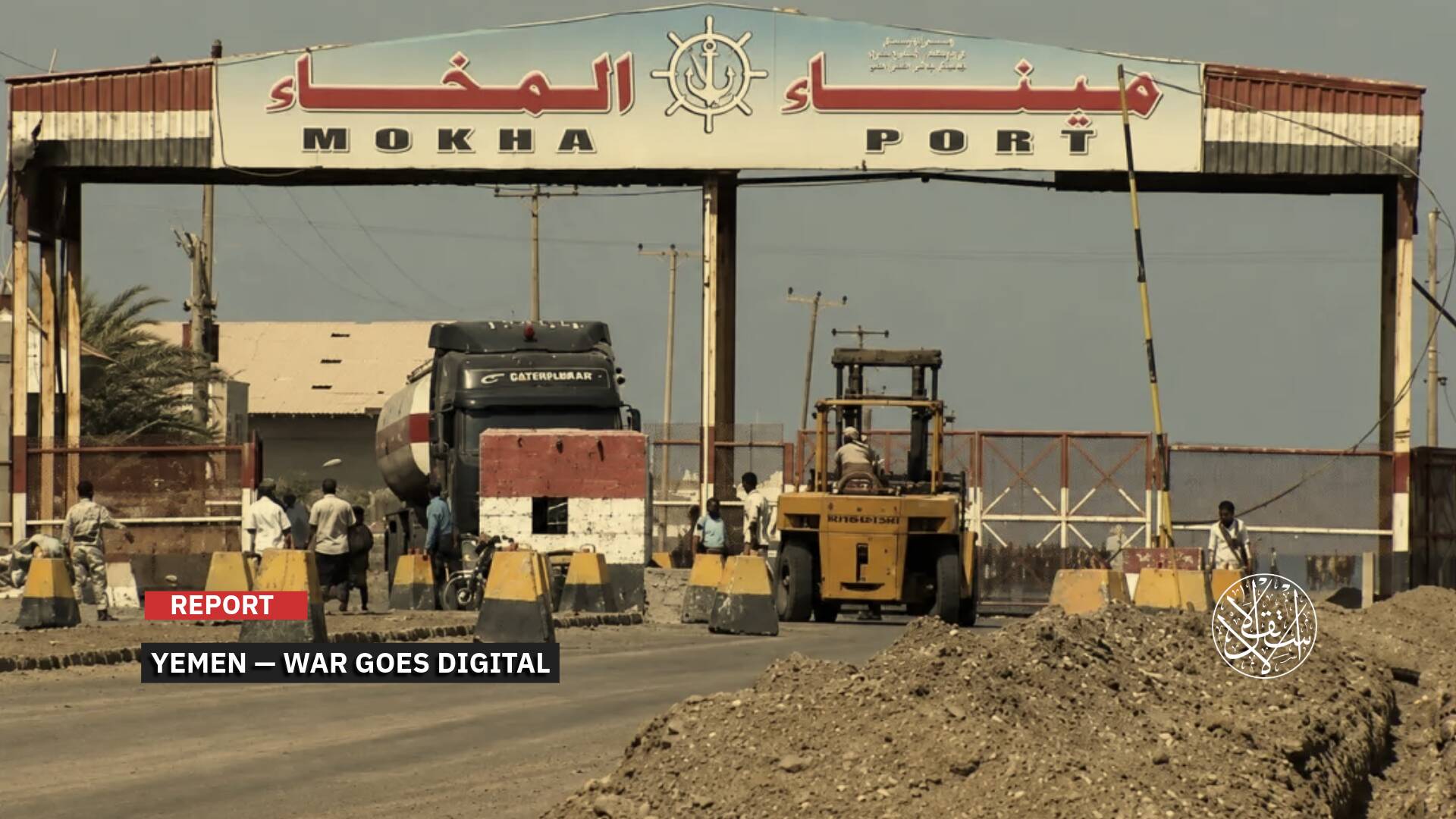
In an article published on September 11, 2026, Foreign Affairs described Bab al-Mandeb as Iran’s second front, arguing that Houthi control of Mokha and then Mayyun represents a profound shift in the balance of power and gives Iran and its allies an additional bargaining chip after Hormuz.
While the magazine rejected the idea that the Houthis are merely a simple Iranian tool and emphasized their considerable autonomy, it nevertheless stressed that they form part of Iran’s pressure network.
The Foreign Affairs analysis argues that the Houthi gains also represent a gain for Iran, effectively opening a second front in its confrontation with the United States and creating a dual chokepoint, with Iran controlling the Strait of Hormuz and the Houthis controlling Bab al-Mandeb.
This means that after seizing control of Bab al-Mandeb, the Houthis are no longer simply a party to Yemen’s war. They have turned Yemen itself into a direct part of the regional struggle over energy and trade routes.

Why Is ‘Israel’ Concerned?
Bab al-Mandeb is the southern gateway to the Red Sea. Under normal conditions, about 12% of global trade and roughly 7% of oil supplies pass through it. If the strait were closed, ships, particularly Israeli vessels, would have to sail around the Cape of Good Hope, adding weeks to their journeys and driving up shipping costs.
But that is not the most serious problem. More concerning is that the port of “Eilat” has no other direct maritime route to Asia besides the Red Sea. The experience of the Israeli war on Gaza has shown that disrupting shipping through Bab al-Mandeb can leave the Israeli port “isolated and crippled” without requiring a direct attack on the port itself.
“Eilat” was effectively shut down in 2024 after the Houthis declared their support for Gaza during the Israeli genocide and began targeting the port and preventing ships from sailing to and from it.
In July 2024, Israeli reports quoted the management of the Port of “Eilat” as saying that operations had come to a complete halt because ships could no longer reach the port due to Houthi attacks during the war on Gaza.
The Houthis do not need to completely close Bab al-Mandeb to achieve their objectives. Even the global fear that they could disrupt the flow of goods and oil can itself become a political and economic weapon.
Establishing a lasting sphere of influence around the strait would also shift the threat from maritime attacks to a strategic ability to exert control over one of the most important routes leading to the Israeli Occupation.
Bab al-Mandeb could thus be transformed from a global trade route into an Iranian bargaining chip and from a distant front for “Israel” into a central part of the struggle for control of the Red Sea.
When the Houthis threatened on August 26, 2026, to renew their maritime blockade of the Israeli Occupation and close Bab al-Mandeb to Israeli shipping, an analysis by Yedioth Ahronoth warned that the move could push the Port of “Eilat” to the brink of collapse.
The newspaper said the Port of “Eilat” would become the direct casualty of any escalation or Houthi control of Bab al-Mandeb, warning that this could mean the erasure and collapse of the Israeli port. One measure of the losses is its accumulated tax debt, which reached about 10 million shekels as of July 2025.
Israeli studies have also confirmed that Houthi attacks on shipping since 2023 have directly harmed the Port of “Eilat” and the maritime trade routes serving the Israeli Occupation.

The 1973 ‘Eilat’ Lesson Has Not Been Forgotten
What concerns Israelis most is that they have experienced this crisis before, during the October 1973 War, and suffered significant consequences. That experience prompted “Israel” to seek a foothold in the Red Sea, at times through alliances with the breakaway territory of “Somaliland,” and at other times with Eritrea and Ethiopia, while also expanding its intelligence and military presence or activities in the region.
During the 1973 war, Egypt and South Yemen closed Bab al-Mandeb to ships bound for “Eilat,” disrupting the flow of oil from Asia and the Gulf to the Israeli port.
Historical sources say the blockade lasted from October 6 to November 1, 1973, during which ships bound for “Eilat” stopped reaching the port.
Egypt did not need to attack “Eilat” itself. It simply took control of the chokepoint at the southern end of the Red Sea, Bab al-Mandeb, effectively shutting down the port.
The experience revealed why the Israeli Occupation remains so sensitive to the strait: whoever has the ability to disrupt shipping at the southern gateway to the Red Sea can put pressure on maritime traffic heading north toward “Eilat.”
During the October 1973 war, Egypt effectively blockaded the Israeli port of “Eilat” by cutting off access at the source, at Bab al-Mandeb, preventing ships from entering or leaving the Israeli Occupation through the Red Sea.
An Egyptian naval force had been deployed in the Bab al-Mandeb area in advance. Once the war began, it received orders to impose the blockade, with Egyptian naval destroyers and submarines intercepting ships bound for “Eilat,” while Egyptian submarines were deployed farther north in the Red Sea as a second line of defense against vessels that might manage to pass through the strait.
South Yemen also took part in closing the strait, with its government declaring Bab al-Mandeb a “war zone.” Egyptian and South Yemeni forces also participated in preventing ships from passing through.
A study published in the U.S. Naval Institute’s Proceedings magazine in March 1995 confirmed that the strategic objective was to cut off oil shipments to “Eilat.” Egypt achieved this by controlling the passage of ships through Bab al-Mandeb, while submarines positioned north of the strait served as a reserve force.
A document published by the U.S. Naval Institute described the operation as effectively closing the Port of “Eilat” to imports and exports, particularly oil shipments that at the time came from Iran under the Shah, even though “Israel” controlled Sharm el-Sheikh and the Straits of Tiran.
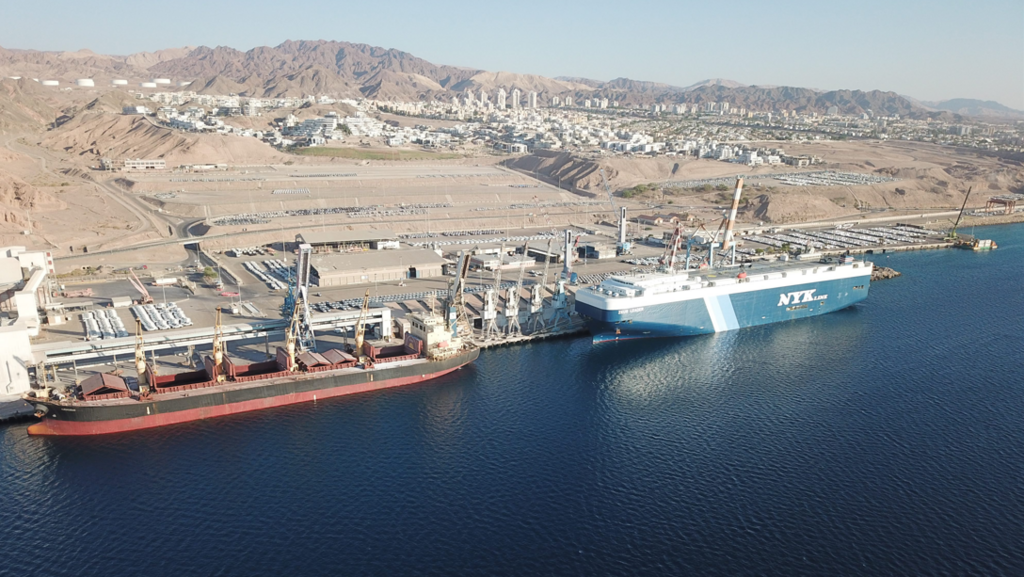
The Port of “Eilat” sits at the northern tip of the Gulf of Aqaba, and the maritime route to it runs south through the Gulf of Aqaba, then the Red Sea and Bab al-Mandeb, before reaching the Indian Ocean and the Gulf. This means that closing Bab al-Mandeb in the south can choke off the maritime route to “Eilat,” even if the Israeli Occupation controls the Straits of Tiran and Sharm el-Sheikh.