Heir to One of the Richest Families in the US: Who Is James Fergie Chambers, Accused of Financing Hamas?
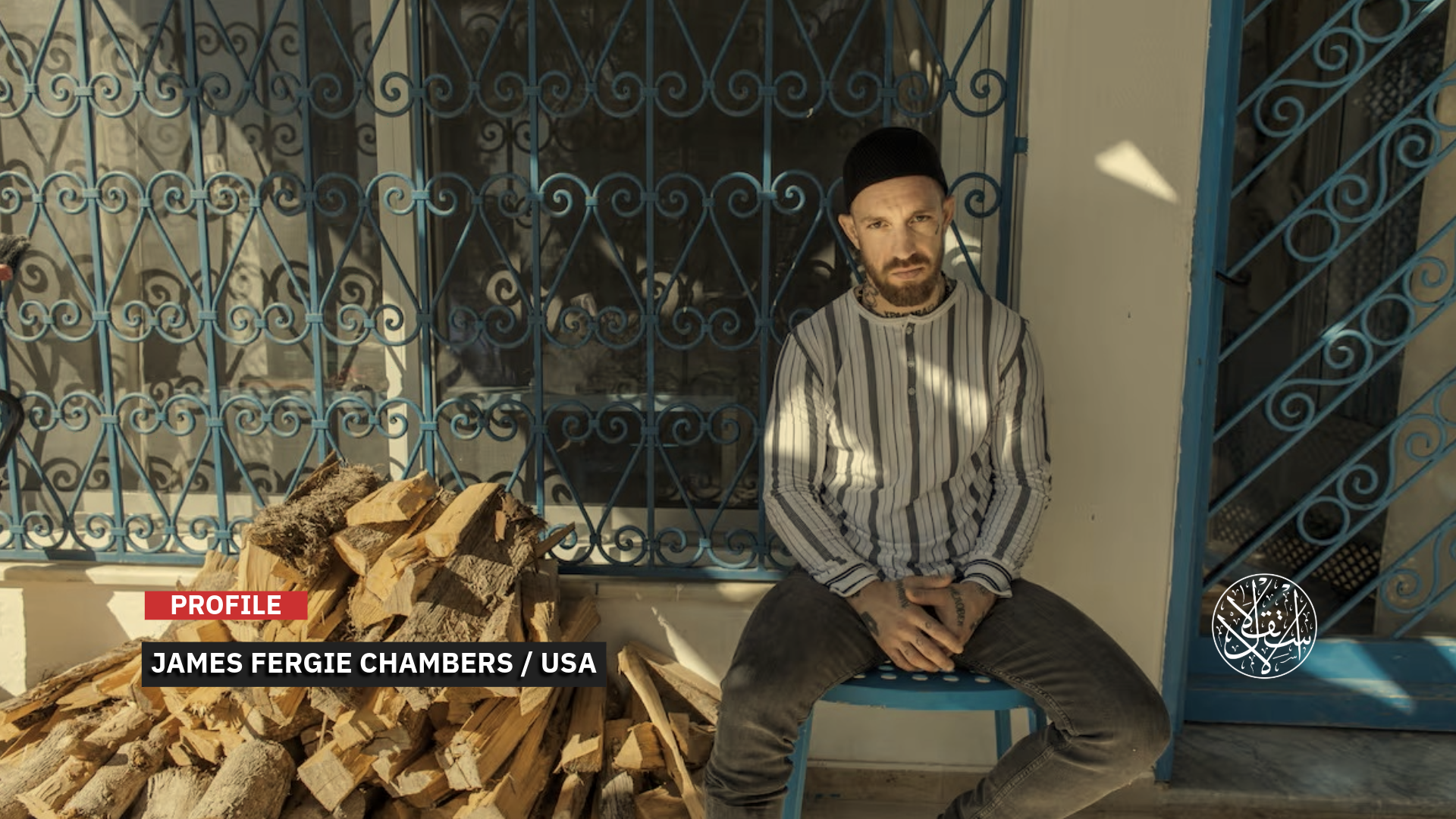
“Chambers belongs to the fourth generation of a family whose wealth traces back to James Middleton Cox.”
In a rare move for a member of one of America’s wealthiest families, James Fergie Cox Chambers Jr. severed his financial ties to the Cox empire and directed a portion of his wealth toward funding leftist movements and various political and social initiatives.
Following the October 7, 2023, operation by Hamas, the Palestinian cause became the central focus of his activism; he supported activists targeting Israeli arms companies and donated to health and relief projects aiding Palestinians in Gaza.
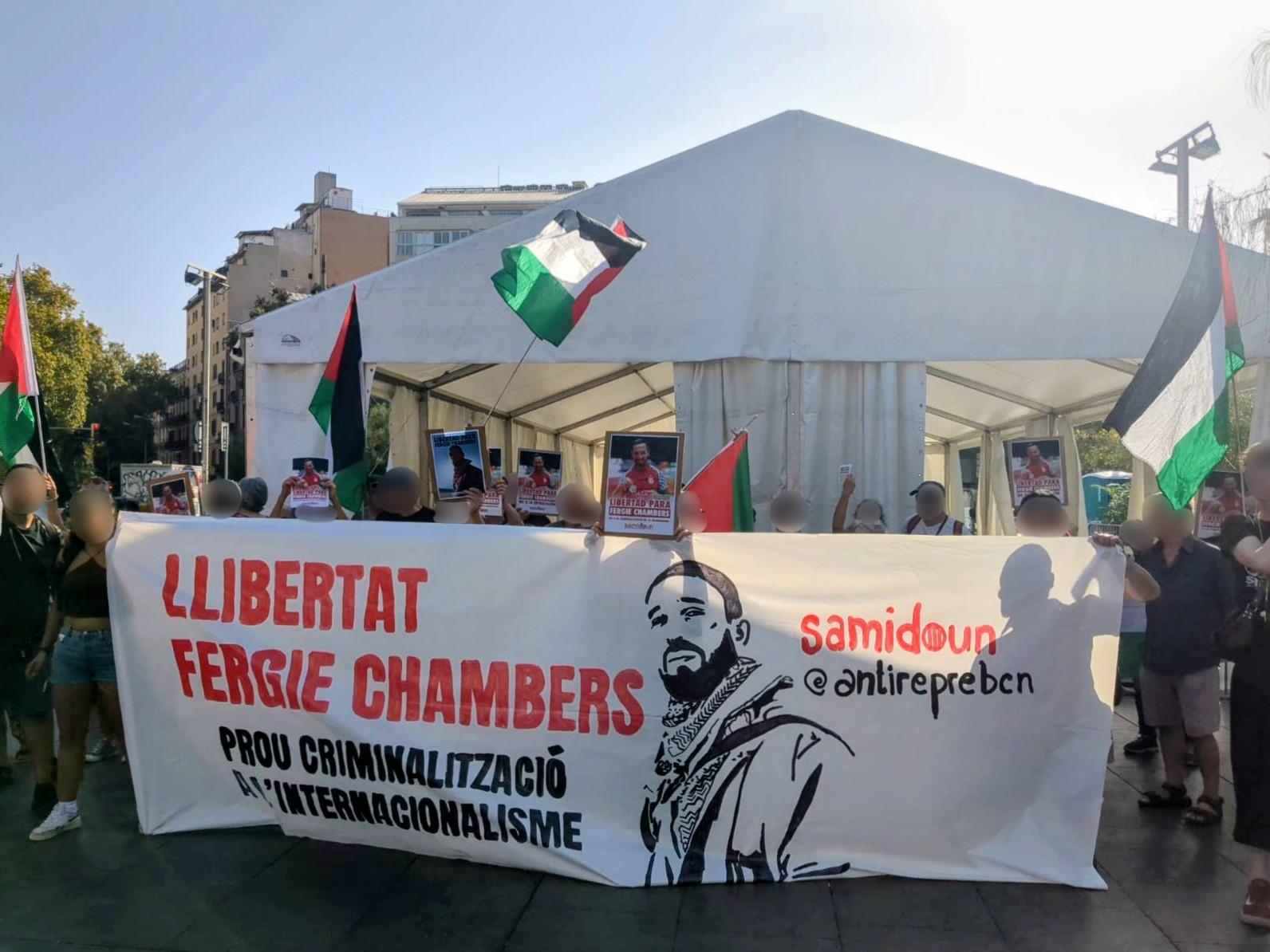
Chambers publicly expressed his support for the Palestinian resistance before his financial and political activities became the subject of a U.S. legal case—resulting in his arrest in Spain and sparking a legal battle to prevent his extradition to the United States.
Wealth and Funding
Chambers belongs to the fourth generation of a family whose wealth originated with James Middleton Cox, the founder of the company that would later become Cox Enterprises in 1898.
Today, the group ranks among the largest private family-owned companies in the United States, operating in the telecommunications, automotive, media, and investment sectors.
His grandmother, Anne Cox Chambers, was a major heir to the group, while Forbes magazine estimates that his father, James Chambers—alongside his two sisters, Katharine Rayner and Margherita Taylor—holds a stake of approximately 17 percent in the company.
However, the exact size of Fergie Chambers' personal stake, as well as the specific trusts and family interests from which he benefited, has never been publicly disclosed, making it impossible to determine the precise figures.
His parents separated when he was around two years old, and he grew up in New York, far from the Cox empire’s headquarters in Atlanta. He attended the private St. Ann’s School in Brooklyn and later enrolled at Bard College, though he did not follow a traditional academic path.
In a report published by the American magazine Vanity Fair in May 2024, Chambers spoke of a turbulent adolescence marked by struggles with addiction and repeated stints in treatment.
He also recounted that, as a child, he only gradually realized the true extent of his family's wealth after encountering their name on lists of the wealthy.
Regarding his intellectual evolution, he told the French newspaper Le Monde in May 2025 that, during his teenage years, a teacher encouraged him to read the works of Karl Marx—the German philosopher, economist, and key communist theorist—and Vladimir Lenin, the leader of the Bolshevik Revolution and founder of the Soviet state.
He subsequently went through various intellectual and religious phases before identifying as a Marxist-Leninist.
He later participated in the Standing Rock protests—led by Indigenous tribes and activists opposing the Dakota Access Pipeline due to concerns about its impact on their lands and water sources. Afterward, he purchased land in Georgia and attempted to establish a communal living settlement for activists.
He then moved to the New England region in the northeastern United States, where he founded the Berkshire Communists group and a rural project in the town of Alford, Massachusetts. This project included housing, a community center, a martial arts studio, and classes on communist thought.
Irish filmmaker Sinéad O’Shea chronicled this journey over nearly two years in her documentary 'All About the Money', which premiered at the Sundance Film Festival in 2026.
The intellectual break from his family’s world evolved into a financial separation in the summer of 2023, when Chambers threw his weight behind the campaign opposing the Atlanta Public Safety Training Center—known to its detractors as Cop City.
On July 19, 2023, the U.S. outlet Axios reported that Chambers had pledged approximately $600,000 to support a campaign seeking a referendum on the project; at the time, he stated that he possessed hundreds of millions of dollars he wished to use to build revolutionary organizations.
His stance took on added sensitivity due to the involvement of interests and figures linked to the Cox family in the project; Chambers later attributed his departure from the family’s business network to his opposition to the development.
This coincided with a financial settlement that ended his ties to Cox Enterprises' interests. According to Vanity Fair, the deal included an initial payment of $250 million, though Chambers later told Le Monde that the total sum was higher.
Following the split, the Babushki Collective emerged as the vehicle he used to channel funds into political and social movements—ranging from anti-police campaigns within the United States to initiatives linked to Palestine.

Palestine: The Focus of His Activism
After October 7, 2023, Chambers’ activism became increasingly focused on Palestine; he participated in protests targeting Elbit Systems, an Israeli military manufacturing company.
He also funded legal fees and bail for activists linked to the Palestine Action movement, which targets companies and facilities connected to the Israeli arms industry.
In November of the same year, an Elbit factory in Merrimack, New Hampshire, was the site of a protest that involved vandalism of the building and resulted in arrests.
Chambers’ defense team states that the charges of rioting and conspiracy to riot brought against him in the U.S. case stem from this incident; they maintain that while their client funded the bail and legal defense, he was not present at the protest itself.
This financial activity was accompanied by explicit political rhetoric; following the October 7 attack, Chambers published statements supporting Palestinian factions, described Hamas as a resistance movement, and referred to the Al-Aqsa Flood operation as a source of inspiration for those seeking justice for Palestine.
Chambers subsequently left the United States for Tunisia after converting to Islam. In an interview with Le Monde, he linked his relocation to his involvement with the Palestinian cause and a sense of mounting pressure due to his activism against U.S. policies supporting Israel.
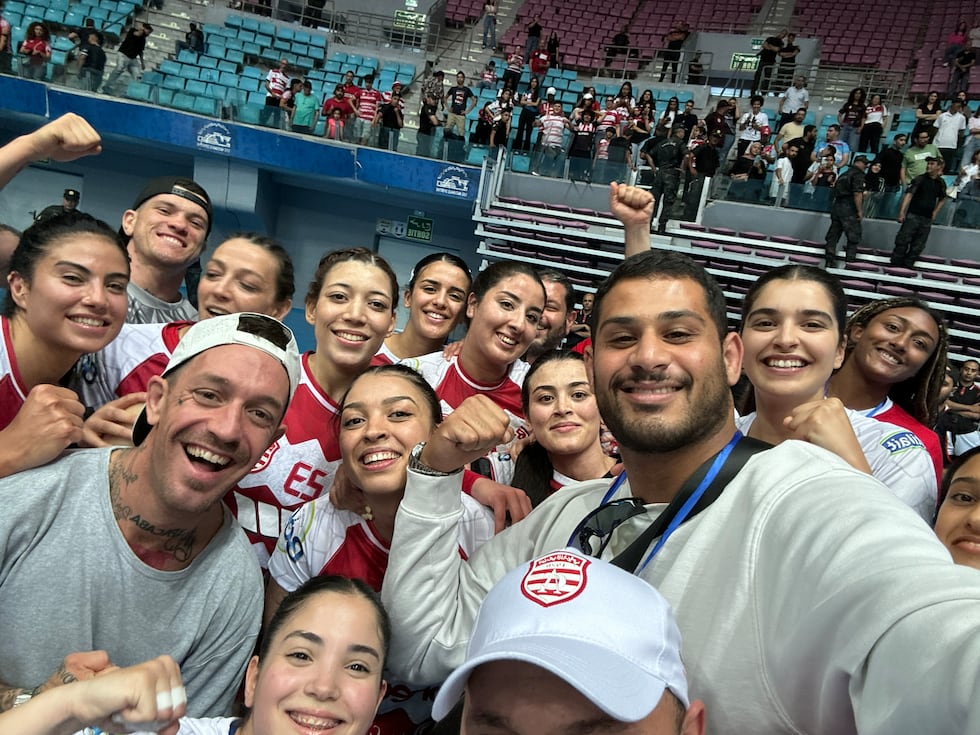
He settled in Sidi Bou Said, learned Arabic, and continued practicing and teaching martial arts. He later entered the field of sports sponsorship, becoming a major sponsor of the Tunisian club Club Africain on July 1, 2024, through his company, JII.
By May 2025, he had paid approximately 3.5 million euros of the pledged 4 million; these funds helped settle about 90 percent of the club's debts, which had been approaching 6 million euros.
These payments later became part of the defense’s narrative regarding his international transfers; Washington has placed a total transfer of approximately $7.5 million—sent from the United States to Tunisia—at the heart of the money-laundering case.
However, his lawyers maintain that Chambers was living in the Arab nation and transferring his personal funds there to manage his business ventures; they state that a portion of these funds went to Club Africain and other identifiable activities, as well as to the funding of Palestinian projects.
His funding for Palestinian causes expanded in subsequent years. In an investigation published by the Spanish newspaper El País on August 16, 2026, his lawyers presented a list of five entities he reportedly supported with a total of $1.52 million.
The list included $550,000 for the Middle East Children’s Alliance (MECA)—a US-based relief organization supporting food, medical, and water programs for Palestinians—and $370,000 for the Samir Project, which operates within Gaza.
It also included $300,000 for the international People’s Health Movement; $200,000 for the Ghassan Abu-Sittah Children’s Fund, which supports medical treatment for injured Palestinian children; and $100,000 for the Zainab Project, dedicated to providing psychosocial support to children affected by the war.
Chambers’s activities regarding Palestine also extended to political movements; he had previously spoken of funding the Samidoun network—which supports Palestinian prisoners—before the US Department of the Treasury designated the group on October 15, 2024, as a fundraising entity for the Popular Front for the Liberation of Palestine (PFLP).
An investigation published by The Free Press website reported that Chambers announced a six-figure donation to an international maritime initiative bound for Gaza.
This funding is significant given the US scrutiny of support networks for blockade-breaking flotillas; on January 21, 2026, the US Treasury Department stated that 'the Popular Conference for Palestinians Abroad' is covertly controlled by Hamas and was a key supporter of several flotillas heading to the Strip.
However, the published documents do not link the initiative funded by Chambers to these flotillas, nor do they indicate that his funds passed through the Popular Conference or any entity designated by Washington as having ties to Hamas.

From Investigation to Prison
The earliest public indication of US authorities' interest in Chambers' pro-Palestinian activities dates back to the autumn of 2023, when Los Angeles magazine cited a federal law enforcement source stating that officials were examining his financial and political activities linked to Palestine Action.
The most prominent financial aspect of the case involves the transfer of $7.5 million from a US bank account to Tunisia during the period Chambers was residing there.
US authorities allege that the transfer was intended to provide support to Hamas; however, the names of the US or Tunisian banks involved—or the beneficiary account holder—have not been disclosed.
Furthermore, no subsequent transfer from Tunisia to Gaza has been identified, nor has any financial intermediary or Hamas operative been named as the recipient of the funds.
As the investigation progressed, the case shifted from US-led scrutiny to a request for an international arrest warrant.
Documents reviewed by the Spanish newspaper El País revealed that an Interpol notice listed three primary charges against Chambers: international money laundering, rioting, and conspiracy to riot.
Acting on this request, Spanish police arrested Chambers on the morning of July 10, 2026, in the countryside of northern Ibiza.
He was driving with his wife, actress Stella Schnabel, and the couple was scouting schools for their son in preparation for settling on the island.
The following day, he appeared via video link before the judge of Central Court of Instruction No. 6 at Spain’s National Court.
Judge Antonio Peña ordered him held in pre-trial detention without bail pending Spain's consideration of the extradition request.
His defense was undertaken by the ILOCAD firm, led by former Spanish judge Baltasar Garzon—a figure renowned for his work on human rights cases and universal jurisdiction.
After visiting his client, Garzon stated that the case was politically motivated, linked to Chambers' stances regarding the United States and Palestine.
Days after the arrest, agents from the US Federal Bureau of Investigation (FBI) searched the home Chambers had been renting in Ibiza.
On August 25, The Guardian quoted Garzon as saying that the search yielded no evidence, while US authorities did not release an inventory of any seized items.
The defense attorney maintains that the funds were personal and legitimate, with declared destinations in Tunisia and for Palestinian projects; he also believes that Chambers' positions on Palestine and US policy lie behind the prosecution.
Spanish extradition law excludes terrorism from the category of political offenses that bar extradition; however, it permits the rejection of a request concerning an ordinary crime if there are serious grounds to believe the true purpose is to prosecute the individual for their views. Additionally, the law requires that the acts underlying the request also be punishable under Spanish law.
The Spanish judiciary is responsible for initially reviewing the legality of the extradition, though the government retains final authority should the court approve it; consequently, the campaign supporting Chambers is pursuing both legal and political avenues simultaneously.
On September 5, Ione Belarra, Secretary-General of the left-wing Podemos party, called on the Spanish government to reject the extradition request, while the case remained before the National Court without a final ruling at the time of writing.
A significant procedural development occurred on September 2, when reports indicated that Washington had submitted the extradition documents to Spain prior to the expiration of the statutory 45-day deadline, and that Spanish authorities had begun reviewing the request.
The case has thus moved to a stage where the Spanish judiciary will assess the weight of the evidence presented by the United States and determine the extent to which the conditions for extradition apply to the alleged offenses.
Sources
- Fergie Chambers, the US millionaire activist detained in Ibiza: ‘I am a human rights defender’
- FBI raided Spanish vacation rental of wealthy leftwing funder James ‘Fergie’ Chambers after his arrest
- As US seeks Gaza donor’s extradition, wife warns of ‘terrifying precedent’
- The Life and Times of Fergie Chambers
- "Stop Cop City" petition drive backed by big bucks
- Fergie Chambers: The Dublin-based communist millionaire in the Trump administration’s crosshairs
- Fergie Chambers, an American unlike any other in Tunisia [French]