Houthis Advance Along Yemen’s Western Coast: Betrayal or a Saudi Emirati Power Struggle?
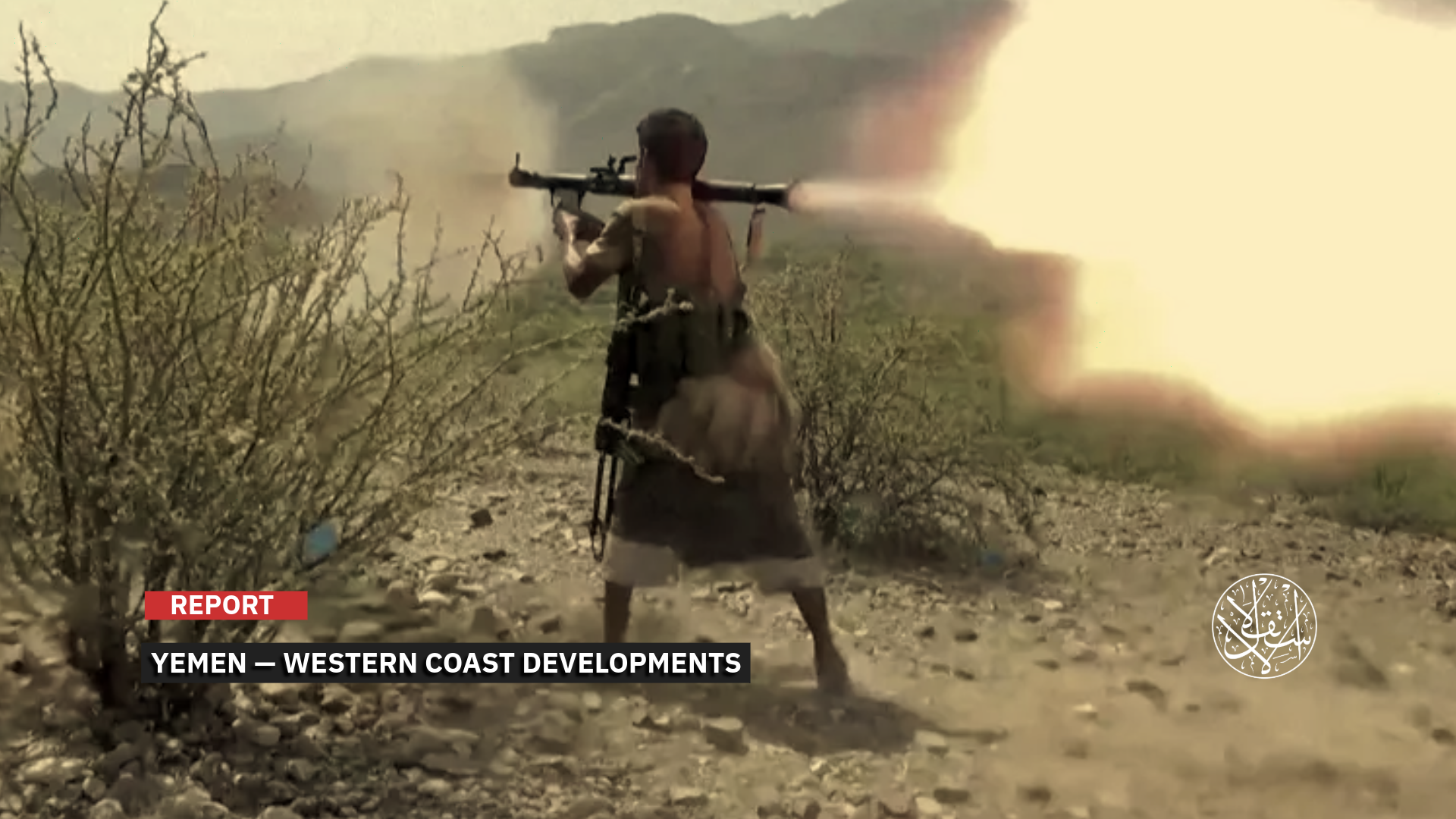
Government forces suffered a major collapse along the western coast front.
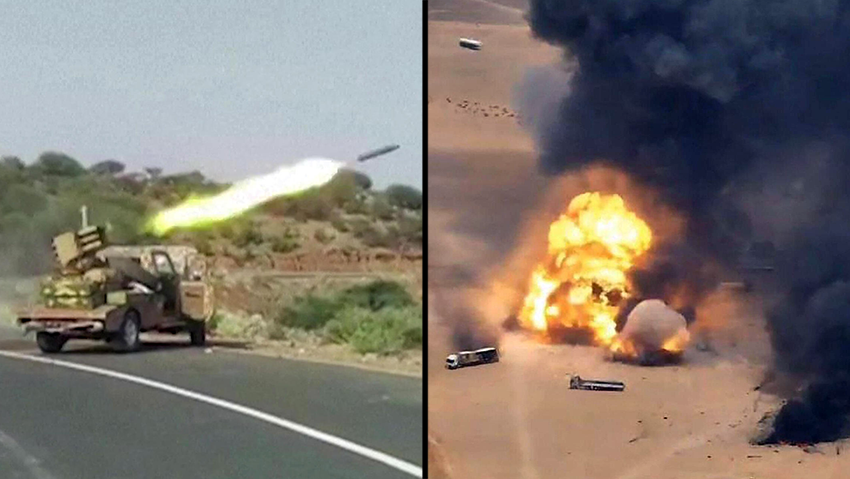
After government forces made some gains against the Houthis, backed by heavy Saudi airstrikes and support, their positions unexpectedly collapsed on September 9, 2026. The troops withdrew, leaving heavy weapons behind, following a Houthi counteroffensive backed by missiles and drones.
Just 24 hours after the attack began, the Iran-aligned Yemeni Houthi group seized the Red Sea port city of Mokha on September 10, 2026, near the strategic Bab al-Mandeb Strait, in a move that could strengthen its grip on the vital waterway.
The Houthi gains extended across roughly 100 kilometers of Yemen’s western Red Sea coast, according to Yemeni sources. Along with Mokha, the group took control of coastal areas along the strait, including Dhubab and Perim Island, also known as Mayyun, giving it control over the entire Yemeni side of the Bab al-Mandeb Strait.
The western coast front saw a broad collapse among government forces, while the Houthis seized an estimated 2,600 square kilometers of territory following chaotic withdrawals by the Giants Brigades, as the UAE-backed force is known.
The Giants Brigades are an armed group backed and supplied by the UAE that has been a source of major tensions and divisions within government forces since 2018, amid Abu Dhabi’s efforts to use the group as a tool for extending its influence over Yemen’s ports.
Yemeni and Western analyses point to a deeper problem within the anti-Houthi camp: it is made up of factions with competing interests, some aligned with the UAE and others with Saudi Arabia, making it difficult to forge a unified front against the Houthis.
According to these analyses, the UAE-backed Giants Brigades and forces led by Tariq Saleh bear much of the responsibility for the latest defeat.
The latest developments suggest that the collapse of government defenses along the western coast, particularly among the Giants Brigades, was not caused by fighting alone. Internal fragmentation, withdrawals, and mass desertions, especially among UAE-backed forces, appear to have played a major role, fueling talk of possible “betrayal” and leaving the road to Bab al-Mandeb largely open to the Houthis.
What Happened?
On September 9, 2026, Yemeni government forces launched a long-planned attack against the Houthis, involving several separate military formations, including the UAE-backed Giants Brigades and Presidential Guard, as well as the Saudi-backed National Shield Forces and Hadramout Protection Forces.
The attack targeted the Houthis, who have controlled the capital, Sanaa, since their 2014 military takeover.
The operation, which left more than 500 soldiers dead, aimed to liberate four Yemeni provinces, Taiz, al-Hudaydah, al-Bayda, and al-Jawf, and retake Sanaa. It was launched from four directions in an effort to stretch and overwhelm Houthi forces.
But by the evening of the same day and into the early hours of September 10, the battlefield had turned on its head. The Iran-backed Houthis seized a number of strategic positions and areas as government forces and Saudi and UAE-backed formations withdrew.
The Houthis, meanwhile, held their ground and expanded into new areas in the north before pushing the front south toward Yemen’s western Red Sea coast near the Bab al-Mandeb Strait.
Until then, Houthi influence had been concentrated largely in northern and western Yemen. By September 10, however, the group had moved much closer to Bab al-Mandeb after capturing the coastal city of Mokha and the Hanish Islands, tightening its grip over large stretches of Yemen’s Red Sea coast, according to Reuters on September 10, 2026.
Analysts had said the Houthis needed to capture only the areas of Dhubab and Mayyun to reach Bab al-Mandeb directly and secure control of the strait.
Hours later, however, the Houthis announced that they had captured both areas and ended military operations along the western coast after taking control of the areas overlooking the Red Sea all the way to Bab al-Mandeb.
According to this account, the Houthis expanded their control over roughly 100 kilometers of coastline in a single day, including strategic islands in the Red Sea. This could reduce their reliance on long-range missiles to threaten maritime traffic while raising the possibility of other tactics, including laying mines in the strait, similar to Iran’s use of mines in the Strait of Hormuz.
Before September 10, 2026, the Houthis already controlled most of northern and western Yemen, including Sanaa and its surrounding areas, as well as Saada, their main stronghold in the far north.
They also controlled most of the cities in Amran, Hajjah, and al-Hudaydah provinces and their ports, along with large parts of al-Jawf, al-Bayda, Dhamar, Ibb, and Taiz. Government and resistance forces remained in Taiz city and other parts of the province, as well as in parts of Marib, although the Houthis did not control the entire province.
After September 10, however, Houthi forces also seized Mokha and its port on the western coast after advancing south through Taiz province, marking a strategic expansion toward the Bab al-Mandeb Strait, according to the Associated Press on September 10, 2026.
Houthi forces also captured the strategic islands of Zuqar and Greater and Lesser Hanish off al-Khokha on the Red Sea, bringing their maritime reach even closer to Bab al-Mandeb.

Where Did the Crisis Begin?
After the Arab Spring protests erupted in Yemen in 2011, President Ali Abdullah Saleh stepped down in 2012 and was succeeded by his vice president, former Yemeni President Abdrabbuh Mansur Hadi.
In 2014, Saleh allied with the Houthis despite their longstanding hostility toward each other, providing them with support from the former North Yemeni army. This helped the Houthis carry out their takeover and seize the capital, Sanaa.
On September 21, 2014, the Houthis captured Sanaa after storming state institutions, military bases, and other military positions. They then surrounded the presidential palace on January 19, 2015, and seized large parts of the country before announcing a “constitutional declaration” and dissolving parliament.
Since then, the Houthis have consolidated their control over large parts of Yemen and administered the areas under their influence.
Following the Houthi takeover and their seizure of the capital, Saudi Arabia and other Gulf states came to view the group as a threat to their national security. On March 26, 2015, the Coalition to Support Legitimacy was formed and began direct military intervention against the Houthis in Yemen.
Ali Abdullah Saleh was later killed by the Houthis in December 2027 after his alliance with them collapsed and fighting broke out between the two sides in Sanaa.
The current battle, which began on September 9, 2026, is therefore not simply another round of Yemen’s civil war. It is part of the internal conflict that began in 2014 with the Houthi takeover and seizure of the capital, while also forming part of the broader regional struggle.
Despite the defeat, Saudi voices and media outlets continue to argue that what happened along the western coast was not a withdrawal, defeat, or betrayal, but a calculated political and military tactic. They claim the Houthis “took the bait” and that the forces that advanced and captured the coastal cities will eventually be wiped out, without offering evidence or a clear explanation of how such a scenario would unfold.

What Does Houthi Control Mean?
The Houthis’ capture of Mokha on the Red Sea coast, Jabal Zuqar Island in the southern Red Sea, and the city of Dhubab gives them control over areas of major strategic importance, particularly Dhubab, which sits directly on the Bab al-Mandeb Strait opposite Perim Island at the heart of the Red Sea’s southern entrance.
Strategic experts and analysts expect the development to significantly shift the balance of power in the Red Sea and pose a challenge to Saudi Arabia, the Israeli Occupation, and the United States.
Western experts and research centers say Houthi control of Mokha and Yemen’s western coast, along with the inclusion of the Greater and Lesser Hanish Islands within their sphere of influence, could have far-reaching regional and international consequences.
As an Iran-aligned group, the Houthis could monitor ships passing through the strait and establish checkpoints, much as Iran does around the Strait of Hormuz.
According to these assessments, they could also deploy radar networks and missile platforms on the islands, giving them the ability to influence maritime traffic in the Red Sea through military means, prevent ships from countries they oppose from passing through, or threaten them with attacks, similar to Iran’s leverage over the Strait of Hormuz.
That could allow the group to threaten countries hostile to the Houthi government with disruptions to their trade and oil shipments through the strait, giving the Houthis a more direct hand in maritime traffic after relying largely on the threat of launching missiles from distant cities.
The development could pose a direct threat to Israeli interests. On September 19, 2026, Israeli newspapers and Israel’s Army Radio said that “the Houthis can blockade the port of Eilat after taking control of Yemen’s western coast up to Bab al-Mandab.”
The Houthis could also, under this assessment, disrupt Israeli efforts to expand its presence in the Horn of Africa, particularly in the breakaway region of Somaliland, which is aligned with the Israeli Occupation, and target Israeli interests in the region.
That prompted Somaliland President Abdirahman Mohamed Abdullahi to issue an appeal for help on September 10, 2026, during a visit to Washington. He said he wants an Israeli military presence in the region because of growing regional threats, according to Yedioth Ahronoth.
He said his country welcomes a future Israeli military presence, arguing that close security cooperation could strengthen deterrence as threats around the Horn of Africa and the Red Sea increase.
Houthi control of the Red Sea coast and Bab al-Mandeb, along with their grip on Perim Island and Dhubab, could also give the group greater capacity to threaten or disrupt Gulf oil shipments and global trade, while providing Iran with an additional source of leverage if it seeks to confront the United States simultaneously at the Strait of Hormuz and Bab al-Mandeb.
Bab al-Mandeb lies on the opposite side of the Arabian Peninsula from the Strait of Hormuz, one of the main theaters of the U.S.-Israeli War on Iran. At its narrowest point, the strait is about 29 kilometers (18 miles) wide, restricting ship traffic to two navigation channels, one for inbound vessels and one for outbound traffic, separated by the Yemeni island of Perim.
A closure of the waterway could isolate Gulf oil producers, particularly Saudi Arabia, from major energy shipping routes, especially after Iran effectively closed the Strait of Hormuz, a critical maritime artery for energy supplies between Asia and Europe.
Bab al-Mandeb is also the southern gateway to the Suez Canal, meaning ships must pass through it to reach the canal from the south. Any disruption to shipping could force vessels to reroute around the Cape of Good Hope in southern Africa, dealing another blow to Egypt’s Suez Canal.
The Houthis previously launched a sustained campaign of attacks on ships in the southern Red Sea and Bab al-Mandeb in late 2023, citing solidarity with Palestine during the Israeli Occupation’s war on Gaza. The attacks disrupted traffic through the canal and hurt Egypt’s Suez Canal revenues.
Major shipping and oil companies, including Hapag-Lloyd, MSC, Maersk, and oil giant BP, as well as tanker operator Frontline, responded by rerouting vessels away from the Suez Canal and sending them around Africa instead.
A tighter Houthi grip on Bab al-Mandeb could also give Iran a major advantage in the war launched by the United States and “Israel,” which has already seen a sharp decline in energy shipments through the Strait of Hormuz, driving oil prices sharply higher.
According to data from Kpler, the total volume of oil products passing through Bab al-Mandeb accounted for about 7% of global oil production in June 2026.
By expanding their control along the Red Sea coast, the Houthis are seeking a new bargaining chip against Saudi Arabia and the United States to reach an agreement that would lift the U.S. blockade on Iranian oil tankers in the Gulf, The Guardian reported on September 10, 2026.
The Houthis also stepped up pressure on Riyadh by targeting Saudi Arabia’s East-West crude oil pipeline, which was built to reduce the kingdom’s dependence on the Strait of Hormuz. Sentinel-3 satellite images showed a huge black plume of smoke stretching roughly 100 kilometers along the pipeline’s route.
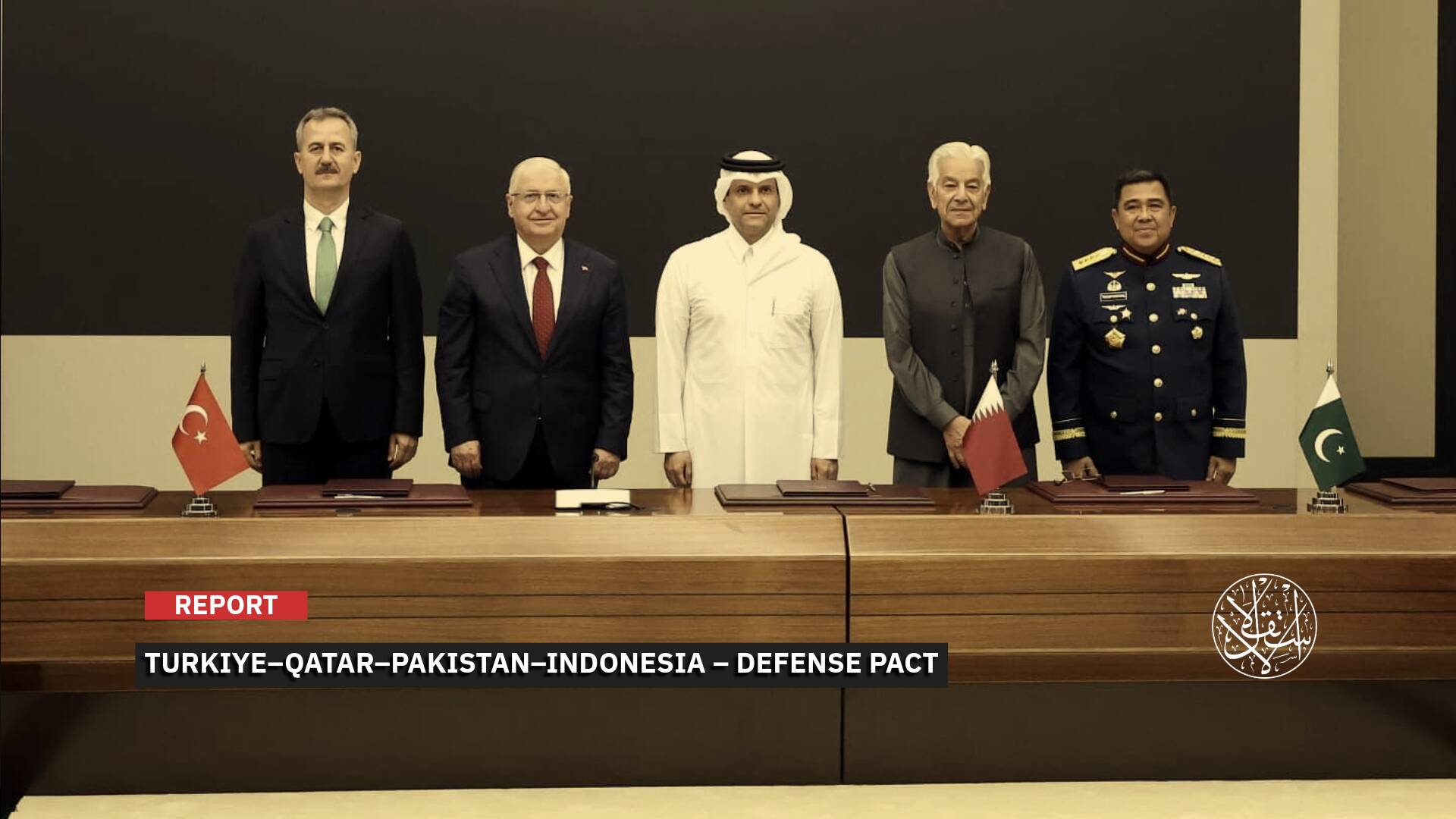
This raises the question of whether Riyadh will turn to its allies under the “Mecca Joint Defense Agreement (MJDA),” signed with Turkiye and Pakistan in early September 2026. The pact commits the three countries to mutual defense if any of them comes under attack, although Western analysts expect Ankara and Islamabad to be reluctant to become directly involved in the war.
Western assessments and U.S. media reports suggest that the only way to shift the balance of power against the Houthis at this stage may be for Saudi Arabia to become more deeply involved and activate the MJDA. Yet there are serious doubts that Turkiye and Pakistan would agree to enter the conflict, despite reports that Pakistan warned Iran against allowing the Houthis to expand attacks on Saudi Arabia.
Axios reported on September 11, 2026, that Saudi Crown Prince Mohammed bin Salman spoke twice with U.S. President Donald Trump and urged him to launch strikes against the Houthis over their advance toward Bab al-Mandeb. Trump reportedly rejected the request.
That leaves Riyadh facing two choices: plunge into a broader and potentially prolonged war in Yemen, or limit its response while continuing to support its Yemeni allies as proxies. The latter option is considered more likely by Anna Jacobs of the Arab Gulf States Institute in Washington and a memo by the International Crisis Group, according to Agence France-Presse (AFP) on September 10, 2026.
What Caused the Collapse, and Was There a Betrayal?
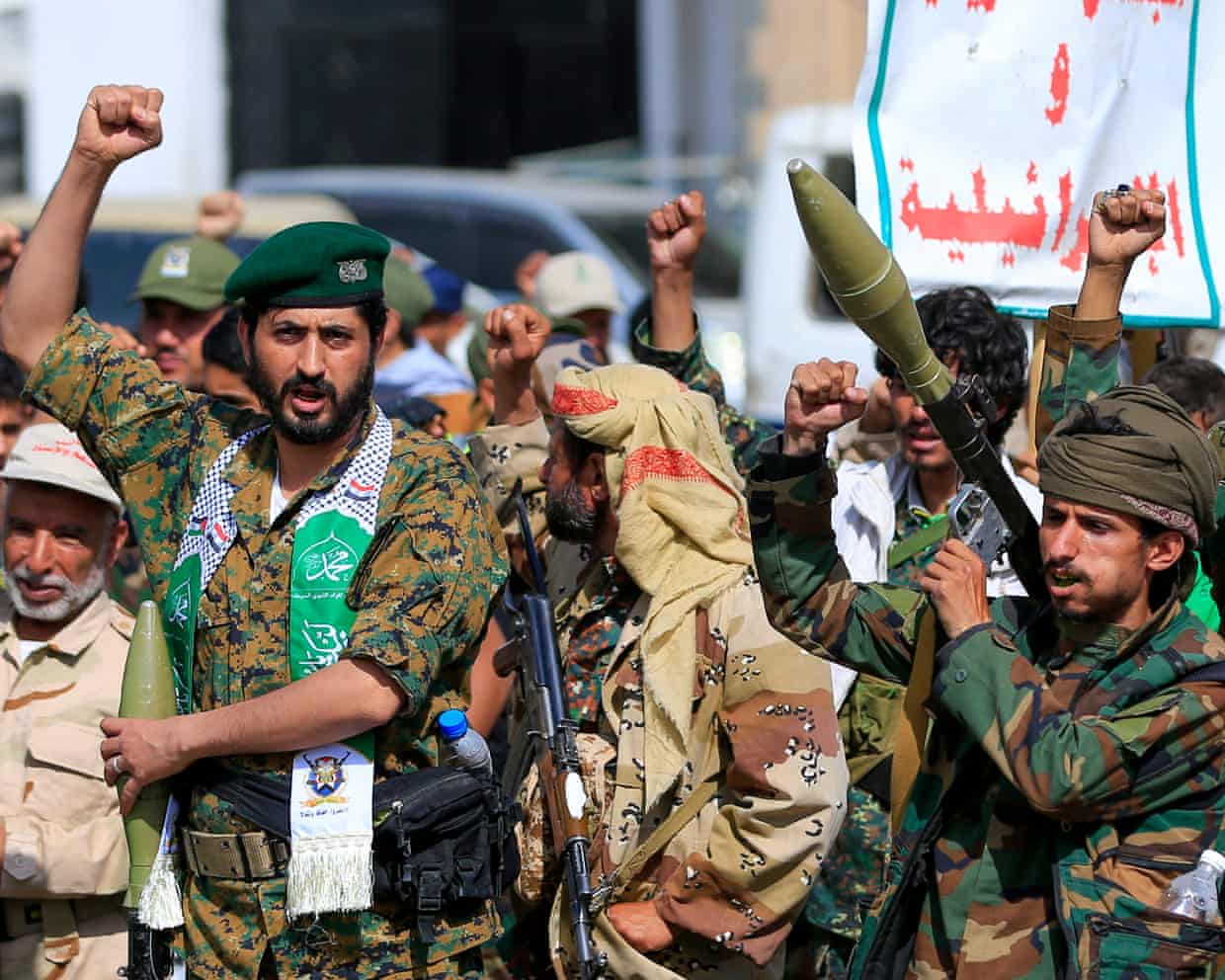
As the confrontation intensified between Iran-backed Houthi forces in Yemen and government troops, the UAE moved to build local military formations loyal to Abu Dhabi as part of its competition for influence and control over parts of Yemen, its ports, and its maritime routes. Among the most prominent were the Giants Brigades, alongside other forces, including those led by Tariq Saleh.
The Giants Brigades were formed by Abu Dhabi along Yemen’s western coast and consist of around 15 brigades, each with roughly 1,000 fighters recruited from Yemenis loyal to the UAE, according to Anadolu Agency. The forces were deployed along the western coast and supplied with modern weapons.
The formations were built between 2016 and 2018, before the UAE ended its direct military presence in Yemen in 2019 following differences with Saudi Arabia. Abu Dhabi left behind local Yemeni forces that served as an extension of its influence and helped strengthen its political, military, and economic presence in the country.
These forces fought the Houthis as part of the military camp supporting Yemen’s internationally recognized government after the Houthis seized Sanaa in 2014. But their role gradually shifted from fighting the Houthis toward protecting UAE interests and influence, particularly in coastal areas and around ports.
After entering Yemen under the banner of fighting the Houthis, the UAE expanded its influence through allied local forces, eventually reaching Socotra Island, where UAE-backed forces seized control and expelled forces loyal to then-President Abdrabbuh Mansur Hadi on June 21, 2020.
Control of Yemen’s ports became a central pillar of the UAE strategy. Abu Dhabi established influence over a number of ports and coastal facilities, including Aden, Mokha, al-Mukalla, al-Dhaba, Bir Ali, Balhaf, ar-Radum, Dhubab, al-Khokha, al-Khawkhah, Qena, and al-Nashima.
It also worked to establish a new port in al-Mahrah at an estimated cost of $100 million, according to The Cradle on March 24, 2023.
By controlling these ports and areas surrounding the Bab al-Mandeb Strait, Abu Dhabi sought to strengthen its position along one of the world’s most important shipping routes and elevate its standing as a strategic player in regional and international maritime trade.
The UAE’s influence also extended to Abd al-Kuri, the second-largest island in the Socotra archipelago. Located between the Gulf of Aden and the Horn of Africa, the island has strategic importance because of its proximity to a major shipping route between Europe and Asia and to Bab al-Mandeb.
In cooperation with the Israeli Occupation, Abu Dhabi established a military base on the island in December 2021 and accelerated work on the military and intelligence facility from July 2024, according to Maariv.
But this military and security network came under a major test when fighting erupted and the Houthis seized several areas along the western coast on September 10, 2026.
Although the Giants Brigades and other UAE-built forces had previously made battlefield gains against the Houthis, they gradually evolved into a parallel force to the government army. This contributed to the proliferation of command centers, deepened divisions among local factions in the anti-Houthi camp, and redirected part of their military capabilities away from fighting the Houthis toward southern and internal conflicts.
The proliferation of formations backed by different regional powers ultimately weakened the structure of Yemen’s military and the broader anti-Houthi camp, creating a fragmented chain of command whose consequences became starkly visible during the latest Houthi offensive.
Following the Houthi counteroffensive and their breakthrough at Khalid ibn al-Walid Camp near the Red Sea port city of Mokha, the Giants Brigades, along with government forces, withdrew from the areas of Hays and al-Khokha, while government defensive lines rapidly collapsed under the Houthi advance.

Tariq Saleh’s Forces: A Blow to Mokha and Yemen’s Western Coast
The collapse was not limited to the Giants Brigades. It also affected the UAE-backed forces of Tariq Saleh, a separate military formation from the Giants Brigades but part of the wider network of UAE-backed Yemeni forces opposing the Houthis.
Tariq Saleh, the nephew of late Yemeni President Ali Abdullah Saleh, previously commanded the Special Guard before building his own military force after the Houthis killed his uncle in December 2017.
Known as the National Resistance or Guards of the Republic, the force was formed largely from former Republican Guard and Central Security officers and soldiers loyal to the Saleh family.
Tariq Saleh’s forces, who is a member and deputy chairman of Yemen’s Presidential Leadership Council, were primarily based along the western coast, particularly around Mokha, where they fought numerous battles against the Houthis. Yet they withdrew during the latest fighting despite being one of the main anti-Houthi military forces on the western coast.
Since its formation in 2018, the UAE has played a central role in establishing, arming, financing, and training Tariq Saleh’s forces, making them one of Abu Dhabi’s key local formations along the western coast.
A specialized study published by the U.S.-based Jamestown Foundation on February 6, 2020, described Tariq Saleh’s forces as heavily dependent on the UAE for funding and supplies and noted direct Emirati military support for operations he led against the Houthis in 2018.
The Houthi capture of Mokha on September 10, 2026, therefore dealt a major blow to Tariq Saleh’s forces as well as the Giants Brigades, with both formations representing key parts of the UAE-backed military network along Yemen’s western coast.
Reuters reported that Tariq Saleh ordered his forces deployed along the western coast to withdraw and regroup while establishing an alternative command center in a secure location. The move pointed to his forces’ retreat under the Houthi assault and the heavy losses they had suffered.
The sudden withdrawals raised broader questions about what caused them. Were they simply a military redeployment in response to a surprise offensive, or did undisclosed understandings or internal arrangements lie behind the move?
Some Saudi writers and analysts openly raised the possibility of betrayal. Among them was Suleiman al-Aqili, former editor-in-chief of Saudi newspaper al-Watan, who wrote without naming the UAE, “Mokha was handed to the Houthis in the dead of night as a gift from one state to another, without a fight, exactly as happened in Sanaa in September 2014.” He argued that the goal was to “encircle and threaten Saudi Arabia and Egypt from the east.”
Several other Saudi writers and analysts raised similar questions, including Dr. Awwad al-Qarni, a researcher in national strategy, who commented on the developments along the western coast by asking, “Who betrayed whom? Was this betrayal or deception?” He also expressed surprise at how quickly the cities and military positions fell.
By contrast, voices aligned with the UAE attributed the developments to the “failure of non-Emirati forces” to hold the territory that Abu Dhabi-backed forces had recaptured from the Houthis in 2018.
A video of Tariq Saleh ordering his forces to withdraw also circulated on social media. Some interpreted it as a sign of “betrayal” by his UAE-aligned forces, while others attributed the move to divisions within the anti-Houthi camp. Some went further, viewing the withdrawal as a result of Saudi Arabia abandoning the government forces.
The movements of UAE-aligned forces added to the questions surrounding the reasons for the defeat. The Saudi-backed National Shield Forces, along with other units, began withdrawing south toward al-Anad Air Base and the outskirts of Aden after government forces suffered a series of defeats and retreated under the Houthi assault.
Reports also emerged that UAE-backed forces and formations had “blocked or obstructed” the entry of troops withdrawing from the coast into Aden. Among those affected were the Giants Brigades and commanders linked to Abu Dhabi, including Brig. Gen. Hamdi Shukri, who commands large formations in the Fourth Military Region, along the coast and around Bab al-Mandeb.
The reports linked these developments to tensions between Mohammed bin Zayed and Mohammed bin Salman, suggesting that what happened could reflect the broader struggle for influence between Abu Dhabi and Riyadh at an especially sensitive moment. If confirmed, preventing the defeated forces from redeploying south could amount to a “stab in the back” within the anti-Houthi camp.
Fragmented Command: The Key Factor Behind the Collapse
Military sources, meanwhile, believe that divisions among the pro-government factions and the absence of a unified military command were major factors behind the rapid collapse of their ranks under the intense assault by Houthi forces.
Under this interpretation, the collapse was not necessarily the result of an organized betrayal but rather the product of years of accumulated military and political divisions. These included multiple centers of decision-making, conflicting agendas among local forces, each formation relying on a different regional backer, and the absence of a unified operations room capable of managing a large and sudden offensive.
As the Houthis tightened the noose around some units and severed supply and communication routes between them, the forces resorted to a rapid withdrawal, with no clear contingency plan for dealing with the collapse of their first defensive lines.
The question of “betrayal” therefore remains open amid the sudden withdrawals and the speed with which some positions fell. But it cannot be settled based solely on circulating recordings or statements. What is clear is that the fragmentation of the anti-Houthi camp, along with its competing loyalties and multiple command centers, created an extremely fragile military structure that allowed the front lines to collapse far faster than expected.
Sources
- Houthi advance along Yemeni coast threatens Saudi oil exports
- Iran-backed Houthi rebels take strategic port city in Yemen, raising threat to Red Sea shipping
- Somaliland leader says he wants Israeli military presence amid growing regional threats
- Houthis seize key Yemeni port of Mocha in drive to take control of Red Sea coast
- Yemen’s Wildcard General—An Updated Profile of Brigadier Tariq Saleh
- Between Order and Chaos