How Scotland, Wales, and Northern Ireland Are Pushing to Dismantle the UK
"Scottish, Welsh, Northern Irish leaders say that Westminster is not working and are back self-determination."
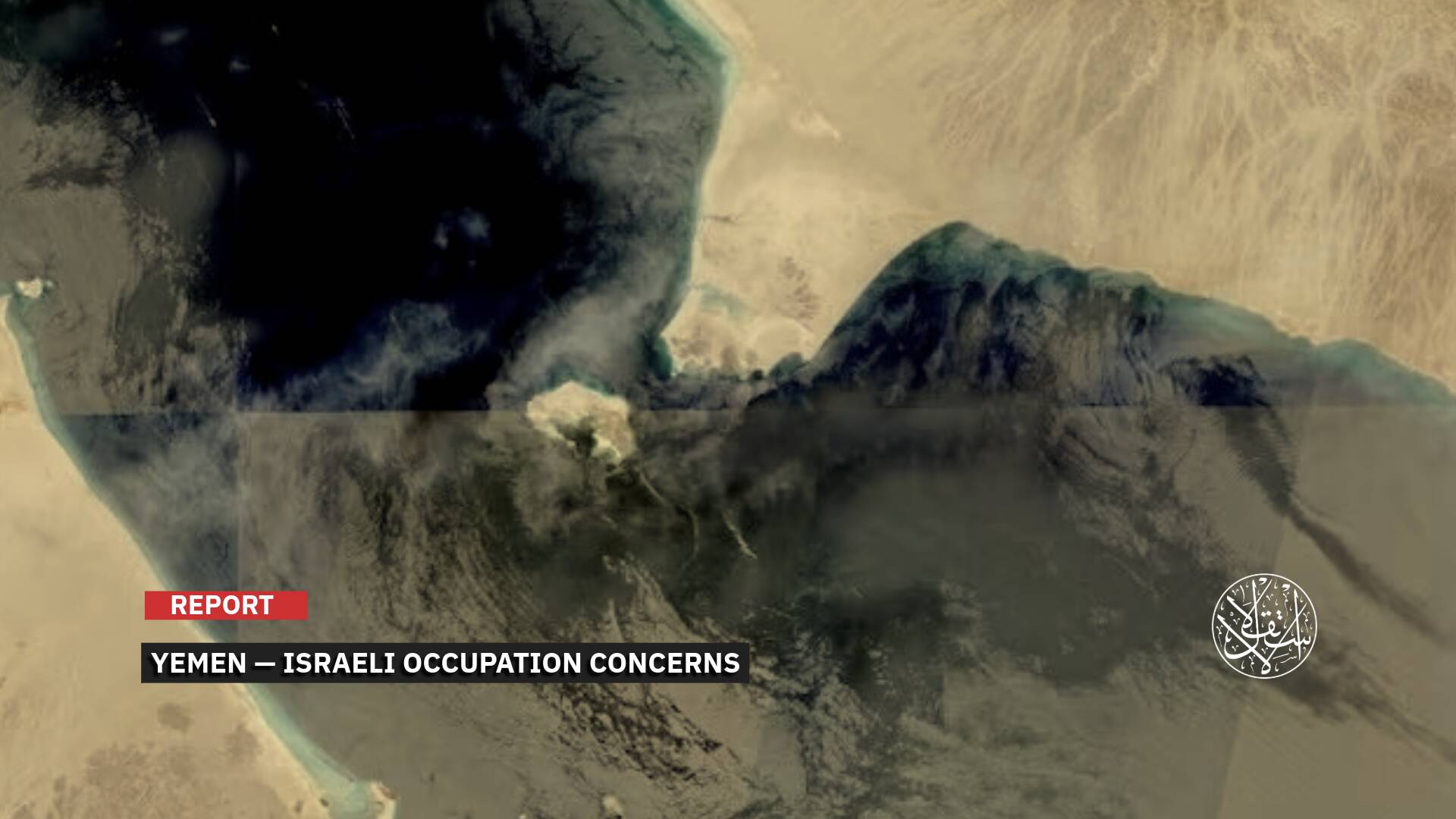
Leaders from Wales, Scotland, and Northern Ireland have declared that the era of Westminster’s dominance is drawing to a close, following their recent signing of a joint agreement asserting that no British government has the right to obstruct democracy.
This announcement comes at a time when the three nationalist leaders—representing Plaid Cymru, Sinn Féin, and the Scottish National Party—hold office simultaneously for the first time since the devolution system began.
They are actively seeking radical constitutional changes and greater independence from Britain, with the ultimate goal of secession.
While they all agree on the principle of separating from Britain, differences remain among the parties regarding the method and timing of such a move.
Downing Street’s response was swift and decisive; a spokesperson for British Prime Minister Andy Burnham stated that the government is committed to the Union and prefers to focus on alleviating the cost-of-living crisis facing households rather than engaging in constitutional debates or new referendums.
Burnham has made few public statements regarding the issue of devolution to the three nations since assuming office last July.
In the late 1990s, the UK passed legislative acts that decentralized government through the process of devolution, giving each country except England some level of policy independence and self-governance through their own parliaments.
But tensions have remained with the UK-wide government in London, which retained control over national issues and those concerning England.
Political Coordination
For the first time in the history of the UK, the heads of government of the three devolved nations—Scotland, Wales, and Northern Ireland—have gathered in one place as political forces belonging to parties that advocate for either secession or a redefinition of their relationship with London.
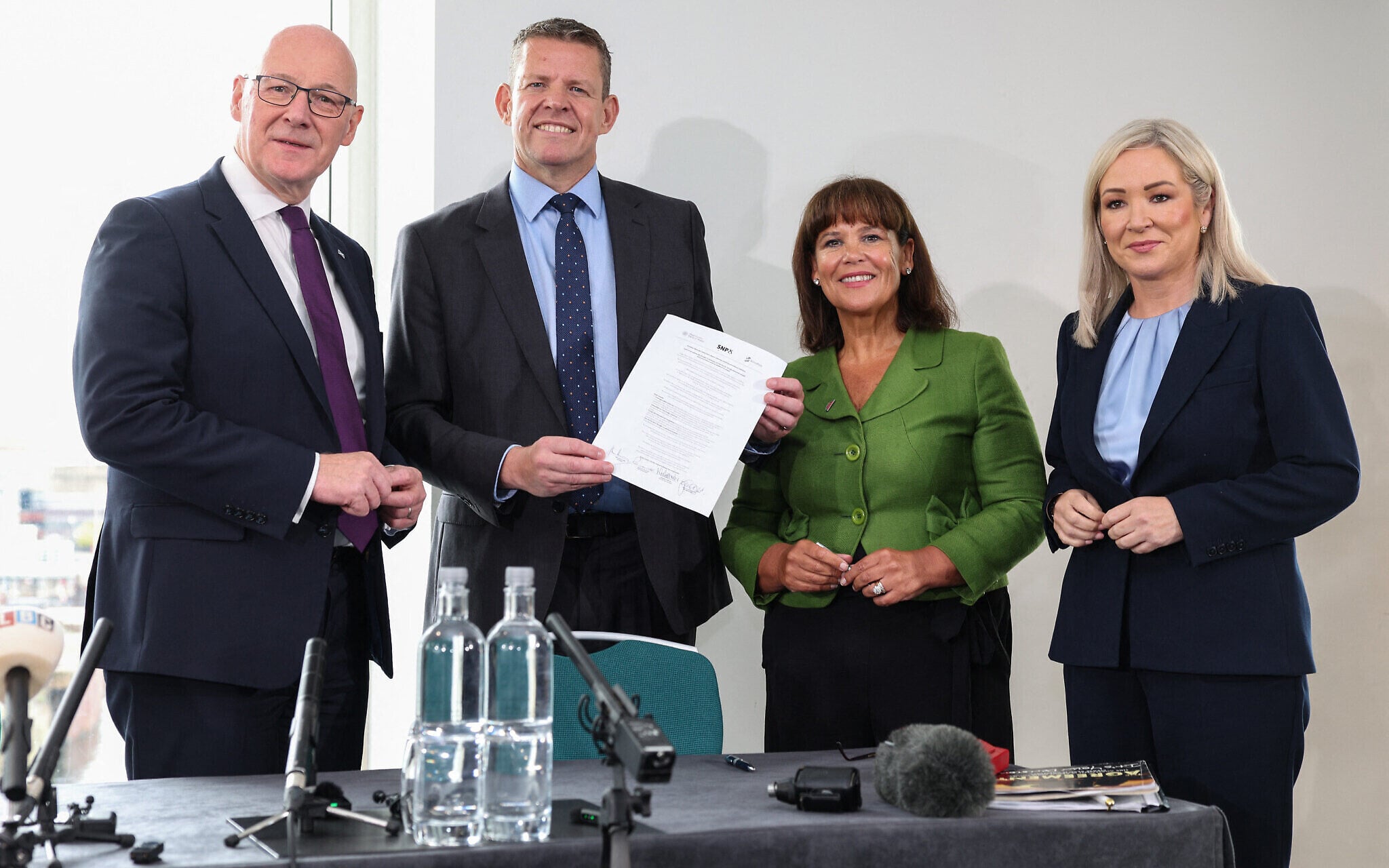
At a meeting held in Cardiff on September 14, 2026, the three regional leaders signed a memorandum of understanding to coordinate demands regarding the right to self-determination and referendums.
This move marks a shift from isolated protests toward building a political front that transcends the UK's internal borders.
The meeting saw the signing of a memorandum of understanding by John Swinney (leader of the Scottish National Party and First Minister of Scotland), Rhun ap Iorwerth (leader of Plaid Cymru and First Minister of Wales), and Michelle O’Neill (leader of Sinn Féin and First Minister of Northern Ireland), alongside Mary Lou McDonald (leader of the party in the Republic of Ireland).
The signed memorandum covered issues including the economy, energy, relations with Europe, international cooperation, and the right to self-determination.
Crucially, the four leaders attended in their party capacities rather than their official government roles—a deliberate choice that framed the gathering as an exercise in political coordination rather than institutional negotiation.
The memorandum affirmed that the principle of self-determination must not be undermined, while acknowledging that the participating parties hold differing constitutional positions and that every nation has the right to determine its future in the manner and at the time it deems appropriate.
The Scottish party seeks a second independence referendum—following a 2014 vote in which the option to remain part of Britain narrowly prevailed—though successive British governments have ruled out holding another referendum in the near future.
Meanwhile, Sinn Féin—the former political wing of the Irish Republican Army (IRA)—seeks a vote on the reunification of Ireland and Northern Ireland.
Plaid Cymru advocates for Welsh independence in the long term, though its leader, Adam Price, has ruled out calling for a referendum at this time.
Nevertheless, observers note an ideological common ground: all three regions envision their future within the European Union, with Scotland and Wales joining as new members, while Northern Ireland would join through the Republic of Ireland.
However, the Welsh outlet Nation.Cymru emphasized that the memorandum does not imply that referendums are imminent or legally binding; rather, it shifts the issue from fragmented nationalist rhetoric to organized political coordination.
It is worth noting that Andy Burnham previously provoked an angry reaction from Sinn Féin by stating last August that a referendum on Irish unity was off the table.
In response, McDonald described the Cardiff meeting as historic, stating: "We have the right to a referendum, we have the right to determine our future, and we will not accept any prime minister telling us that this right is not an option."
As for O'Neill, she stated that the three nations are distinct and each has its own priorities, yet the shared issue is that Westminster does not serve—and will not serve—our peoples.
In Dublin, Mary Lou McDonald warned the Irish government against obstructing any future referendum on unity, while Irish Taoiseach Micheál Martin accused Sinn Féin of reviving the rhetoric of the 1970s, stressing the need to foster reconciliation among the different political traditions in Northern Ireland.
Meanwhile, US President Donald Trump also waded into the debate as he reiterated his support for Northern Ireland breaking from the United Kingdom to unify with the Republic of Ireland.
He added that he would not talk about Scotland becoming independent yet.
In Wales, Rhun ap Iorwerth stated there is a growing realization that Westminster isn't working, noting that the Senedd elections in May gave his government a mandate for change.
When asked about the timing of any potential referendum, he said the timeframe would be determined by the people of Wales once they are convinced, adding, "My job is to persuade."
He added that the Welsh Government currently lacks the authority to hold such a referendum, but that he intends to secure that power.
However, Plaid Cymru has ruled out holding an independence referendum before the next Senedd elections in 2030.
Swinney and Iorwerth subsequently signed a separate agreement between their governments to push for greater fairness in funding arrangements and constitutional powers—further signaling that the Scottish and Welsh paths are moving at a different pace than the Irish one.
The agreement also covers cooperation on several issues, including tackling child poverty and strengthening ties with the European Union.
However, Swinney stopped short of supporting a reform of the Barnett Formula—the mechanism determining government funding allocation—which Welsh ministers argue disadvantages Wales, while Scotland is said to benefit from it.
The last Scottish independence referendum, held in September 2014, resulted in 55 percent of voters opting to remain in Britain, while 45 percent voted for independence.
Decisive Shift
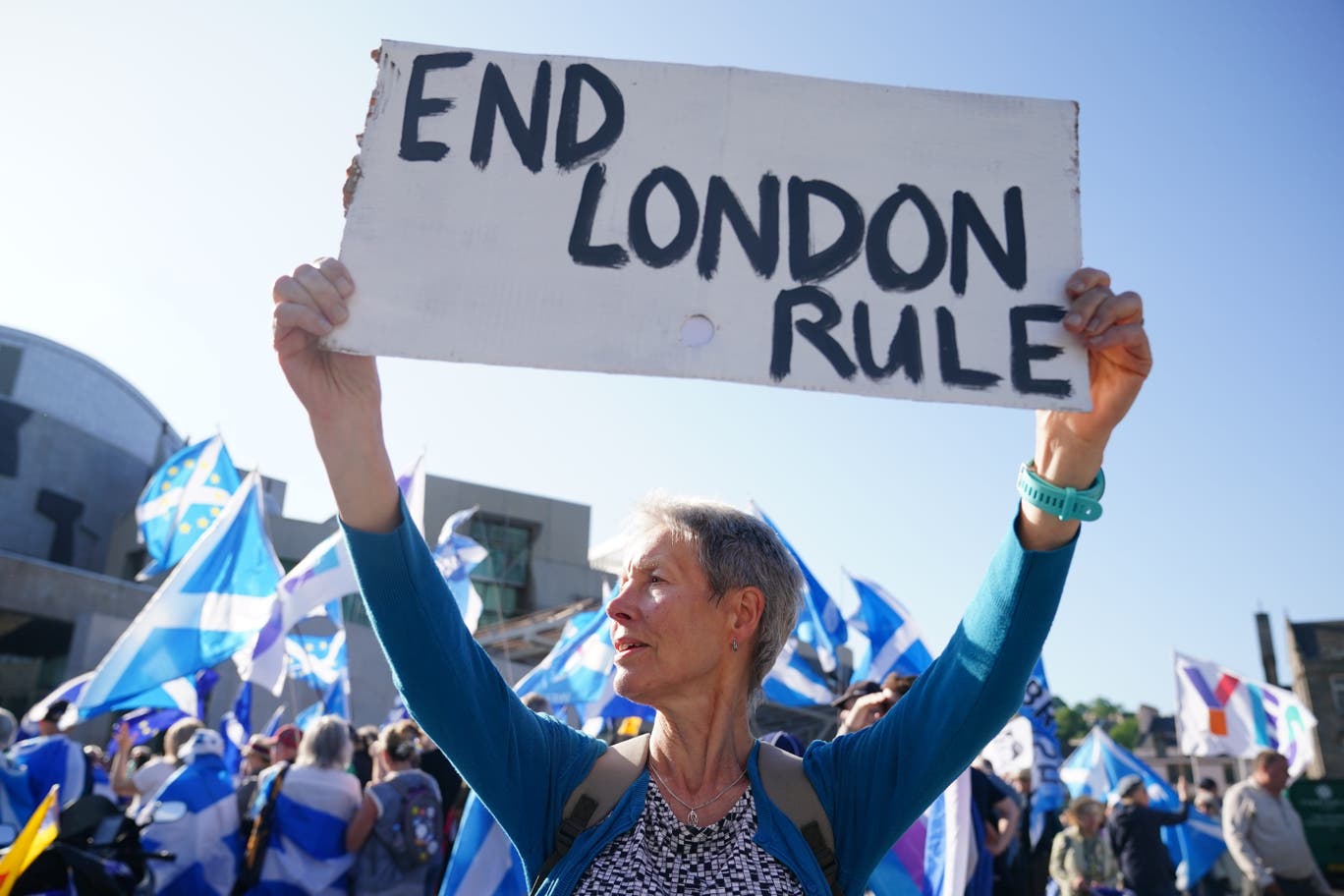
For his part, Scottish First Minister John Swinney described the current situation by stating: "Having pro-independence heads of government in all three territories for the first time proves that the status quo is unsustainable," warning Westminster to prepare for a post-UK future.
The meeting took place against the backdrop of a debate sparked by British Prime Minister Andy Burnham during a recent House of Commons session, in which he left the door open for a new Scottish referendum should public opinion shift decisively.
Downing Street was quick to insist that the statement did not signal a policy shift; Burnham subsequently sent a letter to Swinney last week reiterating the established position: a referendum remains off the table due to a lack of public consensus.
Swinney interpreted the initial remark as a tacit acknowledgement of the principle of self-determination, going so far as to predict: "Burnham will go down in history as the last Prime Minister of the UK."
Experts view the inconsistency in Burnham’s statements as emblematic of London’s deeper dilemma: legal rejection does not resolve the crisis but risks transforming it into a battle over legitimacy.
Should nationalists secure a clear majority in future elections, Edinburgh would likely use the result to argue that London is stifling democratic expression.
Polls published by Nation.Cymru paint a more complex picture than the meeting might suggest.
In Scotland, an August Survation poll of 2,036 voters showed pro-independence supporters leading with 47 percent against 43 percent—a margin that widens to 52 percent versus 48 percent when undecided voters are excluded.
In Wales, the poll presents a radically different picture: only 32 percent support independence, compared to 68 percent oppose it.
The generational divide is striking: support reaches 59 percent among the 18–24 age group, whereas it drops to just 15 percent among those over the age of 65.
As for Northern Ireland, a poll conducted last May involving 1,534 voters showed that 35.8 percent would vote for Irish unity compared to 49.7 percent opposed—figures that shift to 42 percent in favor and 58 percent against when undecided voters are excluded.
Constitutional scholar Laura McAllister of Cardiff University believes that the use of the term self-determination in the memorandum of understanding was deliberate and broadly phrased.
She notes that this marks the first time Britain’s three nations have attempted to advance the constitutional issue with such a high level of coordination.

Public Mandate
The legal mechanisms available to Westminster vary by region.
In Scotland, the UK Supreme Court ruled that the Scottish Parliament cannot unilaterally organize an independence referendum, noting that London retains the final legal authority to grant such authorization.
In Northern Ireland, the situation is fundamentally different, as the Good Friday Agreement allows the British Secretary of State to call for a referendum on the island's unity if it appeared that a majority of voters would support it.
This positions the referendum as a recognized constitutional mechanism rather than merely a partisan demand.
Wales, however, lacks a similar mechanism and remains dependent on securing a fresh popular mandate.
In response, the British government stated that the Prime Minister is committed to driving change across the UK’s four nations and is a staunch believer in the Union, noting that he is scheduled to meet with devolved leaders next month.
Meanwhile, Welsh Labour’s Ken Skates accused Plaid Cymru of seeking to dismantle Britain and weaken Wales.
Leaders from the Conservative Party and Reform UK also urged the Prime Minister to focus on crises facing the National Health Service (NHS) and the education system, rather than becoming preoccupied with the issue of independence.
Tim Bale, a professor of politics at Queen Mary University of London, told Deutsche Welle that Scotland lacks sufficient support to force a new referendum, and that Welsh nationalist sentiment reflects anger toward London rather than a pro-independence majority.
Tony Travers, a professor at the London School of Economics, added that Scottish nationalists would tread carefully given the defeat of the 2014 referendum.
However, The Guardian takes a broader view, noting that the rise of English nationalism—and the potential for far-right Reform UK leader Nigel Farage to gain significant influence—could prompt nationalists in the devolved regions to completely rethink their strategies.
Mark Drakeford, the former First Minister of Wales, eloquently articulated the idea: "England might change politically to such an extent that the Union leaves Wales behind, even without the Welsh people choosing separation."
For its part, the UK’s Institute for Government (IfG) proposes a different path: reviving a regular council that brings together the heads of the four governments, treating Edinburgh, Cardiff, and Belfast as partners rather than adversaries, and opening a dialogue on devolving additional powers regarding taxation, spending, energy, and railways.
Meanwhile, London-based lawyer Bassam Tablieh emphasized that the Cardiff meeting marks a pivotal moment and holds significant political weight in modern British history, representing the first high-level public coordination bringing together three nationalist movements within the UK.
Speaking to Al-Estiklal, Tablieh explained that while the Union won't collapse overnight, the crisis has broadened beyond London’s dispute with Scotland into a multi-front movement reshaping the center-periphery divide.
Legally, he noted that the meeting’s outcomes have limited impact, as the document neither forces London to hold a referendum nor gives any region the right to secede unilaterally.
He pointed out that the gap between political ambition and the prevailing constitutional reality is clearly illustrated by the fact that the signatories are political party leaders rather than representatives of executive governments.
Tablieh warned that without a genuine power-sharing compact from London, the memorandum could evolve from a pressure tactic into the foundation of an alternative political system.
Sources
- Plaid Cymru, SNP and Sinn Féin sign new cooperation pact
- UK's unity threatened by pact between Wales, Scotland and Northern Ireland
- Scotland, Wales and Northern Ireland Signed an Independence Pact. Westminster Still Holds Every Legal Card
- Westminster's time is coming to an end, Welsh, Scottish, Northern Irish leaders say