The Settlement Project Linking Occupied Jerusalem to ‘Ma’ale Adumim’ and Threatening a Future Palestinian State
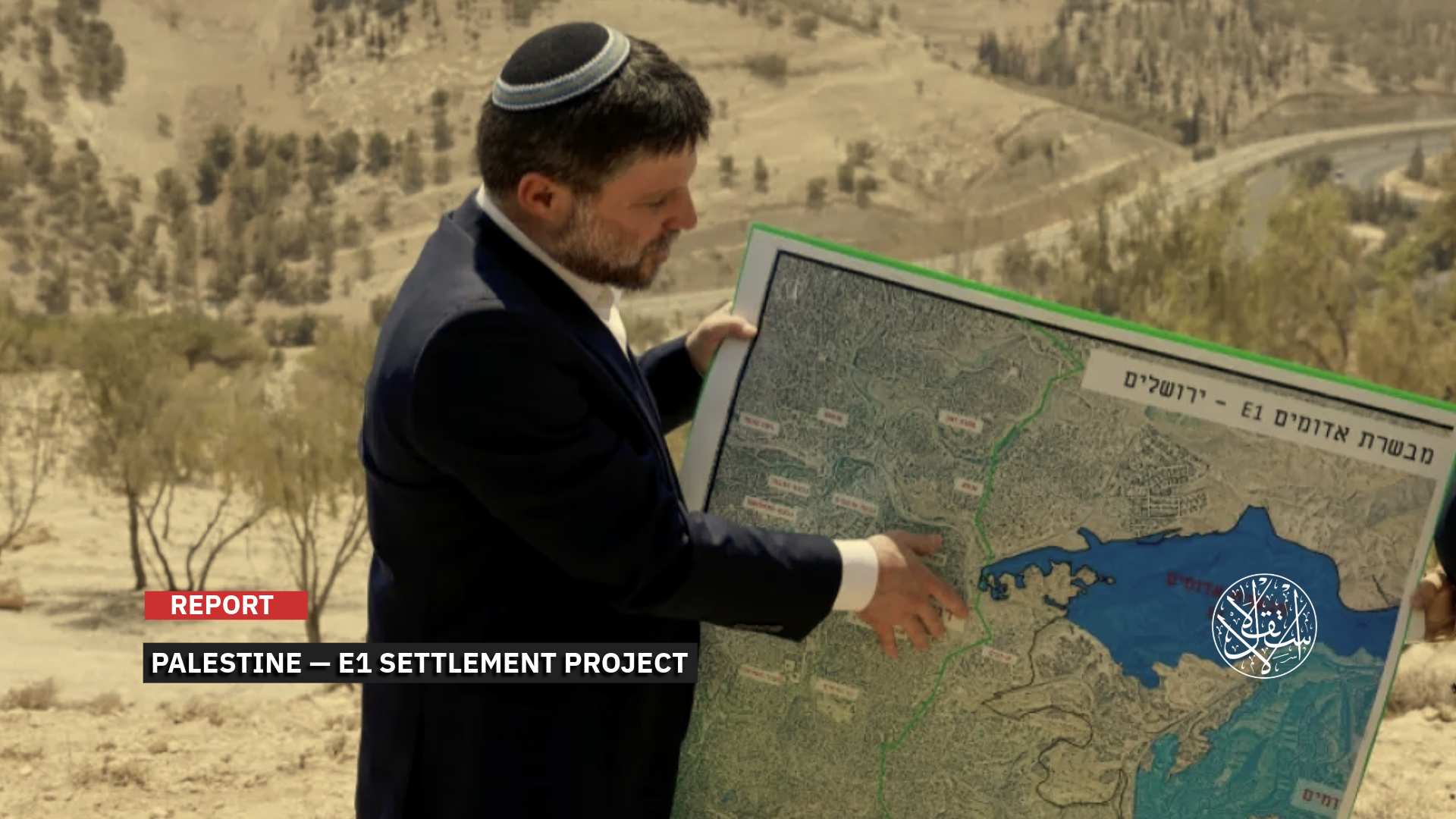
Finance Minister Bezalel Smotrich said the project buries the idea of a Palestinian state.
On September 17, 2026, the Israeli Occupation moved the E1 settlement project east of occupied Jerusalem into an advanced implementation phase after completing the inclusion of its 3,401 housing units in the tender process.
The move brings a plan that had been stalled by international pressure for decades closer to actual construction contracts, in an area whose future could determine Palestinian territorial contiguity between the northern and southern West Bank and between occupied East Jerusalem and its surrounding areas.
Across these hills, housing plans, roads, and employment zones intersect with measures threatening the forced displacement of Bedouin communities, creating a project that extends beyond the boundaries of “Ma’ale Adumim” to the future of the land on which a Palestinian state is supposed to be established. Israeli officials, including extremist finance minister Bezalel Smotrich, have said the goal of the construction is to close the door on the establishment of a Palestinian state, while residents and rights groups are challenging the implementation measures in court.
So how did the project reach this point after three decades of delays? Who is turning its plans into reality? And how are roads, housing, and displacement coming together to redraw the West Bank? What can Palestinian and international objections still stop before the tenders move into the construction phase?
Three Decades
The road to the tender process began with a redrawing of administrative boundaries. In 1991, part of the area was transferred to the jurisdiction of the “Ma’ale Adumim” municipal council under the government of Yitzhak Shamir. Three years later, former Israeli Prime Minister Yitzhak Rabin instructed Housing Minister Binyamin Ben-Eliezer to prepare plans for a neighborhood there, and the master plan was approved in 1999.
Successive governments continued developing the idea, with roads, facilities, and a police headquarters built over the years, while residential construction remained on hold. In 2012, the Israeli Occupation revived the project after Palestine was granted upgraded status at the United Nations, but the process slowed again. The residential plans were submitted for objections in 2020, leading to final approval in August 2025.
The decisive shift came when the project moved from approved maps to the marketing of construction. In December 2025, Tender No. 460/2025 was issued for the entire project, but the opening of bids was repeatedly postponed.
On August 18, 2026, a separate tender, No. 186/2026, was issued for 1,234 housing units, while the number of units in the original tender was later reduced to 2,167 in an update dated September 7.
This was a redistribution of the approved units between two tenders, not an increase in the overall number of units. The first tender closes on October 19, 2026, while the second begins accepting bids on October 25, two days before the scheduled Israeli election.
In a study published by the Israeli Institute for National Security Studies (INSS) on September 7, the tenders were described as crossing a threshold that previous governments had stopped short of amid U.S. and European opposition.
The distinction highlights the nature of the shift. Approval gives the project planning authorization, while a tender brings companies and their contractual rights into the picture, making any retreat from the project more complicated.
The study links the timing to a quick political gain for the government ahead of the election, while raising questions about the project’s strategic value and the diplomatic cost it could carry.
Roads Redrawing the West Bank
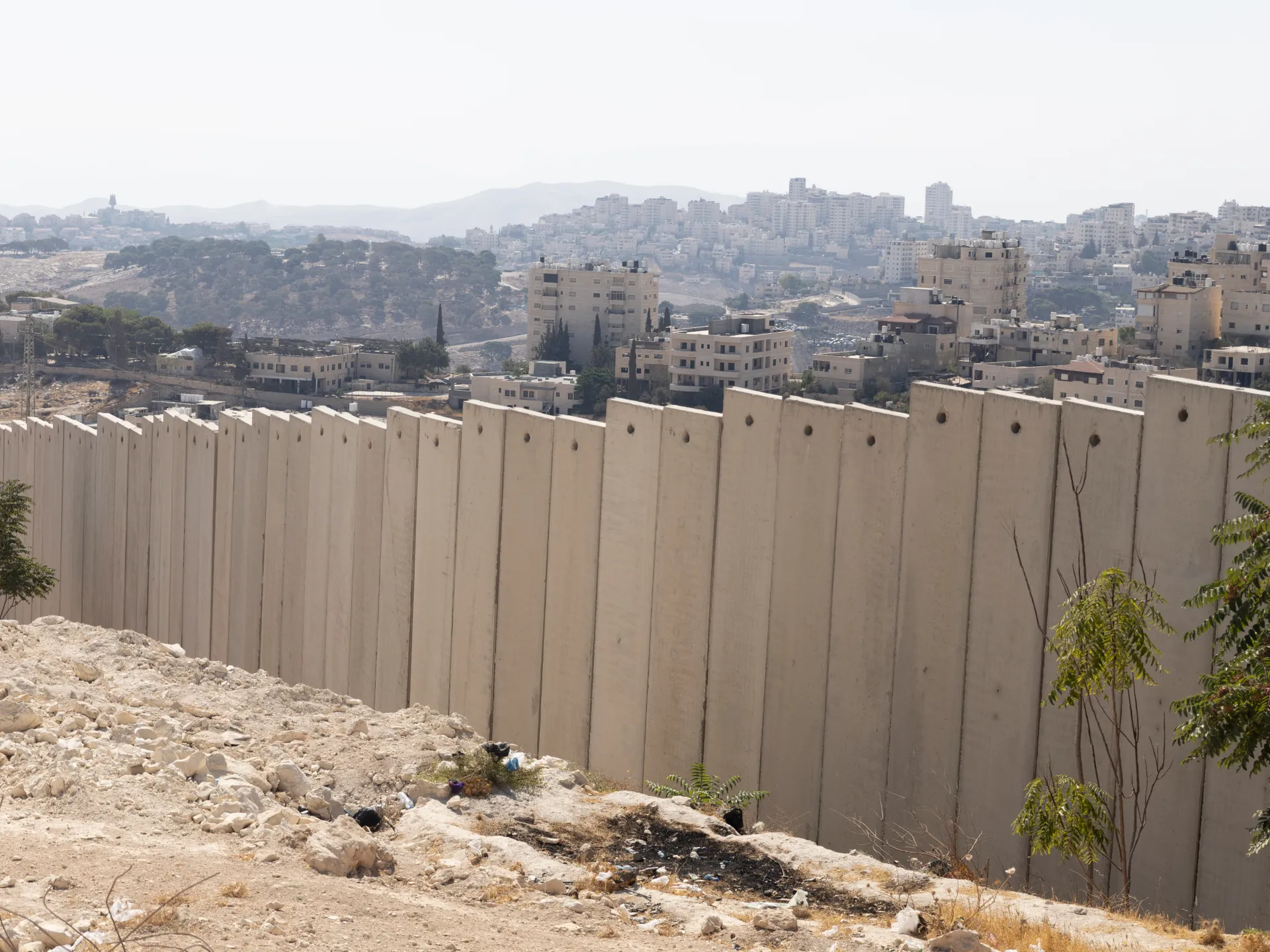
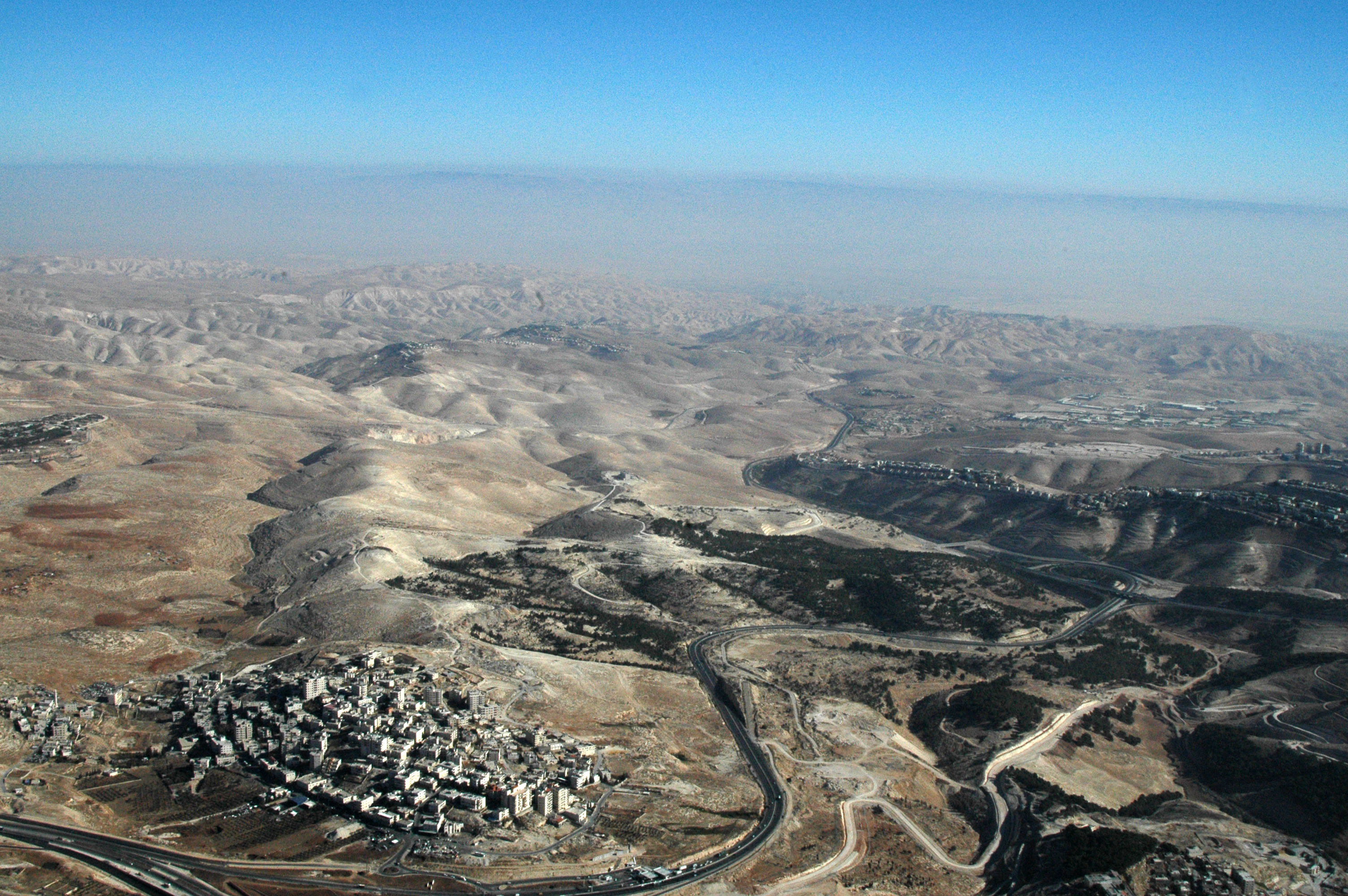
The significance of this threshold becomes clearer on a map of the al-Quds (occupied Jerusalem). The project covers roughly 12 square kilometers in Area C, between occupied East Jerusalem and “Ma’ale Adumim,” alongside Anata, az-Za’ayyem, Issawiya, al-Eizariya, and Abu Dis. An Israeli corridor running from west to east intersects with a Palestinian area linking Ramallah with Bethlehem and Hebron.
The area carries significance far beyond the footprint of the housing units. It forms part of the land reserves needed for the development of the Palestinian urban area extending across occupied Jerusalem, where housing, employment, and services are closely intertwined. Ir Amim estimates that around 1 million Palestinians live within a 15 kilometer radius of E1, illustrating the scale of the population that could be affected by the project.
To complete the Israeli link, a tender was issued in March 2026 for a 1,355 dunam commercial and employment zone east of Anata and az-Za’ayyem, with a planned entrance from the direction of occupied Jerusalem.
At the same time, work advanced on the al-Eizariya to az-Za’ayyem road, known as the “Fabric of Life” or “Sovereignty Road,” with an allocated budget of 335 million shekels.
In May, the Israeli Occupation administration demolished dozens of shops at the entrance to al-Eizariya, measures that organizations linked to preparations for construction of the road.
The road is intended to divert Palestinian traffic away from the corridor between “Ma’ale Adumim” and the project, allowing checkpoints to be relocated and the surrounding area to be closed off to Palestinians.
Ir Amim estimates that the effective annexation this network is driving toward would encompass around 3 percent of the West Bank, including the wider area around the settlement.
The planning concern centers on securing a continuous stretch of land suitable for development. The route from Ramallah to Bethlehem may remain possible, while the entrances and surrounding lands come under Israeli control. The project’s impact therefore goes beyond lengthening travel distances, extending to restrictions on the expansion of Palestinian al-Quds and the possibility of establishing a state with territorial contiguity and sovereignty.
Annexation Through Israeli Occupation Tools
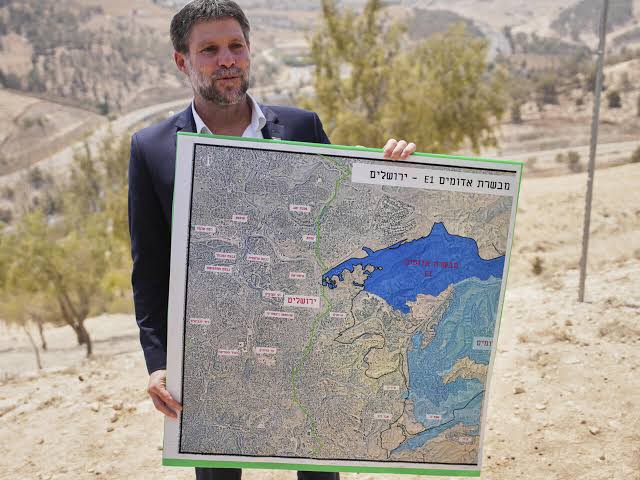
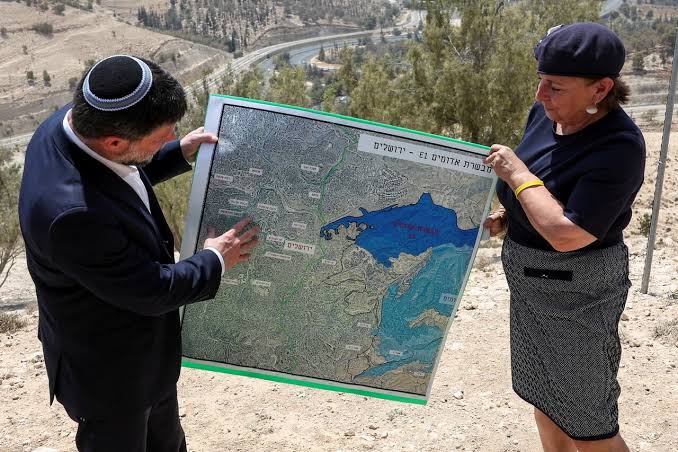
Statements by Israeli Occupation officials give this map its political meaning. In August 2025, Smotrich said the construction “buries the idea of a Palestinian state.” A month later, Israeli Prime Minister Benjamin Netanyahu said during the signing of a development agreement for “Ma’ale Adumim” there will be no Palestinian state. The acceleration of the project was thus tied to an explicit objective concerning the future of a political settlement.
Implementation is divided among several institutions. The Higher Planning Council within the Civil Administration approves plans and considers objections, while the Ministry of Construction and Housing and the “Israel” Land Authority issue the tenders, with the “Ma’ale Adumim” municipality involved in development and licensing.
Smotrich holds both the finance portfolio and powers within the War Ministry related to civil affairs in the West Bank, giving him influence over funding and the administrative process.
A September 2025 agreement translated this coordination into concrete commitments, including 3 billion shekels for infrastructure needed for roughly 7,600 housing units across “Ma’ale Adumim” and E1, in exchange for the municipality speeding up the issuance of building permits. The funding therefore covers a broader expansion beyond the E1 project itself.
Behind the decision is a settlement network pushing the project politically and on the ground. The Yesha Council, an umbrella group representing settlement councils, held an event to announce the project’s advancement, with its chairman, Yisrael Ganz, welcoming the move. “Ma’ale Adumim” Mayor Guy Yifrah has pushed for expanding the settlement and connecting it to occupied Jerusalem.
Regavim, meanwhile, uses petitions and monitors Palestinian construction to call for the demolition of communities it describes as “unauthorized,” most notably Khan al-Ahmar. It has joined the “Jerusalem Periphery Forum” in organizing tours for members of the Knesset to pressure authorities to clear the community. Two Likud lawmakers, Danny Danon and Yuli Edelstein, took part in one such tour in January 2023.
Ir Amim has documented Smotrich’s involvement in these efforts during his time with the movement, before he assumed government powers. The connection illustrates how demands for demolitions can move from advocacy campaigns by organizations into the hands of institutions capable of issuing and enforcing orders.
Renewed Displacement East of Occupied Jerusalem
On the Palestinian side of the map, Khan al-Ahmar lies at the heart of the struggle to remain on the land. Its residents were previously displaced from the Negev in the 1950s before settling east of occupied Jerusalem.
The Bedouin community now numbers around 250 people and faces repeated threats of eviction. On May 19, 2026, Smotrich instructed the Civil Administration to accelerate procedures to remove the community, alongside an order to seize a strip of land through the area for a water pipeline connecting the settlements of “Mishor Adumim” and “Kfar Adumim.”
Ir Amim warns that the route threatens residents’ structures and could further tighten the restrictions imposed on them as part of measures targeting the wider area around the project. Human Rights Watch estimates that implementation of E1 threatens the forced displacement of more than 18 Bedouin communities whose ability to remain on the land depends on access to grazing areas and basic services.
At the same time, the Israeli Occupation government is advancing a plan to expand the al-Jabal neighborhood near Abu Dis across roughly 79 dunams, with a planned capacity of around 950 housing units. Peace Now says the site is less than 100 meters from a waste dump and that the terrain and density of the proposed buildings are incompatible with the Bedouin way of life.
The plan also revives the experience of the Jahalin, who were moved to the area in the 1990s to make way for the expansion of “Ma’ale Adumim.” A study by Bimkom documented the impact of that earlier relocation on women, including the loss of their economic roles in livestock herding, reduced privacy, and strained social relations in overcrowded sites. At the same time, new housing and services are being used to attract Israeli Occupation settlers, while opportunities for Palestinian expansion east of occupied Jerusalem continue to shrink.
A Battle Before the Bulldozers
The measures are facing challenges that go beyond statements of condemnation. On the Palestinian side, Vice President Hussein al-Sheikh called for turning condemnation into “binding and decisive measures” to halt settlement construction and annexation, warning that the possibility of establishing a territorially contiguous Palestinian state was being undermined.
Residents affected by the project have joined petitions filed by Ir Amim, Peace Now, and Bimkom, represented by attorney Michael Sfard.
On September 8, the occupied Jerusalem District Court rejected a request to temporarily halt the tender for the first batch while leaving the challenges to the plans under consideration.
The legal battle is also tied to pressure on the parties carrying out the project. Rights groups have based their objections on the prohibition against transferring the Israeli Occupation’s civilian population into occupied territory, as well as the prohibition on the forced transfer of Palestinian residents. Human Rights Watch has warned companies of the risks of involvement in violations linked to settlement construction and displacement.
The foreign ministers of Turkiye, the United Arab Emirates, Indonesia, Qatar, Egypt, Pakistan, Saudi Arabia, and Jordan also called for the project to be halted and its procedures canceled and backed sanctions against entities that finance, facilitate, or carry it out.
On September 8, 12 countries announced plans to impose trade restrictions on settlement goods, support for them, or dealings with them, while Britain, France, and Canada pledged to take national measures to ban such trade.
Inside the occupied territories, former Israeli army chief of staff Gadi Eisenkot described the project as a “mistake” that would impose an international cost on “Israel,” while rejecting a two-state solution under current circumstances.
Former Israeli Prime Minister Ehud Olmert, meanwhile, stepped up his criticism of Benjamin Netanyahu’s government policies in the West Bank, saying Palestinians were being subjected to an attempt at “ethnic cleansing.”
Sources
- E1 Settlement Project Enters Implementation Phase: How Israel Is Geographically Fragmenting the West Bank [Arabic]
- Olmert: Israel Is Carrying Out Ethnic Cleansing in the West Bank and Backs British Sanctions on Settlements [Arabic]
- 8 Countries, Including Turkiye, Condemn Israeli Settlements and Call for E1 Project to Be Halted [Arabic]
- Israel Opens Bidding for Highly Sensitive Settlement Project in the West Bank [Arabic]
- Joint Foreign Ministers' Statement on the Two-State Solution