Gaza’s Streets Slide Into Chaos: How Is Israeli Occupation Shaping the Security Crisis, and How Is the Resistance Responding?
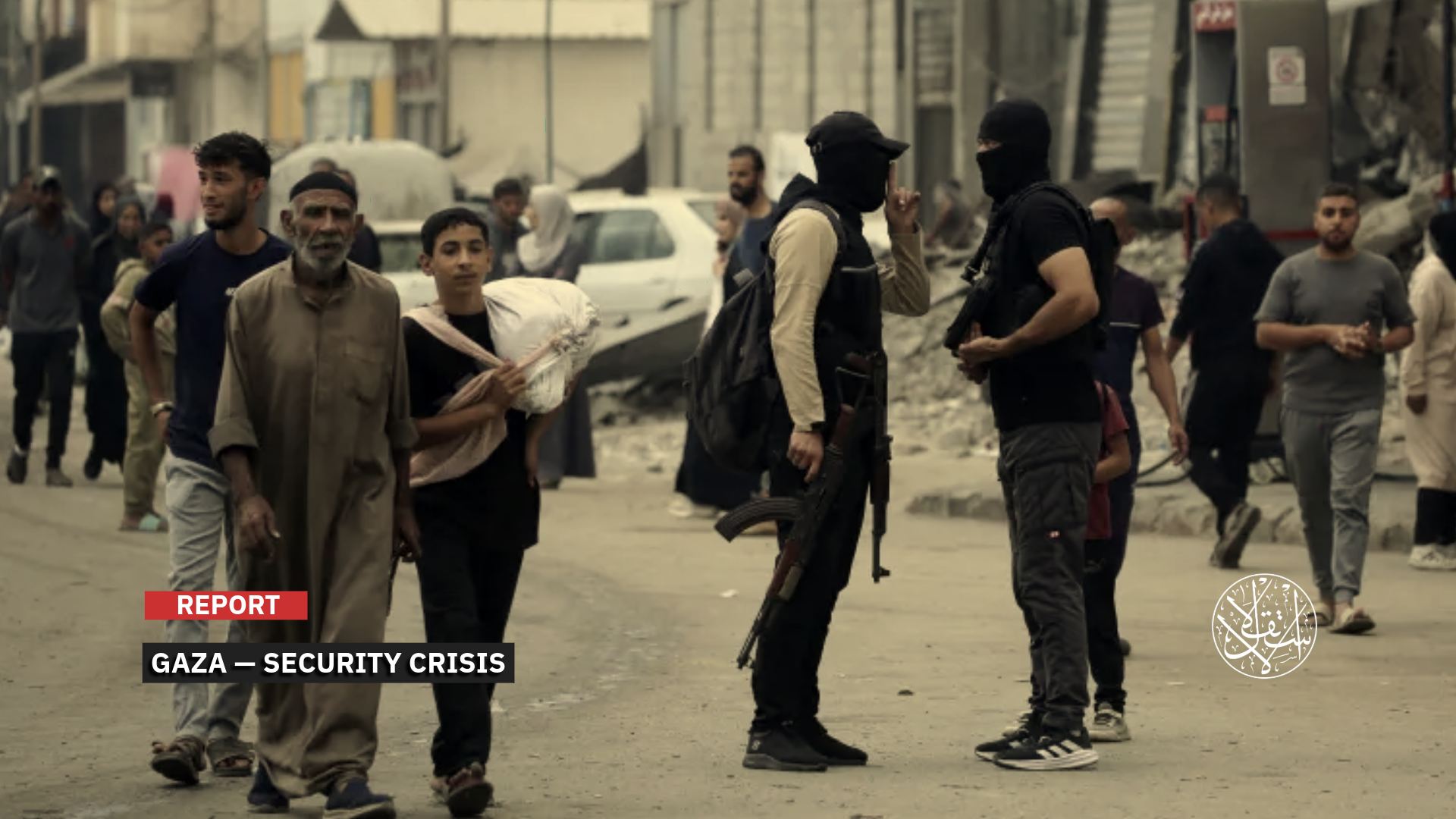
This reality has pushed the security services to adopt new, more discreet arrangements.
For Palestinians in Gaza, another hidden war has stripped away any sense of security, leaving danger on every side. It is unfolding alongside the ongoing Israeli genocidal war that began on October 7, 2023, which has martyred more than 75,000 Palestinians and left nearly 10,000 missing beneath the rubble.
Gaza’s streets have descended into a worsening security crisis, where crime, the proliferation of weapons, and rising family disputes increasingly overlap. In many cases, these disputes escalate into armed confrontations involving firearms or bladed weapons, followed by killings and cycles of revenge.
At the same time, gangs, armed groups, and the drug trade are expanding in a society already exhausted by the Israeli genocide, which has targeted the security and legal institutions that once provided a measure of order.
The police and security forces have faced repeated attacks. The United Nations says deadly Israeli Occupation attacks on police officers and their facilities have contributed to the dismantling of civilian law enforcement structures and weakened institutions’ ability to protect the population.
By August 2026, the United Nations Human Rights Office had documented 18 deadly airstrikes targeting police in Gaza since the beginning of the year, resulting in the martyrdom of 77 Palestinians, including 57 police officers.
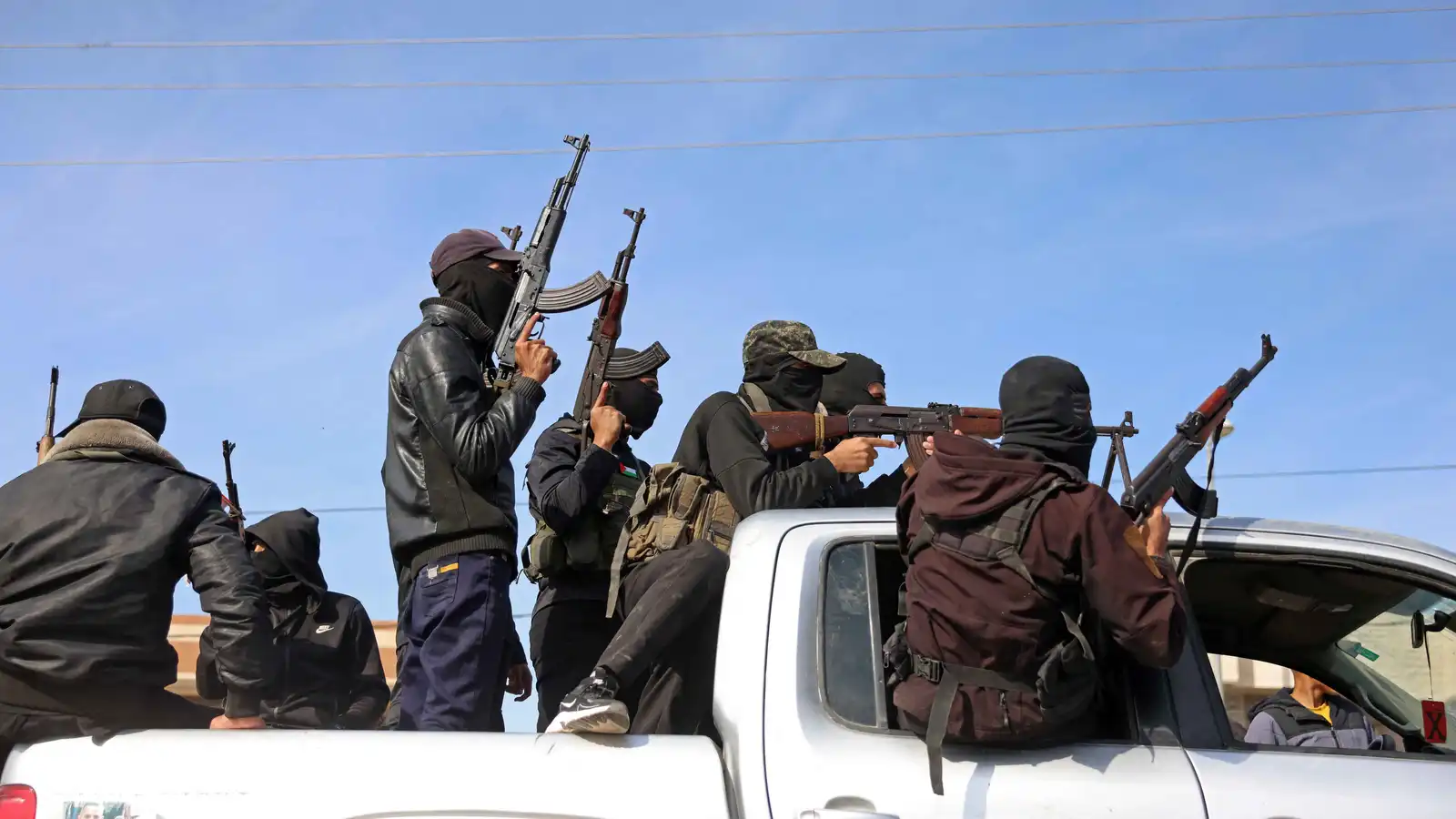
Chaos on Gaza’s Streets
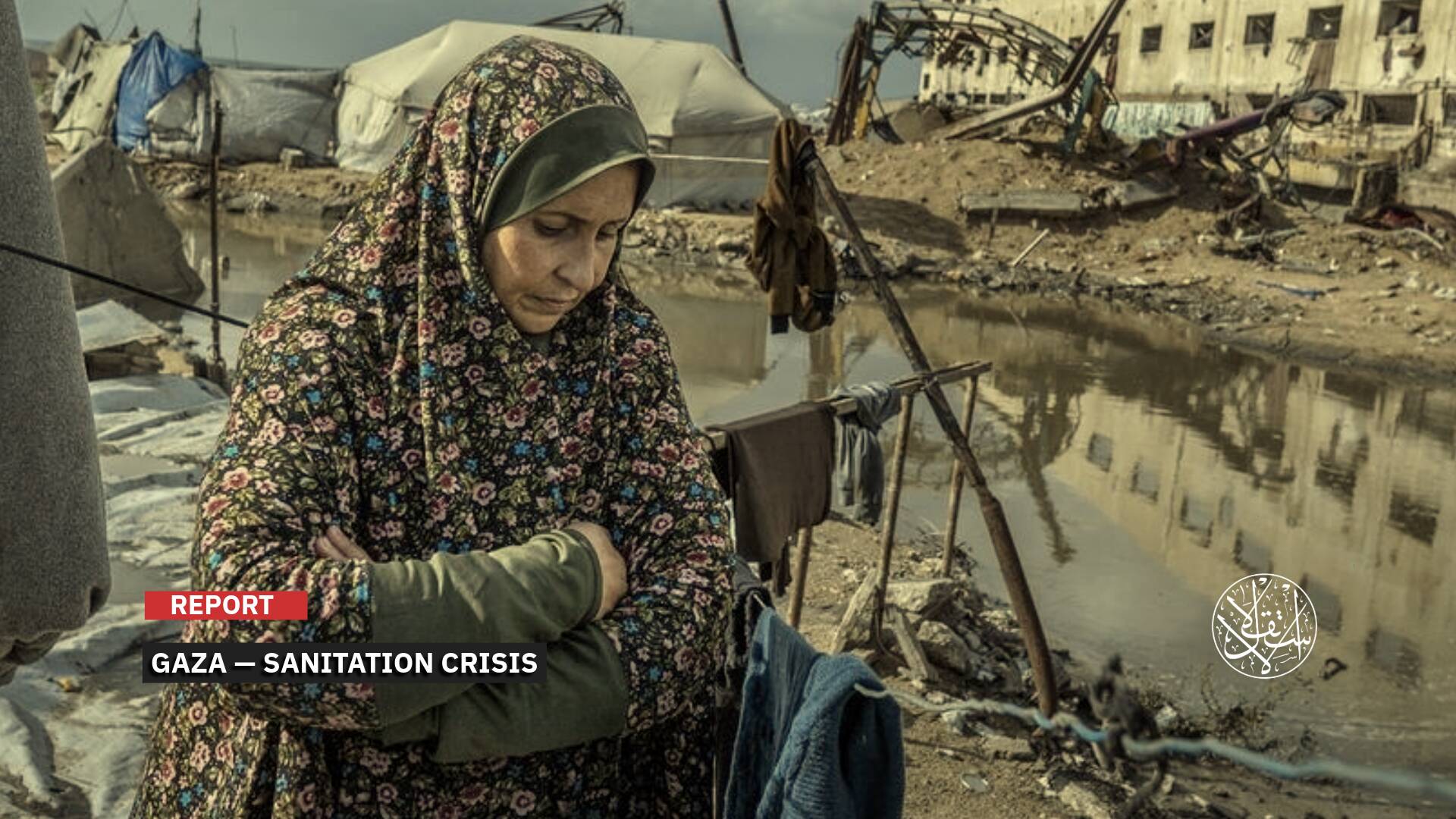
As an Al-Estiklal reporter traveled through displacement camps and roads across the Gaza Strip and documented family disputes, one conclusion became clear: the harsh conditions of displacement are fueling tensions. Camps are overcrowded, tents are packed tightly together, and water is scarce, both for drinking and household use. Long lines at communal food kitchens add to the strain.
Displaced Palestinians are forced to share almost everything and stand in lines under the scorching sun, living in conditions of severe hardship and deprivation. Even minor disagreements can quickly escalate, particularly as security forces have a limited presence.
In interviews with displaced Palestinians in the al-Mawasi area, Al-Estiklal documented a killing in August 2025 that was reportedly triggered by a dispute over who had the right to stand in line for drinking water.
Other accounts described a major family dispute that escalated into gunfire and left people injured after beginning with a minor disagreement between women over where to hang laundry. Other disputes, too, began over small matters that would normally have been easily resolved under ordinary circumstances.
Mohammed Abu Obeidah, a young man, said the security situation in the Gaza Strip has become extremely difficult. “The law of the jungle, the rule of force and thuggery, and the power of families and their weapons are the prevailing logic today. This is how disputes are settled, and this is what everyone in Gaza has come to rely on.”
The decline in security capabilities and the growing targeting of police and security personnel have further contributed to the worsening security breakdown.
Abu Obeidah, who works as a supervisor at a displacement camp on the coast near the village of al-Zawaida, said what is happening inside the camp he oversees and in the surrounding area reflects part of the broader situation across Gaza.
Some armed families, he said, have taken control of parts of the camp and allocated them to their own members. When bread aid arrives, these families take quantities far beyond what they need, depriving many displaced people in the camp of their share.
The same happens, Abu Obeidah said, when drinking-water trucks arrive and when food aid is distributed. He described the process as being carried out through intimidation and thuggery, calling it unprecedented.
He said the decline in police operations and patrols has allowed these families to avoid accountability, particularly as a result of the daily attacks targeting police and security personnel. These families are now armed and do not hesitate to open fire, he said, adding that some of their members previously worked in the Palestinian Authority’s security services before 2007. Those individuals, he said, have become the “cornerstone” of families that have increasingly come to resemble armed gangs.
Abu Obeidah said the problem is not confined to the camps or to what he described as a “system of thuggery” involving certain families. It has also spread to the roads, where residents face daily family clashes, gunfire by unidentified assailants, and killings.
The victims of these clashes are often displaced people on the roads, passersby, and residents of tent camps who have no homes to shield them from gunfire. Bullets can easily penetrate any tent and hit those inside, he added.
“As if the Israeli Occupation’s bombardment of the tents and the people were not enough, these criminals come along to deepen the suffering and shed even more blood in Gaza.”

Community Mobilization
As Gaza grapples with a worsening security breakdown, community efforts have emerged to prevent the crisis, social divisions, and family disputes from spreading further. Community elders and reconciliation committees have stepped in to resolve disputes.
These committees have worked with Gaza’s Interior Ministry, taking on a large part of the reconciliation efforts and trying to contain family conflicts before they escalate.
According to Interior Ministry data, reconciliation committees resolved 1,440 cases in August 2026 alone.
The cases included fights, financial disputes, land conflicts, family problems, killings, theft, and other disputes.
Abu Mohammed al-Brikat, a community elder and member of a reconciliation committee that works to resolve family disputes, said Gaza is experiencing a severe security breakdown. He said the current situation is unlike anything seen in more than two decades.
“I have never seen Gaza go through what it is experiencing today,” he told Al-Estiklal. “There is now a clear disregard for human life and a growing willingness to use weapons, whether firearms or bladed weapons.”
He said the Strip is witnessing killings, injuries, and armed clashes on a daily basis, describing the phenomenon as something alien to Palestinian society in Gaza.
In the past, al-Brikat explained, family disputes would begin with police intervention. When an assault occurred, whether through physical violence or gunfire, police would detain those involved. Reconciliation committees would then approach the two families, identify the source of the dispute and, where possible, work out a solution and offer guidance to both sides.
Once a reconciliation agreement was reached, the committees coordinated with the Palestinian police. When the reconciliation document was submitted by the two families, police would release those detained unless there was a public criminal claim or a killing involved. Today, he said, the situation has changed completely.
Al-Brikat said reconciliation efforts now often fail because some families insist on settling disputes through force.
Powerful families whose members carry weapons see themselves as above sitting down for discussions or resolving disputes through mediation, he said. Instead, they may resort to gunfire and what he described as a “system of thuggery,” which has become increasingly common as police authority weakens and patrols and officers face repeated attacks.
Police intervention, he said, now often focuses on crimes after they have already occurred, particularly killings. Despite the considerable efforts police continue to make, he said, the situation has grown beyond their capacity to control.
Some families have also come to resemble gangs, particularly those whose members have stolen aid trucks during the Israeli war or engaged in other illegal activities, while some of their members have committed killings. Al-Brikat estimated that such families see themselves as armed and capable of protecting their members amid the weakening of the rule of law in Gaza.
“These families do not abide by any tribal reconciliation solutions, nor will they even sit down for what we call a tribal justice session,” he said.
“The security breakdown, bombardment, and family clashes, despite continuing for a long time, will undoubtedly come to an end. When they do, every criminal, every complicit community elder, and everyone who helped spread lawlessness and shield criminals from accountability will be held to account,” the reconciliation official added.
He said accountability would not stop at legal and tribal measures, as the community would also hold those responsible to account. Palestinians in Gaza, he added, would reject anyone who helped threaten public and community security or assisted the Israeli Occupation in spreading chaos.

The Police Fight Back
On the other side, despite the Israeli attacks targeting Gaza’s security system and security operations that have resulted in the martyrdom of more than 2,800 police commanders, officers, and personnel; injured more than 1,950 others; and resulted in the capture of around 211 members, the police and security forces are trying to operate in extremely difficult conditions.
Their work goes beyond pursuing those accused of murder. They also intervene in fights, seize weapons, combat drug trafficking, and try to contain family disputes.
Al-Estiklal spoke with a security official in Gaza’s security services to examine the current security situation in the Strip, the efforts being made by the Gaza government, whether the situation has slipped beyond its control, and how the Israeli Occupation is contributing to the security breakdown.
The security source said the Israeli Occupation is the main actor behind the tense security conditions in Gaza. It had worked for three years to bring about the current situation, beginning with attacks on police patrols, officers, and commanders, as well as police stations and prisons, which he said resulted in the martyrdom of thousands of police personnel.
In an interview with Al-Estiklal, the security source said Gaza is facing a growing list of problems, from killings and armed clashes between families to theft and the spread of drug trafficking. He also pointed to merchants who manipulate the prices and availability of essential goods by raising prices and withholding products from the market. He said the Israeli Occupation plays a central role in driving these problems.
The security source added that there have been cases in which individuals committed killings and then fled to eastern areas and areas controlled by criminal gangs to evade arrest and accountability. These gangs, he said, have increasingly portrayed themselves as protectors shielding criminals from the security services and Palestinian factions.
These areas now include people collaborating with the Israeli Occupation, as well as criminals, killers, and thieves, and provide them with protection. He said this points to the Israeli Occupation’s role in directing these militias to protect criminals and deepen and fuel the security breakdown.
Once the perpetrators flee, he said, a new wave of family disputes and armed clashes often erupts between the killer’s family and the victim’s family. He said this is precisely the outcome the Israeli Occupation wants and is working to create.
The security source also accused the Israeli Occupation of encouraging the drug trade. He said large quantities of drugs enter Gaza, either with goods coming through Israeli-controlled crossings or via quadcopter drones that cross the border from the occupied territories.
He said networks also smuggle drugs directly, as well as through “militias collaborating with the Israeli Occupation.” He said the aim is to flood Gaza with drugs, arguing that the spread of drugs and drug use directly facilitates crime and provides criminal networks with a source of funding.
On the security forces’ role, the source said police and security personnel move to the scene as soon as a family dispute or armed clash breaks out in an attempt to stop it. If injuries or crimes occur, they work to arrest those involved.
The speed of their response depends on the security situation and the presence of Israeli aircraft, he said. The Israeli Occupation, he added, often treats these clashes as traps for security personnel and directly targets them as soon as they arrive at the scene. He said this has happened dozens of times.
“This reality has pushed the security services to adopt new, more discreet arrangements and procedures that strike a balance between maintaining security and protecting security personnel,” he added.
The source said the Israeli Occupation’s goal of creating a security vacuum and neutralizing the role of Gaza’s security institutions will ultimately fail. Even at the height of the war, the security services continued operating while adapting their methods to the security conditions on the ground.
He also said public awareness helps prevent many disputes from escalating, concluding, “The Israeli Occupation’s plan will ultimately fail.”