Gaza’s Deathtrap Homes: Why Are Thousands Living in Buildings on the Verge of Collapse?
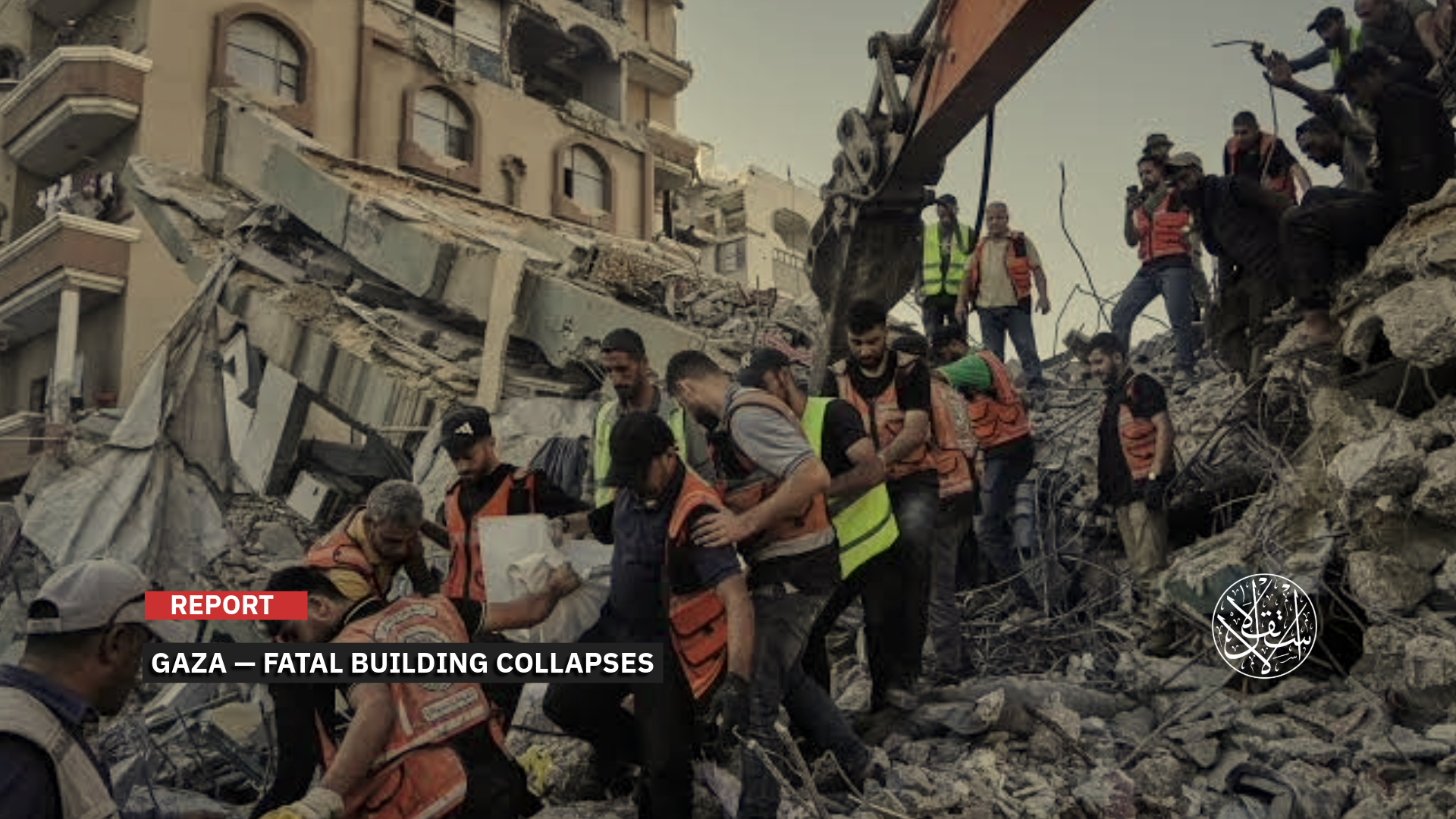
About 76 percent of housing units in the Gaza Strip have been damaged or destroyed.
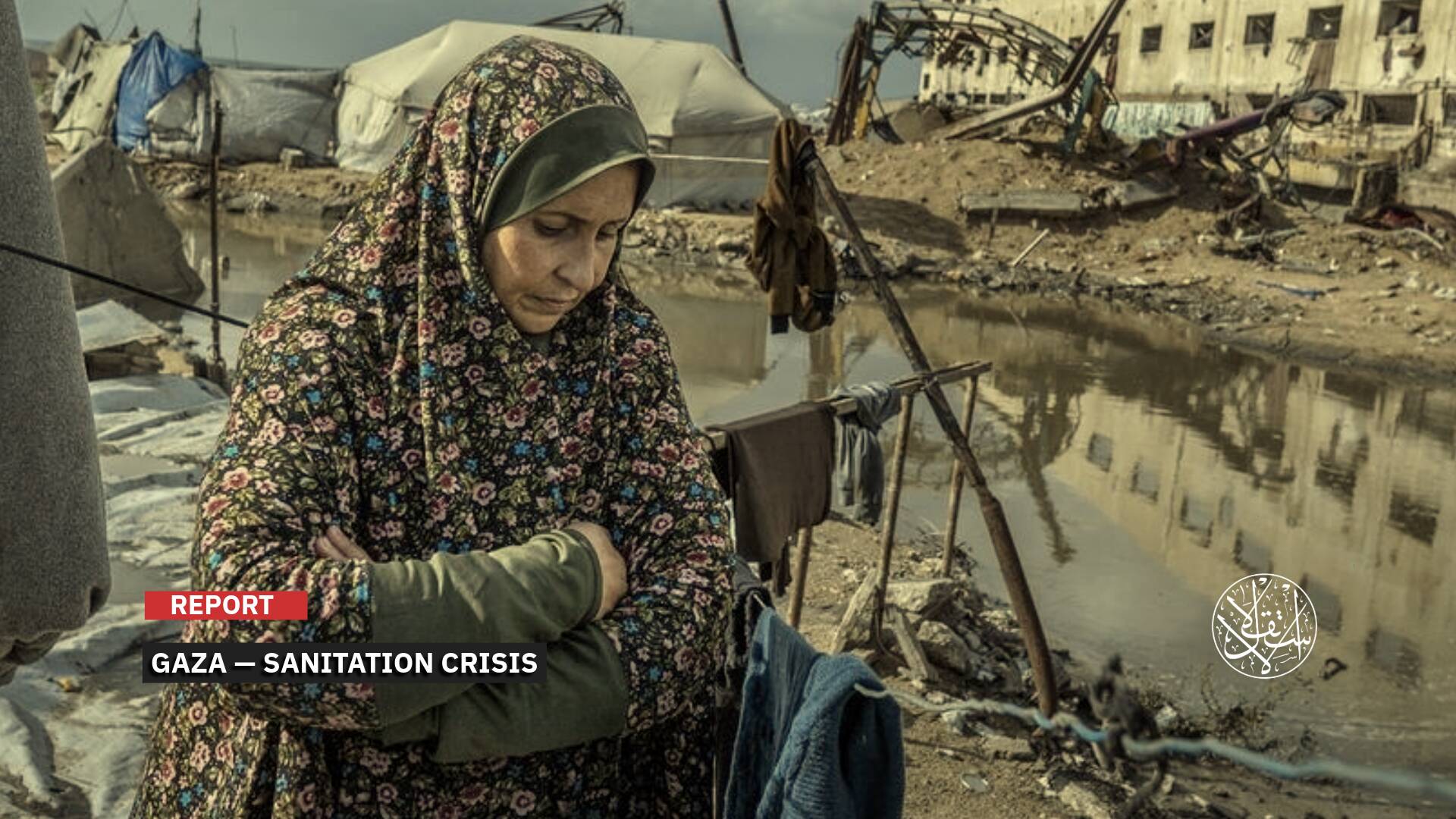
The danger left behind by the Israeli aggression on Gaza extends beyond the buildings destroyed in the bombardment to those still standing. Thousands of families have returned to homes stripped of walls and roofs, while the Ministry of Public Works and Housing estimated on September 19, 2026, that more than 3,000 buildings urgently needed intervention.
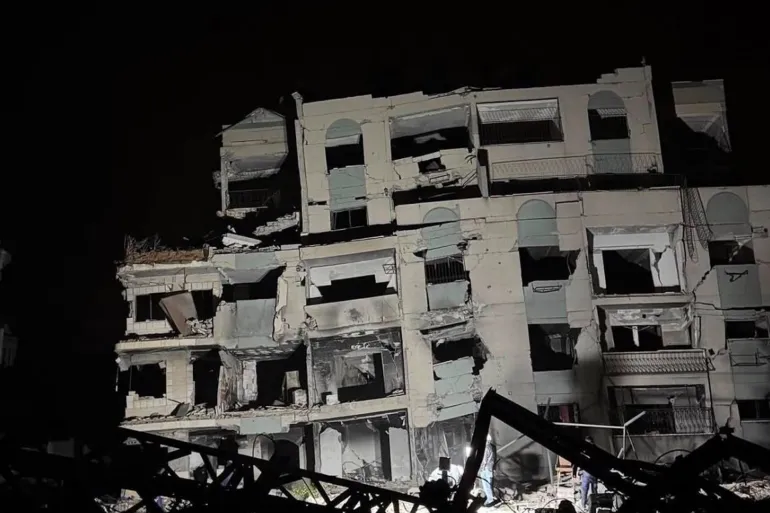
The collapse of the al-Saada building in Gaza City on September 16 exposed the immediate human cost of that danger. The families living there knew the building had been damaged, but with shelter options running out, they had little choice but to remain. The building eventually collapsed, killing 21 Palestinians.
Two days later, the roof of another building collapsed after a brief spell of rain, injuring four children. With the rainy season approaching, thousands of buildings now need to be inspected, reinforced, or demolished, while Gaza faces severe shortages of shelter, equipment, and repair materials needed to confront the devastation left by the Israeli Occupation.
Thousands of Buildings Damaged
A report published by the United Nations Office for the Coordination of Humanitarian Affairs (OCHA) on September 4 said two shelter-sector partners had carried out detailed field assessments since January covering 38,240 buildings containing 178,632 housing units.
Of those, 70,691 units, or 40 percent, were classified as habitable or as having minor to moderate damage. The remaining 107,941 units, or 60 percent, were severely damaged, destroyed, or otherwise uninhabitable.
A separate assessment by the Shelter Cluster, the humanitarian coordination framework for organizations working on shelter, in cooperation with the Norwegian Refugee Council, estimated that about 320,181 housing units had been damaged, affecting nearly 1.7 million people.
A joint assessment by the World Bank and the United Nations in April 2026 estimated that 76 percent of housing units across the Gaza Strip had been damaged or destroyed.
At the end of 2025, the Engineers Syndicate in Gaza launched an initiative allowing residents to request inspections of damaged homes. Teams of engineers and specialists would visit the properties, assess their structural safety, and provide owners with technical recommendations. The initiative was aimed particularly at families unable to afford private engineering assessments.
In a field assessment conducted by the Shelter Cluster and published in August, structural engineers worked alongside researchers to evaluate shelter conditions among 1,951 families across northern Gaza, Gaza City, Deir al-Balah, and Khan Younis.
Buildings were classified according to five levels of damage, ranging from no damage to minor, moderate, and severe damage, as well as partial collapse. Researchers were trained before the assessments, and their work was subject to field supervision and daily review.
The Engineers Syndicate carries out technical inspections of homes, while the Ministry of Public Works identifies the buildings considered most dangerous and requiring urgent intervention. But the classification process remains divided between these tracks, without a unified Palestinian protocol setting numerical standards for decisions on whether a building can remain occupied, should be reinforced, evacuated, or demolished.
The engineering assessment largely depends on the extent to which structural elements have been damaged. Samer Faraj, an engineer and director of Etqan Engineering Consultancy, said field inspections in Gaza had identified cracks in foundations and load-bearing walls, missing sections of roofs, and suspended concrete elements, as well as damage to key structural supports.
He told the Hafryat website that some buildings could be stabilized quickly before their load-bearing elements were repaired, while damage in others was severe enough to require controlled demolition. He estimated that 60 to 70 percent of the buildings classified as “dangerous” would need to be demolished.
After the collapse of al-Saada building, Abdullah Thabet, a board member of the Palestinian Authority of Engineering Offices and Companies, said exposed reinforcing steel, leaning walls or facades, hanging structural elements, and damage around foundations were among the clearest warning signs.
He called for emergency engineering teams to survey buildings and classify them according to their level of risk, while reinforcing those that could still be saved with steel or wooden supports and placing warning signs and safety perimeters around structures considered highly dangerous.
Why Are They Living There?
In central Gaza, Abu Mazen al-Ashqar returned to his damaged home with his wife and children after repeated displacement had exhausted the family. He told Al-Estiklal that an engineer had inspected the building and warned the family about its condition after the columns and roof were damaged and the floor began to tilt.
He said the family could see the slope when water spilled onto the floor and moved in one direction, while rain seeped through the roof and cracks remained visible in the walls and concrete elements.
Al-Ashqar said the family had gathered stones from around the house and used corrugated metal sheets, tarps, and curtains to close the gaps and make part of the home habitable again. But repairing the columns and roof was beyond their financial means.
Returning to a tent would mean entering another cycle of displacement, he said, while he could not afford to rent another home. So he and his family remained inside the building despite knowing the risks, hoping to repair it or find safer shelter.
Many families have made the same choice after three years of repeated displacement. A survey by the Shelter Cluster and the Norwegian Refugee Council found that 77 percent of those surveyed remained displaced, while 22 percent had returned after being displaced. Another 45 percent said they had been displaced seven times or more.
About 1.98 million people, or nearly 94 percent of Gaza’s population, also need shelter assistance and essential household items. Finding alternative shelter is complicated by the cost of repairing homes and the shortage of alternatives. Some 71 percent of families living in damaged buildings said they could not afford the materials needed for repairs, while about two thirds of the households surveyed were living in tents or makeshift structures. More than half of those using tents had been living in the same tent for more than a year.
Shaina Low, the communication adviser for the Norwegian Refugee Council, said some residents were choosing to remain in dangerous buildings because a tent could be an even worse option, amid shortages of shelter supplies and deliveries that remain far below the level of need.
Tents carry their own risks as winter approaches. Some 54 percent of surveyed families reported rainwater leaking into their shelters, while 71 percent said they had experienced flooding since the previous winter. More than half of the families affected by flooding said the water had caused additional damage to their shelters.
As tents deteriorate under prolonged exposure to sun, wind, and rain, returning to a home with cracked walls can become, for some families, a way to regain a roof, some privacy, and a fixed place to live after months of displacement.
The financial crisis reached its most devastating point at the al-Saada building, where about six displaced families were living despite knowing that the structure was unstable.
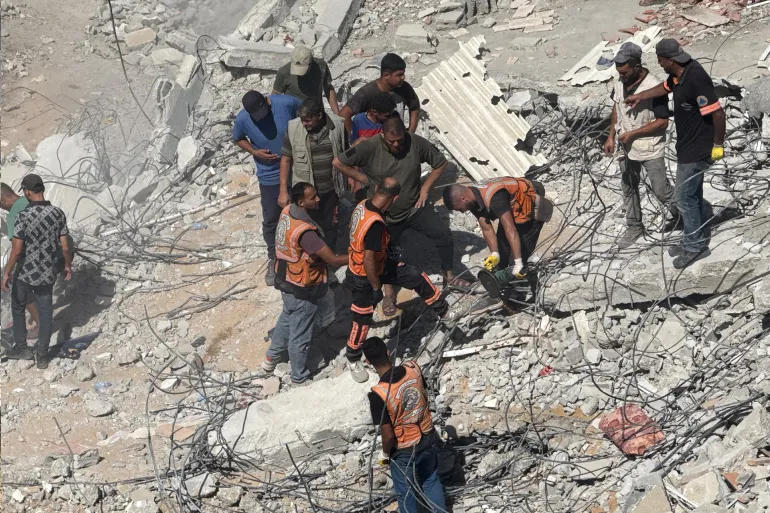
Aboud Majdalawi, a Palestinian civil defense worker involved in the rescue effort, told the Associated Press (AP) that the lack of options and alternatives had kept residents inside. Survivor Nader al-Ajla said his family had moved into the building after failing to find other shelter, only to find some of his relatives trapped under the rubble after the collapse.
Civil defense teams worked with a severe shortage of excavators and fuel, forcing some rescuers to dig with their bare hands to reach people trapped beneath the debris.
The Winter Threat
The previous winter brought a series of building collapses involving structures that had already been damaged. On January 14, 2026, OCHA said 25 people, including children, had been killed since mid-December in weather-related building collapses.
A four-story building in the Maghazi refugee camp collapsed on January 5, killing a man and his eight-year-old son and injuring five others. By January 13, the Shelter Cluster had identified 67 occupied buildings in Gaza City at risk of collapse, while efforts to evacuate their residents were hampered by the lack of safe alternative places to relocate them.
On September 18, two days after the collapse of the al-Saada building, a brief spell of rain caused the roof of another building in Gaza City to collapse, injuring four children, as warnings grew over the impact of the rainy season on buildings weakened by the Israeli heavy bombardment.
In a report published on September 11, OCHA said humanitarian organizations were struggling to improve drainage, reinforce shelters, and maintain access routes because of shortages of funding, materials, and equipment.
The shortage of materials has forced residents to improvise, including reusing wooden pallets and empty flour sacks filled with sand to limit flood damage. Gaza is now entering another winter after 71 percent of families surveyed by the Shelter Cluster reported experiencing flooding during the previous winter, while 54 percent said rainwater had leaked into their shelters.
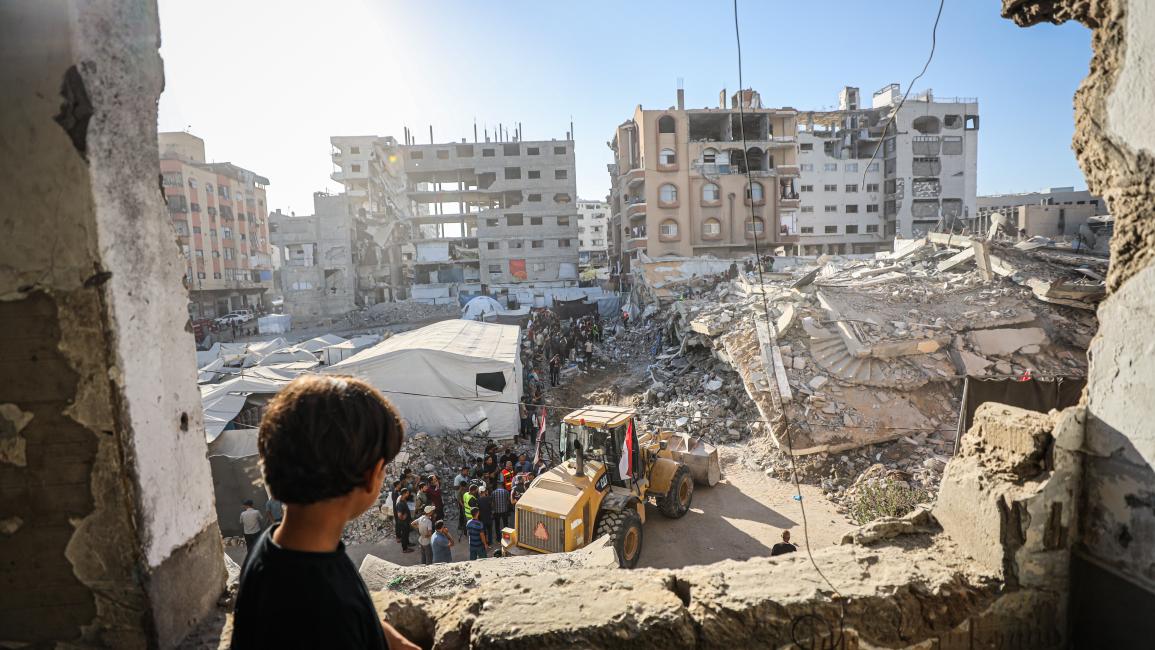
Reinforcement and demolition efforts are also facing a severe shortage of equipment. Adel Abu Hammad, an engineer with Farid Baroud Kayan Contracting, which operates in Gaza’s construction sector, said his company received an urgent request at dawn from the United Nations Development Program to move equipment from Khan Younis to the site of the Al Saada building collapse.
But reaching the site required clearing roads filled with rubble, and only about two heavy excavators were operating there by dawn. A shortage of equipment transporters also prevented additional machinery from reaching the site.
Aref Abu Ouda, an engineer and board member of the Palestinian Contractors Union in Gaza (PCU), said the remaining machinery was suffering from shortages of engine oil, spare parts, and tires, leaving some contractors’ equipment out of service.
The PCU estimated that effectively addressing structural risks and clearing rubble over a period of about two years would require nearly 100 excavators, between 200 and 250 loaders, and between 400 and 500 trucks.
Roqaya Abualrub, head of the Gaza Reconstruction Team at the Ministry of Public Works and Housing, said the operating efficiency of available equipment had fallen by more than 55 percent because of wear and tear and shortages of maintenance supplies, engine oil, and spare parts. She said there was also a need for specialized equipment for the controlled demolition of high-rise buildings, as well as hydraulic breakers and shears.
Restrictions imposed by the Israeli Occupation on the entry of materials and supplies have made it even harder to prepare homes for winter. In September 2026, the International Organization for Migration resubmitted a request to bring in about 37,000 pieces of timber and 660 emergency shelter kits after Israeli Occupation authorities had rejected the request twice for “security reasons.”
Between early March and September 11, Israeli authorities approved 13,445 liters of engine oil, while another 92,778 liters remained awaiting approval. Only 12,175 liters had actually entered Gaza, despite the material being needed to operate vehicles and heavy machinery used to clear rubble and reopen roads.
The Palestinian Civil Defense, the Ministry of Public Works, and humanitarian organizations have all reported shortages of excavators, fuel, reinforcement materials, and spare parts. The capacity of the machinery still operating has also declined under the combined effects of widespread destruction, the Israeli blockade, and the lack of essential maintenance supplies.
Sources
- War-damaged Gaza building collapses, killing 20 people sheltering inside
- Rescue efforts end after 21 die in collapse of bomb-damaged building in Gaza; 45 saved from rubble
- Shelter Severity and Household Needs Across Accessible Areas of Gaza
- Gaza: 94 per cent of households in need of shelter aid
- Fatal building collapse highlights dangers plaguing Gaza nearly a year after ceasefire
- Humanitarian Situation Report | September 11, 2026 [Arabic]
- Statement by Dr. Ramiz Alakbarov, Humanitarian Coordinator for the Occupied Palestinian Territory, on the Collapse of a Building in Gaza [Arabic]