How Did Morocco’s Islamists React to Upgraded Diplomatic Ties With 'Tel Aviv'?
They said Morocco has entered a phase of “malicious Zionist domination.”
Morocco and the Israeli Occupation agreed to upgrade their liaison offices to embassies, drawing widespread criticism and anger across Morocco.
On September 16, 2026, the Israeli Occupation announced that it had agreed with Morocco to upgrade diplomatic representation and open embassies in both countries, following a meeting between the two foreign ministers in New York under U.S. auspices.
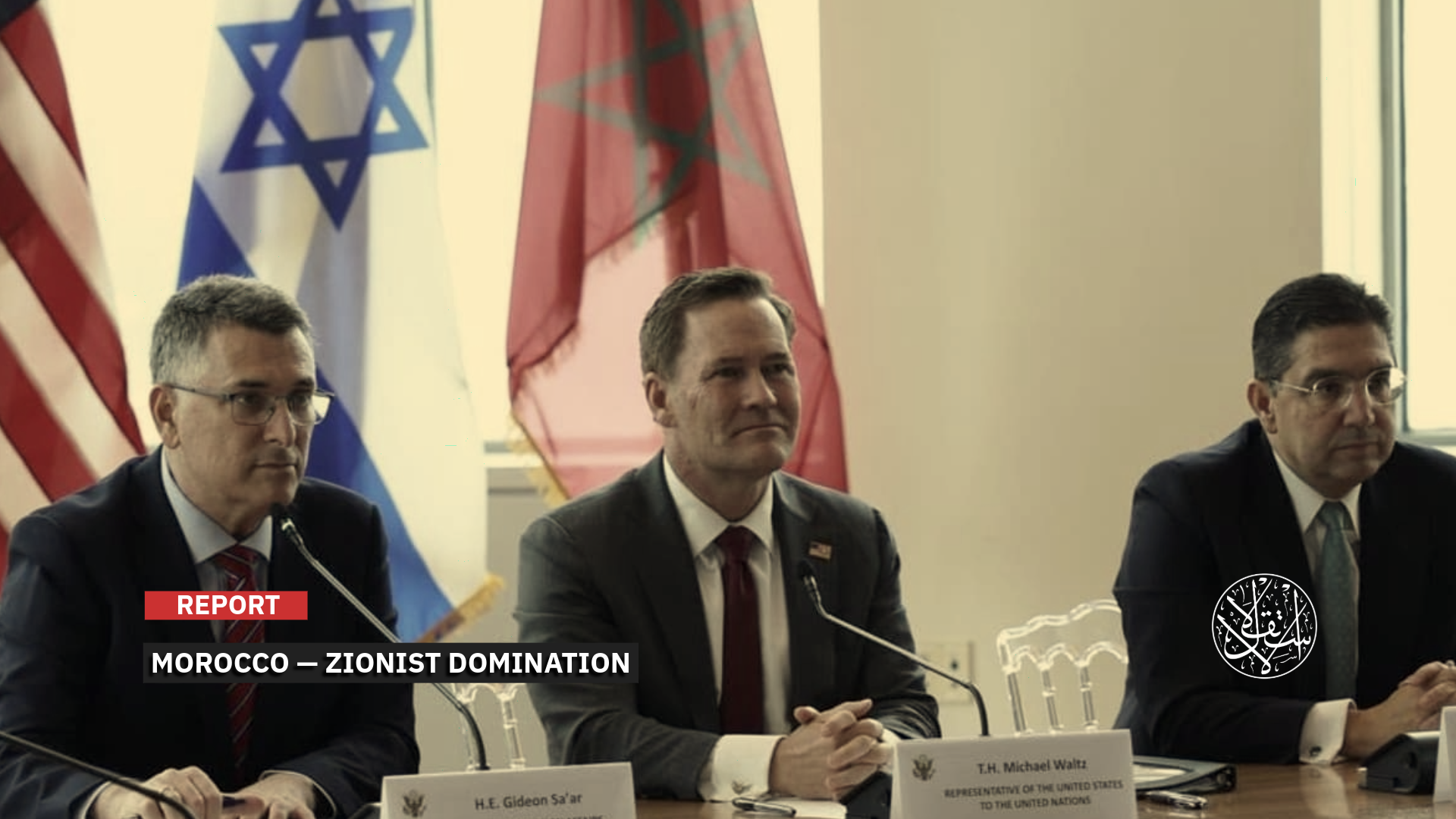
In a statement, the Israeli Foreign Ministry said Foreign Minister Gideon Sa’ar held a trilateral diplomatic meeting in New York with Moroccan Foreign Minister Nasser Bourita at the invitation of U.S. Ambassador to the United Nations Mike Waltz.
The statement said the three countries reaffirmed their commitment to a series of measures aimed at strengthening relations between the Israeli Occupation and Morocco, including upgrading the two diplomatic missions to embassy level and appointing ambassadors.
The Times of Israel also reported that Morocco and “Israel” had agreed to finalize two agreements on investment protection and the avoidance of double taxation by the end of 2026, with the aim of facilitating mutual investment and strengthening economic and trade ties between the two countries.
The same source added that the agreement also included reciprocal high-level visits in the coming months as part of efforts by both countries to strengthen bilateral relations.
Morocco and the Israeli Occupation announced the resumption of diplomatic relations in December 2020 following the signing of a trilateral agreement between Morocco, the United States, and “Israel,” before the Israeli Occupation opened its liaison office in Rabat in 2021.
Human Rights Organizations
The development sparked angry reactions from organizations and groups in Morocco that support Palestine and oppose normalization with the Israeli Occupation, including the Moroccan Observatory Against Normalization (MOAN).
In a statement issued on September 17, MOAN said it saw the development not merely as a rejected form of diplomatic normalization but as a process moving toward the normalization of influence, discourse, and penetration, ultimately seeking to normalize a new vision and image of Morocco itself, turning it into the “Holy Kingdom of the Children of Israel.”
It strongly condemned the announcement of upgrading diplomatic representation with a genocidal, ethnic cleansing, and apartheid entity to embassy level and exchanging ambassadors.
MOAN called on the Moroccan state to end what it called the failed “Bouritism,” a reference to the surname of the foreign minister, which it said had brought the country to the brink of collapse and would lead to catastrophe if the “recklessness” continued. It also called for an end to the process, the closure of the Israeli Occupation liaison office, and the termination of all forms of cooperation that undermine national sovereignty.
It condemned all manifestations of Israeli penetration into Morocco’s political, cultural, media, symbolic, and religious spheres, rejecting turning Morocco into a sphere of influence for the Zionist project, using the issue of the Moroccan Sahara as a pretext for normalization, or turning territorial integrity into a bargaining chip with any foreign power.
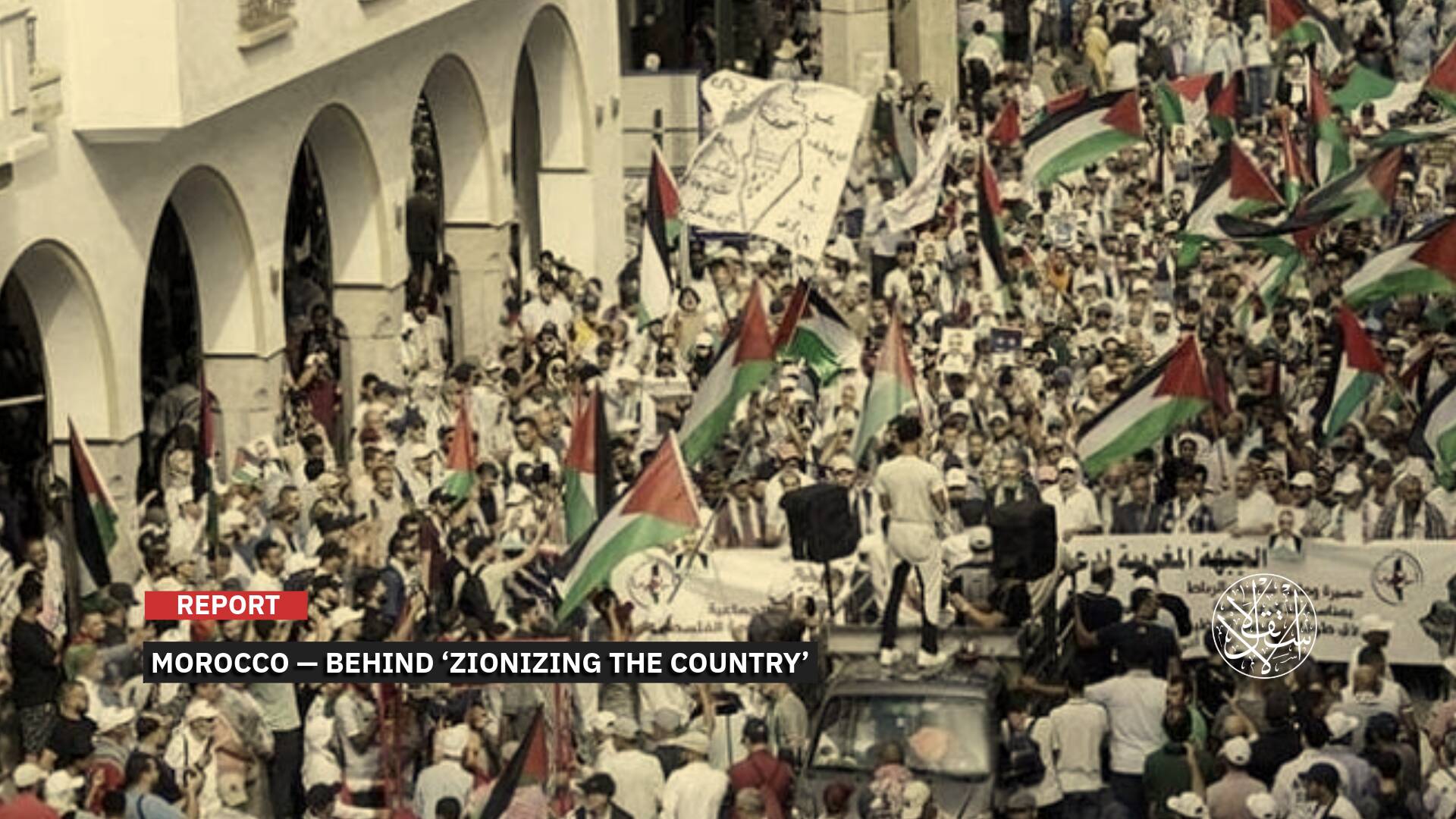
MOAN called on all active national forces, including political, trade union, human rights, and civil society organizations, as well as the Moroccan people as a whole, to continue popular, civic, and political mobilization against the normalization process and all forms of Israeli penetration.
The National Action Group for Palestine (NAGP) also strongly condemned the decision to upgrade diplomatic representation with the Israeli Occupation to embassy level and called for cutting all ties with “Israel.”
In a statement issued on September 17, 2026, it expressed its absolute rejection and disgust at the move, saying its timing was particularly alarming and raising questions about whether there are people in Morocco working to support Israeli crimes against the Palestinian people.
It said the move comes amid the continuing humanitarian tragedy and genocide in the Gaza Strip, at a time when serious violations against the Palestinian people remain the subject of international reports, investigations, and condemnations.
NAGP considers upgrading relations from liaison office to embassy level a dangerous shift in dealing with a criminal enemy whose leaders, soldiers, and settlers are being pursued by international courts, and at a highly sensitive time for the Palestinian people. It said it rejects and opposes the move in line with its longstanding opposition to normalization in all its forms.
It also expressed strong surprise at the government’s decision to take such a major step without listening to the position of the Moroccan people and its active forces, which oppose normalization with an enemy and occupying entity that openly declares its expansionist intentions and threatens Arab national security.
The Moroccan Authority for the Support of the Nation’s Causes (MASNC) also strongly condemned what it described as the government’s rush to accelerate normalization with the Israeli Occupation, viewing it as a submission to the Israeli will and interests and a disregard for the views and sentiments of the Moroccan people, who oppose various forms of Israeli penetration and normalization.
In a statement issued on September 17, it denounced the move to turn relations with the Israeli Occupation into advanced diplomatic and economic partnerships while the Palestinian people continue to face occupation, aggression, displacement, and settlement expansion.
It added that the move opens the door for “Israel” to gain further political and economic legitimacy, rather than using international relations to pressure it to end the occupation and enable the Palestinian people to secure their legitimate rights.
MASNC also rejected the announced economic arrangements and agreements, including those concerning investment protection and the avoidance of double taxation, as well as the expansion of cooperation and reciprocal visits, viewing them as an expansion of normalization and an effort to entrench “Israel’s” presence in Morocco.

Party Positions
At the party level, the Justice and Development Party (JDP), led by former Prime Minister Abdelilah Benkirane, responded to the news by holding what it described as an “urgent and extraordinary” meeting of its general secretariat.
In a statement issued on the occasion, the party reaffirmed “its firm and steadfast position rejecting and opposing all forms of normalization and all relations and agreements with the occupying Zionist entity, which continues its genocide and crimes against the brotherly Palestinian people.”
“The party has consistently reaffirmed this position through statements issued by its various institutions and bodies, most recently in its election platform,” it added.
JDP linked the public’s rejection of the developments to the legislative elections, calling on citizens to turn out in large numbers to choose those who will defend the country’s vital interests, foremost among them national and territorial unity, as well as the causes of the broader Arab and Muslim world, particularly the Palestinian cause.
Jamal el-Asri, secretary-general of the Unified Socialist Party, also weighed in, saying his party’s election platform calls for “ending all forms of normalization with the Zionist terrorist entity” and scrapping any agreements that stem from it, regardless of their scope or the sector involved.
In a post on his Facebook account, el-Asri stressed “the political responsibility of the three parties forming the current government, the RNI, PAM, and Istiqlal, for this move to strengthen relations with those who destroyed, killed, displaced, and starved our brothers and sisters in Palestine.”
The leftist politician also criticized the silence of many parties on normalization, saying they appear to take the view that “foreign policy is none of our business; it does not concern us and is not among our priorities.”
El-Asri called for “deep political and constitutional reforms to establish popular sovereignty and, with it, national sovereignty.” He stressed that his party would not accept the country “joining hands with terrorist murderers” and would continue to reject all forms of normalization with “this illegitimate entity.”
Public Reactions
Rachid Benkirane, a university professor specializing in Islamic studies, said the new announcement “comes at a time when the people of Palestine are facing further forms of genocide at the hands of that usurper, and at a time when Islamic law, justice, and support for the oppressed require a position that puts pressure on those responsible to end the injustice against them.”
In a Facebook post, Benkirane stressed that political interests cannot be served by responding to the suffering of the oppressed with further signs of diplomatic rapprochement with the aggressor, warning that “the sanctity of human life and rights is a fundamental principle that political calculations cannot override.”
“Accordingly, as a Moroccan Muslim, I condemn this agreement [...]. I have nothing but this pen: O God, I disassociate myself before You from this decision.”
Academic and human rights activist Latifa el-Bouhsini also rejected the agreement between Morocco and the Israeli Occupation.
Addressing those behind the decision, she said, “You chose the criminal entity. We have made our choice clear: to support the Palestinian people and stand with them in their struggle for liberation.”
“Even if you build thousands of embassies, be certain that this shameful decision will only fuel division, without bringing any real benefit,” she added.
“On the contrary, be certain that our hostility toward, hatred of, and rejection of Zionists will only grow stronger. We will never accept this disgraceful intrusion.”
She stressed that “nothing at all can justify this downfall or these ties with an entity that is facing growing rejection from people around the world, including in Europe, which was behind its creation.”
Questions Over Implementation
From another perspective, The Voice noted that the new agreement between Morocco and “Israel” to upgrade diplomatic relations did not set a timeline for opening the two countries’ embassies, despite both sides announcing plans to elevate their diplomatic missions to embassy level and appoint ambassadors.
In an analysis published on September 16, the website pointed out that announcing a move to embassy-level relations is not unprecedented in the history of ties between the two “countries.” On August 12, 2021, then Israeli Foreign Minister Yair Lapid announced during a visit to Morocco that the two “countries” had agreed to open embassies within two months.
He even said Bourita was expected to travel to “Israel” in October or early November to open the Moroccan Embassy in “Tel Aviv.”
In June 2022, Lapid again announced that Bourita would visit the Israeli Occupation during the summer to open the Moroccan Embassy, but the visit never took place.
The same source noted that the relationship later stalled following Operation al-Aqsa Flood and “Israel’s” war on the Gaza Strip, which affected the pace of ties and air links between the two “countries.”
Royal Air Maroc suspended flights to “Tel Aviv” after the war broke out, and the suspension lasted for an extended period, reflecting the slowdown in the normalization process during that period.
Alongside the embassy issue, The Voice said the two sides announced plans to finalize agreements on investment protection and the avoidance of double taxation before the end of 2026, while expanding direct flights to include Moroccan airlines, with the new flights expected to begin in the coming weeks.
The announcement did not identify the airlines involved or specify the number and schedules of flights. Nor did it disclose details of the two economic agreements.
The website therefore said the new agreement revives steps that had already been announced as part of Moroccan-Israeli relations but once again leaves the details of implementation unclear, particularly the date the embassies will open, the names of the ambassadors, and when they will begin their duties, as well as the details of the economic agreements and new flights.
Political Reading
Academic Mohamed Awam described the agreement between Morocco and the Israeli Occupation to exchange ambassadors as “another setback and a major predicament, confirming that we have entered a new phase of malicious Zionist domination over Morocco.”
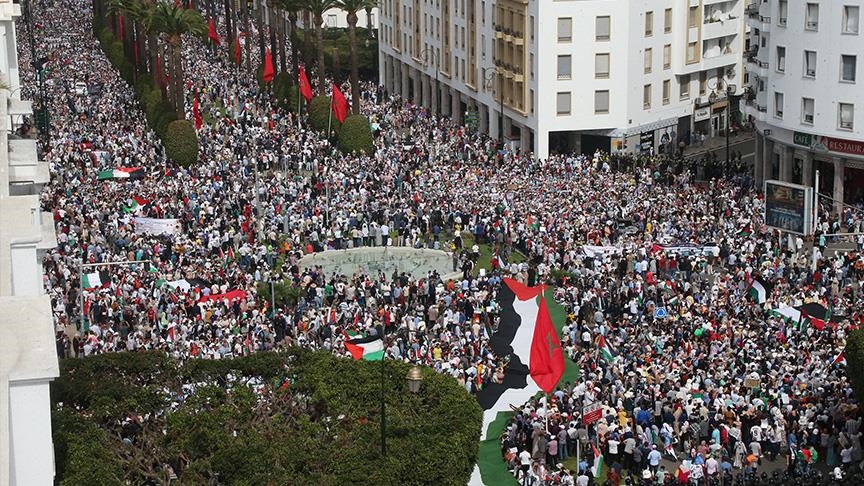
In comments to Al-Estiklal, Awam stressed that the decision goes against the will of the people at a time when attention is focused on the election campaign for the September 23, 2026, legislative elections, and despite what the Moroccan people have expressed through marches, rallies, and organizations in rejecting normalization.
He said the decision to exchange ambassadors and upgrade diplomatic ties ignores all of this, showing no regard for the voices that have grown hoarse, the writers who have condemned the move, or the statements that have rejected it.
“Frankly, we have entered a new phase of soft occupation of Morocco by an illegitimate, Nazi entity that destroyed Gaza and continues its arrogance and domination, even as reports, including Israeli ones, say that this entity is collapsing and nearing its end. There is no doubt that it will disappear, God willing.”
Awam then raised what he described as a key question: “Will this diplomatic development between the new Morocco, Morocco after normalization, and this malicious Zionist entity usher Morocco into a phase of implementing what they call the ‘Morocco Plan,’ which calls for establishing a Jewish state on its territory extending southward, through soft means, of course?”
“Or will they be content with absolute domination and control over the key institutions of the Moroccan state, especially given that the Zionist octopus has extended into every sector and taken over every sphere?”
“Whatever the case,” he continued, “we are witnessing a very dangerous development. At a time when the political elite is preoccupied and the popular will is absent, this ill-fated decision has been taken, with consequences that will not serve the Moroccan state well.”
Awam concluded by reaffirming his categorical rejection of any relationship with the criminal Zionist enemies of the nation, arguing that these ties will have harmful consequences and calling on the state to reverse the decision out of respect for religion and Palestine and for the Moroccan people who reject normalization.
Sources
- Israel, Morocco agree to appoint ambassadors, upgrade ties as FMs meet
- From a 2021 Promise to a 2026 Deal: Moroccan and Israeli Embassies Still Without a Date [Arabic]
- Justice and Development Party Reaffirms its Firm and Deep-Rooted Position Rejecting All Forms of Normalization With the Criminal Zionist Entity [Arabic]