Western Raids And Funding: What Is Turkiye Targeting With Its ‘My Family Is Safe’ Campaign?
In the transfers involving the U.S. Department of State, MASAK reported $113,591.
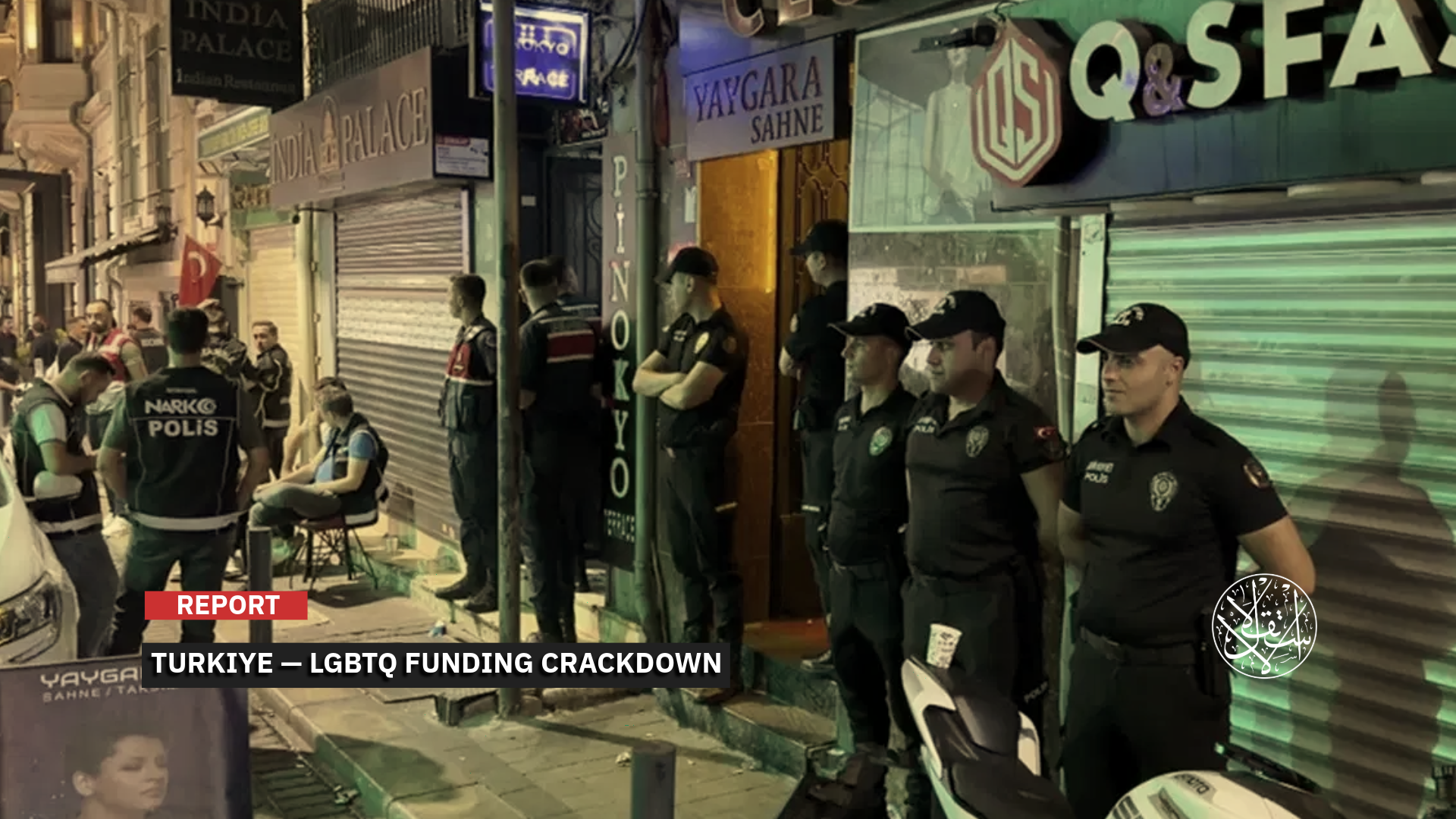
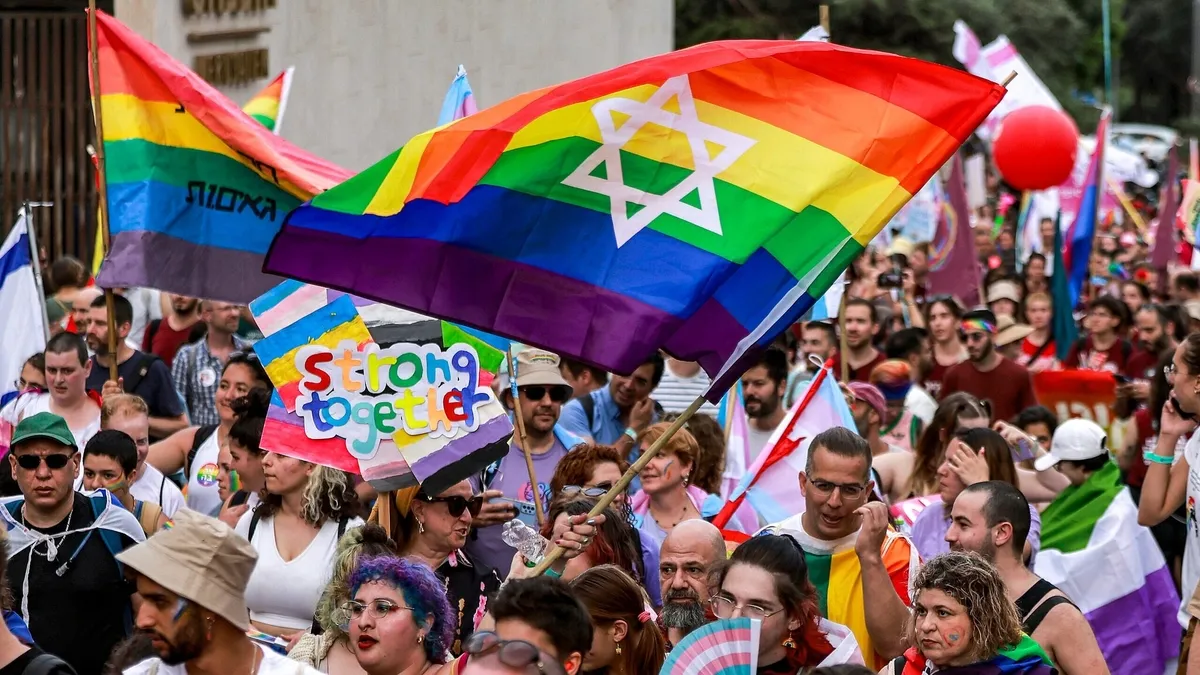
In a security campaign spanning 15 provinces, Turkish authorities raided the offices of associations, entertainment venues, and homes, and opened an investigation into foreign financial transfers to organizations serving LGBTQ people, placing the “My Family Is Safe” operation at the intersection of security, Western funding, and government policies aimed at protecting the Turkish family.
On September 13, 2026, Turkiye’s Ministry of Justice announced judicial measures based on investigations into activities involving prostitution, obscene content, and drugs.
Turkish newspapers, meanwhile, published details of funds received from U.S. and European entities, including government institutions, diplomatic missions, and independent foundations.
The local newspaper Yeni Akit described the campaign as the “largest cleanup” to have upset the Western world, while the government presented the operation as part of its responsibility to protect children and the social order. Conservative writers and activists welcomed the campaign.
While the financial transfers involved sums sent over several years to organizations linked to these activities, the case has raised questions about the scale of the funds, the main senders and recipients, how Turkish officials linked the campaign to family-protection policies, and what supporters of the campaign want to see in the next steps.
Suspicions and Raids
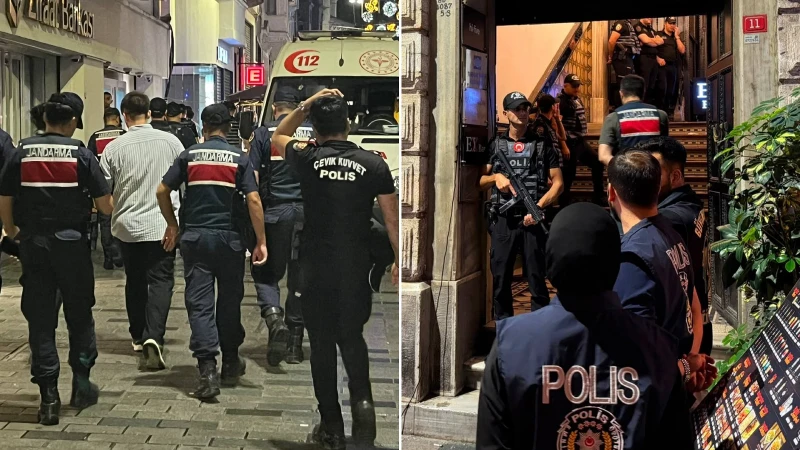
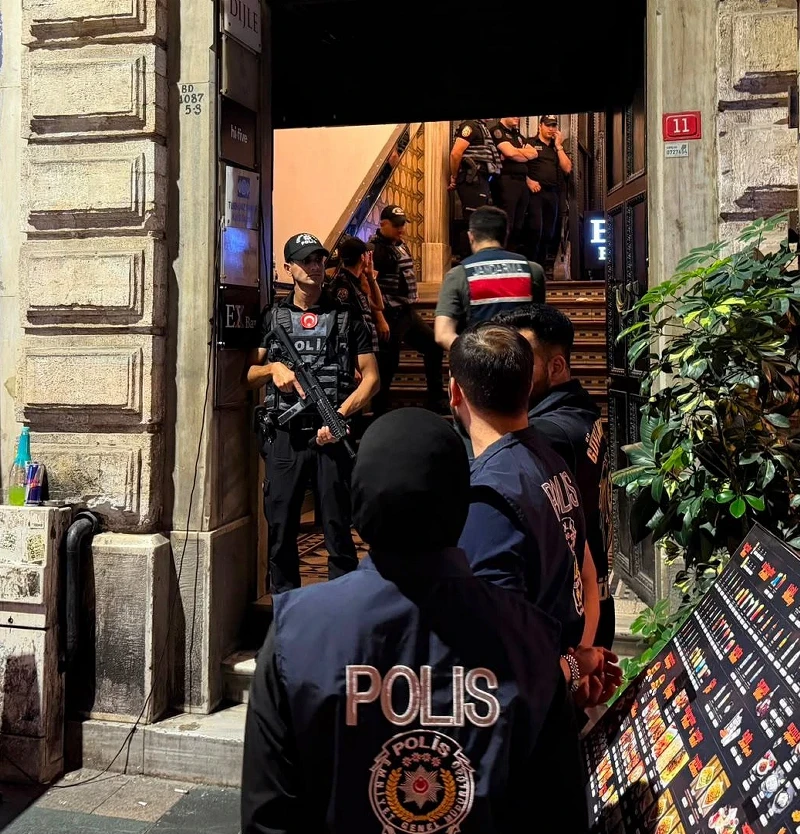
The public prosecutors’ offices in Istanbul, Ankara, Izmir, Aydin, and Mersin coordinated the investigations carried out by the police and gendarmerie. The measures targeted 162 suspects, nine associations, and 13 commercial establishments.
These figures refer to the individuals and entities subject to judicial proceedings and do not mean that all of the suspects were remanded in custody.
Authorities said the investigation concerned facilitating homosexuality and prostitution, providing venues for such activities, producing and distributing obscene content, and exposing children to such content, alongside other activities that are still under investigation.
Justice Minister Akin Gurlek said the raids followed the use of undercover investigators, field and technical surveillance, witness interviews, and the analysis of recordings and digital materials.
The official statement, as reported by the Turkish press, said that drugs, devices, and digital materials were seized during simultaneous detention, search, and seizure operations, without publicly providing details linking each seized item to a specific association or to every individual covered by the measures.
The measures also extended into the digital sphere. Turkish reports said that 73 websites and accounts were blocked, including platforms belonging to the associations Kaos GL, Lambda Istanbul, SPoD, Pink Life, and 17 May.
According to the Turkish Freedom of Expression Association (IFOD), the blocks also affected the accounts of Evrensel newspaper, Amnesty International Turkiye, Academics for Peace, and the Media and Law Studies Association on X and Instagram.
Kaos GL, whose office was raided and whose officials were detained, said that the Ankara Public Prosecutor’s Office accused it of publishing content that it classified as obscene and that could be accessed by children.
Millions of Dollars
Data published by the newspapers Yeni Safak and Takvim, citing reports from the Financial Crimes Investigation Board (MASAK), showed that approximately $3.36 million had been transferred to six associations.
These figures cover different periods between 2011 and 2026 and do not represent funding for a single year or exclusively Western government funds.
SPoD, an association focusing on social policy and gender identity, topped the list with $1,570,692, followed by Hevi with $762,939, and Positive Living with more than half a million dollars.
Listag, which focuses on LGBT people’s families and relatives, received $314,220, while Lambda Istanbul received $103,650, and Pozitif-iz Association received $89,138.
Regarding transfers from the U.S. Department of State, MASAK reported that $113,591 reached SPoD through nine transactions, while $7,067 was transferred to Pozitif-iz Association through two transactions.
From the Netherlands, the newspaper reported approximately $127,000 transferred by the Ministry of Foreign Affairs to three associations, in addition to $92,189 from the Dutch Consulate in Istanbul to SPoD and Lambda Istanbul.
The French Embassy was reported to have transferred $11,799 to Pozitif-iz Association and $6,503 to SPoD. German government transfers totaling $106,950 were also reported as having gone to Listag and SPoD.
These figures concern the transfers highlighted in media reports and do not constitute a comprehensive accounting of all assistance provided by the countries mentioned.
The total funds received by the associations also combine multiple sources and cannot all be attributed to embassies or foreign ministries.
Regarding the connection between these transfers and the allegations under investigation, Turkiye’s Justice Minister said that the source of the financial movements and their relationship to the activities in question remain under investigation.
List of Funders
Alongside embassies and ministries, the list of funders included organizations that differ in nature from official government bodies.
Takvim reported transfers from the European Endowment for Democracy (EED) to the Hevi association totaling $182,955 in 2024 and 2025, and $38,194 to Listag in 2025 and 2026.
The newspaper also reported that the German Marshall Fund transferred approximately $24,864 to Listag, $24,839 to SPoD, and $13,644 to Positive Living in 2021.
The details also included a $200,000 transfer from Wellspring Philanthropic Fund to Hevi, $220,500 from Women Win to SPoD, and $149,951 from Rainbow Railroad to the same association, alongside organizations such as ILGA-Europe and Freedom House.
The identity of these organizations is important when examining the nature of the relationship between the funding and government bodies, as the donors do not all belong to the same category, nor do they necessarily have identical legal structures or ties to states.
The European Endowment for Democracy describes itself as a grant-making organization established by the European Union and its member states in 2013 to support democracy, with Turkiye among the countries covered by its work.
The organization says it supports civil society, independent media, and activists, and requires adherence to human rights, democratic values, and nonviolence. These are the EED’s stated objectives and do not, in themselves, constitute a response to the specific details of the Turkish investigation.
The German Marshall Fund, meanwhile, is an independent U.S.-based organization headquartered in Washington, D.C. It was established in 1972 with a gift from Germany and works to strengthen transatlantic relations.
Therefore, the organization’s name does not make it an agency of the German government, nor does it mean that its grants can be attributed to transfers made by official diplomatic missions.
Taken together, these figures point to different levels of external support, including direct government transfers, grants from organizations with European institutional ties, and funding from independent philanthropic organizations.
Family Protection
The Turkish government’s rhetoric links the campaign to a political and social agenda centered on protecting the family and ensuring the continuation of future generations.
Justice Minister Akin Gurlek explained that the operation is part of the “Family and Population Decade 2026–2035” vision and Presidential Circular No. 2026/4, invoking the state’s constitutional responsibility to protect the family and children.
“We will not tolerate any criminal organization, exploitation network, or illegal activity that targets our children, young people, and families,” Gurlek said in a statement concerning the investigations.
President Recep Tayyip Erdogan, meanwhile, wrote in the foreword to the vision document that “a strong Turkiye can rise only on the shoulders of strong families.”
He warned of the impact of digital technologies and cultural currents on the family and values, as well as declining population growth and fertility rates.
The document includes measures to encourage marriage and increase childbearing, prepare young people for adulthood, care for the elderly, support rural development, and achieve a balanced distribution of the population.
This framework places security policies within a broader government project that incorporates social and demographic considerations.
The vision of family protection therefore extends beyond security measures to issues of population, education, values, and social policies.
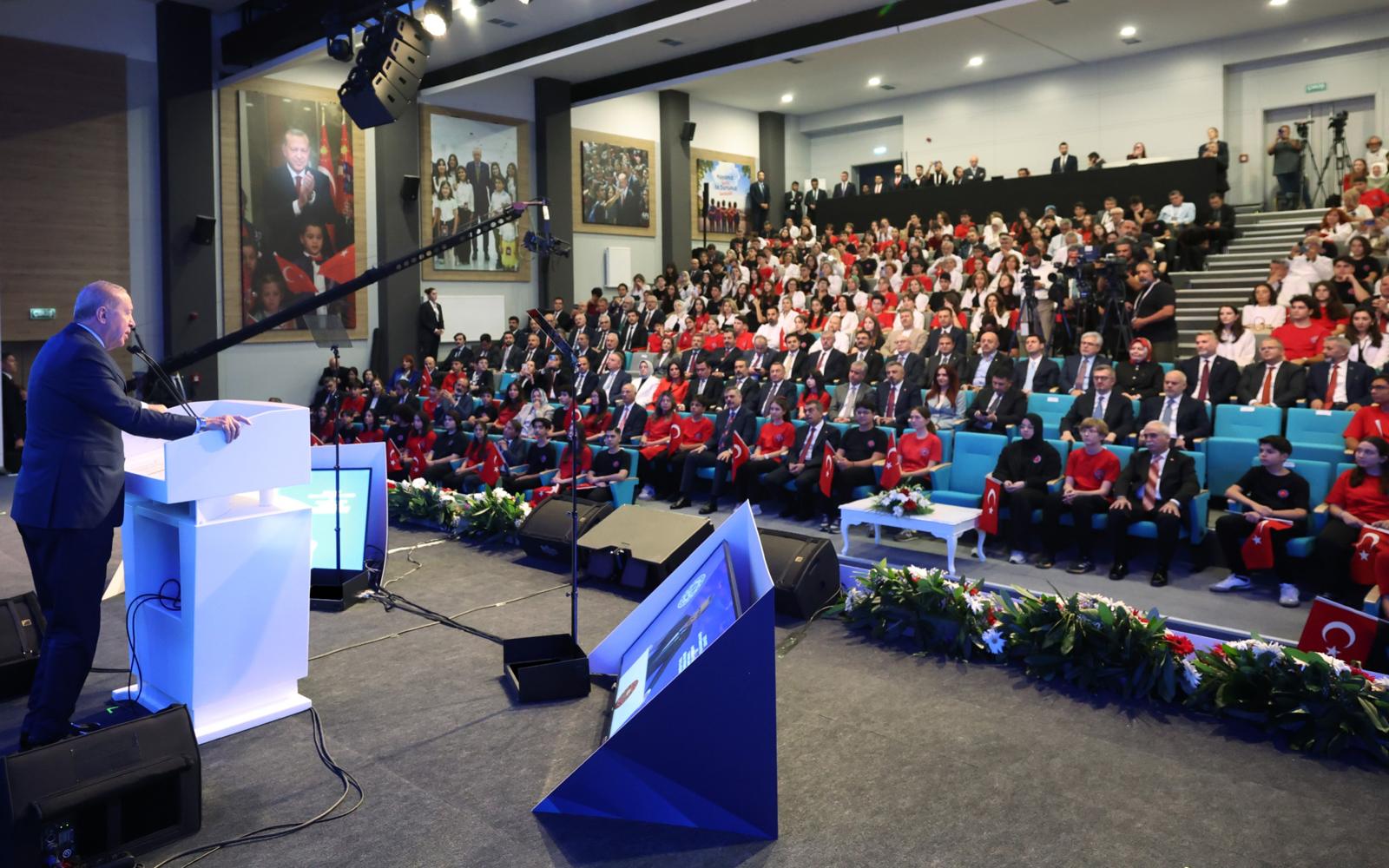
At the opening of the academic year on September 14, Erdogan called on families to pay as much attention to their children’s morals, respect for others, and commitment to national and moral values as they do to their academic success.
He also called for students to be made aware of the risks of technology while benefiting from the opportunities it provides.
In an earlier context concerning the protection of society, Interior Minister Mustafa Ciftci said during a meeting with local administration officials in Erzurum on June 5, 2026, that combating extremism requires consideration of its social, cultural, educational, and psychological dimensions, as well as working with institutions and associations to address its roots.
He called for strengthening “morality, conscience, goodness, and love,” saying that digital propaganda and content that normalizes violence constitute one source of threat.
In a parallel position on organized crime, Presidential Communications Director Burhanettin Duran stressed on September 14 the need to cut off sources of funding, prevent criminal propaganda online, and support families and social protection policies, while upholding the principles of the rule of law.
Calls to Expand the Campaign
Conservative circles welcomed the campaign as a response to calls for greater official intervention.
In an article published by Yeni Akit on September 14, writer Ali Kara Hasanoglu thanked the authorities for allowing the public prosecutors’ offices to take action, saying he believed the move had come late.
The writer criticized the Felicity Party and the newspapers Milli Gazete and Yeni Asya over what he described as their silence regarding the operation, despite their previous calls for the protection of the family.
In a subsequent article, he criticized the European position expressing concern over the arrests and addressed conservative writers whom he viewed as having moved closer to opposition positions.
On X, commentator Ferhat Murat announced his support for the operation “to the end,” calling for the investigation to go deeper into the case.
These positions reflect an emphasis on continuing the investigation and uncovering foreign links, alongside support for the raids and security measures.
Support for the government’s decision also came from Istanbul MP Burak Akburak, who wrote that he supported the “My Family Is Safe” operations and linked his position to protecting the family as the foundation of Turkish society.
Akburak belongs to the opposition Good Party (IYI Party), so his statement represents support for this particular operation and should not be classified as a position held by the governing coalition parties.
In a statement issued on September 15, the Bursa Family Platform described the operation as a national and historic step, calling for it to be expanded and for legal measures to be taken against what it considers the financial and digital extensions of international lobbying groups.
The platform also called for legislation banning the promotion of homosexuality in public spaces, educational institutions, the media, and digital platforms.
This shows that the demands of some supporters go beyond holding individuals accountable for specific alleged criminal acts and extend to calls for changes to the rules governing public activity and content circulated in educational and media spaces.