3 ‘Suicidal’ Steps Taken by Mansour Abbas Ahead of the Knesset Elections: What’s the Story?
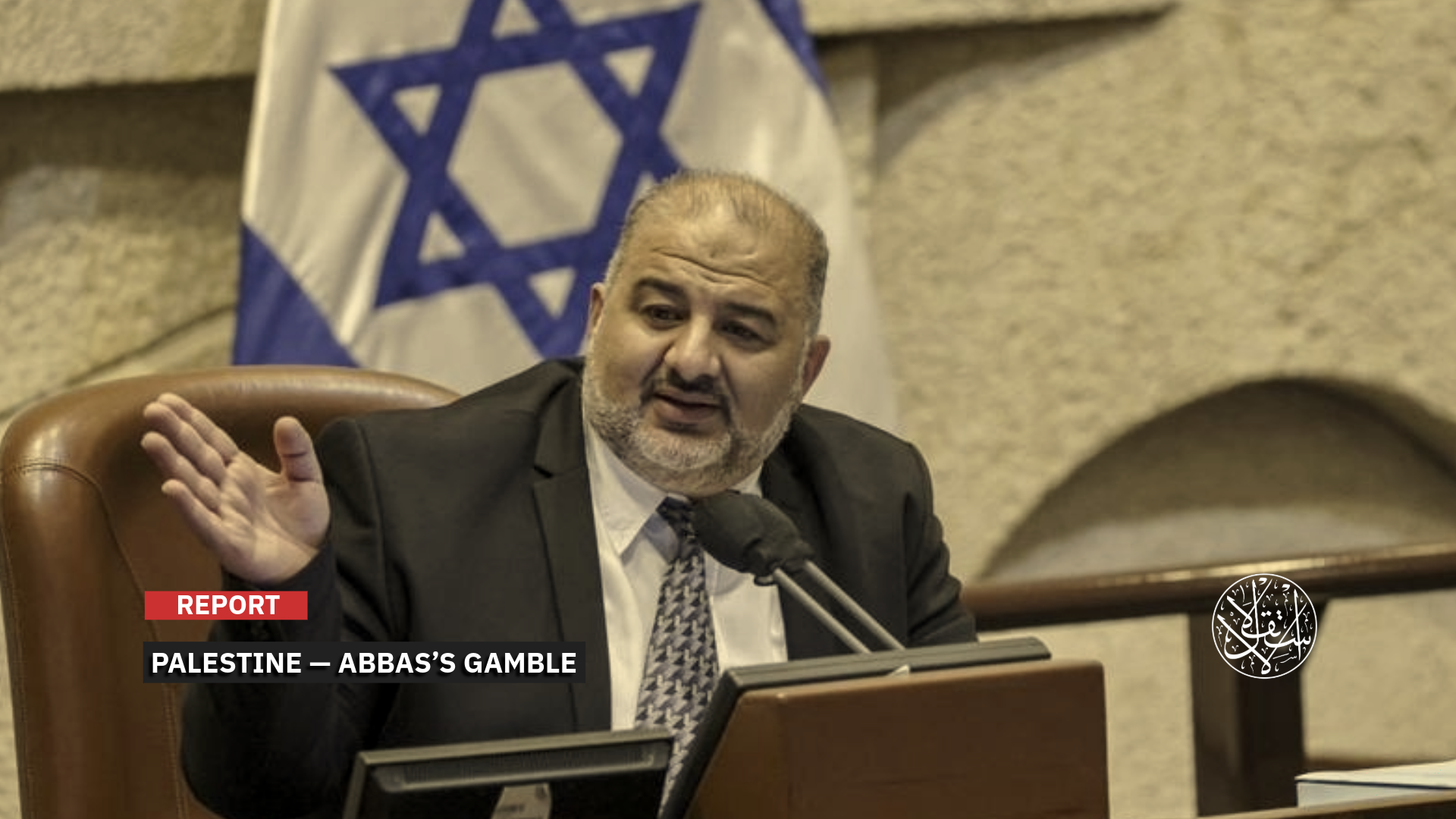
Opinion polls had projected between 15 and 17 seats for the expected four-party alliance.
Three steps described as major political gambles were taken by Mansour Abbas, head of the United Arab List, a party historically rooted in the Islamic Movement among Palestinian citizens of “Israel”, as his party prepares to contest the Knesset elections in “Israel”.
The first step: Abbas refused to join an electoral alliance with three parties representing Palestinian citizens of “Israel”, even though opinion polls projected the expected four-party alliance to win between 15 and 17 of the Knesset’s 120 seats, compared with only 7 to 9 seats for the three allied Arab parties and around 5 seats for the United Arab List if it contested the election separately.
The second step: He broke with the Islamic Movement and chose his candidates for the Knesset elections independently, for the first time without relying on the movement’s institutions.
In July 2026, Abbas ended the organizational ties between the United Arab List and the Islamic Movement, giving the party greater freedom to make its own political decisions and select its Knesset candidates as an independent body.
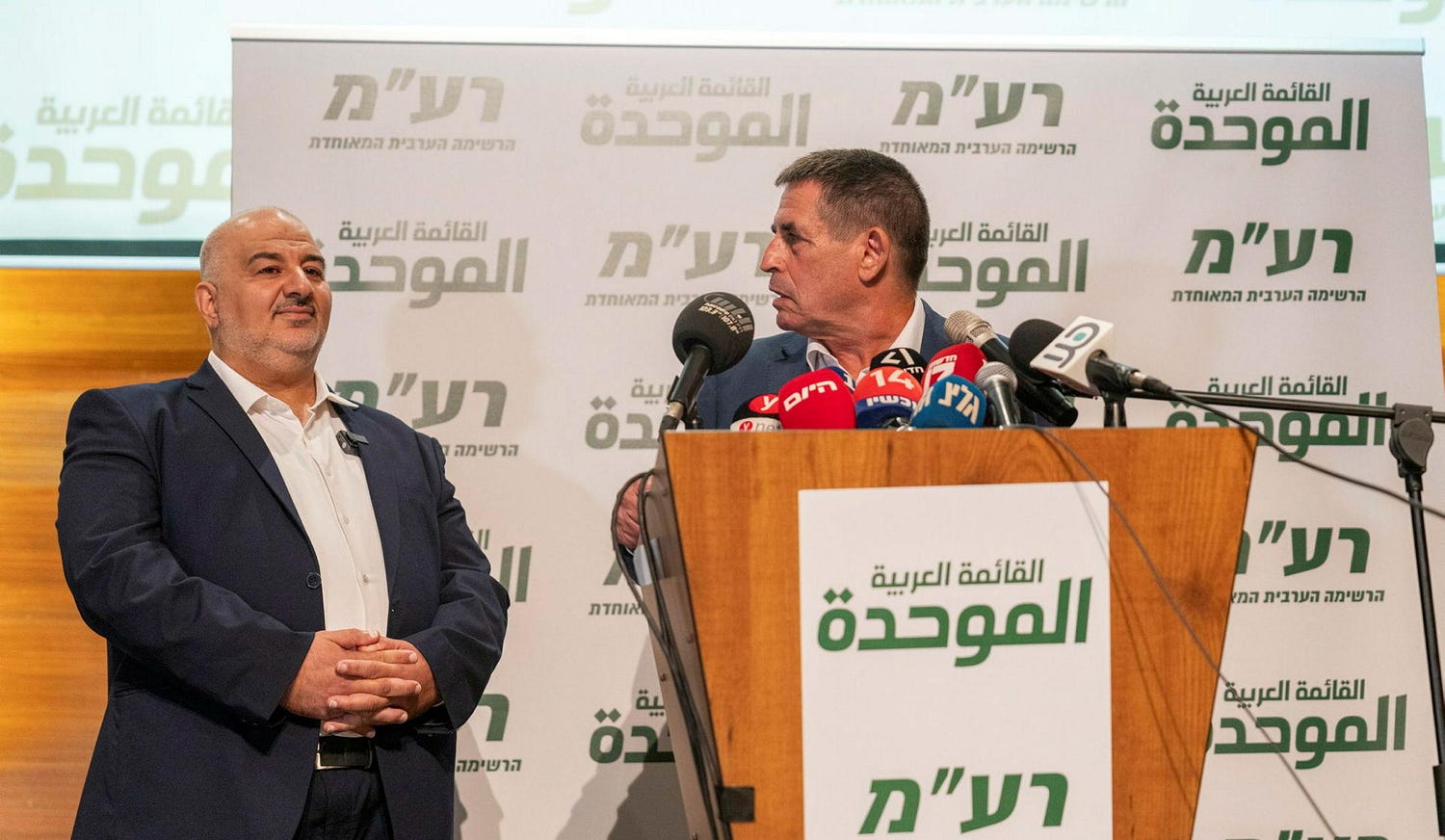
The third step, considered the most controversial: was bringing Yoav Segalovich, a former senior official in “Israel’s” police force, into a party with an Islamic background and placing him second on the party’s six-candidate electoral list, which includes a Jewish candidate for the first time.
Why Did the Four-Party Alliance Fail?
Arab parties representing Palestinians in the territories occupied in 1948 have traditionally united in times of crisis and contested Israeli Knesset elections on a joint Arab list, seeking to maximize their parliamentary representation and influence government decisions affecting Palestinians.
This time, however, Palestinian citizens of “Israel” face heightened risks, including racism, hostility, and calls for retaliation against them in the aftermath of Operation al-Aqsa Flood, prompting the four main Arab parties to hold talks over forming an alliance.
They first united on a joint list in the March 2015 Knesset elections, in response to the Israeli decision to raise the electoral threshold to 3.25 percent as a condition for winning seats. They won 13 seats, becoming the third-largest bloc in the Knesset.
But they split again in the 2021 and 2022 elections. The United Arab List (Ra’am), led by Mansour Abbas, an Islamist current that accepts engagement with Israeli institutions, contested the elections separately, while the other parties continued within a joint framework.
Data from the Israel Democracy Institute show a direct relationship between the unity of Arab electoral lists, higher Arab voter turnout, and the number of seats won, particularly given that voter turnout in the Arab community is relatively high, at around 65 percent.
Despite this, the division was repeated. Three parties formed a joint list, while Mansour Abbas’s party remained separate and allied with a former Israeli official.
Abbas also renewed his calls for an alliance with the Israeli opposition, as he did in the 2021 elections, in an effort to oust Netanyahu.
Efforts to form a joint Arab list stalled after the Democratic Front for Peace and Equality (Hadash), led by Ayman Odeh; the Arab Movement for Renewal (Ta’al), led by Ahmad Tibi; and the National Democratic Assembly (Balad), led by Sami Abu Shehadeh, accused Mansour Abbas of preferring an alliance with Israeli parties over one with Arab parties.
The three parties’ decision to distance themselves from Abbas’s party, and Abbas’s refusal to join a joint Arab list, stemmed in part from accusations by some Arab party officials that he had betrayed their cause. Abbas had previously participated in an Israeli governing coalition in 2021 and has indicated that he intends to repeat the experience in order to bring down Netanyahu’s government.
The disagreement is also more political than electoral. The three parties, Hadash, Ta’al, and Balad, belong to nationalist, left-wing, and secular currents that take more hardline positions on the Palestinian issue.
Ra’am, by contrast, has adopted a pragmatic approach under Abbas, focusing on civil issues affecting Arabs in “Israel”, such as crime and violence, budgets, housing, and economic development, while keeping the door open to cooperation with Zionist parties to form a governing coalition in order to advance the interests of the Arab minority.
During the latest negotiations, Mansour Abbas said in a statement issued by his party, the United Arab List: “We agree with the parties on the need to form the Joint List with the aim of ousting Netanyahu, but is it reasonable for removing Netanyahu to remain merely a slogan, as it was in the past?”
He said, “We are speaking here from the position of a list with actual experience, not from the position of theorists. The United Arab List actually helped bring down Netanyahu in 2020 and was part of the Change Government, led by Naftali Bennett and Yair Lapid, in 2021, while the other parties were running around and coming up with laws that they used in cooperation with Netanyahu, Smotrich, and Ben-Gvir to bring down the Change Government,” according to his account.
“Is it reasonable to return to the same scenario without understandings that guarantee achievements for and serve the interests of the Arab community? Is it reasonable, for example, to replace Netanyahu today without recommending Naftali Bennett or Eisenkot as an alternative?”
He also asked, “Are we going to go back to selling slogans to the public and make them believe that there are hidden or unrealistic options in Israeli politics?” He called on the leaders of the other three parties to explain “how this list [the four-party list] would operate, how it would replace the right-wing government, and how it would help keep the right in opposition?” The process ultimately ended with Ra’am withdrawing from the Joint List.
As a result, the upcoming Knesset elections, scheduled for October 27, 2026, will be contested by two main Arab lists rather than a single unified Arab list.
The first is the Joint List, an alliance of Hadash, Ta’al, and Balad, which is contesting the Knesset elections with the stated aim of turning the political weight of the Arab community into a decisive force capable of bringing down Netanyahu’s government.
The second is Mansour Abbas’s party, which is running separately after adding an Israeli Jewish candidate, Yoav Segalovich, to its list.
The leader of Ra’am promotes the principle of “preventing harm and bringing benefits,” arguing that participation in an Israeli government would provide a better means of securing Palestinian rights.
According to Palestinian estimates and studies, the division and the decision by Arab parties to contest the election on two separate lists do not necessarily mean a loss of Arab representation, but the number of seats could be higher or lower depending on Arab voter turnout, which tends to increase when the parties unite.
In the latest Israeli poll, Ra’am was projected to win 5 seats, while the three-party list was projected to win 7 seats, despite earlier polls suggesting that all four parties could have won 17 Knesset seats had they united.
With the nomination period for the Israeli Knesset elections now closed, 38 electoral lists are competing for 120 seats, with 26 of them expected to fall below the electoral threshold. Polls indicate that the opposition blocs would win 57 seats, while the current governing coalition, headed by Benjamin Netanyahu, would win 51 seats.
Neither bloc would therefore have the 61-seat majority required to form a government on its own, potentially forcing them to seek Mansour Abbas’s support in the end, despite their stated opposition to forming alliances with Arab parties.

The Kingmaker Repeats the Experiment
In the May 2020 elections, the Islamist United Arab List (Ra’am) emerged as a “kingmaker,” refusing to align with Netanyahu and instead choosing to support the opposition, led by Naftali Bennett and Yair Lapid. This contributed to Netanyahu’s defeat and the formation of a government that remained in power from 2021 to 2022.
Ra’am is seeking to repeat that experience in the October 2026 elections, with its leader, Mansour Abbas, attempting to recreate the 2021 model.
This means presenting Ra’am as an Arab party willing to negotiate with the opposition Zionist camp and participate in a government if it can secure gains for Arab citizens, rather than remaining outside power.
The difference this time, however, is that opposition leaders themselves are more cautious, particularly in the aftermath of the October 7 attack.
For this reason, Abbas is now presenting himself more insistently to Israeli opposition parties amid heightened hostility toward Arabs since October 7, with those who ally with Abbas facing accusations of being anti-Israel. He has also offered concessions, including his acceptance of the “Jewish character of the State of Israel.”
In December 2021, Mansour Abbas acknowledged that “Israel was established as a state for the Jewish people and will remain so.” On August 26, 2026, he reiterated that the Jewish character of the state is “a reality imposed on us, not a choice.”
In a Facebook post, he wrote, “The Jewish character of the state is an imposed reality. We did not choose it; it is the choice of the Jewish majority and not a demand of ours. Arab parties have been forced to accept it in practice; otherwise, they would be disqualified from participating in parliamentary and local elections.”
On the other hand, during an election campaign on August 28, 2026, he said, “We recognize the State of Palestine. The State of Palestine exists and is already a reality.” This prompted Israeli officials to compete in attacking him, and led Eisenkot to emphasize that “a Palestinian state will not be established during my term.”
Netanyahu and Israeli Security Minister Itamar Ben-Gvir seized on the statement. Netanyahu began warning Israelis about what he described as an alliance between the opposition and the “Muslim Brotherhood,” given that Mansour Abbas’s party originated from the Islamic Movement, which has roots in the ideology of the Muslim Brotherhood.
Ben-Gvir, meanwhile, warned that such an alliance, if it were to materialize between the opposition and Abbas, would mean “the return of the Bennett-Lapid brothers’ alliance to sell the country to the Islamic Movement,” according to his claim.
The campaign has resulted in statements by Naftali Bennett rejecting “forming a government with the support of an Arab party,” as well as confirmation by the leader of Yashar, Gadi Eisenkot, who is leading in the polls, that he would rule out an alliance with Abbas unless he recognizes Zionism and the Jewish character of “Israel”.
Mansour Abbas understands that the Israeli opposition parties lack a majority, and that both the opposition bloc and Netanyahu’s camp are unable to reach the 61 seats required in the Knesset to form the next government. He is therefore offering the five seats his party typically wins to support the opposition and participate in government.
He has sent them messages of political overture, saying that Naftali Bennett, Gadi Eisenkot, and Avigdor Lieberman are all qualified to serve as prime minister, and that he believes agreements can be reached with them that would allow his party to join a new governing coalition.
But Abbas faces a major obstacle this time: opposition leaders fear that publicly accepting an alliance with him could cost them support from “Israel’s” right-wing constituency, with voters potentially shifting to Netanyahu amid heightened mobilization and hostility toward Arabs following the October 7 attack.
Perhaps for this reason, Abbas placed the Jewish Zionist politician Yoav Segalovich second on Ra’am’s electoral list, in an attempt to portray the party as a political actor capable of operating within “Israel’s” political system, rather than simply as an Arab opposition party.
Breaking Away From the Islamic Movement?
Historically, the Islamic Movement in “Israel” has split twice. The first split took place in 1996, when it divided into two branches, the Northern and Southern branches, over disagreements about participation in Knesset elections.
The second split began in 2021 and became entrenched in June 2026, as tensions intensified between senior figures in the Southern branch and the leadership of the United Arab List (Ra’am), the political arm of the Southern branch, over Mansour Abbas’s pragmatic approach and his desire to form alliances with Israelis in government and parliament.
Following Ra’am’s entry into the government of Naftali Bennett and Yair Lapid in 2021, leaders and members of the Islamic Movement warned that Abbas’s continued approach could lead them to declare that “Ra’am does not represent us.”
This prompted Mansour Abbas to seek to transform Ra’am into a political party with independent decision-making powers and its own institutions, while the Islamic Movement’s leadership and Shura Council insisted on their right to direct the party, given that it is the political arm of the Southern branch of the Islamic Movement.
On August 22, 2026, Ra’am held its general conference and independently elected its Knesset list, without consulting the Islamic Movement or being subject to the Shura Council, in a move that effectively formalized the party’s separation from the Islamic Movement’s institutions and Shura Council.
In an interview with Haaretz on September 7, 2026, Abbas said that the general conference of his party, Ra’am, would operate independently, without intervention from the Islamic Movement or the Shura Council, an Islamic advisory body based on the principles of Sharia.
Following the split, Ra’am leader Mansour Abbas announced at a press conference in Nazareth, inside “Israel”, on August 31, 2026, that the party’s executive committee had decided to add former Deputy Minister of Internal Security Yoav Segalovich to its electoral list, placing him second for the upcoming Knesset elections.
Observers are asking: Will this bold combination of a conservative Arab Islamist movement and a former senior Israeli police officer, a secular liberal Zionist, succeed? Or will it jeopardize Mansour Abbas’s political future, particularly if the opposition refuses to form an alliance with him?
Why Form an Alliance With an Israeli?
The Israeli newspaper The Jerusalem Post, on August 16, 2026, summed up Abbas’s goal and strategy in adding a Jewish candidate to his electoral list with the question: “How can a former Jewish police investigations chief restore Mansour Abbas to his status as the Arab kingmaker in Israel?”
Abbas and his Ra’am party aim to participate in an Israeli government formed by the opposition, provided that the opposition succeeds in winning more seats than Netanyahu.
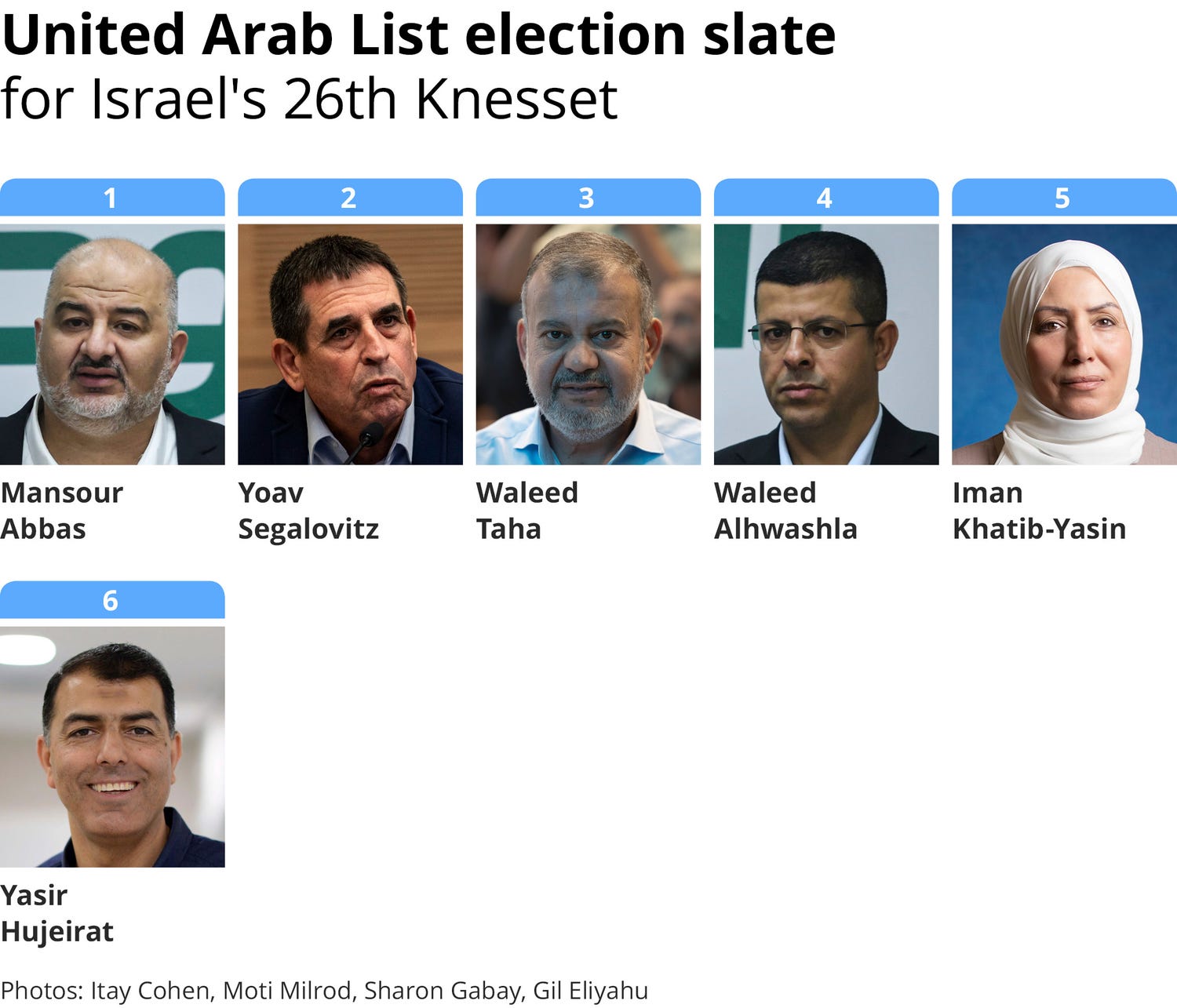
Following negotiations between party leader Mansour Abbas and Segalovich, who previously represented Yesh Atid before resigning from the Knesset, Ra’am unveiled on September 7, 2026, its list of candidates for the 26th Knesset, including former senior Israeli police officer and Knesset member Yoav Segalovich.
Party leader Mansour Abbas heads the list, followed by Segalovich, then lawmakers Waleed Taha, Waleed alhawashla, Iman Khatib-Yassin, and Yasir Hujeirat.
Taha, who lives in Kafr Qasim, has held a Knesset seat since 2019 and previously chaired the Knesset’s Internal Affairs and Environment Committee.
Alhawashla, who is completing his first term, is from the Bedouin village of Sawa and represents the Negev on the list.
Khatib-Yassin previously won a Knesset seat in three terms. Hujeirat, a physician and former head of a local council, holds a PhD in genetics and chaired the Knesset’s Science and Technology Committee during the outgoing term.
The Joint List of Arab parties, Hadash, Ta’al, and Balad, criticized Yoav Segalovich’s joining of the United Arab List (Ra’am), saying the move reveals the “political price” of Mansour Abbas’s approach and gives his party a seat in the Knesset through the votes of Arab voters.
In a statement issued on September 8, 2026, the Joint List said it wished that the parties and national forces within the Arab community had been “closer to Mansour Abbas and Ra’am than to a former officer in the occupation army who takes pride in his Zionism.”
The Joint List linked the move to the failure of efforts by its three constituent parties to form a joint Arab list that would include Ra’am.
It said it had made “a series of concessions” in an effort to overcome differences and reach an agreement, but those efforts, according to the Joint List, encountered conditions and obstacles from Ra’am’s side.