Full Scholarships, Denied Visas: How Europe and Israeli Occupation Are Blocking Gaza Students From Leaving
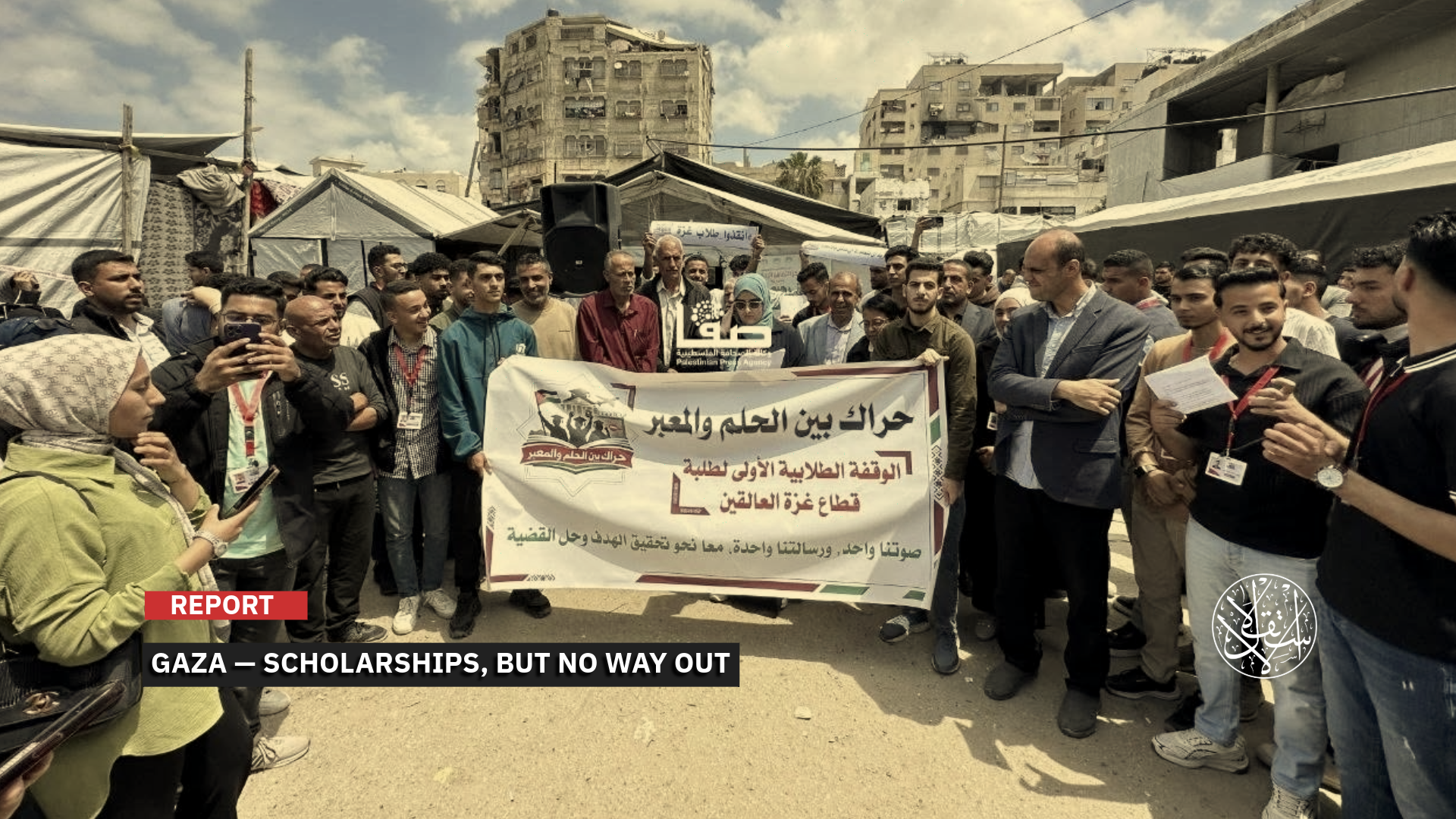
Delays can mean missing an entire semester or academic year, or losing the funding committed by the university.
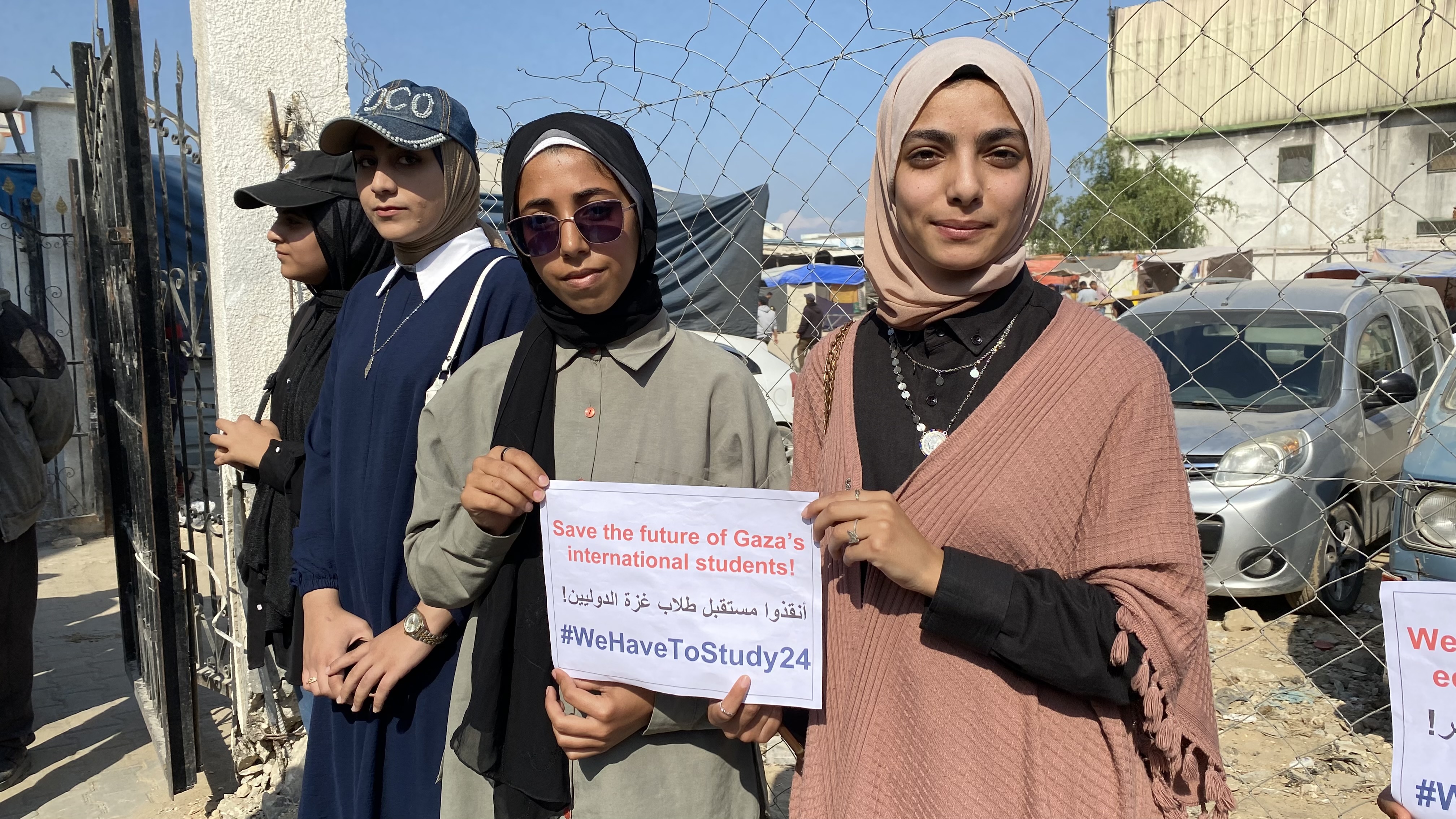
Over nearly three years of Israeli aggression, dozens of students in Gaza have secured scholarships and admission to European universities, only to find their path to the classroom blocked at another set of doors.
Some were denied visas even though their scholarships covered tuition, housing, and living expenses, amid requirements concerning finances, academic and employment records, documentation, and their “intention to return.” Others remained in Gaza after completing the visa process, waiting for exit permits from the Israeli Occupation authorities.
Students Left Stranded
Just a year ago, Ireland showed that it was possible to bring students from Gaza to its universities. On August 28, 2025, the Irish Foreign Ministry announced the arrival of the first group of 52 Palestinians from Gaza who had received scholarships from Irish educational institutions.
The transfer followed an operation coordinated by Irish diplomatic missions with the Israeli Occupation authorities and transit countries. In September, the ministry arranged for another 15 students with long-term study visas to leave Gaza.
As the new academic year approached, visa refusals became another obstacle for scholarship recipients. In an investigation broadcast by Ireland’s national broadcaster on August 14, Ronni Greenwood, a professor of psychology at the University of Limerick, said that nine of 11 students from Gaza who had received full scholarships had been denied visas, while two others were still awaiting decisions.
At University College Dublin, 10 scholarship recipients from Gaza received visa refusals. On August 24, Emma Stokes, Trinity College Dublin’s vice president for global engagement, wrote in the Irish Times that the university had 61 applications from students in Gaza, 52 of which had been rejected.
Data from Ireland’s Department of Justice points to a broader picture. As of August 21, Palestinians had submitted 130 applications for long-term study visas in 2026, while 39 visas had been issued and 103 applications had been refused.
The department said some of the decisions concerned applications submitted in previous years. Its figures also cover Palestinians from both Gaza and the West Bank, unlike university figures that specifically track students currently inside the Strip.
Outside Ireland, 13 Palestinian students and researchers with scholarships remained stranded in Gaza despite being accepted by Belgian universities as of September 3, according to the Brussels Times.
Among them is 26-year-old Essam Abu Amro, who received a VLIR-UOS scholarship in June 2025 to pursue a master’s degree in sustainable land management at Ghent University. His inability to leave Gaza forced the university to defer his scholarship for an entire year.
Abu Amro told the newspaper on September 3 that the new academic year had begun and he was facing the same problem, without knowing whether a second deferral would be possible.
Before the Israeli genocide in Gaza, he had begun studying for a master’s degree in water engineering in Gaza. His studies were disrupted after university facilities were destroyed and electricity and internet access were cut off. He hopes to use his expertise later to help rebuild the wells, desalination plants, and water networks destroyed by the Israeli Occupation.
The waiting game has also played out in Italy, though from a different angle. The government had succeeded in bringing hundreds of students out of Gaza, but about 50 scholarship recipients were still inside the Strip in August 2026, according to organizations tracking their cases, after new evacuation operations were halted in early June.
With academic deadlines approaching, delays can mean losing an entire semester or academic year or seeing university funding expire before students are able to leave the Strip.
Since the Israeli Occupation occupied the Palestinian side of the Rafah crossing on May 7, 2024, the crossing has ceased to function as a regular route for travel from Gaza to Egypt.
It was reopened on a limited and intermittent basis in 2026 for restricted numbers of people, particularly for medical evacuations and the return of Palestinians. European governments arranging the departure of students have instead used another route, taking them through the Israeli-controlled Karem Abu Salem crossing (known as Kerem Shalom in Hebrew) and then across the Allenby Bridge into Jordan, from where they travel onward by air.
Visa Requirements
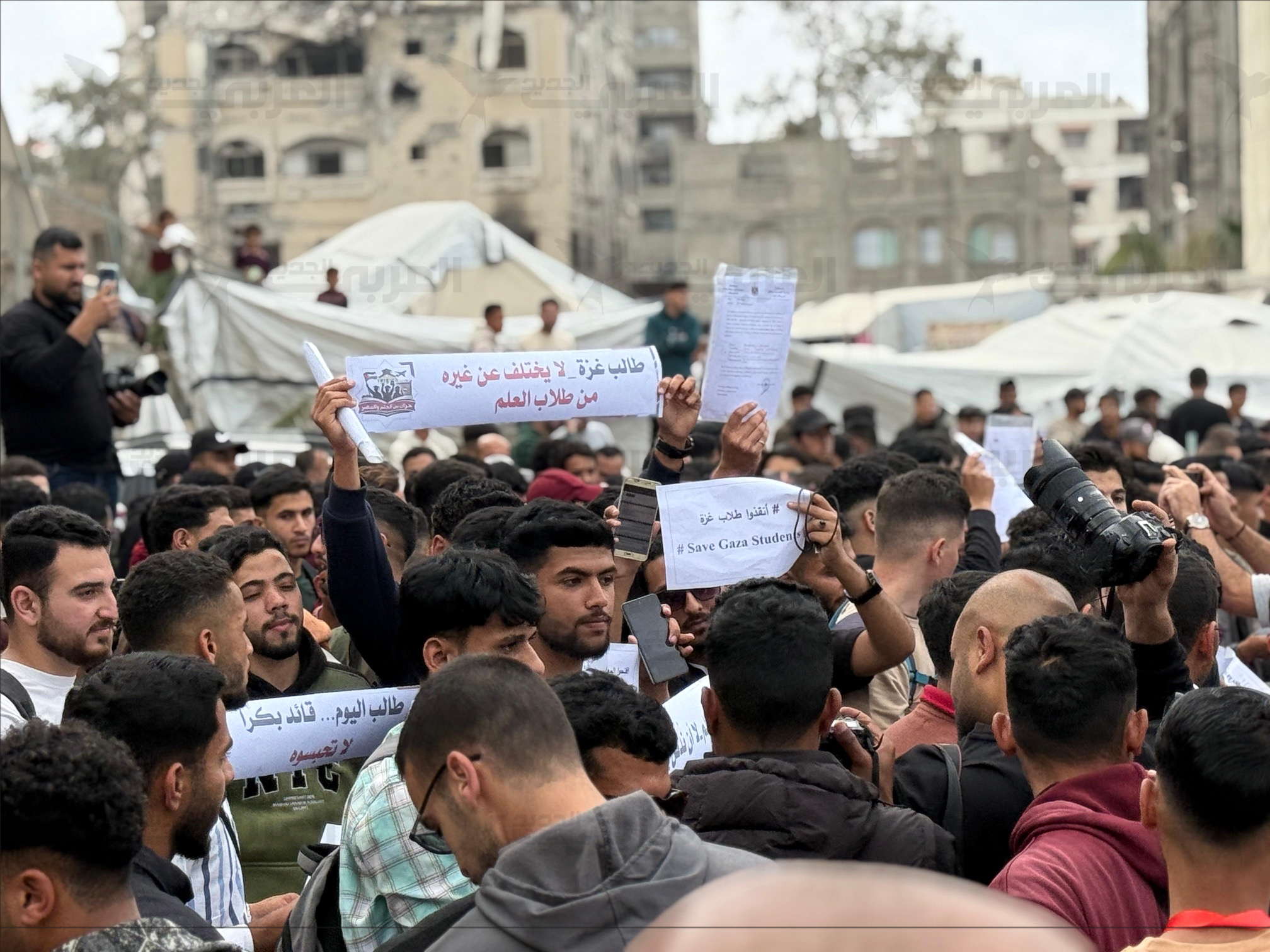
In Ireland, the Irish Immigration Service, part of the Department of Justice, sets detailed financial requirements for students seeking long-term study visas. Applicants must show access to €10,000 for their first academic year and the ability to provide a similar amount for subsequent years.
They must also submit bank statements covering the previous six months, explain deposits, and document their financial records in accordance with the specified requirements.
The requirements also extend to academic and employment history. Applicants are asked to explain any gaps in their education, provide their employment history and academic certificates, prove their language proficiency, and submit original or certified documents. They must also outline their plans after graduation and commit to leaving Ireland.
These requirements take on a different weight in Gaza, where the Israeli aggression that began on October 7, 2023, has destroyed many of the institutions that issued and stored the documents students are expected to provide.
In an assessment published by UNESCO in cooperation with the Palestinian Ministry of Education and Higher Education in November 2025, 195 of the 206 university buildings assessed had been destroyed or severely damaged, along with about 120,000 computers and 105 university servers.
The effects of that destruction are now showing up in students’ applications as gaps in their education records or missing documents and records required by immigration authorities.
Ahmed Abuhassan, 22, was studying computer science when his university was destroyed in 2023. He borrowed a computer from a relative and continued studying online from inside a tent while struggling to find electricity and an internet connection.
He told the Irish Times on August 17, 2026, that he had received a full scholarship from University College Dublin covering tuition, accommodation, and €10,000 a year for living expenses.
But his visa application was rejected, with concerns raised over his finances, language proficiency, documents, and ties to Gaza that would support his return, despite the university confirming that it would cover his costs and that he had met its English-language requirements.
After the refusal, Abuhassan had two months to file an appeal. An Irish human rights organization had to deliver his documents within Ireland because postal services in Gaza had been disrupted, while delays in the decision threatened his chances of joining any future student evacuation.
The case of Zainab Eid highlights the difficulties surrounding documentation and proof of intent to return. The 30-year-old physiotherapist, who previously worked for Doctors Without Borders, had received a scholarship to pursue a master’s degree in public health at University College Cork.
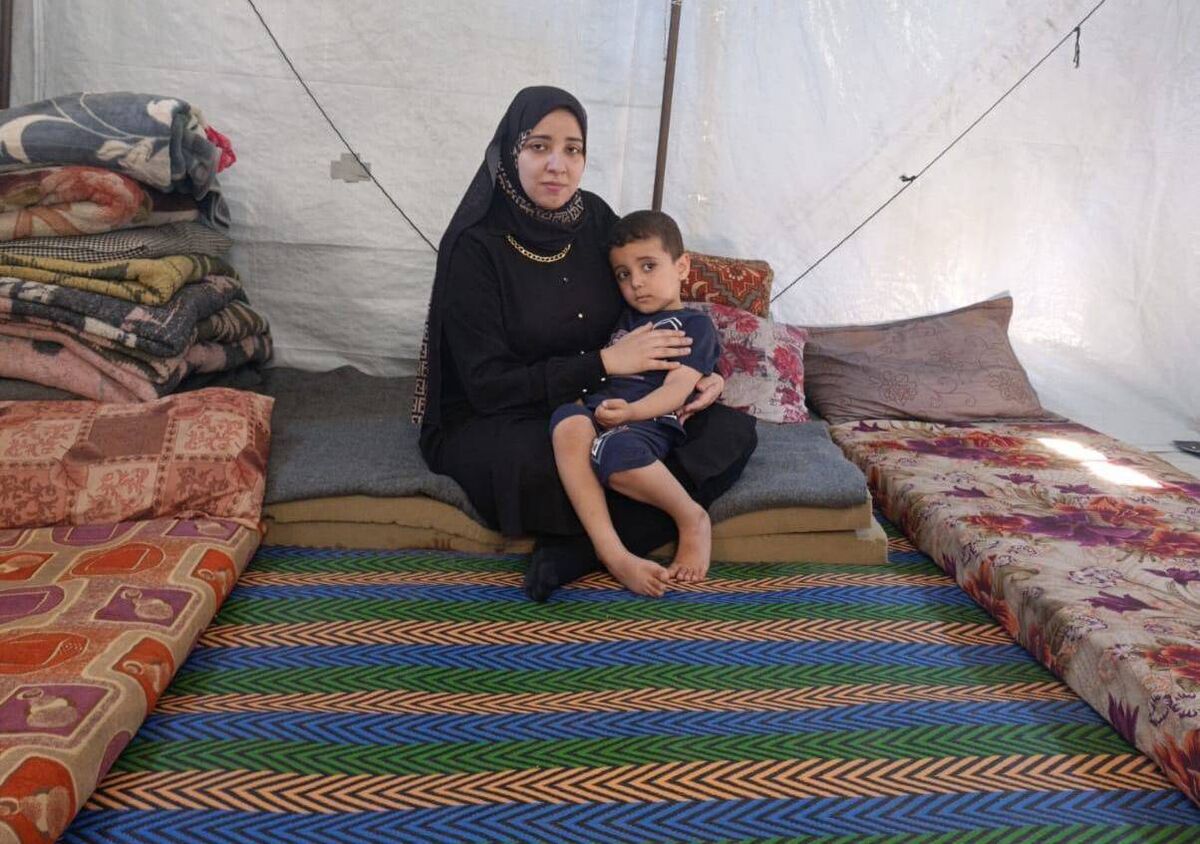
Eid received a refusal in August 2026 while living in a tent with her husband, Mohammed, and their son, Karim. The Irish Examiner reported on August 13 that the decision cited insufficient evidence of her academic and employment history, original documents, and ties supporting her return.
Two days later, Alannah Faulkner, a lawyer with Phoenix Law, which represents several students, said immigration authorities were asking for original documents from people whose banks, universities, and workplaces had been destroyed. Eid had been piecing together her professional history from emails and copies she had managed to preserve during displacement.
The obstacles have also extended to academics who secured opportunities outside Gaza. Mohammed Omar told Al-Estiklal that he had been accepted by the University of Barcelona to teach journalism and media under a nine-month contract before Spanish authorities rejected his request to enter the country for the position.
“The university submitted a request to the Spanish government for approval to bring me in to teach, but it was rejected,” Omar said, suggesting that concerns he might not return to Gaza could have been one reason for the decision.
Israeli Occupation Controls the Exit
Once a student secures a visa or reaches an advanced stage in the process, another obstacle emerges: the ability to leave Gaza, amid the closure of crossings controlled by Israeli Occupation forces and restrictions on their operation.
Under the European evacuation routes established during the Israeli war, students need government coordination and must have their names placed on a list that requires approval from Israeli Occupation authorities before they can leave the Strip.
In Britain, the problem became particularly clear in the summer of 2025. The visa application center inside Gaza was closed, while the process required students to appear at an approved center to have their fingerprints and photographs taken before a visa could be issued.
More than 80 Palestinians held offers from British universities, including about 40 full scholarship recipients, but they could not reach a center outside the Strip without first being allowed to leave Gaza.
After pressure from universities and members of Parliament, the British Home Office established a process allowing security checks to be carried out first, followed by fingerprinting and photographing in a third country before a final decision was made on the visa.
On September 22, 2025, 34 full scholarship recipients arrived in London and Manchester after leaving Gaza through Jordan. The government later expanded the arrangement to cover some family members after the travel process had forced some students to leave spouses or children behind in Gaza.
In 2026, the British government retained the special route for students with verified full scholarships, requiring the funding to cover tuition and living expenses and students to meet immigration rules.
Government guidance says London can support and coordinate departure arrangements, but a student’s exit from Gaza remains subject to approval from Israeli Occupation authorities and transit arrangements with the countries involved.
Italy, meanwhile, established “university corridors” under an initiative by Italian universities for Palestinian students. Its embassies in “Tel Aviv” and Amman, along with its consulate in occupied Jerusalem, began coordinating student lists and transit permits. Between September and December 2025, 157 students left Gaza in four operations organized by Rome in cooperation with universities.
The operations continued in 2026. Seventy-two students left Gaza through Karem Abu Salem on May 11 and then traveled to Jordan, followed by another 17 on June 1.
By June 2026, Italy’s Ministry of Foreign Affairs and International Cooperation said 246 scholarship recipients had arrived in Italy and San Marino since September 2025, before the operations were halted again.
In August, organizations helping the students estimated that about 50 eligible scholarship recipients remained inside Gaza. Italy’s Foreign Ministry said the resumption of evacuation operations depended on permits from Israeli and Jordanian authorities.
In Belgium, the Federal Migration Center, Myria, said on July 15, 2026, that study visa applications normally require applicants to appear in person at a diplomatic mission. There is no Belgian mission inside Gaza where students can submit their applications, and the remote application process available in some family reunification cases does not apply to study visas.
Belgian Foreign Minister Maxime Prévot told Parliament that being granted a visa allows its holder to reside in Belgium, but getting the person out of Gaza requires a separate government decision and arrangement.
As of September 3, 13 scholarship students and researchers remained inside the Strip, leaving them in a position where they needed to reach a third country to complete the process, even though getting out in the first place required government intervention and Israeli Occupation approval.
In France, the government suspended operations to evacuate students and researchers in August 2025 following a case involving a student accused of making posts that were classified as “antisemitic.” The operations were later resumed with stricter security screening. In October, about 20 students and artists were transferred through Karem Abu Salem to the Allenby Bridge and then Jordan before traveling onward to France.
Le Monde reported, citing diplomatic sources involved in the operations, that Israeli authorities had in some cases removed names from lists submitted by embassies after security screening, while Jordan imposed conditions concerning transit and final destinations.
The French route was activated again in late August 2026, with the Brussels Times reporting on September 3 that 44 students and researchers had left Gaza during the previous week.
These routes show the limits of what universities can do once they have issued an admission offer and scholarship. The decisions then shift to immigration authorities and governments organizing evacuations before ultimately reaching Israeli Occupation authorities, whose approval is required for students to leave Gaza.
Sources
- How to apply for long term study visa
- Information on Student Finances
- ‘Every day we wait is a gamble for us’: Palestinian students continue to face visa rejections
- We can and should do better for Gaza students seeking to study in Ireland
- Academics criticise visa refusals for Gaza scholarship students
- 'This is the worst day in my life': Gazan woman denied visa to study Masters in UCC
- Tánaiste welcomes imminent arrival of 52 Palestinian young people from Gaza
- UNESCO presents the assessment of damage and reconstruction needs for higher education institutions in Gaza
- Seventy-two young Palestinian university students left Gaza and will study in Italy. The number of young people evacuated from the Gaza Strip since September has risen to 229
- Why Belgium is not evacuating 13 Palestinian scholarship students stuck in Gaza