Hemedti in Addis Ababa, Troops Mass on the Border: Is ed-Damazin Next?
The relationship with Hemedti could give Ethiopia leverage over Khartoum and greater room to maneuver inside Sudanese territory.
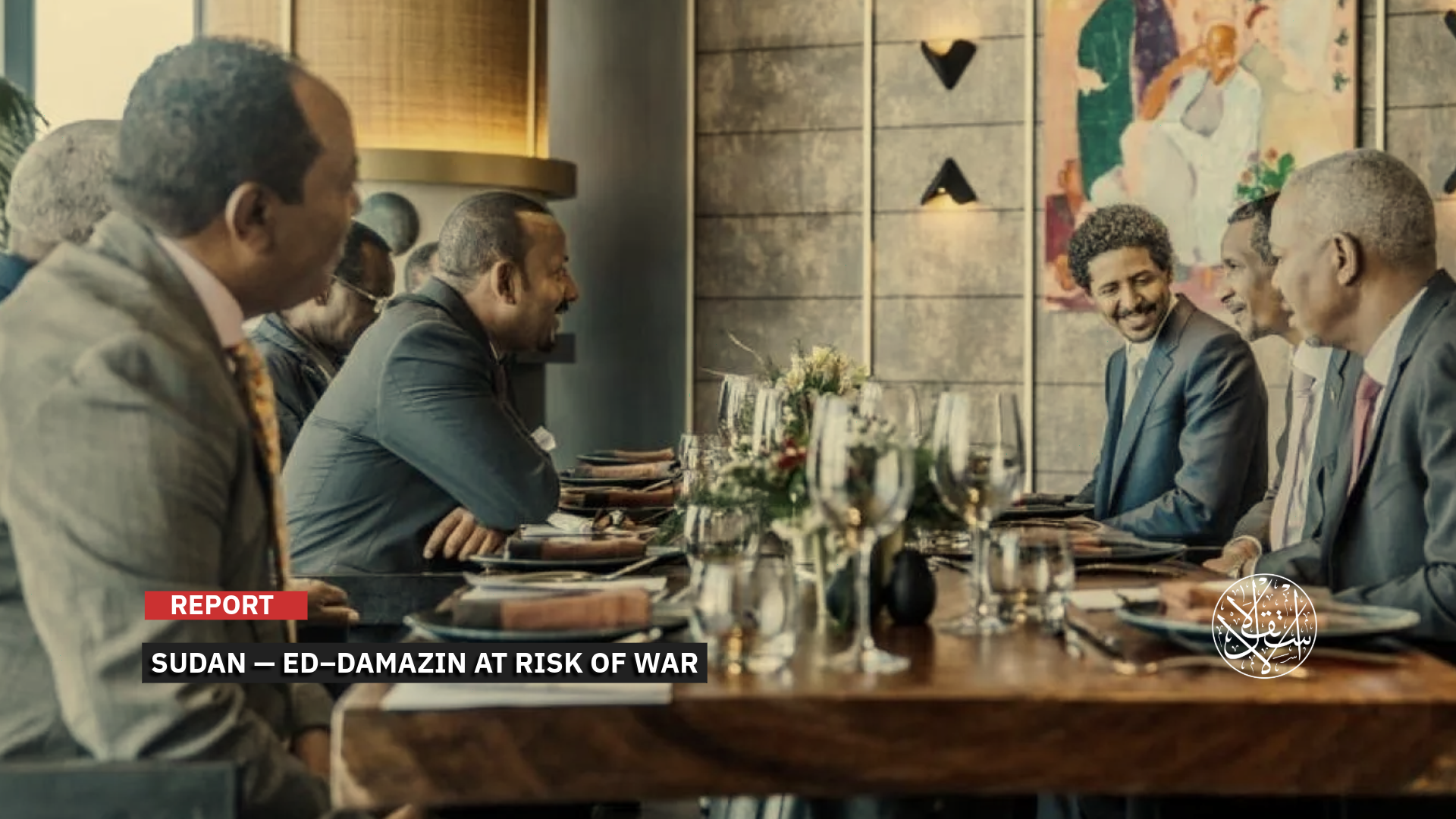
Rapid Support Forces commander Mohamed Hamdan Dagalo, known as Hemedti, returned to Addis Ababa on an unannounced visit on August 26, 2026, as military attacks by his forces and their allies intensified in Sudan’s Blue Nile region and moved closer to positions protecting the roads leading to Ed-Damazin, the regional capital.
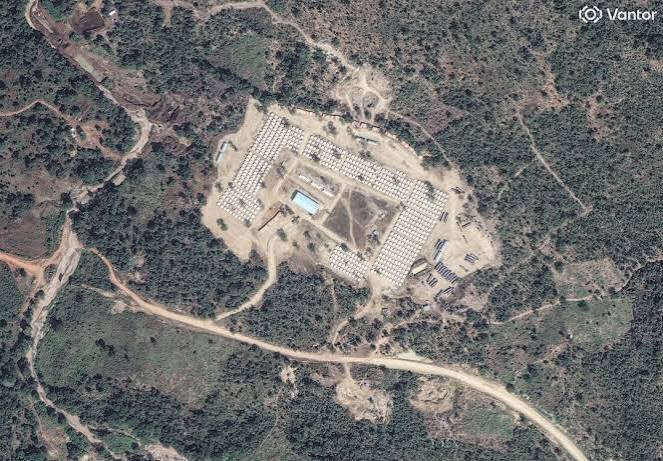
At the same time, satellite imagery revealed a rapid military buildup at Ethiopia’s Asosa base, involving dozens of military vehicles and troop carriers along with increased logistical activity. The Sudanese army, meanwhile, sent reinforcements to Ed-Damazin to retake positions it had lost in the border areas.
The timing of Hemedti’s visit alongside the military buildup puts Addis Ababa at the center of developments on the Blue Nile front and raises questions about the nature of the security and military arrangements along the border, including whether the area is becoming a supply corridor for the Rapid Support Forces (RSF) and a launchpad for their advance toward Ed-Damazin.
The developments take on added significance as fighting shifts from the border areas to positions protecting supply routes and the regional capital. The army’s ability to cut supply lines coming across the border and counter drone attacks could prove crucial in determining the direction of the next battle.
The Addis Ababa Table
Hemedti’s talks covered the war, prospects for peace, and border security, according to an RSF leadership source and an Ethiopian government source who spoke to Mada Masr.
The first source said the expansion of fighting in the Blue Nile region had made communication with Addis Ababa more important, pointing to a meeting between Hemedti and Ethiopian Prime Minister Abiy Ahmed. The Ethiopian source neither confirmed nor denied the meeting, saying only that Hemedti had held meetings with Ethiopian officials.
The Ethiopian government source said Addis Ababa’s priority was to prevent the fighting from spilling onto its territory and protect stability in border areas. Ethiopia, the source said, was monitoring armed groups on both sides of the border while keeping channels open with various Sudanese factions as the fighting began to affect neighboring areas.
The contacts are taking place amid mutual accusations over Ethiopia’s role in the Sudanese war. Reuters reported in May 2025 that the Sudanese army had accused Ethiopia and the UAE of involvement in a drone attack targeting Khartoum Airport.
Reuters quoted a Sudanese intelligence source as saying that Addis Ababa could benefit from Hemedti’s forces in confronting its own internal rivals, particularly the Tigray People’s Liberation Front.
An Ethiopian military source had previously told the outlet that Tigrayan fighters had crossed from Sudan into the western part of the region before fighting with the federal government resumed.
The intelligence source said the relationship could give Ethiopia leverage over Khartoum and greater room to maneuver inside Sudanese areas along its border.
This assessment helps explain some of the concern in Sudan, while a former Sudanese diplomat linked the significance of Hemedti’s visit to the security meetings and field arrangements that could follow.
According to the diplomat, Tigrayan leaders are monitoring military and logistical movements near the Sudanese border, and closer ties between Addis Ababa and the RSF could prompt them to reconsider their deployment along the border.
Military Buildup
At the Ethiopian army’s Asosa base, the Yale School of Public Health Humanitarian Research Lab (HRL) identified about 100 light military vehicles arriving over five days in late August, along with 15 vehicles whose specifications are consistent with armored personnel carriers.
The imagery also showed equipment for mounting weapons, with at least five vehicles believed to have weapons installed on them.
The monitoring also identified containers, trucks, and vehicle carriers, after at least 60 shipping containers had accumulated at the base over roughly two months.
The imagery aligns with an account from a Sudanese intelligence source who said activity had accelerated with the arrival of fighters from Darfur through South Sudan, along with ammunition and crates believed to contain weapons and supplies for field hospitals.
The source added that the growing number of flights to dirt airstrips had made the movement of fighters more visible and easier to track.
Reuters had previously revealed in an investigation published in February 2026 the existence of another camp in the same region, in Menge, used to train thousands of fighters for the RSF.
The investigation drew on satellite imagery, testimony, and documents and said the camp was financed by the UAE, amid accusations that Abu Dhabi was involved in the war on the side of Hemedti’s forces.
The investigation also identified construction at Asosa Airport, including equipment for controlling drones, which a researcher at the Dutch organization PAX identified. Ethiopian officials, meanwhile, spoke of plans to turn the airport into a hub for their operations.
Amid the buildup, Mada Masr, citing open-source flight-tracking data, reported that 46 Ilyushin flights from the UAE had been recorded in August 2026, the highest monthly total since the air bridge began, according to the data.
As for the destination of these supplies, the outlet quoted a senior Ethiopian Air Force official as saying they were being used to support the government’s fight against its opponents but were primarily intended for Hemedti’s forces.
Routes to ed-Damazin
The Sudanese army’s concerns stem not only from the scale of the buildup but also from its location. Asosa lies in Ethiopia’s Benishangul-Gumuz region, about 100 kilometers from Kurmuk, and is connected by road and air routes to areas of operations in the Blue Nile region, according to security and military sources who spoke to Sudan Tribune.
An intelligence source in the army’s 4th Infantry Division warned that the area between the base and RSF positions could become a zone that would be difficult to penetrate.
According to the source, this could provide a corridor for supplies and military operations toward Ed-Damazin at a time when the army has limited ability to intercept movements coming across the border.
The concerns intensified after the loss of Geissan and Kurmuk. Kurmuk had changed hands between the two sides before the RSF regrouped at camps in Asosa and launched a fresh offensive, according to a Sudanese military source.
Three military sources told the outlet that forces had crossed from Ethiopia and taken part in the attack, while an administrative official in Asosa said infantry units had moved from an RSF base toward the border.
The fighting then spread to Bakori and Sarkam. Sudan Tribune reported that the RSF had announced control of both areas in alliance with the Sudan People’s Liberation Movement led by Joseph Toka. The newspaper said the army repelled waves of morning attacks before repositioning outside the two areas.
Bakori, about 170 kilometers southeast of Ed-Damazin, is home to the headquarters of an infantry brigade belonging to the 4th Infantry Division, giving it strategic importance as one of the positions protecting the roads leading to the regional capital.
An account from a military source cited by Ain Alsudan provided further details of the attack, describing heavy drone and artillery strikes followed by an advance from three directions, one of them from inside Ethiopia.
The source said a shortage of jamming systems weakened the defenses, eventually forcing them to withdraw and evacuate Sarkam, allowing the attackers to enter without resistance.
According to a source in the 4th Infantry Division, the battle has now shifted from border towns to the lines protecting the roads leading to Ed-Damazin, making the recapture of these positions a priority for the army.
Testing the Supply Lines
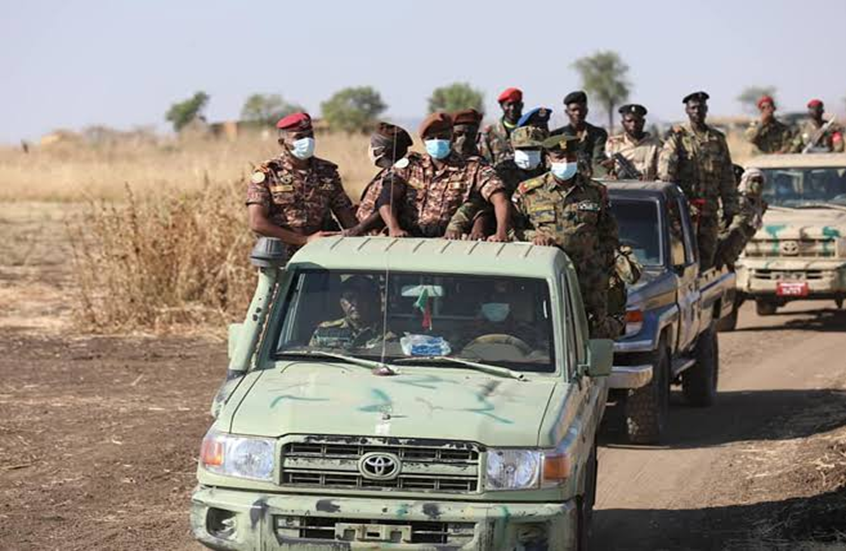
The Sudanese army responded by sending substantial reinforcements from Khartoum, al-Jazirah, and Sennar to Ed-Damazin to retake positions it had lost southeast of the Blue Nile. The reinforcements included a brigade from the elite General Intelligence Service and battalions from the joint force of armed movements allied with the army.
The forces brought jamming systems with them, and some began deploying north of Bakori in preparation for artillery and drone strikes.
The preparations followed a battle that sources attributed in part to the units’ inability to contain drone attacks, a problem that highlights the growing importance of drones in a report by a fact-finding mission on Sudan cited by the Associated Press (AP).
The report identified networks supplying the RSF with weapons, training, and foreign contractors linked to advanced systems and drones. It also pointed to preliminary findings that foreign-supplied drones had contributed to expanding the capabilities of the Sudanese army as well.
In Ed-Damazin, army commander Abdel Fattah al-Burhan inspected the troops alongside the regional governor and the commander of the 4th Infantry Division.
According to an army statement, al-Burhan was briefed on the security and operational situation and stressed the need for readiness, vigilance, and discipline.
Local outlets, including Sudan News, interpreted the visit as an attempt to demonstrate control over the city and respond to RSF statements that its forces were closing in on it.
But a source in the 4th Infantry Division identified a challenge that goes beyond the size of the reinforcements: protecting roads, supply depots, artillery positions, and communications equipment spread across a wide area, while opposing forces move along multiple routes across the border and through areas controlled by the Sudan People’s Liberation Movement, seeking to force the army to redistribute its units.
HRL warned of a growing risk of an attack on Ed-Damazin, with potential civilian casualties and displacement, including people who could cross into Ethiopia.
Halting the advance also comes down to the supply problem. Army forces moving out from Ed-Damazin rely on roads whose disruption could weaken supply lines and make it harder to hold positions they recapture.
Securing movement routes and countering drone attacks will therefore remain essential to consolidating the army’s gains and preventing the RSF and their allies from renewing pressure on Ed-Damazin.
Sources
- Hemedti in Addis Ababa
- Hemedti in Addis Ababa: Sudan Accuses Ethiopia of Launching Attacks From Its Territory [Arabic]
- Heavy Nighttime Airstrikes Hit Ed-Damazin: What Were They Targeting? [Arabic]
- Sudan Accuses Ethiopia of Plotting to Seize Al-Fashqa and Ed-Damazin [Arabic]
- Sources: Ethiopia Builds Secret Camp to Train Fighters for the Rapid Support Forces [Arabic]