South Sudan Surprises Egypt with the “Fula” Dam: Could the “Renaissance” Scenario Be Repeated?
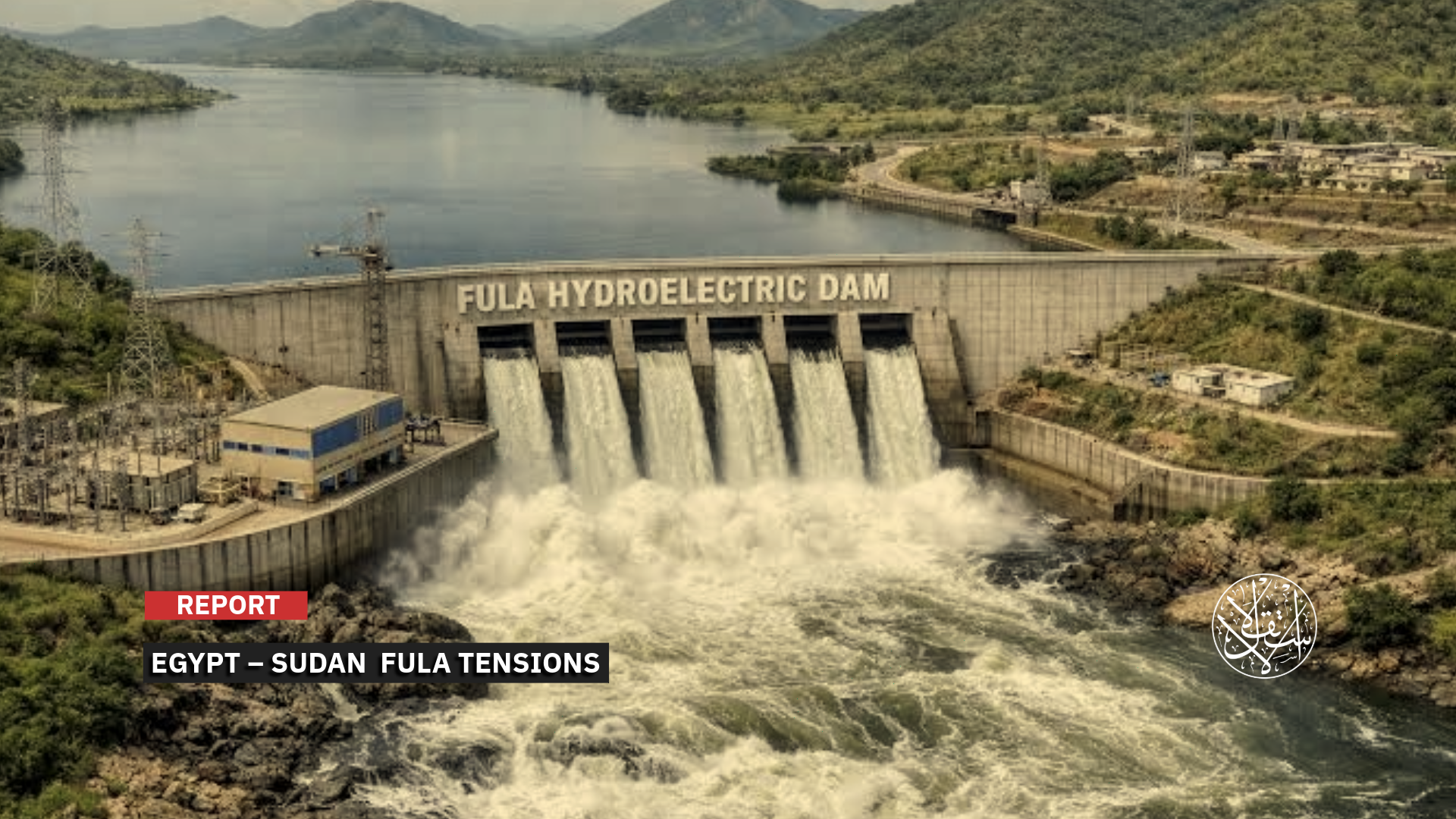
Cairo fears that the construction of new Ethiopian dams could affect the flow of its share of the Nile’s water.
At a time when Cairo is struggling to deal with the Ethiopian Renaissance Dam, which has become a fait accompli and is raising concerns about a worsening water crisis during periods of drought, given that Egypt has no control or joint mechanism for its operation, it was surprised by the announcement from its ally, South Sudan, of a new dam project on the Nile.
Cairo fears that the construction of new Ethiopian dams could affect the flow of its water share, estimated at around 55.5 billion cubic meters, which the Nile Basin upstream countries no longer recognize. This has added to its concerns about the future flow of the river.
Although the idea of South Sudan building a dam on the Nile, similar to the Renaissance Dam, has been under discussion since 2021, its implementation was postponed because of difficulties in securing funding.
However, Energy and Dams Minister Agok Makur Kur confirmed on September 17, 2026, that his country is now preparing to move forward with the project, known as the Fula Dam, in a move that appeared to challenge Cairo.
Although Egyptian Minister of Water Resources and Irrigation Hani Sewilam said in an interview with Al Arabiya on September 20, 2026, that Egypt had “in principle” approved the construction of the Fula Dam in South Sudan and that it would not cause significant harm, the timing of Juba’s decision has sparked concern and criticism among Egyptians and experts.
What is particularly troubling for Cairo is that its policy toward South Sudan, both before and after its independence, has been based on embracing and containing the country as part of its “soft power policy,” with the aim of persuading Juba to accept the Jonglei Canal project, which would have provided Egypt and Sudan with around 10 billion cubic meters of rainwater currently lost in the swamps.
However, Juba not only rejected the Egyptian project, but also ratified the Entebbe Agreement on July 12, 2024, which grants Nile Basin upstream countries the right to build dams without notifying the downstream countries, Egypt and Sudan.
Juba also does not recognize Egypt’s share of Nile waters under previous historical agreements and has cooperated with “Israel”, Ethiopia, and Rapid Support Forces commander Mohamed Hamdan Dagalo, known as “Hemedti,” against Cairo’s interests, according to critics of South Sudan’s policies.
Tensions increased in May 2026, when South Sudan took a step that drew Egyptian objections by requesting the closure of an Egyptian military base in Jot, Upper Nile State, near the Ethiopian border.
Now, with Juba announcing that it is moving closer to building a dam on the Nile, questions are emerging about the project’s implications for Egypt’s water interests.
Why Is the Dam Being Built Now?
According to South Sudanese media outlets, as reported by i-ROKO and Radio Tamazuj, Energy and Dams Minister Agok Makur said that his country “is preparing to build the Fula Dam on the White Nile near the town of Nimule in Eastern Equatoria and is not afraid of Egypt.”
Speaking to journalists in Juba on September 17, 2026, the minister said, “We are not afraid to build our dams because we have sovereignty and we have the right, and South Sudan is also part of the Nile Basin.”
He explained that the Nile Basin Council of Ministers had approved 34 projects, with the Fula project being one of them. He noted that Egypt was among the countries that participated in approving these projects.
“There is no reason to be afraid because the countries approved these projects, including Egypt,” he said.
Makur also spoke of interest from investors and ambassadors in the projects, claiming that “most investors and ambassadors are now coming to us and knocking on the door, but the time has not yet come to disclose the full details.” He added, “As the Ministry of Energy, we are ready to build our dams.”
Egyptian Minister of Water Resources and Irrigation Hani Sewilam had previously stated, during a meeting of the Nile Basin Council of Ministers in Bujumbura on December 6, 2025, that the Nile Basin Initiative (NBI) program, established in 1999 by the water ministers of the basin countries, had “given initial approval to 36 projects.”
This came under the Nile River Basin Investment Program, following “preliminary studies” to determine their impact on downstream countries and verify their compliance with the agreed standards.
The countries of the southern Nile Basin include Burundi, the Democratic Republic of the Congo, Kenya, Rwanda, South Sudan, Tanzania, and Uganda.
They are considered upstream countries of the river and, together with the eastern Nile countries, Ethiopia, Sudan, Egypt, and Eritrea, form the Nile River Basin region.
In February 2026, during his visit to Juba, Sewilam reiterated that Egypt had supported 36 projects on the White Nile and in the Equatorial Plateau under the initiative’s investment program.
However, the notable point is that the South Sudanese minister spoke of the Nile Basin Council of Ministers approving 34 projects, including the Fula Dam, whereas the Egyptian minister referred to “initial approval” based on an assessment of their potential impacts on the downstream countries, Egypt and Sudan.
This means that the initial approval remains contingent on determining the dam’s height, reservoir capacity, and operating rules.
South Sudanese political analyst Boboya James told Radio Tamazuj on September 19, 2026, that South Sudan’s failure and delay in developing its hydropower potential “has been affected by political and diplomatic challenges, including its relations with Egypt.”
James alleged that Egypt had played a role in obstructing the development of hydropower in South Sudan, but he provided no evidence to support the claim.
“Egypt’s role in interfering with South Sudan’s hydropower station has had a catastrophic impact on South Sudan’s energy needs,” he said.
James explained that studies supported by Norway had identified several potential hydropower generation sites between Kajo-Keji and Juba, including Sukoli Falls, Baden Falls, and Fula Falls.
What Is the “Fula Dam”?
The dam referred to by Makur is similar to the Ethiopian Renaissance Dam in terms of the idea of harnessing water resources to generate electricity.
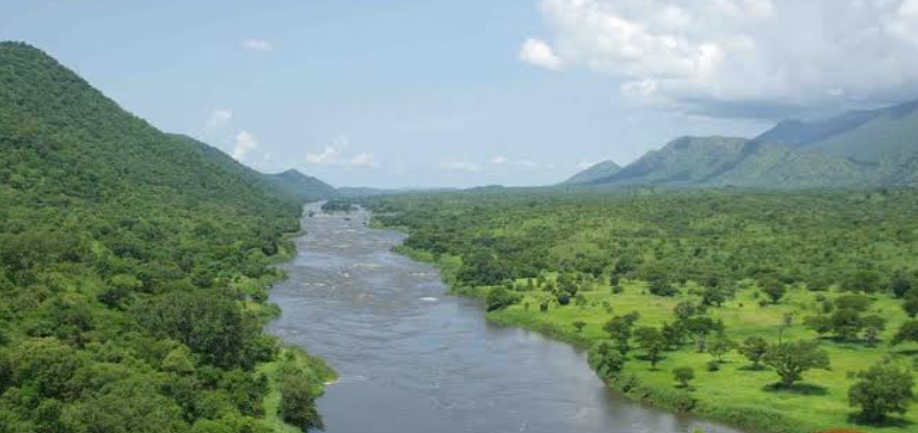
It is a proposed hydropower project on the White Nile, or Bahr el-Jebel, near the town of Nimule in Eastern Equatoria State, close to the border with Uganda, approximately 33–34 kilometers downstream from the border.
The project aims to harness the Fula Falls and rapids, as well as the difference in elevation, to generate electricity. Studies estimate its capacity at around 890 megawatts, with the possibility of exporting surplus electricity to neighboring countries.
The project remains at the feasibility-study stage, with support from the European Union, the World Bank, and the African Development Bank.
Its implementation has been hampered by several factors, including the internal conflict over oil wealth among militia generals who had fought against Sudan before independence and later turned against one another after independence.
In March and April 2026, the project gained renewed attention after a delegation comprising representatives of the European Union, South Sudanese officials, and the Nile Basin Initiative’s NELSAP program visited the project site.
On April 7, 2026, a joint mission comprising the European Union, South Sudan’s Ministry of Energy and Dams, the South Sudan Electricity Corporation, the Ministry of Water Resources and Irrigation, and the Nile Basin Initiative visited Nimule to inspect the Grand Fula hydropower site along the White Nile.
Earlier, in 1981, Norwegian engineers had surveyed the dam site and concluded that it had potential for hydropower development.
The first comprehensive engineering study of the Grand Fula Dam project was conducted by the Italian company Bonifica in 1983. The study proposed a series of four dams along the Bahr el-Jebel, the most prominent of which was Fula.
Could It Affect Egypt’s Water Share?
Egypt does not, in principle, oppose development projects in the Nile Basin countries. It has previously approved projects in Ethiopia and Uganda, and most recently in Tanzania, but it calls for precise hydrological studies demonstrating that such projects will not threaten to restrict water flows to downstream countries.
Egypt’s position regarding dams and development projects is also based on viewing the Nile as an international river shared by several countries, rather than as a resource subject to the sovereignty of a single state.
Accordingly, Cairo stresses the need to comply with international law and the principle of no harm, and to treat international rivers as shared resources.
For this reason, Egypt gave “initial” approval to the construction of the Fula Dam in South Sudan, according to Egyptian Minister of Water Resources and Irrigation Hani Sewilam, who spoke to 80 correspondents representing around 45 foreign media outlets at the official State Information Service on September 20, 2026, as well as in remarks to Al Arabiya.
He said the approval came “after precise hydrological studies demonstrated that its water-related impacts are acceptable and manageable,” in his words.
The new South Sudanese dam is not, in itself, expected to reduce Egypt’s established share of Nile waters. Its primary purpose is electricity generation rather than water consumption.
Moreover, the White Nile, on which the dam would be built, already passes through a different natural and regulatory system, most notably the Sudd wetlands in South Sudan.
Of Egypt’s total Nile water share, the White Nile contributes only around 14–15 percent of the river’s water coming from the Equatorial Lakes region, including Lake Victoria and its tributaries, compared with around 85 percent from the Blue Nile and the Ethiopian tributaries, including the Atbara and Sobat rivers.
However, the operation of a large reservoir could affect the timing and volume of water flows, depending on the reservoir’s size and operating method, as happened with Ethiopia, although the anticipated South Sudanese reservoir would be different, according to assessments by Egyptian experts.
Therefore, the actual impact on Nile water flows heading toward Egypt, should the dam be built, requires a detailed hydrological study based on the final design of the dam and an assessment of its potential impact on Egypt’s water supplies.
When Water Resources and Irrigation Minister Hani Sewilam said Egypt had approved the project, he explained that detailed hydrological studies had been conducted and “demonstrated that its water-related impacts are acceptable and manageable.”
Under this interpretation, this means that the project will have some water-related impacts, but that they would remain within manageable limits, possibly because of its relatively small size compared with the Ethiopian dam.
Another concern surrounding the South Sudanese project, according to some Egyptian concerns, is the possibility that it could begin with one dam and later expand into additional projects and dams, potentially resulting in the long term in the withholding of quantities of water from Egypt.
It has become clear that Grand Fula is not entirely an isolated project. Documents point to a group of major planned hydropower sites along the White Nile in South Sudan, including Fula, Bedden, Lakki, and Shukoli, as part of long-term plans to harness the river for electricity generation.
Documents from the African Development Bank, dating back to September 6, 2013, identified several major hydropower sites along the White Nile, with a combined capacity reaching thousands of megawatts.
In its South Sudan Infrastructure Action Plan, the bank identified five potential major hydropower sites along the White Nile, with a combined capacity of 2,590 megawatts:
- Bedden: 720 megawatts
- Fula: 1,080 megawatts
- Lakki: 420 megawatts
- Shukoli: 250 megawatts
- Juba Dam: 120 megawatts
The document states that all these sites had undergone pre-feasibility studies, while the Fula project was being prepared for a more detailed feasibility study.
Egyptian journalist Mahmoud al-Ansary says that, for a downstream country such as Egypt, assessing the South Sudanese dam should not stop at describing it as an “electricity-generation project.”
He explained that any major water infrastructure on an international river should not be assessed solely by the number of megawatts it generates, but also by the size of its reservoir, how it is filled, its operating regime, the water releases it will make, evaporation losses, and any agricultural expansion or water diversions that may subsequently be associated with it.
He noted that key details concerning the Fula Dam, such as the final reservoir capacity, filling and operating rules, and the detailed hydrological impact on northward water flows, remain unclear or undisclosed.
He said the lack of publicly available information about coordination over a project of this scale raises the question of whether Cairo has received the project’s full technical details and whether consultations were held regarding its potential impacts before it moves to more advanced stages.
According to him, following the experience of the Renaissance Dam, Egypt’s question is no longer simply whether a dam will be built, but the more important questions are: How will it be built? How much water will it store? How will it be operated? And what will happen to the river’s water after it becomes operational?
Regarding South Sudan’s announcement of the “Fula Dam,” water-resources professor Abbas Sharaky believes that the unilateral announcement of plans to construct water projects or dams constitutes an explicit violation of international norms, agreements, and international law.
Speaking to Asharq Al-Awsat on September 19, 2026, he said, “The management of water projects on shared rivers should be carried out according to the principles of consensus, prior notification, consultation, and constructive cooperation, rather than using media statements as a platform for defiance or to stir public opinion.”
He explained that the available information indicates that the Fula Dam is intended for hydropower generation and does not involve a large storage reservoir, given its geographical location.
This would nevertheless require approvals and coordination among neighboring countries to ensure that surrounding lands are not inundated.
He noted that Egypt insists on adherence to the principle of no harm to any downstream country, as well as the sharing of data and technical information, to prevent a repeat of the crisis over the Ethiopian dam.
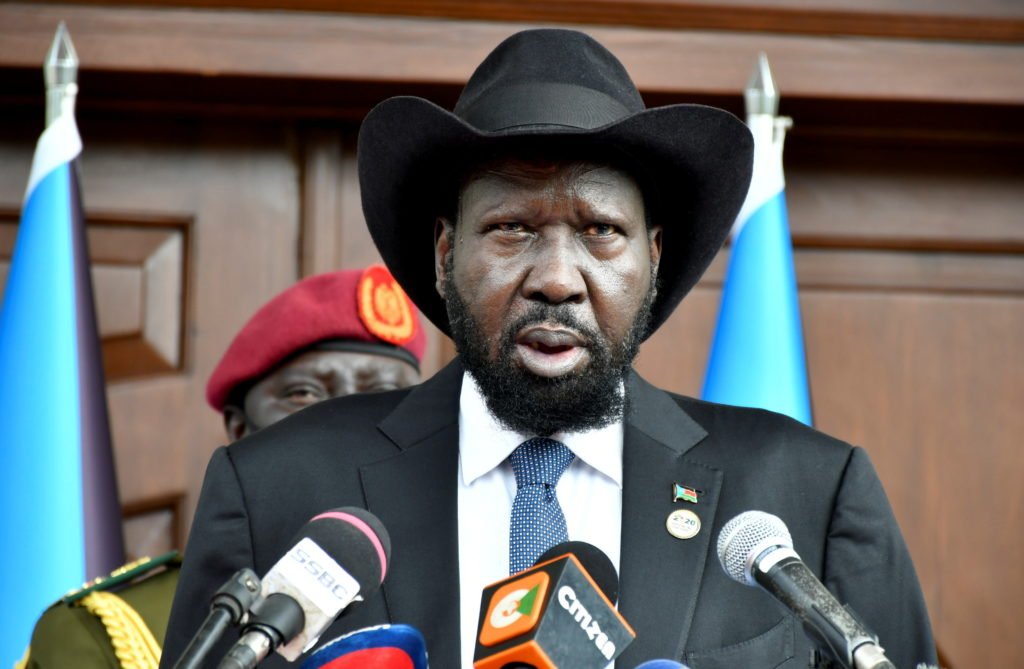
South Sudan: A Fragile State
South Sudan gained independence in 2011, but it descended into a prolonged and bloody civil war in 2013 after violence erupted between forces loyal to President Salva Kiir Mayardit and those of his former vice president, Riek Machar.
During the war, the parties to the conflict used starvation as a weapon against the population, despite the young country’s oil wealth and abundant natural resources.
The United Nations documented horrific cases of killings, displacement, destruction of property, mass rape, sexual slavery, and executions, and conflict remains widespread across the country.
According to the Fragile States Index, formerly known as the Failed States Index, South Sudan topped the list as one of the world’s most fragile states in 2015, 2017, and 2018.
The index, produced by the Fund for Peace, indicates that between 2012 and 2022, South Sudan never moved out of the second, third, or fourth positions among the world’s most fragile states.
The index is designed to assess whether a state is vulnerable to conflict or collapse and when the pressures it faces may push it toward the brink of failure, by highlighting issues relevant to weak and fragile states.
It also aims to assess political risks and provide early warning of conflict, making the information accessible to policymakers and the general public.
The index is based on 12 different indicators used to determine the degree of fragility, including human rights, public services, demographic pressures, refugees and internally displaced persons, security, and other factors. The higher a country ranks on the list, the greater its level of fragility.