Secret Visit and Murky Alliances: What Did BIBI and MBZ Discuss in Abu Dhabi?
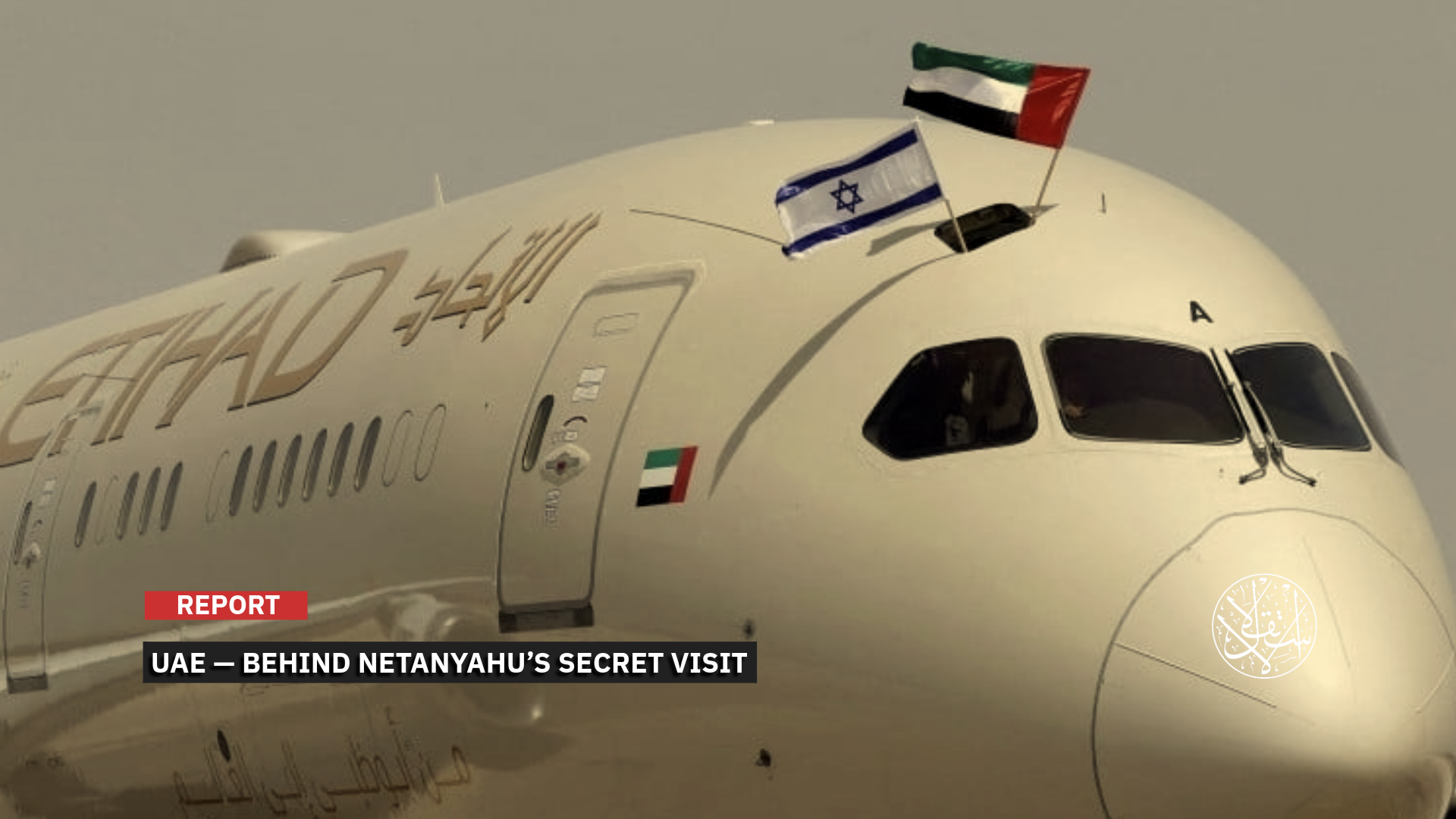
This was Netanyahu’s second visit to the UAE in five months.
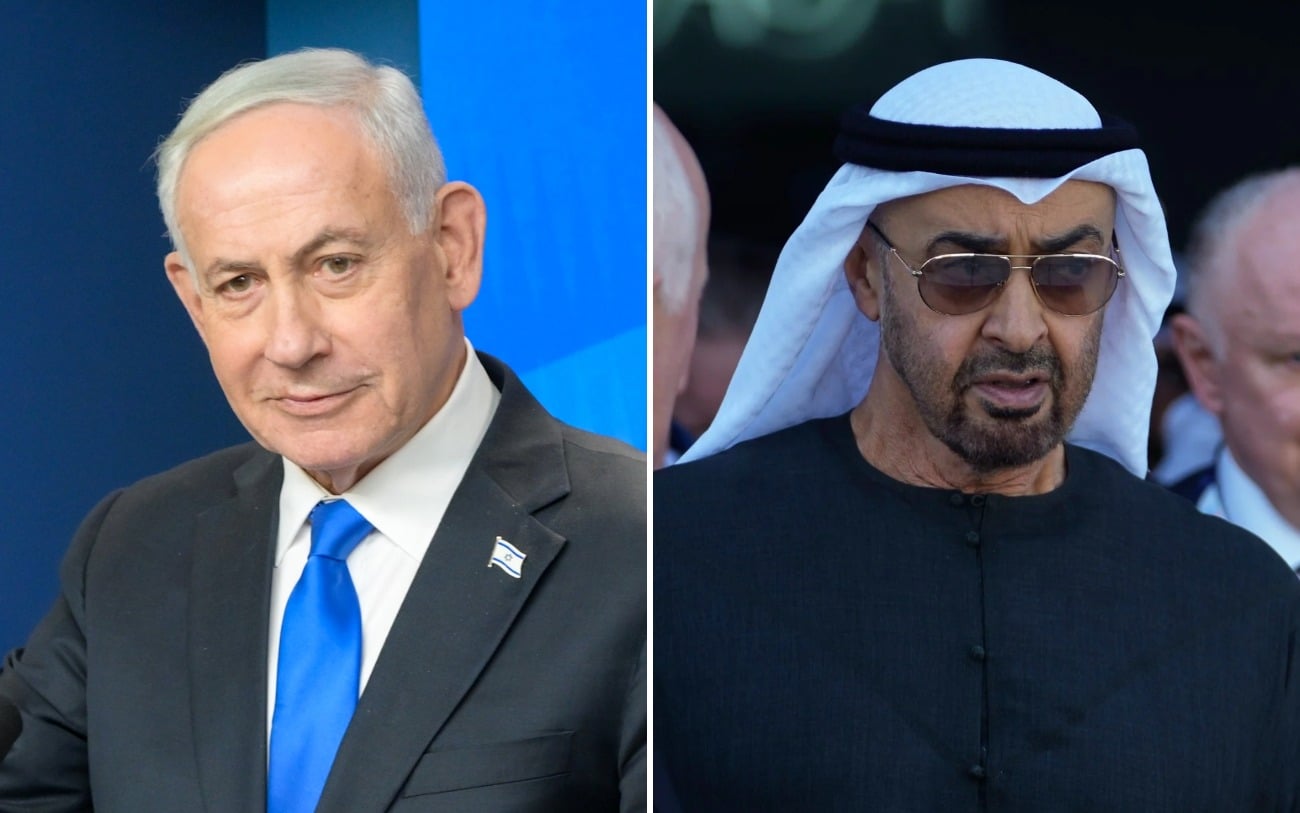
Israeli and U.S. media reported on September 27, 2026, that Israeli Prime Minister Benjamin Netanyahu had made an undisclosed visit to Abu Dhabi, where he met with UAE President Mohammed bin Zayed (MBZ). It was Netanyahu’s second visit to the UAE in five months.
Israel’s public broadcaster Kan 11, Channel 12, and Axios all reported on the visit on September 27, citing sources in Washington and “Tel Aviv.”
According to the reports, the visit came after leaks about an earlier warning MBZ had given Netanyahu ahead of the October 7, 2023, events. This time, the Israeli Occupation was pressing the UAE to deny the reports, amid concerns that they could add to pressure on Netanyahu ahead of the Knesset elections scheduled for October 27, 2026.
The reports also said the two sides discussed Iran, the Houthis, and the Bab al-Mandeb Strait, as well as regional security coordination over these issues.
The visit marked Netanyahu’s second trip to the UAE in five months, following his first visit to al-Ain on March 26, 2026. Various assessments linked that trip to Israeli support for Abu Dhabi in the face of Iranian attacks, including the delivery of Israeli Iron Dome systems and personnel to help operate them and intercept Iranian missiles.
The irony was that the UAE denied the first visit, while Netanyahu’s office confirmed it, saying he had “secretly visited the UAE, where he met with its president, Mohammed bin Zayed.” Reports linked the trip to the U.S.-Israeli War on Iran and Iranian strikes on Abu Dhabi at the time.
The second visit was also not announced publicly. Israeli and U.S. reports said one reason for the trip was Netanyahu’s request that Abu Dhabi deny reports that it had warned him about the October 7 events. The UAE refused, while some reports noted that the Israeli Occupation had previously embarrassed MBZ by publicly disclosing the first visit despite his reluctance to do so, then confirming it after the UAE denied it, further putting him in an awkward position.
The most striking reports, however, involved broader leaks saying that the meeting was not limited to Netanyahu and MBZ but also included representatives from Saudi Arabia, Jordan, and Morocco to discuss forming a “defense alliance” in the region, particularly against Iran.
Why the Second Visit?
One of the striking details to emerge from reports about MBZ contacting Netanyahu twice to warn him that Operation al-Aqsa Flood was approaching, with similar warnings coming from the head of the Egyptian regime Abdel Fattah el-Sisi, is that four Israeli newspapers and websites and five U.S. media outlets republished the story throughout September 2026. Israeli assessments suggested that the issue was among the reasons for Netanyahu’s second visit to the UAE.
The story first emerged on September 8, 2026, in an investigation by Haaretz. It was then picked up by The Times of Israel and The Jerusalem Post, followed by The New York Times on September 25, bringing the issue back into the spotlight repeatedly.
The reports said the renewed coverage coincided with the approaching anniversary of Operation al-Aqsa Flood and the debate it could reignite over Netanyahu’s responsibility for the failures preceding the operation. Netanyahu has refused to assume political responsibility for those events, despite the resignations of senior military and intelligence officials.
As the same information was republished in greater detail on September 27 and 28 by two Israeli television channels and U.S. media outlets, additional interpretations emerged involving the elections and the possibility that Israeli and U.S. actors, perhaps at the request of Arab parties, were seeking to weaken Netanyahu or affect his electoral prospects.
Haaretz quoted three sources as saying Netanyahu received a warning from MBZ about a week and a half before the October 7, 2023, events, but did not pass it on to the Israeli military or the Shin Bet, “Israel’s” internal security agency.
The newspaper reported that about a week and a half before Operation al-Aqsa Flood, Netanyahu received a 45-minute phone call from MBZ, who again warned him about the intentions of former Hamas political bureau chief Yahya Sinwar to launch a major operation against the Israeli Occupation. Yet, according to the sources cited by the newspaper, Netanyahu did nothing again.
After the discussion of warnings from the UAE and Egypt to Netanyahu about Operation al-Aqsa Flood had subsided for a time, Israeli and U.S. newspapers and websites returned to the same reports, this time with new details, amid what appeared to be a broad media campaign against him as the elections approached.
On September 25, 2026, The Atlantic published an extensive investigation into warnings from the UAE and Egypt to Netanyahu about a Hamas attack. It said former Egyptian intelligence chief Abbas Kamel had secretly visited the Israeli Occupation eleven days before the October 7, 2023, events and warned that Hamas was preparing for a major operation.
Citing the same sources, The Atlantic reported that warnings had reached “Tel Aviv” from Abu Dhabi before October 7. UAE intelligence agencies had passed information to the Shin Bet in September 2023 indicating that Hamas was preparing for a “violent move,” while MBZ also contacted Netanyahu to warn him of the threat.
However, information that emerged in Israeli newspapers following the visit suggested, according to those reports, that the matter may have gone beyond Netanyahu asking bin Zayed to support him in the elections by denying that he had contacted him and warned him about Operation al-Aqsa Flood.
According to these reports, the discussions also covered military and security issues involving Iran, the Houthis, and regional security arrangements.
Why the Secrecy?
Less than 48 hours after new reports emerged about leaked warnings over Operation al-Aqsa Flood, Israel’s Channel 12, Axios, whose “Israel” correspondent is Barak Ravid, and Israel’s public broadcaster Kan 11 revealed that Netanyahu had visited MBZ and met with him to discuss the implications of the October 7 warnings.
Netanyahu’s office issued a statement criticizing Israeli media outlets for publishing details of his second visit to the UAE, claiming that the reports put the lives of the prime minister, his wife, and the accompanying delegation at risk, as he had not yet returned to “Israel” and security measures for his return were still in place.
The office said the delegation included the Mossad chief, the national security adviser, Netanyahu’s military secretary, and the head of the Shin Bet protection unit, along with the flight crew and security detail. Media reports viewed the composition of the delegation as an indication that the visit involved sensitive security and military matters.
On Monday evening, Israel’s Shin Bet filed a complaint with the Israeli military censor against Channel 12 over its disclosure of Netanyahu’s unannounced visit to the UAE. The agency said the “timing of the publication” had put Netanyahu, his delegation, and the security operation at risk, pointing to security concerns over the possibility of an Iranian attack against him.
The Prime Minister’s Office said in a statement that the Shin Bet had called for “legal action” against the channel, accusing it of a “serious violation of military censorship instructions.” It claimed that “publishing the visit and the way it was carried out exposed the agency’s methods of operation, making future operations themselves more vulnerable.”
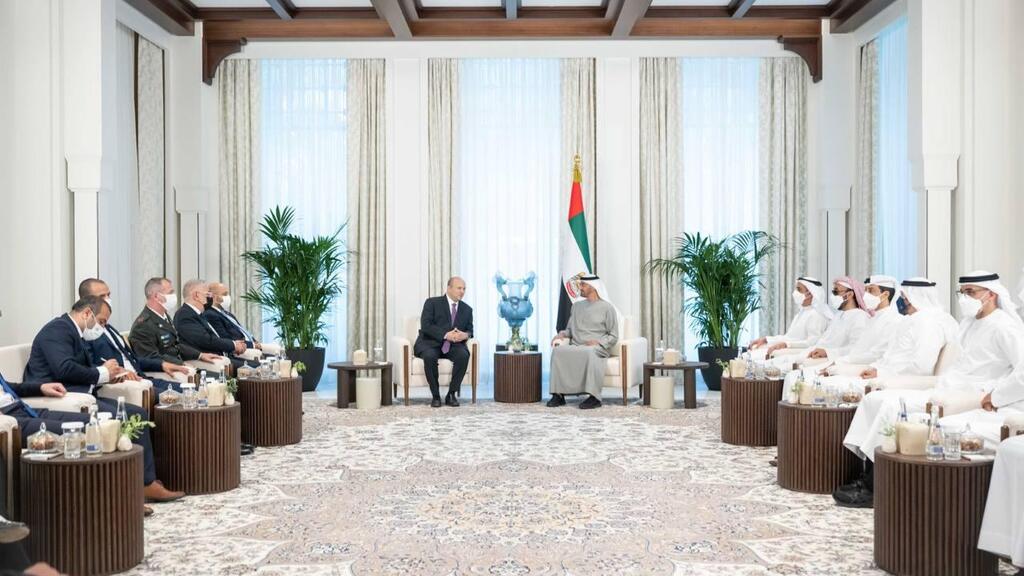
Netanyahu’s office and the Emirates News Agency (WAM) later confirmed the visit to Abu Dhabi and said MBZ had received Netanyahu. The two offices said that the two leaders discussed bilateral relations between the UAE and “Israel” and ways to strengthen and further develop them.
Israeli newspapers and television channels reported that Netanyahu had asked the UAE to officially deny that he had been warned about the October 7 events while also discussing the Iranian and Houthi threats and military coordination in response to them.
According to the Israeli reports, MBZ refused to issue an official denial. The UAE side instead published a statement from an official Emirati source to The National on September 19, 2026, saying that the UAE discusses security matters with other countries through the relevant authorities.
On September 28, 2026, The Wall Street Journal published a new report on Egyptian and Emirati warnings ahead of October 7, reiterating that MBZ had contacted Netanyahu in September 2023 and warned him of indications that Hamas was preparing an attack.
Current opinion polls, according to media reports, show Netanyahu facing difficulty securing a governing majority in the Knesset, amid concerns that the Egyptian and Emirati warnings over Operation al-Aqsa Flood could affect his party’s electoral performance. It also remains unclear whether the opposition will win enough seats to form a government.

Three Possible Reasons
According to Israeli and U.S. assessments and reports from news agencies, Netanyahu’s second visit to MBZ focused on three main issues:
First: Reconfiguring regional security after the war on Iran, with the Houthis entering the confrontation and threatening to shut down the port of “Eilat” without firing a single shot by preventing Israeli ships from entering or leaving the port.
According to other assessments, the two sides may also have discussed joint support for Ethiopia as it faces seven armed groups that, according to these assessments, have begun advancing toward the capital with the aim of overthrowing Prime Minister Abiy Ahmed. The Israeli Occupation and the UAE have shared interests in supporting him, despite this conflicting with Cairo’s interests.
Second: Netanyahu’s attempt to contain the domestic fallout from leaks that Abu Dhabi and Cairo had warned him about an October 7 events and their potential impact on the Knesset elections by securing an official Emirati denial of the reports, which had fueled debate over his responsibility for the failures preceding the Hamas operation.
On September 28, 2026, Haaretz and the Associated Press, citing sources, reported that Netanyahu had asked the UAE president to deny the Haaretz report published on September 8, 2026, about a warning from a representative of MBZ regarding Operation al-Aqsa Flood.
A person familiar with the matter told the Israeli newspaper that Netanyahu asked MBZ during a secret meeting on September 27, 2026, during his second visit to Abu Dhabi, to deny the Haaretz report so it would not affect him in the elections.
Netanyahu’s office denied this, saying that the visit focused exclusively on strengthening relations between the two “countries” and addressing regional challenges.
At the same time, Western media speculated about U.S. and Arab regional coordination aimed at weakening Netanyahu, portraying him in these reports as an obstacle to normalization and the expansion of the “Abraham Accords” because of his positions and those of his right-wing coalition.
Some of these reports suggested that the UAE could be part of such an effort in coordination with Washington, with the aim of weakening Netanyahu’s chances in the upcoming Israeli elections. These reports linked that possibility to Abu Dhabi’s refusal to issue an official denial regarding the warning he received about Operation al-Aqsa Flood.
Before these speculations emerged, Maariv reported on September 28, 2026, that MBZ initially denied knowing that Netanyahu was in the UAE. Emirati officials told the Israeli prime minister that he was not in the country, but Netanyahu told them that he was there and wanted to proceed with the visit for important reasons.
The newspaper quoted sources as saying that Netanyahu exerted heavy pressure on the UAE to complete the visit before the elections. Emirati officials described the pressure as “extremely intense,” saying it included phone calls and appeals to people close to the leadership and international figures, as well as hints about future security cooperation.
Third: Discussing specific and undisclosed military and security arrangements involving Iran and regional security coordination after the latest war, as well as deepening security cooperation between Abu Dhabi and “Tel Aviv,” according to Israeli sources.
Other sources told CNN on September 28, 2026, that the Iranian issue dominated the meeting’s agenda.
Benjamin Netanyahu’s visit to Abu Dhabi came at a highly sensitive time, amid mounting regional pressure on “Israel” and concerns over Houthi control of the Bab al-Mandeb Strait, roughly a month before “Israel’s” parliamentary elections.
It also came after Netanyahu returned from the United Nations General Assembly meetings. According to U.S. assessments, this suggests that the visit had a greater security and political dimension than a routine diplomatic trip, particularly because the meeting took place without an official announcement and no details of its agenda were disclosed.
The Netanyahu office’s disclosure that his wife, Sara, accompanied him, along with the Mossad chief, the national security adviser, his military secretary, and the head of the Shin Bet protection unit, further fueled speculation that sensitive military and security issues were discussed, possibly involving cooperation against Iran or the Houthis, or support for the Ethiopian government, where Abu Dhabi and “Tel Aviv” are believed to share interests with Prime Minister Abiy Ahmed.
According to this assessment, the visit appears to have been intended for direct consultations on regional security arrangements amid the possibility of a resumption of war on Iran, as well as discussions on military and security ties between the UAE and “Israel” and related issues.
During Netanyahu’s first visit to Abu Dhabi, Israeli and Western reports similarly said the purpose of the trip was “military” and involved military and intelligence coordination against Iran. This was particularly significant because the UAE has hosted Israeli intelligence operations since the signing of the “Abraham Accords,” some of which were targeted during Iranian drone attacks, according to media reports.
On May 14, 2026, Israel’s Channel 13 reported that the meeting came amid Israeli assessments that a resumption of the war on Iran remained possible, linking the visit to “Israel’s” desire to strengthen coordination with Abu Dhabi over Iran.

Was Saudi Arabia Involved?
Once the UAE officially confirmed the visit, right-wing Israeli media outlets aligned with Netanyahu expanded on the leaked information, raising the possibility that other Arab countries, including Saudi Arabia, Jordan, and Morocco, had also taken part in the meeting.
Israel’s Channel 14 reported that Saudi representatives joined the expanded portion of the meeting between Netanyahu and MBZ to discuss a “regional security alliance.”
Channel correspondent Dror Balazada wrote that a senior Emirati source had told him that representatives of Saudi Arabia took part in a broader meeting following Netanyahu’s talks with MBZ.
He claimed that the first part of the meeting was attended by Netanyahu, MBZ, and representatives from “Israel” and the UAE, while representatives from other Arab countries, including Saudi Arabia, joined the second part. There was also speculation that Jared Kushner, U.S. President Donald Trump’s son in law, had been behind bringing the participants together.
He said the discussions focused on continued security cooperation, with “Israel” expressing readiness to provide assistance with air defense systems, similar to the support it provided to the UAE during the U.S.-Israeli War on Iran.
According to the channel, this included supplying the Gulf with defense systems such as “Israel’s” Iron Dome, as well as the continuing war on Iran and the Houthis and the formation of an alliance among countries in the region.
On September 29, Yedioth Ahronoth published further details, saying the talks focused on Iran and ways to curb the influence of its proxies in the Middle East, with particular attention to the Houthis in Yemen.
The newspaper reported that “Israel” was prepared to provide assistance by forming a defense alliance and supplying Gulf states with air defense systems, such as the Iron Dome systems it provided to the UAE during Netanyahu’s first visit to Abu Dhabi in March 2026.
Yedioth Ahronoth quoted sources familiar with the details as saying that representatives from Saudi Arabia, Morocco, and Jordan attended the meeting, along with representatives from other Gulf states. Mossad chief Roman Gofman reportedly organized the meeting, while MBZ agreed to host it.
The report claimed that the meeting followed a Saudi request to “Israel” for assistance in dealing with Houthi attacks in the Red Sea. The talks focused on Iran and what the report described as its “proxies” in the Middle East, particularly the Houthis.
The right-wing newspaper Israel Hayom also reported the same, revealing that officials from two Gulf states that do not have diplomatic relations with “Israel” took part in the meeting between Netanyahu and MBZ.
The newspaper said the meeting focused on Iran, near-term scenarios, the Houthi threat, and political and security coordination, and was held with the knowledge and approval of the U.S. administration.
Israeli newspapers also reported that during his meeting with MBZ, Netanyahu sought to play on internal Gulf divisions by expressing concern that Qatar might leak new information against him ahead of the Israeli elections, further deepening his domestic crisis.
According to these newspapers, Netanyahu asked MBZ not to respond to media campaigns and leaks against him and to provide him with moral support.
Analysts linked the speculation over Saudi participation in the Netanyahu-MBZ meeting to Saudi Defense Minister Khalid bin Salman’s invitation to UAE Vice President Mansour bin Zayed to come to Saudi Arabia for a meeting.
Israel’s public broadcaster Kan 11 quoted sources familiar with the matter as saying that Netanyahu’s latest visit, as well as his previous visit to the UAE during the war on Iran, included meetings attended by officials from several Gulf states, including countries that do not have official relations with Israel. The discussions focused on Iran.
The broadcaster noted that several military and government aircraft landed in Abu Dhabi while Netanyahu was there, including an aircraft linked to Khalifa Haftar’s forces in Libya, a Moroccan Hercules aircraft, and a UAE government aircraft that had arrived from Riyadh.
The reports emerging from Netanyahu’s second visit to Abu Dhabi therefore said that it went beyond an announced bilateral meeting aimed at strengthening relations between the UAE and “Israel.”
Instead, it has become the focus of broader questions about the warnings preceding the October 7 operation, the upcoming Israeli elections, and the future of regional security coordination against Iran and the Houthis, as well as whether Abu Dhabi and Tel Aviv are seeking to reshape a broader regional security framework after the war on Iran.
Sources
- Netanyahu shared new intelligence on Iran’s nuclear ambitions with UAE leader, source says
- Netanyahu meets Emirati leader in a secret weekend trip to Abu Dhabi, and other Mideast developments
- Netanyahu Asked UAE Leader to Deny Haaretz Report on Oct. 7 Warning in Secret Visit, Sources Say
- Netanyahu held secret Gulf summit on Iran, Houthis in UAE, sources say
- Revealed: Netanyahu Received an Explicit Warning Days Before Oct. 7. He Didn't Brief Israel's Security Chiefs
- Bin Zayed: “Tell Him I’m Not in the Country” as Emirati Officials Say Netanyahu Applied “Heavy Pressure”: What Was Behind His Abu Dhabi Visit? [Arabic]