Al–Burhan’s Visa: When U.S. Pressure Turns Into a Test for Mediation and Peace in Sudan
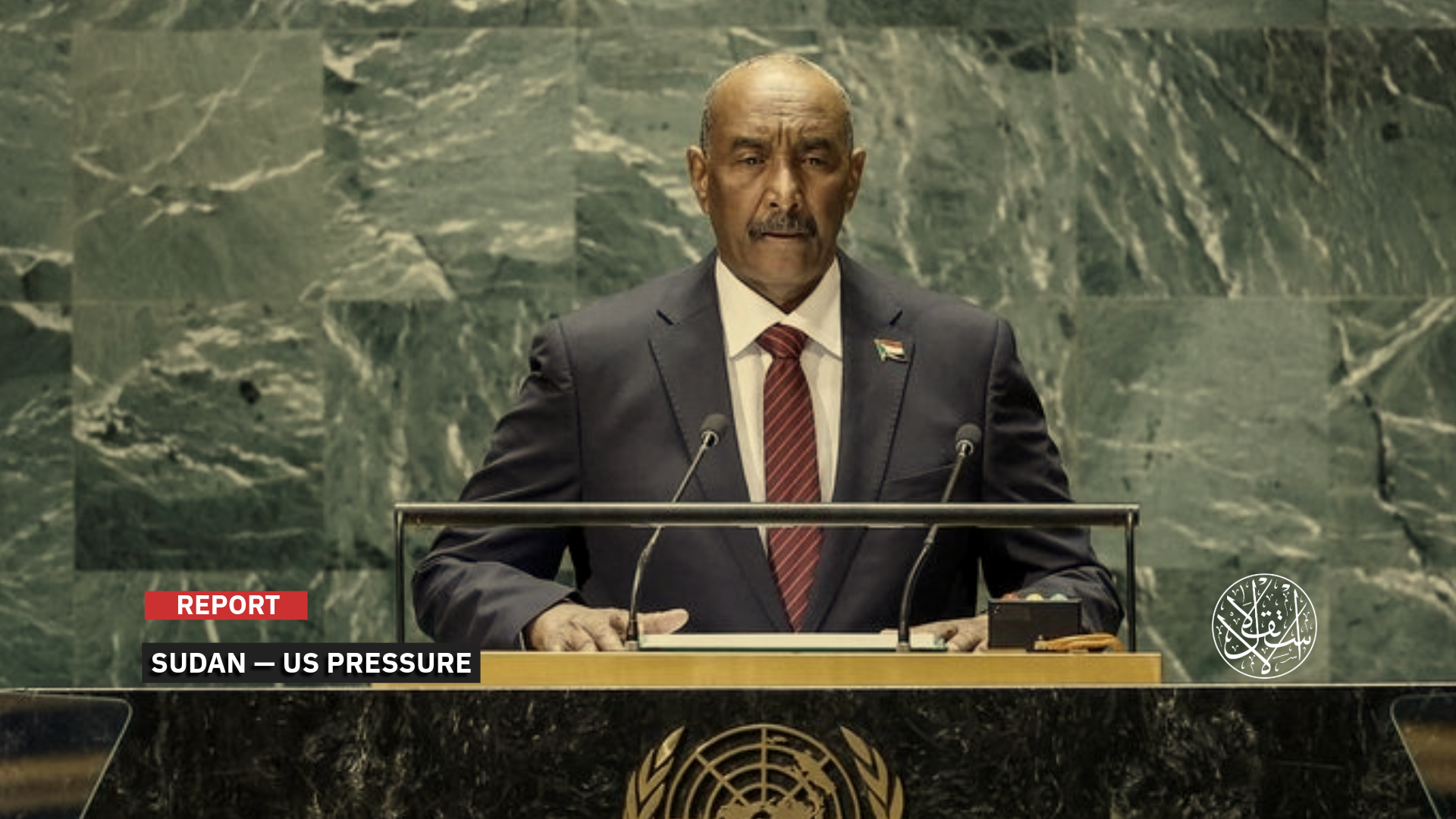
Blocking Burhan’s attendance does not mean the UN has decided to strip Sudan of its seat.
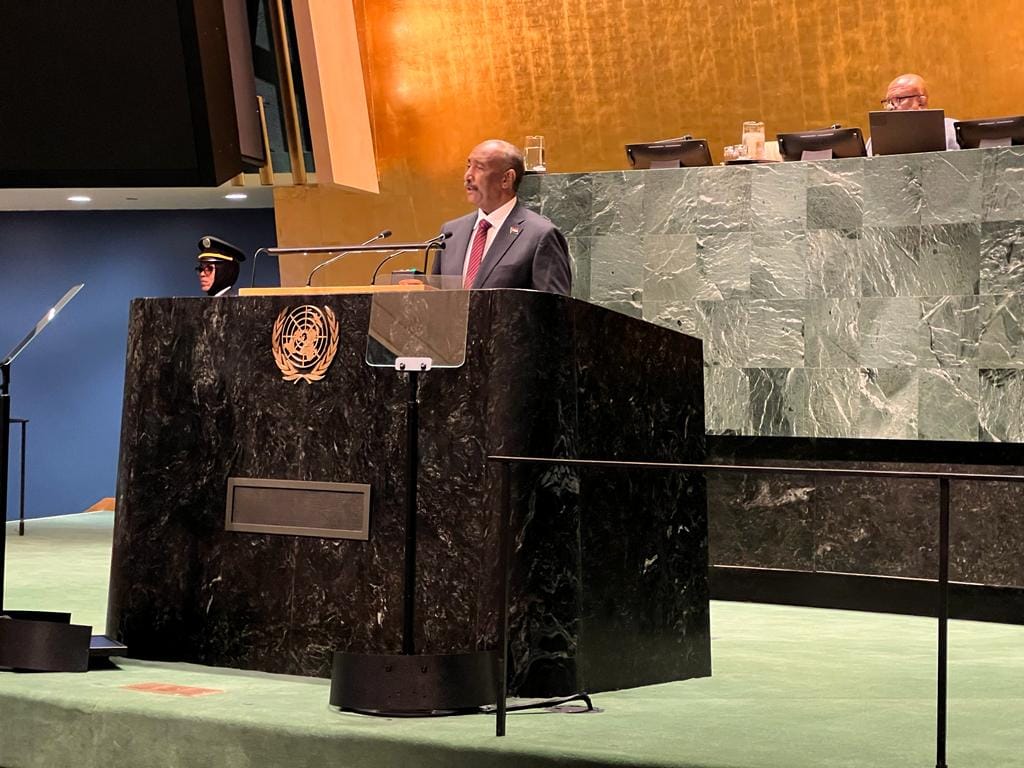
The United States withheld a visa for Transitional Sovereignty Council of Sudan (TSC) Chairman Abdel Fattah al-Burhan ahead of his planned participation in the United Nations General Assembly, putting its dispute with Sudan’s army leadership to a test that extends beyond bilateral relations to its obligations as the host country of the international organization.
Reuters reported on September 22, 2026, that U.S. officials linked his attendance to acceptance of a 90-day truce proposed by U.S. presidential adviser Massad Boulos. While Burhan postponed his trip, a Sudanese statement confirmed that he had not received an official notification that his visa had been denied.
The move came as Burhan laid out his vision for peace in an article in Foreign Policy, while Washington called on both sides to halt the fighting without conditions. The dispute over access to the UN platform thus became intertwined with disagreements over the terms of a settlement, who has the right to represent Sudan, and the future of power after the war ends.
Will visa pressure help push the war toward a ceasefire, or further complicate mediation? Where do Washington’s powers end and the rights of a UN member state begin? And how does Burhan’s plan differ from the U.S. proposal?
The Sudanese objection began with the United States’ role as the host country of the United Nations. In a letter dated September 21, Sudanese representative al-Harith Idriss al-Harith asked Secretary-General Antonio Guterres to intervene immediately to ensure the visa was issued, warning that the continued impasse would prevent the chairman of the TSC from personally participating in the General Assembly proceedings.
UN spokesperson Stéphane Dujarric told Reuters that Guterres was very concerned about the failure to issue the visa and was in contact with Washington over the matter.
The U.S. State Department, meanwhile, declined to comment on the request, while the agency reported that Foreign Minister Mohieddin Salem would deliver Sudan’s address instead of Burhan.
Sudan’s argument is based on the 1947 Headquarters Agreement. Article 11 bars obstruction of the passage of representatives of member states to the organization, while Article 12 makes these facilities independent of relations with the U.S. government. Article 13, meanwhile, requires the necessary visas to be issued as quickly as possible.
The crisis therefore raises a distinction between Washington’s position toward Sudan’s authorities and its obligations to facilitate the access of member-state representatives to the organization. Questioning the legitimacy of a government does not automatically settle its delegation’s right to participate, just as blocking Burhan’s attendance does not mean the UN has decided to strip Sudan of its seat.
In this context, Ultra Sudan quoted diplomat Ammar Mohammed Mahmoud as criticizing the shift in the debate from the Headquarters Agreement to the legitimacy of Sudan’s government. He cited a letter he said Trump sent in January 2026, addressing Burhan as chairman of Sudan’s TSC.
Dispute Over Withdrawal Before the Truce
Beyond the entry dispute lies a negotiating disagreement that predates the New York meetings. Documents reviewed by Reuters in July 2026 showed that the Sudanese government had accepted most of the U.S. proposal but rejected limiting the Rapid Support Forces’ withdrawal to specific areas, instead demanding that they leave all cities under their control.
The proposal called for an immediate humanitarian truce, followed by negotiations on a permanent ceasefire and a civilian transition. Washington urged the parties to accept it as presented, without preconditions.
These details show that the dispute concerns what the truce would mean on the ground, the limits of troop deployment, civilian security, and safeguards against using a halt in fighting to rearm. Agreement on the need to end the war, therefore, is not enough on its own to overcome disagreements over how the truce would be implemented.
The Sudanese government insists that clearing civilian sites must come first. TSC Chairman’s Adviser Amjad Farid said in comments published by Alahd Online that ending the coercion of civilians is necessary for meaningful talks. He argued that the future of governance, the constitution, and reconstruction should be discussed inside Sudan through an inclusive dialogue led by Sudanese people.
Washington, meanwhile, is putting an end to the fighting at the forefront of the process. The U.S. State Department accused the army and the Rapid Support Forces (RSF) of intensifying military operations and drone strikes rather than showing a serious commitment to an immediate truce, and called on both sides to engage in dialogue leading to a civilian government.
But turning disagreements over the arrangements into a condition for international participation adds another burden to mediation. Reuters quoted people familiar with the discussions as saying that denying Burhan a visa could reduce the chances of his engaging with Boulos in the future.
A Sudanese diplomat said Burhan does not want the proposal treated as a fixed text and believes it should remain open to negotiation. That makes the wording of the proposal itself part of the dispute, alongside the terms of the truce and the guarantees surrounding it.
Washington Raises the Cost of Rejection
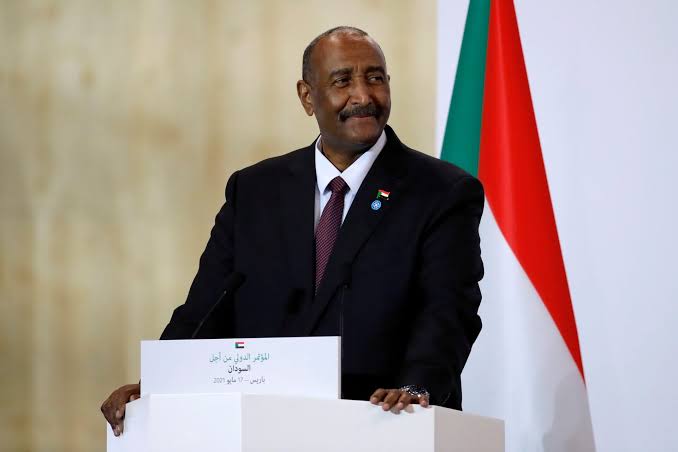
The negotiating pressure has also been accompanied by a tougher U.S. position on the future of Sudan’s leadership. On September 15, Boulos said in Dubai, which Khartoum accuses of supporting and supplying the RSF, that Washington supports a swift civilian transition that would exclude Burhan and RSF commander Mohamed Hamdan Dagalo from political leadership. He acknowledged that the roadmap had yet to produce results a year after it was introduced.
The crisis comes on top of a legacy of sanctions. The Biden administration sanctioned Burhan in January 2025, before Trump took office. In May of the same year, the new administration announced measures over its accusation that the Sudanese government had used chemical weapons, a charge Khartoum rejected.
In June 2026, the Treasury Department also targeted networks linked to supplying the army and others involved in recruiting fighters for the RSF.
Still, diplomatic contacts have not been cut off. Boulos met with the Sudanese foreign minister in New York. The continuation of meetings alongside the escalation suggests that Washington is negotiating with the government in power while refusing to give political recognition to its vision for governance.
The visa crisis also prompted criticism over Sudan’s status and the limits of U.S. influence over the international organization. In a September 23 post, intellectual Azmi Bishara compared the blocking of representatives from Sudan and Palestine with the Iranian president being allowed to attend, despite “the war with Tehran.”
He described this as “another important indicator of the status of Arab states and entities, and the weight of the official Arab system internationally.” He later clarified that by “the Sudanese president,” he meant the chairman of the TSC.
From the perspective of mediation, Alahd Online quoted U.S. researcher Cameron Hudson as criticizing the use of a visa as leverage for signing an agreement and questioning the sustainability of a settlement secured through coercion. This criticism puts the effectiveness of the U.S. measure to the test, particularly when maintaining trust in the mediator becomes part of the conditions for keeping negotiations going.
In an article titled “Entry Visas and a Miscalculation,” writer Mustafa Abdel Aziz al-Batal argued that the move would strengthen Burhan’s position, weaken Boulos, and push Khartoum to take a harder line on the Quad’s conditions.
Hassan Ismail, meanwhile, criticized the way the visit was handled, arguing that the increasingly tough U.S. rhetoric should have prompted Sudan to anticipate the obstruction and send Prime Minister Kamil Idris instead.
Writer Ali Mohamed Taher Allam called for resolving the dispute through legal and diplomatic channels while keeping communication open. His position reflects a call to challenge the use of visas as leverage without cutting off dialogue in a way that could further complicate Sudan’s crisis.
Burhan Puts Forward a One-State Peace Plan
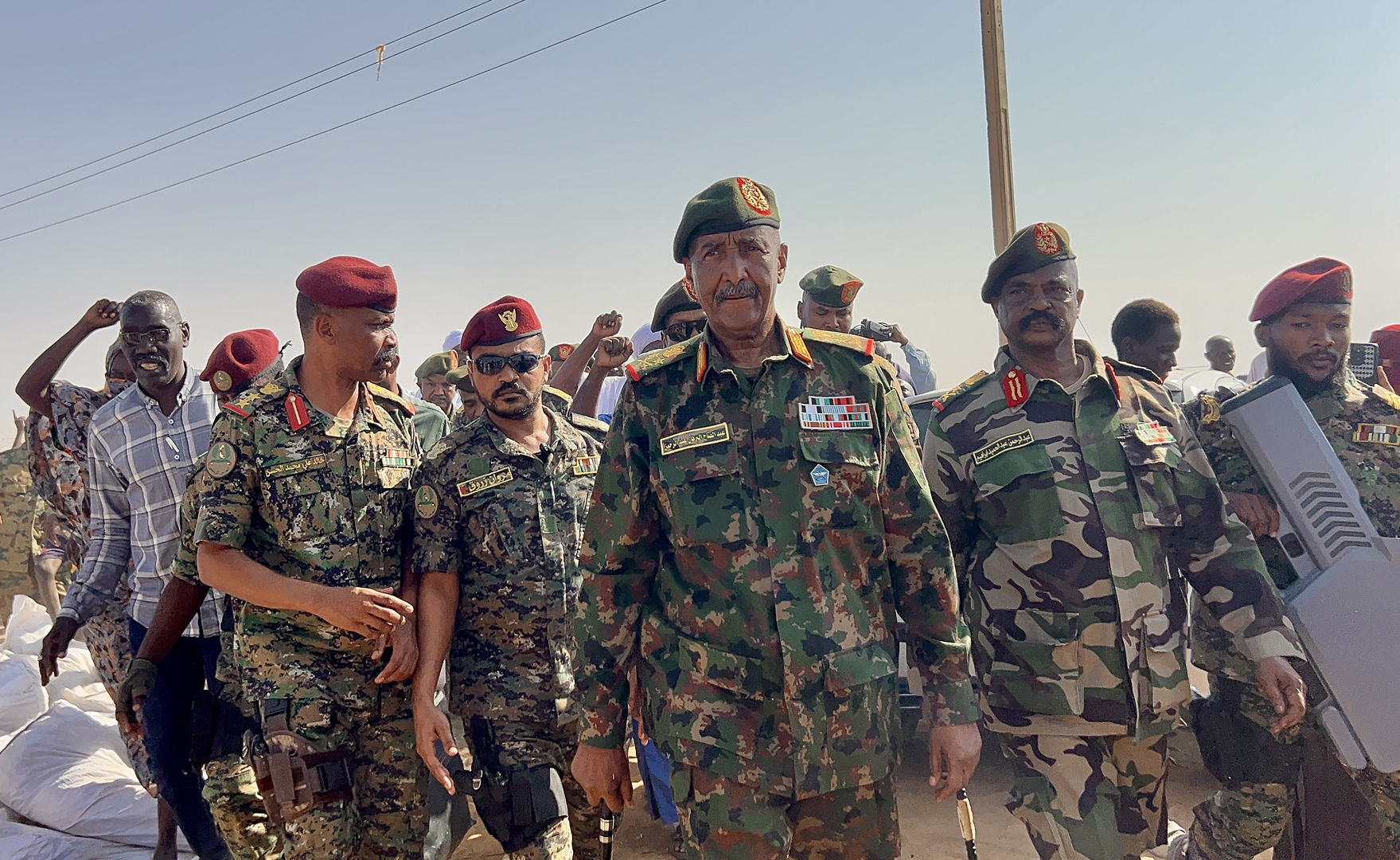
In response to U.S. criticism, Burhan laid out his vision in Foreign Policy, emphasizing the role of state institutions. He acknowledged that the government he leads is transitional and imperfect but argued that it remains the government of a sovereign UN member state and said he was prepared to abide by international law and be held accountable under it.
The plan he outlined calls for a permanent ceasefire, with UN oversight to help remove fighters and weapons from civilian areas, ultimately leading to a single national army under civilian oversight. Burhan links this to a Sudanese dialogue free from outside dictates, a constitution drafted by Sudanese people, and free elections subject to international monitoring that would return political decision-making to citizens.
His article sets out four priorities for the international community: supporting the plan submitted to the TSC, cutting off the RSF’s funding and supply lines, supporting UN monitoring of the ceasefire, and giving Sudanese people space to determine their own future. He also criticizes previous truces, arguing that they gave the RSF and its supporters an opportunity to regroup rather than end the war.
He points to the return of around four million Sudanese to Khartoum, al-Jazirah, and Sennar after the RSF withdrew as evidence of the importance of restoring state authority. By linking the return of residents to the army’s advances, Burhan presents the restoration of state institutions and security as the foundation for a settlement while rejecting any equivalence between the government and parallel armed formations.