Saudi Arabia Seeks Partners for War: Can Turkiye and Pakistan Fill Washington’s Void?
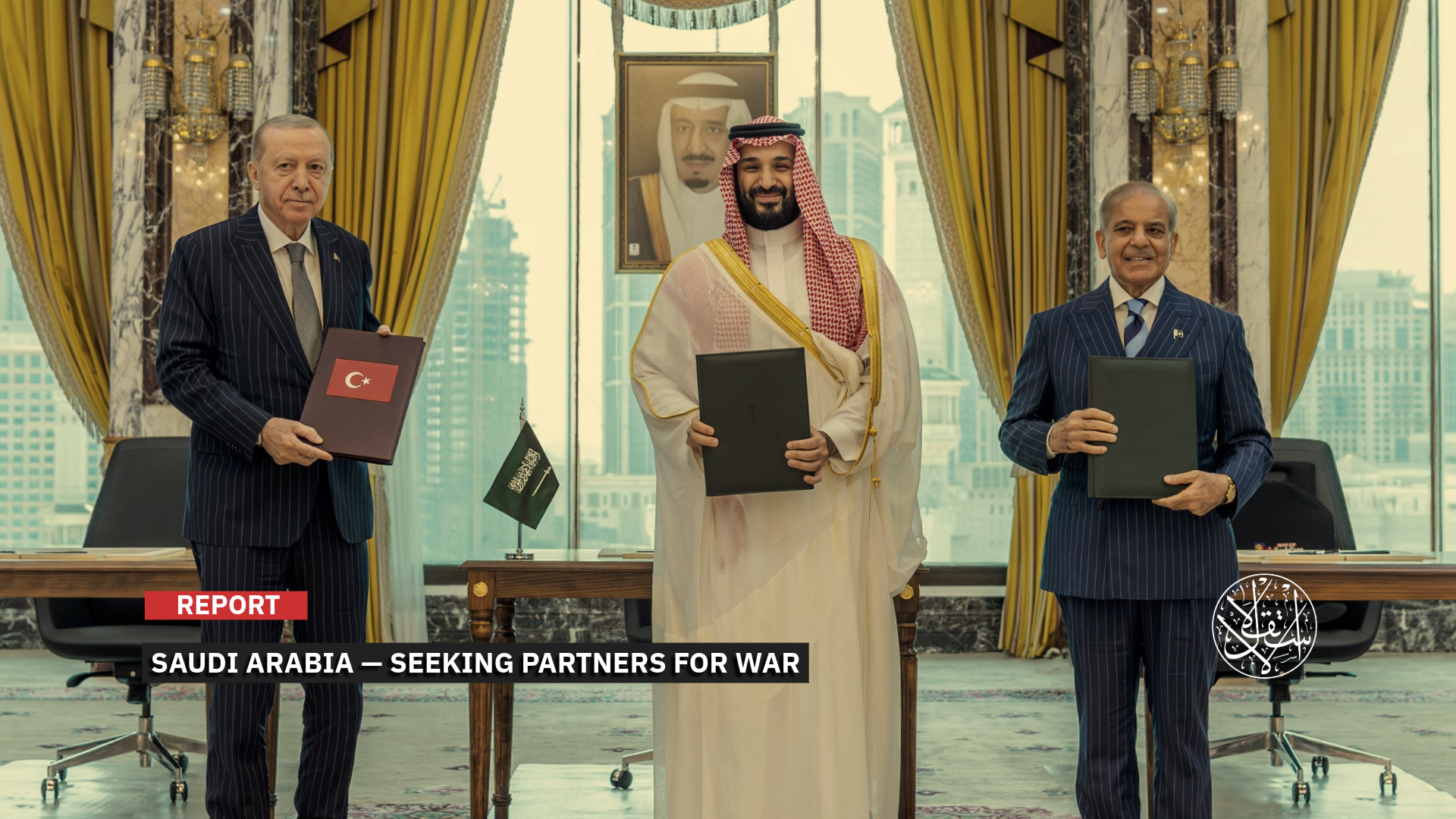
The Saudi-Turkish-Pakistani alliance brings together complementary strengths.
At the height of a confrontation that has seen Saudi airstrikes in Yemen coincide with escalating Houthi attacks on the kingdom, Saudi, Turkish, and Pakistani military leaders met in Riyadh on September 25, 2026, to discuss military coordination, intelligence sharing, and closer integration of their capabilities.
The leaders pledged to immediately turn the commitments made under the Mecca Joint Defense Agreement (MJDA) into military cooperation, as Riyadh faces a question that goes beyond its weapons and military capabilities: how ready are its allies to fight alongside it?
The meeting came after Washington rejected a Saudi request to join an ongoing air campaign against the Houthis. As the group advances along Yemen’s coast and threatens shipping and Saudi facilities, U.S. reluctance is increasingly affecting the kingdom’s ability to regain the initiative and protect its economic agenda.
This is where the partnership with Ankara and Islamabad takes on significance beyond the Yemen war, becoming a test of whether a regional force can be built to support Saudi decision-making when its calculations diverge from those of Washington.
Can the MJDA shift the balance of the confrontation? What would it mean for Turkiye and Pakistan to move from pledging protection to bearing the costs of war? And could what Riyadh sees as U.S. abandonment open the door to a broader restructuring of the security framework the kingdom has relied on for decades?
An Offensive to Regain the Initiative
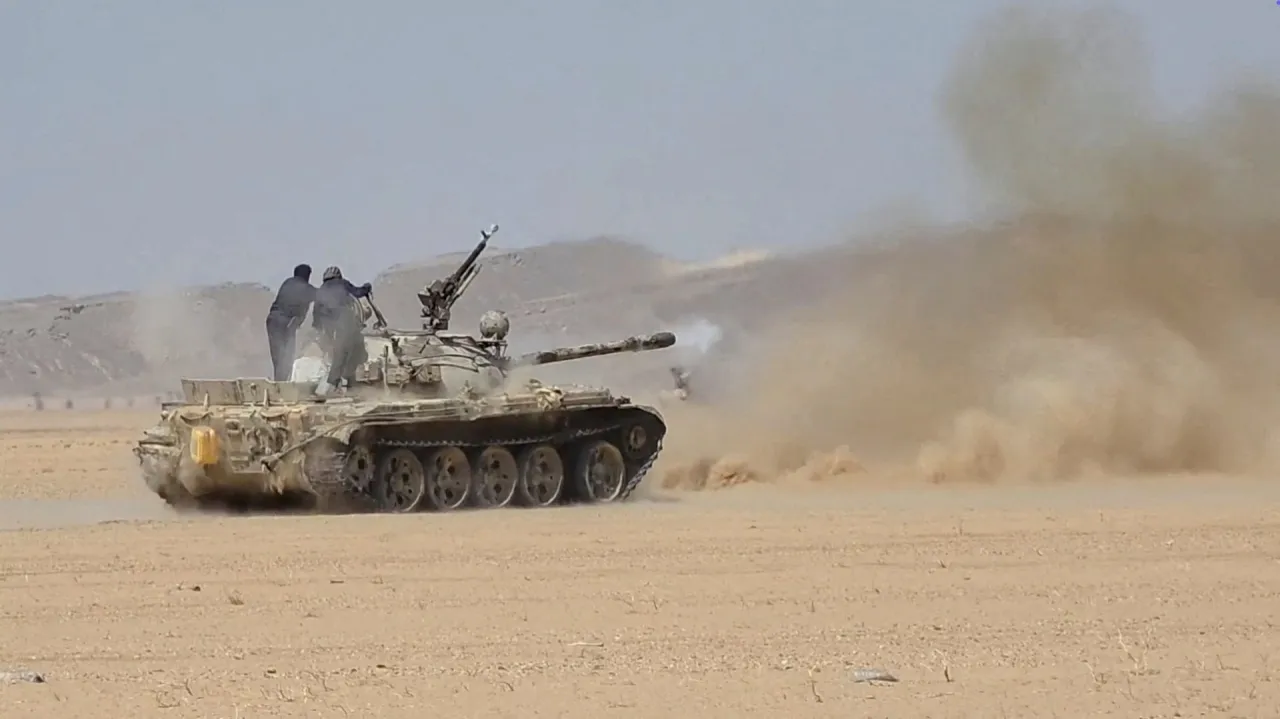
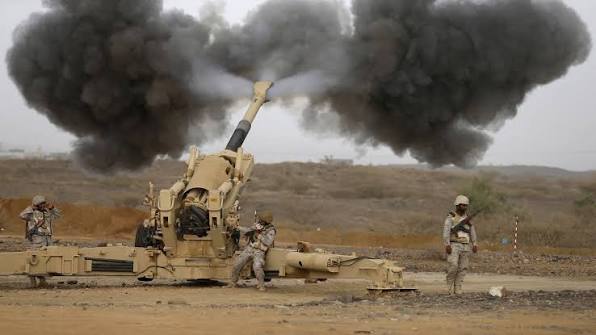
Saudi Arabia is fighting on two interconnected fronts: protecting its territory from missiles and drones while supporting Yemeni forces seeking to halt the Houthi advance and retake lost positions.
That is why Riyadh’s request for U.S. involvement is not only about defending its territory and facilities. It is also part of an effort to shift the balance of the fighting inside Yemen.
On September 14, 2026, Yemeni government forces announced that they had retaken positions west of Taiz and made gains in al-Jawf with air support, as fighting intensified following the Houthis’ arrival in the Bab al-Mandeb area.
That same day, the Houthis said Saudi Arabia had carried out 58 airstrikes across six provinces within 24 hours. The episode highlights the challenge of a counteroffensive: airstrikes can support ground forces and hit enemy positions, but retaking the coast and other strategic areas requires forces on the ground capable of holding those gains and preventing the fronts from collapsing again.
External support could improve reconnaissance, logistical support, and coordination, while direct military involvement could also affect the morale of Yemeni forces, according to a Saudi analyst quoted by the Financial Times.
Developments at sea have raised the stakes further. Houthi control of positions near the strait gives the group leverage over Saudi trade, while disruption around the Strait of Hormuz is narrowing the kingdom’s options.
The threat therefore extends beyond Saudi Arabia’s southern border to the security of its exports and investments, as well as market confidence in the kingdom’s stability.
In an analysis published by the Center for Strategic and International Studies (CSIS), former U.S. ambassador Michael Ratney linked a Saudi military response to the need to counter the attacks politically, while suggesting that diplomacy would ultimately have to resume.
Regaining the military initiative, therefore, could strengthen Riyadh’s position in any settlement. Continued Houthi pressure, meanwhile, leaves negotiations under constant threat and puts Saudi Arabia’s ability to protect its interests and impose costs on its attackers to the test.
A Snub MBS Won’t Forget
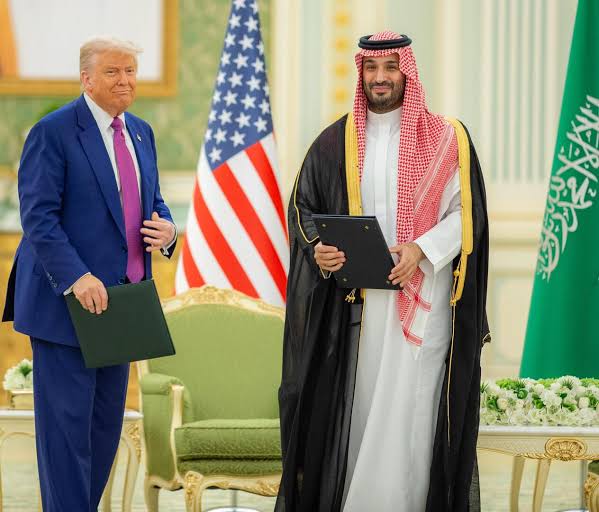
At the center of this equation was the U.S. message that the Financial Times made the focus of its report. Saudi Arabia had asked for strikes beyond a single operation, but Washington declined to take part, with the White House offering no comment on the report.
Riyadh wanted U.S. involvement to support its campaign and send a deterrent message, while Trump kept military assistance separate from direct participation in the war.
Retired Gen. Karen Gibson, the former intelligence director at U.S. Central Command, summed up the potential consequences in comments to the newspaper saying that bin Salman will not forget this.
She said the United States would not necessarily fight when Saudi Arabia’s vital interests were threatened. The stance carries added weight as Saudi Arabia relies on its partnership with Washington to protect the economic transformation championed by the crown prince.
The situation is further complicated by Washington’s opening of contacts with the Houthis through Oman, while a Houthi official said the group’s attacks were aimed at Saudi Arabia rather than U.S. interests. Mona Yacoubian therefore warned that leaving the kingdom to face the attacks alone could undermine confidence in the partnership, given that U.S. interests were not under threat.
The divide reflects different priorities. Trump is dealing with the costs of the U.S.-Israeli War on Iran, fuel pressures, and congressional elections, while MBS faces threats to projects aimed at turning Saudi Arabia into a hub for investment, trade, and tourism.
What Washington sees as another front that can be avoided, Riyadh sees as a conflict affecting its security and standing. According to Ratney, the crisis also revives memories of the lack of a U.S. military response to the 2019 attacks on Abqaiq and Khurais.
The experience is giving greater weight to Saudi Arabia’s search for other partners, including Turkiye, Pakistan, and China. Buying weapons and continuing intelligence sharing do not, however, answer the question of who will use those capabilities alongside Saudi Arabia when its security is at stake.
That is the significance of what Riyadh sees as a U.S. snub: cooperation remains in place, but doubts are growing over the political commitment the kingdom believed would underpin that cooperation and protect it when tested.
Three Powers, a Different Security Equation
The Saudi-Turkish-Pakistani partnership brings together complementary strengths: Saudi Arabia’s financial, political, and religious influence; Turkiye’s defense industry and military capabilities; and Pakistan’s military strength and longstanding security ties with the kingdom.
It also brings together a NATO member and a nuclear-armed state, giving the partnership political weight that extends beyond training and arms purchases.
That weight, however, does not automatically extend NATO guarantees or a nuclear umbrella to Saudi Arabia. The three countries have publicly committed to treating an armed attack on any one of them as an attack on all three, but the agreement’s practical value will depend on their ability to make and carry out joint military decisions.
Researchers Mohanad Hage Ali and Azam Cheema, writing for Carnegie, view the MJDA as an attempt to prevent a security vacuum in the Gulf exposed by the U.S.-Israeli War on Iran. They link Ankara’s and Islamabad’s interests to opportunities to expand their defense industries with Saudi funding and strengthen their positions along regional trade routes.
The partnership is therefore built on shared interests that give the defense commitment a broader foundation than temporary solidarity.
That cooperation also has a practical foundation. In April 2026, Riyadh announced the arrival of Pakistani fighter and support aircraft under an earlier bilateral defense agreement, while the Turkish-made Akinci drone deal announced in 2023 provides a framework for training, support, and industrial cooperation.
These existing ties could help shorten the gap between political commitments and operational coordination.
More importantly, the partnership could allow Saudi Arabia to move from relying on a single external power for security support to negotiating within a coalition in which it has significant influence. For Ankara and Islamabad, helping protect the kingdom would also give them an opportunity to demonstrate a broader regional security role.
If the Yemen conflict puts the MJDA to a real test, its credibility will depend on whether the commitments translate into concrete military action. If they remain largely political, the pact will offer a different kind of security guarantee from the one Riyadh has been testing with Washington.
Commitment on the Threshold of War
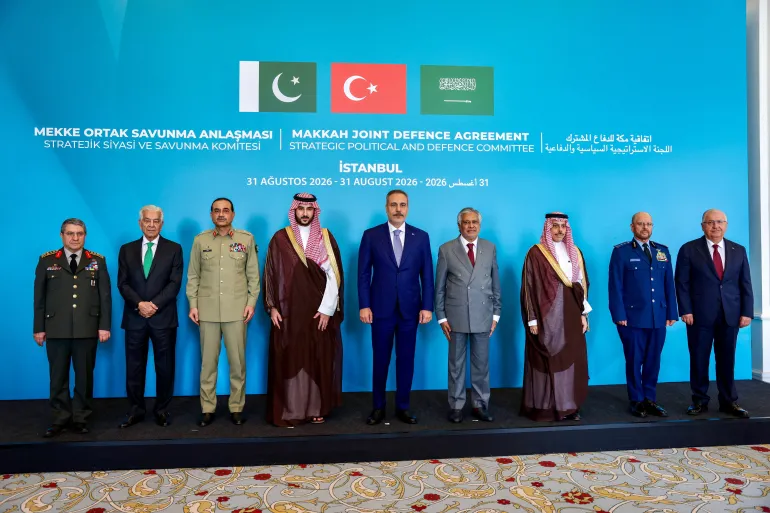
That is why statements by the MJDA’s leaders draw a line between a commitment to protect Saudi Arabia and agreeing to an open-ended war.
Turkish President Recep Tayyip Erdogan outlined the nature of the response in an interview reported by Anadolu Agency, saying it would depend on the request and needs of the country under attack. He cited intelligence, logistical support, ammunition, and broader assistance depending on the threat, while ruling out the assumption of automatic military intervention in every incident.
Turkish Foreign Minister Hakan Fidan also affirmed Turkiye’s readiness to meet Saudi Arabia’s military needs, particularly in the technical field, but rejected dragging the kingdom into the U.S.-Israeli War on Iran.
This position allows Ankara to support Riyadh while retaining the discretion to determine the nature of the mission. Providing intelligence or defensive equipment is different from deploying forces to carry out strikes inside Yemen.
In Pakistan, Defense Minister Khawaja Muhammad Asif said the time had come to implement the MJDA and that defending the kingdom and the holy sites was an existing commitment even without a formal agreement.
Pakistan’s PM Shehbaz Sharif reinforced this position by emphasizing the protection of the holy sites, while Deputy PM Ishaq Dar refrained from discussing details on the timing, targets, and means of using force for reasons related to operational secrecy.
The participation of Field Marshal Asim Munir in the Riyadh meeting, followed by his talks with Saudi Defense Minister Khalid bin Salman, gives these commitments a direct military channel.
However, the statements do not specify any new deployments linked to the meeting or announce a decision to launch a joint operation, nor do they reveal the limits each side is willing to reach.
The activation procedures themselves also remain incomplete. On September 25, the speaker of the Turkish parliament said the agreement had not yet been submitted for ratification.
Bilateral assistance can still be provided in the meantime, but the real test of the commitment begins when Riyadh requests support that carries human and political risks.
At that point, the alliance’s ability to agree on the war’s objectives and duration, share its burdens, and determine whether it is prepared to turn the cost of Saudi Arabia’s security into a shared responsibility will become clear, rather than leaving it as a burden borne by the kingdom and its Yemeni allies alone since the escalation resumed.
Deterring the Houthis and Recalibrating Washington’s Calculations
In its current test, the alliance seeks to change the Houthis’ calculations over the cost of continuing their attacks.
Actual military support could prevent the Houthis from exploiting Washington’s hesitation to isolate Saudi Arabia militarily and give Riyadh a better ability to combine domestic defense with support for a counteroffensive.
But it could also push the group to expand its targets. Houthi leader Mohammed al Bukhaiti warned countries that might join the kingdom in the war in an interview with the Associated Press (AP).
The possibility is particularly sensitive because of the relationship with Iran. Asif disclosed that he had conveyed a Saudi message to Tehran, while Ankara and Islamabad have stressed that the agreement is not directed against any particular country.
These contacts allow potential military strength to be used as leverage for a settlement, but the situation becomes more complicated if the ally providing defense becomes a direct party to the fighting.
In this context, Saudi Foreign Minister Faisal bin Farhan called for comprehensive and sustainable regional security arrangements while affirming the kingdom’s right to protect its security.
Saudi Arabia’s objective is therefore as much about preventing a repeat of the crisis and safeguarding navigation as it is about the outcome of the current round of fighting.
The MJDA also has implications for Washington. If the new partners prove effective, Riyadh would have greater room to negotiate over U.S. security guarantees. Firas Maksad told the Financial Times that the tensions could accelerate the diversification of security partners and create opportunities for strategic competitors.
Still, the United States remains a source of weapons and intelligence, supplying 77 percent of the kingdom’s imports of major arms between 2021 and 2025.
The potential shift, therefore, would begin by reducing Washington’s monopoly over response options while continuing to rely on its defense infrastructure.
Turkiye and Pakistan’s performance in this crisis will determine whether Riyadh can turn its frustration into greater leverage and additional protection, or whether the allies’ meeting will leave it facing the same dilemma: advanced weapons, numerous partners, and a Saudi decision to bear the cost of the confrontation alone.
Sources
- ‘MBS will not forget’: Donald Trump’s reluctance to fight Houthis rattles Saudi Arabia
- Is the United States Abandoning Saudi Arabia at Its Moment of Need?
- Iran-backed Houthi rebels warn against joining Saudi Arabia in Yemen’s growing civil war
- Saudi Arabia, Turkiye, and Pakistan Set for Urgent Military Meeting: Will the MJDA Be Activated Against the Houthis?
- Turkiye Sends Chief of General Staff to Saudi Arabia for Urgent Meeting on MJDA [Arabic]
- Erdogan: Mecca Agreement Reflects a Responsibility to Build a Safer and More Peaceful Future [Arabic]