Open Borders and Smuggling Networks: Why Is Mauritania and Senegal’s Mission Becoming More Complicated?
“Irregular migration is a major challenge facing the world and has strained even major countries.”
The Mauritania–Senegal border is a major hub of activity for both countries, particularly for the movement of people and goods.
At the same time, however, it has become a centre for illegal activities that have claimed hundreds of lives from both countries and across sub-Saharan Africa.
In this regard, the United Nations Office on Drugs and Crime (UNODC) has warned of risks associated with human trafficking and migrant smuggling along the Mauritania–Senegal border, highlighting the dangers faced by people travelling through the area.
The UN office addressed the issue in a report released on September 9, 2026, in the context of efforts to combat criminal activities, including drug smuggling, calling for stronger cooperation between authorities and local communities.
Meanwhile, the Mauritanian news website Taqadomy reported that the UN report comes amid growing interest in strengthening security cooperation between Mauritania and Senegal to combat transnational organised crime.
In an analysis published on September 10, the website stressed that the Mauritania–Senegal corridor is also linked to irregular migration routes across the Atlantic towards the Canary Islands.
Over the past few years, Mauritania has strengthened its mechanisms to combat migrant smuggling and human trafficking, alongside security cooperation with European countries to monitor borders and pursue smuggling networks.
The website also noted that the latest UN warning comes amid broader efforts to tighten border controls and combat cross-border criminal activities.
However, according to the information published, the report did not announce any specific security operation or new arrests.

Official Efforts
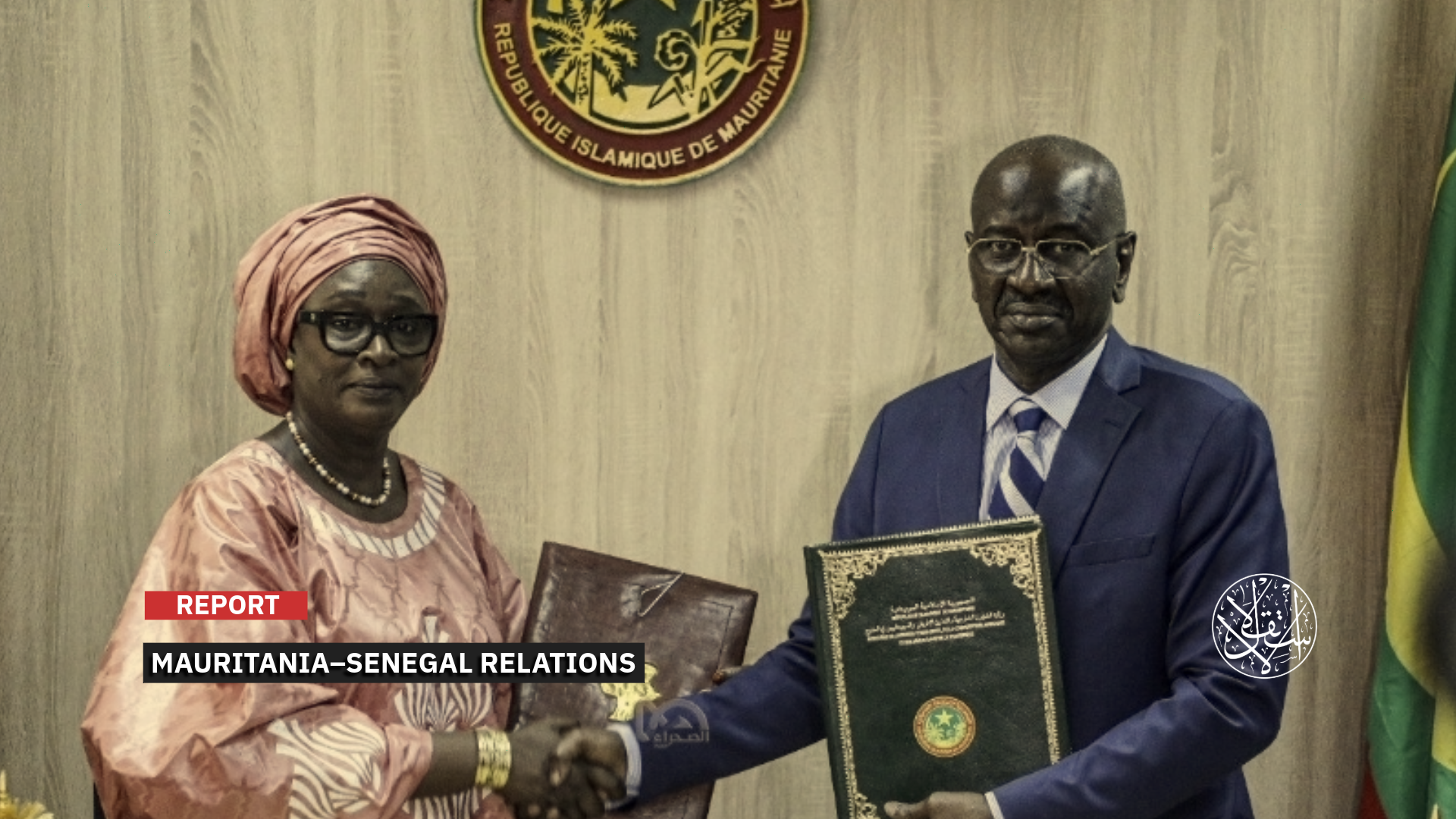
The growing prevalence of crime along the border prompted Mauritania and Senegal to sign two agreements in mid-2025.
The agreements cover combating irregular migration, migrant smuggling, human trafficking and related practices, as well as protecting victims.
The second agreement regulates the conditions governing the entry, residence and settlement of people and the movement of goods between the two countries.
Mauritanian Foreign Minister Mohamed Salem Ould Merzoug explained that the agreements were a response to an urgent moral imperative to put an end to the suffering, abuses and crimes associated with human trafficking and migrant smuggling, which exploit the vulnerability of the most disadvantaged groups.
In a statement to the press at the time, the Minister noted that the agreement governing the entry, residence, and settlement of persons and goods between Mauritania and Senegal establishes the framework and details the conditions and procedures for ordinary, legal, and economic movement between the two countries.
In July 2026, a Senegalese delegation visiting Mauritania held talks with Sidi Ahmed Benane, Commissioner for Human Rights, Humanitarian Action and Relations with Civil Society.
The discussions focused on implementing the memorandum of understanding signed by the two countries on combating human trafficking and migrant smuggling.
The two sides discussed mechanisms for implementing the memorandum by strengthening coordination between the relevant institutions in Mauritania and Senegal and expanding cooperation in preventing human trafficking and combating migrant smuggling, thereby reinforcing joint efforts to tackle these crimes.
The Senegalese delegation included Modou Ndiaye, Secretary-General of the Interministerial Committee for Combating Migrant Smuggling, and Mody Ndiaye, Secretary-General of the National Unit for Combating Human Trafficking.
Previous Reports
The vulnerability of Mauritania's borders poses a growing security challenge for Nouakchott amid increasing drug and arms smuggling, as well as terrorism and irregular migration, in the Sahel region, which continues to experience security instability.
This was highlighted by Sahel Intelligence in a report published on August 31, 2026. The report explained that Mauritania's geographical location, close to routes linking Latin America with West and North Africa and Europe, has made the country a potential transit point for drug-smuggling networks.
The report noted that Mauritania's proximity to Mali and Algeria further heightens its security concerns, given the presence of armed groups and criminal networks in the region, as well as the continued movement of weapons and smuggled goods across its borders.
It also pointed out that Mauritania serves as an important transit point for migrants from West African and sub-Saharan African countries seeking to reach Spain's Canary Islands, exposing some of them to human trafficking and smuggling networks, as well as the dangers associated with irregular journeys.
Citing a report by the World Customs Organisation (WCO), the website stated that Mauritania had been identified as a potential transit area for small arms and light weapons that could reach armed groups.
According to the report, the challenge facing Nouakchott lies in strengthening control over border areas and safeguarding national security, while preventing security gaps from being exploited to serve broader regional conflicts and interests.

Expert Analysis
In this context, a report prepared by a working group from the Regional Media Network in Nouadhibou to Combat Migrant Smuggling, and published by the Mauritanian platform Sout al-Shamal, stated that Nouakchott has made notable efforts, which have become an example in the region in dismantling human trafficking networks and addressing the challenges of irregular migration.
The report, published on June 24, 2026, noted that Mauritania enacted the Law on Combating Human Trafficking in 2020, which imposes severe penalties, including imprisonment and hard labour, on those involved in forced exploitation and the deprivation of individuals' freedom of choice.
It added, “The country did not stop at legislation, but later adopted the National Plan (2024–2026) to combat human trafficking.”
In what the report described as an advanced procedural step, a special court was established exclusively to handle crimes of slavery, human trafficking and migrant smuggling. This increased prosecutions efficiency and accelerated the resolution of sensitive cases.
He added that the National Referral Mechanism has been activated to ensure the safe referral of victims, alongside increasing the allocations of the Fund for the Support and Assistance of Trafficking Victims to facilitate their social reintegration.
The report noted that Mauritania’s position as a major gateway to Spain’s Canary Islands, which alone received around 63,000 migrants during periods of intense migration flows, has drawn Brussels’ attention, leading to the signing of the Joint Declaration between Mauritania and the European Union on Migration on March 7, 2024.
The agreement included a package of more than €210 million in European financial and technical support aimed at strengthening the capabilities of the Mauritanian coast guard, border management, and efforts to combat smuggling gangs, in return for Mauritania’s commitment to intensify security monitoring of its coastline and land crossings to prevent boats from departing.
The report concluded that the success of the Mauritanian experience lies in striking a delicate balance between building a judicial system that protects victims and prosecutes perpetrators, securing due international recognition of its human rights efforts, while maintaining state sovereignty and firmly rejecting any transformation into an alternative homeland for migrants deported from Europe.
Arrests of Suspects
On the Senegalese side, as part of its latest efforts to combat human trafficking, the Migrant Smuggling Unit arrested Moussa Sankare, known as ‘the Malian’, after he had been wanted since 2023 and 2024 on suspicion of leading a migrant-smuggling and corruption network operating between Senegal, Mauritania and Gambia.
According to a report published by Ndar Info on September 12, the network operated under the slogan ‘Barcelona or Death’, referring to irregular journeys aimed at reaching Spain by sea.
The report said that, during a search of Sankare’s home, police found a notebook of around 200 pages containing the names of recruits and people suspected of cooperating with the network, along with amounts of money paid to boat captains and information about locations where migrants were housed before their journeys began.
According to the same source, analysis of the notebook’s contents enabled investigators to identify all those suspected of involvement in the network.
The National Unit for Combating Migrant Smuggling is continuing its investigation to determine the role of each individual in the activities attributed to the cross-border network.
The website concluded that Sankare’s arrest was part of a series of operations to dismantle migrant-smuggling networks operating across Senegal’s borders, following investigations and efforts in recent years targeting organisers of irregular sea migration journeys.

Hundreds of Victims
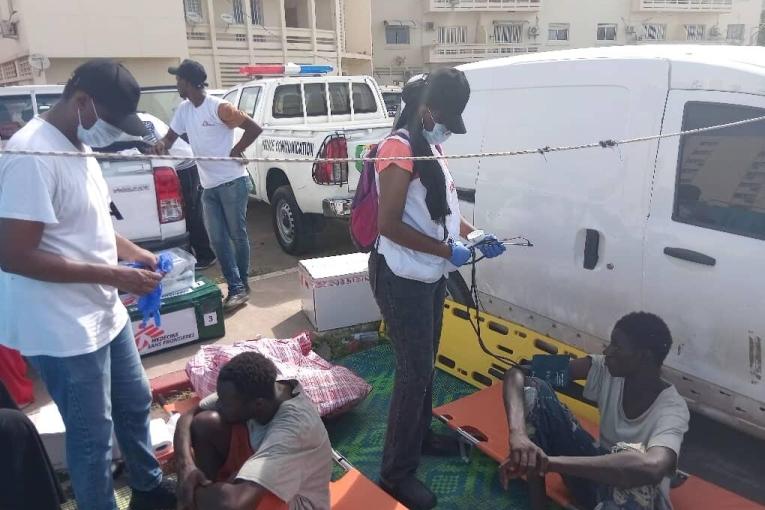
Two days before the UN report, Medecins Sans Frontieres (MSF) issued a statement on September 7, 2026, confirming that, in just one week at the end of August, 1,046 migrants attempting to reach the Canary Islands in makeshift boats were rescued.
The organisation explained that, given their critical condition, the migrants were brought ashore in Mauritania and Senegal, where MSF medical teams provided them with care.
According to MSF, the survivors had been travelling on seven boats, each carrying an average of 150 people. They had departed from Gambia in the hope of reaching the Canary Islands, approximately 2,000 kilometres away, a journey considered one of the longest maritime migration routes in the world.
The organisation said, “After being swept by the waves, they were rescued and brought ashore, where MSF medical teams provided them with emergency care. After spending a prolonged period at sea, the survivors were suffering from dehydration, extreme exhaustion, loss of consciousness, fractures, and skin, stomach and respiratory infections.”
MSF said the group included 134 women, one of whom was pregnant, and 88 minors. Alongside their urgent physical needs, the psychological impact on the survivors was profound, as many had witnessed the deaths of loved ones during the journey.
The organisation noted that most of the survivors were from Senegal and Gambia, while others came from Mali, Guinea and Ivory Coast.
Many told MSF teams that they had experienced violence in their countries of origin and during their journey into exile.
One person who arrived in Dakar said he had been beaten by a smuggler and a group of men who forced him to pay more money for his passage.
A woman, meanwhile, recounted that a smuggler stole the money she had set aside for the journey and then raped her before they boarded the boat.
Political Analysis
Commenting on the UN report, Mauritanian journalist and activist Mustafa Mohamedn Ould Wali said that the Mauritanian-Senegalese border areas are “in reality porous areas, characterised by extensive interconnections and difficult to control.”
Mohamedn Ould Wali told Al-Estiklal that this is particularly the case “given the vast length of the border, the social and economic ties between the peoples of the region and their difficult material circumstances, as well as weak oversight.”
He continued, “During a recent reporting assignment that took me to the area in mid-August 2026, I was struck by the extent of the ties between the populations on both banks and the ease with which people cross the border areas back and forth. While all of this is important to the lives of local residents, it also leaves the region vulnerable to various forms of smuggling and makes it a fertile ground for cross-border smuggling networks.”
He added that observers are well aware of the significant steps Mauritania has recently taken to curb irregular migration and smuggling, deploying substantial material and human resources for this purpose, in addition to coordinating with various parties, particularly neighbouring countries and destination countries in Europe.
Overall, Mohamed Ould Wali said that irregular migration is a genuine challenge facing the world and has strained even major countries with considerable material and institutional resources.
This requires significant efforts and cooperation from the countries and peoples of the region, particularly because, as West African countries, “we are no longer merely transit areas. Many of these migration flows are now settling in our countries, putting pressure on local employment and placing an additional burden on basic services that are already fragile.”
The same speaker continued that local authorities must provide young people with genuine opportunities and create conditions that encourage them to remain in their local areas and countries of origin.
He added that there must also be local efforts to raise awareness of the dangers posed by smuggling networks, the many risks associated with their activities, and the false promises they make to young people.
European countries, he said, must also make a serious and effective contribution to creating such conditions, through funding and follow-up in cooperation with these countries.