Fouzi Lekjaa: A Controversial Moroccan Technocrat Seeking to Head the ‘World Cup Government’
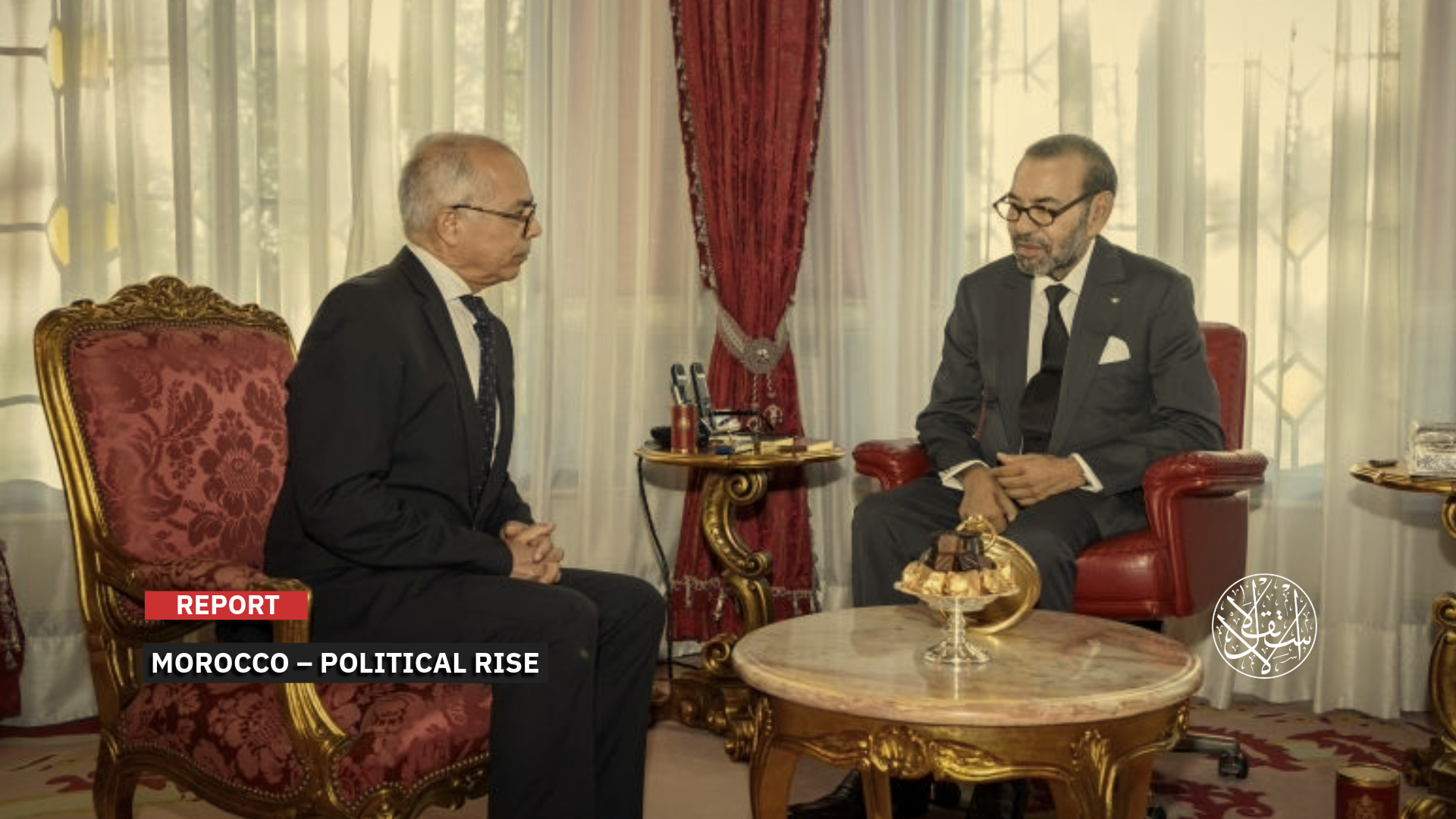
“I will always be at the service of my King and my country, whatever the position.”
Fouzi Lekjaa, the minister delegate in charge of the budget in Aziz Akhannouch’s government, did not join the PAM merely as another new member of the party, which came first in the September 23, 2026 elections to head the next government, or what has been referred to in the media as the World Cup government.
In fact, his joining came as a surprise, as Lekjaa had for years been known as a technocrat with no party affiliation, both during his tenure at the Ministry of Finance and through his leadership of the Moroccan Football Federation.
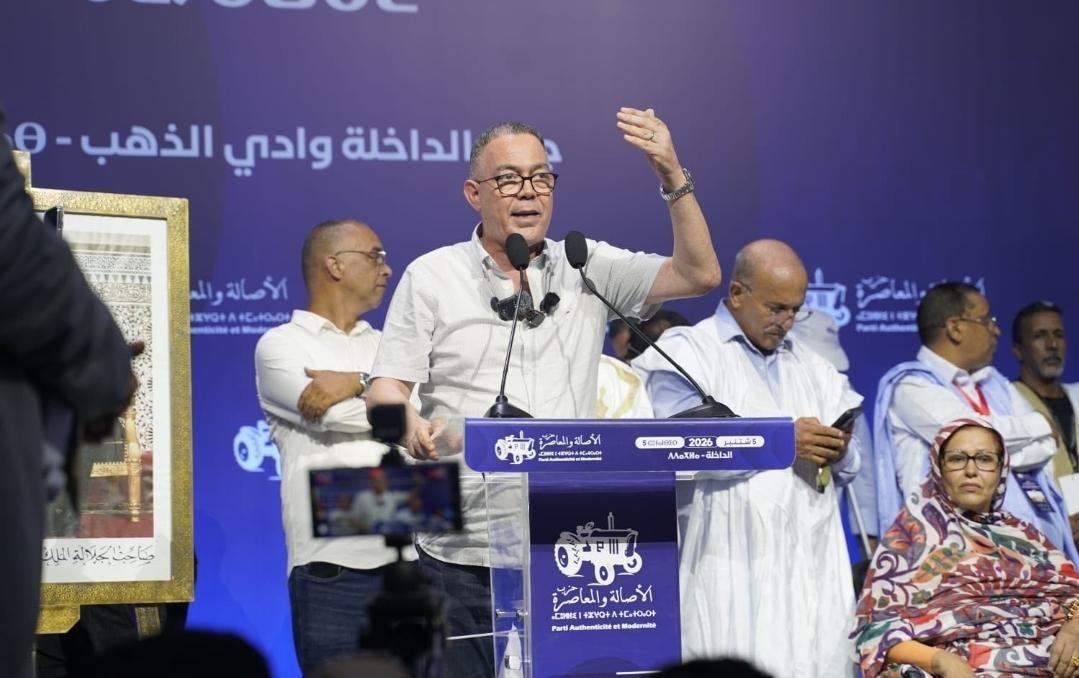
On July 25, 2026, Lekjaa was announced as a member of the political bureau of the PAM during the 32nd session of the party’s National Council.
Lekjaa’s decision to join the party sparked widespread debate, given his position within the institutional landscape and his role as minister delegate in charge of the budget.
The move also comes as he oversees several major financial and investment projects, in addition to serving as president of the Moroccan Football Federation.
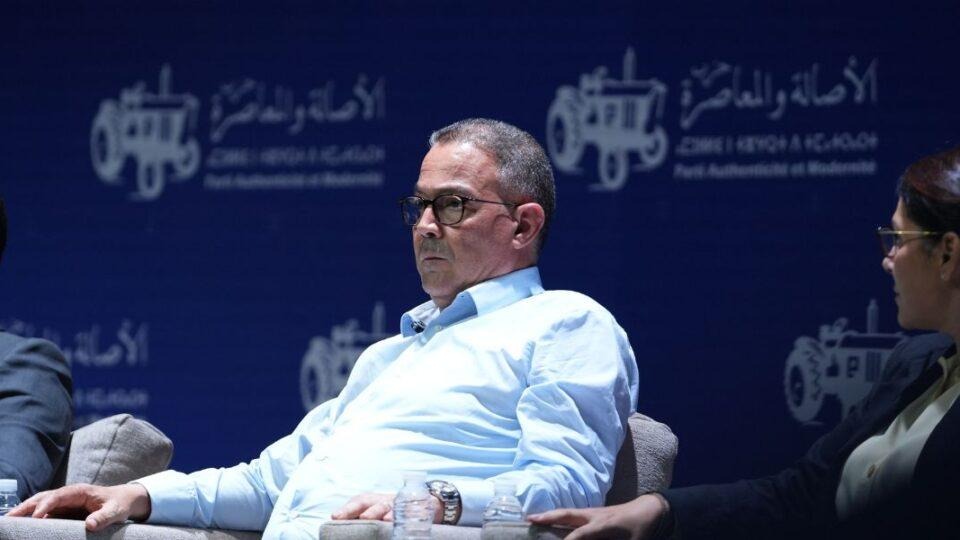
Who Is Lekjaa?
Lekjaa is considered one of the figures who have left a mark on Morocco’s administrative and sporting landscape over the past two decades.
He combined academic training with experience in public administration and sports management.
However, his career is significant not only for the range of positions he has held, but also for his association with several achievements, particularly in sport, as he has headed the Moroccan Football Federation since 2014.
Fouzi Lekjaa was born in July 1970 in the city of Berkane, in eastern Morocco, where he completed his primary and secondary education before obtaining his baccalaureate in 1988.
He subsequently moved to the capital, Rabat, to pursue higher studies at the Hassan II Institute of Agronomy and Veterinary Medicine, graduating in 1994 as a State Engineer.
He also received training at the National School of Administration, giving him a background that combined technical and administrative expertise.
This academic training laid the foundation for a professional career in public administration. He began working at the Ministry of Agriculture before moving to the General Inspectorate of Finance, one of Morocco’s key financial oversight institutions.
He held several administrative positions before being appointed Director of the Budget at the Ministry of Economy and Finance in 2010. In this role, he was responsible for preparing and implementing the state’s budgetary policy.
In 2021, King Mohammed VI appointed him Minister Delegate to the Minister of Economy and Finance, in charge of the Budget.
However, during parliamentary discussions on budget bills, he often appeared to be the person holding the reins of all financial affairs with a firm grip.
While Finance Minister Nadia Fettah Alaoui, from the National Rally of Independents party, would limit herself to presenting the draft legislation in parliament, it was Lekjaa who would spend hours following every detail of the financial debate with parliamentarians and responding to their questions, often in a manner more reminiscent of a politician’s populism than that of a technocrat.
Remarkable Rise
Alongside his administrative career, Fouzi Lekjaa has also been closely associated with sport, particularly in the city of Berkane.
He was a member of Renaissance Sportive de Berkane (RS Berkane) and was also involved with the club’s basketball section during the period when it won the Moroccan league title for the first time.
However, his most prominent role was within the football section. In 2009, he became president of RS Berkane, transforming the club within a few years into one of Morocco and Africa’s leading teams.
The club went on to win several domestic and continental titles and became a model often cited in the field of sports governance.
On April 13, 2014, Lekjaa was elected president of the Moroccan Football Federation.
In the years that followed, Moroccan football underwent a series of structural reforms, which were reflected in the results achieved by Moroccan teams across different age categories.
Women’s football witnessed notable development, both at the domestic league level and in the results of the national team, which reached the final of the Women’s Africa Cup of Nations and qualified for the FIFA Women’s World Cup. Futsal also achieved a series of continental and international successes.
The youth national teams likewise continued to assert their strong presence. On October 20, 2025, Morocco’s under-20 national team won the FIFA U-20 World Cup for the first time in its history, becoming the first Arab country to do so, after defeating Argentina in the tournament held in Chile.
As for the achievement that solidified Morocco’s global presence, it was the national team’s historic participation in the Qatar 2022 World Cup, where it reached the semi-finals—a first for any Arab or African team—followed by reaching the quarter-finals of the 2026 World Cup, hosted by the United States, Canada, and Mexico.
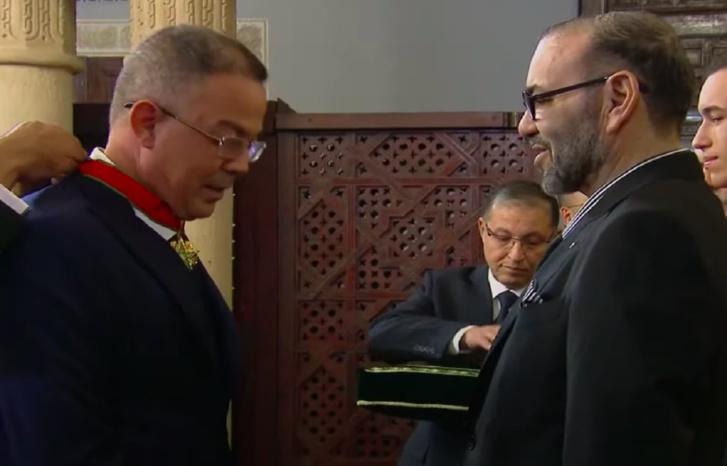
On October 5, 2023, King Mohammed VI appointed Lekjaa as president of the 2030 World Cup Committee, the body responsible for overseeing the organization of the successive sporting events that Morocco is set to host in the coming years.
According to a statement issued by the Royal Palace, this appointment follows the unanimous approval by the FIFA Council of the joint bid from Morocco, Spain, and Portugal as the sole candidacy to host the 2030 World Cup.
At the international level, Lekjaa was elected to the FIFA Council and also became First Vice-President of the Confederation of African Football (CAF).
These positions strengthened Morocco’s presence within international football decision-making bodies and contributed to the country’s efforts to secure, alongside Spain and Portugal, the right to host the 2030 FIFA World Cup.
From Sports to Politics
Following the success he achieved in public administration and football management, some observers believe that Lekjaa is seeking to replicate this success in the political arena by joining the PAM less than two months before the legislative elections held on September 23.
Others, however, argue that Lekjaa’s success in football does not necessarily mean that he will achieve similar success in politics, as each field has its own particularities, mechanisms, and criteria for evaluation.
Although the two camps disagree over the purpose behind Lekjaa’s transition from a politically unaffiliated technocrat to a senior figure in the PAM, there is broad agreement that the move reshuffled the dynamics of an electoral campaign that had largely revolved around a two-way contest between Aziz Akhannouch, the prime minister and former president of the National Rally of Independents Party, and Abdelilah Benkirane, secretary-general of the opposition Justice and Development Party (PJD).
The French magazine Jeune Afrique argued that Benkirane had been setting the pace of the electoral campaign through his populist rhetoric and sharp criticism, attracting various segments of society, but the entry of Lekjaa changed the rules of the game, turning the confrontation from a risky two-way contest into a more manageable struggle.
Since joining the PAM, Lekjaa has conducted several outreach tours with citizens across various regions and cities of Morocco, raising the bar on his promises and slogans while attacking his former ally, Aziz Akhannouch.
Despite the current rivalry and attempts to create a political polarization between the PAM and the National Rally of Independents, the two parties share a relatively similar history, as both were founded to confront specific political opponents.
As the PJD returns to the forefront, the PAM—along with its new star, Fouzi Lekjaa—is reclaiming its role as a credible, non-Islamist alternative to lead the World Cup government: the administration that will oversee preparations for Morocco’s hosting of the 2030 FIFA World Cup.

Seriousness and Discipline
Lekjaa is regarded as a practical and effective figure who combines competence and experience, with an image of someone close to the realities of Moroccan society.
He is also not known to have been involved in scandals and is described as serious and disciplined, despite criticism concerning the concentration of power.
Following his surprise decision to join the PAM, however, a question remains: Is Lekjaa seeking to become prime minister?
Some analysts argue that there are no clear indications of such an ambition, particularly since the Constitution stipulates that the head of government is appointed from the party that wins the elections.
They note that his decision to join the party reflects deeper shifts in the political landscape rather than a direct personal ambition.
Lekjaa succeeded, within just a few days, in changing the dynamics of the electoral campaign. Perhaps his move was not about seeking power, but rather about reshaping the political landscape and giving his party the ability to regain the initiative.
Others, however, argue that since his appointment to the political bureau of the PAM was announced, the position of the next head of government has effectively been decided.
They point to Lekjaa as a figure who has achieved notable successes, particularly in sport, which could work in his favor in the political arena.
According to this interpretation, Lekjaa’s announcement that he had joined the PAM can only be understood as reflecting his ambition to advance to a government position that cannot be held without a political affiliation, namely the position of head of government.
Article 47 of Morocco’s 2011 Constitution explicitly states that the King appoints the head of government from the political party that comes first in elections for members of the House of Representatives, based on the results of those elections.
Therefore, any ambition by Lekjaa to become head of government could not be fulfilled without a political affiliation that, if his party came first, would entitle it to have the head of government appointed from among its members.
Journalist Abdellah Tourabi said that Lekjaa has a profile suitable for the position of head of government, pointing to his administrative experience, his popularity linked to football, his communication skills, his strong relationships with both the governing majority and the opposition, as well as his good relations with the business community.
Speaking on the local channel Medi 1 TV’s program Sada al-Ahdath, Tourabi said that Lekjaa is an unusual figure in Moroccan political life.
He suggested that his joining the PAM could be understood as a message that he is the country’s next head of government, noting that this is how the Moroccan public interpreted the move.
Despite a broad consensus that his entry into party politics via the PAM signaled he might be the most suitable candidate to head the next government, Lekjaa himself has denied that such an ambition figures in his personal calculations.
In an interview with Jeune Afrique magazine, Lekjaa said, “I have never thought about it, and I never will,” stressing that his focus at this stage was entirely on the elections.
He added, “I have a mission that ends on the 23rd,” explaining that what comes after the elections, including the King’s constitutional powers and the roadmap for the next phase, belongs to a different context.
Regarding his future after the elections, Lekjaa said, “After the 23rd, everything and every decision, and in any case, I will always be at the service of my King and my country, whatever the position.”