All-Out War: Why Did al-Alimi Choose This Moment to Take on the Houthis?
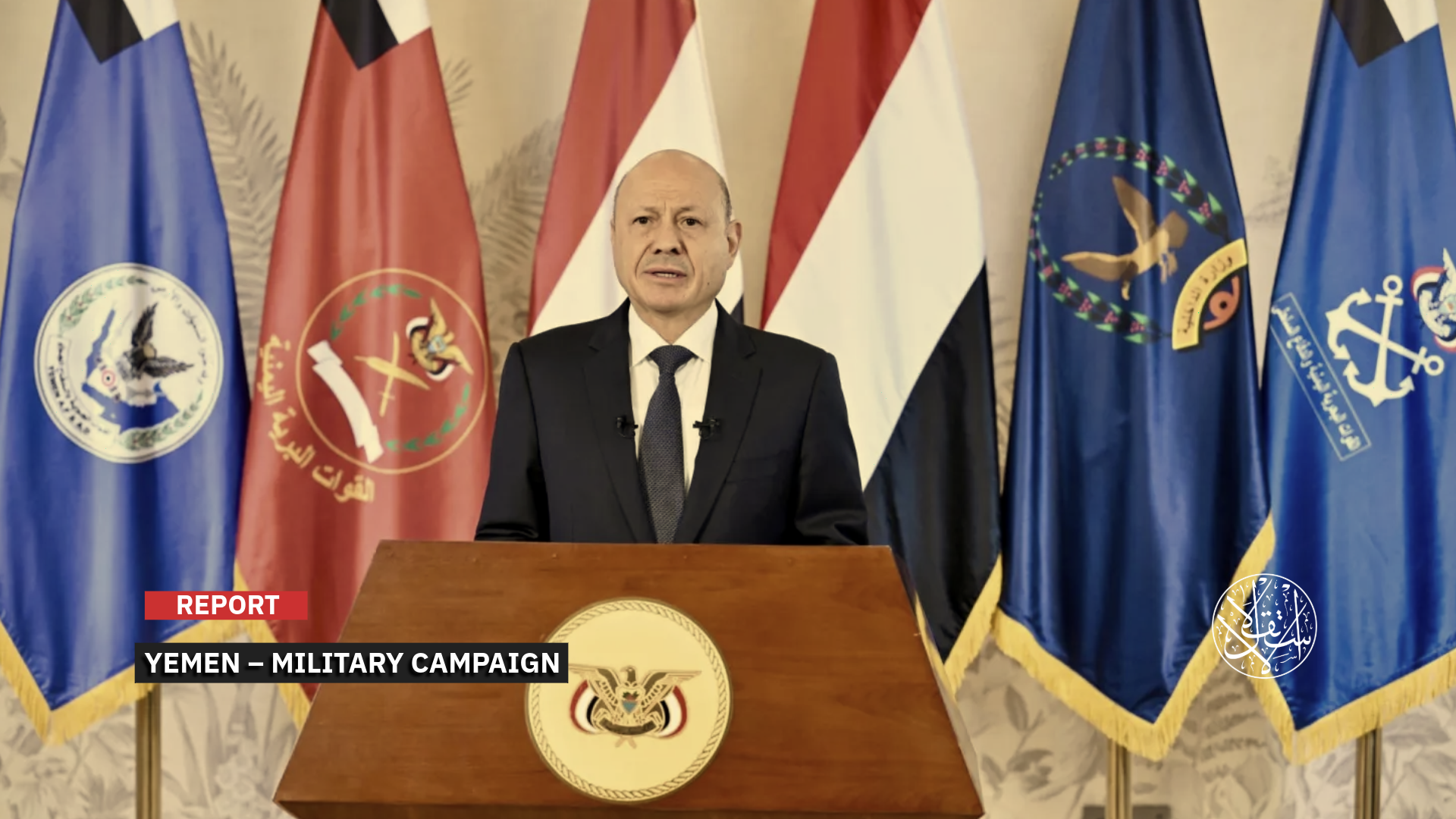
“Al-Alimi announced the launch of comprehensive military operations to retake areas controlled by the Houthis.”
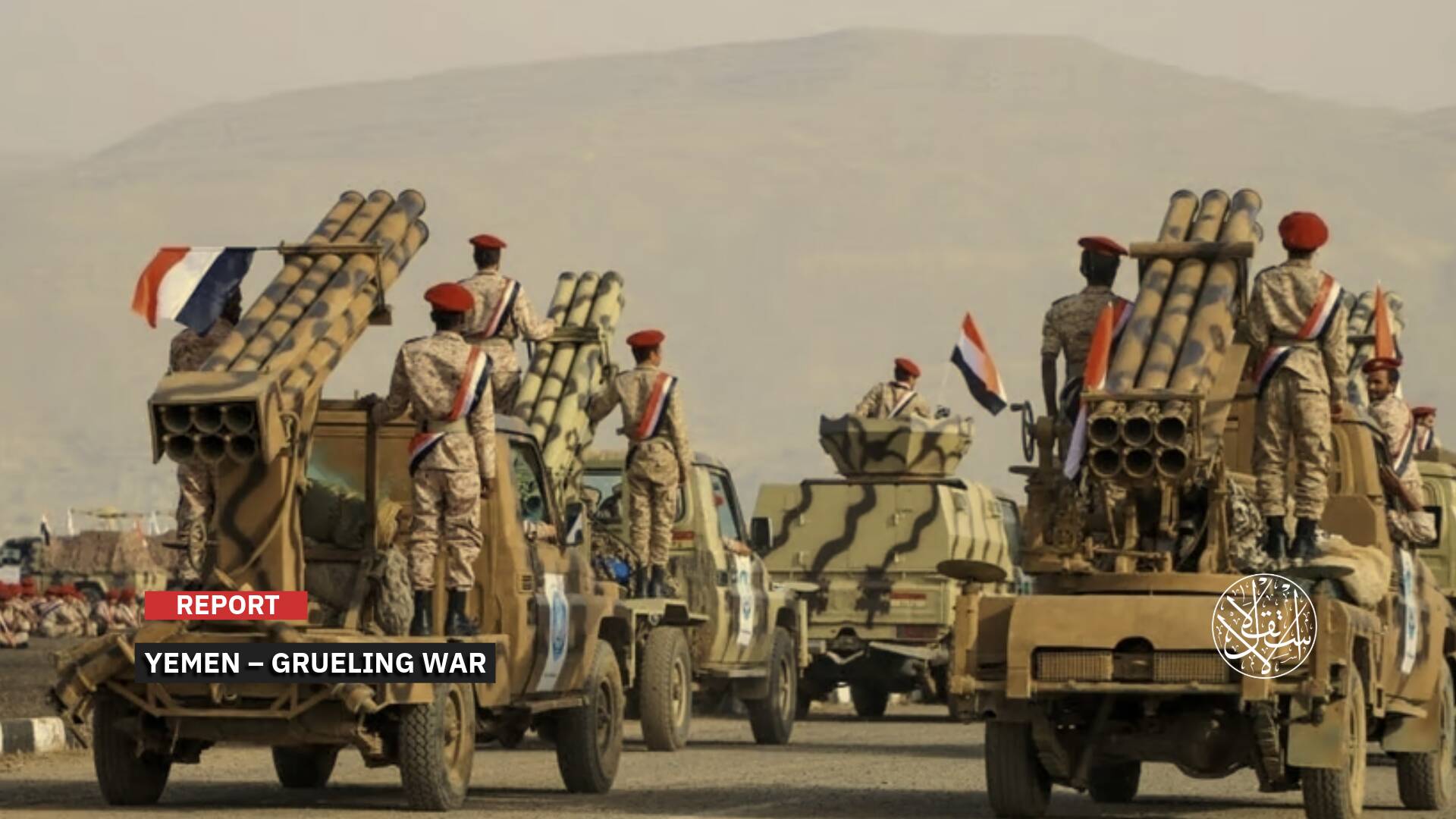
Yemen entered a new military phase on October 4, 2026, when Presidential Leadership Council Chairman Rashad al-Alimi announced the launch of comprehensive military operations to retake territory held by the Houthis, ending years of relative calm and negotiations that followed the October 2022 truce.
The move raises questions about why the government chose this moment, whether internationally recognized government forces have the capacity to turn the announcement into gains on the ground, and whether they can deliver on their promises to protect civilians, grant amnesty to those who lay down their arms, restore salaries and public services, and create conditions for displaced Yemenis to return home.
The Timing of the Shift
The government chose this moment after al-Alimi said that all opportunities for de-escalation had been exhausted and that the Houthis had continued mobilizing, escalating, launching attacks, and issuing threats against civilians, infrastructure, neighboring countries, and international shipping lanes.
The escalation on the ground reinforces this explanation. Government forces said they had carried out strikes in Sana’a, Sa’dah, Midi, Baqim, al-Jawf, Marib, al-Bayda, and Lahij, while concentrating their efforts on Taiz. They said they had conducted 257 precision targeting operations as fighting widened across multiple fronts.
Yemeni writer and political analyst Ahmad al-Zurqa said Yemen had entered a new phase of war and escalation, describing the announcement as a real test of the government’s future.
He said the issue now comes down to regaining the initiative and proving the state’s ability to assert its authority.
In remarks to Al-Estiklal, al-Zurqa said “the Houthis had used the years of de-escalation to consolidate their control, reorganize their forces, and develop their military capabilities. They then expanded their escalation into the Red Sea and government-held areas.”
As a result, he said, continuing de-escalation unilaterally was no longer producing a settlement but instead had allowed the balance of power to gradually and clearly shift in their favor.
The Yemeni expert saw that al-Alimi’s announcement would ultimately be judged by what happens on the ground, because a political declaration alone is not enough without unified military leadership, an operational plan, and coordinated action across multiple fronts, along with sustained support.
He described the confrontation as the last resort and said resorting to it had been delayed but had become increasingly urgent.
The timing of the shift to full-scale war is not separate from developments on the battlefield. The army announced extensive strikes, while the Taiz front said it had taken control of al-Muqarama, al-Zakira, and Hisn Samea. The Houthis, meanwhile, announced counterattacks.
Al-Alimi also linked the military campaign to parallel political tracks, reaffirming his commitment to the outcome of the Saudi-sponsored South-South dialogue.
He also called on allies to support the government and armed forces, as well as humanitarian efforts and reconstruction programs.
A Test of Strength
Al-Alimi’s message to residents of Houthi-held areas also sheds light on the calculations behind the timing.
He stressed that the operations were not targeting civilians and did not amount to a war against any sect or tribe.
He urged civilians to stay away from military positions, gatherings, and supply routes, while offering safe passage and amnesty to those who lay down their arms and stop fighting.
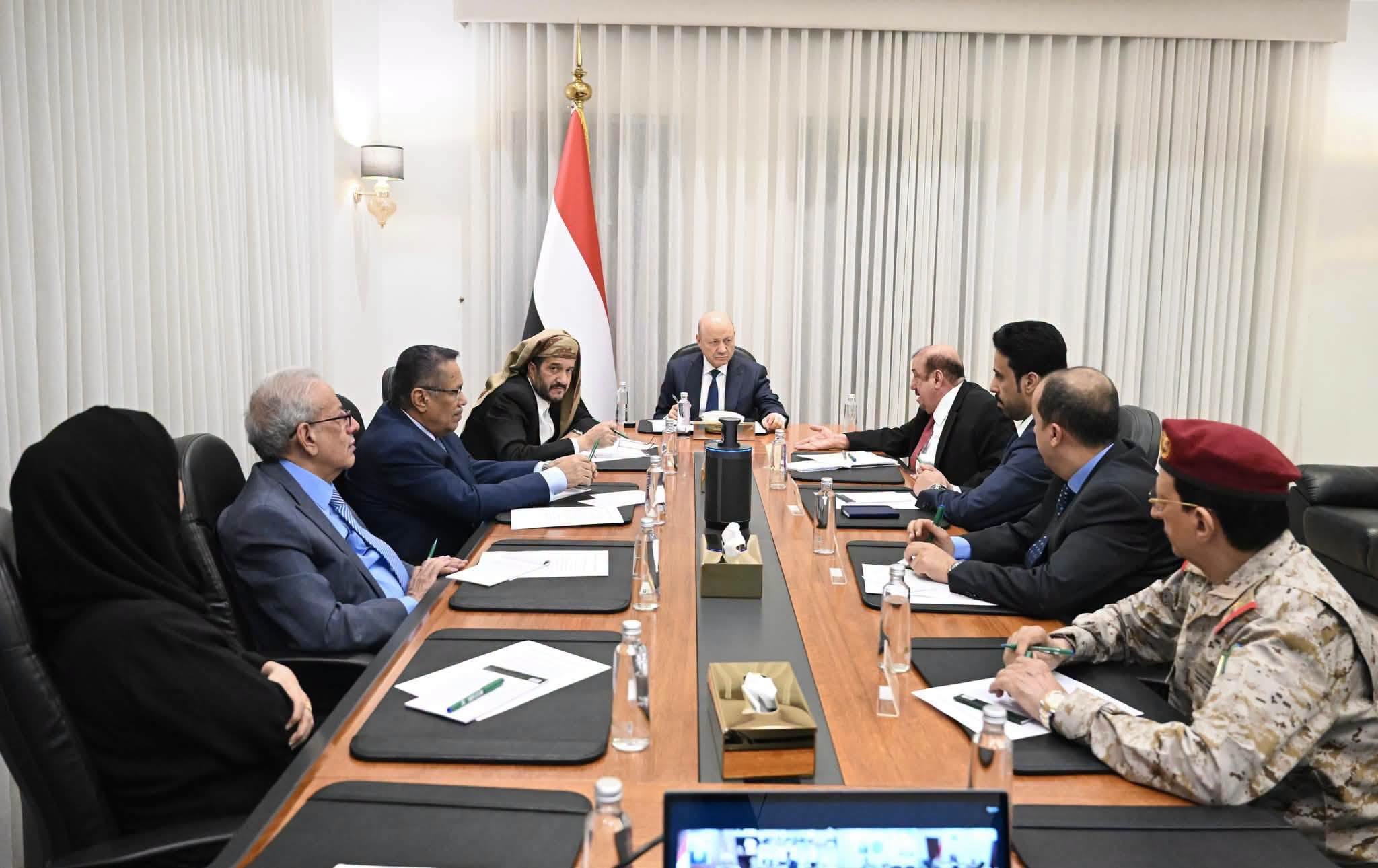
According to the publicly announced military deployments, government forces are not entering the confrontation from a defensive position.
Ahmad al-Zurqa said the forces are spread across a wide geographic area, giving them the ability to apply pressure along eight fronts and axes.
He noted that the multiple fronts could force the Houthis to spread their forces, reserves, and firepower across a broad theater of operations.
Brigadier General Mohammed Al-Kumaim said in a televised interview on October 4 that the main shortcomings in the battle along the western coast had been in battle management, fire coordination, and the operations room.
He explained that the forces were large, qualified, ready, trained, and organized, but management problems had affected their effective deployment.
Al-Kumaim also pointed to weaknesses in the distribution of military sectors between the western coast and the Taiz front, citing gaps between fronts and sectors that the Houthis exploited to advance.
He said these shortcomings had been addressed by reorganizing battle management and the operations room, allowing combat formations to operate within a framework of coordination and joint cooperation.
According to al-Kumaim, the Yemeni armed forces are now at a high level of readiness and a very high state of combat preparedness, with large numbers of troops deployed across multiple fronts.
He said the popular resistance is playing an exceptional role and that a general mobilization is underway, with plans to receive 100,000 fighters alongside the armed forces, backed by the necessary weapons.
On this point, al-Zurqa said Saudi support would be decisive if it evolved from varying levels of political and military backing into a comprehensive commitment to the campaign, including intelligence, reconnaissance, air support, air defense, logistics, ammunition, command and control, and securing supply lines.
He stressed that the scale of this support would directly affect the forces’ ability to hold on to any gains they make on the ground.
A Complex Battle
The ability to carry out strikes, however, does not by itself guarantee a sustained breakthrough. Government forces have announced strikes on command and control centers, troop concentrations, and supply lines, along with operations across several fronts.
Air defenses have also shot down Houthi drones, while the army has announced that it seized positions in Taiz, making the ability to hold and consolidate those gains the most important test.
The experience of the western coast, according to al-Kumaim, shows that troops, training, and weapons may not prevent setbacks when battle management, fire coordination, and the distribution of military sectors break down. Fixing these administrative and operational problems is therefore an important part of testing whether government forces can turn their readiness into tangible results.
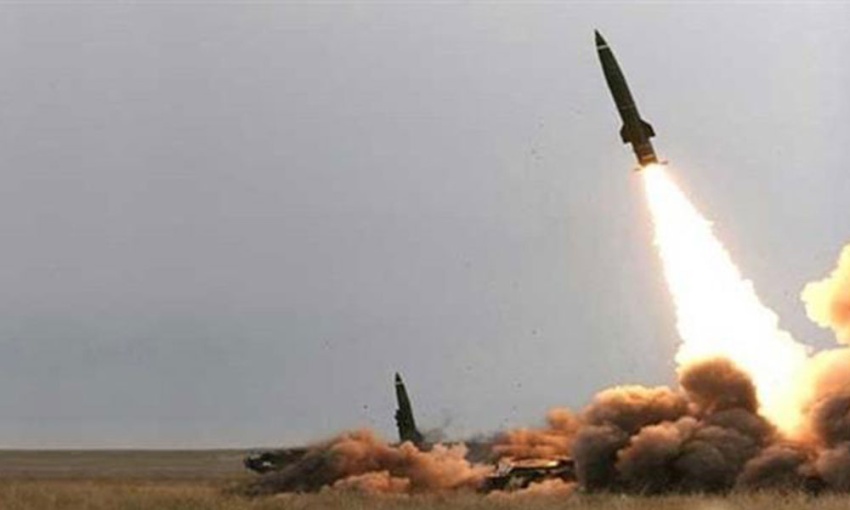
The battlefield obstacles include mines, fortifications, drones, and missiles, as well as the Houthis’ extensive combat experience.
Al-Kumaim said the Houthis possess advanced Iranian weapons and satellite-linked technologies and have used ballistic missiles, advanced missiles, and precision-guided weapons with accurate coordinates, making the government’s task more difficult across the various fronts.
These obstacles are compounded by the nature of Houthi-held areas and the possibility that fighting could move into more densely populated areas, potentially causing casualties, displacement, and damage to infrastructure.
At the same time, the available information indicates that government forces have made gains at positions in Taiz, while fighting and reciprocal attacks continue across several fronts.
Recent fighting has indeed remained concentrated in Taiz, where government forces have reported advances and Houthi attacks have continued.
The spread of the fighting from Marib and al-Jawf in the north to Taiz and Lahij in the south, alongside the escalation in Sa’ada, also presents a clear logistical and operational challenge, as reflected in the reported developments.
With multiple areas and fronts involved, coordinating firepower, supplies, and command is essential to prevent a repeat of the gaps seen during the battles on the western coast.
Al-Zurqa sees the multiplicity of anti-Houthi forces and formations as one of the camp’s biggest weaknesses, explaining that the problem is not a shortage of fighters but the existence of multiple command centers, loyalties, chains of command, and political objectives.
He said this fragmentation could be turned, at least partly, into a strength through a joint operations room and unified command that sets objectives, assigns roles, links the various fronts, and prevents competition or conflicting efforts.
If Marib, Taiz, al-Dhale, the western coast, al-Jawf, and other fronts were to operate according to a single strategy, he said, it would make the Houthis’ task more difficult.
Restoring the State
Al-Kumaim’s remarks lend support to this approach from another angle. He spoke of reorganizing the operations room and battle management and linking military formations to fire support and geographic sectors. This suggests that addressing the problem of fragmentation requires bringing the various forces together within a single, coordinated operational structure.
Protecting civilians and managing areas that are retaken will be among the biggest tests. Al-Alimi has stressed that the operations are not directed against civilians and that the government is committed to the law, safe returns, and the legally announced amnesty.
He also ordered the preparation of a program to resume salary payments, settle outstanding wages, repair infrastructure and restore services, and create conditions for displaced people to return.
Sadaqa put this task at the heart of the battle, stressing that retaking territory is easier than restoring the state there.
He warned that protecting civilians, facilitating the return of displaced people, and restoring services would be among the toughest tests if the operations expand, emphasizing that the humanitarian dimension must be part of the plan from the outset.
According to the Yemeni expert, the government needs a parallel track to the military campaign, with Saudi Arabia playing a leading role - alongside the United Nations, donors, and humanitarian organizations - to establish safe corridors, clearing mines, providing relief, restoring electricity, water, and health services, and rebuilding local administration and security institutions, because the government’s current resources are insufficient to shoulder the burden alone.
The waves of displacement from Hays, al-Khokha, and four districts in Taiz, most notably Mokha and Bab el-Mandeb, underscore the scale of the humanitarian challenge tied to the escalation.
The remnants of war, the destruction of infrastructure, and the possibility that fighting could spread to populated areas also put the government’s commitments to a practical test that goes beyond political rhetoric or military announcements.
Ultimately, the government faces two tasks: making military gains and then consolidating state authority, as Yemeni journalist Ali Alfakih wrote in a post on X on October 4.
Alfakih said Al Alimi’s latest address could be the first in a new and different phase or the last.
In the same context, Yemeni political activist Hazaea all-Bail described the war al-Alimi declared against the Houthis as a battle for existence in a post on X on October 4, saying it concerns Yemenis’ land, history, and lives, as well as their children, families, homeland, and everything they identify with.