Between Bans and Ballots: What Does the Israeli Occupation Fear From Arab Parties?
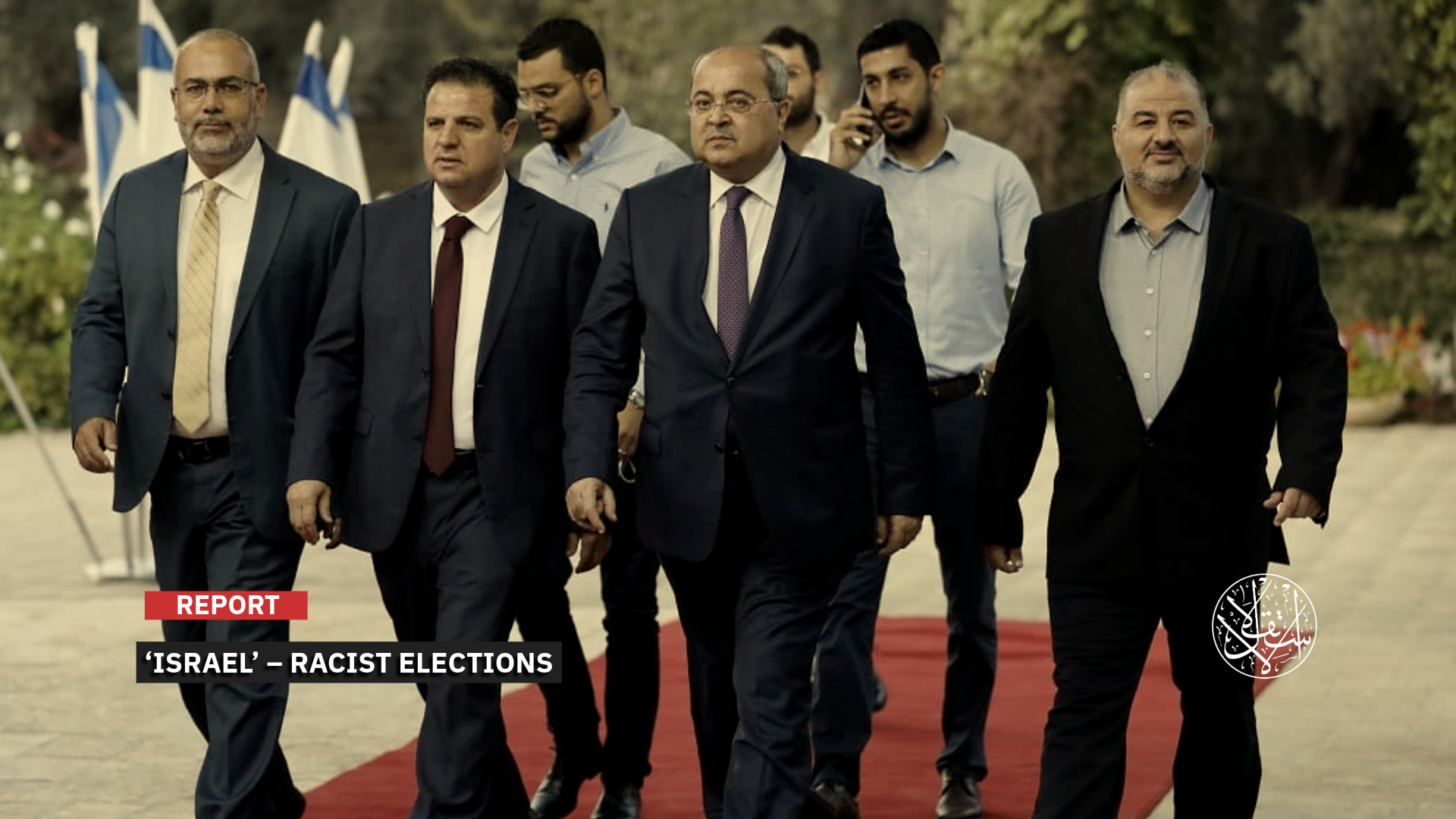
“Banning Arab parties from participating and then allowing them back has negative consequences either way.”
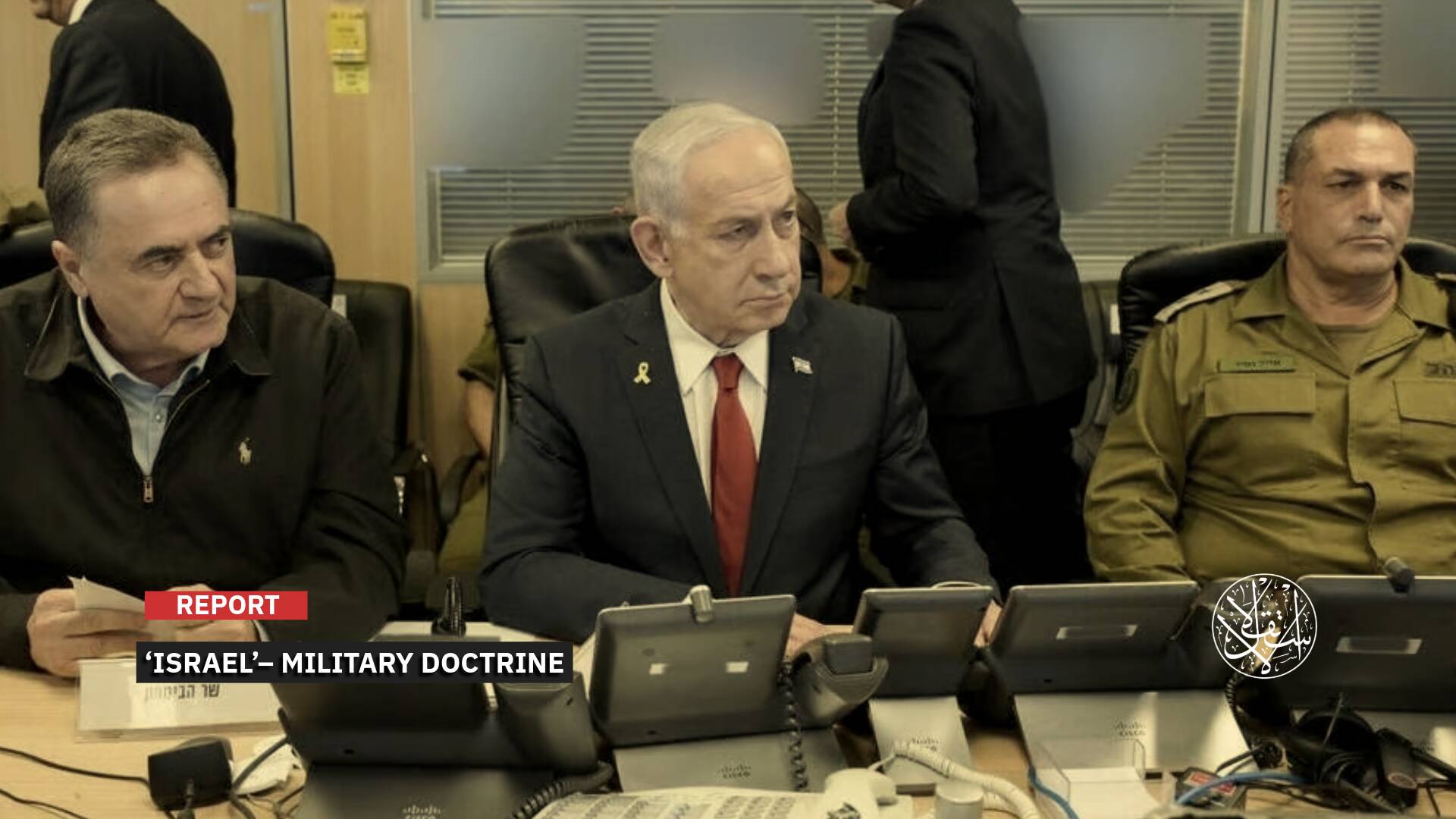
The Israeli Occupation elections scheduled for October 27, 2026, have sparked widespread debate over the limits of political participation for Arab citizens, including ‘48 Palestinians, particularly over efforts to prevent them from influencing the formation of a government led by “Israel’s” opposition.
While Palestinian parties took part routinely in previous elections, this election cycle has seen a notable development after the Central Elections Committee, which has a partisan majority from the far right, decided to disqualify all Palestinian parties from the Knesset elections before the Supreme Court reinstated them in the race.
The initial ban targeted the two main Arab lists, the United Arab List, known in Hebrew as Ra’am and representing an Islamic political current, and the Joint List, as well as candidates Ofer Cassif and Sami Abu Shehadeh.
The decisions prompted accusations that the electoral process was aimed not only at excluding Palestinians, who make up about 20 percent of the population, from representation in the Knesset, but also at limiting their ability to influence the formation of the next government. Critics viewed this as evidence of discrimination within “Israel’s” political system.
The issue has taken on added significance given the role Arab parties played in 2021, when they helped support the formation of an opposition government without taking ministerial posts. That experience has fueled concerns that the elections could become a political process dominated by Jewish parties while leaving minorities with little meaningful influence.
The lists targeted for disqualification argued that the decision was political and went beyond barring specific candidates or parties, affecting Palestinian voters’ ability to use their ballots to shift the balance of power in the Knesset, particularly given the role the United Arab List played in 2021 in ousting Benjamin Netanyahu and helping form the opposition government.
The Israeli Supreme Court later overturned the decisions to disqualify the Joint List, the United Arab List, and Jewish communist lawmaker Ofer Cassif, ruling that the conditions for disqualification had not been met and allowing them to run in the Knesset elections, while recommending that Balad party leader Sami Abu Shehadeh withdraw his candidacy.
Another contradiction is that efforts to prevent Arab parties from participating, out of concern that they could help the opposition form a new government, came as leaders of Jewish opposition parties insisted that they would not rely on Arab parties to form a government.
Haaretz analyst Jack Khoury wrote on September 28, 2026, that the political landscape combines attempts to disqualify Arab parties and right-wing campaigns to delegitimize them on the one hand with an opposition camp made up of left-wing and right-wing forces seeking the votes of Palestinian citizens to oust Netanyahu’s government while, at the same time, refusing to treat their representatives as legitimate political partners on the other.
The Disqualification Story
Since Operation al-Aqsa Flood on October 7 and the rise in hostility toward Palestinians, including citizens of “Israel” who are descendants of the Palestinians who remained in the 1948 territories, calls from far-right parties to exclude Arab parties have grown louder.
The erosion of support for the right-wing coalition led by Prime Minister Benjamin Netanyahu, along with growing expectations that he could lose the 2026 election and mounting blame for the failure to prevent the October 7 events, prompted his government to push for Arab parties to be excluded from the election, fearing they could support the formation of an opposition government, as they did in 2021.
The parties, which hold a majority on the Central Elections Committee, used the committee’s September 24 meeting to seek the disqualification of all Arabs from the October 27 election, marking the first such move in the history of the Israeli Occupation.
Their effort succeeded, with the committee voting 18 to 5 to bar the United Arab List from the election, 18 to 5 to disqualify the Joint List, and 31 to 4 to bar Arab lawmaker Sami Abu Shehadeh, citing their support for the October 7 events.
The committee also barred Jewish lawmaker Ofer Cassif, who was running on the Joint List, from participating in the election, arguing that he does not recognize “Israel” as a Jewish and democratic state.
Why Were They Reinstated?
The committee’s decision could be appealed to the Israeli Supreme Court, which has previously overturned decisions to disqualify Arab lists.
The Arab lists appealed, and the court accepted their petitions, although the circumstances were different this time amid widespread hostility toward Palestinians following the October 7 events.
One of the Supreme Court justices had also chaired the Central Elections Committee and participated in the vote to bar and disqualify the Arab candidates from the election.
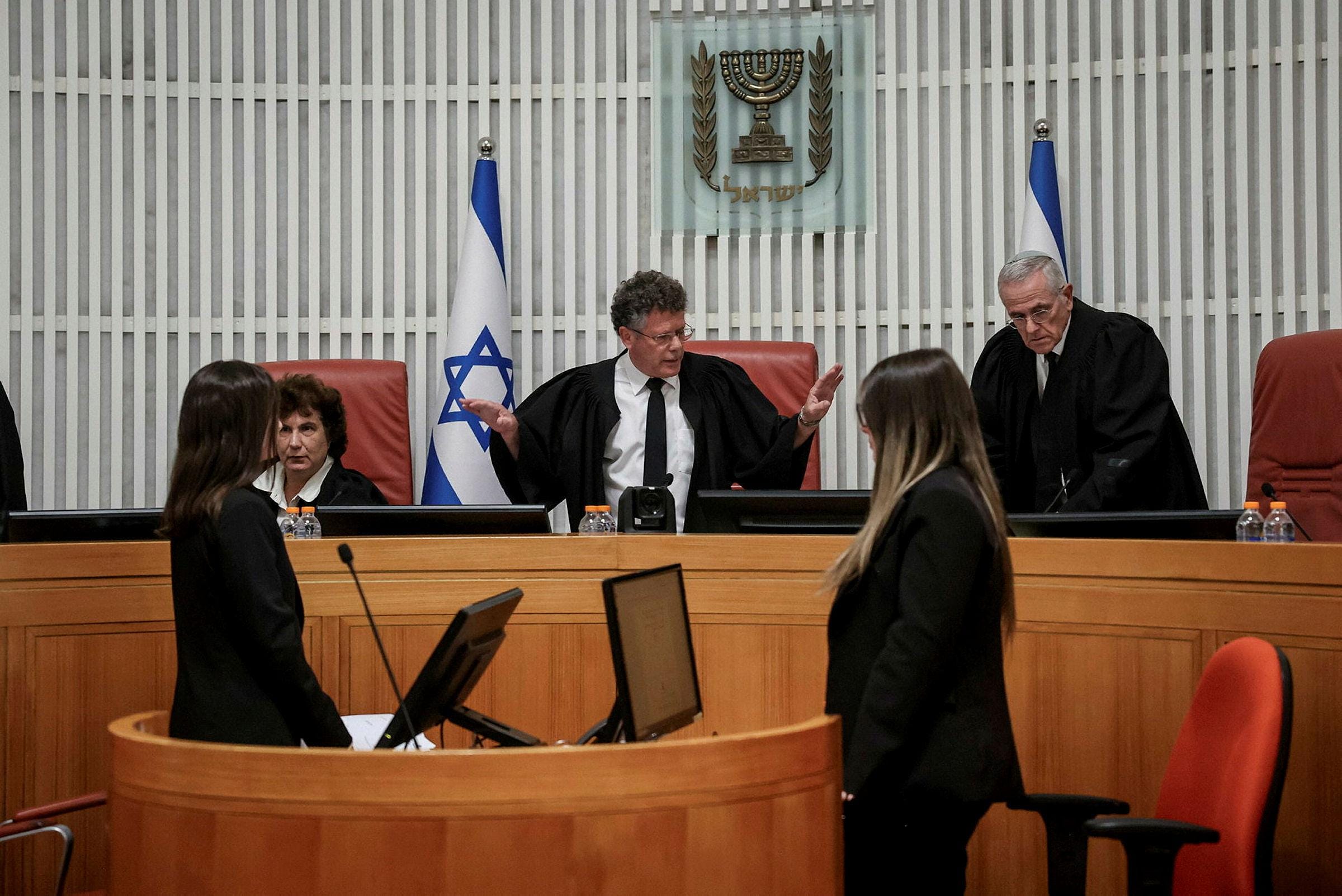
A panel of nine judges reviewed the appeals on October 2, 2026, filed by the United Arab List, an Islamic party, the left wing Joint List, Ofer Cassif, and former Balad party leader Sami Abu Shehadeh, and decided to reinstate them.
The only candidate excluded was Sami Abu Shehadeh, a Palestinian politician and academic who heads the National Democratic Assembly, over an article in which he described the October 7 events as important historic events.
The court allowed him to withdraw his candidacy rather than formally disqualifying him, according to Yedioth Ahronoth.
The judges ruled that the grounds cited by the Central Elections Committee for disqualifying the Joint List, including its alleged denial that “Israel” is a Jewish and democratic state and its alleged support for the armed struggle of an enemy state or a terrorist organization against the so-called “State of Israel”, had not been met.
Regarding the United Arab List, which the Central Elections Committee had sought to disqualify on grounds that it denied “Israel” was a Jewish and democratic state, incited racism and supported the armed struggle of an enemy state, or terrorist organization against “Israel,” the Supreme Court unanimously overturned the committee’s decision.
The Supreme Court also voted 7 to 2 to reject the disqualification of Jewish lawmaker Cassif over allegations that he denied “Israel” was a Jewish and democratic state and supported armed struggle, an enemy state or a terrorist organization.
Before the ruling, there were concerns that the public mood in the Israeli Occupation, which has become increasingly Kahanist, referring to an extremist Jewish far-right ideology rooted in religious nationalism and hostile toward Arabs and Muslims, since October 7, 2023, could influence the court’s decisions.
Requests to disqualify Arab parties and candidates are in fact made on a near-regular basis.
Over the past several decades, most disqualification requests have targeted Arab lists or candidates, as well as far-right lists. In most cases where the Central Elections Committee has voted to disqualify them, the court has intervened and overturned the decision, according to the Israel Democracy Institute.
Adalah, an organization that advocates for the rights of Arab citizens in the Israeli Occupation, says requests to disqualify Arab parties and candidates have been filed in nearly every election cycle for more than 20 years, including in the 2003, 2009, 2013, and 2020 elections.
Historically, the Supreme Court has upheld only three disqualifications approved by the Central Elections Committee: the disqualification of Kach in 1988 and 1992 and Kahane Chai in 1992. All three cases were linked to incitement to racism.
Israeli journalist Noa Landau described the Central Elections Committee’s latest decision as dangerous because it erases Arab representation altogether and strips nearly one fifth of the country’s citizens of their right to political representation, which is a basic condition for democratic elections. In an article published in Haaretz on September 27, 2026, she argued that this deprives “Israel’s” political system of its democratic character.
She also criticized the fact that the exclusion of all Arab parties from “Israel’s” political system passed without a major public backlash, describing it as a seismic event and a denial of the right of one fifth of “Israel’s” Arab population to vote for Arab parties.

A Negative Outcome Either Way
Although the Supreme Court overturned the Central Elections Committee’s decisions and reinstated the Arab lists, Palestinian and Israeli analysts who oppose Netanyahu’s coalition argue that banning Arab parties and then reinstating them has negative consequences either way and that the episode exposed the racist character surrounding the process.
They argue that had the Supreme Court upheld the decision to exclude all Arab lists from the race, it would have effectively allowed Netanyahu and the far-right Zionist camp to form the next government.
The Israeli opposition would have been forced to rely on Arab parties for support in the Knesset to form a government, because opinion polls do not give it a majority against Netanyahu’s coalition.
These Arab parties typically win 12 to 15 of the Knesset’s 120 seats. Their exclusion was aimed at denying the opposition the chance to form a new government, but their return means they can continue to play the role of “kingmaker” in Israeli politics.
The United Arab List previously helped support the formation of an opposition government that ousted Netanyahu when it joined the coalition formed in 2021, ending his long tenure in power.
Mansour Abbas, head of the United Arab List, told Haaretz on September 30 that Gadi Eisenkot, Naftali Bennett, Yair Lapid, and Avigdor Lieberman all want to become prime minister, but he will decide which of them can become the next prime minister.
Although Gadi Eisenkot has said he opposes the United Arab List joining a government he leads, Yair Golan has spoken of the possibility of finding practical ways to include Arab citizens in government, although the issue has not been settled among opposition leaders.
The Standard for Participation
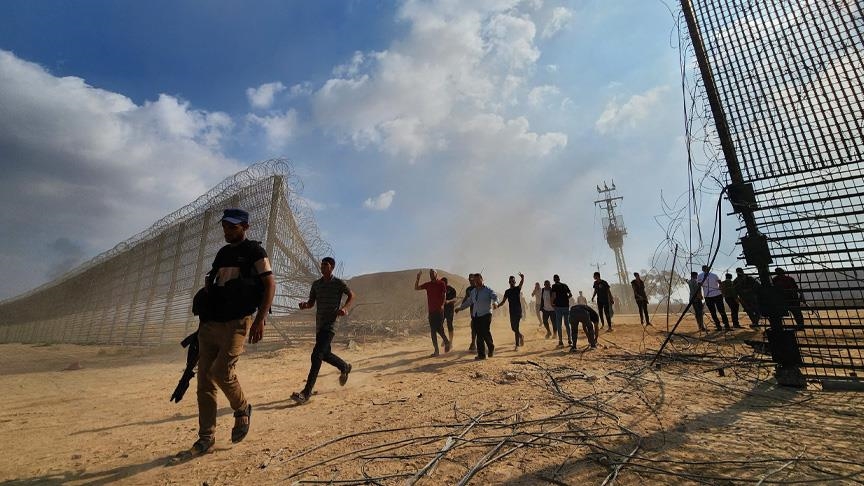
Since October 7, 2023, the position of Arab parties and candidates on the war and the Israeli-Palestinian conflict has become a central issue in “Israel’s” political debate.
When the Central Elections Committee considered disqualifying the Arab parties, it examined statements and positions by those parties related to the October 7 events and the war on Gaza as part of its assessment of the eligibility of certain candidates and lists.
The parties and Israeli critics argued, however, that opposing the war or the occupation does not amount to supporting violence, noting that some Jewish Israelis also oppose the war. This has created a difficult line between taking a political position on the war and actively supporting Palestinian resistance.
The same dilemma confronted the Israeli Supreme Court, which faced the challenge of balancing those who support the resistance” against those who criticize the war, including Israelis who oppose it.
One of the court’s central questions, therefore, was whether the exceptional circumstances surrounding the October 7 events justified applying a different standard when assessing the evidence or whether the same legal standard should apply to all candidates.
The battle, therefore, is not only about who gets into the Knesset but also about the nature of “Israel’s” political system itself, which the Supreme Court sought to uphold by rejecting the disqualification of the Arab lists.
The Battle Is Over the Government, Not the Election
Haaretz analyst David Issacharoff says the Central Elections Committee’s decision to exclude Arab representation from the Knesset has opened a broader battle over the right of Arab parties to be part of the equation for forming the next government.
He said Netanyahu’s campaign is fueling a mix of anti-Arab racism and Islamophobia, with its central electoral message being Gadi Eisenkot will form a government with the Arab parties, while portraying those parties as terrorist organizations.
Israeli accounts also circulated satirical videos about an alleged attempt to hijack an Emirati plane and a clash between a Hindu pilot and an Omani pilot, according to the Israeli narrative. The videos portrayed United Arab List leader Mansour Abbas taking charge of the government amid disagreements among opposition leaders over who should lead the next opposition government.
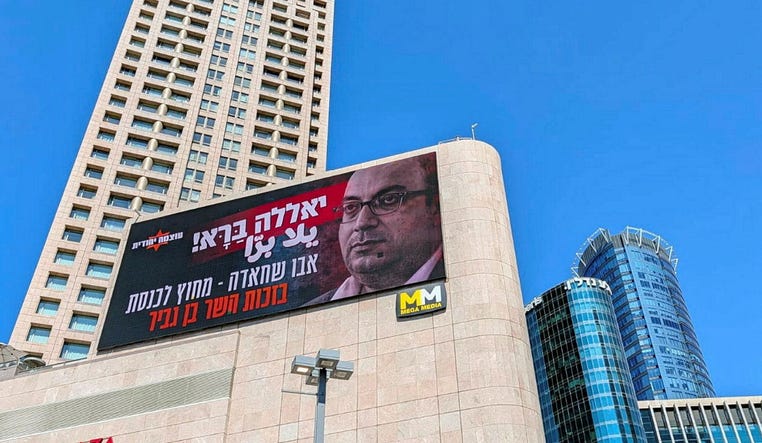
In his article, titled “Welcome to Israel’s Most Racist Election,” Issacharoff pointed to what he described as evidence of this racism, noting that advertisements along a major highway in Tel Aviv were written in both Hebrew and Arabic and carried the slogan “Yalla, bara!” meaning “Get out!” in a message aimed at excluding Arabs from the election.
The billboard belonged to far right nationalist Itamar Ben-Gvir, who turned the chant “Bara!” into an election slogan. The expression is commonly used in the Israeli Occupation as an anti-Arab slur and, according to Issacharoff, became “an election advertisement welcoming you to the most racist election Israel has ever seen.”
Excluding Palestinians
The irony, according to prominent Israeli legal scholar Mordechai Kremnitzer, is that the mechanism for disqualifying candidates was originally designed to exclude Kahanists, the extremist Jewish movement, but has since been used to restrict and exclude Arab representation while allowing extremist Kahanist right-wing forces to continue running.
In a legal paper on the disqualification of electoral lists published by the “Israe”l Democracy Institute (IDI), Kremnitzer explained that Section 7A was added to the Basic Law after a 1984 Supreme Court ruling and became the legal basis for disqualifying Kach and movements that succeeded it. Under the provision, Kach was barred from the 1988 and 1992 elections.
He said Section 7A of the Basic Law: The Knesset, which allows lists or candidates to be barred from running in elections, was originally introduced into the law in the context of confronting Kahanism and the racism represented by Meir Kahane.
Kremnitzer therefore criticized the use of the disqualification mechanism against Arab lists and warned that it could become a tool for restricting the Arab minority’s political participation, particularly as the Central Elections Committee disqualified Arab lists while rejecting requests to disqualify Otzma Yehudit, the Religious Zionist alliance, and Zehut.
He said the committee’s decisions showed that Section 7A is no longer serving democracy but its opponents, arguing that the irony lies in the fact that those now using it against Arab lists are, in his words, the heirs of Meir Kahane.
In other words, Kremnitzer argues that the law itself contains a discriminatory flaw because, in his reading, it targets support for what “Israel” classifies as Arab terrorism without applying the same standard to support for armed Jewish terrorism.
The underlying problem, he argues, was present in the provision from the outset because it was not designed solely to protect the democratic system, as is the case in other democracies, but also to protect the definition of the state as Jewish.
This condition becomes increasingly complicated for Arab citizens as the Jewish state becomes more religious, more extreme, and more nationalist and the foundations of the democratic system are weakened, while Palestinians in Israel are asked to accept the wishness of the state even as the state itself denies the Palestinian people the right to self-determination.
Sources
- The ban on Arab parties will likely be reversed. To its critics, that isn’t exactly a relief
- Central Elections Committee bars Arab Ra'am, Joint List parties from running in October elections
- Haaretz Today Welcome to Israel's Most Racist Election
- Haaretz Today Election Panel Banning All Arab Parties Reveals Who Netanyahu's Rivals Truly Are
- A Fifth of Israelis Are Shut Out of the Election, but the Israeli Center Just Yawns
- Israeli Legal Scholar: Disqualification Mechanism Has Shifted From Targeting Kahanism to Excluding Arab Representation [Arabic]