Iraq After the Coalition Forces' Withdrawal: Who Controls the State's Decisions and Weapons?
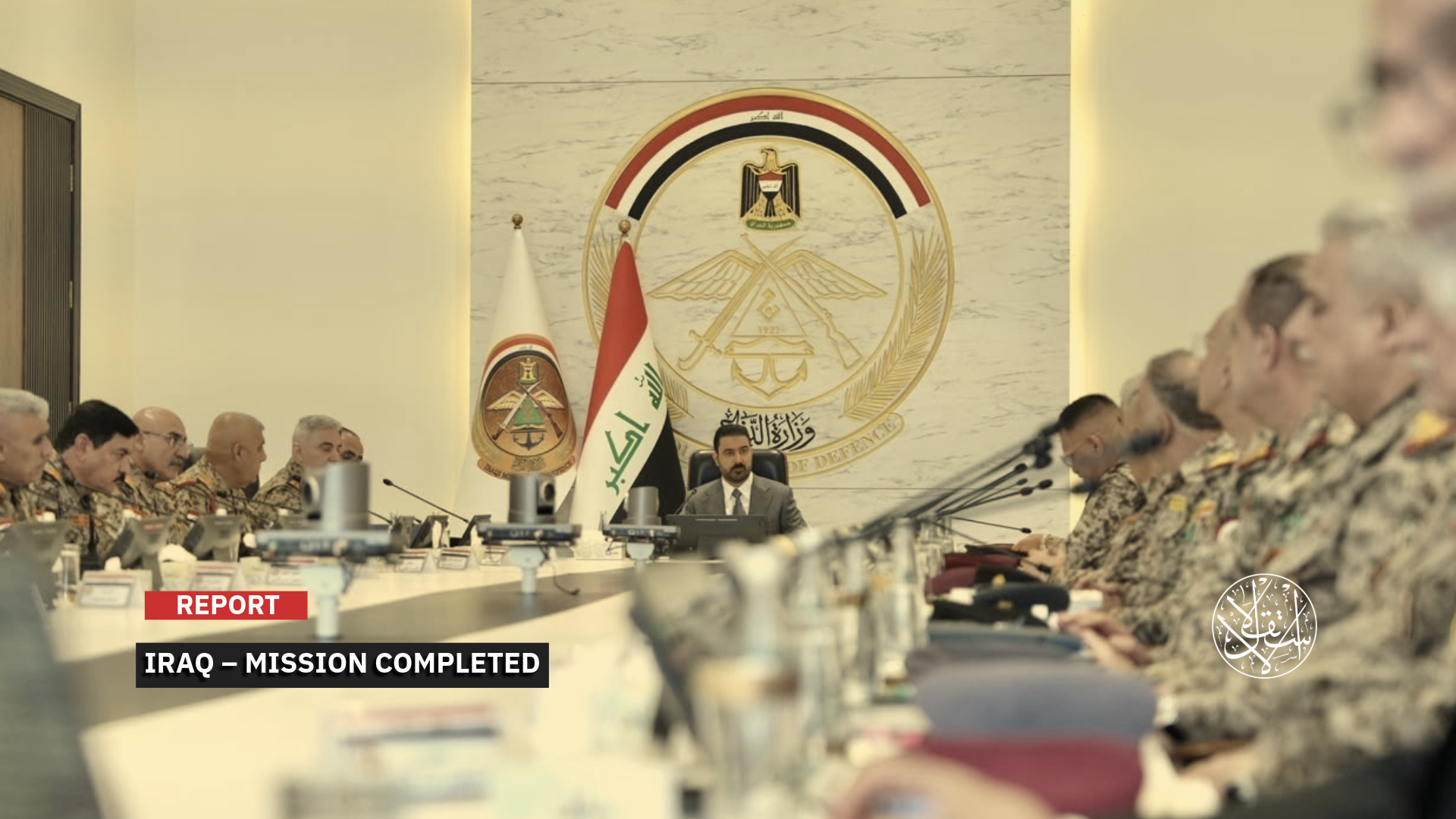
“Iraq announced the end of the Coalition forces’ mission and their withdrawal from the country.”
On September 30, 2026, Iraq formally ended the mission of the International Coalition forces fighting the Islamic State, a move Prime Minister Ali al-Zaidi’s government has framed as a transition into an era of full sovereignty and responsibility for the country’s security.
But with Coalition forces leaving, a more difficult question comes into focus: Can the Iraqi state establish a monopoly over the use of force?
Al-Zaidi has said the next phase will rest on “Iraq’s sovereignty, the strength of its institutions, the readiness of its forces, and the unity of its decision-making.”
Yet the transition comes as armed militias continue to insist on retaining their weapons and reject the government’s proposed timetable for disarmament, putting the principle of state control over arms to a direct test.
The challenge facing Iraq's sovereignty does not end with the departure of the International Coalition; rather, it extends to the ability of al-Zaidi’s government to unify security and political decision-making and enforce the law throughout the country.
The end of the foreign military presence, in other words, may prove easier to achieve than the full exercise of state sovereignty.
An Incomplete Sovereignty
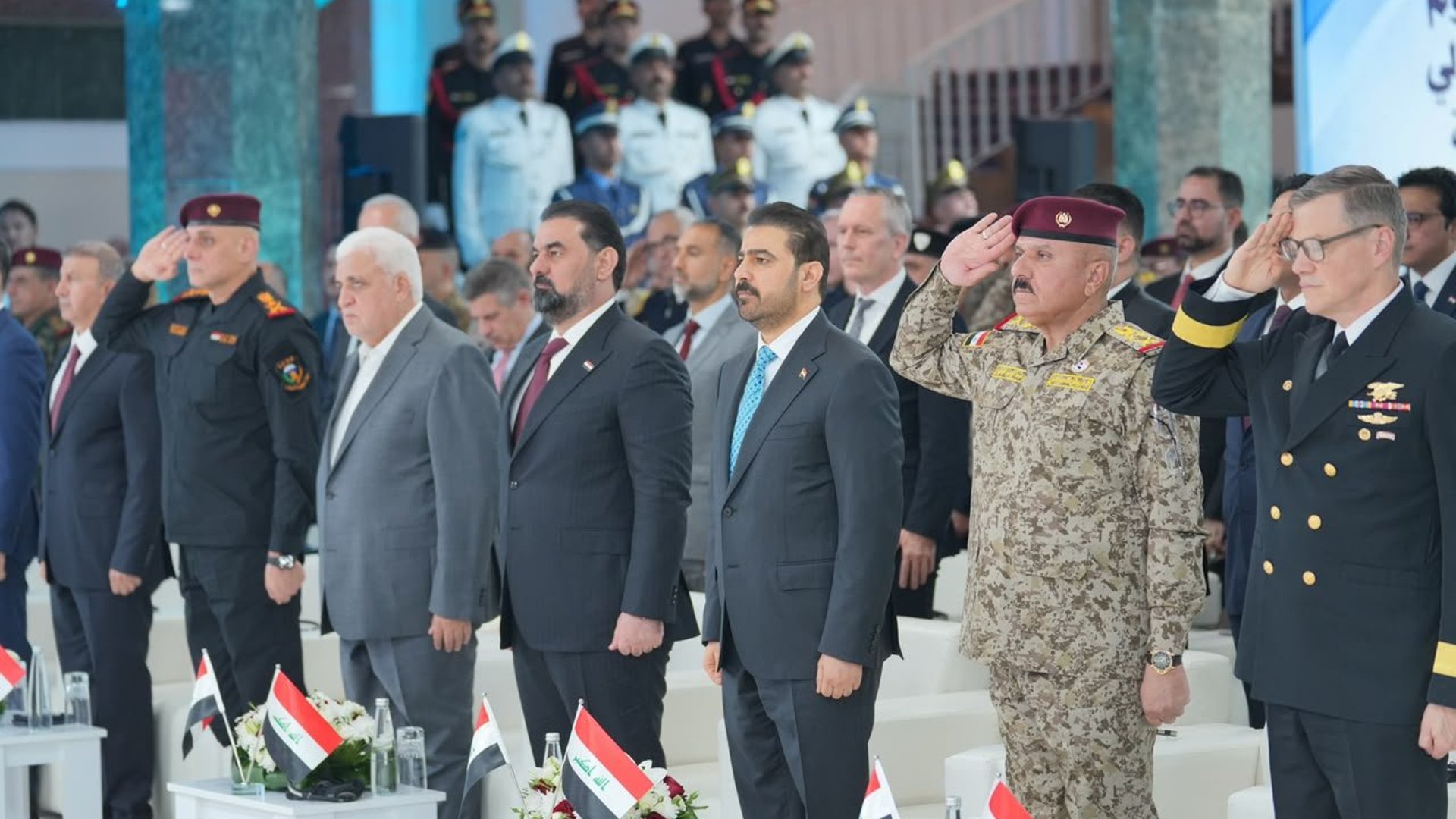
On September 30, Prime Minister and Commander in Chief of the Armed Forces Ali al-Zaidi presided over an official ceremony marking ‘Sovereignty Day’, attended by the Coalition commander and senior military and security officials. The event formally marked the end of the Coalition’s military mission and Iraq’s move into a new phase in which it assumes full responsibility for its own security.
Al-Zaidi said the end of the Coalition mission does not mean the end of the fight against terrorism. Rather, it marks Iraq’s transition to full responsibility for its security and stability.
He also announced that joint operations would now fall under the office of the commander in chief, establishing an institutional framework for managing the country’s security efforts under state authority.
He laid out the next phase under the banner of “Iraq’s sovereignty, the strength of its institutions, the readiness of its forces, and the unity of its decision-making.”
At the same time, he stressed that cooperation with Coalition countries would continue in areas including training, support, technology, and digital capabilities, signaling an end to the military mission without ending broader security cooperation.
At the close of his speech, al-Zaidi emphasized that weapons and the use of force must remain under state institutions, declaring that there can be no weapons outside the protection of the law and no force outside state institutions.
His remarks underscored a central test of the government’s vision of sovereignty: whether it can bring the country’s instruments of force and decision-making under unified state control.
Faiq Zaidan, President of Iraq’s Supreme Judicial Council, has underscored this broader concept of sovereignty, noting that 'Sovereignty Day' should serve as an occasion to consolidate state sovereignty and decision-making independence, uphold the Constitution and the rule of law, protect rights and freedoms, and safeguard the interests of society.
This perspective places the concept of sovereignty within a context that extends far beyond the issue of foreign military presence.
Assessing the transition, Iraqi affairs researcher Ahmed Alhayani told Al-Estiklal that the departure of the U.S.-led International Coalition forces completes its mission to fight the Islamic State, noting that the Coalition had been invited by the Iraqi government in 2014.
He argued that violating, undermining, and insulting sovereignty means allowing weapons to remain outside the state’s control and operate in parallel with it.
He pointed to attacks on state institutions, military bases, radars, and the intelligence headquarters, as well as airports in the Kurdistan region and gas fields, describing these as a direct challenge to state authority.

Parallel Weapons
The issue of weapons existing outside state institutions is not limited to their presence as a military force; it extends to their capacity to influence political and security decision-making—particularly given the emergence of stances, coinciding with declarations of sovereignty, that reject the government’s schedule for regulating arms and insist on the right to respond to threats.
On September 30, Jaafar al-Husseini—spokesperson for the so-called Islamic Resistance in Iraq (comprising Iran-aligned militias)—announced that the group would not abide by any timeline or agreement issued by government or political entities regarding the regulation or disarmament of weapons, affirming their continued retention of arms and readiness to use them against any threat.
Al-Husseini said the factions had spent more than 40 days negotiating the issue through a four-member committee formed by the Coordination Framework in coordination with the federal government.
He explained that the factions had made what they called full sovereignty a condition for any agreement, linking it to the withdrawal of foreign forces from Iraq.
According to the spokesman, the factions had received no response from the government as of that date, despite the committee and representatives of the four factions having formally signed an agreement paper.
He said the door to negotiations remained open on the factions’ terms, while they reserved the right to respond directly to what they consider violations.
The statements came after al-Zaidi pledged to disarm Iraq’s factions by June 2027, giving them a 90-day deadline after which any armed group that failed to comply would be considered outside the law.
The measure forms part of a phased government plan to regulate and bring weapons under state control.
Earlier, the State Administration Coalition, which brings together Shiite, Sunni, and Kurdish political forces, had stressed that weapons must remain exclusively in the hands of official state institutions.
It said any armed activity outside the law posed a threat to national security that required a firm response, according to its stated position.
Alhayani warned that if the departure of foreign forces is not accompanied by Iraqi forces enforcing the law across the country, Iran-backed militias could move to fill the vacuum.
Some of them, he noted, have already said they will not surrender their weapons even after the withdrawal of the foreign forces whose presence had previously been cited as a justification for keeping them.
A Test of Decision-Making
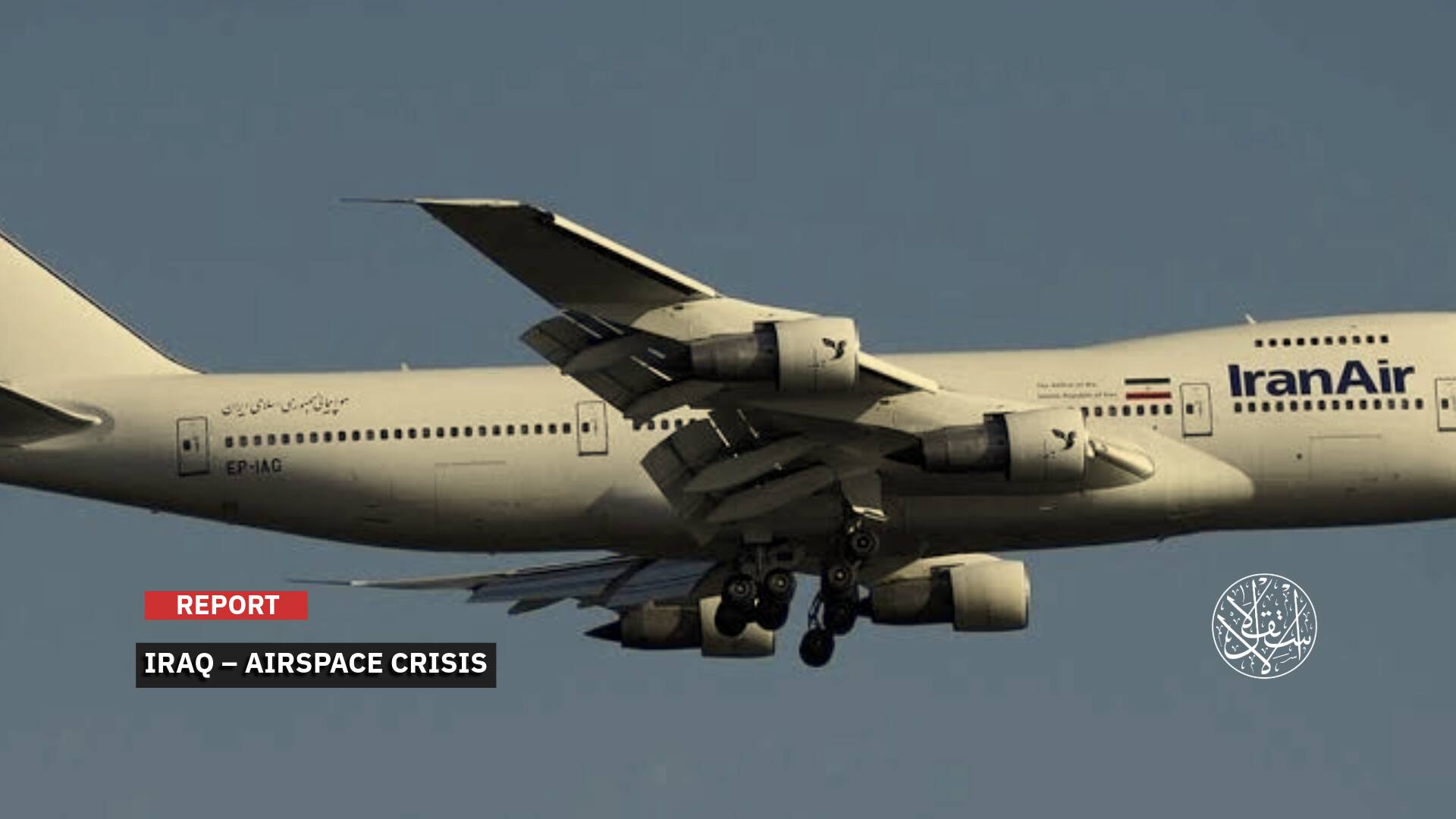
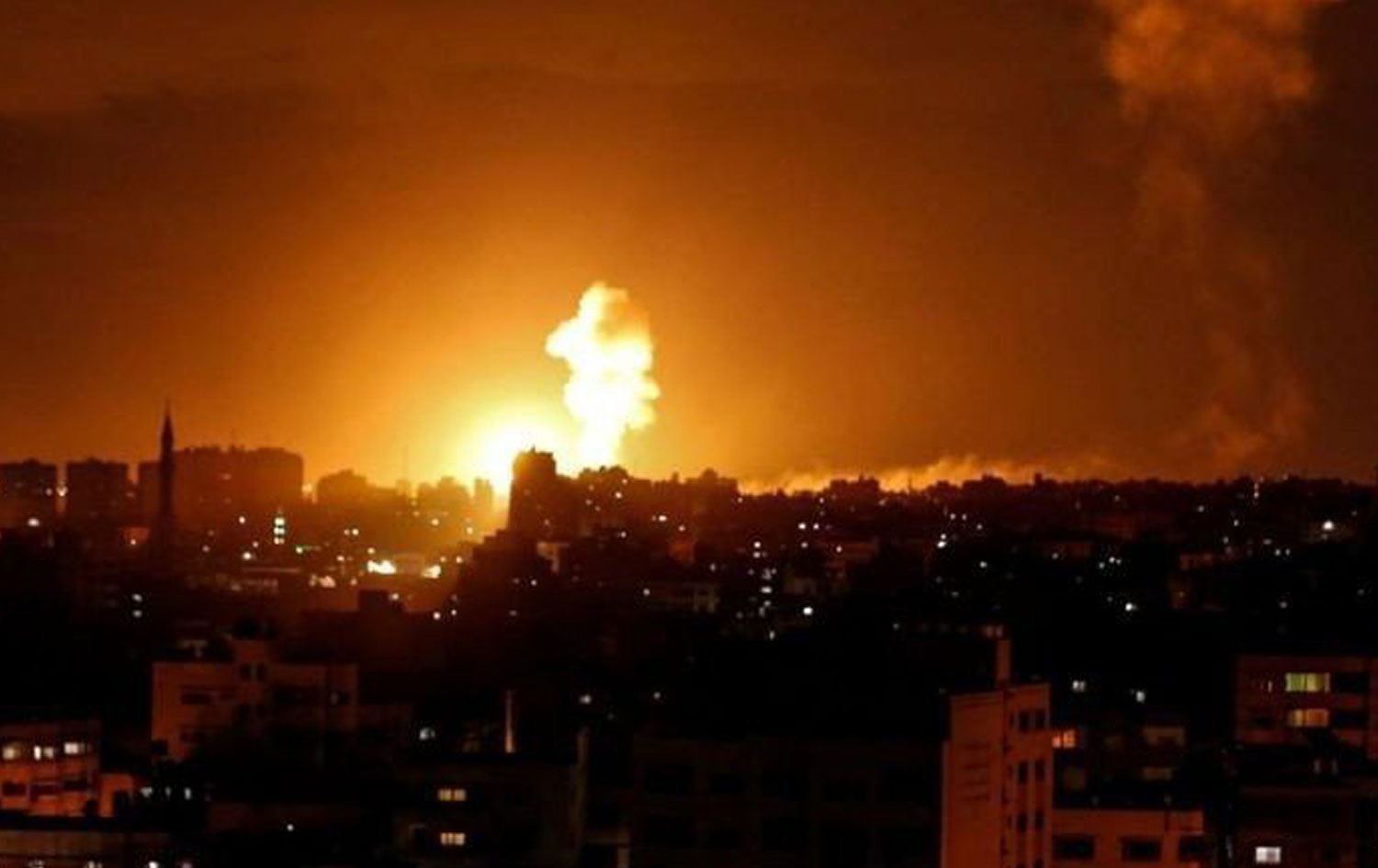
The sovereignty test also extends to Iraqi airspace. Iraq’s Kataeb Hezbollah said U.S. military and surveillance aircraft were still operating in Iraqi skies, claiming that its intelligence units had monitored and documented the flights and had obtained what it described as evidence.
In a statement issued September 30, the group said it had cables documenting the scheduled movements of U.S. military personnel through October 30, 2026, and threatened to release further details about those movements.
The statement added a new dimension to the debate over who ultimately controls Iraq’s airspace.
Abu Mujahid al-Assaf, security chief of Iraq's Kataib Hezbollah, had threatened to bring down al-Zaidi’s government if it did not, in his words, act in the interests of the Iraqi people.
He also threatened to close the entry points of countries involved in what he described as the air blockade imposed on Iran.
Al-Assaf’s remarks went beyond political pressure. He spoke of monitoring Iraqi airspace and warned that aircraft the group considers hostile could be targeted and shot down if what he called the blockade of Iran continued after October 1, 2026.
At the same time, Iraq's Kataib Hezbollah leader Abu Hussein al-Hamidawi ordered a halt to military operations and mobile logistical activities, saying, “We direct our fighters to halt military operations and mobile logistical activities.”
He nevertheless excluded hostile aircraft from the suspension, allowing attacks against them until Iraqi government defenses were fully established.
On September 30, al-Hamidawi also said that “the coexistence of the Islamic Resistance and government agencies is a good thing and there is no need to be wary of it.”
The timing of the statement underscored the continued existence of two competing approaches to security: one centered on official state institutions, and another in which armed groups claim a parallel role.
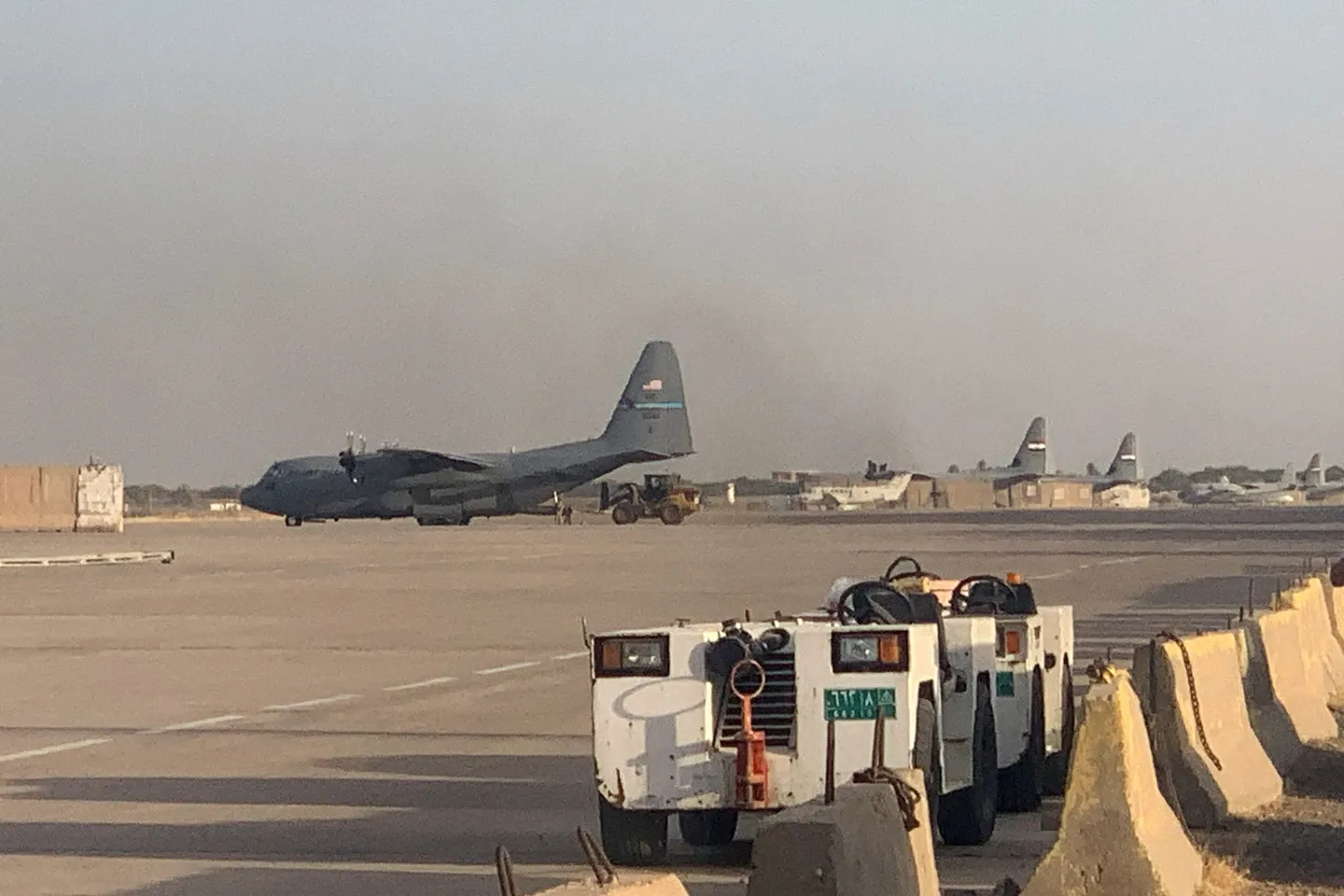
The U.S. Department of War formally announced the completion of Operation Inherent Resolve in Iraq by the United States and its Coalition partners.
The Pentagon said the organized withdrawal of troops and equipment from Erbil Air Base marked the end of the Coalition’s military mission, while training and intelligence support would continue.
A Historic Responsibility
In the same vein, writer and researcher Iyad Al-Samawi does not view sovereignty merely as a military or security issue; rather, he links it to a broader concept concerning the state's ability to exercise its authority and decision-making power, as well as to protect its resources, borders, and points of entry. He maintains that full sovereignty requires strong institutions and the enforcement of the law.
“Sovereignty means, above all, that the state has the final say on its own territory, with no one challenging or sharing its authority, and that decisions over war and peace remain in the hands of the state,” al-Samawi told ANF News.
He added that weaponry must be under state authority and the law must stand above all; furthermore, in his view, economic sovereignty is not limited to political slogans but encompasses the state's ability to protect its wealth and resources, build its economy, and safeguard its borders and points of entry.
From this perspective, al-Samawi said the struggle for sovereignty is not about any single actor but about everything that weakens state authority, whether weapons outside state institutions, corruption within them, influence overriding the law, or sectarian and political power-sharing that turns public institutions into political fiefdoms.
He also linked sovereignty to foreign influence and dependency, arguing that Iraq’s decision-making becomes vulnerable when political interests and influence take precedence over state institutions.
He described this as a historic responsibility for al-Zaidi’s government, which has made state authority and sovereignty the defining themes of the next phase.
That choice, al-Samawi concluded, requires the government to make difficult decisions free from partisan interests and political pressure.
He called for giving it the necessary room to pursue that course, pointing to a dual challenge: unifying state decision-making and enforcing the law.