Amid Israeli Welcome: What Does Morocco Expect from Fatima Ezzahra El Mansouri ’s Government?
“Morocco will turn the appointment of the first woman to head the government into an international media coup to project an image of a modern country.”
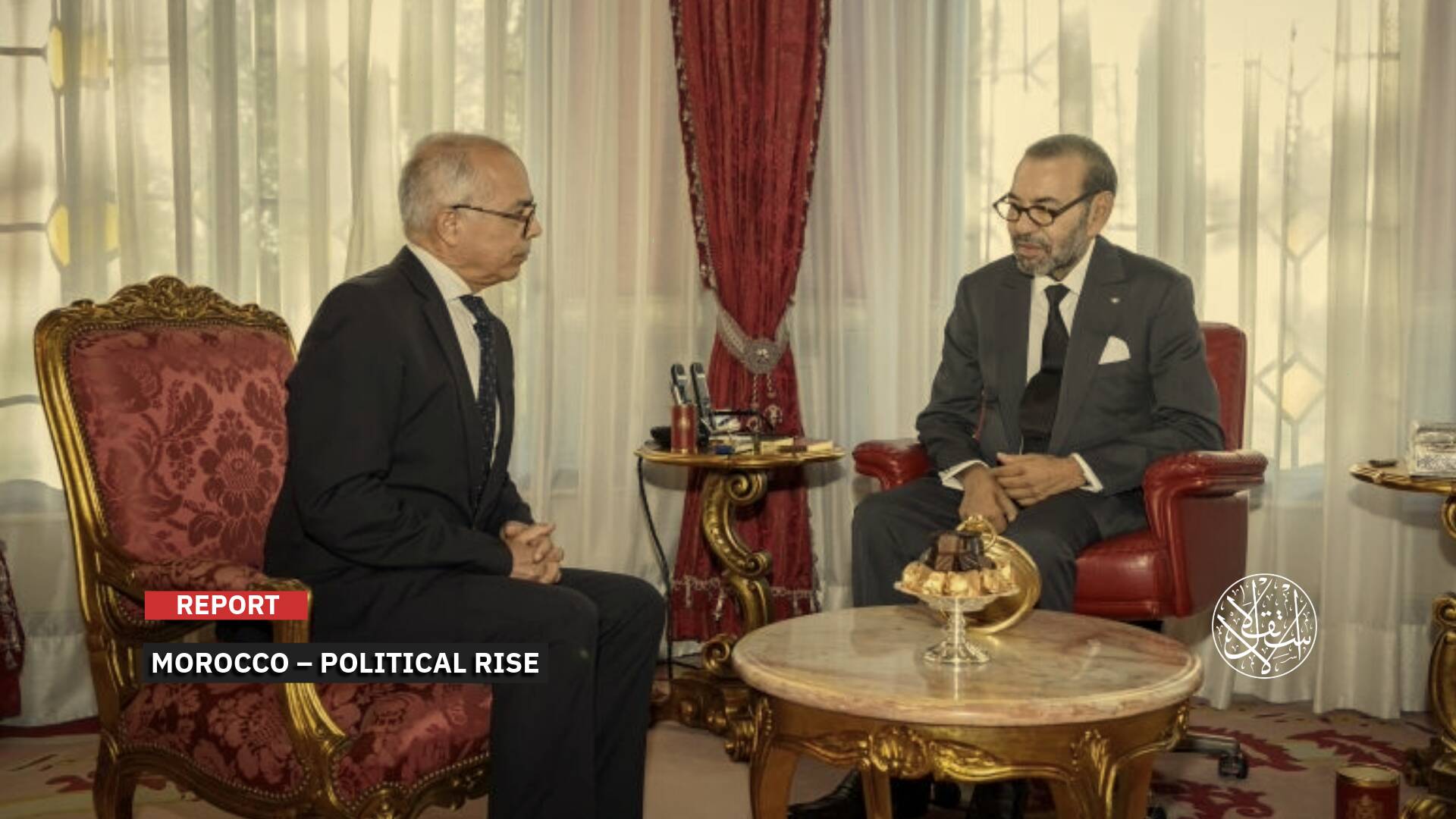
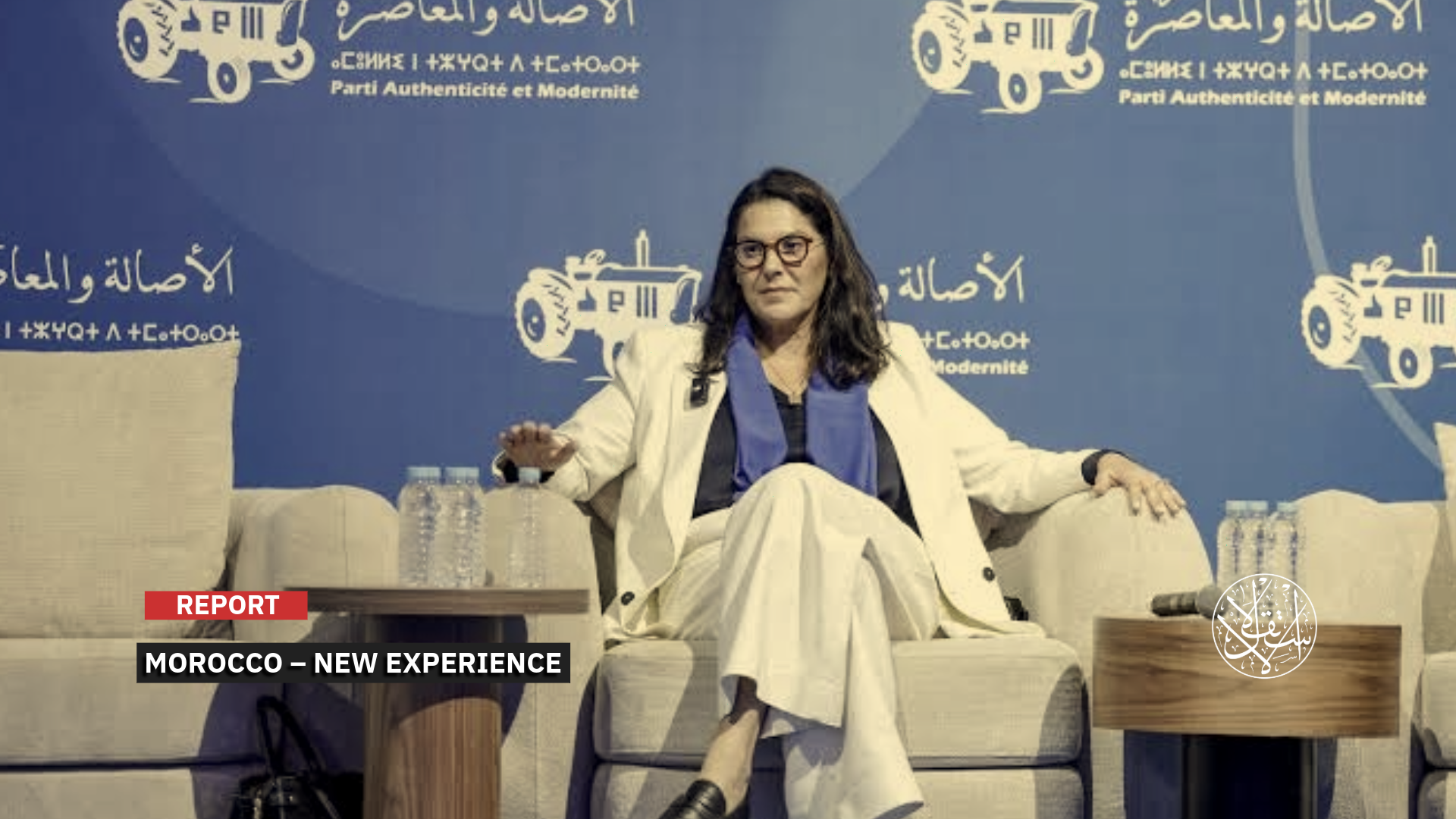
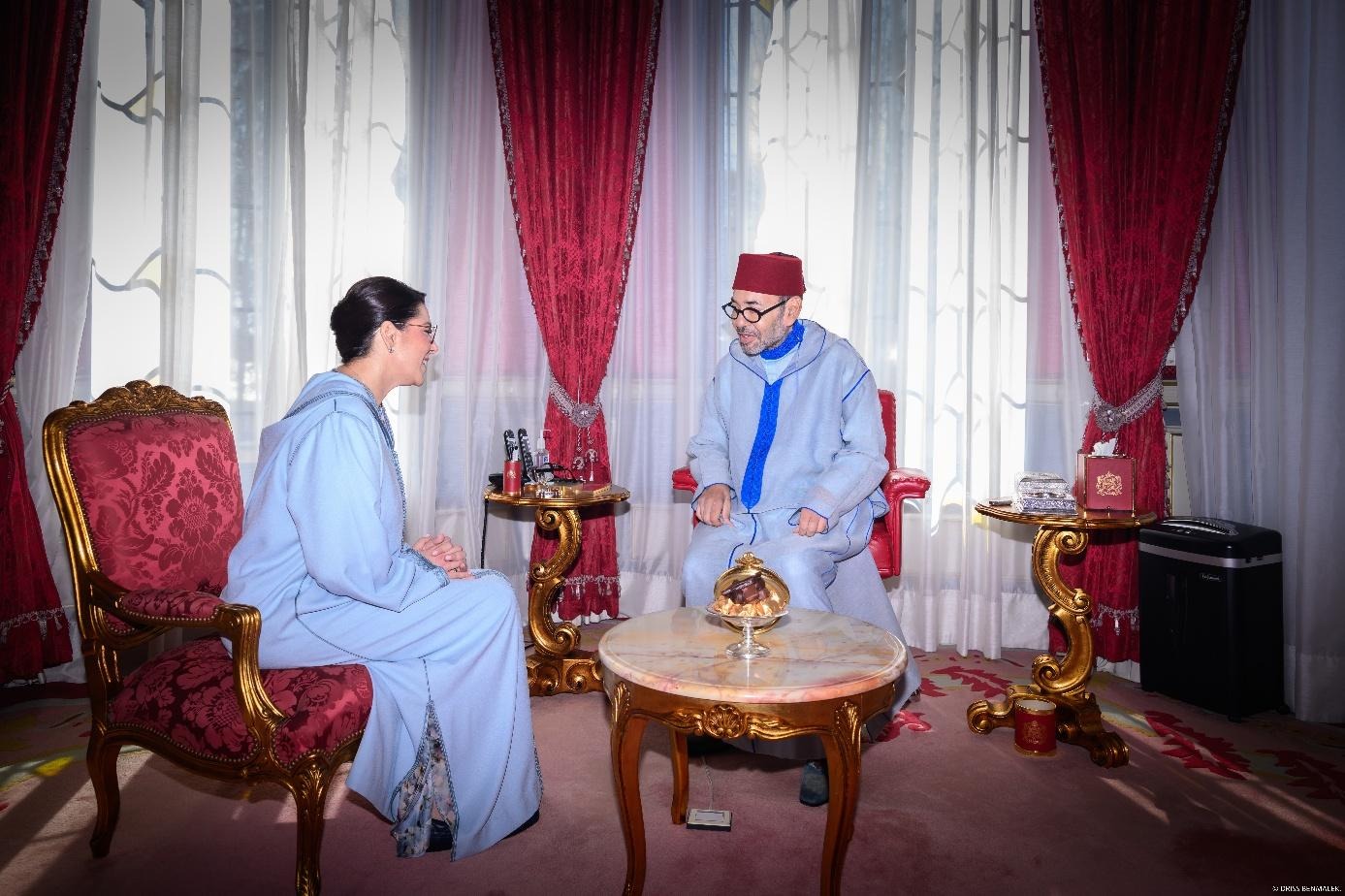
The Moroccan monarch has ended months of uncertainty over who would serve as the next head of government to replace businessman Aziz Akhannouch, appointing the leader of the party that won the most seats in the election.
According to a statement issued by the Royal Palace on September 29, 2026, Fatima Ezzahra el Mansouri, coordinator of the collective leadership of the Authenticity and Modernity Party (PAM), was appointed prime minister and tasked with forming a government.
The appointment came after her party topped the legislative elections held on September 23, winning 97 seats, followed by the National Rally of Independents (RNI) with 66 seats and the Istiqlal Party with 65 seats. The Islamist Justice and Development Party (PJD) came fourth with 54 seats.
The PJD recorded its strongest results since the 2021 elections, doubling its vote count and nearly quadrupling its seats after holding just 13 in the outgoing parliamentary term.
In remarks carried by the official news agency, el-Mansouri said after her appointment that she would work to propose a government that meets the expectations of His Majesty the King and all citizens, and to present a program that offers real and practical solutions.
She added that the royal audience provided an opportunity to receive His Majesty's high directives for managing the next phase.
El-Mansouri described her appointment as a historic moment, noting that it marked the first time in the kingdom's history that a woman had been appointed head of government. "This is a source of pride for me and for all the women of the nation," she said.
She said she would begin by holding internal consultations within her party, followed by consultations with the various political parties.
Israeli Congratulations
Israeli President Isaac Herzog congratulated Fatima Zahra El-Mansouri on her appointment as head of the Moroccan government by King Mohammed VI, expressing his wishes for success in her new role.
In a post on his official X account, Herzog said he was extending, "On behalf of the State of Israel, my warmest congratulations to Fatima Ezzahra El Mansouri on her groundbreaking appointment as Prime Minister of the Kingdom of Morocco by His Majesty King Mohammed VI. I wish her every success in this role."
The Israeli president praised what he described as the great leadership of King Mohammed VI, particularly his efforts toward peace and strengthening the historic ties between the Moroccan and Israeli peoples, in his words.
The Israeli president concluded his message by expressing hope that the two sides would continue working together to expand the circle of peace and tolerance in the region.
The Hebrew-language Ynet website also reacted to the development with an article titled: “Morocco’s First Female Prime Minister Is Closely Tied to the Jewish Community: She Will Follow the King’s Path.”
The website quoted Jackie Kadosh, head of the Jewish community in the region, on the appointment and its implications for the country’s Jewish community.
She said, “She grew up with us. Her father, Abdelrahman el Mansouri, was a prominent lawyer.”
Kadosh said el Mansouri had previously “hosted several delegations at her home as part of her role as mayor of Marrakesh, and we felt as though we were at home there.”
She explained that the Jewish community in Marrakesh traditionally invites senior Moroccan officials to the synagogue every Yom Kippur. Mansouri had attended several years ago and stood in the women’s section, she noted.
“I believe she will do serious work. I believe she will do her job properly, whether in advancing the status of women in Morocco or helping earthquake victims,” she added, describing el Mansouri as not the type who chases money, because she already has it. She will act solely in the country’s interest, will not tolerate an Islamist agenda, and will simply follow the king’s path.
Ahead of the legislative elections, the leader of the ‘We Are All Israelis’ movement in Morocco had announced his and his media group’s support for the Authenticity and Modernity Party and for Mansouri to become Morocco’s first female head of government.
International Media Coup
Writer and political analyst Idriss el Ganbouri said he had expected Mansouri’s appointment for several reasons, foremost among them that Morocco would turn the appointment of the first woman to head the government into an international media coup, projecting an image of a modern country that believes in women’s freedom and tolerance, and using that image during the organization of the World Cup.
In a Facebook post on September 29, el Ganbouri added, “That is exactly what happened. There is hardly a media outlet anywhere in the world that did not put the news on its front page, particularly in Europe and the United States. Even the Israeli media took an interest in the news.”
He continued that the appointment of a woman as head of the Moroccan government had also become the main focus of political debate.
The next government coalition, social and economic issues, and the government’s program were no longer what mattered; rather, the focus was on having a woman at the head of the government.
El Ganbouri added, however, “That is true, of course, because the major issues in Morocco related to preparations for the World Cup are not in the hands of the government; for the state, they are strategic matters.”
The writer stressed that “strategic issues are usually not delegated to governments, and amid preparations for the World Cup, the scope of what is considered strategic has expanded, further narrowing the government’s room for maneuver,” el Ganbouri said.
Conflicting Interests
El Mansouri’s appointment sparked widespread reactions across Morocco’s political and social spheres, including those of university professor and women’s rights activist Latifa el Bouhsini, who shared a series of posts on Facebook on September 29.
In this regard, el Bouhsini said, “Personally, she does not represent me in any way, and I categorically refuse to recognize anyone, whether a man or a woman, who is surrounded by suspicions of corruption and conflicts of interest.”
She continued, “Those who promote the Khaled-style version of modernity are applauding the appointment of a woman while deliberately turning a blind eye to suspicions of conflicts of interest.” She added, “Incidentally, Golda Meir was a prime minister.”
El Bouhsini stressed that she has no problem with any political party affiliation, adding that all her objections are directed at “cartels of interests, corruption and patronage,” as well as suspicions of conflicts of interest.
Political activist Soumaya Elallagui said she could not congratulate the head of government, celebrate her achievement or take pride in it simply because she is a woman.
In a Facebook post, Elallagui added, “I do not attach any importance to this gender-based distinction. I have always believed in competence, and she does not possess it.
She failed as mayor of Marrakesh and as housing minister. That is first.”
Second,” the political activist continued, “as long as the election results are marred by flaws and allegations of electoral fraud, I challenge the legitimacy of her party’s victory and, consequently, I do not recognize her as head of government.”
Elallagui concluded, “I support women being represented in positions of power, but based on their competence, through their own efforts and on the strength of their good reputation.”
Benkirane’s Brotherhood
Immediately after the election results put the “Tractor” party first, the Justice and Development Party, led by Abdelilah Benkirane, said it had a firm, unequivocal stance against joining a government led by the Authenticity and Modernity Party.
In a speech delivered during a meeting of his party’s National Council on September 26, Benkirane stressed that there was a consensus among members of the party’s General Secretariat when it discussed the issue at its most recent meeting, and that no member supported joining a government led by the Authenticity and Modernity Party.
He added, however, “But it should be understood that our position does not mean that we will oppose this party simply because it is corrupt and came to control Moroccan society. Rather, we will see what it does, and we will mount strong, reasonable and non-populist opposition.”
This position was confirmed by a statement issued by the Justice and Development Party’s National Council on the same day.
It said the council had “discussed with full seriousness, responsibility and freedom the position proposed by the General Secretariat, and unanimously decided among those present to take its place in the parliamentary opposition, as guaranteed by the Constitution, particularly Article 10.”
The statement added that the party would “continue to fulfill its constitutional, political and activist roles from the position of responsible and strong national opposition, continue to defend the shared national principles, advocate for the causes of our nation, and defend the legitimate rights and expectations of both male and female citizens.”
Transparency Challenge
Against the backdrop of the extensive legacy left by Aziz Akhannouch’s government regarding corruption and abuse of power, Mohammed el Ghaloussi, president of the Moroccan Association for the Protection of Public Funds, said Moroccans were expecting Mansouri’s government to demonstrate genuine political will to break with corruption, the plundering of public funds, patronage, bribery and impunity.
In an article posted on Facebook on September 29, el Ghaloussi added that Moroccans were also waiting for “the restoration of integrity in public life, the strengthening of trust in institutions, and the bridging of the gap between the rich and the poor through a fair distribution of wealth, as well as spatial justice that does justice to the outskirts of cities and villages that have been marginalized for decades.”
The lawyer and civil society activist stressed that politics and elections have no meaning if corruption is not confronted- corruption that has grown rampant and become structural, draining substantial resources and extinguishing hope and the dream of a dignified life, and which could even undermine major projects and initiatives, “becoming like pouring water onto sand, as the saying goes.”
He warned that “corruption steals resources and wealth and makes people feel that their dignity is being violated by forcing them to accept living with discrimination in the application of the law and the principles of justice.”
El Ghaloussi asked, “Will we actually see a new direction that takes into account all the troubling signs and sends positive signals by moving to a new phase in a turbulent world where only the strongest survive- strongest in terms of institutions and resilience, a strong economy and effective governance, and a domestic front strengthened by respect for rights and freedoms, the criminalization of illicit enrichment and conflicts of interest, a review of the asset declaration law, and linking responsibility to accountability?”
Fighting Corruption
In her assessment of the appointment and what follows, Bouthaina Qarouri, a political science professor at Mohammed V University in Rabat, said that Mansouri’s appointment as head of government is consistent with the provisions of Article 47 of the Constitution, which links the appointment of the head of government to the party that comes first in elections to the House of Representatives, based on the results of those elections.
Qarouri told Al-Estiklal that the appointment once again confirms respect for the constitutional convention followed by King Mohammed VI since the 2011 Constitution, namely appointing the leading figure of the party that comes first.
She noted that although the royal appointment went to a woman, regardless of its symbolic significance, this does not give her any preferential advantage, because what is required is for the institution of the head of government to carry out its constitutional duties.
Therefore, Qarouri added, “this appointment will have deeper significance if it is accompanied by a genuine determination to combat corruption and the ability to find effective solutions to the social and economic problems facing Moroccans, from the rising cost of living to unemployment and the deterioration of public services.”
The university professor expressed hope that the new head of government would adopt a style of governance that breaks with the conflicts of interest and illicit enrichment that characterized the previous government’s experience, and that she would make linking responsibility to accountability and transparency in public affairs a cornerstone of her government’s work.
She stressed that “the success of the first woman to head the government will not be measured by the fact that she is a woman, but by what she achieves for Moroccans in terms of fairness, dignity and trust in institutions.”
She concluded that the natural criteria for assessing her performance are her ability to deliver results, combat corruption, protect the public interest, respond to Moroccans’ demands, and uphold the principles of integrity and good governance.
Academic writer and researcher Tijani Boulaouali said that Mansouri’s appointment is an event with multiple political and symbolic implications, noting that Morocco’s governments have historically alternated between men from different political and intellectual backgrounds.
Boulaouali told Al-Estiklal that Morocco is entering a new experience with a woman in a highly sensitive and responsible political position, raising the question of whether Mansouri will be able to successfully manage this phase.
He added that, ultimately, success is determined less by the identity of the person in office than by their ability to work, govern effectively, respond to citizens’ demands, and turn promises into tangible policies.
Boulaouali cautioned that a woman’s arrival at the head of government should not turn into a symbolic battle between “modernity” and “conservatism,” nor into a battle between supporters of women and supporters of men. Rather, the experience should be viewed from the perspective of public responsibility, in terms of what she will deliver for Moroccans and her ability to successfully address the issues that have continued to trouble society.
Accordingly, the writer warned that the next government will not begin its work in a vacuum, but amid strong social expectations, major economic and development challenges, and preparations for major events, including projects related to the 2030 World Cup, alongside issues such as employment, healthcare, education and purchasing power.
The same source stressed that “these issues require clear decisions, as well as a high degree of coordination and continuity in government work.”
He continued, “It is true that Mansouri has been given a historic opportunity, but history is not made merely by reaching office; it is also made by the way power is exercised, the ability to shoulder responsibility, and the results that citizens feel in their daily lives.”
Boulaouali concluded by expressing hope that Morocco will emerge from the difficult lean years it has experienced recently, and that the changes underway will become a genuine opportunity to restore trust, renew political life, respond to growing social demands, and build a future in which citizens feel that politics can truly improve their lives.