‘Zionism Is Racist’: British Decision Rattles Israeli Occupation and Tests Western Resolve
"The decision recalls the 1975 United Nations General Assembly resolution that declared Zionism a form of racism."
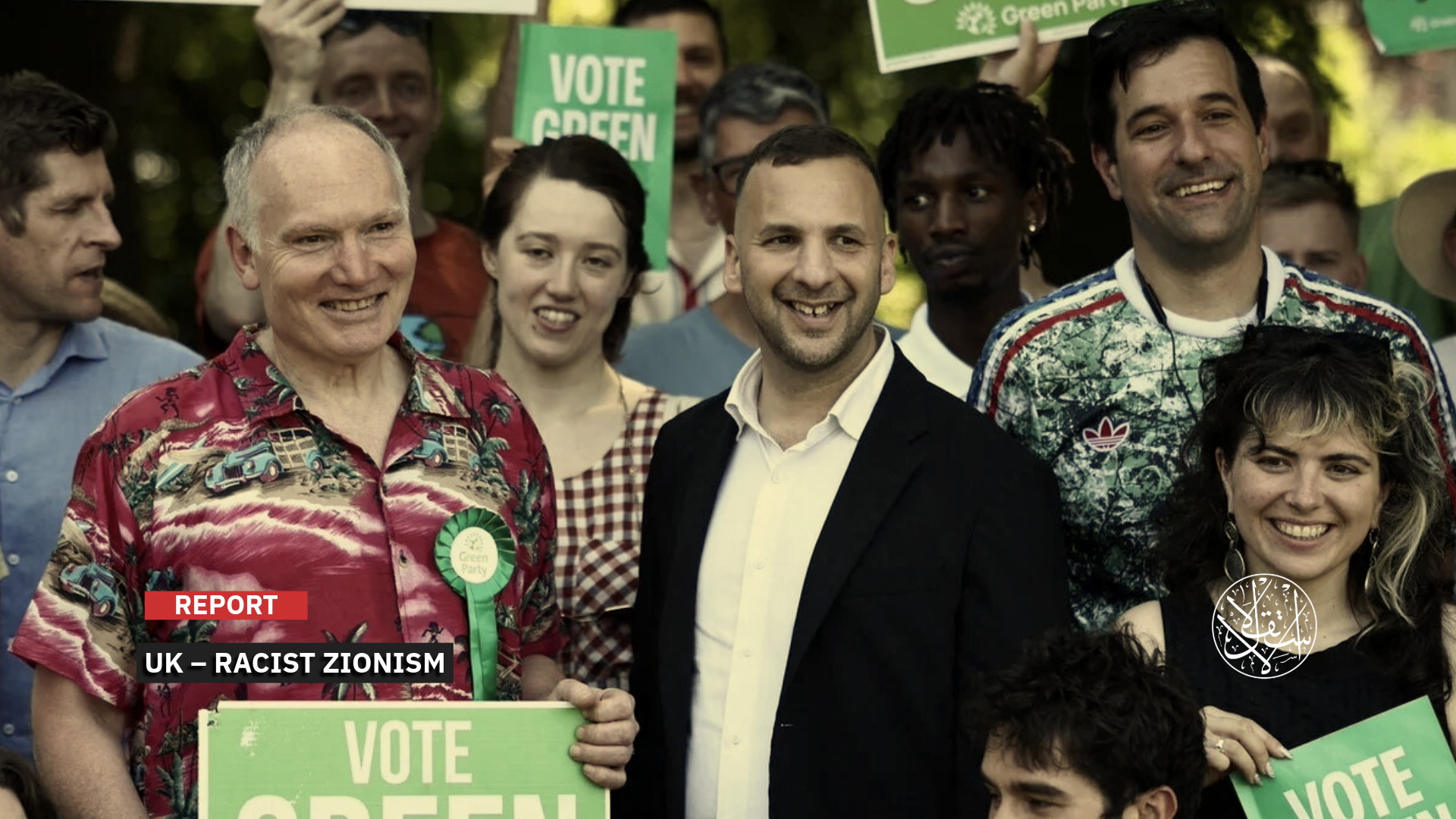
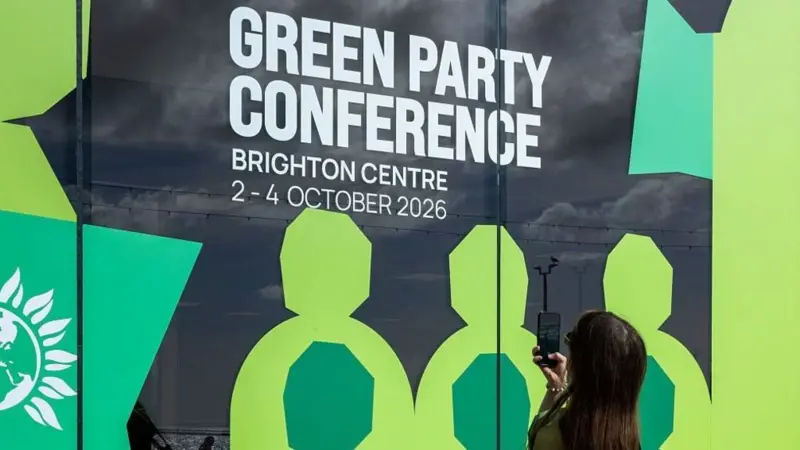
In an unprecedented move in British party politics, members of the Green Party in England and Wales voted on October 6, 2026, to classify Zionism as a form of racism and adopt a vision of a single democratic Palestinian state guaranteeing equal rights for all its residents as an alternative to the two-state solution.
A total of 1,022 members voted in favor of the decision, while 813 opposed it, during the party’s annual conference in the coastal city of Brighton.The Greens thus became the first major party in the United Kingdom to incorporate this position into its official policy.
Within hours of the vote, the Israeli Occupation responded angrily at the highest levels, with Green Party leader Zack Polanski, who is Jewish, also coming under attack. The reaction revealed that Tel Aviv viewed the decision as more than just another passing party statement.
Why did a decision by a party with just five seats in the House of Commons provoke such a strong response from the Israeli Occupation establishment? And does it signal a genuine shift in Western debate over “Israel” and Palestinian rights?
Zionist Ideology
The decision was put forward by the Greens for Palestine Steering Group and largely drafted by Lubna Speitan, a British-Palestinian artist.
It calls for treating Zionism like any other form of racism and for the party to support a single democratic state across the entirety of historic Palestine, with equal rights for all ethnic and religious groups.
This means the party has moved away from the position adopted by Britain’s major parties, which support the establishment of a Palestinian state alongside “Israel,” and proposed an alternative that redefines the nature of the state itself around equal citizenship.
During the conference, members approved an amendment affirming the inalienable right of Palestinians to self-determination, while rejecting another amendment that would have barred the decision from being used to question or exclude Jewish members because of their ties to synagogues or community centers that describe themselves as Zionist.
What sets the decision apart is that it goes beyond criticizing the Israeli government’s policies or the practices of the Israeli Occupation, as many Western parties do, and directly challenges the ideological foundation on which “the state” was established.
The party’s deputy leader, Mothin Ali, explained this reasoning by saying that Zionism, as defined in the proposal, means “a state based on ethnic nationalism” that leads to ethnic cleansing rooted in the belief that one group of people is superior to another.
Speitan sought to allay concerns that the decision could be used against party members, explaining that it falls under foreign affairs policy and has no connection to disciplinary procedures. It also explicitly states that” not all Jews are Zionists, and not all Zionists are Jews.”
The decision did not emerge in a vacuum. In 2024, the Greens became the first major political party in Britain to recognize that a genocide was taking place in Gaza, placing the latest move within a growing pattern of political positions rather than treating it as an isolated development.
Entry Ban
“Israel” went beyond its usual statements of condemnation. Hours after the vote, its Foreign Ministry published a series of posts on X accusing the party of legitimizing the destruction of the so-called “State of Israel” and terrorism.
The ministry cited the decision’s description of Zionism as a racist ideology, its support for a single state, and its recognition of the right to resistance under international law.
The ministry described the decision as clearly antisemitic under the International Holocaust Remembrance Alliance’s definition, arguing that it denied the Jewish people’s right to self-determination. It then announced that Foreign Minister Gideon Sa’ar had decided, “as a first step,” to bar Polanski from entering “Israel.”
Israeli President Isaac Herzog joined the campaign, describing the decision as a disgrace and insisting that Zionism is the national liberation movement of the Jewish people and the foundation of their right to a state and a national homeland.
The entry ban carries a striking irony. “Israel’s” Law of Return grants anyone with at least one Jewish grandparent the right to immigrate to “Israel,” reside there, and obtain citizenship.
Yet Israeli authorities have sometimes barred Jews from entering the country because they pose a security threat or question the state’s legitimacy. In practice, such exceptions have largely been applied to political opponents.
Thus, Tel Aviv finds itself denying the leader of a Jewish party a right guaranteed under the Law of Return, which “Israel” presents as a safeguard for Jews worldwide, simply because his party adopted a political position the Israeli government opposes.
The decision raises questions about where “Israel” draws the line between defending Jews and defending state policy.
The phrase, as a first step, reveals that “Israel” sees the vote not as a symbolic gesture by a small party but as a precedent that must be contained before it spreads to other parties, as well as a warning to anyone considering following the same path.
Racist Endeavor
“Israel’s” anger extends beyond any single British party to the very foundations of the narrative underpinning the legitimacy of the Israeli Occupation state. While Israeli officials and Zionist Jewish groups define the term as the Jewish people’s right to self-determination, the Green Party’s decision turns that definition on its head, placing Zionism among racist ideologies.
This directly clashes with the International Holocaust Remembrance Alliance’s definition of antisemitism, which has been adopted by many Western governments and institutions, including the British government. Among its examples of antisemitism is describing “Israel’s” existence as a racist endeavor.
The Greens’ position entering mainstream political debate therefore amounts to a challenge to the framework long used in the West to equate anti-Zionism with antisemitism.
The decision also recalls United Nations General Assembly Resolution 3379, adopted in 1975, which declared Zionism a form of racism and racial discrimination before the resolution was revoked in 1991.
The Israeli Occupation fears that this equation could return, this time from within Western party politics rather than the halls of the United Nations.
Supporters, meanwhile, argue that distinguishing Zionism as a political project from Judaism as a religion and identity is key to understanding the issue. They contend that any state built around the demographic and political dominance of a single group inevitably marginalizes and displaces others.
In this context, Speitan recalls a family memory: her grandfather used to play cards every morning with his Jewish neighbor in Palestine, and “there was never any problem at all.”
British Palestinian researcher Kieran Andrew argues that a century of colonialism, ethnic cleansing, apartheid, and genocide inflicted on Palestinians was based on an ideology: Zionism, which dehumanizes Palestinians.
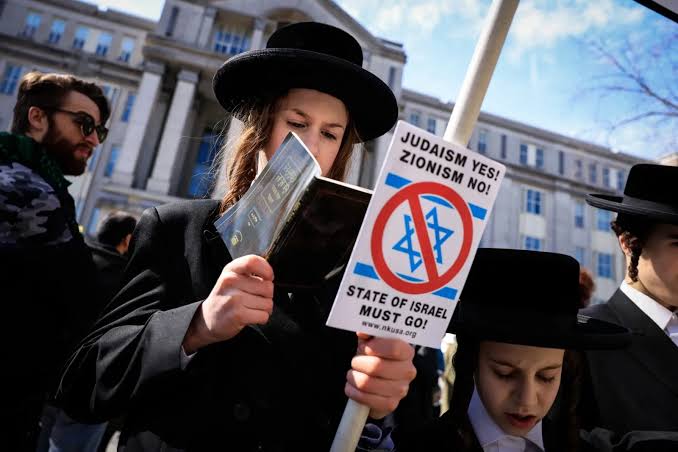
Supporters also point to the decision’s backing from prominent activist and Holocaust survivor Stephen Kapos, who considers Zionism harmful and without any legitimacy, as evidence against accusations of antisemitism.
Jews Against Zionism
The decision did not pass without controversy within the party itself. The margin between supporters and opponents was just 209 votes, and at least three of the party’s five members of Parliament opposed it, including Carla Denyer and Adrian Ramsay.
Meanwhile, Polanski took a middle ground. He described the displacement and genocide of Palestinians as clearly racist but called for an amendment to protect Jewish members affiliated with synagogues that identify as Zionist.
Speitan rejected the amendment, arguing that it undermines the decision and that Palestinians should not have to preface every discussion of their people’s liberation by clarifying that they are not antisemitic.
In an attempt to contain the fallout, the five Green MPs issued a joint statement affirming that there is no contradiction between supporting Palestinian rights and supporting Jewish rights.
Outside the party, three organizations representing the Jewish community had warned before the vote that the decision could affect the security and safety of all British Jews.
The Movement for Progressive Judaism accused the Greens of “making antisemitism their policy,” while the group Jewish Greens said its members were divided and that it had adopted no official position.
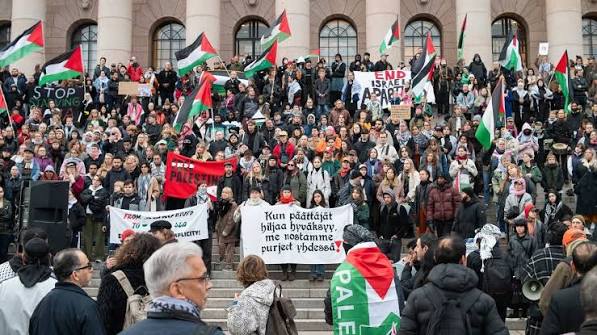
The polarization spilled onto the streets of Brighton. Dozens of pro-“Israel” demonstrators gathered outside the conference venue, waving Israeli Occupation flags and holding signs equating anti-Zionism with terrorism.
One called Polanski a self-hating Jew. Some protesters went beyond criticizing the decision to target Muslims. One woman described it as an alliance between the left and Islamists, while another claimed that Jews were being persecuted by Islam.
Nearby, counterprotesters raised Palestinian flags and held a banner reading Jews Against Zionism, as police kept the two groups apart.
Rift in the Western Wall
Observers and activists argue that the decision’s real significance lies not in the party’s electoral weight but in its move to bring anti-Zionism out of activist left-wing circles and into the official platform of one of Europe’s most prominent political parties. They expect it could pave the way for similar shifts across Europe and the United States.
Party leaders are counting on this ripple effect. Mothin Ali says the Greens have always been at the forefront of the issue, pushing other parties to follow their lead and encouraging wider public debate.
Some supporters go further. Speaking to Middle East Eye (MEE), a young Jewish man named Uri, who took part in the counterprotest, said he hoped that having a party represented in Parliament adopt this position would help bring about sanctions against the Israeli Occupation.
The decision also raises questions about who gets to shape the narrative on Palestine in the West. Hamza Egal, Chair of Global Majority Greens, told the MEE that his group backed the decision because it came from our Palestinian members, signaling a shift in the role Palestinians play within Western political parties, from subjects of debate to those shaping it.
The question “Is Zionism racist?” long confined to the margins of Western politics or met with accusations of antisemitism is now formally on the agenda of a party represented in the British Parliament. This goes a long way toward explaining the scale of “Israel’s” reaction and makes Brighton a potential turning point against which future developments may be measured.
Sources
- Britain: Outcry After Greens Classify Zionism as “A Form of Racism” [Arabic]
- Green Party members to vote on declaring Zionism a form of racism at conference
- Green Party recognises Zionism as a form of racism and backs single Palestinian state
- Why Has the British Green Party Angered Israel? [Arabic]
- Britain’s Green Party Adopts Motion Declaring “Zionism Is Racist” [Arabic]