Arrests Targeting Relatives of Mauritanian Dissidents Abroad: A Retaliatory Measure?
“This campaign will be quietly brought to an end once it has served its main purpose: distracting public opinion.”
Arrests Targeting Relatives of Mauritanian Dissidents Abroad: A Retaliatory Measure?
https://westafricaweekly.com/wp-content/uploads/2024/07/20240701_1627182.jpg
Report
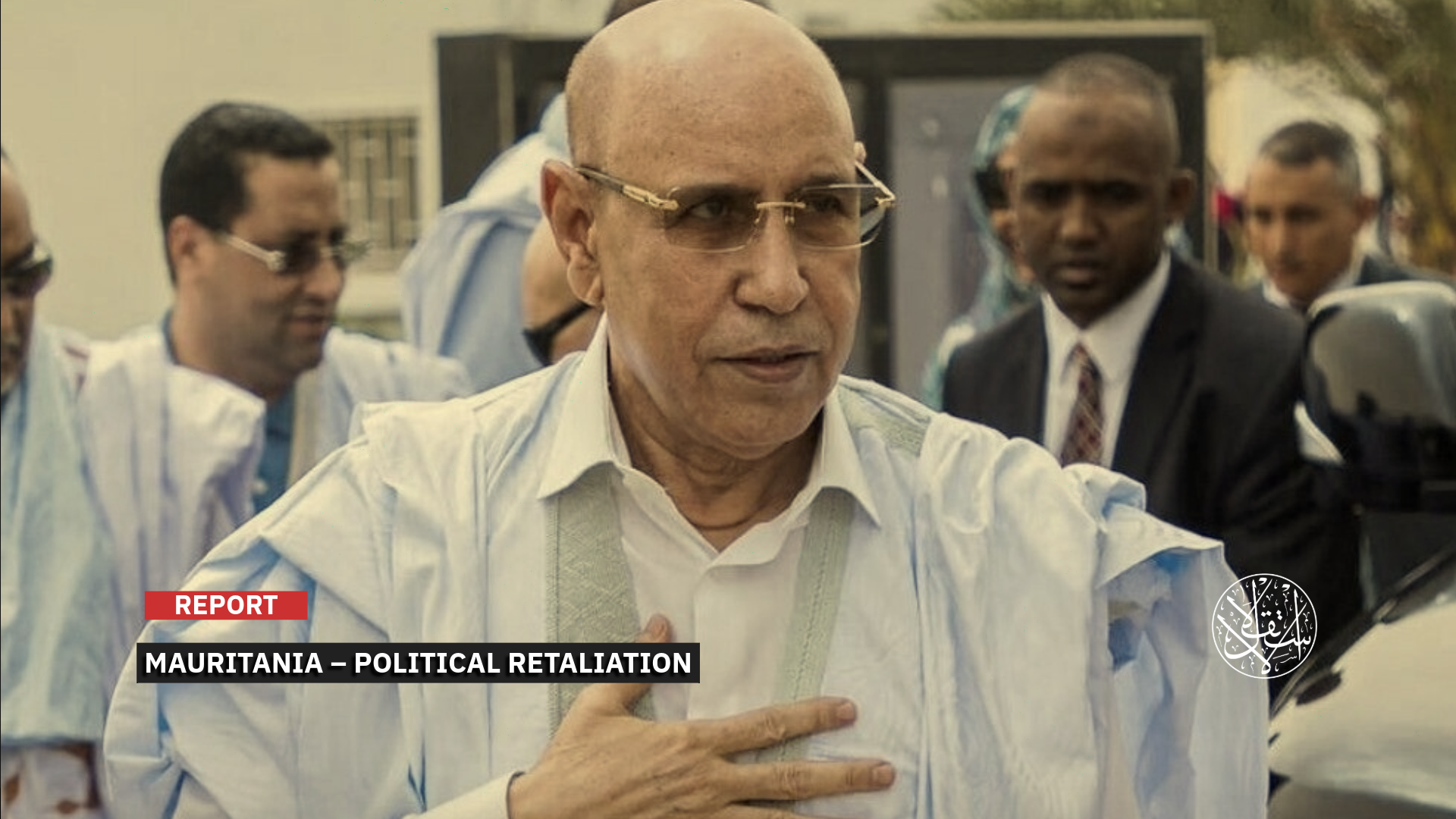
MAURITANIA – POLITICAL RETALIATION
“This campaign will be quietly brought to an end once it has served its main purpose: distracting public opinion.”
Mauritanian security authorities have launched a campaign of arrests targeting relatives of opposition bloggers and influencers living abroad, triggering widespread condemnation among human rights and political circles, amid objections to the use of the judiciary to settle political scores.
On September 30, 2026, Mauritanian government spokesperson El-Hussein Ould Medou announced that the arrests were part of extensive security and financial investigations.
He said the detainees were accused of involvement in a network engaged in financial extortion, spreading false news, defamation, and buying silence through digital platforms.
Ould Medou explained that the network, which he described as being funded, had expanded its activities to include spreading rumors about the private lives of senior officials and decision-makers, including individuals close to the presidency. He stressed that the authorities would not tolerate violations of individuals’ legally protected privacy.
https://www.facebook.com/reel/1730447131519274/?t=9
False Accusations
In response, opposition bloggers and activists categorically denied the allegations, describing the arrests of relatives with no connection to political activities as an act of retaliation and an unlawful form of pressure on families, intended to silence voices critical of the regime from abroad.
The arrests included members of the family of Sidi Mohamed Ould Akmash, an opposition blogger based in the United States. Police detained his older brother, Abdel Rahman Akmash, at his workplace in Nouakchott, and his sister, Tbibba Akmash, in the south of the country before transferring her to the capital. Local media reported that 10 people had been arrested so far.
In a statement published on Facebook by the Nouadhibou Today website, Ould Akmash, speaking from the United States, said the ongoing arrests amounted to an unmistakable policy of silencing dissent aimed at suppressing all voices opposed to the regime.
He explained that this policy had forced many independent voices to seek refuge in other countries as the only way to express themselves freely.
He described the country’s political, economic, and social conditions as deeply dire, arguing that the authorities did not want anyone to discuss these conditions or present them truthfully.
The opposition political activist noted that bloggers living abroad had begun to exert influence inside Mauritania.
He said this influence had grown over time as they provided people inside the country with accurate information that was otherwise inaccessible to them.
He added that the activities of these bloggers had revealed how eager Mauritanians were to learn what was happening within their country, particularly regarding its mineral and fisheries wealth, which he claimed was being plundered on an unprecedented scale.
Ould Akmash stressed that genuine investigations into extortion, the suspected misuse of information, and the accumulation of questionable wealth should target those actually involved in such practices, individuals whose wealth had become increasingly apparent despite having no visible economic activity, and which he attributed solely to their proximity to and connections with those in power.
He called for serious investigations into the reported extortion cases to establish the facts, rather than arresting people close to influencers and bloggers and making false accusations against them.
Legal Perspective
From a procedural standpoint, lawyer Moulay el Hafedh stressed that detention indicates only suspicion. It is the first stage of criminal proceedings and may lead to criminal charges, the dismissal of the case due to insufficient evidence, or the exclusion of evidence obtained unlawfully.
In a statement to Sahara24 in early October 2026, el Hafedh emphasized that an arrest does not establish guilt. He explained that the Constitution enshrines the presumption of innocence as a fundamental principle and a safeguard that cannot be overturned until a final, legally binding court judgment has been issued.
He warned that if a network was involved in extortion and buying silence, this would mean that someone was paying to conceal legally punishable acts.
In such a case, he argued, both the extortionist and the person paying for the silence should be arrested, since their conduct raises suspicions that they are attempting to conceal something criminal under the law.
El Hafedh noted that buying silence was a political crime rather than a legal one, as there is no criminal legislation specifically addressing the practice.
The lawyer also said the strength of the cases cited by the authorities should not be measured by the number of people detained or by increasing that number. Instead, it should be judged by whether the law and proper legal procedures are followed, and whether the evidence meets legal and admissibility requirements.
He concluded that criticizing the conduct of a public official cannot, in itself, be considered an insult, since such criticism concerns the official’s professional or public role.
An offense would arise when the criticism targets a private or personal matter unrelated to the performance of official duties or responsibilities. He stressed that making this distinction is essential to ensuring justice, fairness, a fair trial, and respect for the law.
Legal Violations
In this context, lawyer Yaqoub el-Saif said that several lawyers had been denied access to detainees arrested by police recently in the case known as the “Exiled Bloggers Case,” involving Abdel Rahman Akmash and Tbibba Akmash.
In a statement to the Independent News Agency on September 30, Ould el-Saif stressed that this constituted “a violation of several rights, the infringement of which is serious,” including a lawyer’s right to communicate with their client and the right of anyone whose liberty has been restricted to contact a lawyer, as stipulated in Article 2 of the law criminalizing torture.
Ould el-Saif affirmed that anyone detained has the right to communicate with lawyers, but said the individuals concerned had been denied this right, as well as the right to contact their mother. He expressed concern that her health could be put at risk because she did not know the exact whereabouts of her children.
He also pointed to reports that the woman’s daughter had been transferred from M’Bout to the M’Bera camp in far eastern Mauritania.
Ould el-Saif said that a detainee’s communication with their lawyer was routine and did not halt or obstruct an investigation. He questioned the woman’s situation and the circumstances surrounding her transfer from M’Bout, adding that legal procedures are intended to protect those who come into conflict with the law.
He confirmed that he and fellow lawyer Abah M’Bareck had been retained by the detainees’ mother to represent the family in the case.
The lawyer called for the detainees to be granted their rights, including the right to communicate with their lawyers, and urged human rights organizations to intervene.
He also raised concerns about “physical coercion,” saying that a woman had been transferred from M’Bout and found herself among a group of men. He added that the conditions in which she was being held were unsuitable for questioning.
Double Standards
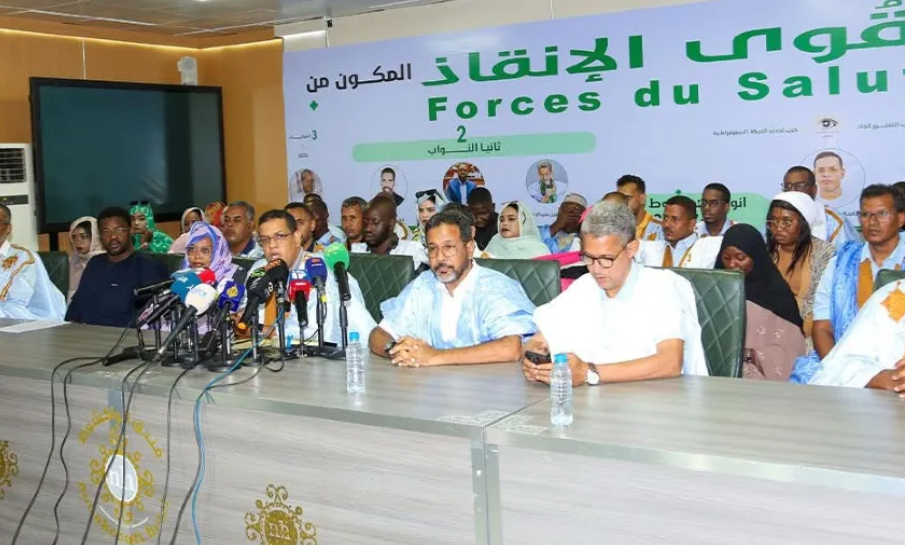
Amid the controversy, the opposition Coalition of Salvation Forces expressed its rejection of what it described as “double standards” in the handling of the case known as the “Exiled Bloggers Case,” following the “arrests of bloggers or their relatives.”
According to a report published by Mauritania Now on October 6, the coalition called for the law to be applied equally to everyone, without exception, and for “influence, status, or family ties not to become a means of escaping accountability.”
At a press conference held on the occasion, the coalition also rejected the principle of criminalizing or detaining individuals solely because of their family relationships, unless there were independent and specific grounds for suspicion against the individuals concerned, supported by facts, evidence, and legally prescribed procedures.
It further condemned “the denial of certain detainees’ fundamental safeguards, which should not be suspended or curtailed except within the limits permitted by law.”
The coalition maintained that combating abuse cannot take place outside the framework of the law, just as protecting dignity and privacy does not justify bypassing legal safeguards or violating detainees’ fundamental rights.
It stressed that criminal liability is personal and cannot be extended to relatives solely on the basis of family ties. Nor should criminal proceedings be used as a means of applying pressure or imposing punishment beyond what the law permits.
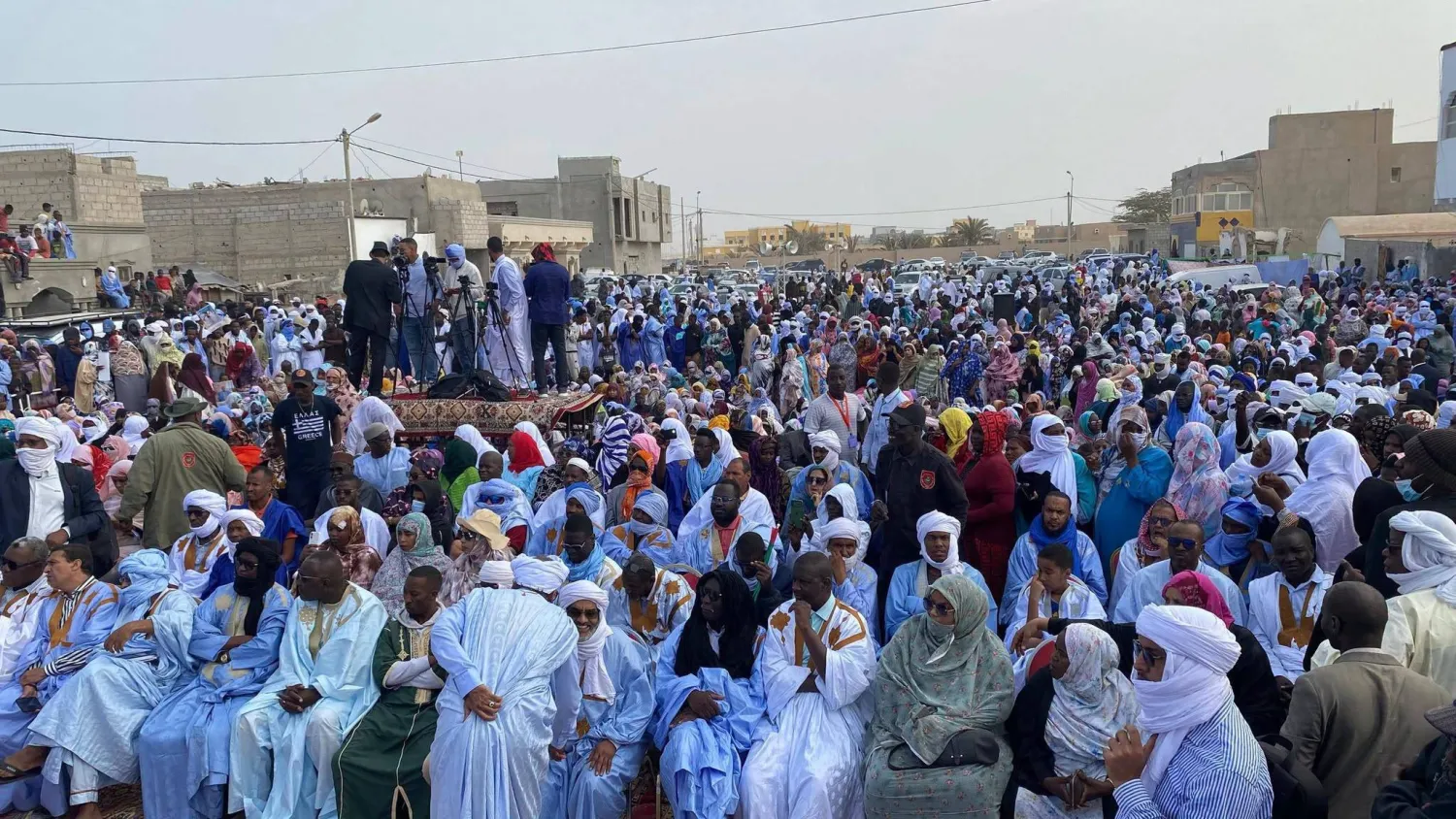
The Rapid Intervention Front for the Salvation of Mauritania, in a statement issued on September 28, expressed its full solidarity with Mauritanian opposition figure and refugee in the United States, Sidi Mohamed Ould Akmash, and his family in Mauritania, following the arrest by what it described as an authoritarian regime, one that appears to be living out its final days, of several family members, including his eldest brother and eldest sister. The statement also referred to the displacement of his elderly mother, as he himself had reported.
The front said that, based on the information provided by Ould Akmash, the incident raised serious concerns about the use of opposition figures’ family members as a means of pressuring them because of their political dissent.
It stressed that targeting family members because of a relative’s political views violates the principle of individual responsibility, turns political disagreement into collective punishment, and employs intimidation and pressure against those who hold opposing views.
The front emphasized that such practices would neither intimidate opposition figures and activists nor force them to submit to the regime.
Instead, it said, they would deepen their awareness of its authoritarian nature, strengthen their conviction that its continued approach poses a genuine threat to Mauritania’s future and stability, and reinforce their determination to continue their political struggle to overthrow it and establish a democratic system that respects freedoms, rights, and the rule of law, according to the statement.
The front called for the immediate and unconditional release of all members of the Ould Akmash family and all other detainees, respect for their rights, disclosure of the reasons for and circumstances surrounding their arrests, and an end to any practices targeting the relatives of opposition figures or using them as a means of influencing their political positions.
Morally Reprehensible
The announcement of these arrests sparked widespread reactions among Mauritanians on social media. Among those commenting was political activist Mohamed Khairy, who lives in Canada, who said the arrests confirmed that President Mohamed Ould Ghazouani’s regime was devoid of political ethics.
In a Facebook post published on September 29, Khairy stressed that accusing the detainees in connection with financial transfers was intended to undermine their credibility, adding that the Mauritanian public at large would not believe these allegations.
He also argued that “these arrests benefit bloggers abroad because they prove that the Mauritanian regime is repressive and authoritarian.”
He added that actions of this kind were undermining the regime’s credibility among international human rights organizations and in international forums.
Khairy affirmed that citizens would continue following the bloggers regardless of what the authorities did to tarnish their image or accuse them of conduct that called their integrity and probity into question.
In contrast, civil society activist Mohamed el-Mona said it was good for the state to demonstrate such a high level of firmness in dealing with bloggers abroad.
However, he added that the public also hoped the state would show the same level of firmness, or even half, a quarter, or a tenth as much, in confronting those who embezzle public funds.
In a post on his Facebook account, el-Mona referred to individuals who had squandered hundreds of billions across just a few sectors selected and audited by the Court of Accounts, which prepared and published a report last year detailing “management irregularities” in those sectors.
The Mauritanian activist argued that safeguarding public funds was another sacred responsibility of the state in every era, no less important than protecting the reputations and personal honor of public officials.
sts/10237193733166322?ref=embed_post
Activist Zein Ould Ahmed said in a comment published on October 3 that one of the main objectives of the current controversy surrounding bloggers abroad and “Bashmarga” figures at home was to undermine the credibility of online activism and create a climate of “everyone doubting everyone else.”
Ould Ahmed added that the eventual result would be an environment in which those involved in corruption could enjoy their ill-gotten gains and questionable deals without disturbance or public outcry.
Chaos and Crises
Mauritanian political activist Mohamed Ould Dahane believes that the current campaign launched by the regime against bloggers abroad and their families inside the country, accompanied by arbitrary arrests and indiscriminate violations, is nothing more than a storm in a teacup.
In comments to Al-Estiklal, Ould Dahane stressed that the campaign would end without achieving any results, just like all the previous campaigns and investigations launched since 2019.
He explained that the campaign was, in reality, another ploy to divert attention and distract public opinion from the country’s severe crises, including poverty, unemployment, rising prices, pollution, chaos, the deterioration of public services and administrative institutions, and crumbling infrastructure.
He continued by pointing to the widespread plundering of state resources by corrupt networks that had seized positions, resources, and decision-making centers.
He also cited a succession of crises, including water and electricity cuts, generators catching fire, fuel shortages, hospital equipment breakdowns, shortages of medication for chronic diseases, and the spread of counterfeit medicines and spoiled food.
He added that the list of problems extended to the rise of tribal rivalries and factional and ethnic tensions, concluding that the public would ultimately see the regime’s failure, corruption, and inability to solve even one of the many problems facing the country and its citizens under what he described as its dismal rule.
The activist argued that whenever the regime attempted to appear as though it was solving a problem or tackling a crisis, it not only failed to resolve it or address it effectively, but also created further problems and triggered new crises on top of those already existing.
Ould Dahane continued to hold the regime responsible for the situation and its failure to manage public affairs, saying, “It has achieved an unprecedented level of failure in finding solutions and broken records in manufacturing problems and creating crises.”
He further argued that if the current investigations were allowed to continue for even a few days, they would reach the regime’s inner circle and those closest to President Mohamed Ould Ghazouani himself.
For that reason, he predicted that the ongoing wave of arbitrary arrests would not last long and would be halted sooner than any observer might expect.
He concluded that the campaign would be brought to an end quietly once it had served its primary purpose: distracting public opinion from the problems and mounting hardships caused by the regime’s structural failures and its erratic, haphazard policies, which, he argued, even the regime itself seemed unable to determine where they were leading.