War Costs or Wasteful Spending? Saudi Arabia Pulls Back on Entertainment Megaprojects
"The government has no qualms about revising its plans."
Saudi Arabia has begun scaling back some of its entertainment projects, including the Neom stadium, and is reportedly considering canceling the 2027 Joy Awards, one of the kingdom’s biggest events, often compared to the Oscars and Grammys.
The moves come amid mounting financial pressures fueled by the U.S.-Israeli War on Iran, the suspension of shipping through the Strait of Hormuz, and clashes with the Houthis.
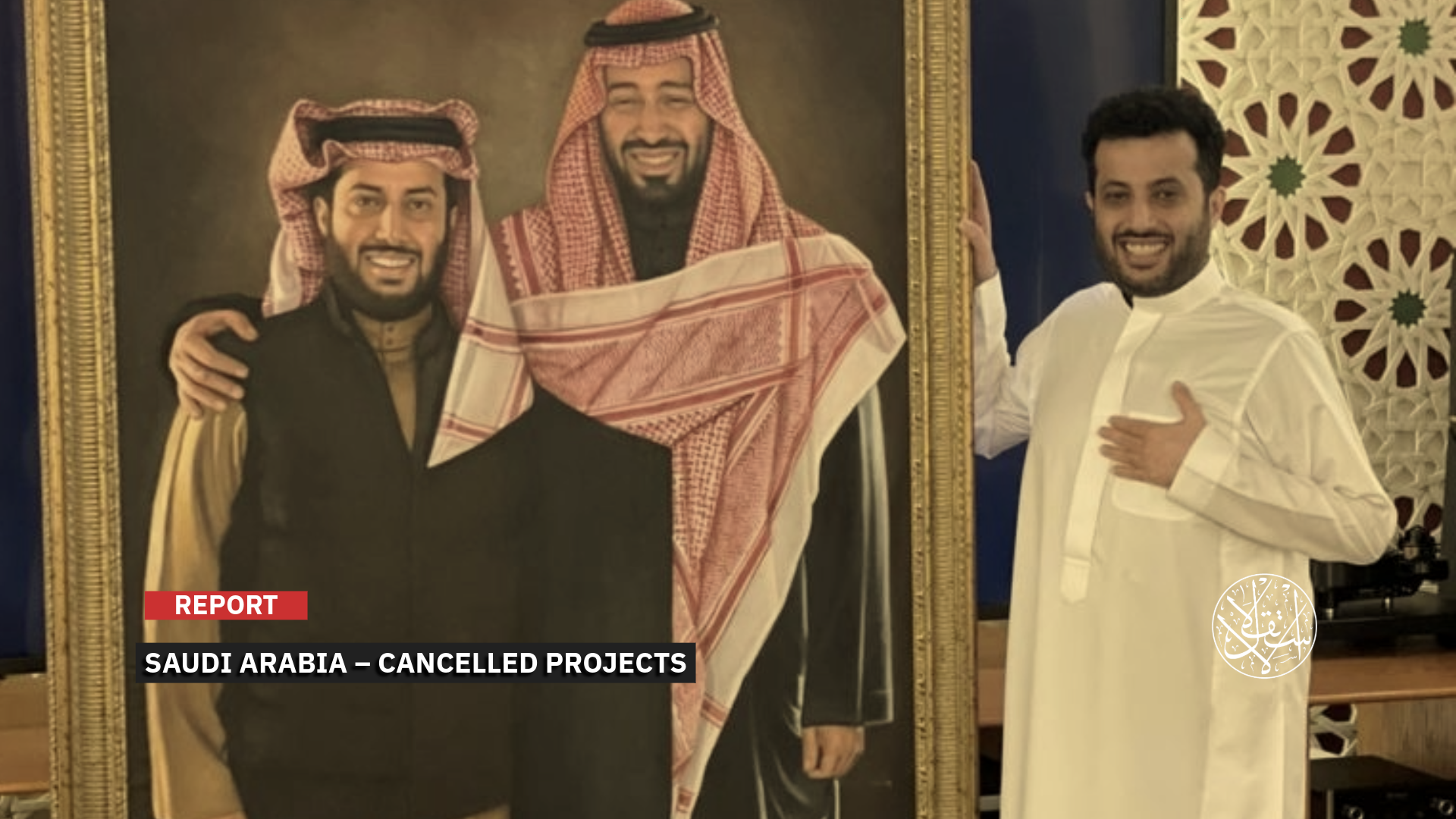
The fallout has hit the entertainment sector, led by Turki al-Sheikh, a close associate of Crown Prince Mohammed bin Salman (MBS).
Budget cuts were already taking shape before the war, as the scale and cost of major projects, including Neom, prompted authorities to downsize or scrap some plans.
The clashes with the Houthis have added to those pressures, creating further obstacles to bin Salman’s ambition of transforming Saudi Arabia into a global destination for tourism and entertainment and a host of international events, while reshaping its traditionally conservative image under Vision 2030.
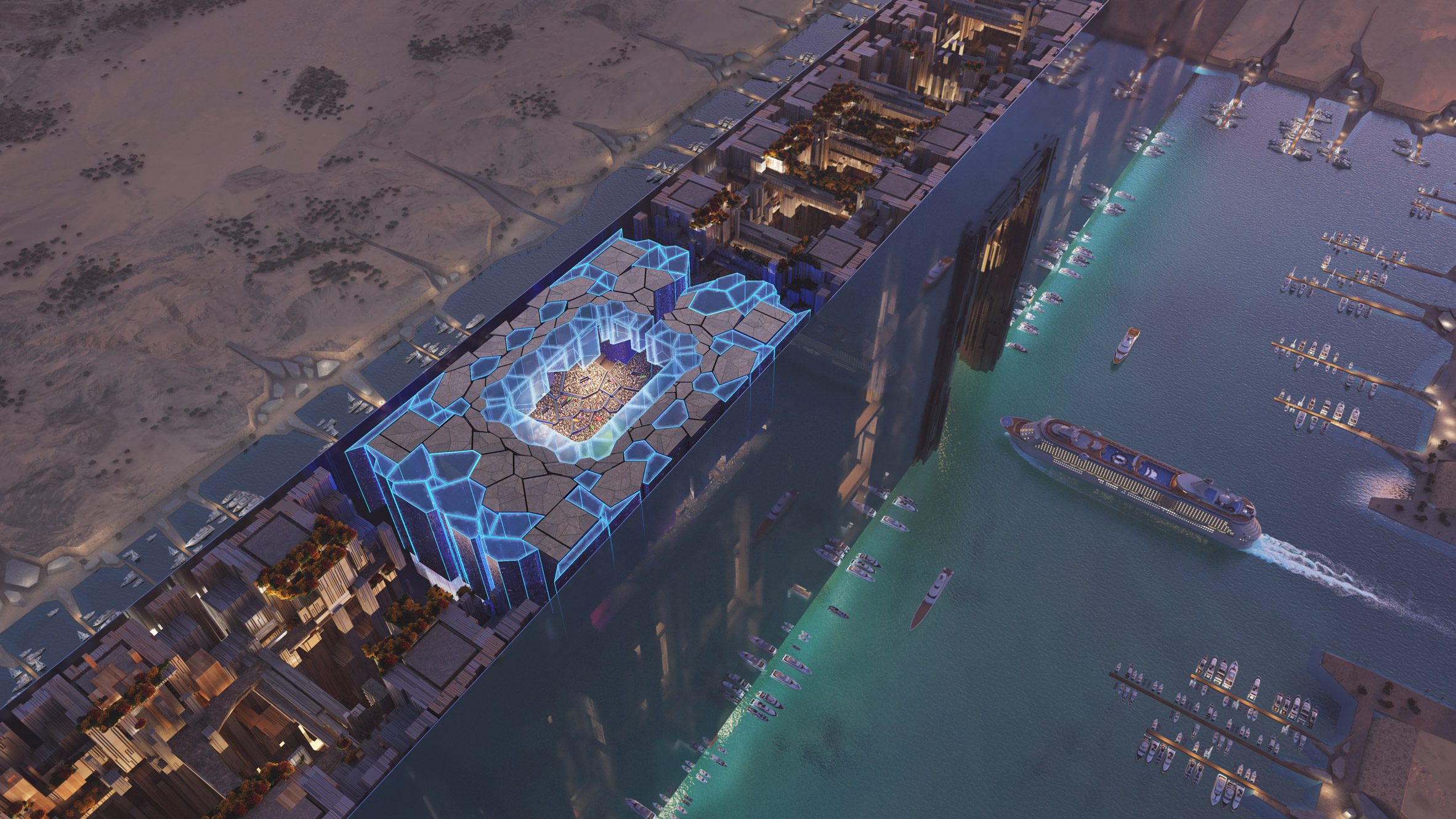
Among the most prominent projects scaled back or indefinitely delayed since 2025, with the trend continuing into 2026, are The Line at NEOM, a 161-kilometer development built around steel and glass, and the Mukaab in Riyadh, a project estimated to cost around $50 billion.
Delays and Cancellations
Saudi sources told Reuters on October 4, 2026, that Riyadh would cancel the 2027 Joy Awards, the kingdom’s version of the U.S. Grammy Awards, which honor performers in the music industry.
The decision comes amid major budget cuts driven by financial pressures, the U.S.-Israeli War on Iran, and the subsequent conflict with the Houthis, all of which have affected the entertainment sector.
Held every January, the event has become the centerpiece of Riyadh’s annual entertainment calendar. This year, in 2026, it drew artists including Katy Perry and Robbie Williams and handed out lavish awards across music and other areas of entertainment and sports.
Major projects that have been scaled back or indefinitely delayed include several components of Neom, particularly the steel-and-glass towers planned for The Line and Riyadh’s Mukaab, a massive cube-shaped skyscraper estimated to cost $50 billion.
In May 2026, Semafor reported that Neom had halted development of new sections of The Line until after 2030, as the Public Investment Fund redirected investment toward projects such as ports and data centers.
The report noted that a widening budget deficit, weak foreign investment inflows, and questions about the viability of some of the fund’s projects had already prompted Riyadh to reassess its priorities before the war further undermined economic confidence.
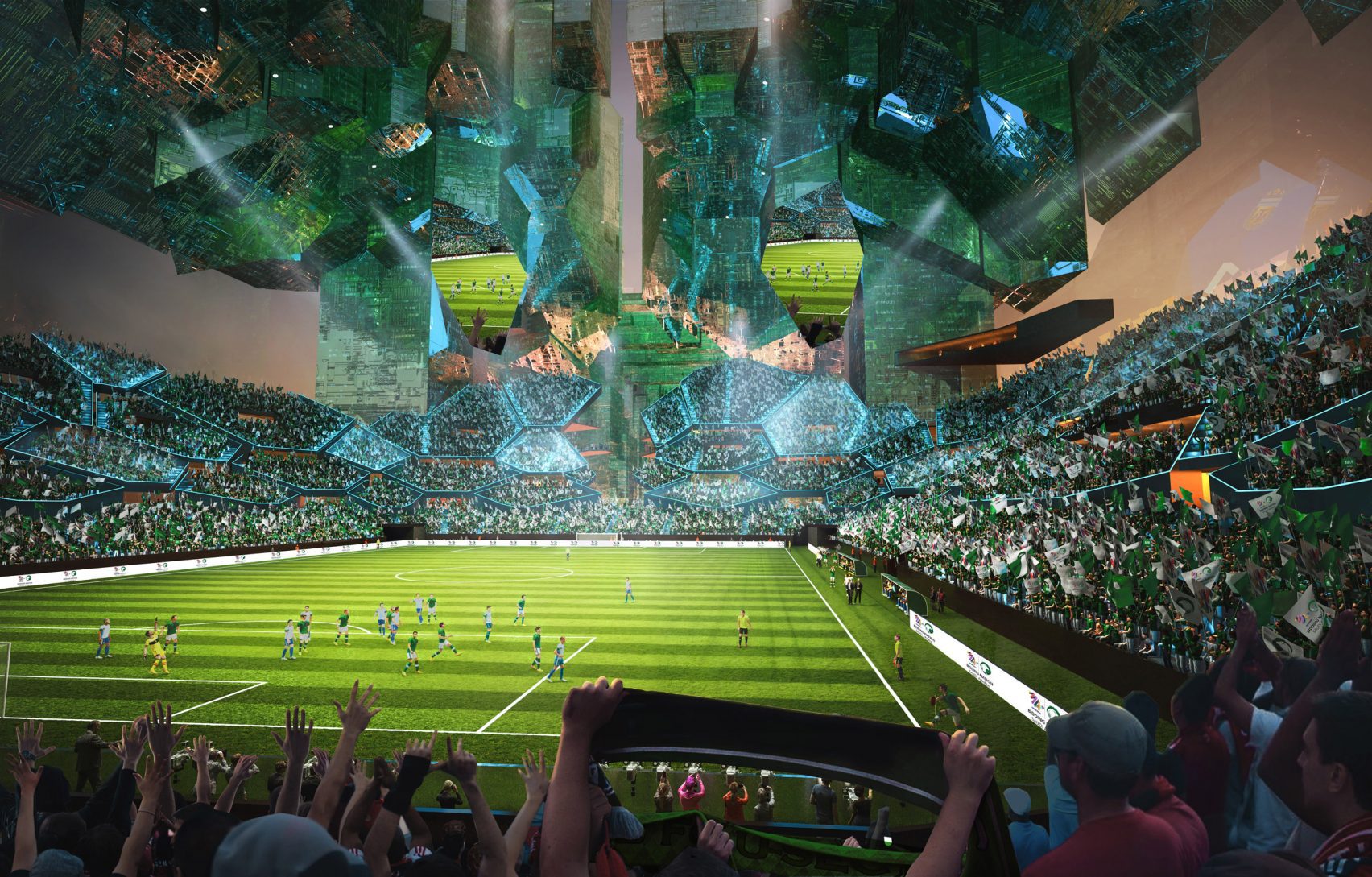
The government has also withdrawn funding from projects such as LIV Golf after spending more than $5 billion to establish it. It is now moving to suspend plans for the Neom stadium, one of the major projects associated with Saudi Arabia’s preparations to host the 2034 FIFA World Cup, following a broader downsizing of the future development that was to include the venue.
The stadium was planned for an elevated platform within a striking 160-kilometer steel-and-glass structure. According to MEED, the venue was expected to cost $2.5 billion and accommodate 46,000 spectators.
The Red Sea International Film Festival, originally scheduled for September 2026, was also postponed until 2027, reportedly because of logistical difficulties and other factors.
Film industry sources said uncertainty over the war on Iran and the prospects of further conflict with the Houthis had made it harder to attract international stars to such events.
The festival launched in 2021 as part of an effort to develop Saudi Arabia’s domestic film industry after the kingdom lifted a decades-long ban on movie theaters.
In September, organizers also canceled Soundstorm, a massive desert music festival scheduled for December 2026 that draws hundreds of thousands of concertgoers.
Soundstorm, also known as MDLBEAST, was launched in 2019. Earlier editions drew criticism from religious scholars and local residents over mixed-gender crowds, dancing, and performances by foreign artists, including homosexual performers, which critics considered inappropriate.
Several newspapers, including the Financial Times on November 6, 2025; The Independent on November 4, 2025; and The Times in early November 2025, published reports resembling obituaries for The Line, one of the flagship projects of Vision 2030, signaling what they portrayed as the possible demise of the Saudi Neom project.
On March 9, 2025, The Wall Street Journal reported that leaked confidential documents indicated that executives responsible for implementing the project had engaged in what the newspaper described as a major fraud scheme aimed at embezzlement.
The Real Reasons
Saudi Arabia’s retreat from major entertainment projects, including the postponement or cancellation of the Joy Awards, Soundstorm, and the Red Sea International Film Festival, alongside the scaling back of megaprojects such as The Line at NEOM, reflects a combination of extravagant spending and direct military conflict.
But there are other factors at play. The decision to abandon or scale back projects stems from a complex economic and geopolitical environment that has forced Riyadh to recalibrate its budgets pragmatically.
A more significant shift is the repurposing of some entertainment developments for industrial use to generate economic value.
The war has not only made fiscal restraint more urgent but has also accelerated efforts to rethink the purpose of certain projects.
“The impact of the war has not only made the economic rationalization more important, but it's also accelerated the desire to rethink some of these projects in the sense that Neom is now being repurposed as an industrial center on the Red Sea, which has obviously assumed much greater urgency since the Strait of Hormuz was effectively blocked,” Kristian Coates Ulrichsen, author of Kingdom of Football: Saudi Arabia and the Remaking of World Soccer, told DW.
Western reports and assessments point to three main factors behind the cancellation of entertainment events and the scaling back of major projects.
The first is the budget deficit and pressure on oil revenues. Saudi Arabia’s budget is under growing strain as global oil prices and production levels remain below those of previous years. The projected fiscal deficit for 2026 has risen to around $65.3 billion.
A Saudi Finance Ministry document on the 2027 budget raised the projected deficit for 2026 from $44 billion to $65.3 billion, citing the kingdom’s involvement, alongside other regional countries, in the broader regional conflict, according to MEED on October 2, 2026.
Funding Vision 2030 projects requires oil prices of around $96 a barrel, while actual prices have generally remained lower, at roughly $70 to $80. Although prices rose amid the U.S.-Israeli War on Iran, Saudi oil revenues have been hit by Houthi restrictions on oil export routes and attacks on the kingdom.
Foreign direct investment has also fallen short of the ambitious expectations set at the outset, disrupting funding for numerous projects. The war has slowed progress, while the scale and feasibility of some developments, including The Line, have raised further concerns. The project’s ambitious plans for high-speed trains traveling through an enclosed structure at extraordinary speeds are among the proposals that have come under scrutiny.
The second factor is the war's indirect impact and regional geopolitical tensions.
Although Saudi Arabia has stayed out of the U.S.-Israeli War on Iran, regional instability and ongoing conflicts across the Middle East have weighed on its economy. The subsequent direct conflict with the Houthis in Yemen has further intensified the war’s impact, contributing to cuts in major projects.
Disruptions to shipping routes, including those through the Red Sea, and restrictions on some maritime traffic resulting from the war on Iran have sharply increased infrastructure and logistics costs for megaprojects. The risks grew further with the outbreak of direct fighting against the Houthis.
Regional tensions have also made international investors more cautious and increased the cost of international borrowing, on which Saudi Arabia relies to finance its budget deficit.
The third factor is a shift from unrealistic ambitions to practical execution, with the government prioritizing projects that can be delivered and changing its spending priorities accordingly.
Saudi Finance Ministry officials have made clear that the government has no qualms about revising its plans. The changes are being framed not simply as cancellations prompted by failure, but as a decisive realignment of priorities.
Budgets for short-term entertainment events, including festivals and concerts, have reportedly been postponed rather than permanently canceled, freeing up funds for more pressing commitments tied to major international events such as Expo 2030 and the 2034 FIFA World Cup.
The government has also placed greater emphasis on near-term returns. The scale of The Line has been drastically reduced, from an original planned length of 170 kilometers to an initial phase of just 2.4 kilometers. The ambitious Saudi project, once envisioned as a luxury smart city stretching 105 miles, has been scaled back toward a site for data centers.
Spending has increasingly shifted toward sectors expected to generate returns more quickly, including data centers, artificial intelligence, industrial logistics zones, and tourism developments ready to open, such as Sindalah Island.
The latest cuts to entertainment spending and construction projects are intended to rein in excessive financial ambition and adapt to declining oil revenues, as well as rising insurance and financing costs amid regional instability.
Saudi Arabia is expected to continue running budget deficits through 2029, with borrowing costs adding to the pressure, according to the Finance Ministry’s preliminary budget statement.
The projected deficit for 2027 stands at 191 billion Saudi riyals, with revenues of 1.2 trillion riyals against spending of nearly 1.4 trillion riyals. The deficit is then forecast to reach 177 billion riyals in 2028 and 192 billion riyals in 2029.
“This year will be the 12th deficit in the previous 13 years, and the PBS projections see no end in sight,” Khalij Economics GCC economist Justin Alexander told EnterpriseAM.

The Numbers Behind the Shift
Saudi Arabia’s fiscal projections suggest that the U.S.-Israeli War on Iran and the outbreak of a war against the Houthis are not the only reasons behind the spending overhaul. The process began well before the war, as problems emerged and projects such as the illusory Hyperloop high-speed train failed to materialize.
Authorities have reassessed the viability of several megaprojects whose costs have soared, whose completion has been repeatedly delayed, or whose ambitions have proved unrealistic and difficult to deliver. Foreign companies promoted some of these schemes, critics argue, as lucrative opportunities to siphon money from Riyadh.
This reassessment has coincided with a widening budget deficit, falling oil prices, growing difficulties exporting crude, and a reduced appetite for pouring money into projects whose returns may take years to materialize.
In April 2026, the Public Investment Fund announced a new strategy for 2026 to 2030, placing greater emphasis on maximizing financial returns, improving investment efficiency, and increasing private-sector participation.
The strategy reflected a shift away from an overriding focus on expanding megaprojects toward generating stronger economic and investment returns.
Budget figures show that the kingdom has entered a period requiring more cautious spending management.
On September 30, the Saudi Finance Ministry announced that its 2027 budget projections put revenues at approximately 1.202 trillion riyals and spending at 1.392 trillion riyals, leaving a deficit of 191 billion riyals, equivalent to around 3.6 per cent of gross domestic product.
The ministry projected that real GDP would contract by around 3.6 per cent in 2026, with oil-sector activity expected to shrink by 21.8 per cent. Non-oil activities, by contrast, were forecast to continue growing by around 3.2 per cent. The ministry linked the slowdown to economic and geopolitical developments.
These figures come as the regional war affects infrastructure, energy, and trade flows, raising the cost of maintaining high spending levels just as the government faces competing funding needs and pressure to redefine its priorities.
As a result, Riyadh has begun sorting through Vision 2030 projects and events, sidelining those requiring massive upfront investment with returns expected far into the future and prioritizing initiatives tied to investment, infrastructure, or more immediate economic objectives. The shift is ultimately likely to reshape the ambitions Saudi Arabia has promoted over the past several years.
Sources
- Saudi Arabia to cancel Joy Awards, its answer to the Grammys, amid budget cuts, sources say
- Saudi Arabia quietly shelving NEOM Stadium, one of 2034 World Cup venues
- Exclusive / Saudi’s NEOM halts work on The Line until after 2030
- Saudi deficits set to persist through 2029 as borrowing costs become the pressure point
- Making sense of Saudi Arabia's shifting World Cup plans