Iraq After the Strait of Hormuz Shock: Oil Alternatives Face a Decision-Making Bottleneck
“The war has shown that Iraq’s heavy reliance on oil exports leaves it vulnerable to the repercussions of conflict.”
The U.S.-Israeli war on Iran, which began in February 2026, has reshaped Iraq’s regional calculations, as its repercussions have exposed the risks of relying on a limited number of export routes.
With oil exports through the Strait of Hormuz disrupted and revenues declining, the search for economic alternatives has become an urgent necessity.
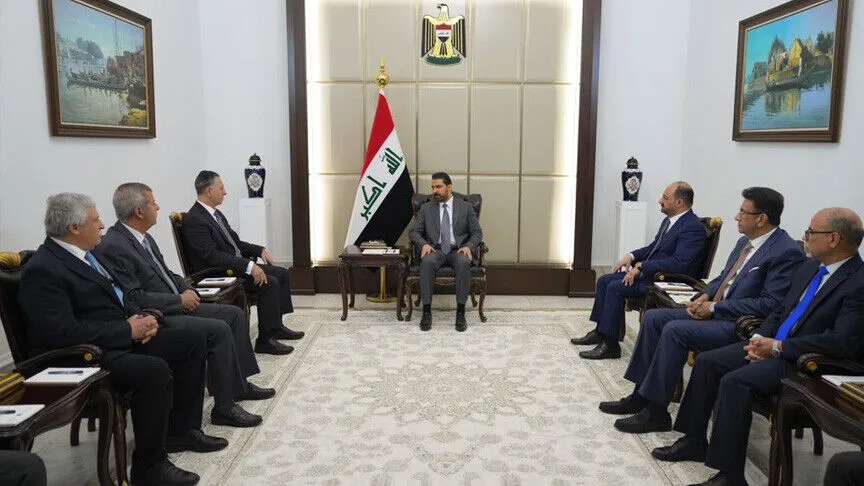
This shift presents Baghdad with a political and economic test: its ability to build more diversified relations with Turkiye, Syria, Saudi Arabia, Jordan, and Western countries.
However, moving from seeking alternative export routes to achieving greater autonomy in foreign policy remains dependent on the nature of domestic political power dynamics and the government’s ability to implement its chosen options.
The Energy Shock
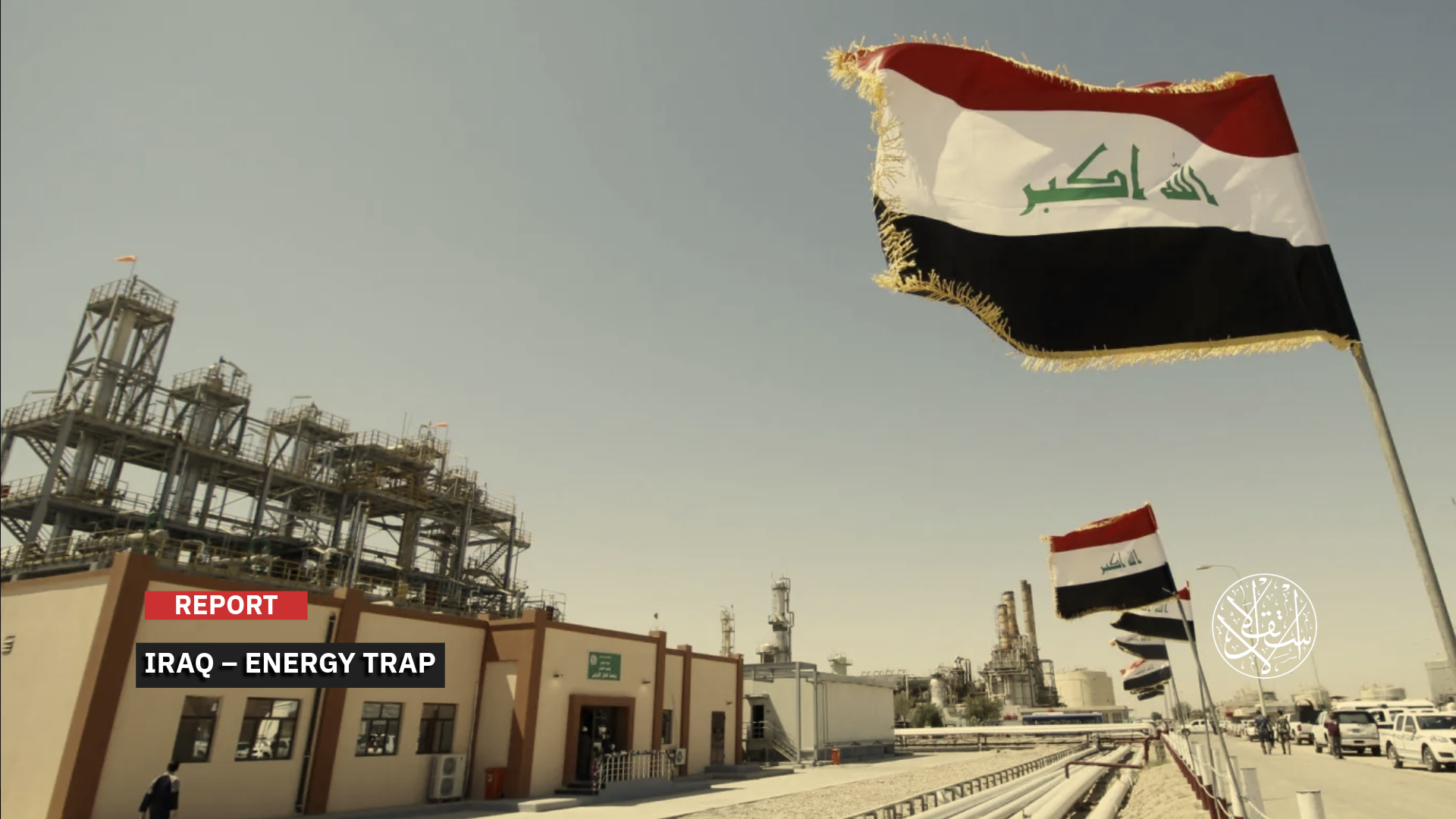
The war has shown that Iraq’s heavy reliance on oil exports leaves it vulnerable to the repercussions of regional conflicts, even when global prices rise.
The key issue is not simply the price per barrel, but Baghdad’s ability to deliver its exports to markets and collect the resulting revenues amid disruptions to transport routes and the inability to use conventional export channels.
The figures cited illustrate the scale of the challenge. On October 7, 2026, Reuters reported that Iraqi exports had fallen to approximately 2.34 million barrels per day in August, compared with more than 3.6 million barrels per day before the war. This represents a decline in the country’s primary source of funding for the state and for meeting its financial obligations.
In its report published in October 2026, the World Bank projected that Iraq’s economy would contract by 12.4 percent during the year, following a decline in foreign exchange reserves from $102 billion in February to $78.3 billion in July, and a 35.7 percent drop in oil revenues during the first five months of the year.
The pressure is mounting because it is difficult to reduce current government expenditure, particularly public-sector salaries.
Bloomberg notes that Baghdad faced a trade-off between protecting the value of the dinar and continuing to pay public-sector salaries, which cost approximately $5 billion per month. This reflects the widening gap between available revenues and the state’s financial obligations.
Rising oil prices alone do not appear sufficient to address the crisis as long as exports face transport bottlenecks.
According to assessments cited by international media, an oil price of $110 per barrel no longer provides Iraq with its usual degree of financial protection, because the closure of the Strait of Hormuz limits the country’s ability to benefit from higher prices.
The crisis has also affected the foreign exchange market and the commercial sector. On October 7, Reuters reported the adoption of a new exchange-rate structure reaching 1,520 dinars to the dollar.
The Associated Press reported that the dollar had risen to more than 1,700 dinars on the parallel market, increasing import costs and putting pressure on households and traders.
These developments suggest that diversifying oil and gas export routes is no longer merely a strategic project that can be postponed, but has become part of the effort to safeguard financial and economic stability.
Achieving this protection, however, requires moving beyond announcing and discussing projects to establishing viable export routes and securing agreements that ensure the continued flow of exports under exceptional circumstances.
Export Routes
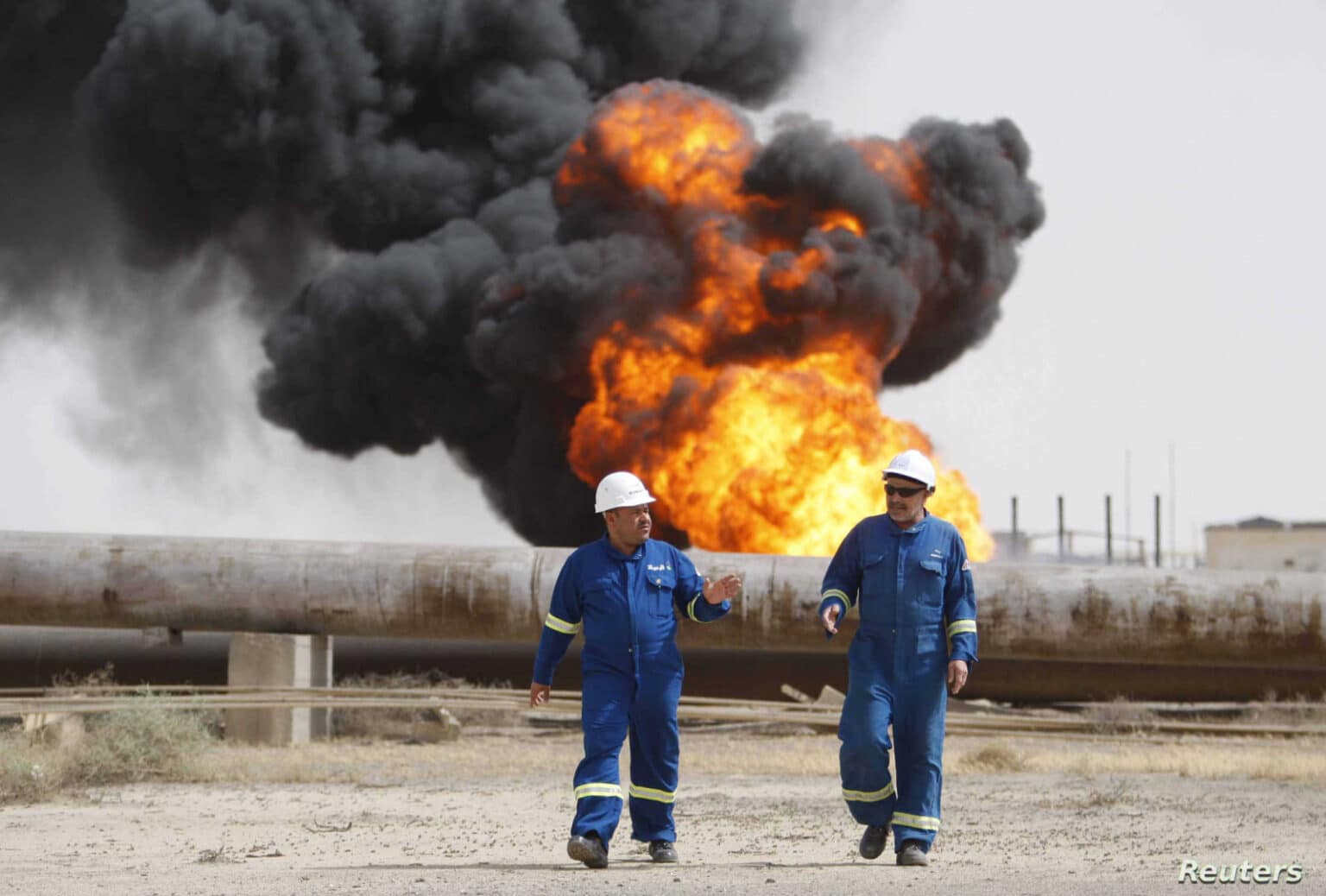
The Basra–Aqaba pipeline project is emerging as one of the leading options under consideration for redrawing the map of Iraqi oil exports. It would transport crude oil towards the Red Sea, potentially providing a route that does not depend on passage through the Strait of Hormuz if the project is implemented.
The project has gained renewed importance following the war, despite previous threats by pro-Iranian forces to blow it up.
The issue is not limited to this project. Baghdad is also holding talks on rehabilitating the Kirkuk–Baniyas pipeline, which would enable Iraqi oil to reach the Mediterranean Sea through Syria.
If restored to operation, this route would provide Iraq with an additional option for diversifying its export outlets and making use of its geographical position and economic ties with neighboring countries.
In a statement to Al-Estiklal, Iraqi writer and political analyst Jasim al-Shimmari said that the Basra–Aqaba and Kirkuk–Baniyas projects were “vital and capable of pulling Iraq out of the difficult situation it is going through.”
He linked the importance of these options to the need to move beyond recurring crises towards more stable economic policies.
Al-Shimmari also highlighted the contrast between Iraq and Syria, noting that Syrians had begun exporting petroleum products to Iraq, although political change in Iraq had taken place more than 22 years ago.
He argued that this experience demonstrated how sincere efforts could produce results within a shorter period when political and executive will were present.
On the Saudi front, Baghdad is seeking to regain access to the Iraqi oil pipeline extending to the port of Yanbu, which Saudi Arabia took control of during the 1990s in the aftermath of the Second Gulf War.
If an understanding can be reached over the pipeline, it could provide an additional outlet for exports. However, the available information does not specify a timetable or definitive terms for its recovery.
On the Turkish front, Baghdad is considering extending the oil export agreement through the port of Ceyhan for one year, pending agreement on a new arrangement that would allow larger volumes to be transported through the pipeline originating in Kirkuk.
The proposal also includes adding another pipeline through Mosul, which would expand Iraq’s export options and strengthen its economic ties with Turkiye.
Nevertheless, the existence of multiple routes does not mean that alternatives are ready to immediately compensate for the volumes of oil that can no longer be exported through conventional channels.
The Associated Press has noted that transporting oil overland through Syria is more expensive and less efficient than conventional maritime transport.
The viability of these alternatives therefore depends on Iraq’s ability to develop the necessary infrastructure and establish sustainable transport arrangements.
Economic Partnerships
Iraq’s transformation also extends to the natural gas sector, where the country is seeking to develop its gas fields through agreements with Turkiye and Western companies, with the aim of achieving self-sufficiency and reducing its dependence on Iranian gas.
This approach reflects an effort to broaden partnerships in the energy sector so that supplies are not tied to a single source or a political relationship vulnerable to crises.
The importance of this step lies in the fact that the export crisis coincides with mounting domestic financial pressures, making continued reliance on external energy sources an additional burden.
Diversifying partners is not only about securing supplies; it also involves benefiting from foreign investment and expertise to develop Iraqi fields and reduce vulnerabilities in the country’s economic system.
Al-Shimmari argued that current crises, ranging from fuel shortages and a rising dollar exchange rate to economic complications, require Baghdad to reconsider its regional relations.
He said Iraq needs to open up to its Arab neighbors and Turkiye to ensure the continuity of the Iraqi economy and enter a phase of economic maturity, rather than tying its interests to Iranian affairs.
Alongside energy agreements, this opening includes expanding the benefits Iraq can derive from trade, transit, and regional and international commercial activities that could pass through Iraqi territory.
Economic relations with neighboring countries could enable Baghdad to diversify its sources of income and strengthen its role in the movement of goods and energy, rather than remaining solely a crude oil exporter.
However, the scale of the required transformation goes beyond changing oil export destinations. A study by Harvard University’s Belfer Center in early May 2026 points to structural weaknesses in Iraq’s political economy, including the state’s reliance on public-sector employment to distribute oil revenues.
The public sector employs approximately 40 percent of the workforce, with wages nearly twice those in the private sector.
This structure highlights how Iraq’s ability to diversify its external relations is also linked to its capacity to reduce its economic vulnerability.
Public finances depend heavily on oil, which accounted for 87.9 percent of government revenues in 2025, according to World Bank data. This leaves any disruption to exports posing a direct threat to public spending and monetary stability.
Accordingly, opening up to Turkiye, Syria, Saudi Arabia, and Western countries could provide additional energy and trade options, but it does not, by itself, guarantee a lasting change in Baghdad’s strategic orientation.
Economic projects require sustained decision-making, investment, and long-term agreements, while the ability to implement them is influenced by political power dynamics and the willingness of Iraqi institutions to safeguard national interests.
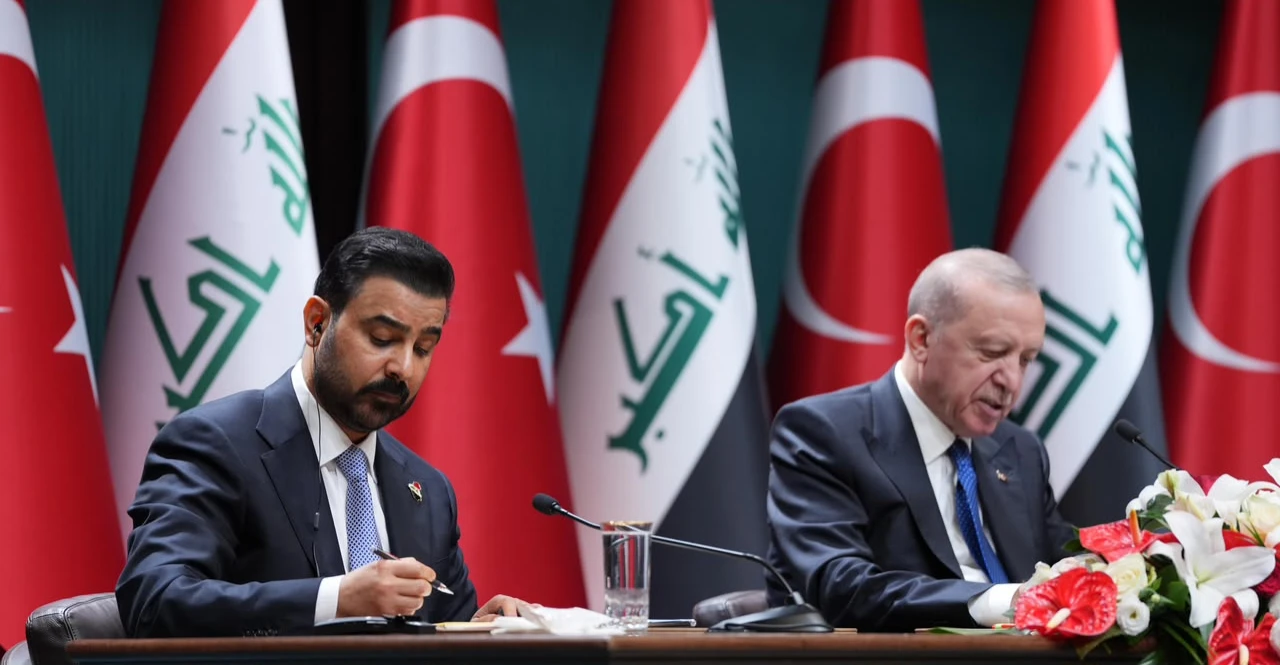
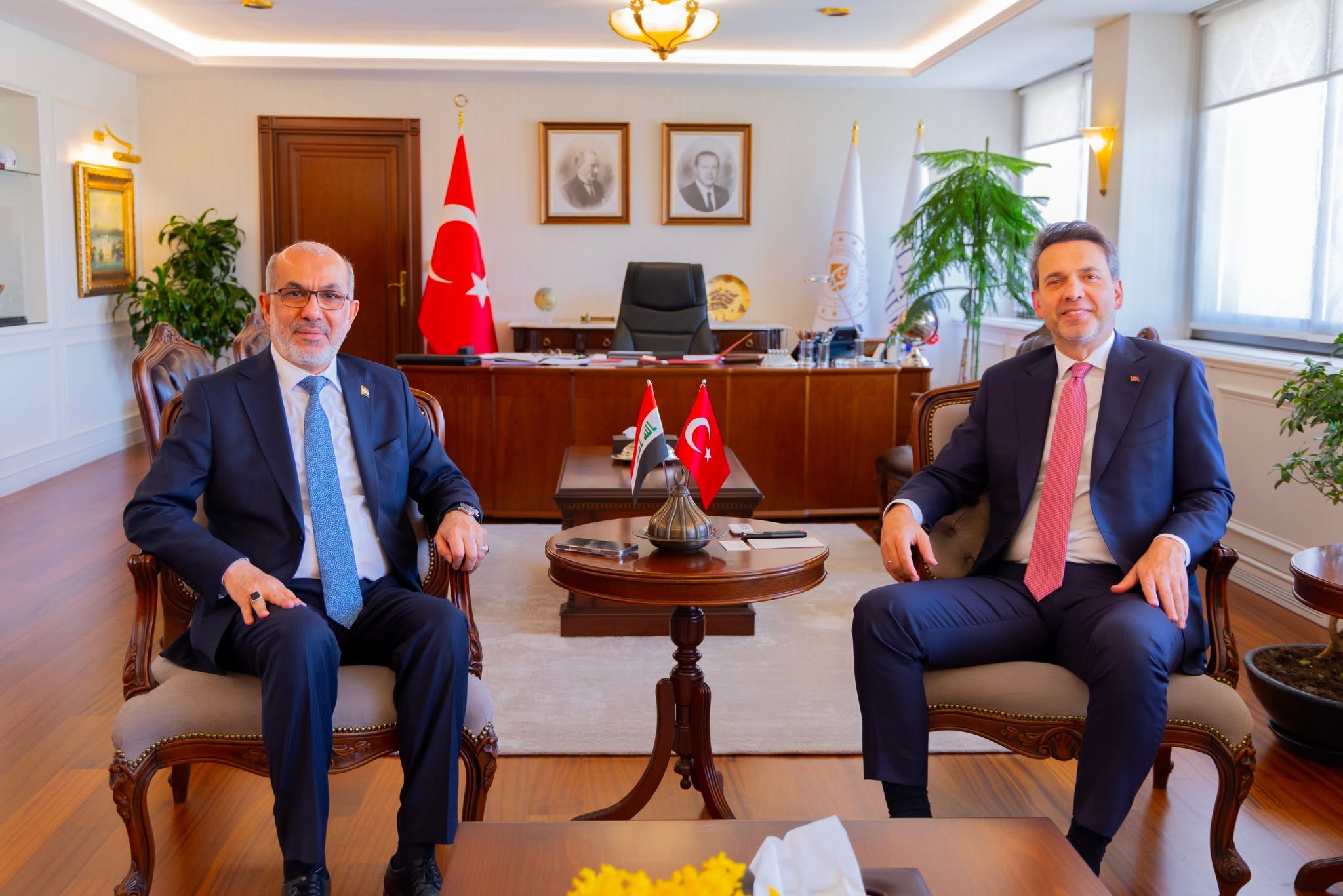
On October 2, Iraqi Oil Minister Basim Mohammed Khudair al-Abadi said that, during his visit to Turkiye, he had discussed increasing export capacity through Ceyhan, as well as Turkish companies’ participation in Iraqi oil and gas projects.
According to the statement, the minister added, “The participation of Turkish companies in Iraqi projects is a very important issue for the governments of both countries, particularly the Iraqi government, as it would help attract qualified international companies to develop and invest in oil and gas most effectively.”
The Decision-Making Dilemma
This shift places the Iraqi government before a fundamental question: who sets foreign policy priorities, and who has the power to turn economic agreements into binding decisions?
The existence of projects with multiple countries is not enough to reshape Baghdad’s relationships if strategic choices remain subject to political power struggles and competing regional calculations.
Al-Shimmari stressed that the state should organize its relations according to interests rather than alignments, saying, “There is no permanent enemy and no permanent friend; there are only permanent interests.”
He added that Iraq’s regional orientation must be defined in a way that safeguards its sovereignty first, followed by its own interests and those of its citizens, without becoming beholden to the agendas of others.
At the same time, al-Shimmari warned that the executive government headed by Ali al-Zaidi might not have the final say on every issue.
He pointed to the role of the Shiite Coordination Framework, citing remarks by Humam Hamoudi, head of the Supreme Islamic Iraqi Council, about establishing a council to lead the state. In his assessment, this proposal raises questions about which body would ultimately wield effective decision-making power.
According to al-Shimmari, the government’s opening up to Turkiye, Syria, and the Arab Gulf states could face obstacles if it conflicts with the positions of influential political forces.
He believes that the proposed council’s members, whom he considers largely aligned with Iran, could make this opening-up process less straightforward, despite Iraq’s economic need to broaden its relations.
This assessment places Iraq’s relationship with Iran at the centre of the test, particularly in light of the consequences of the war and U.S. sanctions.
If reliance on routes linked to Tehran has exposed Iraqi interests to greater risks, seeking alternatives could give Baghdad greater room for manoeuvre. However, this does not necessarily mean that existing political ties will automatically weaken.
Against this backdrop, the government’s ability to implement the Basra–Aqaba and Kirkuk–Baniyas projects, reach understandings with Saudi Arabia and Turkiye, and develop the gas sector in partnership with Western companies becomes a practical measure of its decision-making autonomy.
The benchmark is not the number of agreements announced, but the state’s ability to protect, finance, and operate these projects when they conflict with the interests of domestic or regional power centers.
In this sense, the war has pushed Iraq to test economic options that had been under consideration for years, after the crisis exposed the cost of relying on a limited number of routes for energy and trade. Diversifying partnerships could mark a step towards a more balanced foreign policy.
However, freeing decision-making from political monopolization requires more than opening new routes; it requires the government to have the authority to implement choices that serve the interests of Iraqis, according to observers.
Sources
- Oil Minister: Discussions During Visit to Turkiye Focused on Increasing Export Capacity Through Ceyhan [Arabic]
- Al-Zaidi and Erdogan Agree to Activate Joint Agreements and Launch a Comprehensive Energy Agreement [Arabic]
- Al-Zaidi and al-Sharaa Discuss Bilateral Relations and Regional De-escalation in New York [Arabic]
- Basra–Aqaba Pipeline Tops Iraqi-Jordanian Talks in Baghdad [Arabic]