The Negev Armed Cell: Legitimate Resistance, Arms Trafficking, or an Electoral Scare Tactic?
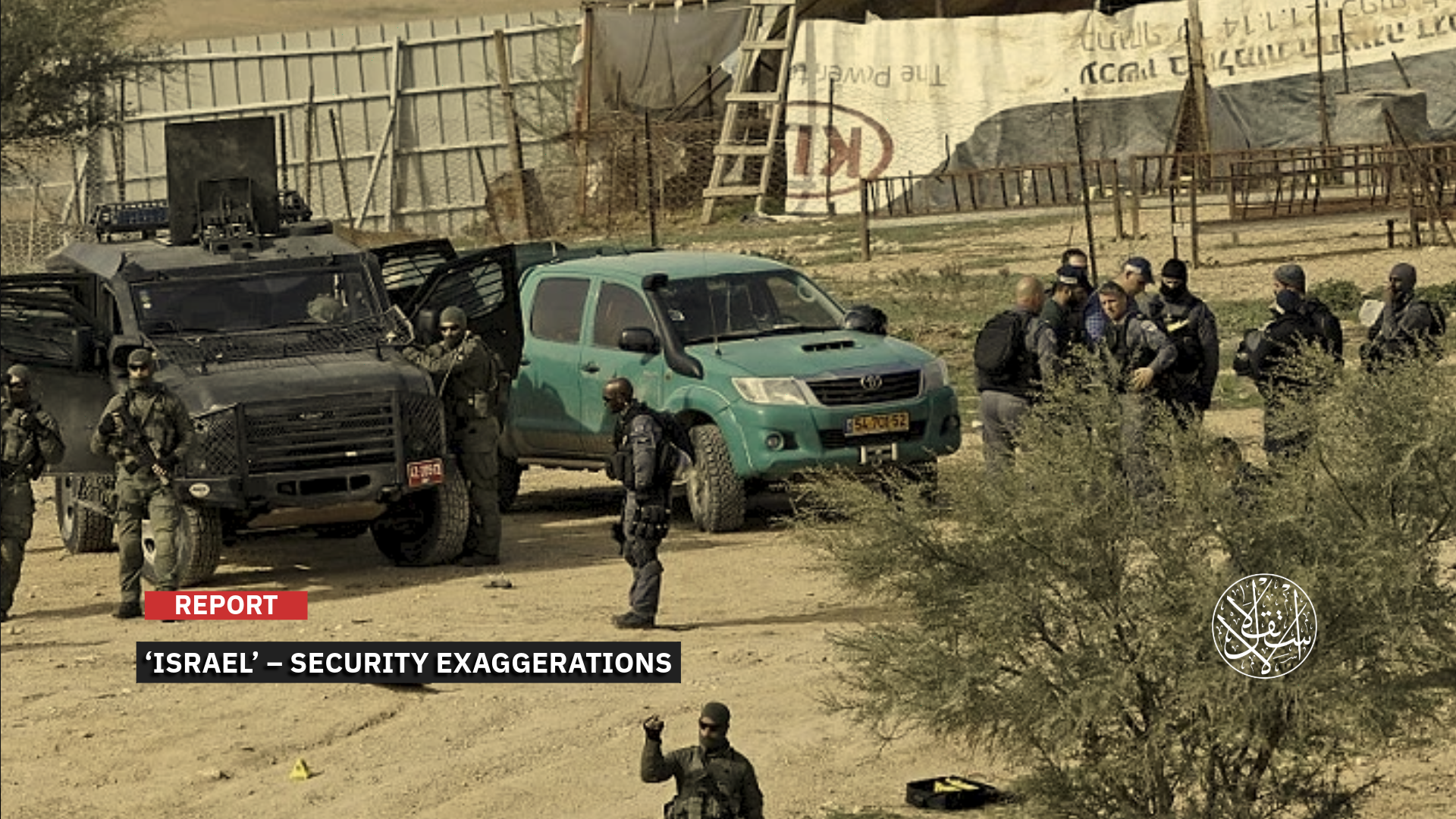
“These exaggerations aim to promote a narrative that serves Netanyahu and his rhetoric about enforcing security and sovereignty ahead of the Israeli elections.”
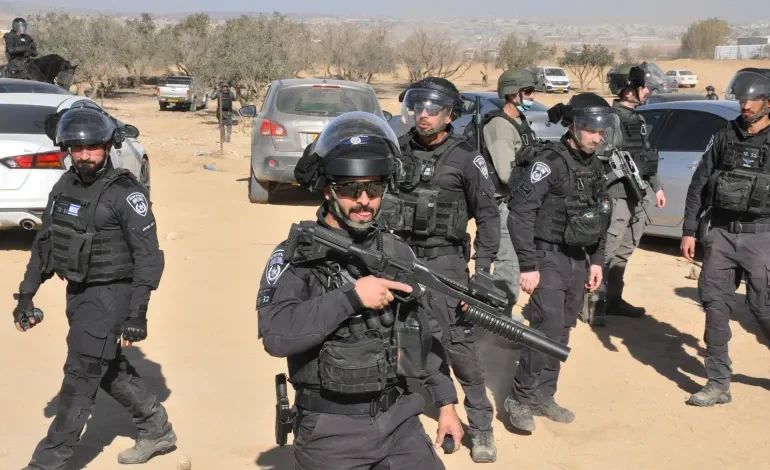
On October 6, 2026, David Zini, head of “Israel’s” Shin Bet internal security agency, warned of the presence of armed groups and military infrastructure in Bedouin communities in the Negev. He also spoke of attempts to establish armed battalions there.
Zini raised the possibility of what he described as an arms revolt within “Israel”. This refers to weapons being transferred from arms dealers and criminal gangs into the hands of resistance fighters opposing the Israeli occupation.
Two days later, the Shin Bet announced that it had arrested around 72 people from the Negev and southern “Israel” since the beginning of 2026, as part of what it called the “Negev Cell” case. Among those detained were 67 Israeli citizens, most of them Arab residents of the Negev who hold Israeli citizenship.
The agency claimed that the detainees were involved in cases it classified as security-related, and that indictments had been filed against around 50 of them.
It also claimed to have uncovered a plot by a group of young men from the Negev town of Segev Shalom to form a military battalion and carry out attacks inside “Israel”.
At the same time, the Israeli prosecution filed indictments against three Negev residents, alleging that they had participated in the purchase and sale of weapons and ammunition that reached Ahmed al-Okbi, the perpetrator of the October 2024 shooting attack at Beersheba’s central bus station.
What’s the Story Behind the Negev Cell?
The discussion concerns the arrest by Israeli occupation intelligence agencies of various groups, including individuals accused of arms trafficking and members of smuggling gangs, amid growing concerns over what is described as an arms revolt within “Israel”.
The term gained prominence as arms and drug-smuggling gangs expanded their activities and developed their methods, using modern weapons and new technologies, including drones to transport weapons.
Arms revolt refers to Israeli security concerns that weapons smuggled and circulated among criminal gangs could become a security threat if sold to Palestinian resistance fighters and used in attacks.
Under this interpretation, the issue would shift from arms smuggling and trafficking to the use of those weapons in armed resistance operations.
An incident disclosed by Israeli authorities has heightened these concerns. On October 8, 2026, the Israeli prosecution filed indictments against three Arab residents of the Negev, alleging that they had participated in buying and selling weapons and ammunition that reached Ahmed al-Okbi, the Palestinian who carried out the October 2024 shooting attack at Beersheba’s central bus station.
Israeli security agencies alleged that the accused, whom they say were active in arms-smuggling networks, knew that the weapons might be used to carry out an attack.
According to the Israeli account, the attack resulted in the death of a female Border Police officer and injuries to others. The police and “Israel’s” internal security agency, the Shin Bet, maintain that the accused were aware of the possibility that the weapons would be used in an armed attack.
However, filing indictments does not mean the allegations against the detainees have been proven; no court has yet issued a ruling against them.
The Shin Bet and police said they would continue pursuing suspects accused of assisting in attacks against Israelis and seek to bring them to trial.
The label “Negev Cell” does not mean that a single organization has been judicially established to link arms trafficking with the planning or execution of attacks against “Israel”.
The Israeli account concerns two overlapping cases that should be distinguished. The first involves criminal allegations related to arms sales and the supply of weapons to an attack perpetrator. The second involves broader security claims concerning attempts to establish armed groups with a military character among Bedouin communities in the Negev.
Israeli newspapers argue that if smuggled weapons or firearms circulating on the illegal market are proven to have reached perpetrators of attacks, the issue could shift from an arms-trafficking case to a broader security matter.
By contrast, Bedouin groups say the Israeli government is exploiting the Shin Bet chief’s statements to justify tighter security measures in Bedouin communities in the Negev and to secure political gains ahead of the election campaign scheduled for October 27, 2026.
Israeli security concerns, and the extensive security campaign in the Negev, are not limited to the possibility that small arms could shift from being tools of crime to becoming a security threat.
Israeli authorities also fear that groups or criminal gangs possessing heavier weapons, such as military machine guns and explosive devices, could eventually use them against police, security facilities, or other Israeli targets, rather than merely selling them to Palestinians who might use them to carry out attacks.
Another concern is the potential transformation of smuggling networks into organized armed structures. According to Israeli newspapers, this would mean that arms trafficking could become intertwined with the formation of groups with a military character, rather than remaining confined to financial gain and organized crime.
Added to this is the concern that the threat could spread from the borders into “Israel’s” interior, following previous cases involving arms smuggling across the Jordanian and Egyptian borders using drones.
These incidents have raised fears that military-grade weapons could reach networks inside “Israel” and subsequently be transferred to groups that might use them for criminal activities or armed attacks.

Are There Armed Groups in the Negev?
On October 5, 2026, David Zini, head of “Israel’s” internal security agency, the Shin Bet, told Israeli officials that what he described as military infrastructure existed in Bedouin communities in the Negev, along with attempts to form armed groups. He claimed that some of these groups were linked to Palestinian organizations, including Hamas.
Israeli politicians amplified these alleged threats, including Ofer Winter, head of the Amcha Yisrael party, who claimed that right under your noses, armed militias capable of slaughtering Israeli citizens, according to The Jerusalem Post.
On October 7, the Shin Bet announced that it had arrested 72 residents of the Negev and southern Israel since the beginning of 2026 on suspicion of involvement in security-related activities. It said that 67 of them held Israeli citizenship and Israeli identity documents.
According to the Shin Bet’s statement, the 72 detainees were suspected of involvement in a range of cases, including planning what “Israel” describes as terrorist activity, arms smuggling, and other activities the agency considers to be a threat to the security of “Israel”.
In one of the cases presented by the agency to support its claims, the Shin Bet said it had arrested five young men in May and June 2026, all Israeli citizens from the Negev town of Segev Shalom.
It alleged that interrogations revealed they had sought to establish a military battalion in the town, inspired by the model of Palestinian armed groups operating in the occupied West Bank.
The Shin Bet claimed that members of the group had discussed carrying out attacks using various methods as part of the group’s alleged activities.
It accused the individual it described as the cell leader of working over an extended period to establish the armed group, as well as publishing content on social media that the agency classified as “incitement” against “Israel” and encouragement to carry out attacks.
According to the Shin Bet’s allegations, reported by Yedioth Ahronoth, Haaretz, and The Times of Israel on October 8, 2026, one member of the group had agreed to proposals to carry out a shooting attack on a police station in Segev Shalom.
The agency also referred to the stabbing and shooting attack at the central bus station in Beersheba, and claimed that the individual had watched videos in order to learn how to manufacture explosive devices.
The Shin Bet added that a third suspect had agreed to join the group and serve as an engineer responsible for preparing explosive devices targeting Israeli Occupation Defense Forces.
The agency alleged that a fourth suspect, whom it described as a young man, had agreed to join the group. It further claimed that he had been planning independently to carry out an attack using an explosive device following his release from detention.
The Shin Bet also alleged that the investigation had revealed his support for the Islamic State organization and that, approximately two years earlier, he had planned to carry out a stabbing attack in the group’s name.
As for the fifth suspect, the Shin Bet claimed that he had agreed to join the group and participate in an attack targeting the police station in Segev Shalom.
The Shin Bet announced that it had arrested Abdullah Jarjawi, a resident of the Segev Shalom area, in July. It alleged that his interrogation revealed plans to carry out an attack at a nightclub in Beersheba.
The agency further claimed that Jarjawi had been in contact with members of the Islamic State organization and had expressed a desire to travel abroad to areas where the organization operates. It also cited what it described as sympathy for organizations including the Islamic State and Hamas.
The Shin Bet said that indictments had been filed at the Beersheba District Court against the individuals discussed in its statement in these cases.
The indictments charged them with offenses that the Israeli prosecution classifies as terrorism crimes. However, the statement did not provide details about the defendants’ positions regarding the charges.
Although the figure refers to arrests involving suspicions of various activities, it does not mean that all 72 individuals belong to a single cell or that they are all accused of planning attacks.
Nevertheless, the Israeli occupation authorities promoted the arrests as a response to the existence of a unified military organization in the Negev with the characteristics described by the Shin Bet chief.
A senior Shin Bet official told The Jerusalem Post on October 7, 2026, that these investigations, alongside other arrests, demonstrated what the agency assessed to be the security threat posed by the formation of cells made up of Israeli citizens, some of them paramilitary in nature, seeking to carry out attacks inside Israel.
The official claimed that the Shin Bet had prevented the plans attributed to the detainees from being carried out by gathering intelligence, monitoring what it described as threats, and arresting the suspects.
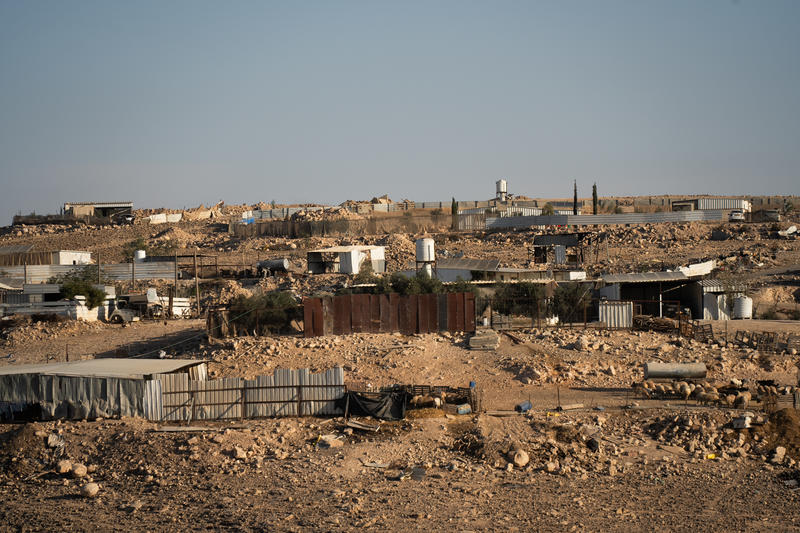
Most Negev residents discussed in Israeli media reports belong to the Palestinian Bedouin Arab community in southern “Israel”.
Many are Israeli citizens who were born there, rather than immigrants who acquired citizenship through naturalization.
A senior Israeli police officer questioned the information on which Shin Bet chief David Zini had based his claims, telling Yedioth Ahronoth on October 7, 2026, and asking what evidence supported the assertion that armed groups with a military character were being formed.
The senior Israeli police officer denied that the Southern District Police Command was aware of any such network of military groups, saying, “It’s unclear where the Shin Bet chief obtained this information.”
The officer said that Shin Bet officials who liaise with the Southern District Police Command were unaware of the basis for these statements.
If the Shin Bet possessed intelligence indicating that military battalions or cells were being formed in the Negev, the officer argued, the police should have been informed first so that they could respond accordingly.
The officer warned against provoking public panic, stating, “I object to serious accusations being made publicly when the relevant security authorities do not know the information on which they are based.”
Israeli security agencies have previously linked the proliferation of unlicensed weapons in the Negev to cases they classify as security-related, as well as to arms-smuggling operations across the Egyptian and Jordanian borders.
Meanwhile, Arab towns in the Negev, like Arab society more broadly, face widespread crime and gun violence, amid persistent criticism of the Israeli police for failing to tackle the problem.
Is It Election Propaganda?
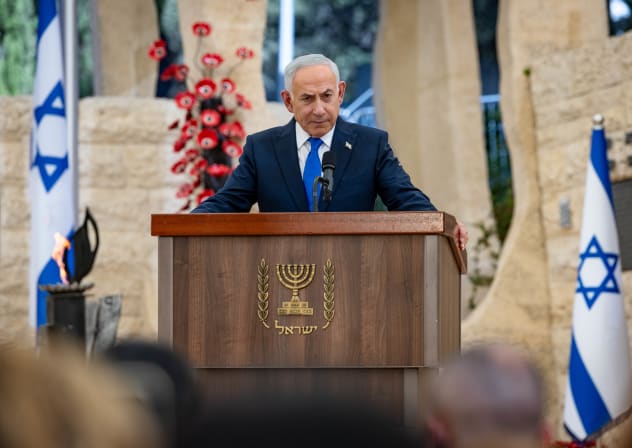
Israeli assessments, particularly those of opposition forces, suggest that the Shin Bet’s announcement and the amplification of these cases, along with claims that military networks exist in the Negev, are intended to promote a narrative that serves Netanyahu and his rhetoric about enforcing security and sovereignty ahead of the Israeli elections.
These assessments point to the political timing of the announcement and disagreements between the intelligence and police agencies over the information underpinning the claims, raising questions about their validity and prompting skepticism.
They argue that the aim is to reinforce the imposition of sovereignty narrative emphasized by Netanyahu’s right-wing coalition ahead of the elections, linking security in the Negev to weapons, crime, and armed groups aligns with the Israeli right’s rhetoric, which focuses on restoring security control.
Itamar Ben-Gvir had previously made restoring governance in the south, meaning the Negev, a central theme of his election campaign, according to Yedioth Ahronoth.
Other Israeli assessments suggest that the aim is to shift public debate away from the Netanyahu government’s failures and toward security threats, which would also serve its electoral interests.
The warning could redirect public attention toward what is presented as a security threat inside “Israel”, rather than scrutiny of the government over crime and illegal weapons.
On October 6, 2026, the Israeli news website Walla published a report quoting Habas al-Atawneh, head of the Hura local council in the Negev, north of Beersheba, as describing the timing of Zini’s statements as “strange.” He linked them to the elections and denied the existence of the formations Zini had described in his town.
The following day, Yedioth Ahronoth quoted a senior police officer questioning the basis of the intelligence claims, saying that Shin Bet liaison officers and officials in contact with the Southern District Police Command knew nothing about the Shin Bet chief’s statements or where he had obtained the information.
Prime Minister Benjamin Netanyahu seized on the issue, calling on his security and intelligence agencies to prepare a comprehensive report on the phenomenon and an immediate emergency plan to address it, according to Israel Hayom.
In January 2026, Netanyahu had already told the Knesset that his government regarded organized crime gangs in the Negev as “terrorist organizations in every sense of the word” and was waging a war against them.
He also spoke of involving the police, the Shin Bet, and the military in efforts to combat crime and illegal weapons.
Sources
- Terror Cells Forming in Negev Bedouin Communities in ‘Concerning Phenomenon,’ Shin Bet Chief Warns
- Shin Bet Chief Warns Cabinet: ‘Very Concerning Terror Organization in Bedouin Diaspora’
- Shin Bet Chief Said to Warn of ‘Very Worrying’ Terror Activity in Unrecognized Negev Bedouin Communities
- Shin Bet Arrests Five Bedouin Town Residents Over Alleged Terrorist Plot
- Shin Bet Chief Claims Attempts to Form Armed Groups in the Negev [Arabic]
- 72 Detainees From the Negev Since the Beginning of the Year: Shin Bet Claims to Have Foiled Formation of a “Military Battalion” and Plans for Attacks in Beersheba [Arabic]