Promotions and Perks: How Have Moroccans Reacted to Fatima El-Mansouri’s Government?
“Will minister Madiha Khiyer be the last fig leaf to fall from the government’s nakedness?”
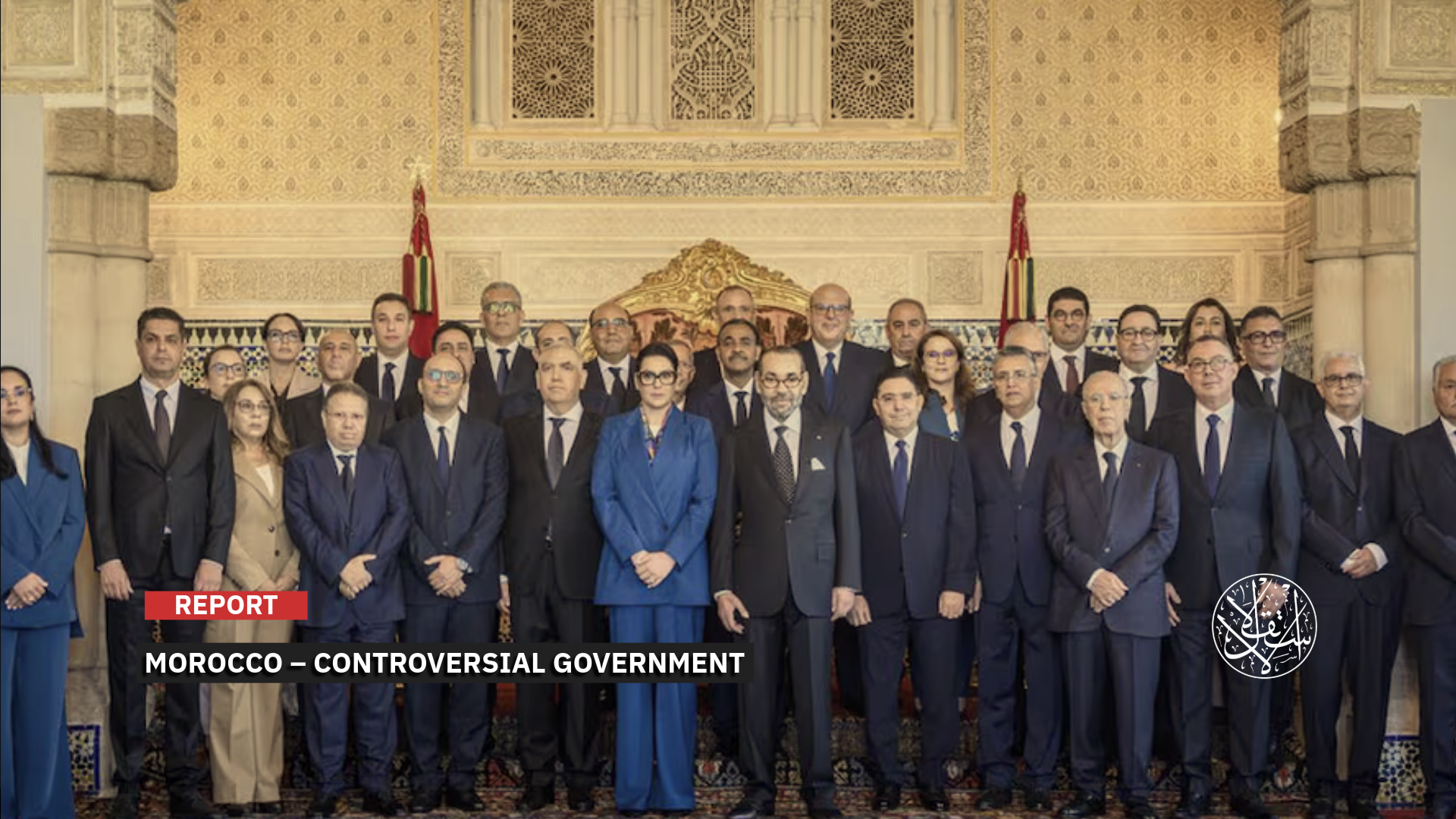
The announcement of the members of Fatima Ezzahra El-Mansouri’s government sparked widespread debate among Moroccans because many familiar faces held ministerial posts, some members face ongoing legal proceedings, and women remain underrepresented despite a woman serving as head of government.
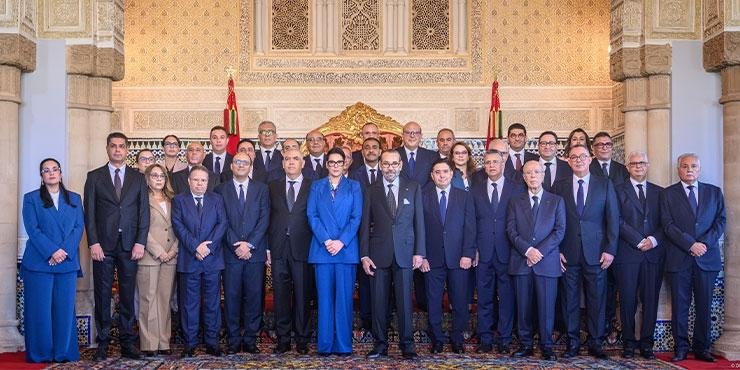
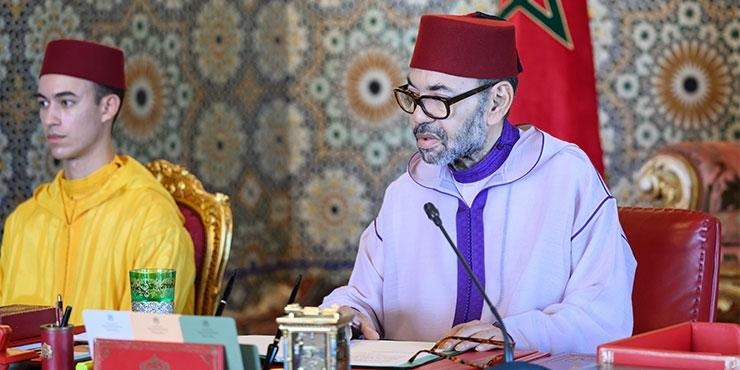
On October 16, 2026, King Mohammed VI of Morocco presided over the ceremony appointing the members of the new government, led by Fatima Ezzahra El-Mansouri, at the Royal Palace in Rabat.
The new cabinet includes ministers overseeing the portfolios of interior, foreign affairs, justice, economy and finance, education, and health, as well as ministries responsible for digital transformation, artificial intelligence, energy, and social development.
Judicial Records
Immediately after her appointment, criticism of the government’s composition intensified, particularly following the widespread controversy surrounding the appointment of Madiha Khiyer, of the Istiqlal Party, as Minister Delegate in charge of Vocational Training and Qualification, due to her criminal record.
Just hours after being appointed to Fatima Ezzahra El-Mansouri’s government, Minister Madiha Khiyer found herself at the center of a major controversy following the renewed circulation of a medical document attributed to her, dating back to 2004.
The document was presented as a certificate issued by a psychiatrist indicating psychological vulnerability and previous suicide attempts by the minister.
Media reports also linked her to legal proceedings involving forgery, fraud, and the issuance of more than 20 forged, uncovered checks in favor of a group of gold traders. The case involved financial and commercial transactions that ultimately came to the attention of the security and judicial authorities.
The controversy quickly culminated in a royal decision. On October 18, 2026, a statement from the Royal Cabinet announced that King Mohammed VI had approved a request submitted by the head of government to dismiss the Minister Delegate to the Minister of National Education in charge of Vocational Training, just 48 hours after her appointment.
Amid the controversy, several journalists reacted to the incident. Writer and journalist Jamal Boudouma argued that “Khiyer has entered Moroccan political history through the record books, having become the minister with the shortest tenure since the formation of Morocco’s first government.”
In a Facebook post, Boudouma added that “the mistakes of youth can sometimes be fatal. Some crimes may become time-barred, but judicial limitation periods are one thing and political accountability is another. The incidents in which the Istiqlal Party minister was implicated cannot simply be swept under the rug.”
He continued, “Even if these incidents date back years, a woman convicted of fraud and spared prison based on a medical report indicating that she suffers from psychological disorders and suicidal tendencies cannot serve in a government headed by His Majesty the King’s appointee.” He stressed that “high-ranking positions are no joke.”
Boudouma argued that the Istiqlal Party should have paid attention to the matter while preparing its list of ministerial nominees, rather than embroiling the head of government and the Royal Palace and placing them in an embarrassing position before public opinion in the age of social media.
Political analyst Khalid El Bekkari said that “since the announcement of the holders of ministerial portfolios, a series of social media posts have emerged revealing the criminal records of several appointees.”
In a Facebook post, El Bekkari argued that “the issue is not about bad people being appointed as ministers, but rather about victims suffering from chronic illnesses that require placing them under the care of specialist doctors.”
He added, “We have a case of sticky fingers, a condition well known to psychiatrists, affecting people obsessed with reaching for what does not belong to them, even when they are financially comfortable.”
“We also have a case of pathological addiction to betting, which may begin in betting shops, progress to casinos, and eventually turn into political betting parlors, where anything can be wagered on, even fish that are still in the sea.”
He went on, “And we have a case of obsession with supernatural beings and magical symbols, particularly those used to search for buried treasures in marginalized areas, before realizing that the real treasure is in Rabat and requires material rather than spiritual intermediaries.”
Noting that ordinary recruitment processes, for positions in education, local government, and the police, among others, involve security checks and sometimes even social background investigations to determine candidates suitability, El-Bekkari asked, “Were such checks carried out in the case of the ministerial portfolios, or had the appointees’ criminal records already been whitewashed, in a process resembling money laundering?”
Ahmed Mediany, editor-in-chief of TelQuel Arabi, asked in an editorial published on the website: “Will Minister Madiha Khiyer be the last fig leaf to fall, exposing the government’s nakedness?”
He added that “the coming days will provide the answer, as the government team includes names whose pasts, both recent and more distant, could bring them close to sharing the same fate as a woman who allegedly impersonated a doctor to defraud dozens of gold traders.”
Dismissed Minister Madiha Khiyer is not the only government member to have faced scrutiny over previous legal proceedings. The reappointment of Fatima Saadi, a senior figure in the ruling Authenticity and Modernity Party (PAM), as Minister Delegate in charge of Housing and Urban Policy, has brought a previous legal case back into the spotlight. The case ended with a suspended prison sentence against her over incidents linked to her tenure as mayor of Al Hoceima, in northern Morocco.
According to information reported by local media, the Al Hoceima Court of Appeal issued a ruling in early 2016 convicting Saadi and sentencing her to one month in prison, suspended, while ordering her to pay compensation to the civil claimant.
The case concerned an incident in 2014, when a garden in Al Hoceima was demolished under the stated pretext of clearing public property.
The legal proceedings involved charges relating to abuse of authority, contempt of court rulings, participation in an assault on another person’s residence and violation of its sanctity, and causing material damage to private property, alongside other charges included in the case file.
The incidents date back to Saadi’s tenure as mayor of Al Hoceima from 2009 to 2015. She later entered parliamentary politics and assumed senior responsibilities within the Authenticity and Modernity Party, before being appointed Minister Delegate to the Minister of National Territorial Planning, Urban Planning, Housing and Urban Policy, in charge of Housing and Urban Policy.
In addition to the two aforementioned ministers, Ahmed Mehdi Mezouari, the minister in charge of fisheries and a member of the government representing the Socialist Union of Popular Forces (USFP), also came under scrutiny amid the controversy surrounding the formation of El-Mansouri’s government.
Media reports brought to light documents from the Supreme Audit Institution, Morocco’s central auditing body, revealing financial irregularities involving the minister, alongside Hassan Lachgar, son of Driss Lachgar, the USFP’s first secretary, and Rim El Aqqad, daughter of a member of the party’s political bureau.
The case concerns the two individuals’ company allegedly benefiting from public funds through the political party to which they belong, under contracts to conduct “studies” that were found to contain numerous irregularities documented by the institution’s auditors.
According to the report, on November 9, 2022, the Socialist Union of Popular Forces received additional annual public funding of 1,930,896 dirhams (approximately $198,000) to cover expenses related to conducting studies.
The party subsequently contracted the research firm MELA STRATEGIE & CONSEIL to produce 23 studies covering economic, social, institutional, and environmental issues, for a total of 1,835,000 dirhams (approximately $188,000).
Regarding the documents submitted to justify the expenditure, the report found that the party provided only 21 documents for the 23 commissioned studies, failing to submit the two studies concerning indicators for measuring governance in the institutional sphere” and “indicators for measuring the rule of law.
An examination of the 21 submitted documents, according to the Supreme Audit Institution, found that they consisted of presentations or brief memoranda containing general information and proposals available to the public, rather than comprehensive studies meeting the scientific methodology required in this field.
A Government of Political Recycling
Fatima Ezzahra El-Mansouri’s government has failed to meet Moroccans’ expectations and aspirations, as the four parties forming the governing majority, the Authenticity and Modernity Party (PAM), the Istiqlal Party, the Socialist Union of Popular Forces (USFP), and the Party of Progress and Socialism (PPS), have failed to put forward suitable candidates to deliver on the ambition of forming a political government capable of correcting the mistakes accumulated under Aziz Akhannouch’s government.
Journalist and writer Ali Anouzla asked, “Are we looking at a new government or merely an expanded cabinet reshuffle?”
He added that “this question arises from a cabinet of 32 members, including 14 ministers, among them the head of government, who served in Akhannouch’s government, as well as two former ministers who have returned to the executive.”
In a Facebook post, Anouzla continued, “Sixteen of the 32 members have previously held ministerial positions, accounting for around 50% of the new cabinet!”
He also questioned the very purpose of elections that drained public funds, effort, and time, cost millions, and mobilized political parties, the administration, and voters, if the result was simply to redistribute seats among the same familiar faces.
Anouzla described it as the ultimate “government of missed opportunities,” embodying a Moroccan political paradox that is difficult to understand: “We call for a break with the past while clinging to symbols of continuity; we raise the slogan of change while recycling the same faces; we speak of linking responsibility to accountability, then reward officials with new positions without questioning them about their previous performance.”
Anouzla concluded by asking, “Are we truly looking at a government of change, or the largest political ‘recycling’ operation within the executive? And if continuity on this scale is what is required, why go through all the trouble of elections and all the talk of seriousness, responsibility, and so on, just more empty words?”
Moroccan journalist Mustafa Ibn Er-Radi described the new cabinet as a rushed government, saying everything happened in haste, from the appointments and coalition negotiations to the cabinet’s formation and royal investiture, followed by a government meeting and a ministerial council, and then a race against time to present the draft budget law. “Even the ‘scandals’ were not long in coming,” he added.
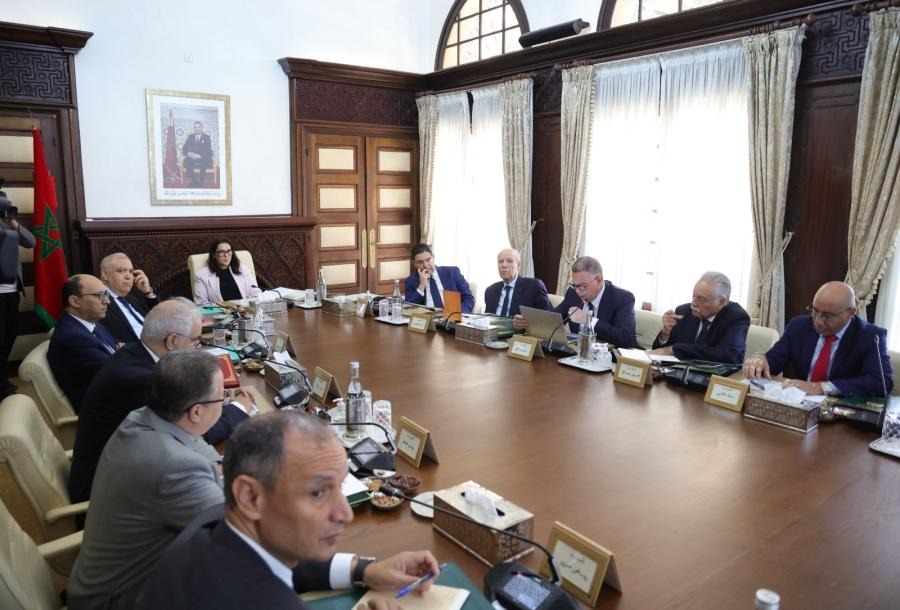
Immediately after the government was appointed on October 16, 2026, King Mohammed VI chaired a ministerial council at the Royal Palace in Rabat the following day. The meeting focused on discussing and approving the broad guidelines of the 2027 draft budget law.
The first government council was held later that same day, followed by the presentation of the government’s program before Parliament on October 18, 2026.
In an opinion article, Ibn Er-Radi argued that the high expectations should have prompted the governing coalition to propose a government of opportunity, rather than a government of party appeasement whose motives were all too obvious.
Warning that Morocco could not afford to waste political and governmental time, Ibn Er-Radi said the government had made a poor start, adding, “We hope the situation can be corrected, because this government appears to be facing considerable difficulties.”
Sources
- Controversy Over an Old Medical Document Topples Minister Madiha Khiyer 48 Hours After Her Appointment to the El Mansouri Government [Arabic]
- From a Prison Sentence to a Ministerial Portfolio: A Past Court Case Haunts Fatima Saadi Following Her Appointment to the Government [Arabic]
- Documents Reveal: El Mahdi El Mazouari, Fisheries Minister in the El Mansouri Government, Accused by the Supreme Audit Institution of Benefiting from Public Funds Through “Party Patronage” Under the Guise of a “Research Firm” [Arabic]
- A Government of Criminal Records [Arabic]