'Israel' on Alert: Who’s Reorganizing Hezbollah After Its Key Leader’s Assassination?
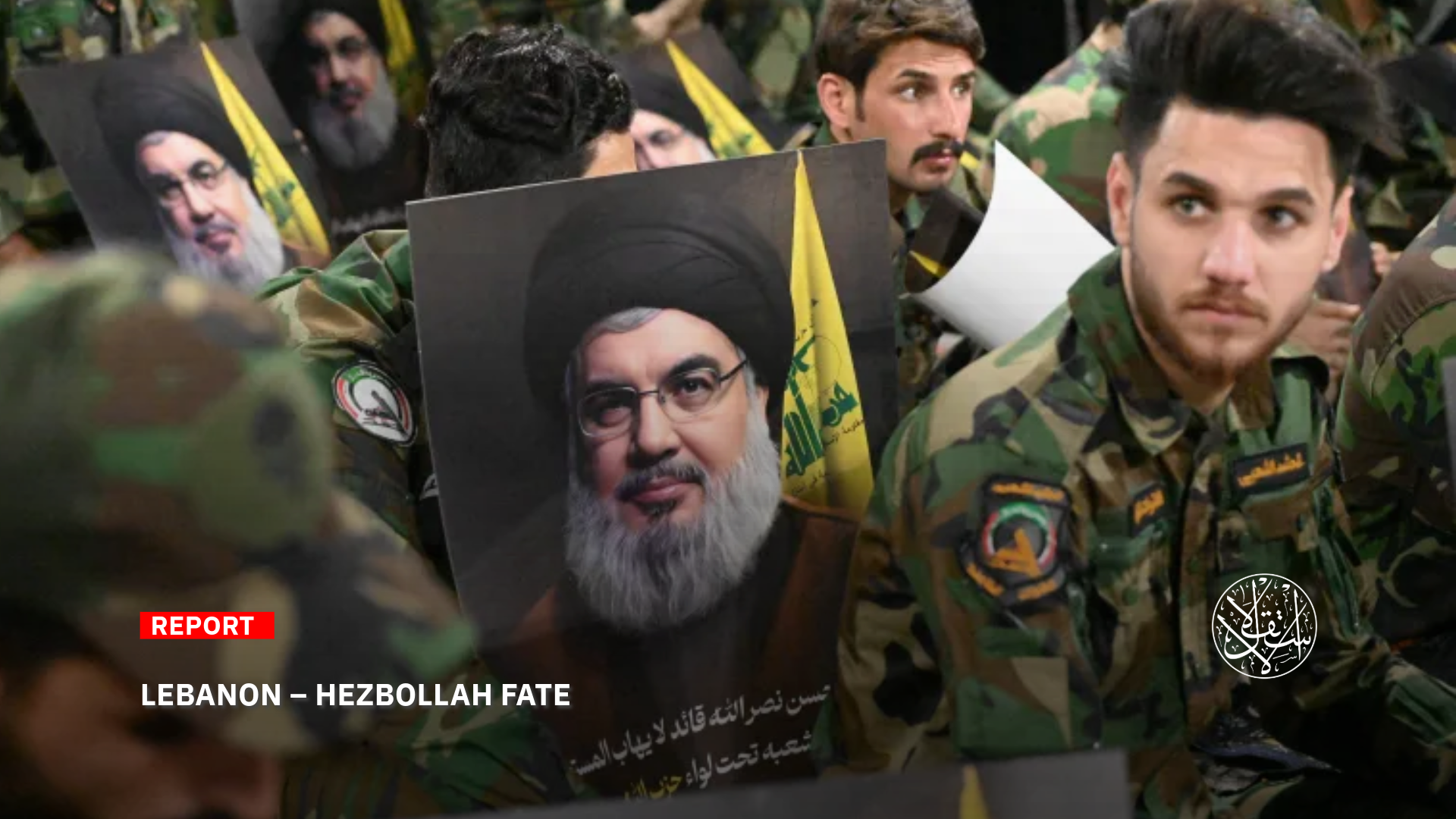
Hezbollah is better equipped to withstand a ground offensive than aerial or cyber strikes.
As “Israel” continues to target the senior leadership of Hezbollah, reports indicate that the group's current leadership is primarily managed by its security apparatus, with many of its leaders remaining safe from assassination attempts. This security faction is credited with the recent resurgence of the party.
On October 23, 2024, Hashem Safieddine, head of Hezbollah's Executive Council, was the latest prominent leader to be mourned, following the announcement of his death three weeks earlier due to Israeli airstrikes on Beirut’s southern suburbs.
On October 19, 2024, Yedioth Ahronoth quoted an unnamed Israeli official stating that Hezbollah has successfully reorganized and strengthened its leadership with previously unknown members, enabling it to continue fighting against “Israel” and inflicting significant losses in recent days.
The group has conducted several major operations, including a deadly airstrike on a Golani Brigade training base, a drone strike targeting Israeli Prime Minister Benjamin Netanyahu's residence in Caesarea, and attacks resulting in the deaths and injuries of dozens of soldiers in southern Lebanon.
An Alternative Leadership
In his often-controversial remarks, Lebanese Shia cleric Muhammad Ali al-Husseini, who identifies himself as the Secretary-General of the Arab Islamic Council, stated that Israeli strikes have targeted Hezbollah’s top political and military leaders, but have yet to affect its security leadership.
Speaking to Saudi Arabia’s al-Arabiya on October 23, which opposes resistance movements in Palestine and Lebanon, al-Husseini noted that “the security leaders of Hezbollah still play a crucial role in Lebanese affairs.”
“The party is currently without a head after Hassan Nasrallah, and is in a state of disarray. Sheikh Naim Qassem [the deputy secretary-general] has tried to fill the void and enhance his speeches to bring in the charisma that Nasrallah had, but he has utterly failed to do so.”
“Hezbollah is now managed at both the central and military levels by Iranian officers. There is a lack of harmony and coordination between the Iranian officers and Hezbollah's commanders,” added the cleric.
“Hezbollah’s officers believe they are more experienced and skilled, asserting that they lead rather than follow. This creates a military challenge, as the backbone and spearhead of the party are its security and military operations.”
In a previous interview aired on September 29, al-Husseini said “Hezbollah is a security party, with its security apparatus being its most vital component. It drives the party's actions and conducts operations abroad.”
“When Imad Mughniyeh was assassinated by Israel in Damascus in 2008, Hezbollah lost its security chief, but two very important figures, Talal Hamiyah and Khuder Yusef Nader, have since emerged to maintain control and composure.”
Al-Husseini pointed out that “Hamiyah and Nader are the most crucial security figures today, as they are the ones who communicate and reorganize efforts; the military and political leadership have both been targeted, while the party's security leadership remains unscathed.”
“Israel” has successfully assassinated many of Hezbollah's key political and military leaders. In addition to the party's leader, Hassan Nasrallah, other notable casualties include: Ali Karki, head of the Southern Front; Fouad Shukur, Chief of Staff; Ibrahim Aqil, commander-in-chief of Hezbollah's special operations unit; and Ibrahim Muhammad Qubaisi, the commander of the group's missiles and rockets force.
The party has also announced the assassination of figures such as Muhammad Ni'ma Nasser, commander of Aziz Unit; Sami Talib Abdullah, commander of al-Nasr Unit; Muhammad Hussein Surur, commander of Air Unit; Abu Hassan Samir, commander of the Training Unit; and Jawad al-Tawil, commander of al-Ridwan Force.

The Command Structure
At the top of Hezbollah's leadership hierarchy is the “Jihad Council,” which oversees all military and security activities of the party and is naturally linked to its Central Shura Council.
The “Jihad Council” serves as the general staff for Hezbollah's armed wing, primarily composed of senior military officials. Its mission is to determine military policy in both routine and emergency situations, supervise and coordinate activities, and make decisions regarding new operations.
The council was previously supervised directly by Hezbollah’s Secretary-General Hassan Nasrallah, and before him, the role was held by Imad Mughniyeh until his assassination in February 2008. Mustafa Badreddine then took over leadership until he was killed in Damascus in May 2016.
As the entity responsible for military affairs, the “Jihad Council” collaborates closely with Iran. Reports indicate that meetings of the council are attended by Esmail Qaani, the commander of the Quds Force of the Iranian Revolutionary Guard.
The “Jihad Council” consists of seven key figures, four of whom have been assassinated: Hashem Safieddine, Ibrahim Aqil, Fouad Shukur, and Ali Karki. Only three leaders remain: Khuder Yusef Nader, head of security; Talal Hamiyah, currently the party's intelligence chief; and Muhammad Haydar, a former member of the Lebanese parliament, whose current role is unknown.
Under the leadership of Hezbollah’s general staff (“Jihad Council”), several main units operate, including the central unit, the commando unit, specialized military units, local units, and the security unit (900).
There are also units dedicated to Syria, which operate regularly in Syrian territory according to operational needs, with Hezbollah establishing two specialized units in the southern region of the country.
These units in Syria coordinate operationally with Unit 840 of the Quds Force and local militias allied with the Syrian army and Shiite militias that operate partly in the Golan Heights near occupied territories.

A New Era
Regarding the future of Hezbollah, American researcher Sam Heller from the Century Foundation stated, “The death of Nasrallah marked the end of an era; he was the foremost decision-maker in the organization as it rose to prominence in Lebanon and regionally.”
“After decades at the helm, Nasrallah's death will necessarily mark a shift for the organization,” Heller told Agence-France Presse.
What will end the conflict is currently being negotiated, both diplomatically and on the battlefield, according to the researcher.
However, Heller cautioned that attempts to politically marginalize Hezbollah under pressure from external forces, including Washington, could lead to internal conflict in Lebanon with negative consequences.
He predicted Hezbollah would need to either adapt to a new negotiated agreement or adjust to the current conditions on the ground, but he did not think it likely that the group would completely abandon its weapons.
In a related vein, Richard Weitz, a senior fellow and director of political-military analysis at the Hudson Institute, indicated that the deaths of senior Hezbollah leaders would make commanding major operations more challenging.
Weitz said in an interview with Alhurra on October 2, 2024, that leaders are crucial for coordinating operations and motivating forces, emphasizing that Hezbollah is expected to be better equipped to counter a ground offensive compared to aerial strikes and cyber attacks.
According to a research paper published by the Center for Strategic and International Studies (CSIS) in early March 2024, Hezbollah has approximately 30,000 active fighters, along with up to 20,000 reservists.
However, in 2021, former Hezbollah leader Hassan Nasrallah stated that the number of party fighters was around 100,000.

The Iran-backed forces of Hezbollah are primarily composed of “light infantry,” historically trained and organized for stealth, mobility, and autonomy.
“Hezbollah has employed a version of what the United States calls ‘mission command,’ empowering subordinates to make independent battlefield decisions based on a commander’s intent,” as noted by CSIS.
“This force design has allowed Hezbollah to operate effectively under conditions of overwhelming Israeli firepower.”
“In 2006, for example, its rocket units were designed to set up a launch site, fire, and disperse in less than 28 seconds, relying on prepositioned equipment, underground shelters, and mountain bicycles to achieve such a small window of exposure,” according to CSIS.
The paper further stated, “In the wake of the 2006 war, Hezbollah continued to build on the strengths of this approach, decentralizing its command and control and reorganizing to force the IDF into more urbanized terrain where its fighters can take advantage of concealed, fortified positions.”
Sources
- 'End of an era' for Hezbollah after Israel killed its leader
- The Coming Conflict with Hezbollah
- American researcher: “The death of Nasrallah marked the end of an era [Arabic]
- Israel’s killing of Nasrallah marks fundamental shift for Hezbollah
- What Does the Future Hold for Hezbollah and Where Is Lebanon Headed? [Arabic]
- After the "Breach" and Without Leadership: What Is the Future of Hezbollah? [Arabic]
- General Staff of Hezbollah: The Jihad Council and Its Main Units [Arabic]
- Hezbollah confirms Israel's assassination of its Executive Council Chairman Hashem Safieddine [Arabic]