From Mediator to Target: What Put Oman in Trump’s Line of Fire?
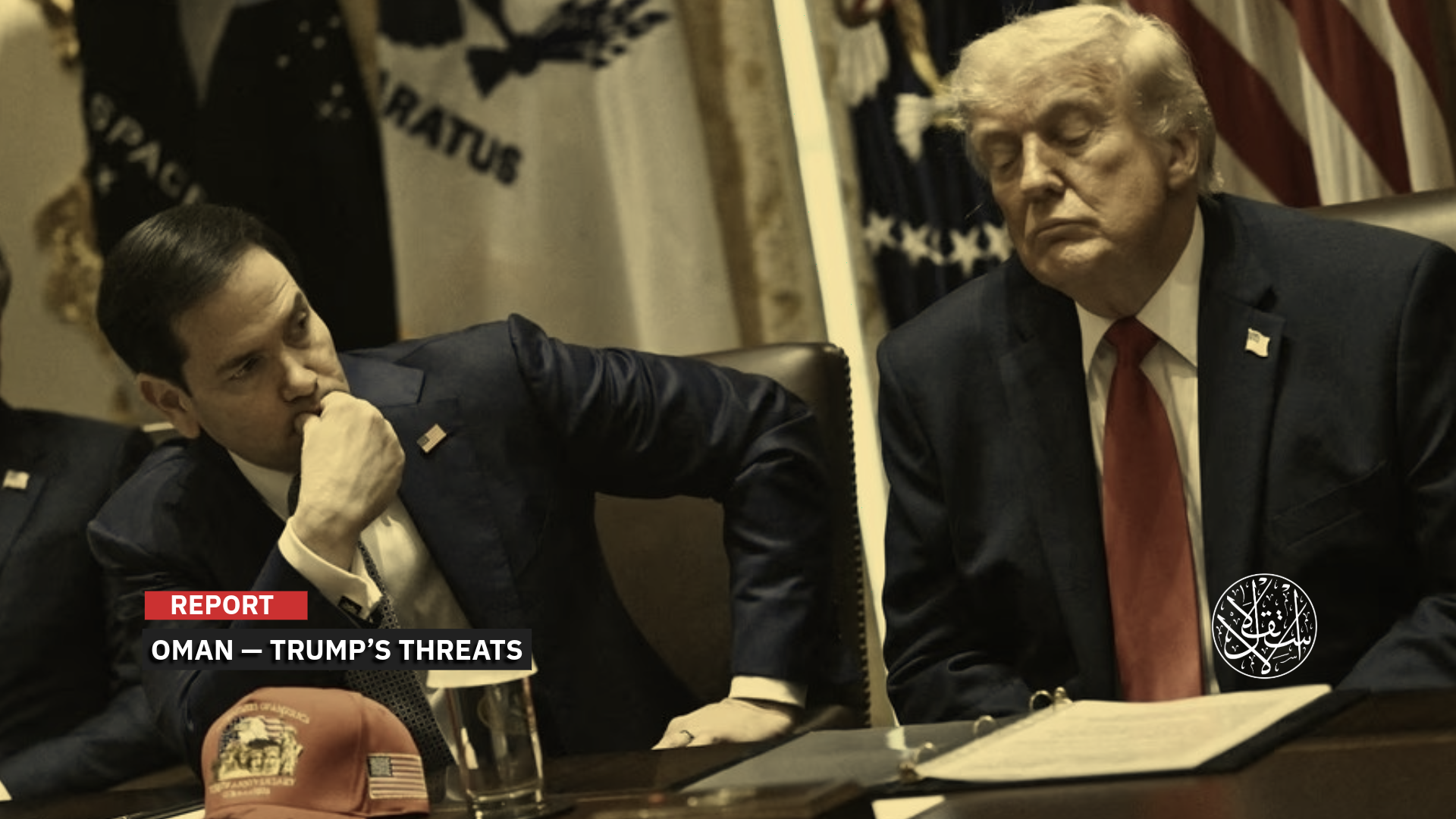
Oman is one of the United States’ closest allies in the Gulf.
In a striking irony, Oman, long seen as a key regional mediator and a trusted channel of communication between Washington and Tehran, has found itself under pressure from its own American ally after President Donald Trump threatened to “blow it up” if it aligned with Iran on the sensitive issue of the Strait of Hormuz.
For decades, Oman has been presented as the Gulf’s “quiet mediator,” a state that carefully balanced its relations with both the United States and Iran. It has also played a central role in facilitating dialogue between the two sides and was, at various points, close to helping broker understandings aimed at preventing escalation before those efforts stalled amid accusations that U.S. decision-making was shaped by Israeli Occupation pressure.
Trump’s threats came amid rising controversy over the future management of the Strait of Hormuz, after Iran said it was holding consultations with Muscat on arrangements linked to the governance of the strategic waterway. Reports, including from the New York Times (NYT), have also suggested Oman has shown openness to discussing mechanisms involving fees on shipping traffic through the strait.
These developments have reopened questions about the limits of alliances between Washington and its regional partners, exposing how diplomatic mediation and political guarantees may not provide full protection in moments of geopolitical crisis and escalation.
They have also fuelled broader Gulf concerns that alignment with the United States is no longer seen as an absolute guarantee of security and stability, but can, in moments of tension, become a tool of pressure even against close allies and partners.
A Victim of Polarization
Trump’s warning came despite the fact that Oman is widely regarded as one of the United States’ closest allies in the Gulf and has played a mediating role during the recent U.S.-Israeli War on Iran. Yet it has found itself a victim of U.S.-Iranian polarization, or indirectly positioned as part of the arena of escalation between the two sides.
Trump’s rhetoric also reflects how his administration views Oman’s positioning, which in its assessment appeared closer to Iran’s stance during the recent war on Tehran that reshaped regional geopolitics and brought renewed focus to the future of the Strait of Hormuz.
More broadly, the language used by Trump toward allied and friendly states, including Saudi Arabia, Qatar, and Oman, signals growing U.S. frustration with their refusal to join the “Abraham Accords” normalization agreements with the Israeli Occupation.
Observers argue that these positions could have implications for the future of U.S.-Gulf partnerships and may even raise questions about the long-term presence of American forces and military bases across the region.
Oman’s Foreign Minister Badr al-Busaidi confirmed in a meeting with local newspaper editors on March 11, 2026, that the country would not join the Abraham Accords, urging Washington to respect that position.
He said the war waged by the United States and “Israel” against Iran was not limited to its nuclear program but also aimed at weakening Iran and reshaping regional balances while advancing normalization efforts and undermining prospects for an independent Palestinian state.
He added that the objectives of the war extend beyond the nuclear file and form part of a broader project to reorder regional power dynamics and weaken actors supportive of Palestinian statehood.
Amid these developments, Trump reportedly threatened to “blow up” Oman if it did not “behave properly,” following reports of consultations between Tehran and Muscat over a joint mechanism to impose fees on ships passing through the Strait of Hormuz, which was closed after the outbreak of the U.S.-Israeli War on Iran.
Trump’s remarks came after the Islamic Republic of Iran Broadcasting (IRIB) announced it had obtained an unofficial draft agreement that would restore commercial shipping through the Strait of Hormuz to pre-war levels within one month.
According to Iranian media reports, the draft outlines a joint management arrangement for the strait between Iran and Oman, alongside the lifting of U.S. restrictions on Iranian ports and the withdrawal of American forces from areas near Iran’s borders.
The Risks of Threats
Political analysts say U.S. threats against Oman, a close security and economic partner of Washington, represent an unusual shift in the nature of the relationship between the two countries and raise questions about the future of U.S. partnerships with traditional Gulf allies.
Brian Katulis, a senior fellow at the Middle East Institute in Washington, told CNBC on May 29, 2026, that Oman’s importance lies in its role as the Switzerland of the Middle East, acting as a neutral mediator with ties across regional and international actors.
He said Trump’s threat against Oman was striking, suggesting it reflected a state of frustration and desperation over his inability to achieve the outcomes he expected regarding Iran and also represented, in his view, another example of performative diplomacy and loud rhetorical posturing, which is unlikely to go beyond statements.
Separately, Mehran Haghirian, director of research and programs at the economic think tank Bourse & Bazaar, said Trump’s comments may be linked to his dissatisfaction with Oman’s foreign minister, Badr al-Busaidi, who led mediation efforts between Washington and Tehran before the outbreak of war in February 2026.
He noted that al-Busaidi later criticized the U.S.-Israeli strikes on Iran, adding that a deal had been within reach before Washington opted for a military path.
Shortly before the war erupted on February 28, 2026, Oman’s foreign minister told CBS News in an interview that negotiations between the United States and Iran had made tangible progress, that a deal remained possible, and he expressed surprise at the decision to resort to military escalation.

In the same context, international relations and Gulf affairs scholar Abdullah Baabood wrote on X that threatening Oman, a peaceful, neutral, and close U.S. partner, represents a serious strategic mistake.
He added that undermining one of the most trusted diplomatic channels of communication with Iran would only weaken prospects for political solutions and damage U.S. credibility among its Gulf allies.
On the other hand, The Nation criticized Trump’s threats against Oman in a report published on May 29, 2026, describing them as reflecting a pattern of political frustration expressed through pressure on weaker or less confrontational actors.
The paper noted that Oman has been a long-standing U.S. ally and continues to host a significant American military presence, questioning the rationale for threatening a state that is supposed to belong to Washington’s allied camp.
It added that one of the core justifications repeatedly cited by U.S. administrations for military involvement in the region has been the protection of Gulf allies, including Oman, from regional threats.
The report also pointed out that Oman is not the only country to have faced pressure from Trump, referencing his attempts to push Saudi Arabia, Qatar, and Pakistan to join the “Abraham Accords,” which he has argued should be mandatory.
The newspaper concluded that Trump uses international crises, whether in the Middle East or elsewhere, as instruments to reshape alliances and extract political concessions from states tied to the United States through security arrangements.
It described this approach as closer to a form of political blackmail, arguing that Washington is using its military superiority to pressure both adversaries and allies in ways that threaten the foundations of traditional partnerships built over decades.
Three Reasons
In explaining the background to the U.S. escalation against Oman, Le Monde reported on May 29, 2026, that American concerns are centered on the possibility that Muscat could provide political legitimacy or legal cover for an Iranian initiative related to managing navigation in the Strait of Hormuz and imposing fees on passing vessels.
Washington believes that any Iranian-Omani understanding on managing the strait or collecting transit fees would effectively acknowledge an expanded Iranian role in one of the world’s most strategic maritime chokepoints, which the United States sees as a threat to its long-standing principle of “freedom of navigation.”
The report said Trump’s anger came at a time when his administration was seeking to reopen the strait without conditions or additional fees, alongside reports of discussions between Tehran and Muscat over new arrangements for managing shipping after the war.
From this perspective, Trump viewed any Omani involvement in such arrangements as undermining the U.S. position while granting Iran additional political and economic gains.
More broadly, Le Monde argued that Trump’s sharp rhetoric also reflects U.S. frustration with Oman’s traditional policy of balance and mediation between rival powers.
For decades, Muscat has maintained close ties with Washington while keeping open channels with Tehran, positioning itself as a key mediator in regional crises. However, that role has come under increasing scrutiny in parts of the U.S. establishment during the latest Hormuz crisis.
The French newspaper summarized the drivers behind the U.S. escalation into three main factors:
- Washington’s rejection of any Iranian role in regulating shipping or imposing transit fees in the Strait of Hormuz
- U.S. doubts over Oman’s potential involvement in arrangements that could enhance Iran’s political and economic leverage
- Trump’s desire to signal that he will not accept any settlement perceived as a U.S. retreat after months of regional tension over the strait
Against this backdrop, some analysts argue that Trump’s threat was not directed at Oman itself but rather served as a broader political message to regional actors that the United States rejects any new arrangements on the Strait of Hormuz without its direct approval and participation.
Country No. 15
Trump’s threat against Oman sparked widespread surprise in U.S. political and media circles, particularly given that it targeted one of Washington’s oldest Arab allies and closest partners within U.S. policy-making circles.
American outlets drew comparisons between Trump during his election campaigns, when he accused opponents of dragging the United States into costly foreign wars, and Trump as president, who has accumulated a long record of military threats against multiple countries, with Oman becoming the latest addition to that list.
According to CNN in a report published on May 27, 2026, Oman is at least the fifteenth country that Trump has threatened to attack, bomb, or target militarily during his presidential terms.
In another report dated May 26, 2026, CNN said Trump’s threat to bomb Oman surprised observers across the U.S. political spectrum, given that the country is considered one of Washington’s oldest Arab partners and among the most stable in its relations with the United States.
Oman’s relationship with the United States spans nearly two centuries. It was the first Arab and Gulf country to establish formal relations with Washington, beginning with the Treaty of Friendship, Commerce, and Navigation in 1833, followed by the arrival of its first Arab envoy to New York in 1840.
Bilateral ties deepened over time, including the 2009 Free Trade Agreement and Oman’s central role in facilitating the 2015 Iran nuclear deal between Tehran and world powers.
Over the past 15 years, Muscat has also served as a key mediator between Washington and Tehran in several sensitive files, including prisoner exchange negotiations and hosting backchannel talks.
Since the Iranian revolution in 1979, Oman has maintained a unique position within the Gulf security architecture, becoming the first Gulf state to sign a military access agreement with the United States in 1980, reinforcing its status as a trusted security partner.
In this context, U.S. researcher Linda Funsch, a specialist on Oman, told Alhurra on May 29, 2026, that Trump’s remarks were shocking and offensive and could not be dismissed as a verbal outburst or political joke.
She added that the statements place additional pressure on Oman’s long-standing policy of balance between the United States and Iran, a strategy that has become increasingly complex following the U.S.-Israeli War on Iran and the resulting shifts in regional security dynamics and the future of the Strait of Hormuz.

Economic Sanctions
Trump’s threats against Oman did not emerge in a vacuum. Following his controversial remarks, U.S. Treasury Secretary Scott Bessent warned Oman against any direct or indirect involvement in arrangements linked to imposing transit fees on ships passing through the Strait of Hormuz, saying Washington would penalize any party participating in such a system.
“The United States Government will not tolerate any effort to impose a tolling system in the Strait of Hormuz. Oman, in particular, should know that the U.S. Treasury will aggressively target any actors involved—directly or indirectly—in facilitating tolls for the Strait, and any willing partners will be penalized,” Bessent said in a post on X.
In response, Omani activists and experts argued that the UN Convention on the Law of the Sea allows coastal states to regulate passage within their territorial waters for reasons related to safety, environmental protection, and maritime order. It also permits the imposition of fees for specific services provided to transiting vessels, provided they are applied transparently and without discrimination.
In a concrete step, the United States has already imposed sanctions on the Strait of the Persian Gulf Authority (SPGA), which Iran established to manage shipping traffic through the Strait of Hormuz, according to the U.S. Treasury Department on May 28, 2026.
Washington added the Iranian body to its sanctions lists, accusing it of playing a role in organizing maritime traffic and collecting transit fees from vessels passing through the strait, in coordination with Oman.
The Treasury Department said the SPGA, established in 2026, is subject to secondary sanctions under Executive Order 13224, as amended by Executive Order 13886, which targets entities linked to terrorism.
It was also designated as a “Specially Designated Global Terrorist” (SDGT) and placed under Iranian Financial Sanctions Regulations (IFSR), citing ties to the Islamic Revolutionary Guard Corps (IRGC).
According to a report by Washington Report on Middle East Affairs on May 22, 2026, the new U.S. sanctions aim to deprive the SPGA of substantial revenues it could have generated through transit fees potentially reaching up to $2 million per ship.
The proposed fee system was expected to generate significant income for both Iran and Oman.
In contrast, five Gulf states officially rejected the creation of the SPGA overseeing shipping in the Strait of Hormuz, according to Bloomberg.
Bahrain, Kuwait, Qatar, Saudi Arabia, and the United Arab Emirates informed the global shipping regulator in a joint letter that commercial vessels should not engage with the SPGA or use the maritime routes designated by Tehran within the strait.
The Guarantor and the Ally
Commenting on U.S. threats directed at a Gulf ally, Gulf analyst Abdullah Khaled Alghanim said this pattern of American pressure is not new, tracing it back historically from the era of former U.S. President Richard Nixon to Donald Trump.
He said the U.S. president is not this time threatening a regional adversary outside the Gulf system, nor merely signaling force against a declared enemy of Washington, but issuing a direct and public military warning to a member state of the Gulf Cooperation Council (GCC) and a U.S. ally.
The significance of the statement, he argued, lies in the shift it reveals within the Gulf security equation. States that have long viewed the American umbrella as a security guarantee and deterrent are now hearing direct threats from the very top of that system directed at one of their own.
Alghanim said the GCC is not only tested when facing external adversaries but also faces a deeper challenge when the lines between ally and rival blur, making sources of threat less clear and forcing each state to reassess its own definition of security and strategic interests.
He called for a structural reassessment of Gulf security calculations in light of these developments, arguing that a moment in which public threats become possible from a primary ally requires the construction of a more independent security architecture, one in which external guarantees are no longer the sole source of reassurance and stability.
Omani journalist Ali al-Mashani wrote on X that provocative U.S. policies have contributed to strengthening Iran’s position as a regional power and to the rise of resistance factions in Lebanon, Gaza, Yemen, and Iraq.
He added that the consequences of these policies could lead to the emergence of new powers in other Arab regions.
Omani academic Hamooud Alnoofli said that the pressure and threats directed by Trump at regional states reflect a broader pattern of political failure. He noted that efforts to pressure Gulf countries into joining normalization agreements have not achieved the outcomes the U.S. administration had sought.
Alnoofli said the verbal escalation by the United States toward Gulf states and Iran reflects the scale of tensions generated by the recent war and its political and strategic repercussions across the region.
Iran Backs Oman
Following Trump’s warnings to Oman to align with Washington or face potential consequences, Iran swiftly announced its support for the Gulf state.
Iranian Foreign Ministry spokesperson Esmail Baghaei said Tehran would stand with Oman in the face of U.S. threats, according to Reuters on May 27, 2026.
In the aftermath of the Iranian position, Oman adopted a firm stance toward Trump’s threats, stressing that it would not yield to pressure or intimidation, and describing the remarks as reflecting growing frustration within the U.S. administration in the region.
Muscat also reaffirmed its commitment to its foreign policy and regional positions, saying it had no intention of changing its approach under external pressure.
Shortly before Trump’s remarks, Iranian state media circulated information about a draft memorandum of understanding between Tehran and Muscat to jointly manage the Strait of Hormuz, including the possibility of imposing fees on vessels passing through the strategic waterway. The Trump administration, however, quickly denied these claims, describing them as “completely fabricated.”
Hours later, U.S. Treasury Secretary Scott Bessent threatened action against Oman if it supported any transit-fee system in the strait, before later stating that he had received assurances from the Omani side that it had no intention of pursuing such a move.
What Role Is the UAE Playing?
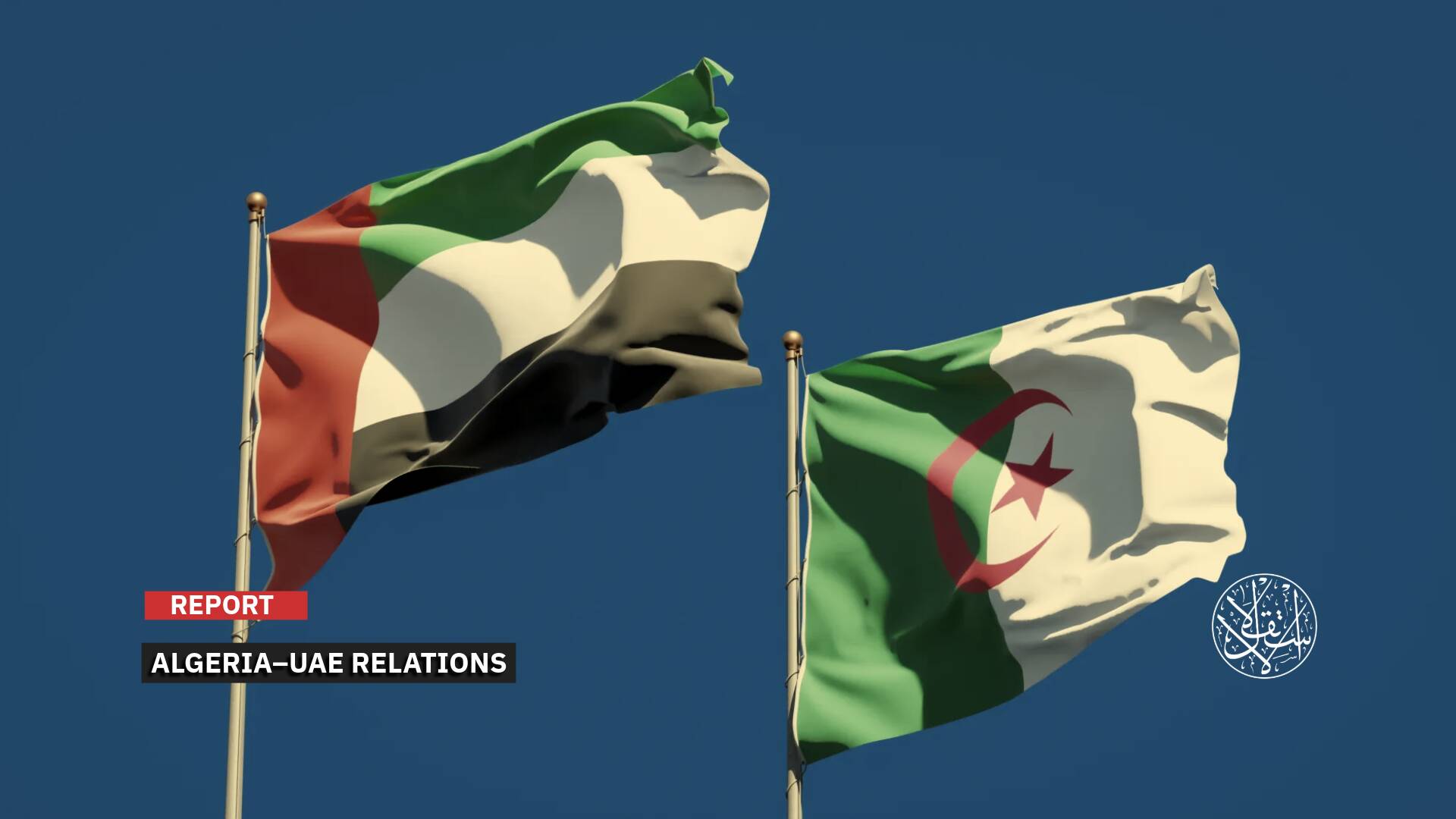
In a notable development, some Omani voices directed explicit accusations at the government of Abu Dhabi, alleging it was behind the escalation targeting Oman, including Trump’s recent threats, which were described as unprecedented in their severity.
According to these accounts, the U.S. pressure on Muscat cannot be separated from what they describe as extensive Emirati financial and political influence within decision-making circles in Washington, allegedly used to reshape U.S. policy in line with specific regional agendas.
These narratives argue that this influence is no longer limited to conventional economic or investment presence but has evolved into a structured system of political leverage within U.S. foreign policy, used to pressure regional actors—particularly Oman—because of its balanced positions on regional issues, especially the Strait of Hormuz.
They further suggest that this influence involves overlapping commercial interests and investment networks linked to companies and influential figures, some of whom are connected to decision-making centers in the region, which has translated into increasingly escalatory U.S. rhetoric toward Muscat.
Critics argue that this reflects a recurring pattern in which economic and political influence is deployed to shape major policy decisions, turning U.S. foreign policy into a tool of pressure that serves specific regional balances of power.
In this context, they say the rhetoric directed at Oman is part of a broader effort to reshape influence in the Gulf and pressure states that insist on neutrality and mediation.
Abu Dhabi’s reliance on Trump to threaten Oman lays bare an Emirati “doctrine of chaos,” one that thrives on buying the silence of major powers and arming gangs to undermine Arab sovereignty and destabilize societies.
Sources
- Trump’s ‘blow ‘em up’ threat to Oman means he’s now attacked or threatened 1 out of every 13 countries
- Trump's Oman outburst throws 'Switzerland of the Middle East' into the spotlight
- Why Trump lashed out at Oman over Strait of Hormuz blockade
- Trump’s Violent Threats Can’t Hide the Truth: He’s a Humiliated Bully