Strategic Rivalry: Why China’s Growing Industrial Footprint in Morocco Is Riling the EU
“China’s growing footprint in Morocco is part of a broader restructuring of global supply chains.”
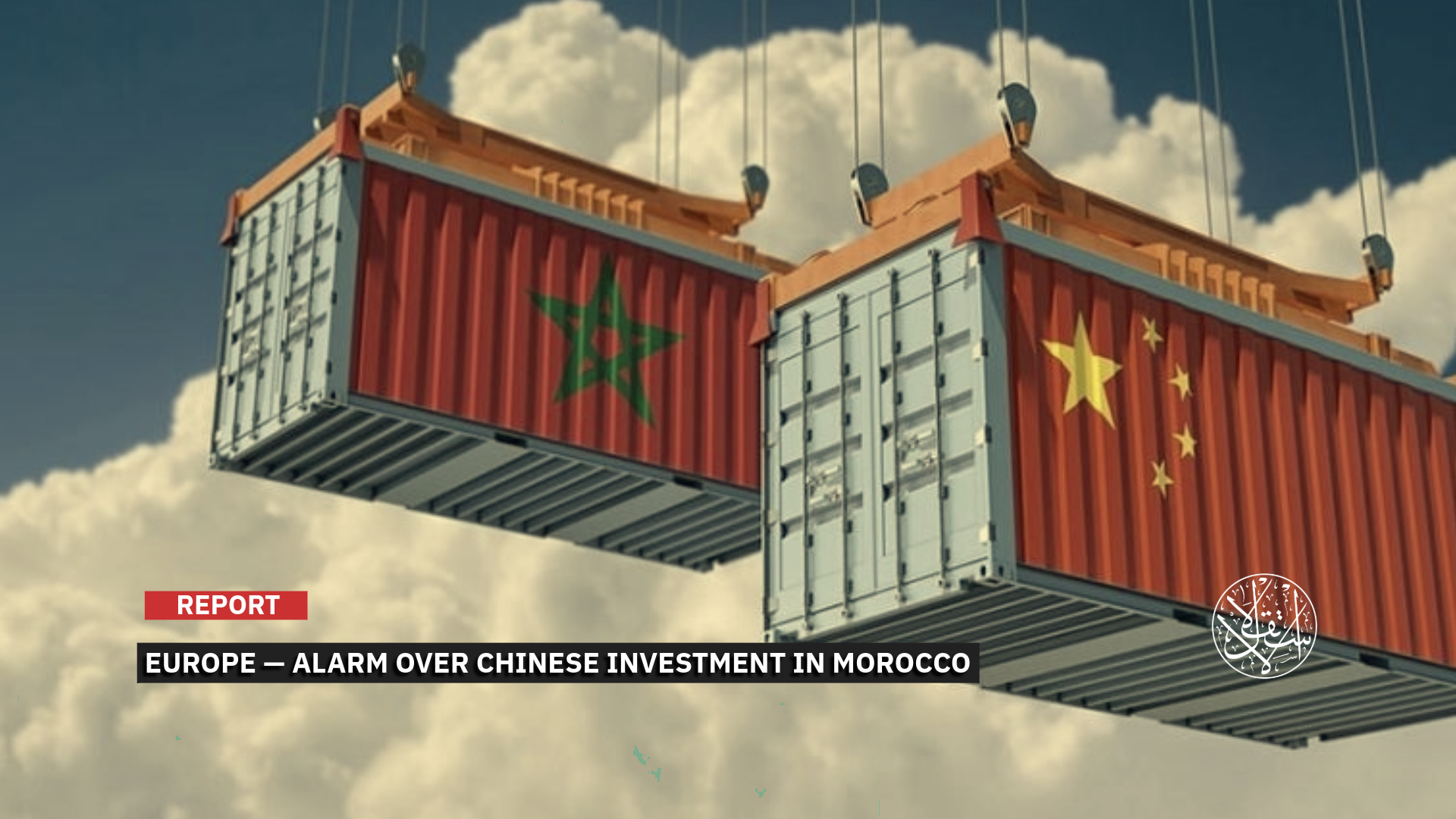
Growing European unease is mounting over billions of dollars in Chinese investment in Morocco, amid fears that the country could become a gateway for subsidized goods that threaten European industry.
The concern was highlighted in an analysis published by the Financial Times on May 30, 2026, which said Brussels is already strengthening its trade defenses against China and what it describes as its commercial proxies.
In 2025, the European Commission ruled that aluminum wheels exported from Morocco were “unfairly subsidized” by Rabat and Beijing through China’s Belt and Road Initiative infrastructure program.
EU officials say it is becoming increasingly difficult to distinguish between genuine Chinese industrial cooperation with Morocco and attempts to circumvent European import tariffs.
A Magnet for Investment
The Organization for Economic Co-operation and Development (OECD) estimates that China subsidizes its electric vehicle industry at a rate three to eight times higher than member states, often through opaque concessional lending that is difficult to trace or challenge.
At the same time, Chinese companies argue that Morocco has become a key hub in European automotive supply chains. Renault and Stellantis, the parent company of Peugeot, both operate major factories in the country, further complicating efforts to tighten trade rules.
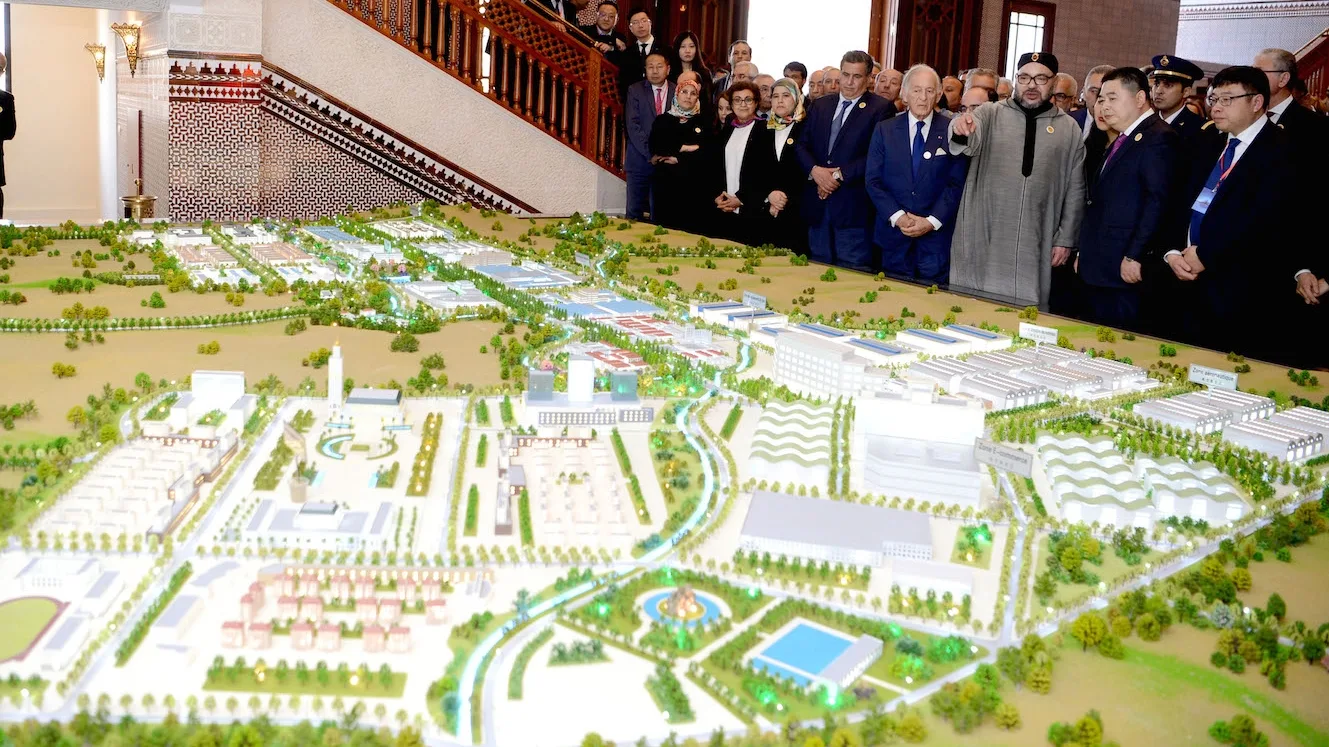
Junjie Cai, project director at Chinese brakes manufacturer APG, which will open a $70 mn facility in the Tangier Tech zone this year, said the plant would combine local labor and materials with Chinese supplies and technology.
“European, Moroccan, and Chinese companies can all share the benefits of this collaboration. This also [delivers] supplies near to their factories in Europe that are priced competitively,” he said.
Chinese investment in other parts of Morocco includes a $1.3 billion battery plant being built by Gotion High-Tech—25 percent owned by German automaker Volkswagen—in the city of Kenitra, around 200 kilometers south of Tangier along the Atlantic coast.
The European Union remains Morocco’s largest trading partner, accounting for a third of its exports, worth more than €26 billion in 2025, making it difficult for Rabat to ignore Brussels’ concerns.
Morocco’s appeal to foreign investors includes a five-year corporate tax exemption, a young workforce, access to green energy inputs to help meet EU carbon tax obligations, and access to 2.5 billion consumers through around 50 free trade agreements, including with the EU and the United States.
Free trade agreements are a major draw for Chinese firms, according to Fitch Solutions, which said in a 2026 report that “nearshoring of production” is increasingly seen as a way to mitigate tariff risk.
In December 2025, Moroccan Trade Minister Ryad Mezzour said the country expects to develop a “full value chain” capable of serving up to 500,000 electric vehicles annually by the end of 2026.
Moroccan officials reject suggestions that special economic zones could become a backdoor for Chinese overproduction into the EU, potentially exacerbating deindustrialization pressures in major manufacturing economies such as Germany.
Morocco is also particularly attractive to Chinese firms as the only African country with a free trade agreement with the United States, giving it a distinctive position within global supply chains.
The Chinese Response
The Chinese outlet Chosun reported in an analysis published in early June 2026 that the European Union (EU) has sought to block the influx of Chinese cars into its market by imposing high tariffs, creating a growing dilemma for Beijing.
The report said that, based on EU findings regarding Chinese state support for the electric vehicle industry, the bloc has imposed tariffs of up to 45 percent on electric vehicles manufactured in China.
However, it added, if products made by Chinese companies are recognized as originating in Morocco, they can enter the EU market duty-free.
Even so, the report noted, even if Chinese firms use Morocco as an export base to bypass tariffs, it is not easy to regulate.
It further argued that recognizing Morocco as a qualifying origin under the EU’s proposed Industrial Acceleration Act (IAA)—designed to boost the competitiveness of European manufacturing—would become a key test case in the future.
Bob Savic, head of international trade at the London-based Global Policy Institute, was cited as saying that Chinese intermediate goods are being moved to North Africa, where they undergo limited processing before being exported to the EU under preferential trade agreements.
He stressed that as the EU’s “de-risking” strategy to reduce dependence on China intersects with Beijing’s strategy of “offshoring production” to the region, North Africa could emerge as a more intense arena of economic competition.
European Anger
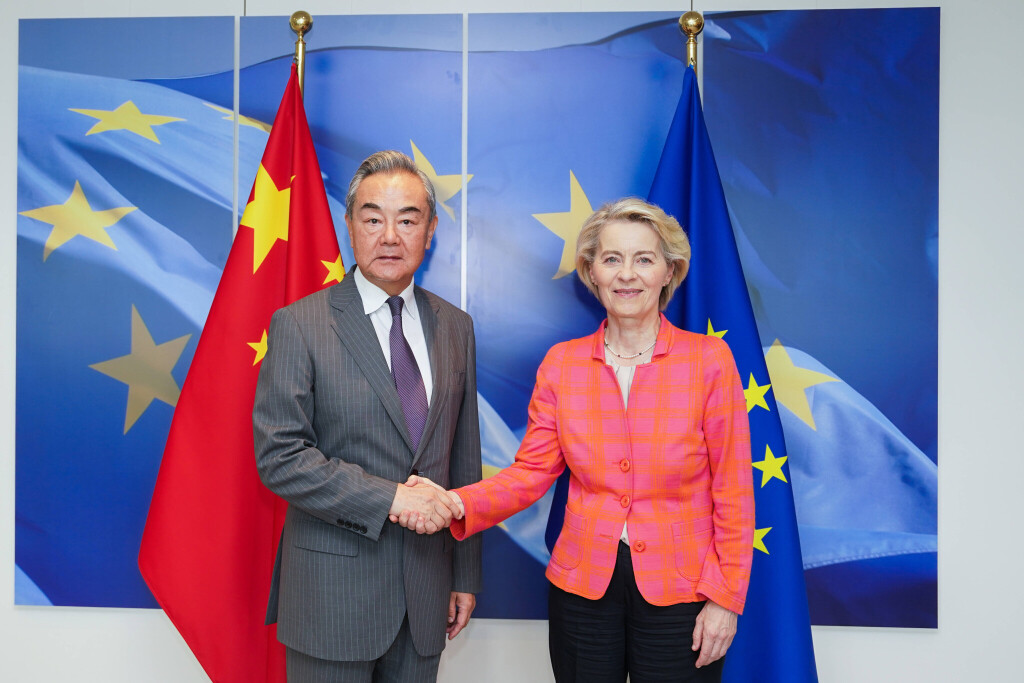
European concerns over Chinese investment in Morocco were underscored by European Commission Executive Vice President Stephane Sejourne, who issued an unusually stark warning that Europe faces an existential challenge that could threaten millions of jobs and undermine the unity of the single market if Brussels does not move more decisively.
According to Le Monde on May 28, 2026, Sejourne painted a bleak picture of trade relations with China, stressing that Beijing runs a trade surplus with the EU of around €1 billion per day—an imbalance that reflects the scale of the economic distortion between the world’s two largest economic blocs.
For the EU official, this trend could push Europe’s trade deficit with China to roughly €500 billion by 2027.
These figures are not seen in Brussels as mere economic indicators but as a direct reflection of declining domestic industrial capacity and the steady relocation of production abroad.
Sejourne warned that around 29 million European jobs could be at risk in the short term as a result of these shifts.
He also noted that about 99 percent of Chinese companies listed and operating in Europe benefit from some form of state support, while a quarter of them operate at a loss within the European market.
EU estimates suggest that China allocates the equivalent of 4 percent of its GDP to supporting industrial and economic activity—far above levels seen in European economies.
Brussels argues that this allows Chinese firms to undercut competitors on price, ultimately eroding market share and forcing the closure of domestic factories.
A Political Reading
Commenting on these dynamics, public policy and strategic analyst Hicham Mouatadid said China’s growing footprint in Morocco is part of a broader restructuring of global supply chains.
“This shift has been driven by rapid geopolitical changes, from the U.S.-China trade war to supply chain vulnerabilities exposed by the COVID-19 pandemic and tensions in key maritime routes,” he told Al-Estiklal.
“China is no longer merely seeking export markets but stable production platforms close to major consumption hubs—making Morocco one of the most attractive geoeconomic locations in the southern Mediterranean.”
“When we look at China’s growing interest in sectors such as electric vehicle batteries and clean energy industries, we are not talking about isolated investments but a strategic bet on the future of global industry,” he added.
Mouatadid added that Beijing understands that the key competition in the coming decades will not only be over oil and gas but over control of the value chains driving the energy transition: lithium, cobalt, batteries, electric vehicles, and green hydrogen.
He said Morocco, with its proximity to Europe, free trade agreements, advanced logistics infrastructure, and growing industrial base, is becoming for China a kind of “advanced manufacturing platform” offering low geopolitical friction access to European and African markets.
At the same time, he stressed that Morocco’s approach is not based on dependency or substitution but on diversification of partners and maximizing strategic autonomy.
He noted that over the past two decades, Morocco has carefully maintained strong ties with Europe and the United States—both economically and in security terms—while simultaneously deepening engagement with emerging powers such as China, India, and Gulf states.
This, he argued, is not situational pragmatism but a diplomatic philosophy rooted in an understanding of a changing international order in which medium-sized states can no longer rely on a single partner.
Politically, Mouatadid said Morocco has so far succeeded in managing a delicate balance: maintaining its status as an “advanced partner” with the EU, while engaging in China’s Belt and Road Initiative without triggering structural tensions with the West.
“Morocco’s success lies in presenting itself as a reliable security and strategic partner to the Western bloc, while resisting economic closure or zero-sum alignment logic,” he said.
“Morocco’s real challenge is not only balancing partners but also turning that balance itself into a source of sovereign strength.”
“The world ahead will not reward states that align quickly, but those that learn to manage complexity and build interdependent interests that make stability with them a strategic necessity for all major powers,” the analyst added.