After Lasting 14 Months: What Are the Backgrounds and Implications of Algeria and Mali's Announcement to End Their Political Crisis?
The decision to reopen the airspace was carried out on Russia's orders.
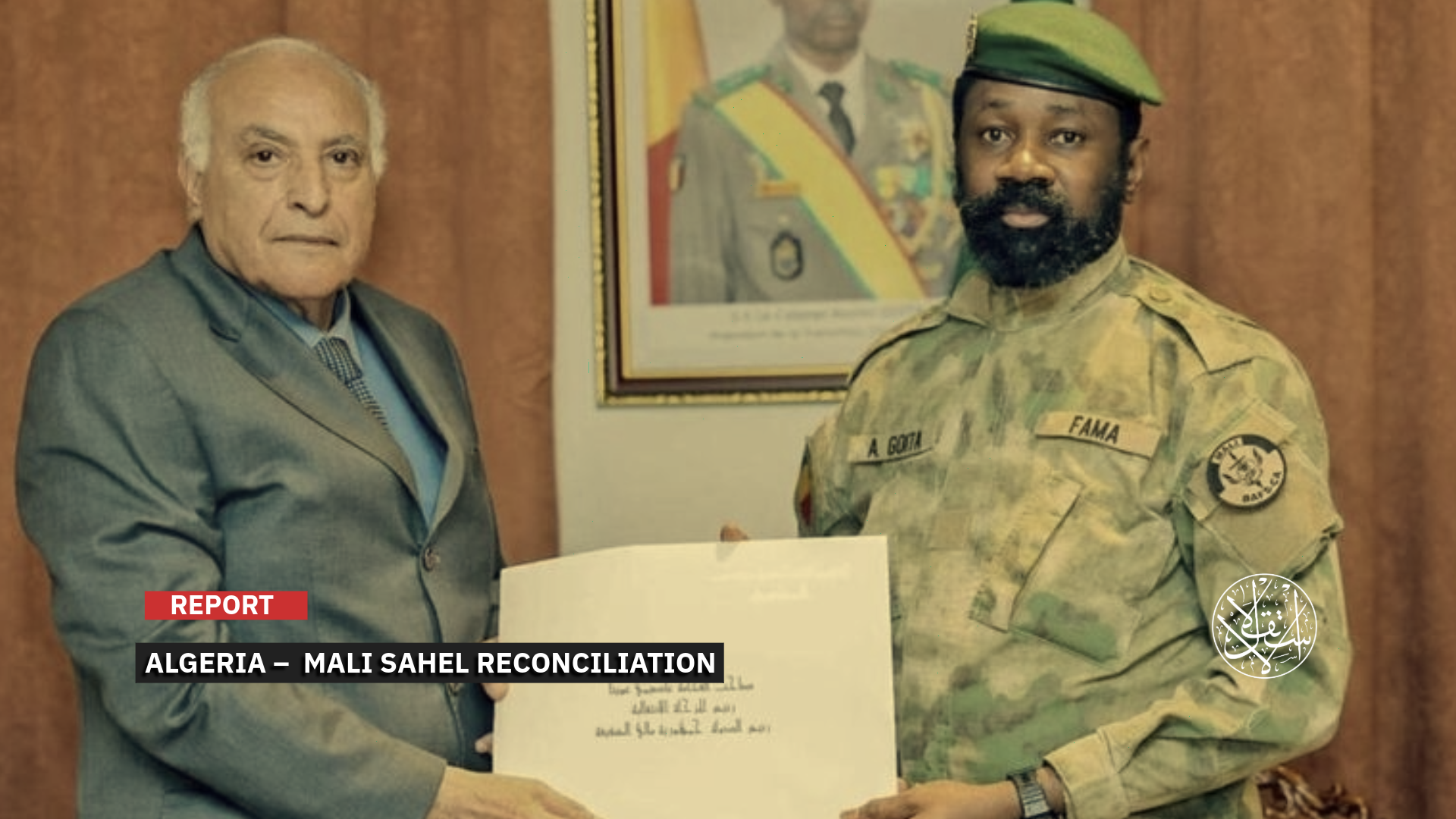
After a year and four months of severed ties, Algeria and Mali announced the restoration of dialogue and diplomatic relations between the two countries following a new bilateral agreement.
On July 10, 2026, Mali's transitional government announced that it had decided to return its ambassador to Algeria and reopen Malian airspace to civilian and military flights to and from Algeria.
In a statement, the government said the decision was made "as part of reviving the relations of cooperation and friendship between Mali and Algeria." It also confirmed the return of Mali's Ambassador Extraordinary and Plenipotentiary to Algeria to his post to resume his diplomatic duties.
Communique No. 2026-003 of the Transitional Government on the revitalization of cooperation and friendly relations between the Republic of Mali and the People's Democratic Republic of Algeria.
Information and Press Office / Ministry of Foreign Affairs and International Cooperation (MAECI).
— Ministry of Foreign Affairs of Mali (@MaliMaeci), July 10, 2026
In a reciprocal move, Algeria announced the return of its ambassador to Mali, Kamel Retieb, to Bamako in his capacity as Ambassador Extraordinary and Plenipotentiary.
In a statement, Algeria's Ministry of Foreign Affairs said that President Abdelmadjid Tebboune had ordered the ambassador's return to Bamako "with a view to restoring relations to their historic and natural course, based on mutual respect and the bonds of brotherhood and cooperation," in a manner that serves the interests of both countries, their brotherly peoples, the Sahel region, and the African continent.
The Algerian Ministry of Defence also announced the reopening of Algerian airspace to all flights arriving from Mali or heading to Mali.

The Context of the Crisis
The crisis between the two countries began when Algeria announced on April 7, 2025, that it was closing its airspace to air traffic coming from Mali or heading to Mali, justifying the decision by what it described as "repeated violations of Algerian airspace" by the Malian side.
The escalation came after the Algerian army announced that it had shot down an armed unmanned reconnaissance drone near the border area of Tin Zaouatine in early April 2025, stating that the aircraft had penetrated two kilometers into Algerian airspace.
In response, Mali's military authorities rejected the Algerian account and described the incident as a "hostile act," insisting that the drone had been downed inside Malian territory.
Bamako quickly responded by closing its airspace to aircraft arriving from Algeria or heading there, stressing that the decision was based on the principle of "reciprocity."
The crisis resulted in both countries withdrawing their ambassadors and completely closing their airspace, leading to the freezing of a significant part of political and economic relations and disrupting security coordination in the Sahel region.
Tensions between the two countries had already been escalating before the drone incident. Mali had announced the termination of the 2015 Algiers Peace Agreement, signed between the Malian government and armed groups.
The ruling military council in Bamako also accused Algeria of interfering in Mali's internal affairs and of hosting political figures and forces opposed to the Malian authorities, further deepening disagreements between the two sides before the drone crisis erupted.
In preparation for resolving the dispute, Algerian President Abdelmadjid Tebboune revealed in May 2026 that there had been "indirect" contacts between Algeria and Bamako following events in Mali, including the April 25, 2026 attack launched by Azawad forces on northern cities and the attack by the al-Qaeda-affiliated Jama'at Nusrat al-Islam wal-Muslimin (JNIM) on the capital, Bamako.
In a televised interview broadcast on May 3, 2026, President Tebboune said, "There are indirect contacts amid these developments," without specifying their nature or the channels through which they took place.
At the time, Tebboune reiterated Algeria's readiness to help overcome the current crisis and its complexities.
Strategic Dimensions
The Algerian side focused on the positive aspects of the move. Among them, writer Faiza Sayeh said that the resumption of diplomatic relations between the two countries represents a significant turning point with strategic dimensions, whose effects extend to the future of security and stability in the African Sahel region.
In an article published by the website "Algeria Today" on July 12, Sayeh said that the restoration of Algerian-Malian relations is of great importance, as it represents a step that reaffirms the value of dialogue in a region facing complex security and development challenges.
She continued, "In a world where cross-border threats are increasing, from terrorism and organized crime to irregular migration and arms trafficking, the security of states is no longer measured only by their political borders, but by their ability to build a stable regional environment."
"In the field of international relations, such decisions are not viewed solely from an administrative or protocol perspective, but rather through the political and strategic messages they convey."
Sayeh stressed that the return of ambassadors means the resumption of direct channels of communication between the two leaderships and the reactivation of consultation mechanisms on bilateral and regional issues.
She further noted, "As for the reopening of airspace, it is an indicator of the restoration of a degree of political and security trust, and a message that the phase of crisis management is beginning to give way to a phase of rebuilding the partnership."
Therefore, the writer said, "the importance of these measures does not lie in their administrative content, but in their political implications and what they reflect of a shared desire to overcome differences and move toward more stable cooperation."
She said that Algeria views Mali's stability as an urgent necessity, considering that it has decisive implications for Algeria's national security, given the two countries' shared border of more than 1,300 kilometers, amid intertwined security challenges between them.
Meanwhile, Sayeh continued, "Mali understands that cooperation with Algeria represents an important element in addressing the challenges of terrorism, organized crime, and irregular migration, issues that exceed the ability of any single country to tackle on its own."
The Russian Role
Some media analyses suggested that the push to restore relations between Algeria and Mali was achieved thanks to an intensive diplomatic effort led by Moscow under the direct patronage of President Vladimir Putin, aimed at ending the tensions that threatened one of Russia’s most important spheres of influence in Africa.
In this regard, the website 24 Hours reported on July 14 that "Moscow has been engaged for nearly two months in high-level mediation, which has not been limited to traditional diplomatic channels, but has also relied on a network of African allies."
It said that this network included the Republic of the Congo, Niger, and Togo, which helped open undisclosed communication channels and create conditions for the resumption of dialogue between Algeria and Bamako.
The website stressed that this move reflects the Kremlin’s recognition that the continuation of the crisis between two of its prominent partners in North Africa and the Sahel could directly affect its expanding strategic project on the continent.
Commenting on this interpretation, Algerian political and media activist Walid Kebir said that these assessments were accurate. He stressed that the decision to reopen Algerian airspace to Malian flights "came in implementation of Russian orders," according to his wording.
Kebir told Al-Estiklal that Algeria’s military leadership "is implementing what is dictated to it by the Russian side, which confirms the victory of Bamako’s ruler, Assimi Goïta, over the Algerian military and political leadership."
He explained that this view was based on the argument that "the Malian side imposed all of its conditions, including Algeria’s announcement of respect for Mali’s unity and sovereignty, that there would be no return to the previous Algiers Agreement, and that Mali would not adopt Morocco’s position on the Western Sahara issue or support the separatist Polisario Front."
Accordingly, Kebir said that "these developments show that Algeria’s military leadership did not carefully calculate its political steps and decisions with neighboring countries," calling for "genuine respect toward neighbors so that the country does not fall into avoidable mistakes."
Algerian political analyst and writer Anwar Malek said that reaching the reconciliation announcement between Algeria and Mali was due to several factors, including the existence of African regional mediation and the realization by both sides that a rupture was not in anyone’s interest.
In an analysis published on his YouTube channel on July 12, 2026, Malek added that another factor was the two sides’ understanding that the dispute did not justify cutting transportation links and air navigation, especially since such a measure threatened the interests of many countries.
He stressed that the reopening of airspace is a political message, not merely a technical or administrative decision. This, he said, raises questions about why Algeria continues to keep its airspace closed to Morocco, despite the latter’s repeated offers to resolve the crisis between the two countries, and despite Algerian leaders’ statements that they are not a party to the Western Sahara issue.
Malek pointed out that the decision by Algerian authorities to close land, maritime, and air borders between Algeria and Morocco had negatively affected tens of thousands of Algerian citizens, as well as Moroccan citizens, particularly those with families or relatives in Algeria.
The political analyst also highlighted the fact that the announcement of the airspace closure came from the Ministry of Defence, as did the announcement of its reopening, considering this an indication that the issue carries security and military dimensions.
He added that these are the same dimensions involved in the crisis file with Morocco, raising questions about the political reasons behind the continued dispute with Morocco and when a solution will be reached to end the ongoing rupture.
Former Algerian diplomat Mohamed Larbi Zitout said that the decision to reopen the airspace should have, or normally would have, been issued by the Algerian Ministry of Foreign Affairs, rather than the Ministry of Defence, considering that what happened is evidence of the military establishment’s control over political and diplomatic decision-making.
Regarding the context of the decision, Zitout said in an analysis published on his Facebook page on July 10 that Bamako has been under siege for several months, with food and essential supplies reaching the city only with difficulty, which raises serious questions about the reasons behind Algeria’s decision to take this step at this particular time.
Accordingly, the former diplomat believes that what is happening confirms that the decision was made based on external instructions or by a major power, rather than being a reflection of an internal decision.
He added that this is because maintaining the situation in Mali as it is serves the interests of Russia and the United States, as the continuation of the crisis benefits these parties. He argued that the faster air transport route through Algerian airspace is one of the requirements linked to these international arrangements and interests.

Academic Analysis
On the other hand, an analysis by the International Crisis Group on July 15, 2026, stated that the ongoing dispute between Algeria and Mali "undermined bilateral cooperation at a time when Mali is attempting to confront a growing threat from separatist and jihadist armed groups that launched joint attacks on April 25, 2026, shaking the foundations of the regime."
It explained that "the Malian side, with support from Russia and also from its new ally Turkiye, carried out a military response against the rebels," adding that reconciliation with Algeria provides Bamako with a new opportunity to expand security and stability in the region.
The analysis said that the crisis between Algeria and Mali "weakened cooperation between the two countries at a time when the military authorities in Bamako are facing threats from armed groups."
It noted that "the resumption of fighting in the north prompted separatist movements to regroup into a new coalition, the Azawad Liberation Front, and revive the separatist agenda."
To put an end to the escalating violence, the group said, "Bamako and Algiers, with the support of African mediators, should deepen their rapprochement in order to lay the foundations for a new partnership aimed at ensuring security along the Algerian-Malian border."
It added, "The two capitals should then work together to engage in dialogue with all warring parties in order to end the fighting."
The group continued, "Bamako should begin discussions with armed groups, both separatist and jihadist, in line with the recommendations of several national dialogue platforms over the past decade."
It further stated, "Algeria, which remains a key interlocutor for some armed groups in northern Mali, should support Bamako in this effort."
The group explained that "with Mali's authorities pursuing a risky path, the apparent easing of tensions in relations between Algeria and Bamako represents an encouraging sign."
Therefore, it added, "the two capitals should build on this progress to explore the conditions necessary for a gradual normalization of relations, which could help restore politics to the forefront of efforts to resolve conflicts in the Sahel region."
Sources
- The Return of Algerian–Malian Relations: A Diplomatic Victory and the Inevitability of Geography in the Sahel Stability Equation [Arabic]
- Putin Leads Secret Mediation Between Algeria and Mali to Protect Russian Influence in the Sahel [Arabic]
- Algeria and Mali: Seizing the Opportunity of Renewed Relations [Arabic]