From the Kurdish Card to Naval Power: How Washington Is Shifting Its Strategy Against Iran
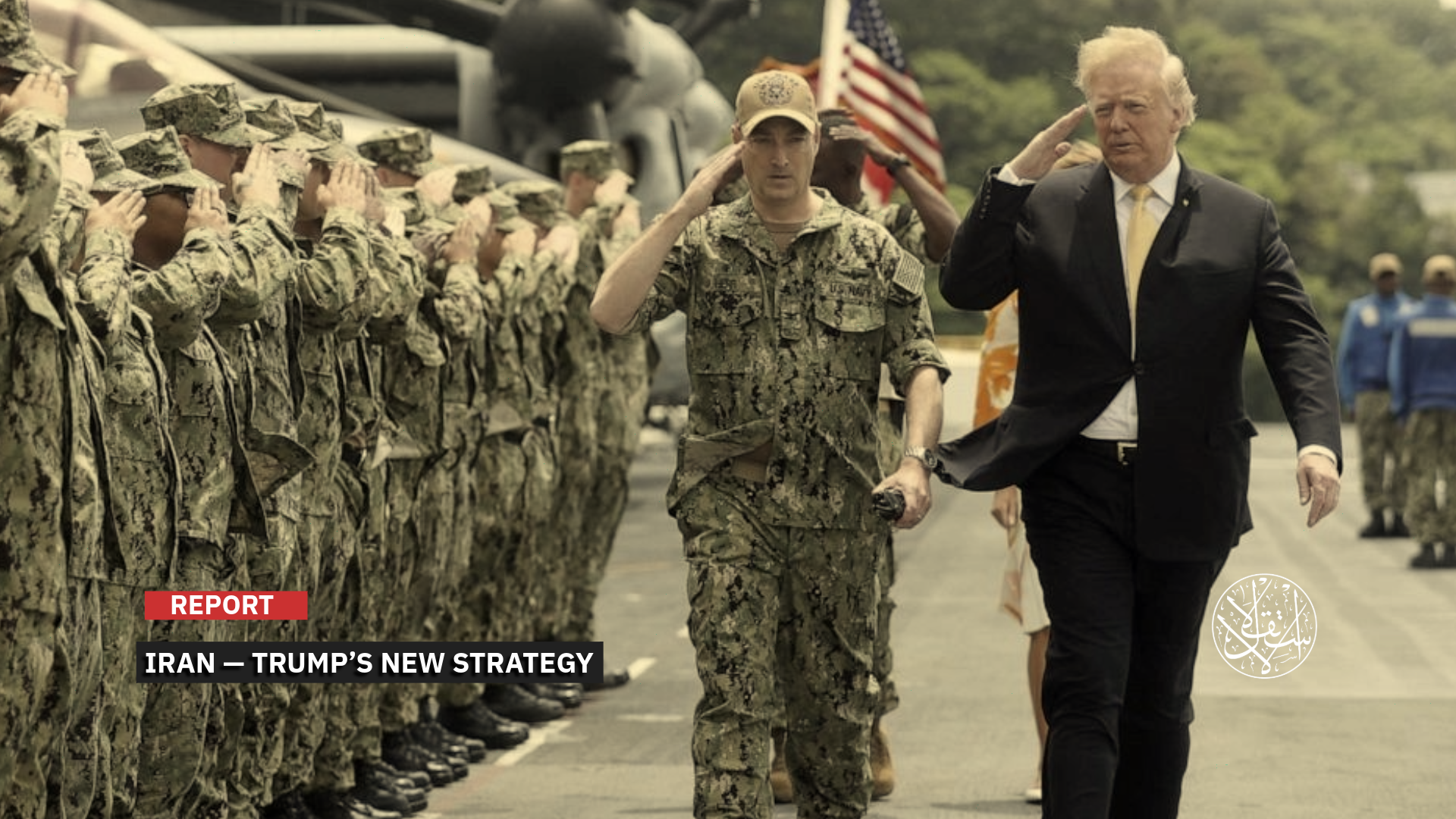
Washington held consultations with armed Iranian Kurdish groups over the possibility of their involvement in his war on Iran.
In March 2026, during the joint U.S.-Israeli War on Iran and amid Donald Trump’s remarks about possible “regime change,” a scenario emerged for a ground operation inside Iran launched from Iraq’s Kurdistan region and carried out by Iranian Kurdish opposition groups. The plan never materialized and ultimately collapsed.
Now, as a new wave of U.S. strikes intensifies, Trump has once again hinted at what could be described as the “Kurdish card,” without naming it directly. He suggested that “a ground campaign” could become an option as the war on Iran expands, while offering no details about how such a move would be carried out or who would lead it.
In a July 15, 2026, interview with Fox News, Trump was asked about the possibility of a ground war and said, “Sometimes you need a ground campaign, but we have other people that will do the ground campaign for us,” signaling that U.S. forces would not necessarily take a direct role in such an attack.
Trump’s reference to “other people” remained deliberately vague, but it quickly fueled speculation among analysts over whether he was referring to local actors inside Iran, armed opposition groups, or Iranian Kurdish factions. His comments revived earlier scenarios from the start of the war, including the idea of “regime change,” even though previous experience has shown the limits of such an approach.
The irony is that one of the main reasons the March scenario failed was that it was leaked publicly, giving Tehran time to prepare and block it. This time, Trump appears to have revealed hints of a possible scenario himself, though indirectly and without naming the Kurds or providing details. That has raised questions over whether his remarks reflect a genuine military option or are part of a broader campaign of political and psychological pressure on Iran.
Tehran, however, appeared to treat the remarks as a serious warning. It moved military reinforcements toward the border with Iraq’s Kurdistan region, carried out strikes targeting Kurdish faction positions, and hit U.S. sites in Erbil just one day after Trump’s comments, suggesting that Iranian officials viewed the hints as a threat requiring immediate preparation.

The First Failed Attempt
In March 2026, the U.S. war secretary openly described the “Kurdish card” as one of the options being considered in the U.S.-Israeli plans to pressure Iran from within.
Washington, he said, had held consultations with armed Iranian Kurdish groups over the possibility of involving them in military pressure against Tehran through Iran’s western front, using Iraq’s Kurdistan region as a launching point if the war escalated, according to a Reuters report on March 4, 2026.
Following those remarks, American and Israeli media circulated a series of reports claiming that armed Kurdish groups had begun infiltrating Iran through border areas with Iraq and Azerbaijan. Those claims were later found to be unsubstantiated.
Even so, Tehran treated the reports as a potential threat, responding with artillery and missile strikes on positions held by armed Kurdish factions along the border as a precautionary measure.
On March 5, 2026, The Washington Post reported that the Trump administration had sought to win over Kurdish groups, holding talks with Iranian and Iraqi Kurdish leaders and offering possible U.S. air support if they moved against the Iranian government.
But the plan quickly ran into obstacles. The Kurdistan Regional Government rejected the use of its territory as a launchpad for attacks on Iran, while Washington stopped short of committing direct military support to Kurdish factions. The plan also faced opposition from Turkiye, which objected to any move that could strengthen armed Kurdish groups, according to U.S. and European reports.
The strategy also struggled with a lack of public support inside Iran for an attempt to overthrow the government through armed groups viewed by many as separatists amid fears over the country’s territorial integrity. Iranian Kurdish parties themselves later denied that any military operation was underway or that they had received military backing from the United States or the Israeli Occupation.
On March 29, 2026, The Times of Israel and Israel’s Channel 12 attributed the collapse of the plan to the early leak of its details and regional opposition. The outlets reported that Washington and “Tel Aviv” had hoped Kurdish fighters entering Iran from Iraq could help spark a broader uprising against the government, but the plan fell apart before reaching the implementation stage.
Israeli Occupation media added that the plan failed not only because it was leaked but also because Iran reinforced its military presence in the country's northwest and pressured the Iraqi government through diplomatic channels, while Turkiye opposed the plan and Kurdish leaders were reluctant to move forward because of the military and political risks involved.
The Washington Post also reported that Kurdish factions were not prepared for a confrontation of this scale, citing shortages of weapons, internal divisions, fears of a broad Iranian response, and opposition from the two main Kurdish parties in Iraq’s Kurdistan region to turning the area into a launchpad for an attack on Iran.

Why Is Trump Bringing It Up Again?
Donald Trump’s renewed comments about the possibility of “a ground campaign” during his Fox News interview have sparked widespread speculation, even though he did not this time link such a move to the “Kurdish card” or any specific faction.
His remarks opened the door to several interpretations: that Washington may be counting on Kurdish factions or other armed opposition groups to operate inside Iran, or that the reference was part of a broader campaign of military and psychological pressure aimed at pushing Tehran to scale back its actions in the Strait of Hormuz and return to negotiations.
Trump’s comments were deliberately vague. Responding to a question about whether he had ruled out a limited “ground campaign,” he said, “I don’t want to do that,” adding, “Sometimes you need a ground campaign, but we have other people that will do the ground campaign for us,” without identifying who those parties might be.
The remarks came alongside a July 13, 2026, report by the Alhurra channel, which cited Iranian Kurdish opposition parties as saying that the Islamic Revolutionary Guard Corps (IRGC) had deployed thousands of troops and heavy weapons to border areas near Iraq’s Kurdistan region.
The channel said the moves could indicate that Iran was preparing for a possible confrontation with Kurdish fighters, noting that Tehran continues to view the possibility of Israeli-backed aggression as a serious threat.
According to Kurdish party officials who spoke to Alhurra, the Iranian reinforcements included special forces, artillery, tanks, missiles, and drones, as well as about 3,000 members of the elite Saberin unit and units from the IRGC’s ground forces and aerospace division.
Adding to the speculation, about 24 hours after Trump referred to “other parties” that could carry out a ground campaign, Alhurra published another report on July 16, 2026, describing what it called a rise in attacks targeting IRGC and Basij personnel inside Iran by opposition groups.
The report said that “the regime’s continued repression has pushed some young Iranians, including people who were not previously involved in opposition movements, to abandon peaceful change and turn to armed action.”
It cited Iranian activists involved in underground opposition networks who said their activities had expanded in recent weeks, moving from Molotov cocktail attacks on security facilities to operations involving rifles, explosives, and attacks targeting IRGC and Basij members.
The channel also interviewed six activists, including some Kurds, who described a widening pattern of armed violence across several Iranian cities, including Tehran, Isfahan, and Mashhad, carried out by scattered groups with different backgrounds and objectives but a shared commitment to armed resistance against the Iranian authorities.
‘Puss in Boots’
As Iran moved military reinforcements to border areas opposite Kurdish faction strongholds, preparing for any possible U.S. ground aggression, and as Donald Trump spoke of “other parties” carrying out any “ground campaign,” Israeli and American media revealed details on July 14, 2026, of a previous secret plan that was never implemented.
The New York Times, Haaretz, and other Israeli outlets reported that “Israel’s” intelligence agency, the Mossad, had developed a plan in March 2026 to overthrow the Iranian government under the codename “Puss in Boots.”
According to Israel’s Channel 13, the plan involved Israeli strikes on IRGC positions along the border with Iraq, particularly in Iranian Kurdistan, followed by a push by armed Kurdish factions into Iranian territory to open a ground front against Tehran.
With the “Kurdish card” returning to the spotlight in July 2026, U.S. analysts questioned whether Trump was seeking to revive the “Puss in Boots” plan and whether this could explain the accelerated deployment of additional U.S. naval and ground forces around Iran.
Observers believe Iran’s April 7, 2026 drone attack on Kurdish positions, as well as the U.S. military base and consulate in Erbil, was part of a preemptive effort to disrupt any potential operation relying on Kurdish factions before it could become a reality on the ground.
A Backup Plan: A Ground Landing?
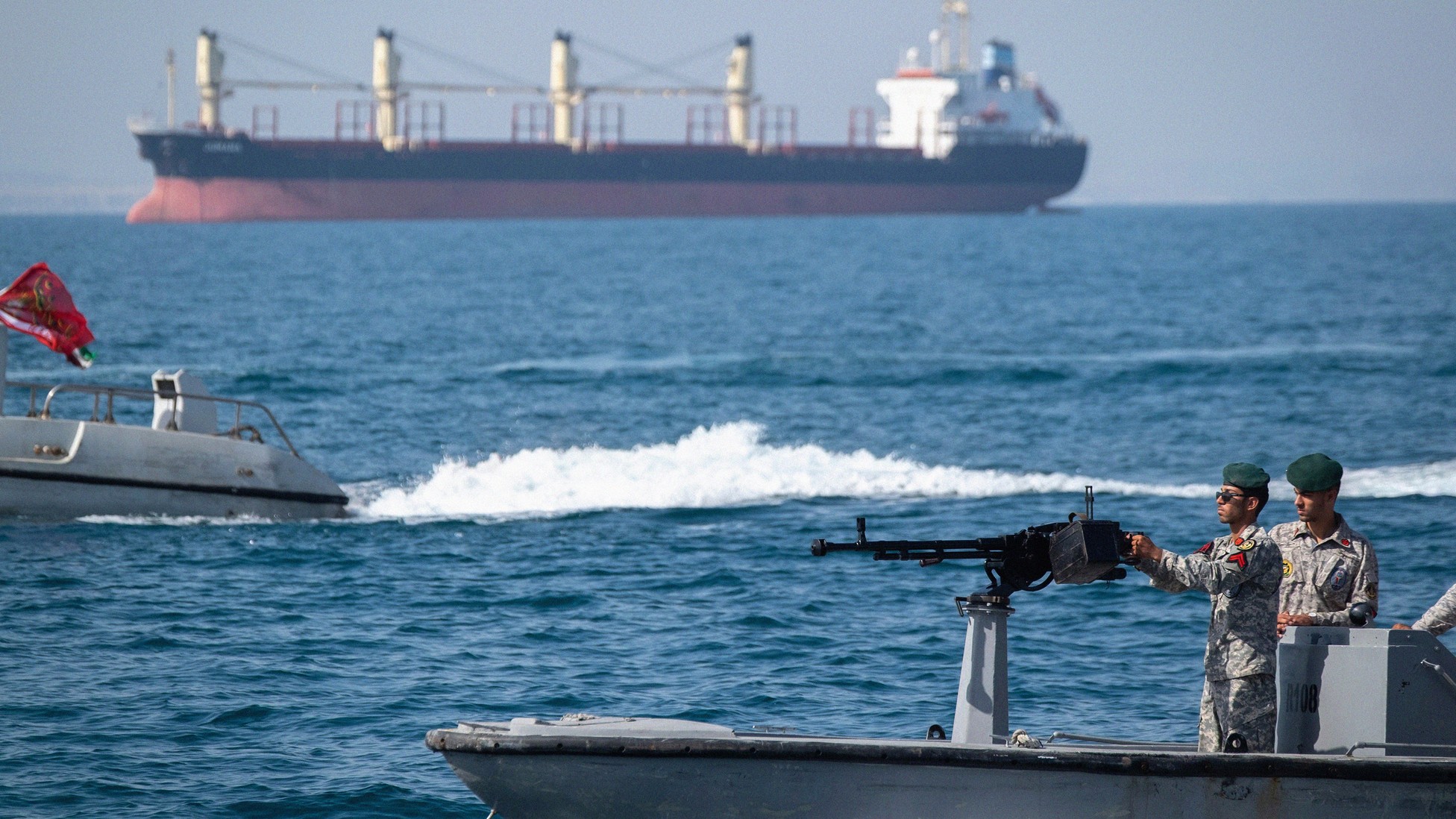
The arrival of units from the U.S. Army’s 82nd Airborne Division, an elite force specialized in rapid deployment, airborne assaults, and securing strategic locations, along with other American military reinforcements in the region, has raised questions about the next phase of the U.S.-Israeli War on Iran and whether Washington is preparing a ground option as an alternative or parallel strategy to the “Kurdish card.”
Speculation grew after U.S. strikes focused heavily on bridges, roads, and transportation networks inside Iran, particularly routes linking southern provinces to Tehran. The attacks prompted analysts to question whether they were intended to pave the way for a ground operation aimed at seizing southern oil facilities, securing areas overlooking the Strait of Hormuz, or even directly controlling maritime traffic through the strategic waterway.
Heavy U.S. strikes on infrastructure in Hormozgan province, which includes the Strait of Hormuz within its territory, further fueled the theory. The strikes appeared focused on isolating Iran’s coastline from the country’s interior, potentially easing the way for any future ground movement if such a decision were made.
Still, military experts do not believe this strategy offers a greater chance of success than previous attempts. Reuters reported on July 16, 2026, citing analysts who said the latest attack showed no clear signs of achieving what earlier military pressure had failed to accomplish: forcing Tehran to change course.
Experts noted that the collapse of a temporary ceasefire agreement reached a month earlier had created a new dilemma for President Donald Trump, who is seeking to break Iran’s control over the Strait of Hormuz and force Tehran to accept his demands, helping explain the renewed reliance on military options.
“There’s no reason to believe that this latest set of attacks or whatever the president has in mind will compel the Iranians to change their thinking,” Jonathan Panikoff, a former deputy U.S. intelligence officer for the Middle East now at the Atlantic Council think tank, told Reuters. “It’s perhaps more likely to harden their position.”
Experts have warned that continued escalation could eventually lead to a ground invasion of Iran, a move that could trigger a “long war” that previous U.S. presidents have warned against. It would also carry major domestic political costs for Trump and the Republican Party ahead of the congressional midterm elections, The Guardian reported on July 18, 2026.
Most analysts also believe that even if U.S. escalation develops into a ground intervention, it would be unlikely to force Iran to change its behavior more effectively than previous phases of the four-and-a-half-month war, despite U.S. and Israeli strikes assassinating senior military figures and damaging Iran’s military capabilities.
CNN reported on July 16, 2026, that analysts believed any potential “ground campaign” could target Kharg Island, Iran’s main oil export hub, or the country’s southern coastline along the Persian Gulf.
However, the network noted that any amphibious landing on Iranian shores, whether carried out by U.S. or allied forces, would require enormous logistical capabilities and remain among the most complex and dangerous military operations, giving Iranian forces opportunities to concentrate defenses around likely landing zones.
Iran could also mine approach routes, block them with maritime obstacles, and strike attacking forces with suicide drones, artillery, mortars, and anti-armor weapons. Meanwhile, supply lines needed for ammunition, food, water, and medical support would remain vulnerable to continuous attacks.
In this context, U.S. Army Captain Daniel Hogstein wrote in the May-June issue of the Army’s Military Review that the balance of power in coastal warfare has swung in favor of the defender.
Former U.S. military officials concluded in a report published by The Atlantic on July 17, 2026, that the Trump administration faces limited choices: either accept the current reality in the Strait of Hormuz or pursue a military escalation carrying significant strategic and political risks.
Sources
- Trump won't rule out ground campaign in Iran
- Trump threatens new Iran escalation and risks repeating old mistakes
- Why is Trump risking midterm disaster by resuming the unpopular Iran war?
- Trump Has Only Terrible Choices With Iran
- Trump calls on Kurds to aid U.S. effort in Iran, offers support
- US-Israeli plan for Kurdish invasion of Iran reportedly collapsed amid leaks, distrust
- Iran Reinforces Border With Iraq Amid Fears of a Kurdish Incursion [Arabic]