The Kurdish Card: Can US and Israeli Plans Strike at Iran from Within?
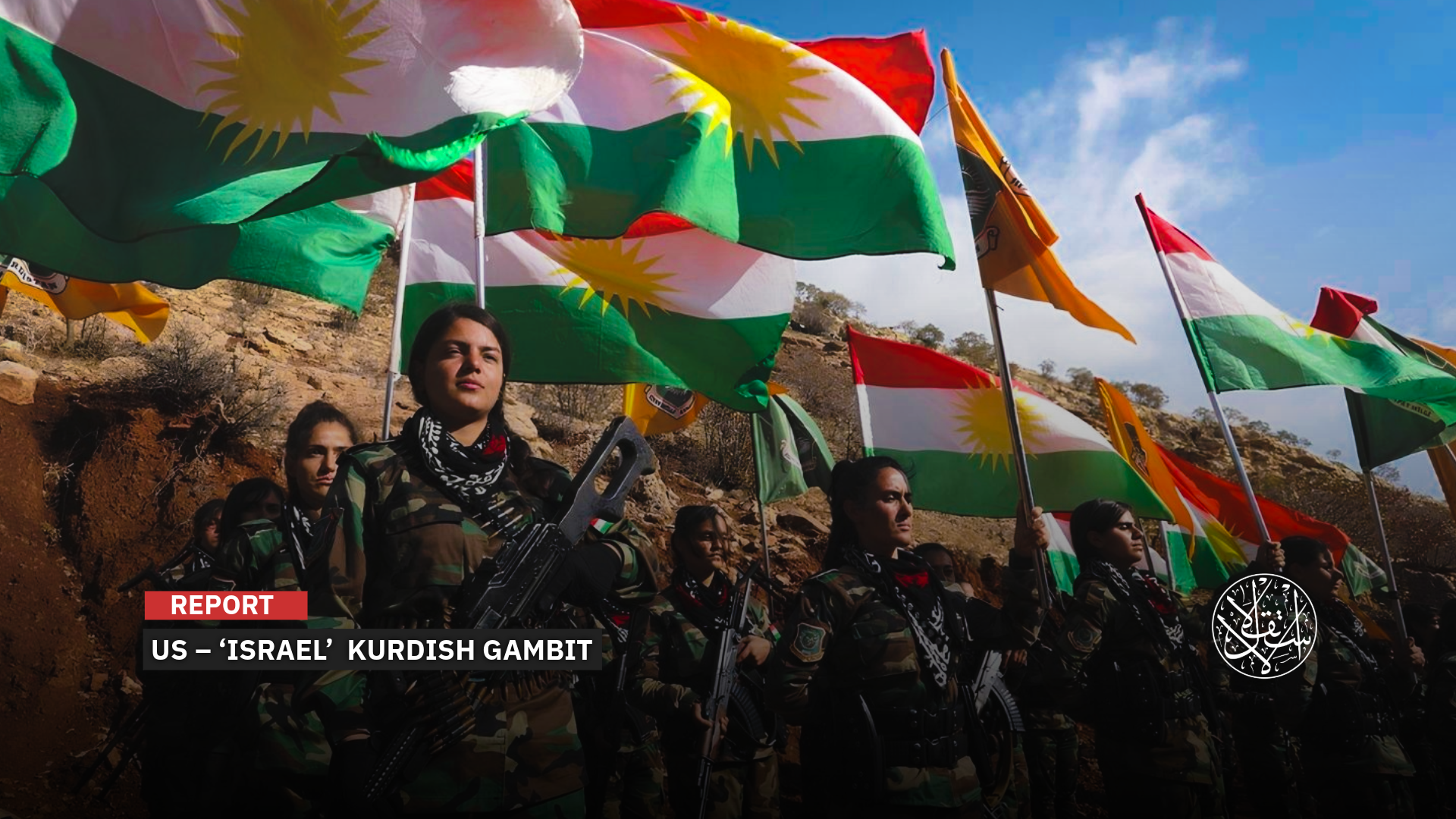
Allegations suggest that fighters from Iranian Kurdish opposition factions have launched a ground offensive against the Iranian regime.
As signs grow that the Iranian regime cannot be toppled through airstrikes alone, and amid the U.S. administration’s denial that it intends to send ground forces into Iran, Washington has begun studying alternative options, according to Western media reports.
One of the most prominent options involves leveraging local opposition forces inside the country, particularly armed groups linked to non-Persian ethnic communities, such as Kurdish factions.
This approach gained attention following remarks by the U.S. defense secretary, who spoke about consultations with Iranian Kurdish armed groups regarding the possibility of participating in military pressure on Tehran from the western front if the confrontation escalates, as reported by Reuters on March 4, 2026.
These statements suggest the potential use of the ethnic dimension in the conflict, by opening unconventional fronts inside Iranian territory to disperse the Iranian army’s capabilities and increase pressure on the regime, a move that could threaten the fragmentation of Iran.
In the aftermath, U.S. and Israeli media outlets circulated successive reports claiming that armed Kurdish groups had begun infiltrating Iranian territory from border areas in Iraq and Azerbaijan.
However, some newspapers that published the reports later issued corrections after it became clear that the Kurdish insurgency had not yet begun and that those forces had not actually entered Iranian territory, but were instead in a stage of preparation and mobilization near the borders.
Tehran responded quickly to these developments by carrying out artillery and missile strikes targeting sites belonging to Kurdish armed factions in Iraq’s Kurdistan region and border areas inside Azerbaijan.
These developments coincided with circulating unconfirmed reports and media rumors about a possible operation involving the insertion of U.S. special forces inside Iranian territory near the Fordo nuclear facility, as part of a potential covert mission, along with claims that those forces had been ambushed by Iran’s Revolutionary Guard, resulting in casualties.
However, these accounts remain unconfirmed by any of the parties involved.
At the same time, reports about Kurdish military movements through Azerbaijani territory, along with Iranian strikes said to have hit areas near civilian facilities, including an airport inside Azerbaijan, contributed to escalating regional tensions.
This prompted the Azerbaijani army to reinforce its military deployment along the border with Iran, signaling the possibility that tensions linked to the conflict could widen further.

How Is It Arranged?
On the second day of the war between the United States and “Israel” on one side, and Iran on the other, in early March 2026, U.S. President Donald Trump held a phone call with Kurdish leaders in Iraq’s Kurdistan region, including Masoud Barzani and Bafel Talabani.
According to American and Israeli sources cited by Axios on March 3, 2026, the call discussed the possibility of a Kurdish ground offensive against Iran launched from Iraqi Kurdistan.
The report, published by U.S.-Israeli journalist Barak Ravid, a former member of the Israeli military, cited claims that fighters from Iranian Kurdish opposition factions had begun a ground assault against the Iranian regime in the country’s northwest, before the report was later revised to confirm that no attack had actually begun and that the movements were still in the preparation and mobilization phase.
Later, Axios retracted its earlier report claiming that a ground offensive had been launched by what it described as “Iranian Kurdish militias,” deleting the story from its X account.
Barak Ravid issued an updated statement denying that any U.S. official had attributed a ground attack in northwestern Iran to “Iranian Kurdish militias,” noting that reports were conflicting and that there was no clear confirmation of the offensive or its potential timing.
Meanwhile, several American and Israeli media outlets continued circulating similar claims, with Fox News and Israel Hayom reporting allegations that thousands of Iraqi Kurdish fighters were preparing a ground assault inside Iran.
CNN, citing multiple sources on March 3, 2026, reported that the U.S. Central Intelligence Agency (CIA) was considering arming Kurdish forces to help fuel protests within Iran.
The network also quoted an Iranian Kurdish official saying that Iranian Kurdish opposition forces were expected to participate in a ground operation in western Iran in the coming days, with anticipated support from the U.S. and “Israel”, while some parties raised the possibility of dividing Iran.
The New York Times reported that U.S.-aligned Iranian Kurdish forces based in Iraq are preparing armed units that could move into Iranian territory, potentially opening a new front in the expanding conflict, according to Iraqi officials and members of Kurdish opposition groups.
White House spokesperson Karoline Leavitt denied reports claiming that President Trump had approved any plan allowing a Kurdish uprising inside Iran.
Regarding the Iraqi Kurdish stance, both Masoud Barzani and Bafel Talabani expressed reservations about participating in any ground military operation inside Iran, according to The Washington Post.
The newspaper quoted a senior Kurdish official saying that Trump’s message to the Kurdish leadership included a direct invitation to choose a side in the conflict, stating, “Choose between the United States and Iran.”
This pattern of actions falls under what is known as a “third-party strategy,” which leverages ethnic groups or minorities as instruments to weaken a central state, combining external military pressure with internal, particularly armed, unrest to create conditions that could destabilize or partially collapse a political system.
Washington and “Tel Aviv” hope that a Kurdish ground offensive, coordinated with U.S. and Israeli airstrikes, would increase pressure on the Iranian regime while triggering internal unrest that could spread to other regions inside Iran.
Six days before the war began, five Iranian Kurdish opposition groups based in Iraq, with armed forces along the Iranian border, announced the formation of the “Coalition of Political Forces in Iranian Kurdistan” to confront the Iranian regime politically and militarily.
Iran shares a long border with Iraqi Kurdistan, where the Iranian Kurdistan Democratic Party has waged a decades-long conflict against the Iranian regime, alongside other Kurdish opposition groups both inside and outside Iran.
Analysts note that any logistical or intelligence support provided by Iraqi Kurdistan to these groups could give the United States an additional ground leverage against Tehran while reducing the need for direct U.S. military intervention.
However, Turkish media reports have highlighted Ankara’s concerns over these developments, warning that it may take a countering stance against any armed Kurdish moves that could alter regional geopolitical balances, viewing such actions as a red line with the potential to impose new strategic realities on the ground.
Confounding Betrayal
To understand the reasons behind the reluctance of Kurdish leaders in Iraq’s Kurdistan region to allow Iranian Kurdish fighters to cross the border or provide them with military support, one must look back to the First Gulf War in 1991.
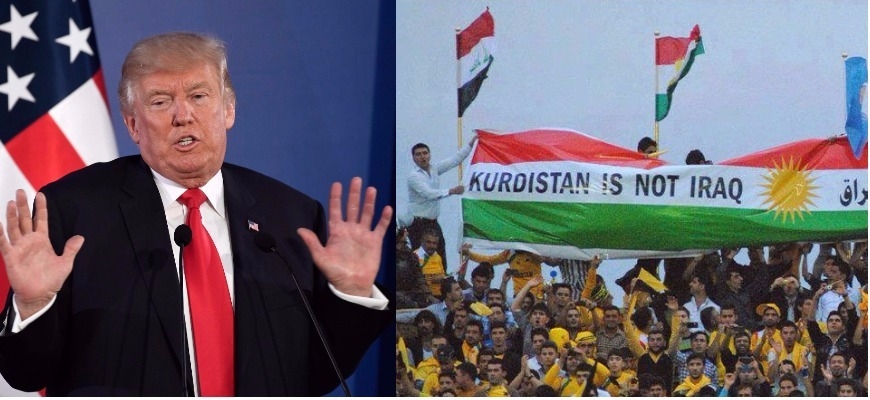
That year, former U.S. President George H.W. Bush encouraged the Kurds in northern Iraq to rise up against Saddam Hussein’s regime.
The Kurds heeded the call, only for the United States to later withdraw support and remain silent, leaving Kurdish forces to face military repression without direct assistance.
A similar situation occurred with the Syrian Democratic Forces (SDF), which were forced to accept integration into the structure of the new Syrian army after analysts considered this a form of U.S. abandonment.
Analysts say these historical precedents are a key reason for the reservations expressed by Masoud Barzani and Bafel Talabani regarding involvement in military operations that could place Kurdish forces in direct confrontation with regional actors without clear international guarantees.
The official Kurdistan website highlighted these concerns, noting that past painful experiences cannot be ignored, citing decisions made during Donald Trump’s presidency that repeatedly placed the Kurds in difficult positions in recent years.
These events included incidents in Kirkuk in 2017 and in Rojava in 2019 and 2026, where Kurdish forces were reportedly left to face stronger opponents without sufficient support.
The site added that Iranian Kurds have learned from these historical experiences and will not repeat what happened in Iraq and Syria, signaling their refusal to engage in military operations that could place them in direct conflict without clear political or military guarantees.
The U.S. president addressed these concerns during his discussion with Kurdish leaders, criticizing their hesitation to fight inside Iran and noting that their previous experiences in Iraq, where they faced attacks from Saddam Hussein’s regime, had helped shape their subsequent political and military reality.
Preemptive Move
To pave the way for these armed Kurdish forces, some of which agreed to cooperate within a framework of multiple Kurdish factions, the United States and “Israel” intensified airstrikes on areas near the Kurdish-populated provinces inside Iran, aiming to keep the Iranian army and security forces away from the border regions, according to The Washington Post on March 5, 2026.
Since the start of the military campaign, U.S. and Israeli Occupation Forces have carried out dozens of airstrikes on military, security, and government buildings in western Iran, targeting, according to media reports, the political leadership of the Islamic Republic, particularly in the border provinces of West Azerbaijan, Kurdistan, Kermanshah, and Ilam, according to the group “GeoConfirmed.”
The Washington Post, citing informed sources, reported that Trump provided extensive air cover as well as military and logistical support to Iranian Kurdish opposition forces to help them gain control over parts of western Iran.
In response, Iran’s Ministry of Intelligence announced that separatist Kurdish groups and other factions planning, with U.S. and Israeli backing, to exploit the war and infiltrate from the western border to carry out attacks Tehran described as terrorist and separatist, had come under military strikes.
The ministry confirmed that its forces conducted a “preemptive offensive-defensive operation jointly led by the Ministry of Intelligence and the Iranian Revolutionary Guard,” resulting in the destruction of a significant portion of the groups’ positions and capabilities, inflicting substantial military losses.
The Iranian Revolutionary Guard announced that it had destroyed sites belonging to armed Kurdish groups in Iraq’s Kurdistan region using around 30 suicide drones, in what it described as an attempt to thwart an infiltration plot aimed at carrying out sabotage operations inside Iran.
In turn, Iranian-backed armed groups in Iraq targeted a U.S. military base in Iraqi Kurdistan, as well as the region’s international airport, oil and gas facilities, and two bases used by Iranian Kurdish fighters, according to media reports.
An Iranian military official, speaking to Iran Nuance, warned that U.S. and Israeli attempts to change the regime by fomenting armed chaos would be met with a direct response, potentially including strikes on “Israel’s” Dimona nuclear facility, located southeast of the city of Dimona in the Negev desert, which is not subject to International Atomic Energy Agency inspections and is believed to be a nuclear weapons production site.
Iranian intelligence agencies revealed that the United States and “Israel” had carried out missile attacks on Iranian border security centers to create gaps enabling militants to infiltrate deeper into Iran, effectively shifting the battle from the airspace to the streets inside Iranian territory.

What Is ‘Israel’s’ Role?
In parallel with U.S. and Israeli support for Kurdish opposition groups to intervene inside Iran, media reports indicated that Israeli intelligence is working to create conditions for internal unrest in Iran by mobilizing armed separatist groups.
The reports mentioned the presence of operatives from the Israeli special operations unit known as Sayeret Shaldag inside Iranian territory, referencing operations announced during the June 25, 2025, conflict, when the Israeli chief of staff stated that Israeli Occupation Commando Forces had conducted missions inside Iran.
Axios reported on March 4, 2026, that Kurdish groups backed by “Israel’s” Mossad and the U.S. Central Intelligence Agency could lead the next phase of the war inside Iran, based on information from American and Israeli officials and leaders of some armed factions.
The reports added that fighters from several Iranian Kurdish factions are preparing for a potential ground attack against the Iranian regime in the country’s northwest in the coming phase.
CNN cited an Israeli official saying that the war began with a joint combat phase between U.S. and Israeli Occupation Forces, but that the continued conflict could expand to include further operations by U.S. and Israeli intelligence agencies.
Separately, Israeli researcher Mordechai Kedar referenced a statement attributed to the so-called “General Command of the Ahwazi Liberation Army,” which called for a “comprehensive liberation battle” and the independence of the Arab-majority Ahwaz region.
According to the statement, there were references to a presumed alliance with the United States and “Israel” aimed at “removing the fangs of Persian fascism” and establishing a “new Middle East based on the Abraham Accords,” seen as part of attempts to promote a political narrative supporting rebellion inside Iran.
The Ahwazi National Liberation Movement has not issued any statement confirming its involvement in the alleged U.S. and Israeli plans, instead releasing a statement expressing solidarity with Gulf states in confronting Iranian attacks, without referencing any connection to the reported military or political developments.
Why Will They Fail?
U.S. and Israeli assumptions gambling with Iran’s future overlook key realities about the Kurdish environment in both Iraq and Iran, namely that the Kurds are not a single bloc that can be easily directed, according to the Syrian site al-Khanadeq on March 3, 2026.
The idea of dividing Iran and controlling parts of its territory through Kurdish groups directly worries Turkiye, which sees it as a threat to its national security and could intervene to prevent any rebellion along the border, according to Western and Turkish reports.
It is unlikely that any ethnically based Kurdish uprising would gain broad support inside Iran, and it would immediately alarm Turkiye, which opposes any U.S. cooperation with armed Kurdish groups in Syria and views a U.S.-backed Kurdish foothold in Iranian territory as a direct threat to its national security, according to Responsible Statecraft on March 4, 2026.
Many Kurds also recall how the United States, after encouraging uprisings against Saddam Hussein in 1991, ultimately abandoned them to their fate while Saddam’s forces crushed the rebels, as well as Washington’s recent decision to overlook the new Syrian government’s dismantling of the autonomous Kurdish region in northeastern Syria.
The main flaw in this plan is its assumption of Kurdish unity, while in reality the Kurdish movement is spread across several countries and subject to complex political and military balances where local and regional interests intersect.
Observers note that even within Iraq, relationships among Kurdish forces are not always cohesive enough to undertake major strategic ventures, with Bafel Talabani exemplifying historical alliances with Iran through his father’s connections, complicating any rebellion project against the Iranian regime.
Historical experience shows that attempts to militarize the Kurdish issue often collide with weak popular support for any broad separatist project and Iran’s ability to contain it politically and security-wise, according to al-Khanadeq.
Former Iranian officials added that the Persian majority in Iran would not tolerate an armed Kurdish incursion, especially since the Kurdish population in Iran is estimated at 6 to 9 million out of roughly 90 million, according to The New York Times.
Peter Galbraith, former U.S. ambassador and adviser to the Kurdistan Regional Government, told al-Monitor on March 4, 2026, that Iranian Kurds should be cautious of U.S. promises, noting that Trump has often let America’s Kurdish allies down.
Ramzy Mardini, founder of Middle East-based risk consultancy Geopol Labs, described the idea of using Kurds in military operations against Iran as “immature and rushed,” dismissing the possibility that a few thousand armed insurgents could overthrow a deeply entrenched regime with a highly organized security and coercive apparatus.
Sources
- The Coming Invasion of Iran
- Scoop: Trump Calls Kurdish Leaders in Iran War Effort
- CIA Working to Arm Kurdish Forces to Spark Uprising in Iran, Sources Say
- US-Backed Kurdish Forces Poised to Enter Iran From Iraqi Kurdistan 'Within Days'
- Netanyahu Asks White House if Secret Iran Talks Are Happening
- Kurds Backed by Mossad; CIA Could Lead Next Phase of War in Iran
- Are Kurds Really Joining US-Israel Fight to Take Down Iran Regime?
- Trump-Netanyahu Gamble on the Kurdish Card: A Bet Doomed to Fail [Arabic]