Qatari Academic: 'The US-Iran Conflict Does Not Represent the Region’s Battle' (Exclusive)
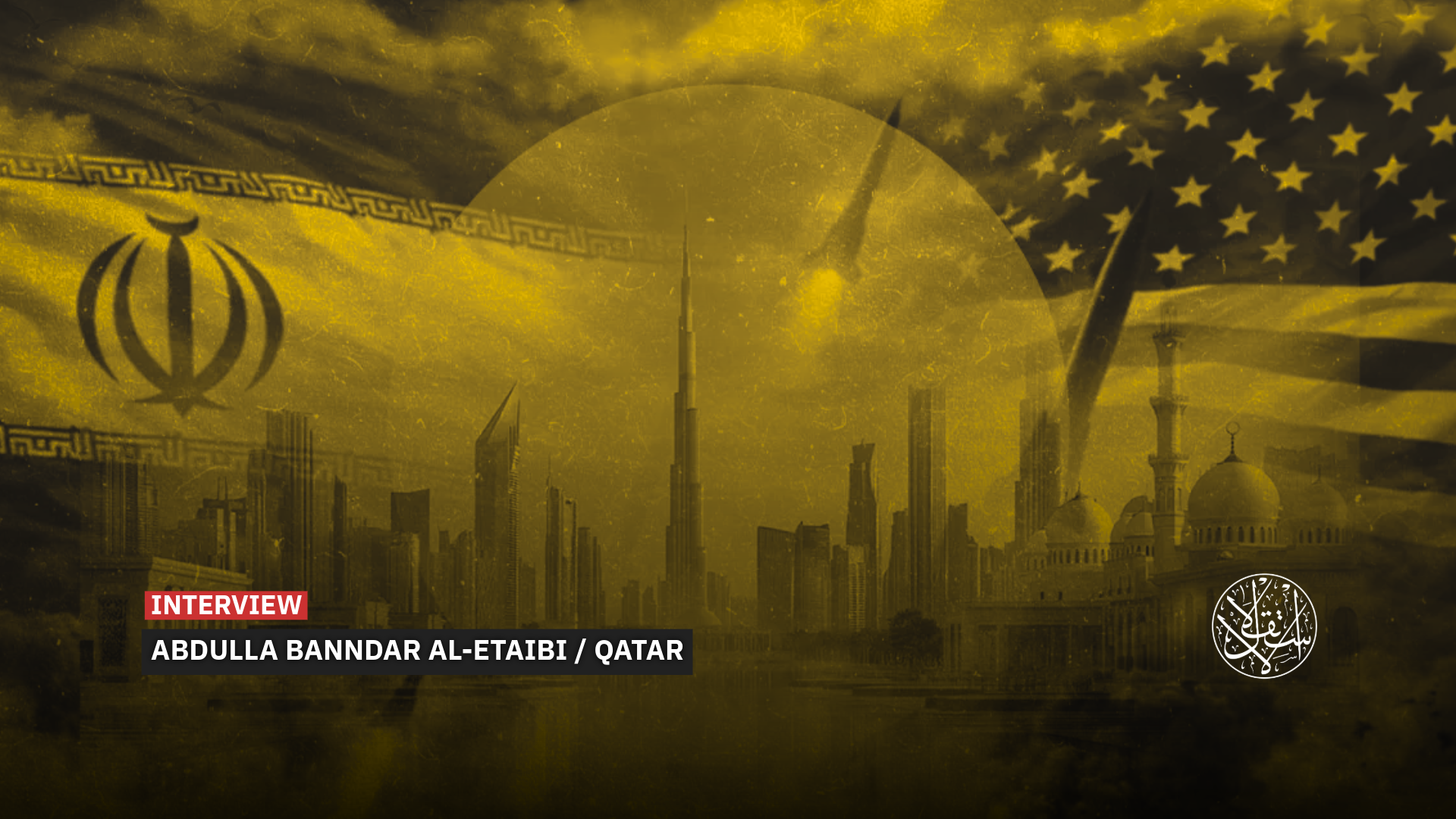
“Al-Etaibi: Qatar is always keen to distance itself from entering or being drawn into conflicts.”
At a highly sensitive regional juncture, where the paths of war and de-escalation intersect following the temporary ceasefire between “Israel” and Lebanon, and amid the ongoing repercussions of the US-Israeli war on Iran, questions are mounting about the Gulf states' position in this scenario and the limits of their options between direct involvement or adopting policies of restraint.
These developments are no longer merely a traditional conflict, but have transformed into a complex equation where military calculations intertwine with energy stakes, and the interests of major powers are intertwined with regional security priorities.
This places the countries of the region before delicate tests regarding how to manage risks without compromising strategic interests.
In this context, Dr. Abdullah Banndar Al-Etaibi, Assistant Professor of International Relations at Qatar University, presented an in-depth analysis of the Qatari approach, describing it as a model of policy based on a balance between firmness and restraint, and on managing crises through patient diplomatic tools that are not limited to immediate reactions.
In this interview with Al-Estiklal, Dr. Al-Etaibi affirmed that Doha has chosen a path based on strategic patience and self-restraint, while preserving its right to defend its sovereignty, without being drawn into a conflict that does not serve the interests of the region.
He highlighted the role of mediation as a cornerstone of Qatari foreign policy, the nature of regional and international efforts to contain the escalation, the limitations of opportunities to build new alliances, an analysis of the differences within the Gulf, and scenarios for the next phase in light of a truce that remains fragile and liable to collapse.
Qatari Balance
How has Doha managed the balance between firmness and restraint despite Iranian aggression?
Qatari policy stems from a clear constitutional foundation; Article 7 of the Constitution stipulates that the State seeks to achieve international peace and security and promote stability through peaceful means.
This framework is not merely theoretical, but rather constitutes a practical basis guiding the State's conduct in a complex regional environment like the Middle East.
Given its geographical and political position, Qatar understands that direct involvement in conflicts only exacerbates them. Therefore, it focuses on the role of mediation as a fundamental tool for crisis management.
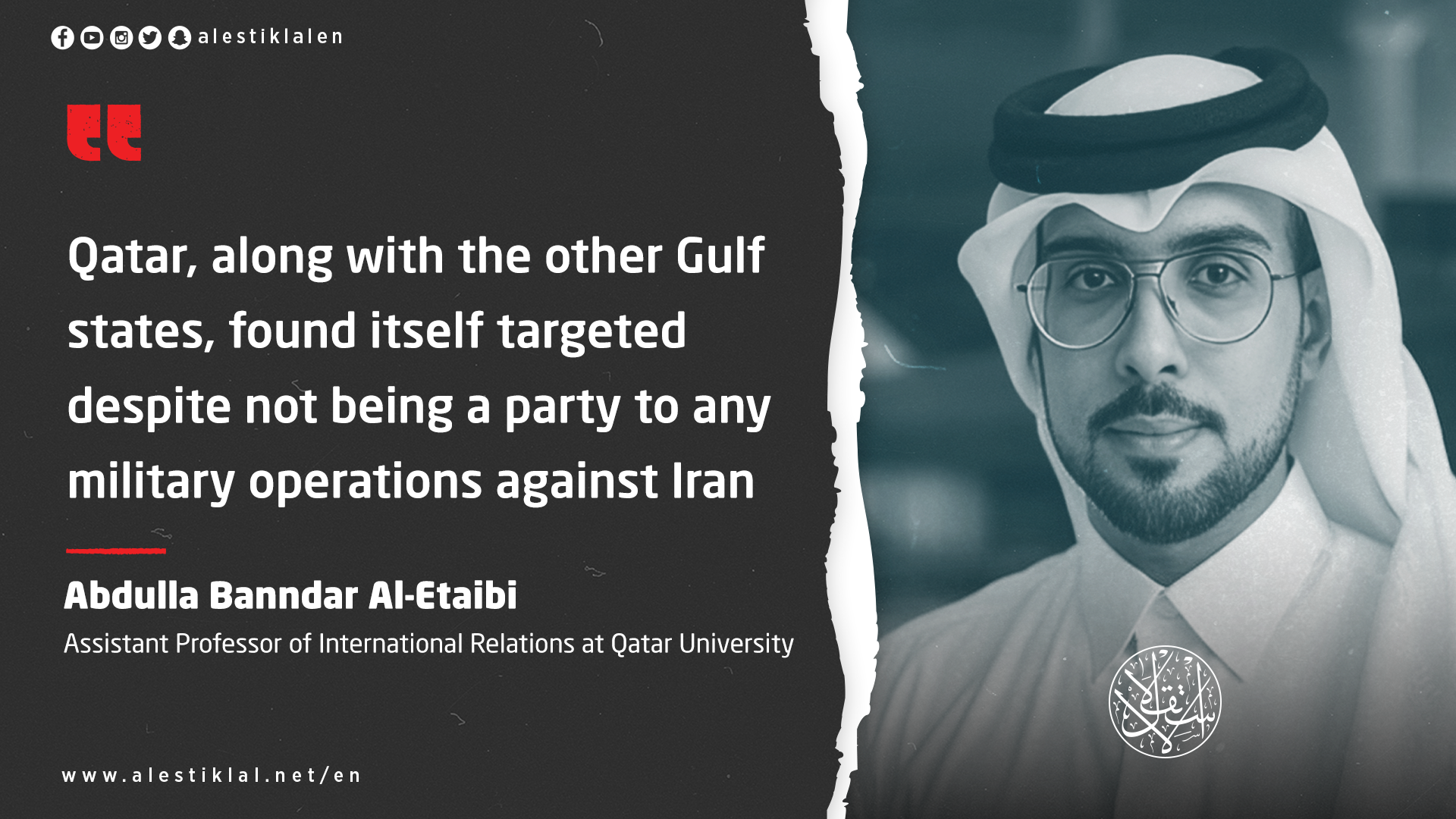
But this war was different. Qatar, along with the other Gulf states, found itself targeted, despite not being a party to any military action. On the contrary, it refused to allow its airspace to be used for any operations against Iran.
This situation imposed a delicate equation, based on the necessity of striking a balance between preserving national sovereignty and avoiding a wider military confrontation.
Hence, the choice of self-restraint and strategic patience, which does not signify weakness, but rather reflects an ability to manage the crisis with awareness, far removed from impulsive reactions.
Furthermore, avoiding involvement in the war is based on clear assessments: firstly, that this war is not a regional war and does not reflect its direct interests; and secondly, that entering it will not yield any real gains, but will instead add strategic, economic, and security burdens.
Diplomatic Doctrine
To what extent can this stance be considered an extension of a well-established diplomatic doctrine?
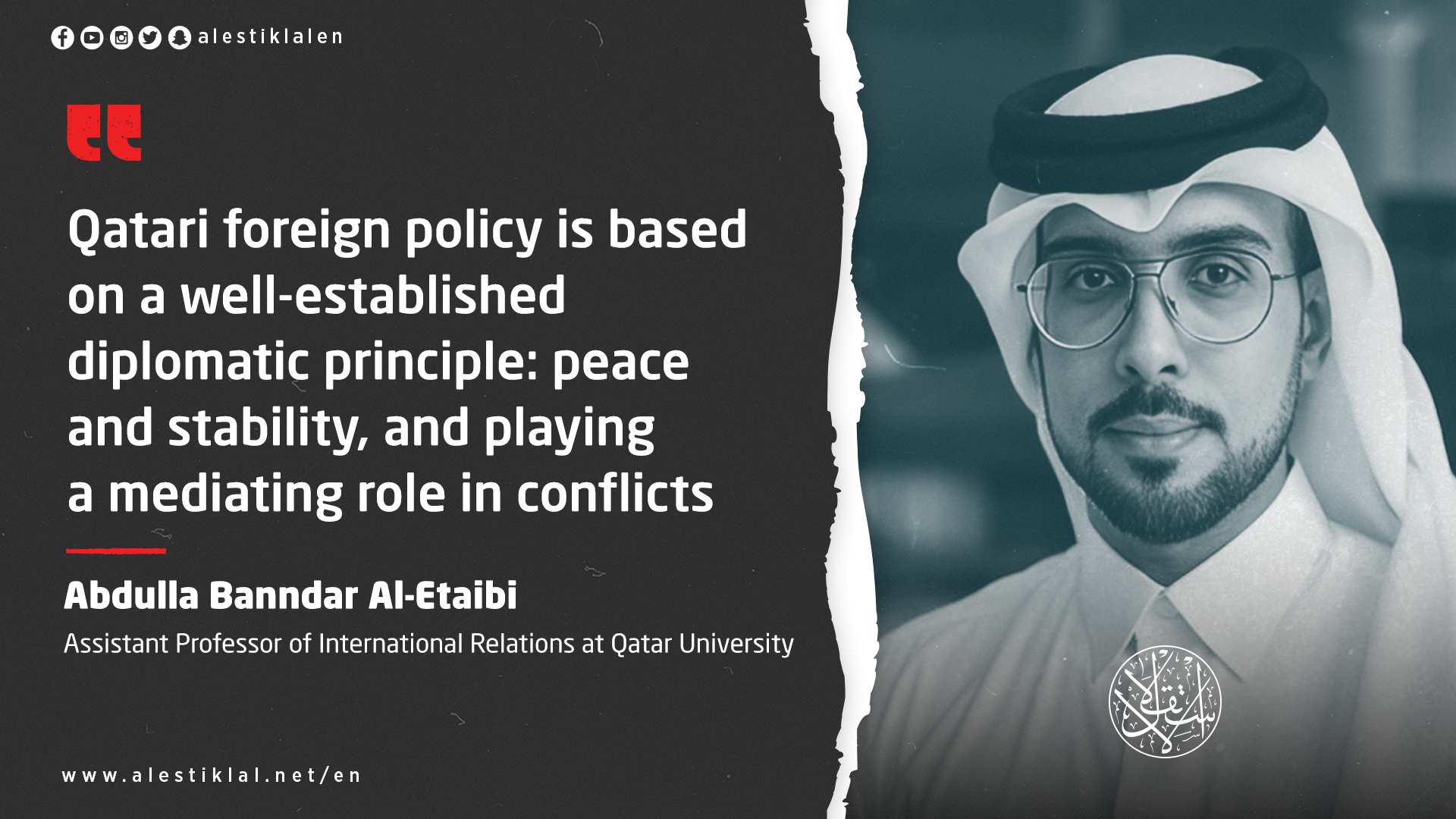
This stance is not a spur-of-the-moment decision, but rather a natural extension of a deeply rooted diplomatic doctrine in Qatari foreign policy, based on the principles of peace and stability, and on playing a mediating role in conflicts.
For years, Qatar has adopted a clear approach based on engaging in crisis resolution rather than becoming embroiled in conflicts. It has participated in numerous regional and international mediations, reflecting a long-term strategic vision.
This approach is based on the idea that regional stability is not achieved solely through military power balances, but also through building avenues for dialogue and providing channels of communication between conflicting parties.
Therefore, distancing itself from conflicts does not equate to passive neutrality, but is part of a broader strategy aimed at playing an active role in de-escalating and containing crises.
What is the nature of Qatar's international efforts to contain escalation?
Mediation is not a simple process; it is a complex endeavor requiring high-level coordination among multiple parties, including not only the countries involved in the conflict, but also influential regional and international powers, and even public opinion.
One of the challenges facing mediation efforts is the multiplicity of tracks, which can lead to a fragmentation of efforts and weaken their effectiveness. Therefore, it is essential to focus on a single, coherent track that serves the primary objective: de-escalation.
In this context, Qatar supported the Pakistani-led mediation, which succeeded in achieving significant progress by brokering a ceasefire between Iran and the United States after nearly forty days of confrontation.
The past period also witnessed intensive diplomatic activity, including high-level visits and communications, reflecting the extent of regional and international coordination to push the parties toward dialogue.
This coordination is not limited to the direct parties but extends to major powers such as China, which is directly affected by developments in the energy market, especially given the discussions surrounding the potential closure or reopening of the Strait of Hormuz.
Active Mediator
Is Qatar seeking to build a balanced international framework to reduce escalation?
At this stage, it is premature to discuss the formation of new international alliances, as what we are currently experiencing is a temporary truce, not a permanent agreement. This means that the possibility of renewed escalation remains.
Building alliances requires clarity of vision and a convergence of interests, which has not yet fully materialized.
The most realistic scenario at present is strengthening bilateral security cooperation between countries, rather than entering into broad alliances that could be costly and complex.
In contrast, Qatar has extensive experience in mediation and a proven track record of more than 30 successful cases, giving it the ability to play an active mediating role at this stage.
However, it cannot be ignored that the current regional escalation has led to a decline in international attention to other issues, most notably Gaza, where the humanitarian suffering continues daily.
How can the difference between the Qatari approach and other Gulf approaches be explained?
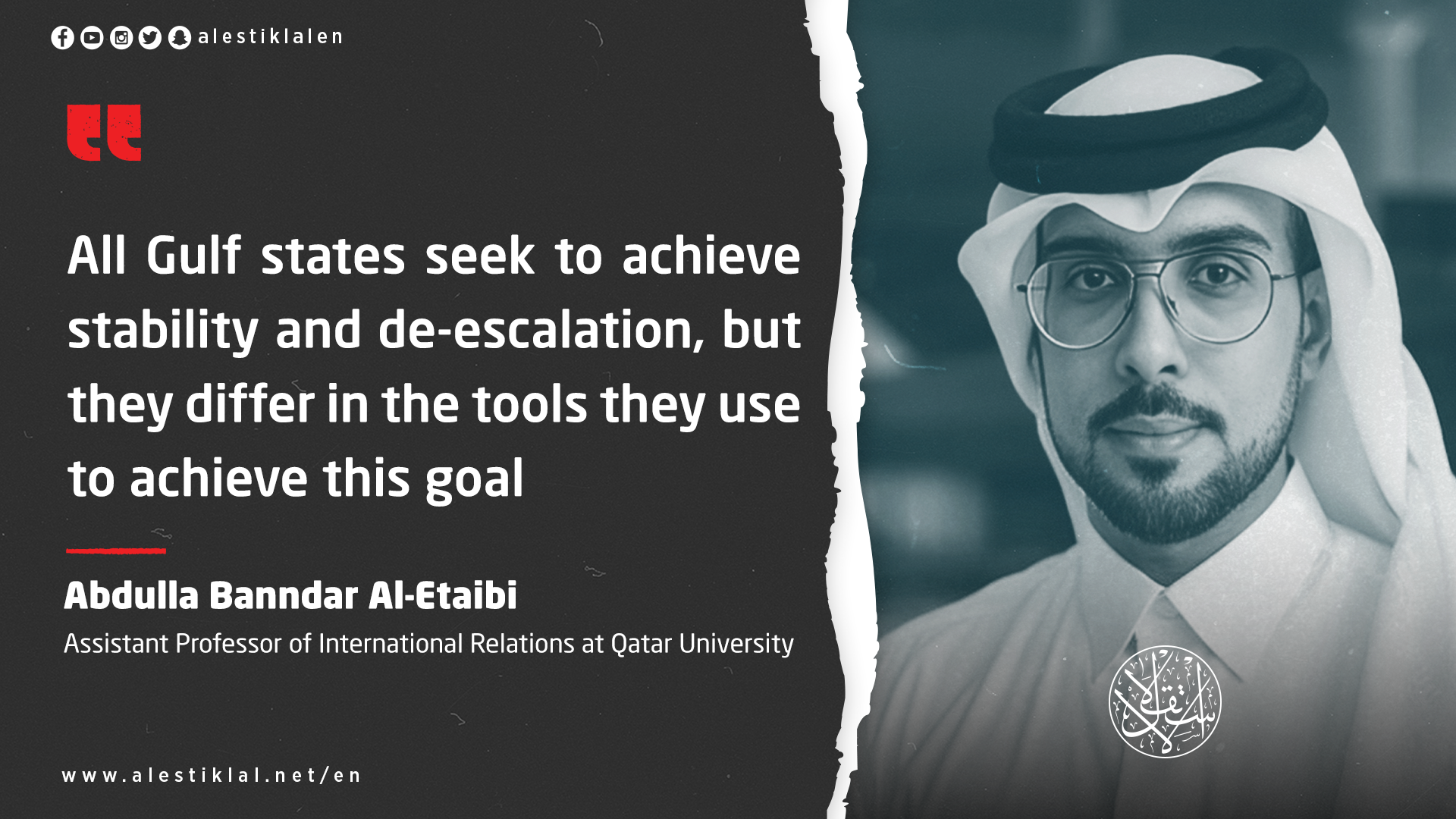
All Gulf states seek to achieve stability and de-escalation, but they differ in the tools they use to achieve this goal.
Some parties tend to use more stringent measures or rely on international avenues, such as resorting to the Security Council, while Qatar prefers to focus on diplomatic solutions, especially through mediation.
There are also different approaches for countries like the Sultanate of Oman, given its geographical location and its role related to the Strait of Hormuz.
Therefore, what we are witnessing is a tactical difference, not a strategic division within the Gulf Cooperation Council.
Managing Complex Crises
How does Qatar manage overlapping pressures without compromising its decision-making independence?
In international relations, it is natural for countries to face varying pressures and, at the same time, seek to balance their relationships in a way that serves their interests.
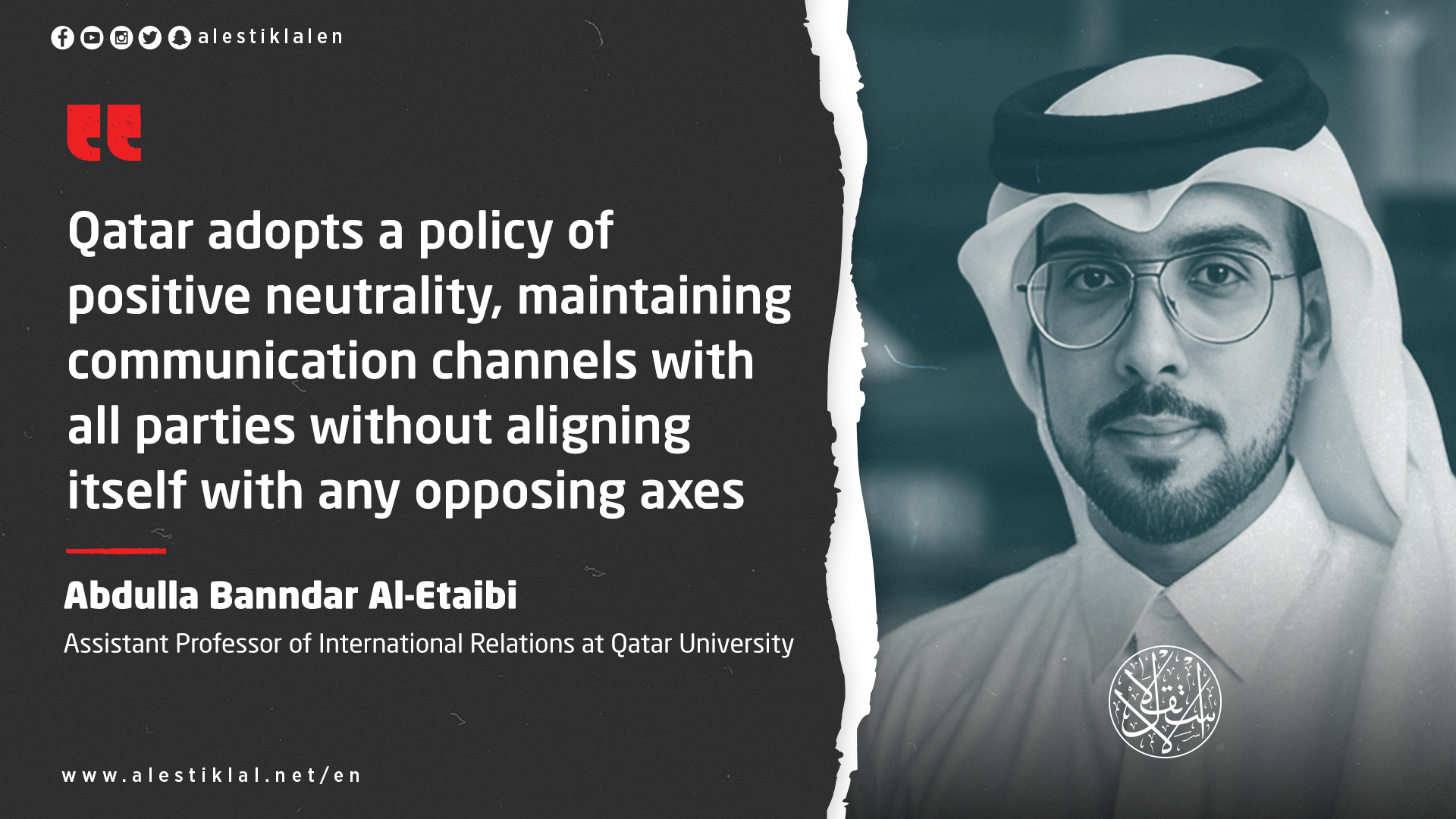
Qatar adopts a policy of positive neutrality, maintaining communication channels with all parties without aligning itself with any opposing axes.
What is happening in the region is not merely a traditional conflict, but rather a competition between major regional projects. This necessitates careful crisis management that promotes stability instead of fueling escalation.
Therefore, this approach cannot be described as managing contradictions, but rather as reflecting a clear vision aimed at containing crises and opening avenues for resolution. It also demonstrates an awareness of the risks.
How does Qatar view the scenarios for the expansion of the war?
There is a real possibility of the war expanding, especially given the fragility of the current truce and the absence of a final agreement that guarantees long-term stability.
However, the data indicates that the U.S. and Iran are not inclined towards a full-scale escalation at this stage, which opens the door for continued diplomatic efforts.
Nevertheless, the situation remains open to several scenarios, given the complexity of regional and international balances.
Furthermore, the impact of the war is not limited to the military dimension; it extends to the global economy, particularly the energy sector, which underscores the importance of containing the crisis.
What is your vision for how Qatar will handle the next phase?
In the next phase, we may witness attempts to rebuild trust through shared issues, such as energy and maritime security in the Strait of Hormuz, but this path requires considerable time and effort.
If de-escalation efforts fail, Qatar will continue to pursue a strategy based on strengthening its defense capabilities, while leveraging its regional and international partnerships.
In any case, de-escalation remains the most realistic option, given the high cost of any new escalation for all parties.
Furthermore, the relationship with the United States remains a stable, institutional one, based on cooperation in multiple areas, which provides Qatar with additional leverage to manage challenges.