Mauritania’s Opposition Parties Challenge the Government: Causes and Consequences
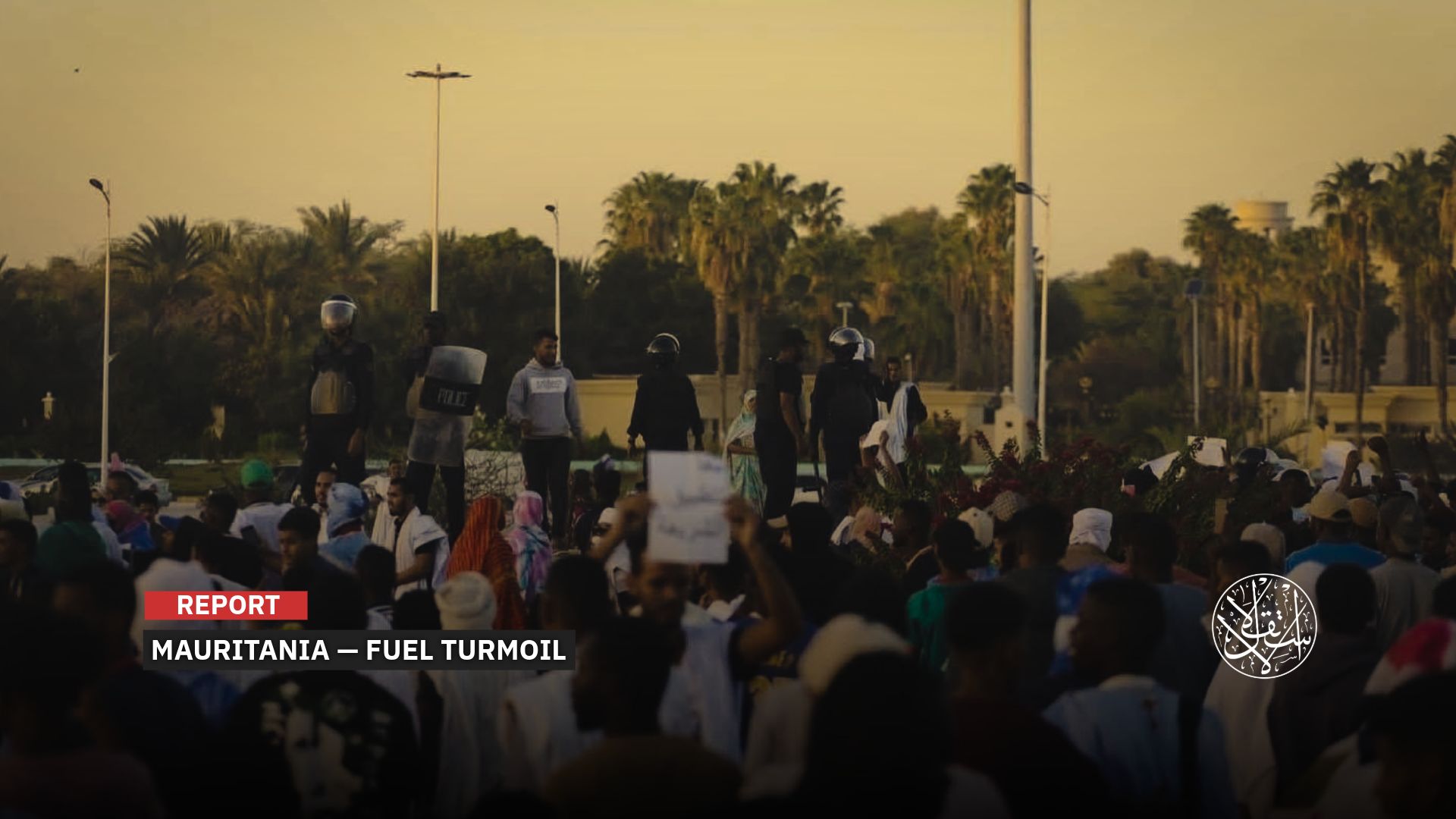
This is the second fuel price hike in a month, after an earlier increase on March 3.
Mauritania is experiencing rising political tension due to increases in fuel prices, with political parties warning of risks to social stability, while the government says it has introduced supporting measures for affected groups.
The controversy follows a government decision to raise gasoline and diesel prices by about 10 to 15 percent, and to reduce subsidies on household gas, as part of a package it says aims to ease the growing cost of energy support driven by rising global prices and the impact of the war in the Middle East.
Under the new measures, diesel prices increased by 10 percent to 563.5 old ouguiyas per liter, while gasoline rose by 15.3 percent to 589.7 ouguiyas, with the state continuing to cover part of the cost gap.
The news site Sahara Media reported on March 31, 2026, that the measures also included adjustments to domestic gas cylinder prices, with a B12 cylinder selling for 5,000 ouguiyas compared to a cost exceeding 9,000, while a B6 cylinder will be sold for 2,400 ouguiyas and a 2 kg cylinder for 1,100 ouguiyas, with significant government subsidies still in place.
The government stated that these measures are accompanied by social policies to mitigate their impact, including raising the minimum wage to 50,000 ouguiyas, providing cash support to families registered in the social registry, and granting exceptional increases to some public sector workers.
This is the second price increase within a month, following an earlier hike on March 3, reflecting the direct impact of global supply chain disruptions after the war caused widespread instability and higher import costs, prompting the government to take urgent steps to stabilize the market.
Rising Tension
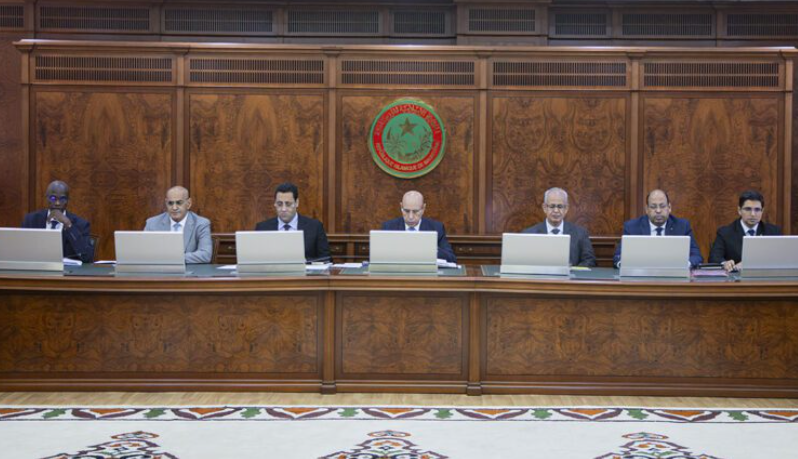
In response, the Mauritanian government announced a package of measures aimed at mitigating the impact of rising energy prices, stressing that the new policies take vulnerable groups into account and will not affect the prices of basic goods.
Government spokesperson Hussein Ould Medou said at a press conference on March 31, 2026, that authorities had decided to ban vehicle movement inside cities after midnight, starting Thursday, April 2, 2026, as part of efforts to reduce energy consumption.
Medou also stated that the Mauritanian president decided to forgo one million old ouguiyas from his salary, while the prime minister would give up 400,000 old ouguiyas, as a contribution to easing the effects of rising energy costs.
In the same context, the government announced direct financial support of 45,000 old ouguiyas for public sector employees to help them cope with higher household gas prices.
The government spokesperson emphasized that these measures will not affect the prices of essential goods, which remain under price controls, adding that the government has a pre-established strategy to manage market fluctuations that is not directly tied to global market developments.
He explained that the government’s approach aims to provide a practical solution to the crisis while taking into account household purchasing power, particularly among the most vulnerable groups.
Meanwhile, the Ministry of Equipment and Transport announced the launch of a free hotline (1886) for citizens to report any irregularities related to unjustified increases in public transport prices, whether urban, intercity, or freight transport.
The ministry said in a statement issued on Friday, April 3, 2026 that the hotline is intended to receive complaints so that authorities can intervene quickly and take necessary action.
However, these measures did not satisfy political opposition parties in Mauritania, which said the fuel price increases exceed citizens’ ability to bear the burden.
The National Rally for Reform and Development party rejected what it described as an unjust increase, warning it would inevitably affect transport and basic goods prices, further increasing the daily burden on households, many of which already live below the poverty line.
In a statement issued on April 1, 2026, the party criticized the government for ignoring the difficult economic conditions facing citizens, arguing that rising poverty and unemployment make it irresponsible to shift the burden of crises onto ordinary people instead of addressing them through political and moral responsibility.
The opposition party called on the government to cancel or revise the price hike and increase subsidies in a way that serves the country’s and citizens’ interests, while also urging greater transparency, accountability, and anti-corruption efforts to prevent mismanagement and the waste of national resources.
The party “Mauritania Forward” also criticized the government’s decision, stating that it would worsen citizens’ suffering, particularly for low-income groups, and questioning the effectiveness of accompanying measures such as the nighttime curfew, which it said contradicts freedom of movement.
The Citizen and Justice Front “Jam’” called for consideration of the difficult living conditions faced by citizens, urging a review of some of the price increases, especially those related to household gas, and stronger support for vulnerable groups.
The Reform of the Democratic Movement Party “Tahaddi” announced, following an extraordinary meeting of its executive bureau, that it would take to the streets in protest against what it described as “the regime’s overreach.”
In a press statement on April 1, 2026, the party demanded clarification from the government regarding the recent fuel price increases, noting that they include gas, despite Mauritania being among the countries that export it.
It added that the party’s general secretariat had sent “letters to the administrative authorities in the districts of Ksar and Tevragh Zeina to notify them of a peaceful protest march in accordance with the law, scheduled for next Sunday.”
The party further stated that “no options remain except demanding rights, taking to the streets, and firmly confronting the regime’s arbitrary and unjustified decisions.”
Containment Efforts
Amid intense public debate and growing anger on the streets of Mauritania, President Mohamed Ould Cheikh el Ghazouani met on April 2, 2026, with leaders of opposition coalition parties in a meeting dedicated to discussing the impact of rising prices and government measures aimed at mitigating their effects on citizens.
The Mauritanian News Agency reported that the meeting is part of a series of regular political consultations between the president and various political actors in the country.
During the meeting, a set of measures aimed at supporting vulnerable groups and maintaining economic stability was reviewed, with the goal of strengthening social cohesion and protecting purchasing power.
According to the same source, the discussions covered key national issues, particularly recent cabinet decisions related to the energy crisis and the impact of international developments on the economic and social situation.
Meanwhile, the ruling el Insaf party praised the government’s measures, describing them as a “balanced approach,” and stressing that the global context and the rising cost of subsidies to very high levels require such decisions, urging citizens to understand and accept them.
Essential Protest
Amid the ongoing political debate in Mauritania, the leader of the Democratic Movement Renewal Party, Yacoub Ould Ahmed Lemrabott, said that calls for protests against government decisions are necessary.
Speaking to Al-Estiklal, Ould Ahmed Lemrabott stressed that his party’s call for demonstrations complies with Mauritanian law, noting that the relevant authorities and the parliamentary opposition institution were formally notified.
He argued that protests place the authorities before a fundamental test: whether the country is truly democratic and respects rights and freedoms, or not.
He added that the current social and economic tensions facing Mauritanians are the result of the ruling authorities’ responsibility, following what he described as rushed decisions regarding gas and fuel prices.
Ould Ahmed Lemrabott rejected the price increases, saying the main beneficiaries are fuel companies and suppliers at the expense of ordinary citizens.
He stated that taking to the streets is a response to rising living costs, price increases, corruption, and what he described as mismanagement by President Mohamed Ould Cheikh el Ghazouani and his government, which he accused of harming citizens’ livelihoods, marginalizing youth, and neglecting small and medium-sized businesses.
Ould Ahmed Lemrabott also urged the government to take neighboring countries as a reference, noting that Senegal has reduced gas prices for the third time, unlike Mauritania, despite being a gas-exporting country.
The political actor stressed that the erosion of citizens’ purchasing power requires public support for opposition forces and protection of voices defending people’s real interests.
He further called on the government to increase wages, reduce prices, and launch a genuine national dialogue and reform process to address what he described as a worsening situation with negative consequences ahead.
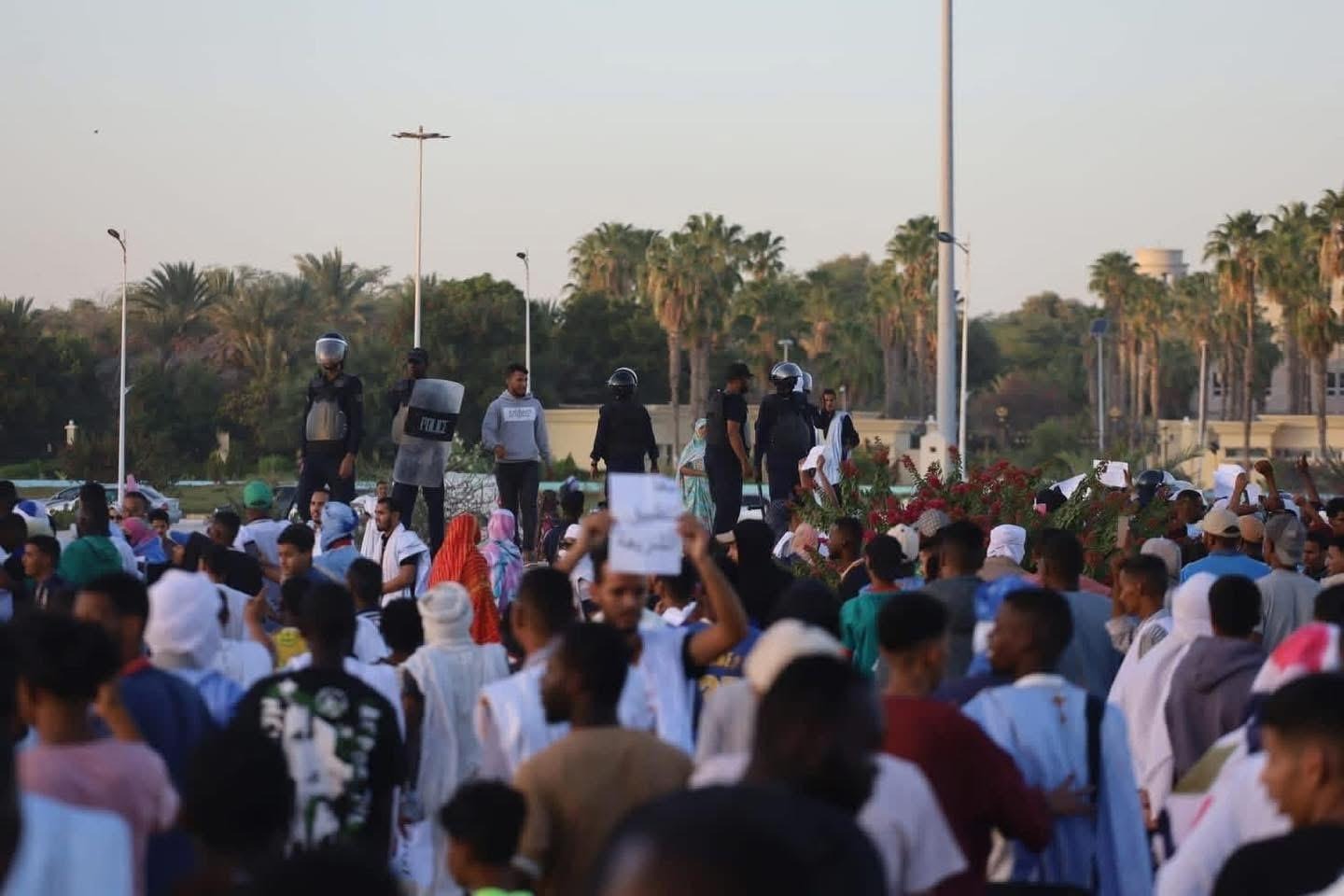
In Mauritania, several political groups have called for street protests rejecting fuel price increases, but authorities have either denied permission or responded with force.
In this context, the “Mauritania Forward” party announced that it had notified government authorities of its intention to organize a protest in Freedom Square.
However, the authorities, represented by the Tevragh Zeina governor, refused to grant authorization without providing sufficient justification, stating only that no demonstrations would be allowed at this time.
In a statement issued on April 2, 2026, the party said this refusal “constitutes a restriction on freedoms and a violation of the right to expression.”
Mauritanian police dispersed a protest on Sunday evening, April 5, 2025, in the capital Nouakchott, organized by activists and politicians to denounce rising fuel prices.
Riot police used tear gas and batons to break up the demonstrators, amid clashes between police and protesters in nearby side streets.
Security forces had imposed a tight cordon in the area between “BMD Junction” and “Star Station” ahead of the protesters’ arrival.
Participants in the demonstration raised slogans condemning price increases before police intervened using tear gas to disperse the crowd.
Police also arrested several protesters, while activists circulated videos showing demonstrators fainting during the confrontation.
In this context, opposition MP Mohamed Lemine Sidi Mouloud held the authorities fully responsible for any harm that may be inflicted on protesters demonstrating against rising living costs.
In a Facebook post on April 5, he said the government is responsible because it adopted what he described as “unjust and harsh measures against the people,” and then refused to grant permission for legally recognized parties to protest, calling this an act of injustice.
The MP added that the authorities “then carried out unjustified and irresponsible repression against peaceful demonstrators.”
Future Outlook
In this context, economic and financial analyst Mohamed Ahmed Amjar argued that assessing the fuel price increase requires moving beyond immediate reactions and understanding it within a broader economic and financial framework, with its real constraints and potential opportunities that must be carefully managed.
In an opinion article published on April 4 in the local Al-Akhbar website, Amjar explained that since March 2026 the world has been experiencing severe geopolitical disruptions in the Strait of Hormuz, one of the most strategic global oil transit routes, which has pushed crude oil prices above 90 dollars per barrel.
For Mauritania, which relies almost entirely on imported refined petroleum products, he said, this increase has directly raised domestic energy costs.
He added that public finances were already bearing a burden exceeding 45 billion ouguiyas annually to subsidize fuel prices. With the latest rise, this level of support has become unsustainable without undermining financial balance or affecting the state’s ability to fund essential services.
Therefore, Amjar wrote, the decision to adjust prices falls within financial necessity rather than a political or ideological choice.
He stressed that the social impact of any price adjustment remains a key factor in evaluating its effectiveness, warning that “reforms not accompanied by an effective social protection system may become an additional burden on the most vulnerable groups.”
Accordingly, he added, maintaining social balance requires targeted support mechanisms that ensure a minimum level of protection for purchasing power.
Amjar noted that the priorities of the current phase include renegotiating gas contracts to improve revenues, strengthening targeted social safety nets, accelerating energy diversification, and revising future contracting models to ensure greater flexibility in dealing with market volatility.
He concluded that the ongoing changes place Mauritania before a real test in managing its resources and adapting its policies to international shifts, emphasizing that “economic sovereignty is not measured by slogans, but by a state’s ability to make balanced decisions that protect its interests in a changing context.”