‘Disengagement’: The Rationale Behind U.S. Strikes on Iraq’s Popular Mobilization Forces
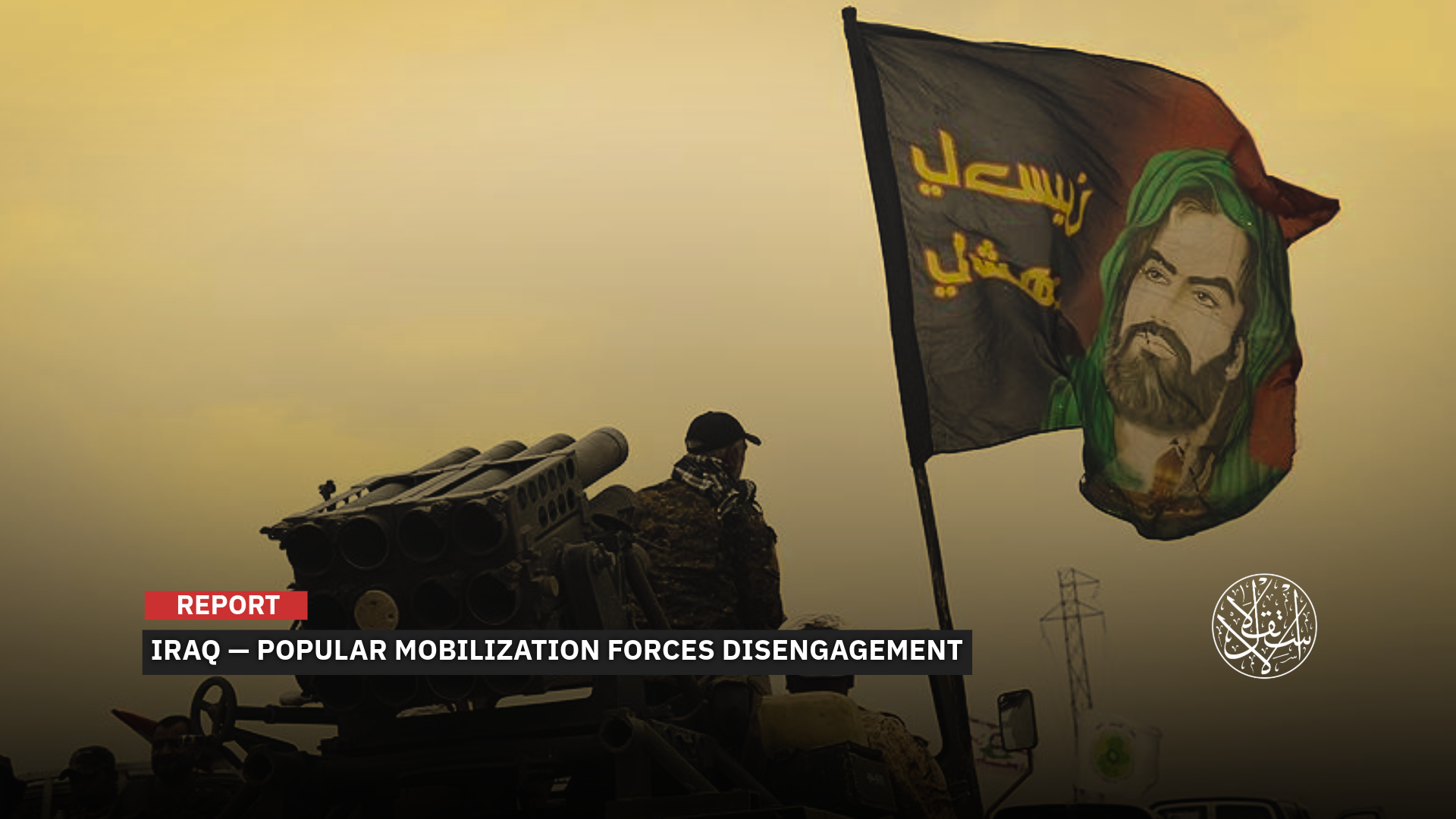
Strikes targeting the Popular Mobilization Forces are concentrated in predominantly Sunni areas of Iraq.
Amid near-daily strikes targeting the Popular Mobilization Forces in Iraq, particularly in predominantly Sunni areas, questions are emerging about the extent of these forces’ withdrawal and whether the sustained attacks are aimed at pushing them out of urban centers.
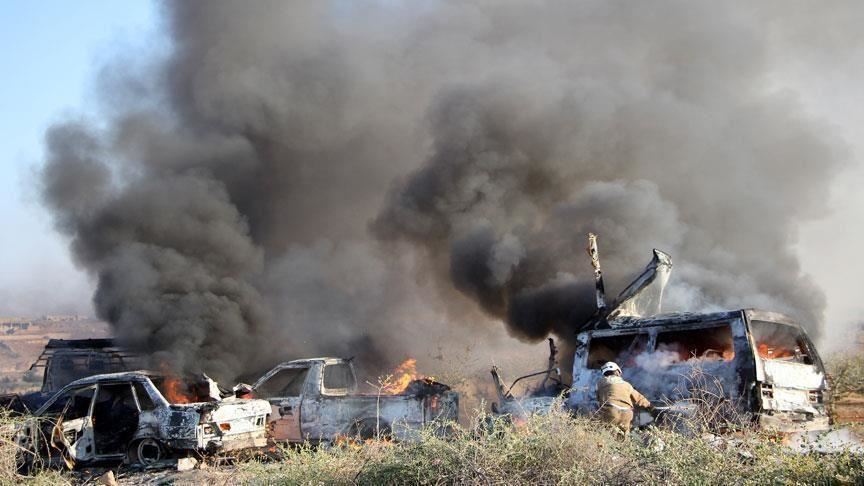
Since the U.S.–Israeli war on Iran on February 28, 2026, the Popular Mobilization Forces have been hit by more than 100 strikes, targeting their positions across the provinces of Baghdad, Nineveh, Salah al-Din, Kirkuk, Diyala, Anbar, and Babil, leaving around 70 dead and more than 130 wounded.
The United States accuses some factions within the Popular Mobilization Forces of ties to Iran, coinciding with announcements by Iraqi factions, under what is known as the “Islamic Resistance in Iraq,” of carrying out military operations against U.S. bases in the region.
Most recently, on April 4, 2026, the Popular Mobilization Forces announced that “the 45th Brigade within the al-Jazira Operations Sector was subjected to a treacherous Zionist-American attack at the border crossing in al-Qaim district in Anbar province, resulting in the death of one member and the injury of four others, in addition to an Iraqi army soldier.”
Disengagement!
Regarding the reasons behind the continued targeting of the Popular Mobilization Forces in Sunni cities in particular, Iraqi affairs researcher Ali al-Masari said that “the attacks aim to push these Iran-aligned forces away from these provinces bordering three Arab countries, Saudi Arabia, Syria, and Jordan, in addition to their proximity to the Kurdistan Region of Iraq.”
Al-Masari told Al-Estiklal that “the presence of the Popular Mobilization Forces along the borders means continued attacks on countries allied with the United States, in addition to strikes targeting U.S. bases in the Kurdistan Region of Iraq.”
The researcher noted that “the Popular Mobilization Forces control all border crossings in those cities, which makes arms smuggling operations, particularly with Syria, extending to Lebanon, specifically to Hezbollah, a likely scenario amid the Syrian authorities’ incomplete control over all territories.”
He pointed out that “pushing the Popular Mobilization Forces away also comes within the context of paving the way for any potential ground incursion against Iran, or at least making such a route accessible, and imposing a new reality along the border strip linking Iraq with its neighbors.”
“The United States knows that the presence of the Popular Mobilization Forces in Sunni areas means control over everything there, in the sense that the state and its official institutions hold no real authority in these cities as long as these forces remain, as they are seen as operating more in Iran’s interest than Iraq’s,” al-Masari added.
The researcher predicted that “these forces will withdraw from Sunni provinces, except for the Jurf al-Sakhar area north of Babil province, whose Sunni residents, estimated at around 250,000, have been displaced since 2014, and which groups have turned into a zone for weapons manufacturing and training, and this will take time, as it is strategically significant in its location.”
Al-Masari stressed that “the United States seeks to disengage Iraq from Iran militarily, meaning that no supporting parties remain that launch attacks from Iraqi territory toward neighboring countries and U.S. interests.”
Tripartite Plan
On another front, Syrian writer Shorsh Ahmed said in an article published by Al-Furat News Agency on April 2 that “Britain, Iraqi Sunni forces, and Syrian President Ahmed al-Sharaa are aligned on removing the Popular Mobilization Forces from Sunni areas, and we may witness changes in Iraq and Syria in the coming period.”
The writer noted that “al-Sharaa’s visit to Britain indicates the existence of a tripartite plan between Britain, Syria, and Iraqi Sunni forces to control the border region between Syria and Iraq and remove the Iran-aligned Popular Mobilization Forces, with the aim of securing energy supplies from Iraq to the port of Baniyas and from there to global markets.”
On March 31, the Syrian Petroleum Company announced the arrival of the first convoys of Iraqi fuel oil via the al-Tanf crossing toward the Baniyas oil terminal, in what it described as the beginning of a new phase of transit operations.
According to Reuters, Iraq’s State Organization for Marketing of Oil (SOMO) has signed contracts to supply about 650,000 metric tons of fuel oil per month from April to June, with shipments to be transported overland through Syrian territory.
The writer argued that the entry of these convoys from Iraq into Syria signals the existence of a broader plan. In addition to this indicator, there are other developments paving the way, including NATO’s mission withdrawal from Baghdad, U.S. forces vacating their bases and redeploying most troops to southern areas of the Kurdistan Region, and the Popular Mobilization Forces increasingly targeting Syrian army positions near the border.
“This could legitimize Syria launching attacks or activating tribal dynamics on both sides in coordination with Mohamed al-Halbousi and Khamis al-Khanjar, Iraqi Sunni political leaders, thereby enabling control over the Kirkuk–Mosul line and parts of Anbar and Salah al-Din provinces, which is what Britain, al-Sharaa, al-Halbousi, and al-Khanjar are seeking,” he added.
The writer concluded that “Britain aims to maintain the status quo but is also trying to shift the balance of power in the region, particularly in Iraq. In doing so, it seeks to achieve two goals at once: first, removing the Popular Mobilization Forces from these areas, and second, securing energy supplies from Iraq to Syria for export via the Mediterranean, potentially serving as an alternative to the Strait of Hormuz.”
Ghanem al-Eifan, a member of the Sunni Azm Alliance, said in a televised interview on March 25 that “emptying Sunni areas of the Popular Mobilization Forces clearly indicates the existence of a post-war project intended to be implemented in this geography.”
Al-Eifan added that “the current war may unfold in two phases: the first is military, and the second could resemble a replication of the Idlib model in Iraq,” stressing that the upcoming project relates to the identity of components, their geographic extensions, and strategic depth, and is intended to be applied in these areas.
While al-Eifan ruled out a return of the Islamic State scenario to these areas as occurred in 2014, he also dismissed the idea that this is preparation for Sunni leadership of Iraq in the next phase.
Rather, he said, it is about preparing regions that do not adopt Iran’s project, do not embrace hostility toward “Israel”, and do not necessarily move toward normalization either.
Scenario 2014
In contrast, the Sayyid al-Shuhada Brigades (Kata’ib Sayyid al-Shuhada), led by Abu Alaa al-Wala’i, said that “the repeated attacks using high and intense firepower in the areas of Mosul, Kirkuk, Salah al-Din, and Anbar raise a number of questions and concerns about hostile and suspicious intentions to create a security vacuum in these provinces.”
In a statement issued on March 25, the Iran-aligned faction viewed these attacks in these cities as “reviving previous security scenarios that cost Iraq dearly,” calling on the government to take stronger measures beyond summoning the U.S. charge d’affaires, and also urging the provision of air defense systems to Iraqi security forces.
The Islamic State group had overrun one-third of Iraq’s territory in mid-2014, declaring the establishment of a “caliphate” in Iraq and Syria under the leadership of Abu Bakr al-Baghdadi, who the United States announced was killed at the end of October 2019 during a U.S. airborne operation in northern Idlib countryside.
However, the Islamic State’s invasion of Iraq was not far removed from the escape of around 600 prisoners, including prominent al-Qaeda leaders, from Taji and Abu Ghraib prisons in July 2013 in Baghdad, according to statements by former Iraqi Justice Minister Hassan al-Shammari.
Al-Shammari, a Shiite affiliated with the Fadila Party who served as a minister in 2013 in al-Maliki’s government, said during a televised interview on January 6, 2014, that the al-Qaeda attack on the two prisons, in an operation the group called “Breaking the Walls,” was orchestrated and involved senior figures within the Iraqi state.
He explained that “senior figures within the state facilitated the escape of al-Qaeda prisoners from Abu Ghraib and Taji prisons in Baghdad,” arguing that this aimed to “strengthen the Syrian regime by strengthening the organization, to deter the United States from any military strike against Bashar al-Assad’s government, and to reinforce the notion that its alternative would be that organization.”
Al-Shammari confirmed that “the Iraqi intelligence service sent a highly confidential letter in July of the same year, just one week before the major Abu Ghraib prison escape, addressed to the commander-in-chief’s office under al-Maliki, as well as the Ministries of Interior, Defense, and Justice, indicating an intention by terrorist groups to target Taji and Abu Ghraib prisons with booby-trapped vehicles and to free the inmates held there.”
The former minister noted that “what is strange is that no precautionary action was taken; instead, security units assigned to guard the prisons withdrew completely, and one week later the attack occurred in exactly the same manner warned of by intelligence.”
Iraqi former parliamentarian Liqaa Wardi, who represented the Sunni Forces Alliance, said that “what former Justice Minister Hassan al-Shammari stated regarding the involvement of senior figures within the state in facilitating the escape of prisoners in favor of Bashar al-Assad’s regime in Syria is more accurate and closer to logic and reality.”
In a televised interview in January 2014, Wardi held al-Maliki’s government responsible for the escape of prisoners from Abu Ghraib and Taji prisons, as well as other detention facilities across the country, noting that “individuals working in the Prime Minister’s office were previously implicated in facilitating the smuggling of al-Qaeda prisoners from presidential prisons in Basra.”
Wardi explained that “the escaped prisoners had cars and prepared identities waiting for them, and they were smuggled into Syria, after which their files were destroyed at the Ministry of Justice.”
The Iraqi parliamentarian at the time stressed that “prisoner smuggling takes place through an agreement between the Iraqi and Iranian governments to push them into Syria in order to support the Islamic State group, enabling it to kill civilians under the pretext of the existence of such organizations, in a way that suggests a repetition of the same scenario in Iraq.”
Sources
- Iraq: An Airstrike Kills One Popular Mobilization Forces Member and Injures 5 [Arabic]
- Britain and Its Proxies: Forming a New Reality in Iraq and Syria [Arabic]
- 100 Attacks on the Popular Mobilization Forces in Iraq Since the Start of the War: A Break in the State’s Authority? [Arabic]
- Al-Wala’i Brigades Warn of a Repeat of the 2014 Scenario: Bombardment Creates a Security Vacuum [Arabic]
- Not Satisfied With the Crimes He Has Committed: Why Does Nouri al-Maliki Insist on Provoking Iraq’s Sunnis? [Arabic]