Amid Ongoing Tensions: How the Sisi Regime Marginalized Al-Azhar’s Role in Personal Status Law
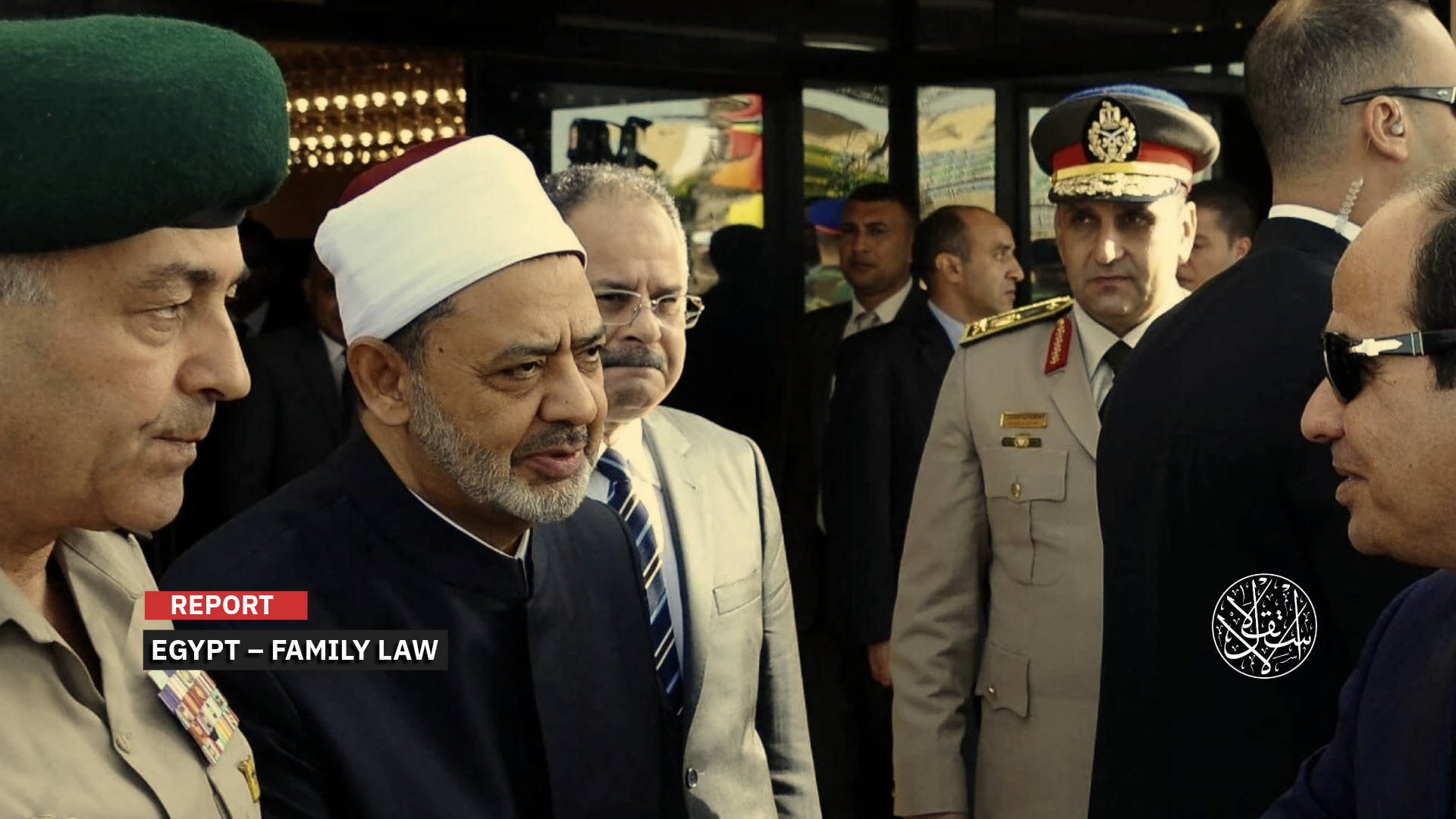
“Al-Azhar does not intervene in legislative matters for the sake of luxury, but rather from the perspective of its religious expertise.”
Recently, widespread criticism has been leveled at Al-Azhar Grand Imam Ahmed el-Tayeb, demanding he resolve the controversy surrounding the Personal Status Law currently before Parliament. The Law faces objections related to clauses that critics argue restrict marriage, impose fines, and contradict Islamic Sharia law.
On May 18, 2026, Al-Azhar issued an official statement denying any involvement in drafting the new Personal Status Law.
It emphasized that the law had not even been presented to it, despite previous statements by the head of the drafting committee claiming Al-Azhar had approved approximately 90% of its articles.
Al-Azhar's stance was not limited to denying its involvement in drafting the controversial law, or its failure to be presented with it despite its transfer to Parliament and subsequent debate after being referred to by the government.
Its statement contained a notable allusion to the disregard for a comprehensive draft personal status law that the religious institution had prepared in 2019.
This move by Al-Azhar's scholars came after escalating public calls demanding that the religious institution declare its position on the law.
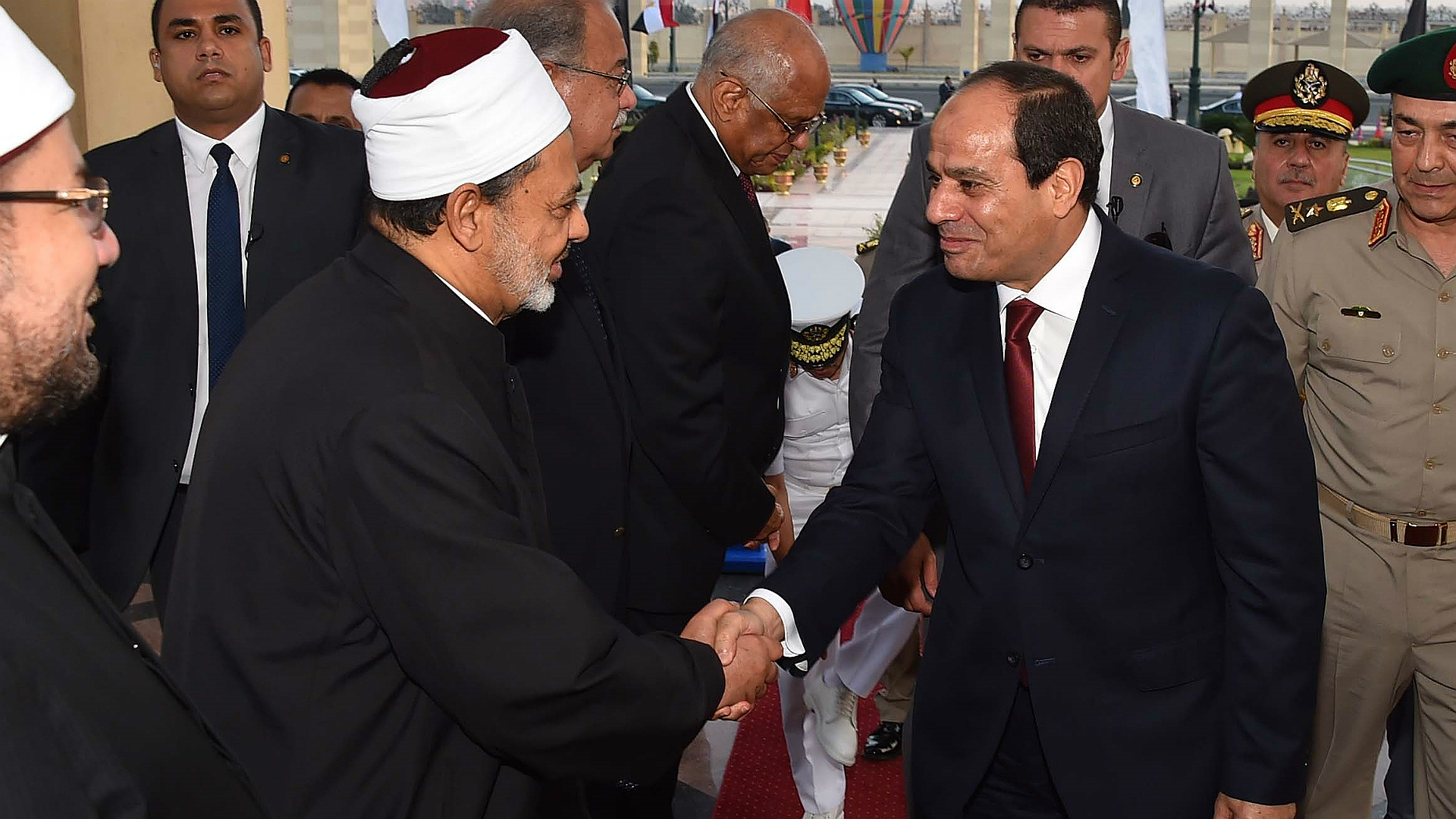
There were expectations that any explicit objection to some of its articles would reignite tensions between the Grand Imam of Al-Azhar, Ahmed el-Tayeb, and the Egyptian President, Abdel Fattah el-Sisi, stemming from previous disagreements related to religious and legislative matters.
The debate surrounding the potential influence of Al-Azhar's position on the law's passage has also brought back to the forefront years of intermittent tension between the presidency and Al-Azhar since 2013, beginning with disagreements over the issue of verbal divorce and the renewal of religious discourse.
These disagreements reached their peak in 2019 with the introduction of amendments that were said to infringe upon Al-Azhar's independence by transferring powers related to the selection of its Grand Imam to the President of the Republic.
This crisis was later contained through various mediations and initiatives. However, the differences persisted whenever projects or issues related to Sharia law and religious identity arose.
Personal Status Law
It seems that the spark that prompted Al-Azhar to issue an official statement denying its involvement in the new Personal Status Law came days after statements by the head of the drafting committee, Counselor Abdel Rahman Mohamed, in which he claimed that Al-Azhar had approved the majority of its articles.
On May 13, the committee head stated that Al-Azhar had approved at least 90% of the articles of the law, before clarifying in a subsequent appearance that only the newly introduced articles had not yet been presented to the religious institution.
However, Al-Azhar responded in a completely different manner, emphasizing that the law had not yet been presented to Al-Azhar, nor had it participated in its drafting in any way.
The Al-Azhar Media Center also clarified that the institution had previously prepared a comprehensive vision for a personal status law through a committee of senior scholars and specialized professors, and submitted its draft in April 2019.
It noted that Al-Azhar was unaware of the extent to which this proposal aligns with the currently circulating draft law.
Observers believe that Al-Azhar's statement was also intended to preempt any public perception suggesting that the religious institution participated in drafting the bill or gave its prior approval, especially given the escalating public debate surrounding several of its articles.
The statement also implicitly conveyed that Al-Azhar has a prior legislative perspective on the matter, and that the proposed government bill is not necessarily a direct continuation of what the institution had previously submitted.
This controversy brought back to the forefront one of the most prominent points of contention in the past between the presidency and Al-Azhar, specifically during the Police Day celebrations in January 2017, when the issue of verbal divorce was raised, with calls to only recognize it if it is officially documented—a position rejected by the Council of Senior Scholars.
During the celebrations, Egyptian President Abdel Fattah el-Sisi addressed the Grand Imam of Al-Azhar, Ahmed el-Tayeb, with a phrase that garnered widespread attention at the time: "You have exhausted me, Your Eminence."
Following Al-Azhar's statement, the debate returned to television screens, with journalist Ahmed Moussa hosting Counselor Abdel Rahman Mohamed on his program on Sada El Balad channel to respond to Al-Azhar's denial.
Mohamed reiterated that the draft law was prepared in coordination with Al-Azhar, noting that the institution had already submitted its draft to the Ministry of Justice in 2019, and that the drafting committee had made amendments to it before the ministry submitted another draft in 2021 containing approximately 194 articles.
He explained that the government's draft law includes a section on personal guardianship, and that Al-Azhar had proposed amendments to a limited number of articles.
He added that the committee had taken into account the feedback it received and incorporated further amendments.
He also acknowledged that the draft law would be presented to Al-Azhar later, after the parliamentary discussions concluded, noting that the current draft represents a compromise between what the Ministry of Justice had submitted and previous proposals.
Dr. Abbas Shuman, Secretary-General of the Council of Senior Scholars at Al-Azhar, commented on the controversy, emphasizing that Al-Azhar's statement was not directed against any institution, but rather aimed to clarify its position to the public.
He stated that the institution had not yet received the draft law and had not yet expressed its opinion on it.
He explained that Al-Azhar had formed a committee comprised of scholars, jurists, and representatives from judicial bodies and relevant institutions, which had worked for nearly a year to prepare its own draft.
He added that the currently circulating draft is not Al-Azhar's draft, and that portraying it as the product of joint consultations places the institution under undue pressure.
Media outlets later circulated unconfirmed reports that, following this televised debate, representatives from Al-Azhar were contacted to send a copy of the draft law. However, no official confirmation has been issued regarding this.
Controversial Provisions
The most controversial provisions in the new draft Personal Status Law for Muslims in Egypt focus on issues of custody, visitation, annulment of marriage, and divorce due to harm, in addition to the fees and procedures related to marriage and divorce.
One of the most controversial clauses concerns the possibility of annulment within the first six months of marriage.
The draft law grants the wife the right to seek judicial annulment if it is proven that she was subjected to fraud or that essential information was concealed by her husband, provided that there is no pregnancy or childbirth.
According to prevailing interpretations, this includes cases of concealing educational qualifications, the nature of one's profession, or essential information that could affect the continuation of married life.
This text has sparked considerable division. Critics argue that it could transform the first months of marriage into a probationary period, opening the door to higher rates of early divorce, while its supporters maintain that it provides legal protection for the wife in cases of deception.
The amendment to the custody order has also generated controversy, as the draft law places the father directly second to the mother, contrary to the previous arrangement. This has prompted some women's rights advocates to warn of its repercussions on custody arrangements.
Regarding divorce, the provisions regulating divorce procedures have sparked widespread debate, particularly those concerning the requirement for a husband seeking a divorce during the early years of marriage to pursue legal channels and attempt reconciliation before finalizing official procedures.
The draft law also includes provisions for divorce due to harm and khul' (divorce initiated by the wife), along with proposals to protect wives' financial rights and establish funds to manage post-separation alimony.
Another point of contention is the regulation of second marriages. The draft law stipulates procedures for notifying the first wife, which supporters view as a safeguard for rights, while opponents consider it a restriction on polygamy.
The issue of verbal divorce has also resurfaced, as the draft law aims to strengthen the official documentation of divorce proceedings. This is despite Al-Azhar's previous stance that verbal divorce is legally valid if its conditions are met, even if it is not officially documented.
The debate surrounding this law dates back several years. Al-Azhar had submitted a comprehensive draft of the Personal Status Law in 2019, while the state subsequently formed a legal committee to prepare another draft.
This coincided with widespread public and media discussions about family and personal status laws, including the controversy sparked by the television series Faten Amal Harbi and the accompanying calls to reconsider some laws regulating family relations.
In May 2022, President el-Sisi spoke about the need to develop the Personal Status Law, acknowledging that the structure of society and the family is a shared responsibility among state institutions.
After the government approved the draft and referred it to Parliament in April 2026, the Minister of Justice explained that the law introduced an addendum to the marriage contract containing optional clauses related to the marital home and financial agreements, granting them legal force.
The draft also stipulated the requirement for a wife to obtain an insurance policy as part of the new procedures.
Amid this controversy, comparisons emerged between the process of drafting the Personal Status Law for Christians, which was conducted in coordination with the churches, and the process of drafting the Muslim Personal Status Law.
This sparked discussions about the nature of religious authorities and the limits of their involvement in legislation related to personal status.
Al-Azhar's Vision
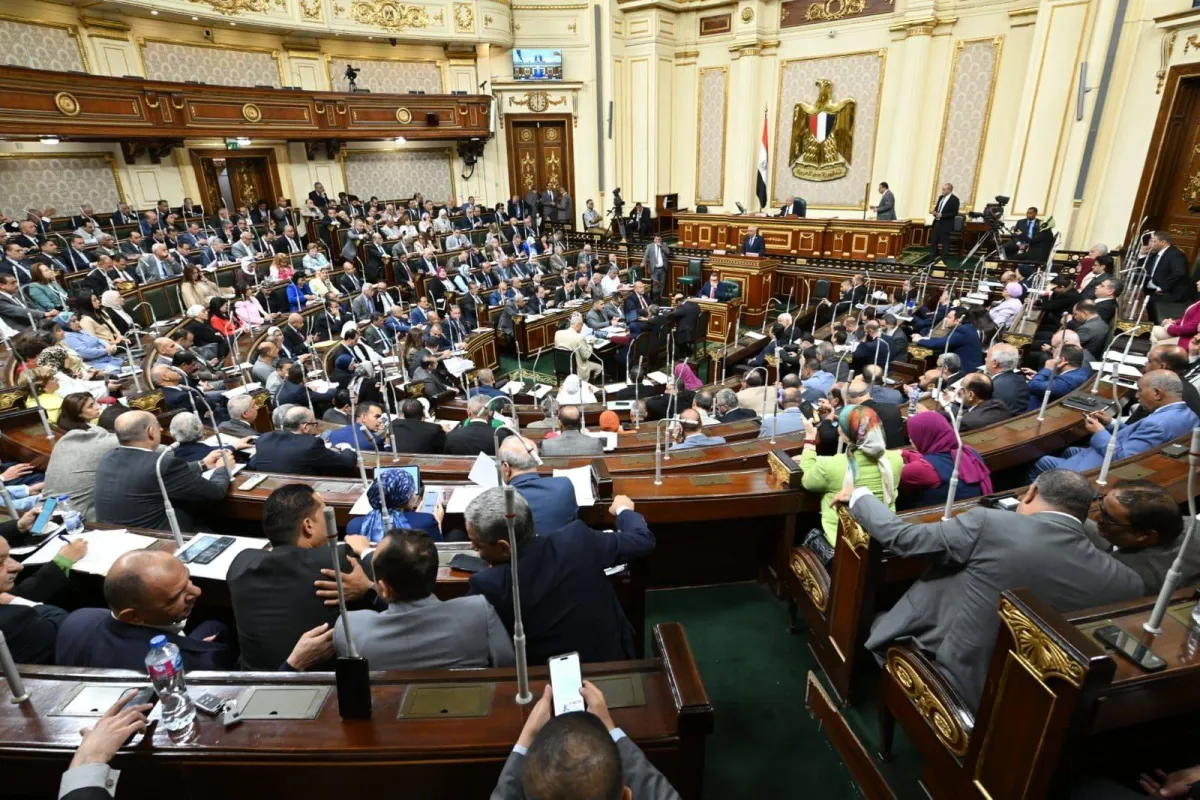
Amid the ongoing debate surrounding the new Personal Status Law, Al-Azhar's recent statement reopened the file on its own draft law, which it had prepared in 2019, raising questions about its fate and the reasons for its exclusion from the current government version.
Al-Azhar confirmed in its statement that it had indeed submitted a comprehensive draft law on personal status in April 2019. This draft was prepared by a committee of senior scholars and specialized professors, within a vision aimed at unifying and regulating family laws, reducing disputes, and guaranteeing the rights of women and children.
However, the religious institution clarified that it was unaware of the extent to which this draft law was compatible with the one currently before Parliament, raising a fundamental question once again: "Was Al-Azhar's draft law ignored or replaced?"
According to the ongoing debate, Al-Azhar's draft law, completed in 2019, was the result of work by a committee formed in 2017.
It comprised approximately 192 articles addressing various family-related issues, from marriage and divorce to custody, alimony, and visitation rights, in an attempt to formulate a unified law to replace the existing fragmented legal texts.
However, as indicated by subsequent statements, the draft law has not yet been enacted, amidst signs of institutional disagreements within the state regarding certain sensitive issues, most notably verbal divorce and the regulation of marital relations.
Al-Azhar's recent statement is seen as an indirect indication that its draft law was not adopted or included in the final version of the government legislation, despite its intended role as a primary reference point in this matter, given the nature of issues directly related to Islamic law.
Conversely, questions are mounting about whether the draft law was entirely disregarded in favor of a new government version, or whether it remains a parallel reference point yet to be activated within Parliament.
This discrepancy opens the door to a broader debate about the mechanisms of family lawmaking in Egypt, and the boundaries of the relationship between religious authorities and legislative institutions, particularly regarding laws with high social and religious sensitivities.
Religious Debate
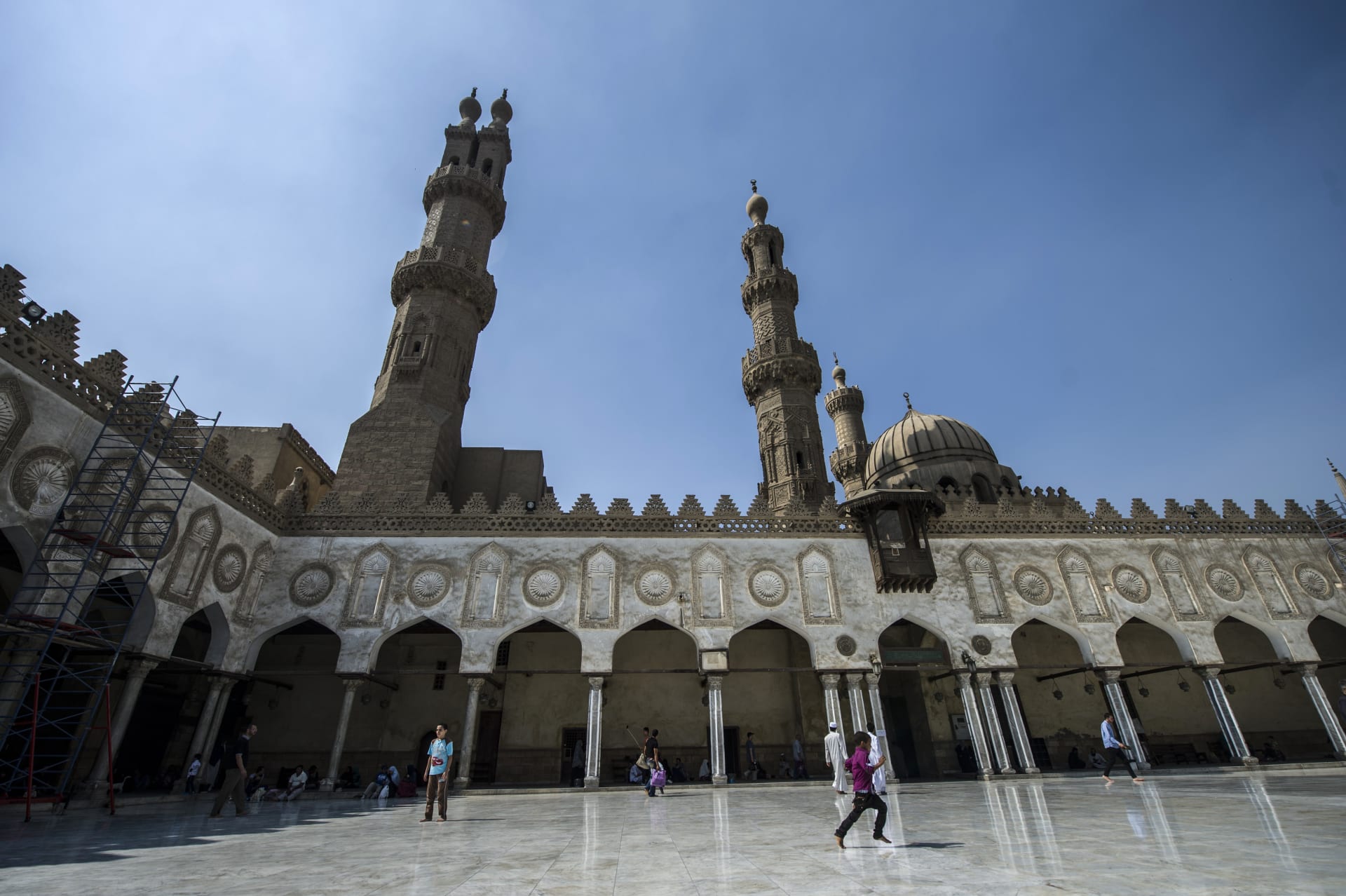
At the height of the debate surrounding the limits of Al-Azhar's role in legislation, the Grand Imam of Al-Azhar, Ahmed el-Tayeb, issued decisive statements rejecting any attempt to diminish the religious institution's standing in matters of personal status.
He emphasized that discussions on laws based on Sharia should not be left to just anyone.
In statements to the newspaper Sawt al-Azhar on April 10, 2019, el-Tayeb said that the institution had prepared the draft personal status law based on its religious duty and constitutional role in this area, stressing that Al-Azhar does not intervene in legislative matters for the sake of luxury, but rather from the perspective of its religious expertise.
He added that issues related to the family in Islam—such as marriage, divorce, and inheritance—should only be addressed by specialized scholars, asserting that excluding Al-Azhar from this matter contradicts both the constitution and religious custom in the country.
El-Tayeb pointed out that the draft law prepared by Al-Azhar represents, in his view, a scholarly and religious obligation, not merely an advisory opinion.
He emphasized that the public would not accept legislation being enacted for them by those ignorant of the rulings of their Sharia.
In a related context, the draft law received support from a number of jurists, members of parliament, and legal experts, who considered Al-Azhar the most qualified body to rule on laws directly related to Sharia, questioning the wisdom of ignoring its opinion on this sensitive matter.
This comes amidst the ongoing debate surrounding what has been termed the renewal of religious discourse since 2015, and the ensuing heated discussions on issues such as verbal divorce. Official parties have called for restricting it to official documentation, while Al-Azhar maintains that it is legally valid as soon as it is uttered.
These disputes also date back to a history older than the mutual interventions between the religious establishment and the executive authority in family laws, from the 1979 law—known in the media as the Gihan Law—to the 2000 law related to the introduction of the Khul' Divorce, up to the current project that raises renewed controversy over the final authority in personal status legislation.
Sources
- 3 controversial articles in the draft Personal Status Law [Arabic]
- Head of the Family Law Committee: Al-Azhar has the first and last say in matters of Islamic law [Arabic]
- Details of Al-Azhar's draft Personal Status Law after its submission to the relevant authorities [Arabic]
- Al-Azhar Voice newspaper: The Personal Status Law project addresses family issues in accordance with the interests of society [Arabic]
- Will the “Personal Status” law succeed this time, or will the same outcome be repeated? [Arabic]