Did Juba Seek to Shut Down an Egyptian Base? The Hidden Conflict Near the GERD
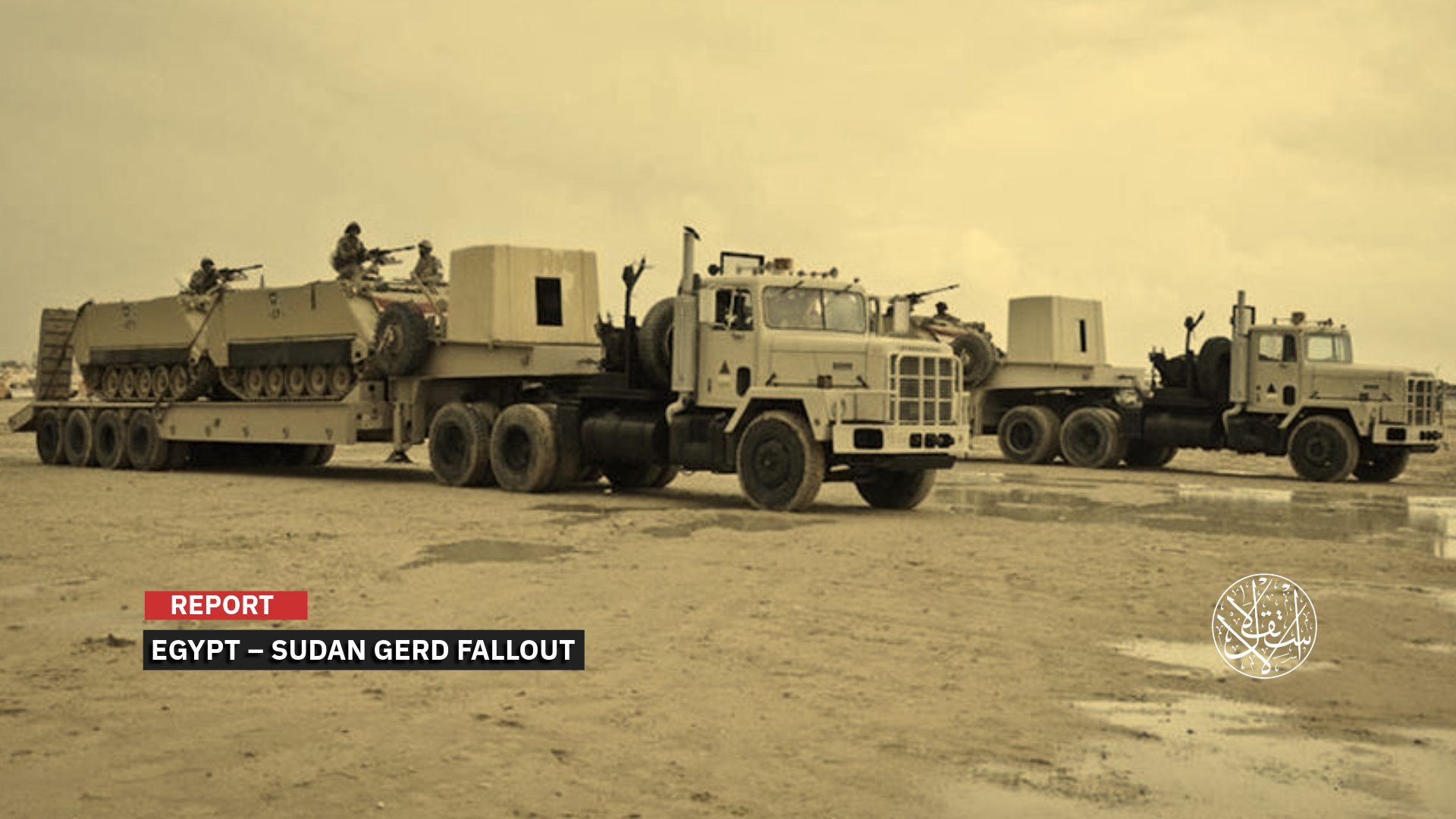
Juba reportedly sought the closure of an “Egyptian military base” near the Ethiopian border in Jot, Upper Nile State.
Sudanese, Ethiopian, and foreign reports have circulated claims that South Sudan requested the closure of an “Egyptian military base” near the Ethiopian border in the Jot area of Upper Nile State, though neither Cairo nor Juba has officially confirmed the reports.
The English-language outlet Sudan Times appears to be the primary source behind the claims. The relatively little-known website’s coverage suggests alignment with the governments of Ethiopia and South Sudan, as well as the Rapid Support Forces militia, while adopting a hostile tone toward Islamist movements and the Sudanese army, which it refers to as the Burhan Army.
The outlet frequently publishes political and security reports with an intelligence and analytical character related to Sudan, Egypt, Ethiopia, and the UAE, often without citing official documents or confirmations from recognized international agencies.
Its sources of funding also remain undisclosed, amid Sudanese speculation linking it to possible Emirati backing.
Relations between Cairo and Juba have witnessed noticeable tensions over the past two years, amid South Sudan’s growing rapprochement with Ethiopia and “Israel” on issues Egypt considers tied to its national security and strategic interests, despite the assistance, facilities, and privileges Cairo has provided to South Sudanese citizens in Egypt.
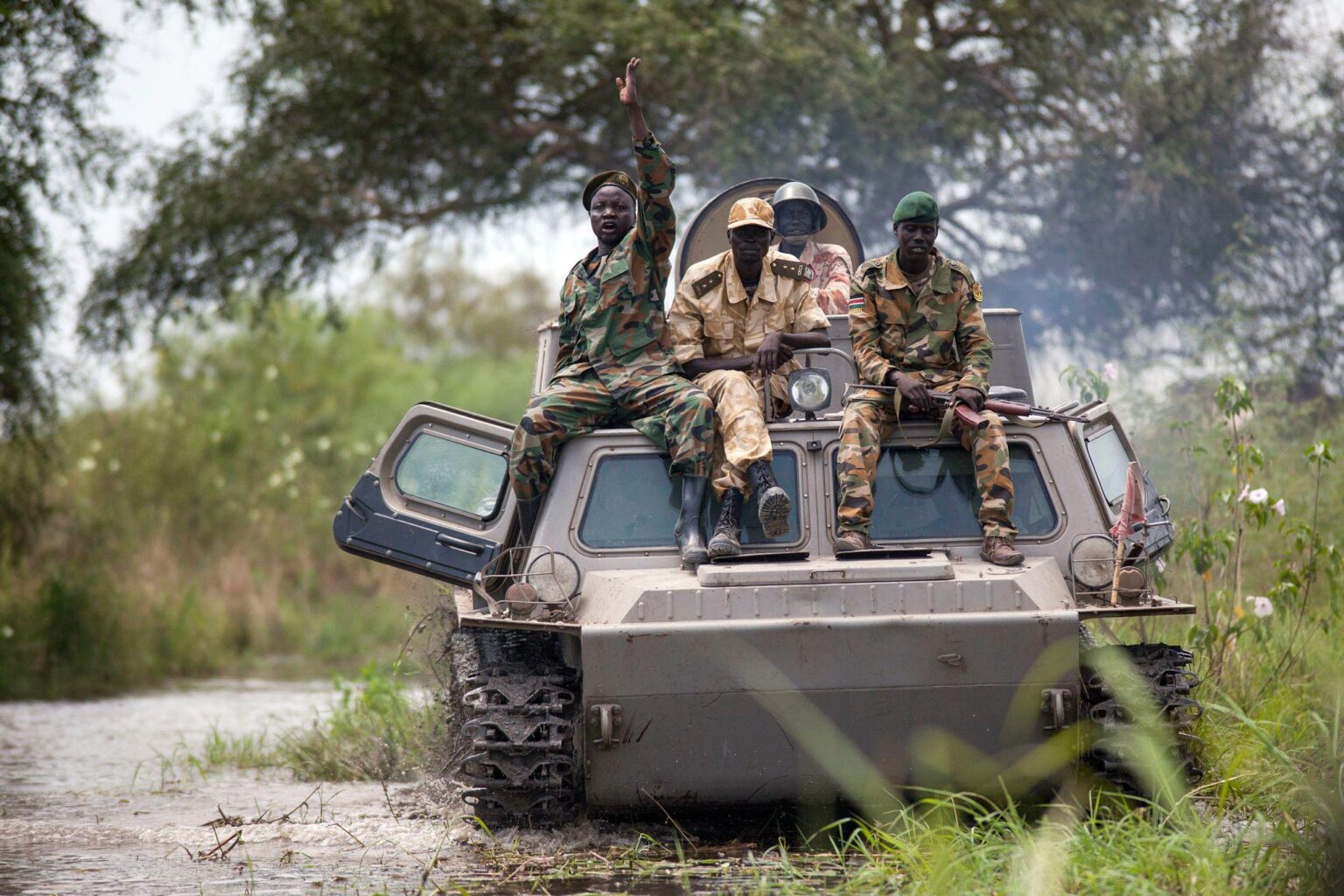
The Story of the Egyptian Military Base?
Talk of an Egyptian military base in South Sudan first emerged in June 2020, when South Sudan’s Foreign Ministry stated that no such agreement had been reached and that no Egyptian base existed on its territory.
According to a government statement published by Anadolu Agency on June 4, 2020, South Sudan’s Ministry of Foreign Affairs and International Cooperation denied “claims that it had approved a request to establish an Egyptian military base in the country.”
The ministry said, “No agreement whatsoever has been reached to allocate land for the establishment of an Egyptian military base on the territory of the Republic of South Sudan.”
The statement also rejected allegations “circulating on social media that the government of South Sudan had approved an Egyptian request to build a military base in Pagak,” a town in Upper Nile State near the Ethiopian border.
The issue resurfaced again in May 2026, this time involving reports about a military base in the Jot area of Upper Nile State. Sudanese and regional media reports circulated on May 8, 2026, claiming that Juba had requested the closure of an Egyptian military base near the Ethiopian border, despite the absence of any official Egyptian or South Sudanese confirmation that such a base publicly exists under that name.
Jot and Pagak, both linked in media reports to alleged Egyptian military presence in 2020 and 2026, are located in eastern South Sudan near the Ethiopian border.
However, they differ geographically, administratively, and strategically, and are often confused in reports concerning Egyptian military activity or regional tensions.
Pagak lies in Upper Nile State in eastern South Sudan, almost directly adjacent to the Ethiopian border and close to Ethiopia’s Gambella region. Its political and military significance stems from its role as a major stronghold for forces loyal to Riek Machar and the Sudan People’s Liberation Movement-in-Opposition, as well as being an area of influence for the Nuer community.
Historically, the area has also served as a crossing point between South Sudan and Ethiopia and was closely tied to South Sudan’s civil war before gaining wider media attention in 2020 amid rumors of an Egyptian military base there.
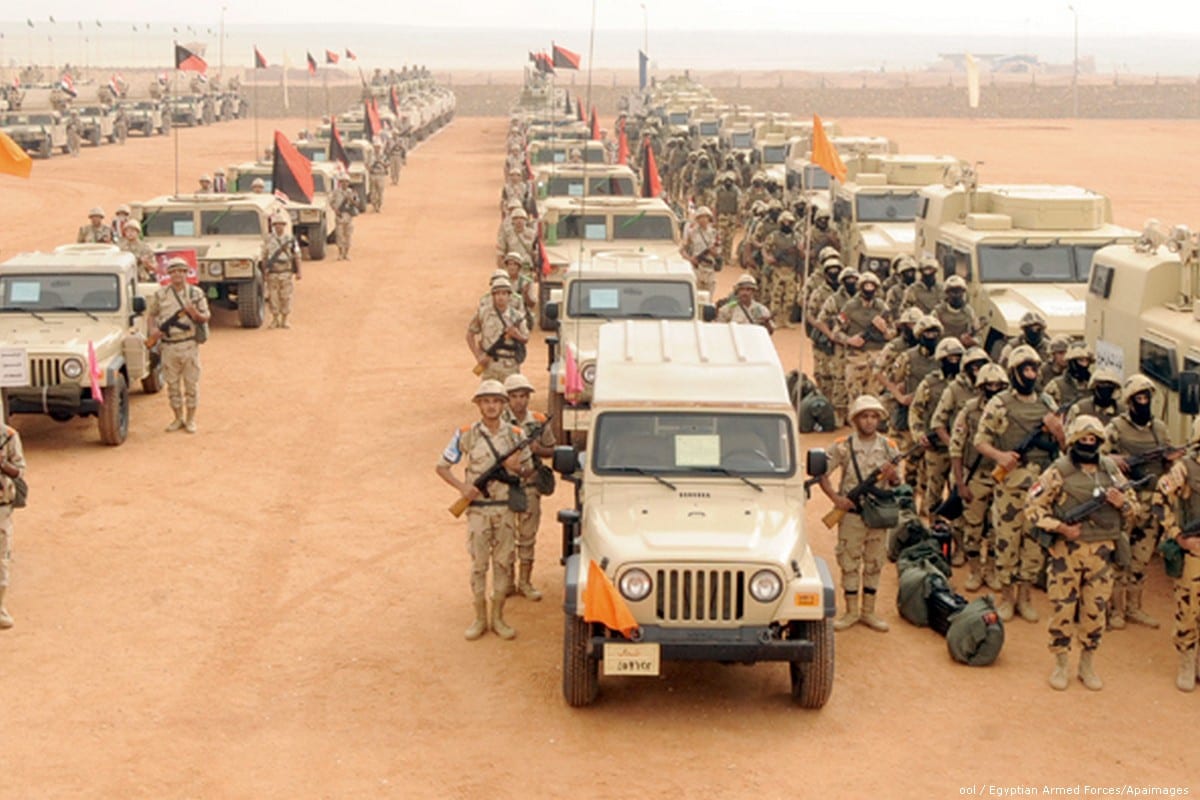
As for the Jot area, which was recently rumored to host the Egyptian military base that Juba allegedly requested to close, it is less well known in media coverage than Pagak and is also located in Upper Nile State, though relatively farther from major border crossings.
Jot is considered a small local area or settlement rather than a well-known border town like Pagak, leading some researchers to question the accuracy of the circulating accounts or suggest that its name may have been used as part of an information campaign linked to the Sudan conflict and the Grand Ethiopian Renaissance Dam dispute.
A review by Al-Estiklal of the trajectory of the story indicates that the first media outlet cited in reports about the closure of the alleged Egyptian base was the Sudanese website alsulta, a little-known platform with unclear ownership and funding sources.
The website wrote, “South Sudanese press reports revealed the issuance of an urgent decision to close the Egyptian military base in the Jot area of Upper Nile State, located near the Ethiopian border,” without identifying the sources of the information.
It added that “the decision includes the complete termination of the Egyptian military presence in the area, reflecting a major shift in the map of military deployment along the sensitive border,” estimating that the move “carries implications for the regional landscape and relations among the concerned states, particularly given the geographic importance of the site and its strategic role in regional security balances.”
Two days later, Sudan Times republished the story, after which it spread to other outlets, including Russian media platforms.
The platform said South Sudan had requested the closure of an Egyptian military base in the Jot area near the Ethiopian border, “in a move that could redraw the map of security influence in the Horn of Africa and end Cairo’s military presence near the Ethiopian frontier.”
Sudan Times quoted analysts as saying the decision could indicate “new political or military arrangements inside South Sudan” or reflect “shifts in regional understandings among Nile Basin states.”
They added that it raises “uncertainty about the future of military and security cooperation between Cairo and Juba amid intensifying international and regional competition in the Horn of Africa.”
The outlet also said the decision raised questions about its political and strategic implications, especially amid ongoing tensions surrounding the Grand Ethiopian Renaissance Dam and competition for influence in the Horn of Africa.
It further noted that the Jot area, located in Upper Nile State near the Ethiopian border, had gained strategic importance for Egypt in recent years due to its geographic proximity to Ethiopia and its connection to the broader dispute over the dam.
So far, however, neither Egypt’s nor South Sudan’s foreign ministry has issued any official statement confirming the existence of a permanent Egyptian military base in the strategic area near the Ethiopian border, nor have authorities in Juba commented on the validity of the reports attributed to unnamed “military sources.”
The strategic significance of Jot stems from its proximity to the Ethiopian border, as well as its sensitivity due to its closeness to oil-producing areas, the Sudanese border, and its indirect connection to the Grand Ethiopian Renaissance Dam (GERD) issue.
Military cooperation between Egypt and South Sudan has been part of Cairo’s strategy to strengthen its regional influence and address security challenges, making talk of closing a military base, if one exists at all, a possible indicator of shifts in regional power balances and perhaps closer ties between Juba and Addis Ababa, reportedly with Israeli backing, according to circulating assessments.
Does an Egyptian Base Actually Exist?
Given the absence of any reliable official confirmation regarding the existence of a declared “Egyptian base” in the Jot area, or any documented statement from Juba demanding its closure, along with the lack of conclusive public evidence that such a base exists in the first place, Sudanese sources believe the leak may be part of an information campaign driven by Ethiopian actors.
The sources told Al-Estiklal that ongoing security cooperation exists between Cairo and Juba, reflected in the frequency of visits and meetings between Egyptian intelligence officials and South Sudanese leaders, alongside Ethiopian concerns over any Egyptian presence there. This, they said, has prompted some parties to pressure Juba through the circulation of such reports.
According to the sources, any Egyptian military presence near the Ethiopian border would alarm Addis Ababa because it could provide Cairo with strategic surveillance capabilities and a pressure card linked to the Grand Ethiopian Renaissance Dam dispute, as well as influence over Ethiopia’s internal dynamics.
For that reason, Ethiopian media closely tracks and amplifies reports or rumors related to nearby Egyptian bases, air movements, or Egyptian security cooperation with neighboring states.
In this context, Ethiopian Agriculture Minister Abayneh Alemu endorsed the circulating narrative about the existence and closure of an Egyptian base in South Sudan, claiming that Juba’s declining trust in Egypt and its policies toward peace and regional security cooperation had led to a reduction in military cooperation with Cairo.
Since the outbreak of the Grand Ethiopian Renaissance Dam dispute, reports attributed to Ethiopian sources have repeatedly claimed that Egypt has sought to establish a military foothold near Ethiopia or use territory in South Sudan and Uganda for surveillance and strategic pressure purposes.
An analysis published by the independent Ethiopian research platform Horn Review on May 11, 2026, suggested that the possible closure of the Egyptian military base in South Sudan may reflect the fact that Juba’s balancing policy between Cairo and Addis Ababa had “shifted decisively toward Ethiopia.”
The analysis explained that South Sudan had long maintained a delicate balance between the two capitals because of their competing interests in the Nile Basin and broader regional arrangements.
It noted that Ethiopia historically provided military and political support to armed movements in South Sudan, including backing the Sudan People’s Liberation Movement led by John Garang since the 1980s.
In contrast, Egypt used the post-independence phase in South Sudan to strengthen ties with Juba through development aid, infrastructure projects, diplomatic cooperation, and undeclared security coordination, with the aim of establishing a strategic foothold on Ethiopia’s southwestern flank as part of an indirect containment strategy.
Horn Review stated that Ethiopia does not view any Egyptian military site in Upper Nile merely as a passive intelligence center, but rather as a potential threat point near the western approaches to the dam at a highly sensitive strategic moment. According to the analysis, this may have motivated Juba to close the base, if it exists at all.
The analysis added that Ethiopia now views South Sudan’s internal security not simply through factional influence, but through the consolidation of long-term influence within Juba and the construction of political, security, and logistical networks, instead of relying solely on armed factions as in the past.
Some observers believe Egypt may maintain a limited intelligence presence, undeclared logistical support points, or temporary military training teams, rather than a “large base” in the traditional military sense.
They also point to the expansion of Egyptian military activity near Sudan during 2025 and 2026 amid the war between the Sudanese army and the Rapid Support Forces militia, including the operation of drones and the establishment of forward bases in southern Egypt linked to support for the Sudanese military. This was also highlighted by Reuters in a report published on February 3, 2026.
Notably, the South Sudanese government issued an official statement in June 2020 denying rumors of an Egyptian base in Pagak, but has so far issued no statement regarding the circulating reports about a base in Jot.
Sources stress that military and security cooperation between Cairo and Juba has existed for years and includes troop training, intelligence coordination, reciprocal military visits, and logistical and security support, as reflected in several military cooperation agreements between the two countries.
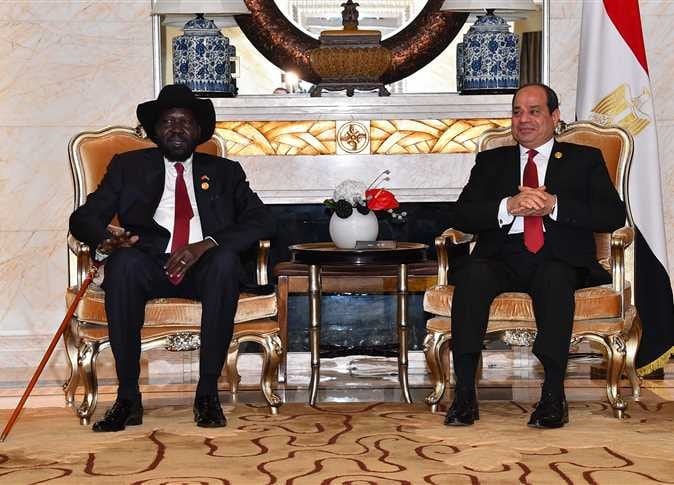
Juba-Cairo Disputes
Relations between Cairo and Juba remained strong even before South Sudan’s separation from Sudan in 2011. Egypt granted South Sudanese citizens educational and economic privileges as part of efforts to encourage Juba to move forward with the Jonglei and Machar canal projects, which could recover between 20 and 42 billion cubic meters of water lost in swamps, with Egypt expected to receive around 10 billion cubic meters.
Cairo’s commitment to building strong ties with South Sudan stemmed from national security calculations and efforts to balance or limit growing Israeli influence there, within what has been described as a “periphery strategy,” based on the view that South Sudan represents an important extension of Egypt’s future water security.
In this context, Egypt provided extensive assistance to South Sudan, while former Egyptian intelligence chief Abbas Kamel visited Juba and met South Sudanese President Salva Kiir Mayardit in March 2020.
Current intelligence chief Major General Hassan Mahmoud Rashad also met a high-level South Sudanese delegation led by Tut Gatluak, security adviser to the South Sudanese president, during a visit to Cairo in February 2026.
In recent years, however, relations between the two countries have witnessed growing tensions and negative developments, including what Cairo views as Juba’s alignment with policies harmful to Egyptian interests.
These include South Sudan’s signing of the Entebbe Agreement on the redistribution of Nile waters in July 2024, alongside accusations that Juba supported the Rapid Support Forces militia led by Mohamed Hamdan Dagalo, known as Hemedti, in ways that affect Egyptian national security.
Since 1997, Egypt has sought to persuade Nile Basin countries not to sign the framework agreement on water sharing among the eleven basin states: Eritrea, Uganda, Ethiopia, Sudan, South Sudan, Egypt, the Democratic Republic of the Congo, Burundi, Tanzania, Rwanda, and Kenya.
Cairo believes that implementing the agreement would effectively nullify the historical treaties governing Nile water distribution, particularly the 1929 and 1959 agreements, which recognize Egypt’s annual share of 55.5 billion cubic meters and Sudan’s share of 18.5 billion cubic meters.

Ethiopia, Uganda, Kenya, Tanzania, Rwanda, and Burundi had already signed the agreement, but Kenya’s failure to ratify it remained a key obstacle to securing the required majority. Egypt was therefore surprised when South Sudan signed the Entebbe Agreement, becoming the sixth state to officially ratify it, allowing the treaty to enter into force.
The third section of the agreement requires ratification by the parliaments of at least six states to establish the permanent commission, which will be headquartered in Uganda.
Cairo and Khartoum fear that the agreement’s implementation could create new realities allowing upstream states to carry out water projects and build dams without adhering to previous treaties, threatening the water and existential security of both countries.
Additional tensions also emerged over the war in Sudan, as Egypt openly backed the Sudanese army led by Abdel Fattah al-Burhan and viewed Sudan’s stability as part of its national security.
South Sudan, meanwhile, sought to maintain a delicate balance because its economy depends heavily on oil exports passing through Sudanese territory, alongside fears that the conflict could spread toward its borders, particularly given that some oil-producing areas fall within the threat range of the Rapid Support Forces militia.
The RSF militia’s temporary control over strategic areas such as Heglig also caused widespread concern in Juba because of its direct impact on oil exports, the main pillar of South Sudan’s economy.
Egypt also believes that the Grand Ethiopian Renaissance Dam project negatively affects its share of Nile waters, while South Sudan seeks to develop its own water projects and benefit from changes imposed by Ethiopia’s rejection of historical water-sharing agreements, raising Egyptian concerns about the future flow of Nile water to the country.