RSF Militia Fractures: How Internal Splits Became a Threat to Hemedti’s Military and Tribal Power Structure
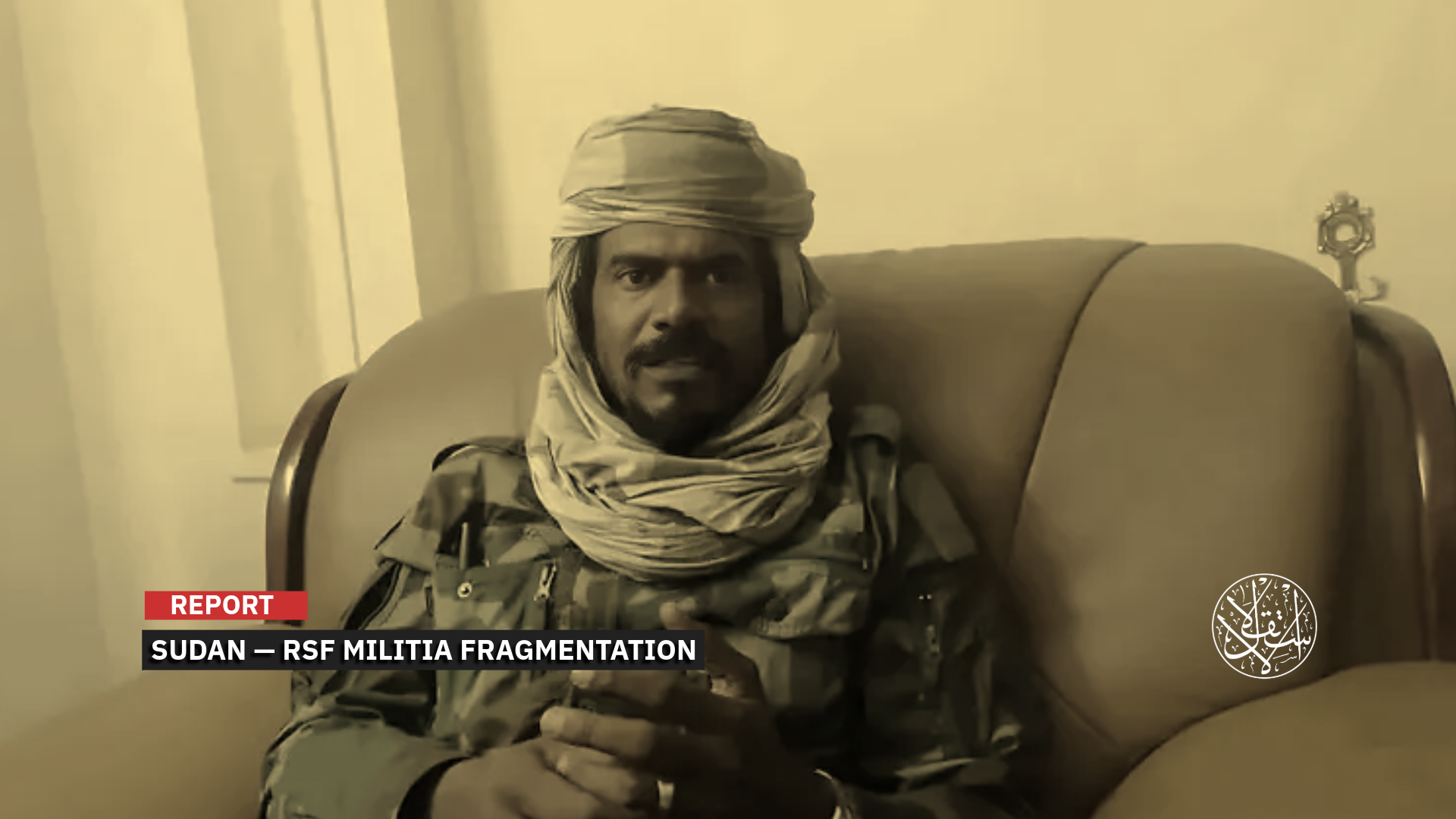
Al-Savanna was no ordinary field commander in Hemedti’s militia forces, having been linked to sensitive operations.
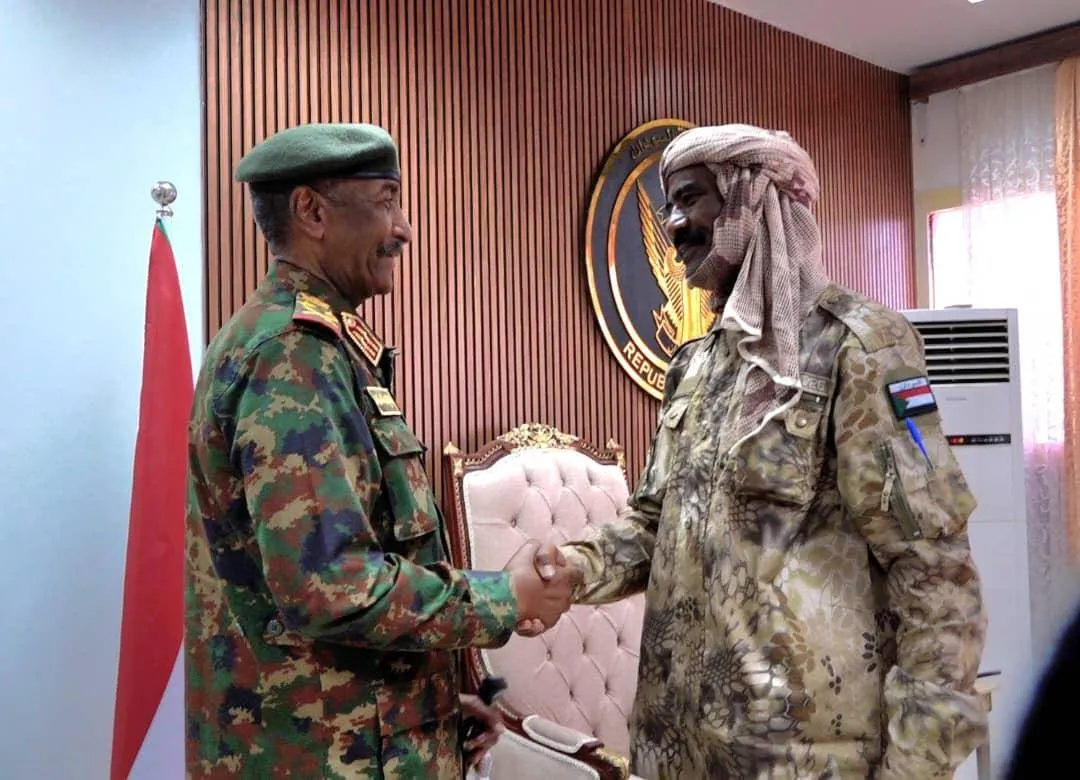
The announcement by prominent Rapid Support Forces (RSF) militia field commander Ali Rizqallah, known as “Al-Savanna,” of his defection on May 11, 2026, was not merely another statement in a war now entering its fourth year.
Rather, it appeared to signal growing fractures within the military and tribal structure on which Mohamed Hamdan Dagalo “Hemedti” has relied since the conflict began.
Al-Savanna was no ordinary commander within the RSF militia. His name was linked to sensitive operations, including the recruitment of foreign fighters from Chad, Niger, and South Sudan, as well as overseeing supply and mobilization routes in western and northern Kordofan.
He also carried significant tribal influence within the Mahamid branch of the Rizeigat tribe, one of the RSF militia’s main social support bases in Darfur.
The impact of these developments on the UAE-backed militia was amplified by the fact that Al-Savanna’s defection came only weeks after the defection of Major General al-Nour Ahmed Adam, known as “Al-Qubba,” one of the RSF militia’s most prominent commanders in Darfur.
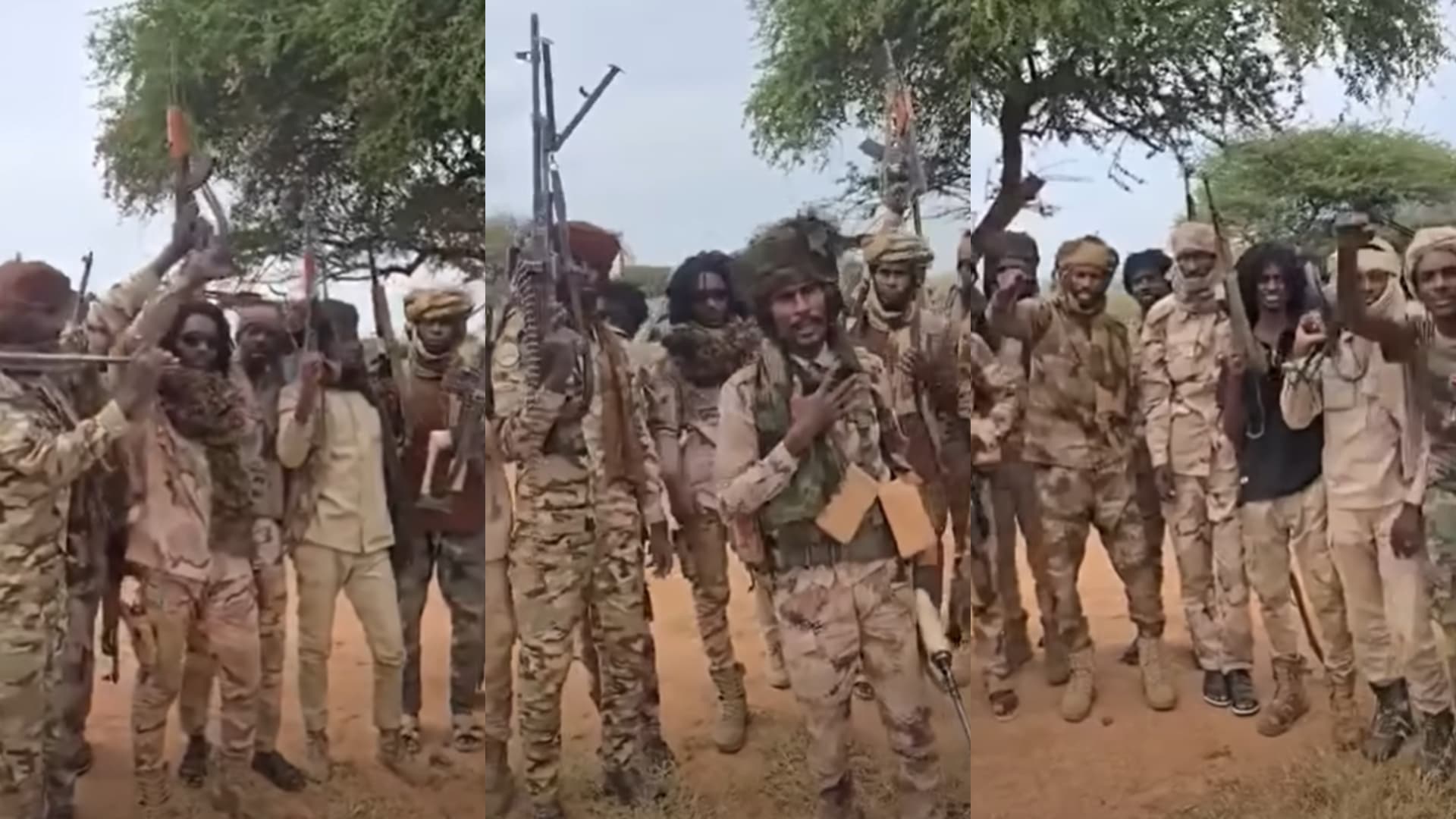
At the same time, field reports have spoken of entire groups of fighters surrendering in Kordofan and Darfur amid continued territorial losses and internal disputes over leadership, influence, and resource-sharing.
While RSF militia leaders have sought to downplay the significance of these defections, observers believe the developments go beyond mere organizational disagreements, reflecting a deeper crisis threatening the cohesion of the force from within, especially amid rising tribal rivalries and the RSF militia’s declining image as a force capable of securing military victory.

Wave of Defections
Although the war erupted in April 2023, major defections within the Rapid Support Forces (RSF) militia did not emerge publicly and on a wide scale until the second half of 2024, coinciding with shifting battlefield dynamics and the Sudanese army regaining the initiative on several fronts.
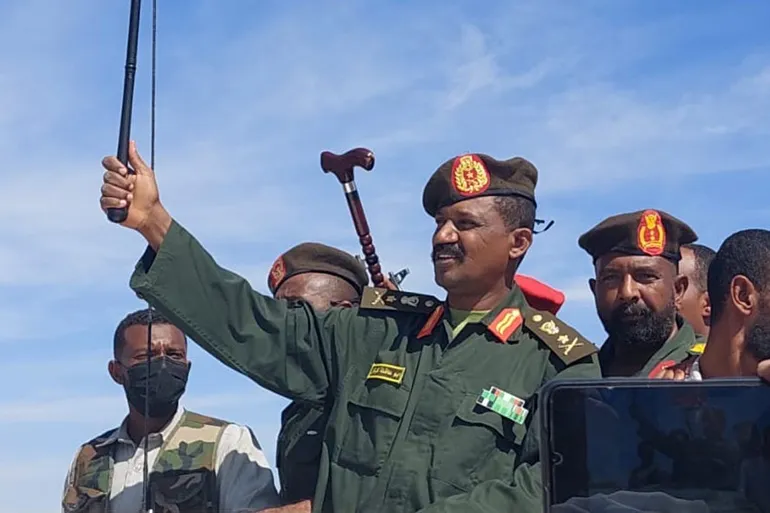
The most significant turning point came on October 20, 2024, when the Sudanese Armed Forces announced the defection of Abu Aqla Keikel, the RSF militia commander in al-Jazira State, who joined the army along with a number of his troops.
At the time, Reuters described the move as “the first defection of a senior commander” from the RSF militia since the outbreak of the war.
Keikel, a former Sudanese army officer, had led the “Sudan Shield” forces allied with the RSF militia in central Sudan before switching allegiance as the army advanced in Sennar and al-Jazira states.
According to an analysis published by the Armed Conflict Location & Event Data Project (ACLED), based in Wisconsin, Keikel’s defection marked a major turning point that accelerated the collapse of RSF militia positions in al-Jazira State and later paved the way for the army’s advance toward Khartoum.
The RSF militia’s response to Keikel’s defection was far from ordinary. Reuters and Amnesty International reported retaliatory attacks carried out by RSF militia forces against villages and areas in eastern al-Jazira following his defection, highlighting the level of disruption and confusion the move caused within the group’s military structure.
Complex Alliances
However, these defections were not merely a reaction to military losses or shifting battlefield dynamics. They also exposed a deeper crisis that had been quietly developing within the tribal and organizational structure of the Rapid Support Forces (RSF) militia.
Since its formation, the RSF militia has relied on complex tribal alliances within Darfur, particularly among branches of the Rizeigat tribe. Yet the recent war has revived long-standing rivalries that had remained dormant for years.
Field reports indicate that the RSF militia attack on the area of Mustariha, the stronghold of tribal leader Musa Hilal in North Darfur, marked one of the key moments that deepened divisions within the force’s social base.
The attack, which left dozens dead, brought back to the surface the old rivalry between the Mahamid branch, to which Musa Hilal belongs, and the Mahariya branch, to which Mohamed Hamdan Dagalo and his brother Abdul Rahim belong.
According to local reports and field sources, Musa Hilal has in recent months played a significant role in persuading members of the Mahamid within the RSF militia to distance themselves from the force, convincing some commanders to defect or remain neutral, something reflected in the defections of “Al-Qubba” and later “Al-Savanna.”
Audio recordings and statements released by several defecting commanders also revealed growing anger over the dominance of Abdul Rahim Dagalo, Hemedti’s brother and the RSF militia’s second-in-command, over key decision-making centers within the force, particularly regarding weapons, funding, medical treatment, and salaries.
Reports published by Arab and international media outlets further suggest that a number of field commanders have come to view the RSF militia as an organization controlled by a narrow inner circle, amid the declining influence of local and tribal leaders who once formed the backbone of the group’s presence across Darfur and Kordofan.
Observers believe these divisions are now increasingly visible on the ground, as some tribal groups have begun viewing the war as a battle serving a specific leadership faction within the RSF militia, rather than a conflict representing all components of Darfur.
Why Now?
The recent wave of defections cannot be separated from the military shifts that have shaped the war over the past two years, particularly after the Sudanese army succeeded in recapturing strategic positions in central Sudan and the capital, Khartoum.
Since late 2024, the army has made gradual advances in al-Jazira and Sennar states before expanding operations inside Khartoum and eventually regaining full control of the capital.
This progress was aided by the exhaustion of Rapid Support Forces (RSF) militia fighters across multiple fronts and the group’s declining ability to maintain supply lines and control the vast territories it had expanded into.
As military momentum faded, other crises began surfacing within the RSF militia, including problems related to funding, discipline, and control over fighters, particularly in al-Jazira and Darfur.
On April 3, 2026, Associated Press published an extensive investigation describing a state of chaos inside controlled areas by RSF militia in Kordofan.
Testimonies from residents spoke of looting, kidnappings, and killings carried out by undisciplined fighters, while the leadership appeared unable to impose centralized control over forces spread across towns and villages.
Pressure on the RSF militia also intensified amid growing international criticism and accusations of abuses committed by the force, particularly in Darfur, where the United States and human rights organizations accused it of carrying out war crimes and acts of ethnic cleansing.
With the war continuing without a clear political horizon, frustration has increasingly spread among fighters, especially as battlefield gains declined and the future of military and tribal leaders tied to the RSF militia became more uncertain.
Security estimates suggest that many field commanders have come to view defection as a means of survival, either to secure guarantees from the Sudanese army or to avoid total collapse should the RSF militia’s position deteriorate further in the coming period.
Phase of Fragmentation
Sudanese political researcher Mohamed Nasr told Al-Estiklal that the Rapid Support Forces (RSF) militia leadership is trying to downplay the impact of the recent defections by portraying them as isolated individual cases.
However, he said developments on the ground point to a much deeper crisis linked to the erosion of the group’s internal structure and the growing tribal and organizational divisions within it.
Nasr explained that the defections are no longer limited to ordinary fighters or small groups, but now include commanders with significant tribal and battlefield influence, reflecting the declining ability of the central leadership to manage balances within Darfur and contain conflicts among competing power centers.
He added that the Sudanese army, meanwhile, has been working to exploit these shifts politically and militarily, whether by opening the door for defectors to return or “repent,” or by benefiting from the information and expertise possessed by departing commanders.
He noted that military intelligence has played a major role in deepening the state of fragmentation within the RSF militia in recent months.
At the same time, Nasr warned that the fragmentation of the RSF militia does not necessarily mean the war is nearing its end.
He explained that the collapse of the central leadership could lead to the emergence of independent armed groups seeking influence and tribal protection, potentially ushering in a more dangerous and complicated phase in Sudan’s conflict.
Nasr concluded by saying that the RSF militia is now facing a genuine existential test: either maintaining its internal cohesion despite mounting losses and divisions, or gradually turning into scattered factions that lose their ability to operate as a unified force against the Sudanese army.
Sources
- Al-Savanna’s Defection Strikes the RSF: Prominent Field Commander Announces Departure from the Militia [Arabic]
- Ali Al-Savanna Defects: Meet the Field Commanders Who Left the RSF [Arabic]
- Sudan Enters a Fourth Year of War as Officials Lament an “Abandoned Crisis”
- Sudanese Army Reports First Defection of Senior RSF Commander
- Two Years of War in Sudan: How the SAF Is Gaining the Upper Hand
- Senior RSF Commander Defects from Sudanese Paramilitary Group
- A Top Paramilitary Commander Defects to Sudan’s Military as War Enters Fourth Year