After Growing Closer to Israeli Occupation, Why Did Burkina Faso's Military Ruler Turn on Arabs and Muslims?
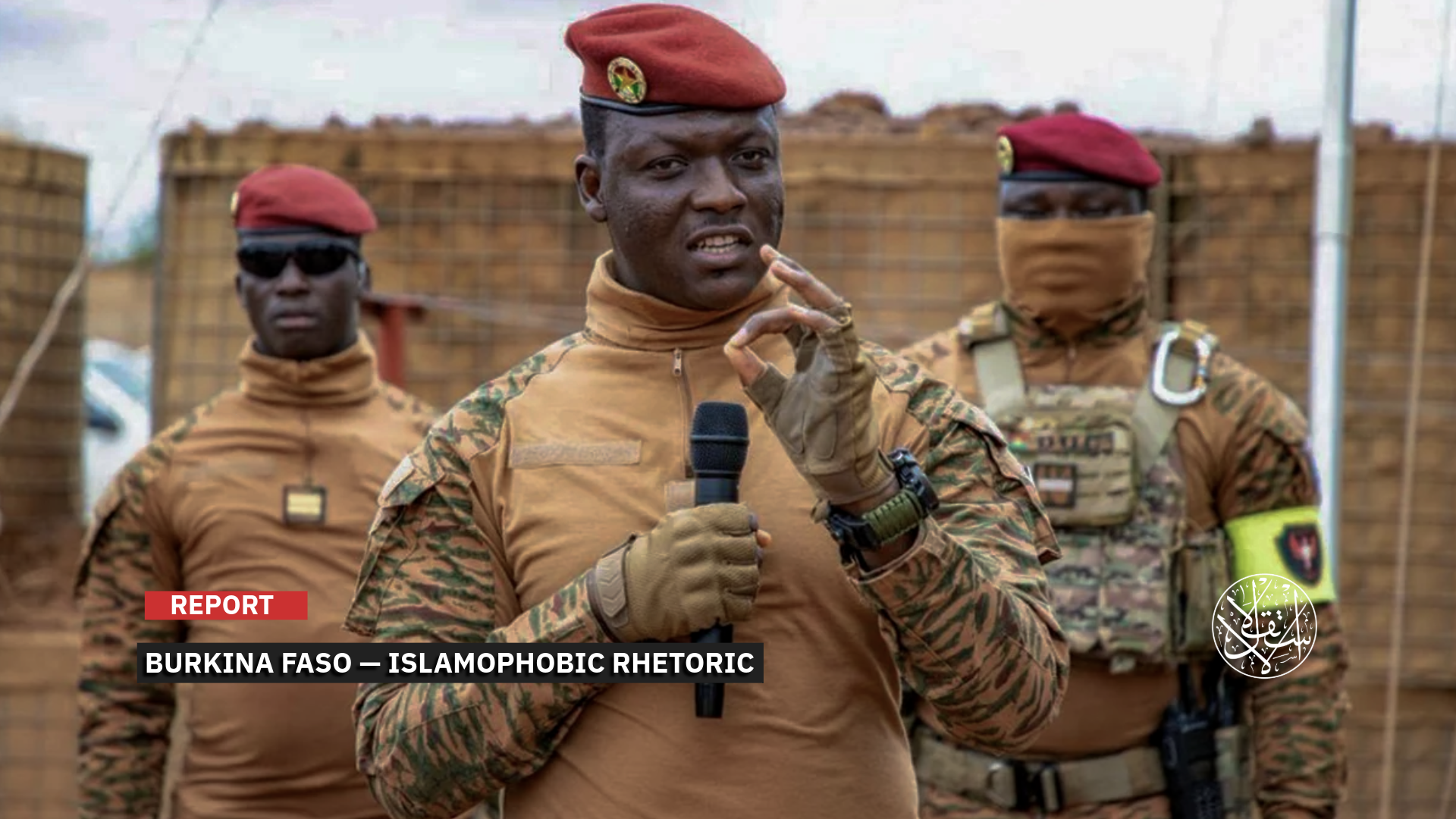
Muslims make up about 63.8% of Burkina Faso's population.
As Burkina Faso moved unexpectedly closer to the Israeli Occupation by welcoming its new ambassador, in a shift that appeared to contradict the country's declared support for Palestine and longstanding anti-Western rhetoric, military ruler Captain Ibrahim Traore launched a scathing attack on Islamic law and those advocating its implementation.
Traore criticized the growing number of Burkinabe students traveling to Arab countries to study Islamic jurisprudence, singling out Saudi Arabia, where he said about 800 students from Burkina Faso are currently enrolled.
His remarks quickly ignited controversy after he reaffirmed the secular nature of the state, declaring that no religion is above the state. While identifying himself as a Muslim, he rejected any move to introduce Islamic law in Burkina Faso.
He also criticized the practice of sending young people to Arab countries to study religious sciences instead of pursuing scientific and technical fields.
Analysts specializing in African affairs say the remarks may reflect a broader shift in Ouagadougou's foreign policy toward a more pragmatic strategy based on diversifying international partnerships rather than maintaining a complete break with Western powers. They also suggest the rhetoric could be part of an effort to improve relations with the West through closer ties with the Israeli Occupation.
Traore's rejection of Islamic law is also closely tied to Burkina Faso's security crisis. Since 2015, the country has been battling armed groups linked to ISIS and al-Qaeda, which control large swaths of its territory. That has made any discussion of implementing Islamic law especially sensitive for the military government, which presents itself as fighting organizations seeking to impose religious rule by force.
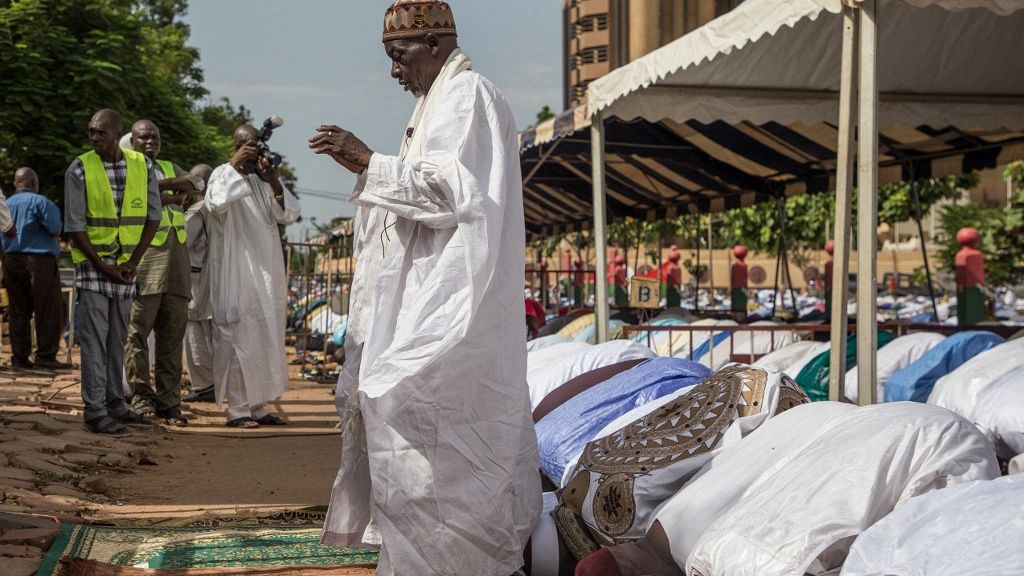
According to semi-official estimates, Muslims make up about 63.8% of Burkina Faso's population, the vast majority of them Sunni, with a small Shiite minority. Christians account for about 26.3%, most of them Catholics and Protestants, while followers of traditional African religions make up nearly 9%.
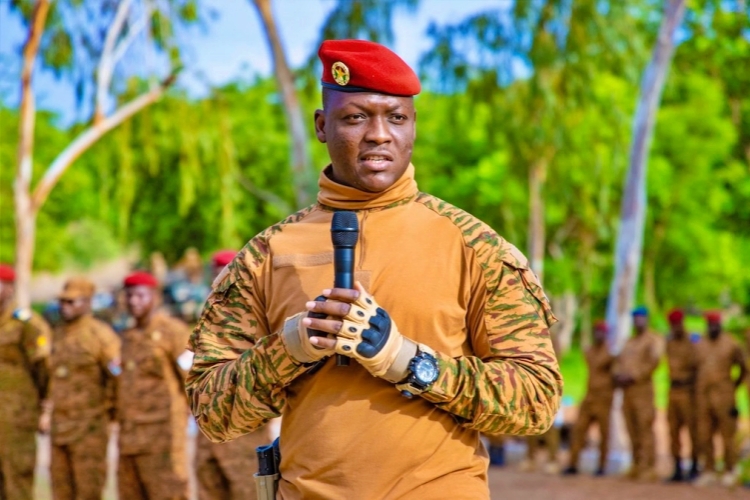
What Traore Said About Islamic Law
In a speech delivered before local leaders in Burkina Faso's Yatenga region on July 17, 2026, Traore stressed that while he is a Muslim, Burkina Faso would never adopt Islamic law and that the state could not be subordinated to religious authority.
His message centered on the idea that Burkina Faso is a secular, multireligious nation whose priorities are economic development and the fight against terrorism, not the establishment of a religious state. Still, critics viewed his remarks as an attack on Islamic law and on students pursuing religious studies.
According to widely circulated footage of the speech, Traore declared, “I am a Muslim, but everyone in Burkina Faso has the right to practice their own religion. There will never be Sharia law here.”
“We have nearly 1,000 Burkinabe students in Saudi Arabia, and the surprising thing is that they are all studying Sharia and Islamic law. None of them is learning a trade. We need people trained in technology, engineering, and agriculture to build the country.”
“If someone believes that their future is to impose Islamic law, they should stay in the country where they learned it,” he added.
The remarks suggested that students traveling to Saudi Arabia should focus on fields that contribute to national development. If their goal was to return and introduce Islamic law, he said, "That will not happen."
A report published by The Gambia Journal on July 18 said Traore's comments had deepened tensions between Burkina Faso's military government and segments of the country's Sunni Muslim community.
Several Sunni religious leaders had publicly backed Traore after he seized power in a 2022 coup, but relations have deteriorated since the government introduced a National Day of Customs and Traditions in May 2026 and imposed new regulations governing public prayers.
Rights groups and local observers have also voiced concern over reports that several Muslim imams and worshippers have disappeared in recent months, while their families say they have received no information about their whereabouts.
Political analysts say Traoré’s latest remarks indicate that his government is preparing to adopt a more confrontational approach toward religious figures it accuses of promoting extremism, despite the government’s insistence that the measures are aimed at preventing terrorism and preserving national unity.
An earlier report by African Arguments on September 22, 2025, offered a window into Traore’s ideological project, describing it as a blend of “faith and a new form of statecraft” in which Islam is used as a source of legitimacy and moral authority.
The report said Traore often invokes what he calls “true Islam,” a carefully defined concept that does not amount to a call for an Islamic state and sets him apart from the armed Islamist groups operating in Burkina Faso.
Instead, Traore has sought to redefine Islam not as a revolutionary alternative to the state but as a civic code built around discipline, solidarity, and defending the nation, presenting religion as a force that strengthens national sovereignty rather than challenges it.
He tells Burkinabe citizens that patriotism, working the land, and defending villages are themselves acts of faith, casting religion as a tool for social unity.
Traore has also accused Arabs of playing a role in Africa’s suffering through slavery, saying Africans endured “more than a thousand years of slavery practiced by Arabs” and that “the last slave market did not close until 1962.”
Rising Tensions Between the Military and Sunni Clerics
Relations between Burkina Faso's military rulers and parts of the country's Sunni religious leadership have grown increasingly strained since the government unveiled a draft religious freedoms law in May 2026.
One of the clearest signs of that rift was the arrest of Imam Mohamed Ishaq Kindo, deputy head of the Sunni Movement of Burkina Faso (MSBF) and one of the country's most influential Sunni scholars.
Authorities also shut down the MSBF's main mosque in Ouagadougou, citing public order concerns after worshippers demonstrated against Kindo's detention.
Rights organizations have also reported the enforced disappearance of Imam Mahmoud BarRo, who has been missing since March 31, 2026, after publicly criticizing the proposed law.
Three other imams, Mohammed Bashir, Haj Traore, and Moussa Ouédraogo, were each sentenced to one year in prison after criticizing the government's decision to designate public holidays celebrating traditional indigenous beliefs during Friday sermons.
Authorities also detained about 100 supporters of the protesting clerics and transferred them to military camps described as "civil training and rehabilitation" programs.
The crackdown is part of a broader campaign that has seen several prominent Muslim scholars, imams, and preachers arrested or prosecuted under orders from Traore's military government.
Among the highest-profile cases is Kindo, who was arrested on May 26, 2026, after publicly condemning a military-backed bill imposing tighter restrictions on religious freedoms, including a ban on prayer spaces and places of worship inside public institutions.
The Federation of Islamic Associations of Burkina Faso (FAIB) confirmed Kindo's arrest and called on the authorities to explain the reasons for his detention, according to the Media Foundation for West Africa on May 20, 2026.
Before his arrest, Kindo argued that the proposed legislation would undermine religious freedom, particularly by prohibiting permanent places of worship inside government institutions, hospitals, and military bases.
The government rejected that criticism, insisting the bill does not ban prayer but merely regulates places of worship in line with the constitution's principle of state secularism, an explanation many Sunni clerics have dismissed.
The growing confrontation comes as Traore has increasingly distanced himself from democratic rule.
On April 3, 2026, he declared that planned elections would not take place, telling Burkinabe citizens to "forget democracy."
"We must tell the truth. Democracy isn’t for us," he said, according to Reuters, raising fresh questions about his long-term political ambitions.
The junta leader, who seized power in a September 2022 coup, also told reporters that people need to forget democracy because democracy kills, in one of his clearest indications yet that he intends to remain in power.
Traore's military government initially pledged to hold elections in 2024 but later abandoned that commitment, arguing that voting could not take place until security conditions allowed all citizens to participate.
Burkina Faso has faced an armed insurgency for more than a decade, led by groups linked to al-Qaeda and ISIS.
Why Did He Say That?
Analysts say Traore’s remarks cannot be separated from Burkina Faso’s wider security and political crisis. The country has been fighting an insurgency linked to al-Qaeda and ISIS for more than a decade, while the military leader seeks to consolidate a state model built around national sovereignty and centralized power.
Around 70% of Burkina Faso’s territory is either controlled by jihadist armed groups or effectively beyond the government’s reach, according to Paul Melly, a Sahel expert at London’s Chatham House, who spoke to Germany’s Deutsche Welle.
The comments also come as Traore seeks to diversify Burkina Faso’s foreign partnerships after its break with Western powers, particularly France. That strategy includes closer ties with the Israeli Occupation, as the military government looks for external support in its fight against extremist groups controlling parts of the country, including al-Qaeda and ISIS affiliates.
Since 2015, Burkina Faso has faced an armed insurgency led by groups linked to both groups, some of which have sought to impose their own hardline interpretation of Islamic law in areas under their control.
Analysts say Traore’s rejection of Islamic law was also a direct message to those groups: the state will not allow the creation of a rival religious authority or a parallel system of rule.
Since seizing power in a 2022 coup, Traore has repeatedly framed his project around restoring state sovereignty, both against foreign influence and armed groups.
His latest remarks reflect that same approach. They place loyalty to the state above religious or ideological affiliations, presenting religion as a personal matter while arguing that laws must remain solely under state authority within a secular system.
From that perspective, Traore criticized the decision by some young Burkinabe to study Islamic law in Arab countries instead of pursuing scientific fields that he believes contribute more directly to infrastructure, agriculture, industry, and national security.
He argues that Burkina Faso needs more scientists, engineers, and technical specialists capable of rebuilding the economy and addressing national challenges rather than expanding the number of religious scholars.
Other Western media analyses suggest that his comments are part of a broader effort to reduce any form of external influence inside the country, whether Western or religious, as part of his rejection of intellectual dependence on foreign models.
Traore has promoted the idea of building an independent African model and resisting the importation of political or religious systems from abroad, according to an African Arguments report published on September 22, 2025.
He portrays himself as the leader of an African liberation movement focused on creating a politically, economically, and culturally independent nation. That vision may explain his opposition to any outside frameworks he sees as competing with state authority, whether Western political influence or foreign religious interpretations promoted through Islamic studies abroad.
His remarks also included a warning against using religious platforms to spread extremist ideas, saying authorities would act against clerics who promote radicalism or call for a religious system that conflicts with state laws, amid ongoing security threats.
The statements come as Traore continues to tighten his grip on power. The transitional authorities have extended his time in office, dissolved political parties, and delayed elections, citing the ongoing fight against armed groups and the lack of security conditions needed for a vote.
Observers say the slogan "No Islamic law in Burkina Faso" fits into a broader project by Traore to redefine the country’s identity around national sovereignty and centralized authority, confronting both extremist groups and foreign influence while prioritizing security and development over religious or ideological considerations.
Why Did He Move Closer to ‘Israel’?
Traore’s growing ties with the Israeli Occupation have raised eyebrows, given the apparent contradiction between the rapprochement and his anti-Western rhetoric and public support for the Palestinian cause.
However, diplomatic developments in 2026 suggest that Ouagadougou is pursuing a pragmatic strategy based on diversifying its international partnerships rather than cutting ties with all Western powers, according to Western reports.
The closer relationship with “Israel” has drawn widespread criticism on social media, as Traore has built significant popularity across the Arab and Muslim worlds through his anti-colonial messaging and vocal support for Palestine. Some of his supporters therefore viewed the decision to welcome an Israeli ambassador as inconsistent with his previously stated positions.
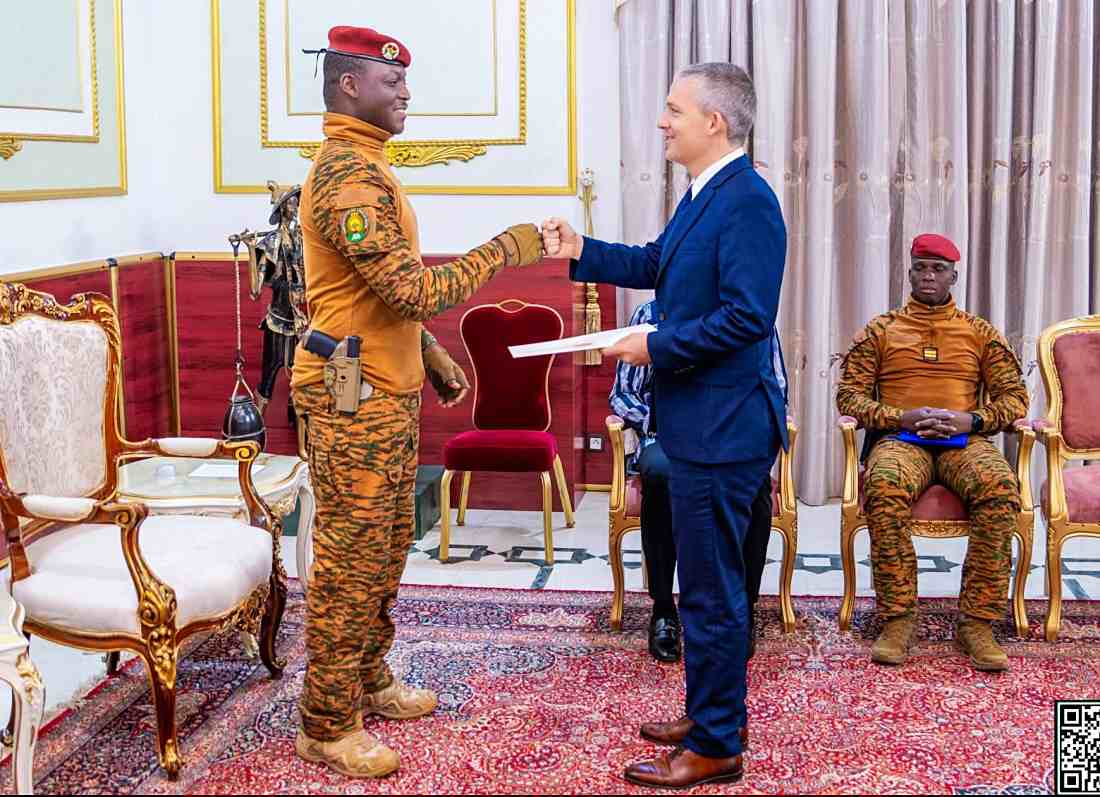
On June 26, 2026, Traore received the credentials of “Israel’s” new ambassador to Burkina Faso, Simon Clement Seroussi, in a move seen as a clear sign that both countries want to expand their relationship, despite the military government’s strong anti-France and anti-Western rhetoric.
A report published by Africa Intelligence on April 14, 2026, said Traore had maintained secret diplomatic channels with “Israel” while publicly promoting a fiercely anti-Western message.
After cutting diplomatic ties with France in June, Burkina Faso found itself seeking new partners in security, technology, and investment. That shift may help explain its growing openness toward “Israel,” alongside deeper cooperation with Russia, Turkiye, and other countries.
Observers say Traore’s outreach to “Israel” is part of an effort to diversify partnerships after the break with France and to benefit from Israeli Occupation military, intelligence, and security expertise in the fight against al-Qaeda and ISIS-linked groups. The move, however, has sparked public criticism and drawn opposition from some religious leaders in the country.
Burkina Faso is facing one of the deadliest insurgencies in the Sahel, with armed groups linked to al-Qaeda and ISIS controlling large areas of its territory.
Analysts say “Israel’s” experience in intelligence, security operations, drones, and military technology could provide tools that Traore’s government sees as useful in confronting armed groups.
Despite the rapprochement, Burkina Faso continues to recognize the State of Palestine and maintains its traditional positions at the United Nations in support of Palestinian rights, a policy that predates Traore’s rise to power.
For that reason, some researchers describe Ouagadougou’s current approach as an attempt to separate its political stance on the Palestinian issue from its practical diplomatic and economic interests with the Israeli Occupation.
Sources
- The Muslim president of Burkina Faso rejects Islamic law (sharia) for his country and criticizes sending students to Saudi Arabia to study it.
- Traoré Warns Radical Islamist Preachers, Vows Crackdown on Sharia-Focused Students
- Captain Traoré: "Young Burkinabe will be learning Sharia law in Arab countries..."
- Forget democracy, Burkina Faso military leader Traore says
- Delinking, Islam, and a New Vision for Burkina Faso
- Ibrahim Traoré nurtures ties with Israel