How the War on Iran Reignited the Debate Over U.S. Bases in Jordan
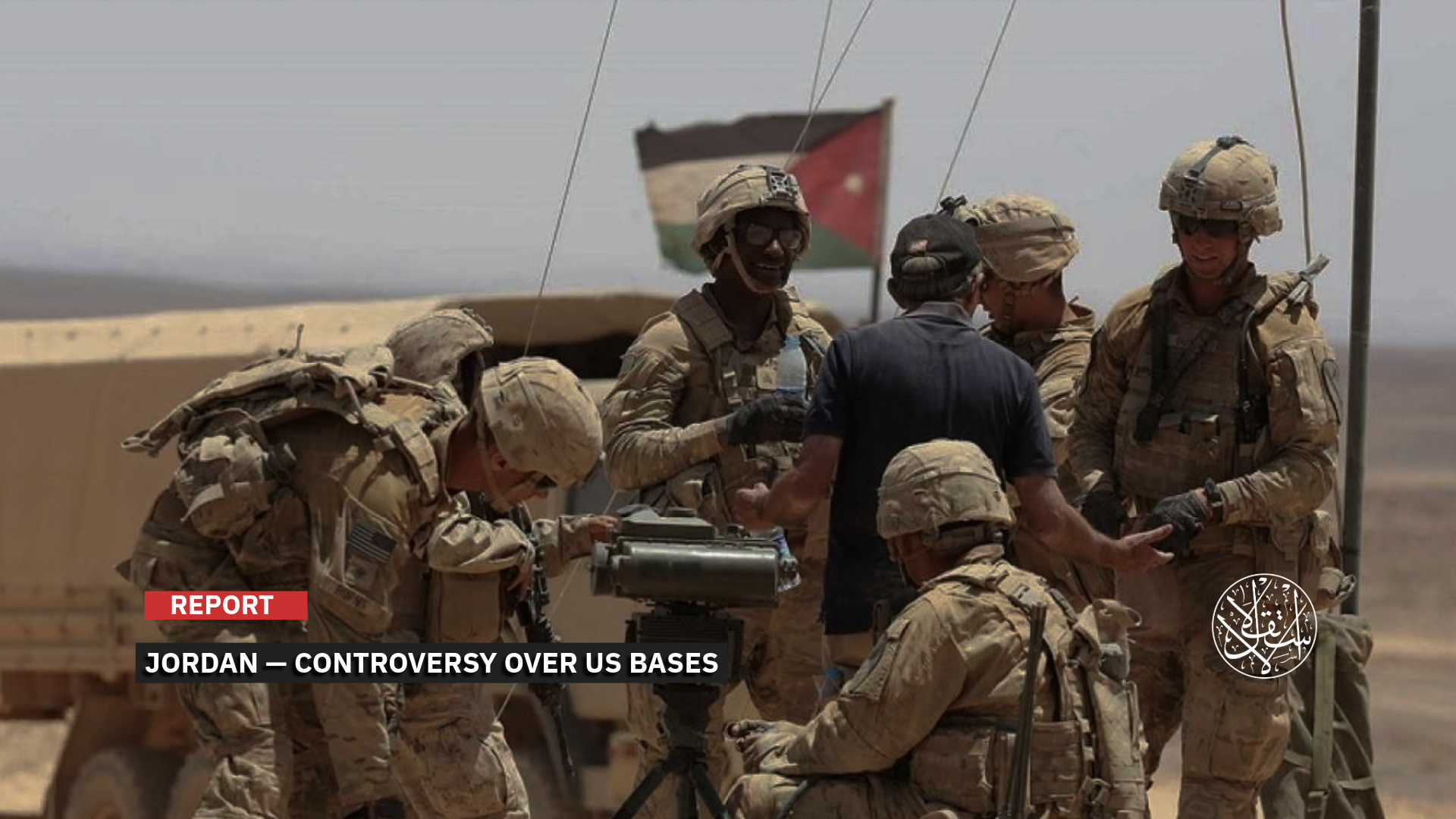
Jordanian public figures issued a document calling for an end to the U.S. military presence in Jordan.
Jordan continues to fuel fierce debate at a particularly volatile moment, as the kingdom faces repeated Iranian attacks following the collapse of the ceasefire and the renewed U.S.-Israeli War on Iran.
The latest escalation began in early July after the ceasefire between Washington and Tehran unraveled. The truce had briefly paused months of war but collapsed after a series of attacks on oil and gas tankers in the Strait of Hormuz near the coasts of Oman and the United Arab Emirates (UAE). The incidents were followed by U.S. strikes on Iranian military sites and infrastructure, prompting Tehran to retaliate with missile and drone attacks targeting American military installations across the region, including sites inside Jordan.
U.S. President Donald Trump and Iranian President Masoud Pezeshkian had signed a memorandum of understanding on June 18 to end the war on Iran that erupted in late February. The agreement survived only a few weeks before renewed military operations and widening hostilities pushed the region back into a dangerous cycle of escalation.
The Withdrawal Petition
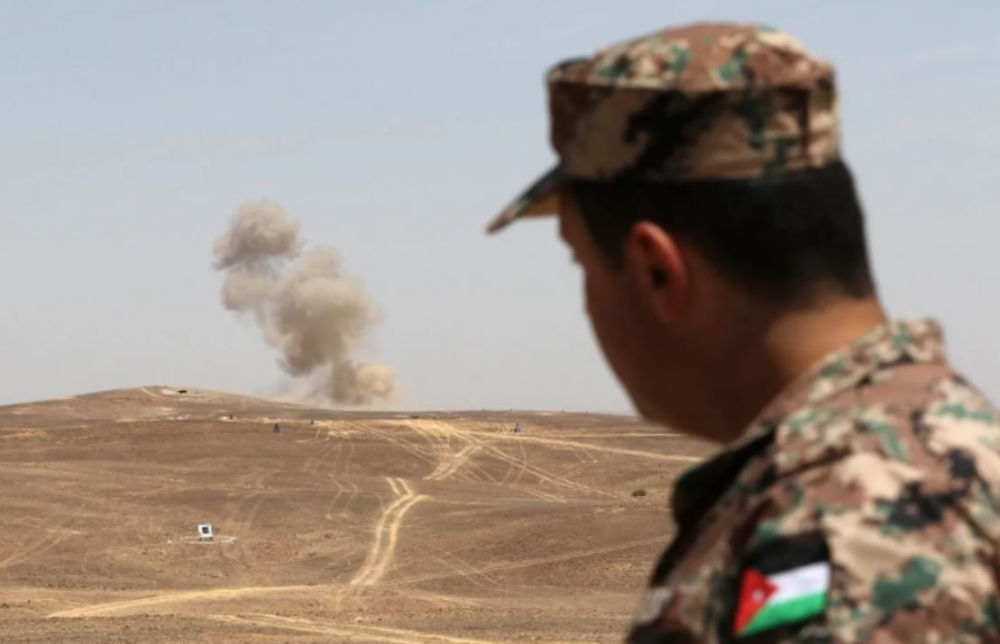
On July 22, a group of prominent Jordanian figures launched a petition calling for the removal of foreign troops from the country after a surge in Iranian attacks targeting sites hosting U.S. forces on Jordanian soil, as the military confrontation between Washington and Tehran intensified.
The petition came just days after an Iranian strike hit a military installation hosting U.S. troops in Jordan, killing three American soldiers, according to Washington, and reigniting debate over the nature of the foreign military presence in the kingdom and its implications for Jordan's security.
The petition, launched by former Jordanian minister and lawmaker Amjad Hazza al-Majali, called for the withdrawal of all foreign troops from Jordan, the cancellation of the country's security and defense agreement with the United States, and its submission to parliament for debate in accordance with constitutional procedures.
The statement, titled "A Call to Remove Foreign Forces from Jordan and Protect National Sovereignty," urged practical steps to keep Jordan out of the region's escalating military conflicts, arguing that doing so would safeguard the country's sovereignty and prevent it from being drawn into wars in which it is not a party.
The signatories argued that the presence of foreign troops exposes Jordan to growing security, political, and economic risks while increasing the likelihood that the kingdom could become a battlefield as those forces come under attack.
They also called on the Jordanian government to withdraw the security and defense agreement with Washington and present it to parliament, allowing lawmakers and the public to examine commitments they believe could affect the country's sovereignty and national security.
The statement further urged the government to keep strategic facilities, including airports, ports, military bases, and other vital infrastructure, out of military, security, or logistical operations linked to the regional conflict in order to protect Jordan's stability.
The signatories praised the Jordanian Armed Forces but insisted their mission should remain focused exclusively on defending Jordan, its holy sites, and confronting what they described as the "Zionist enemy," invoking the army's historical role in the battles of Karameh, Bab al-Wad, Latrun, and the defense of al-Quds.
The petition ultimately called for what it described as a policy of "genuine neutrality," under which Jordan would avoid participating in any military or logistical operations benefiting any party to the conflict while preserving its sovereignty and independent decision-making.
Among the more than 300 signatories were political, party, cultural, academic, and retired military figures, including former Associated and Deliverance Party Secretary General Salem al-Falahat, former Jordanian Writers Association president Muwaffaq Mahadin, Change Movement coordinator Sufyan al-Tall, retired military committee chairman Ali al-Habashneh, former Secretary-General of the Jordanian Communist Party Saud Qabilat, Islamic Action Front leader Ali Abu al-Sukkar, attorney Abdul Qader al-Khatib, and Sheikh Mohammad Ismail Alnahar, one of the leading figures of the Abbad tribe.
Neither the Jordanian government nor parliament issued an official response to the petition, despite the fact that many of its signatories previously held senior political, legislative, and military positions.
At the same time, the Jordanian government has continued to avoid publicly discussing the details of the U.S. military presence in the kingdom and has refrained from directly criticizing Washington's aggression on Iran, while repeatedly condemning attacks on Jordanian territory.
Jordanian officials have consistently described the Iranian strikes as violations of the country's sovereignty, rejecting Tehran's justification that the attacks were warranted because of the presence of U.S. forces.
Speaking at the Aspen Security Forum on July 27, Jordanian Foreign Minister Ayman Safadi said, “There are no American bases in Jordan. There are American forces present as part of a long-standing military partnership.”
“Their presence is governed by a defense agreement that fully respects our sovereignty.”
A Review Is Needed
On whether these figures can achieve their demands, Jordanian writer and political analyst Munther al-Hawarat said a calm review of defense and military agreements is both important and necessary given the crises, wars, and geopolitical shifts unfolding across the region. But he stressed that such a review should not appear as a direct response to military pressure or “Iranian attacks on Jordan.”
Speaking to Al-Estiklal, al-Hawarat said, “Any move taken under the weight of Iranian escalation could encourage Tehran to continue using missiles, militias, and other pressure tactics as tools of regional coercion.”
“What is needed, and what Jordanians have a legitimate right to demand, is that military decisions inside Jordan’s territory and airspace remain entirely sovereign, free from the influence of both Iran and the United States.”
He stressed that any future review should ensure Jordanian territory is not used as a platform for offensive operations against any country or party, while emphasizing the importance of choosing the right timing, especially as Jordan is currently facing direct Iranian attacks.
Al-Hawarat added that any steps in this direction must be carefully calculated and should not align with Iran’s efforts to impose its agenda on regional countries or present itself as the dominant power in the region, a role Jordan rejects. He said Jordan’s military and political relationship with the United States is a sovereign decision based on national interests, not external pressure.
He also said any Jordanian figure has the right to oppose the defense agreement with the United States based on national interests, describing that as a fundamental right. But he stressed the need to approach the current moment with caution and deeper analysis rather than emotional reactions.
On concerns that foreign troops could turn Jordan into a battlefield, al-Hawarat said hosting forces involved in regional conflicts naturally raises security risks because their bases could become targets for Washington’s adversaries.
However, he argued that the presence of U.S. forces is not the only reason Jordan faces threats. The kingdom’s geographic location, international alliances, defense of its airspace and borders, and opposition to Iran’s regional expansion project are all factors that make it a target for Tehran. Jordan, he said, has become "a thorn in the side" of Iran’s regional ambitions by blocking what he described as the completion of a wider regional encirclement.
Al-Hawarat noted that Jordan serves as a corridor for missiles, some of which veer off course and fall inside its territory, giving the state a legitimate right to protect its citizens and prevent strikes on residential areas. Iran, he added, may use this reality as a pretext to target Jordan regardless of the presence of U.S. forces, meaning Iranian attacks should not be reduced to that single factor.
At the same time, he said it is possible to reorganize the nature and missions of foreign military forces in Jordan by establishing clear rules governing the use of Jordanian territory. He noted that the U.S. presence was originally established to counter threats from Islamic State, respond to regional instability, train Jordanian forces, and carry out other defined missions. Setting clearer limits, he argued, could serve both national sovereignty and Jordan’s interests.
Al-Hawarat warned that a sudden cancellation of the defense agreement, which he said is unlikely, would have major consequences for Jordan’s defense capabilities, including training, weapons supplies, intelligence cooperation, counterterrorism efforts, and border security. The military relationship between Amman and Washington, he said, is deeply interconnected across these areas, and ending the agreement abruptly would create a gap that could take years to fill.
He said the motives of those who drafted and signed the petition should not be questioned, describing them as figures expressing genuine concern over Jordan’s security and fears that the country could become a battlefield. Their diverse political and intellectual backgrounds, he added, give the document political and moral weight.
At the same time, al-Hawarat stressed that the petition remains an initiative by a segment of the elite and cannot by itself be considered a reflection of the position of Jordanian society as a whole. Measuring public opinion on such issues, he said, requires scientific polling, parliamentary debate, and a clear public discussion of the potential gains and costs of maintaining or ending the agreement.
A Region on Edge
In an article published by Ammon News on July 22, former Jordanian ambassador Maher Lukasha argued that anyone seeking to debate the defense agreement with the United States or demand its constitutional and legal review should do so through legal arguments, official texts, and the relevant institutions.
"Prejudging the issue, portraying every form of cooperation as submission, every alliance as colonialism, and every difference in judgment as a betrayal of the nation is not responsible debate," Lukasha wrote. "It is political grandstanding that ignores reality and replaces it with emotion."
Lukasha criticized calls for Jordan to adopt a policy of neutrality to avoid regional threats, asking whether the region itself is neutral toward Jordan.
"Will arms and drug smuggling networks stop at our borders out of respect for a statement? Will cross-border militias, extremist groups, regional influence projects, and attempts to export crises grant Jordan immunity simply because it declares distance from conflicts?" he asked.
"Jordan is not an isolated island, and it cannot manage its security through wishes," he added. "When threats accelerate around it, the leadership has a duty to take what it considers necessary to protect the state, even if not everyone understands or supports every decision at the time."
He stressed that this does not mean granting any government or institution immunity from accountability, but rather recognizing the difference between responsible national scrutiny and criticizing the state as if those issuing statements had no connection to its institutions, society, or achievements.
The former ambassador argued that the partnership between Jordan and the United States represents a strategic choice that has served the kingdom’s interests through decades of difficult challenges. Washington, he said, has supported Amman politically, economically, and militarily, helping strengthen Jordan’s ability to cope with major internal and external pressures.
"Acknowledging this reality does not mean dependency, nor does it require Jordan to agree with every U.S. policy," Lukasha wrote. "Relations between states are built on interests, not love or hatred, and disagreement with an ally on one issue does not require destroying the entire relationship."
At the same time, Lukasha warned about what he described as Iran’s regional expansion efforts.
"We have seen firsthand the consequences of Iranian expansion projects in several Arab countries, including divisions, militias, weapons outside state institutions, and the erosion of sovereignty and national decision-making," he said. "Jordan has the right, and indeed the duty, to firmly confront any attempt to approach its borders, undermine its security, or threaten the Gulf states and its Arab depth."
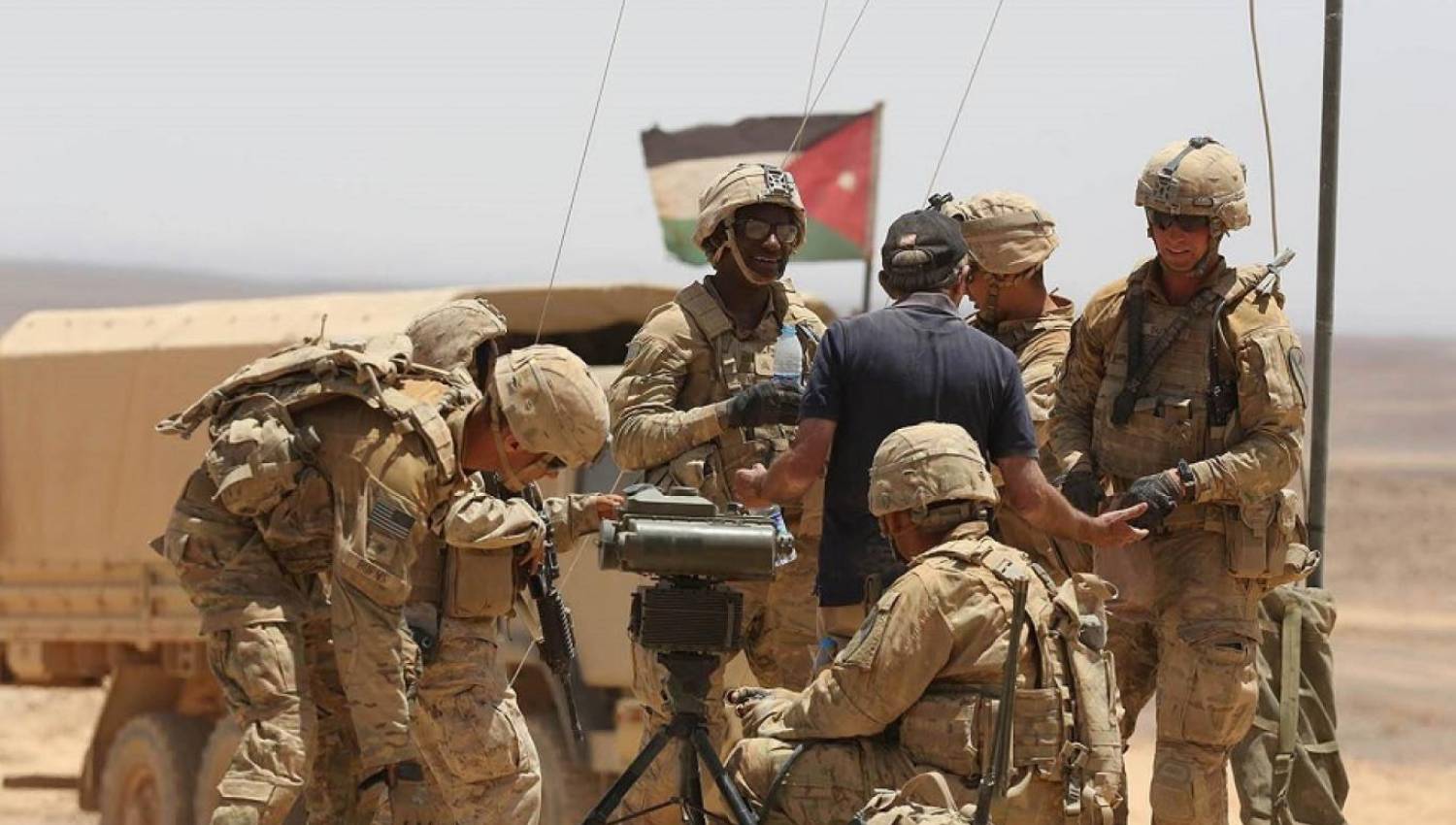
Taking the opposite view, Jordanian writer Abu Fahd al-Mshaqbet questioned the continued presence of U.S. forces in Jordan amid escalating regional tensions.
"In a moment when the region is boiling with wars and retaliatory strikes, what is the purpose of maintaining a permanent U.S. military presence on Jordanian territory?" he asked in an article published by Jordan Voice on July 23.
Al-Mshaqbet argued that the U.S. presence in Jordan has long operated under the banners of joint training, support, and counterterrorism but claimed it has not prevented regional instability, resolved refugee challenges, or delivered meaningful development. Instead, he argued, it has tied Jordan’s security decisions to external agendas and drawn the kingdom into conflicts that do not directly concern it.
"The experiences of the region have shown that this presence has brought threats and instability more than protection," he wrote. "In Iraq, U.S. bases became constant targets and a source of instability. In Syria, foreign military deployments complicated and internationalized the conflict. And in the Gulf, despite massive defense spending, missiles and drones have still breached airspace."
He concluded that "the greater the foreign military presence, particularly the American presence, the more justifications there are for attacks and the higher the risks facing the host state, its people, and its civilian and military institutions."
"Jordan today sits at the center of the storm," he added. "Its geography makes it one of the countries most affected by any escalation, while maintaining permanent foreign forces or bases gives several parties a pretext to view the kingdom as part of the conflict or as a transit route in battles in which it has no stake."
Al-Mshaqbet stressed that the call to end the foreign military presence was not driven by fear of Iran, its missiles, or any external threat.
"Jordan has armed forces and security institutions known for their competence and professionalism, and they have proven their ability to protect and defend the country under all circumstances," he said.
Public discussion of U.S. forces in Jordan emerged more openly for the first time in 2024, specifically in late January, after the U.S. military announced that three American soldiers were killed and dozens wounded in a drone attack carried out by Iraqi militias against a military facility on Jordanian territory.
At the time, U.S. Central Command (CENTCOM) said the attack targeted Tower 22, a logistics support facility within Jordan’s defense network in the kingdom’s northeast near the Syrian border. The strike killed three U.S. service members and wounded 34 others, even as Amman continued to officially deny the existence of an American military base on its soil.
Sources
- Jordan Faces a Dilemma in Its Growing Role in the US-Iran War
- Three U.S. Troops Killed in Jordan Attack, Biden Promises Retaliation [Arabic]
- Over 200 Jordanian Figures Call for Withdrawal of Foreign Forces [Arabic]
- One Killed in Iraq, Two in Jordan and Unidentified Remains: U.S. Military Reveals Latest Losses [Arabic]
- Jordan Responds to Calls for the Withdrawal of Foreign Forces [Arabic]
- No to the Continued Presence of U.S. Forces in Jordan [Arabic]
- Why Jordan Hosts U.S. Troops Even as That Makes It a Target
- Safadi: Jordan Has No U.S. Bases, Iran Has No Justification for Attacks [Arabic]