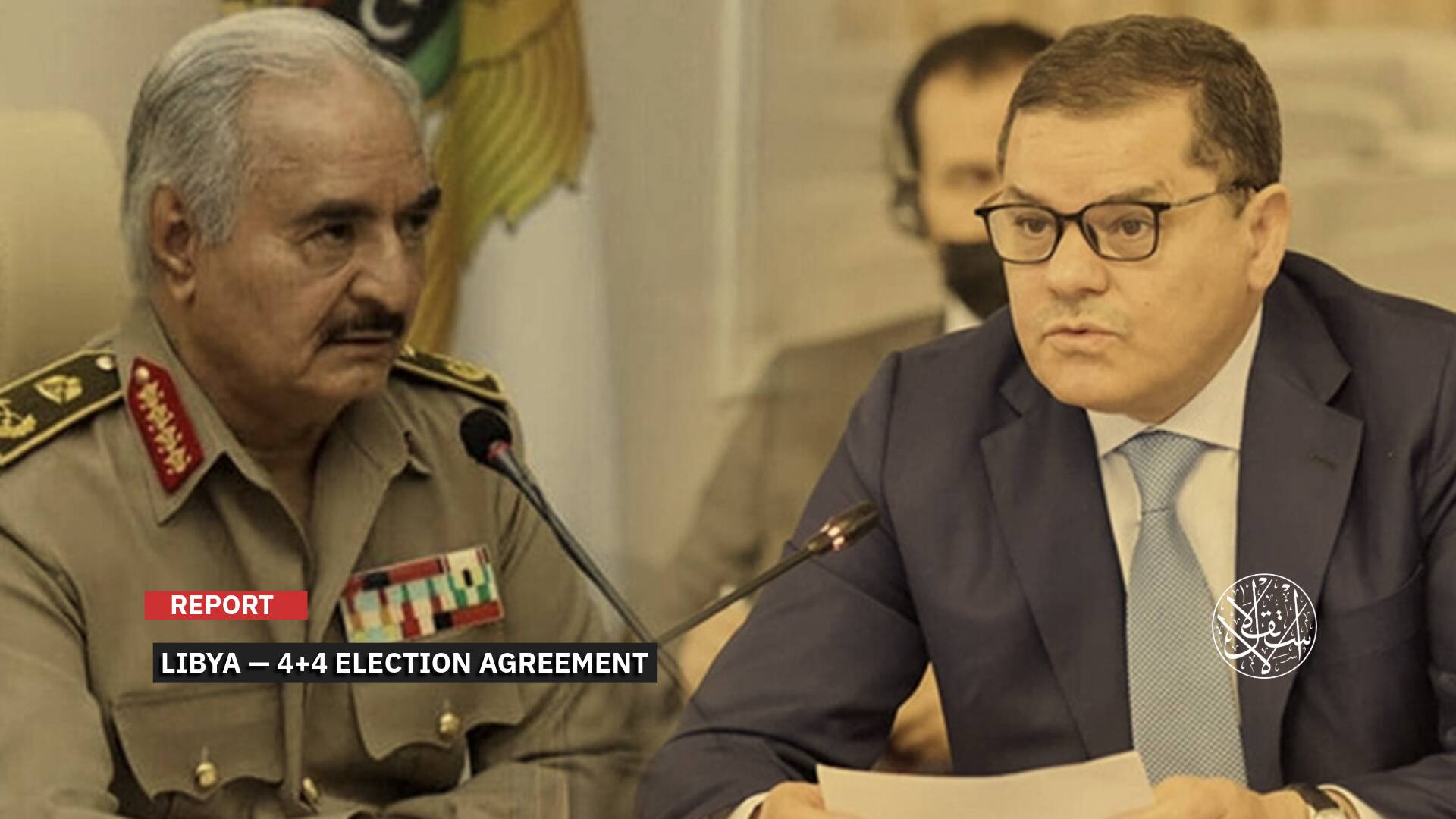
Pakistan Steps Into Mediation Efforts to Resolve the Libyan Rivals’ Crisis: What’s Behind It?
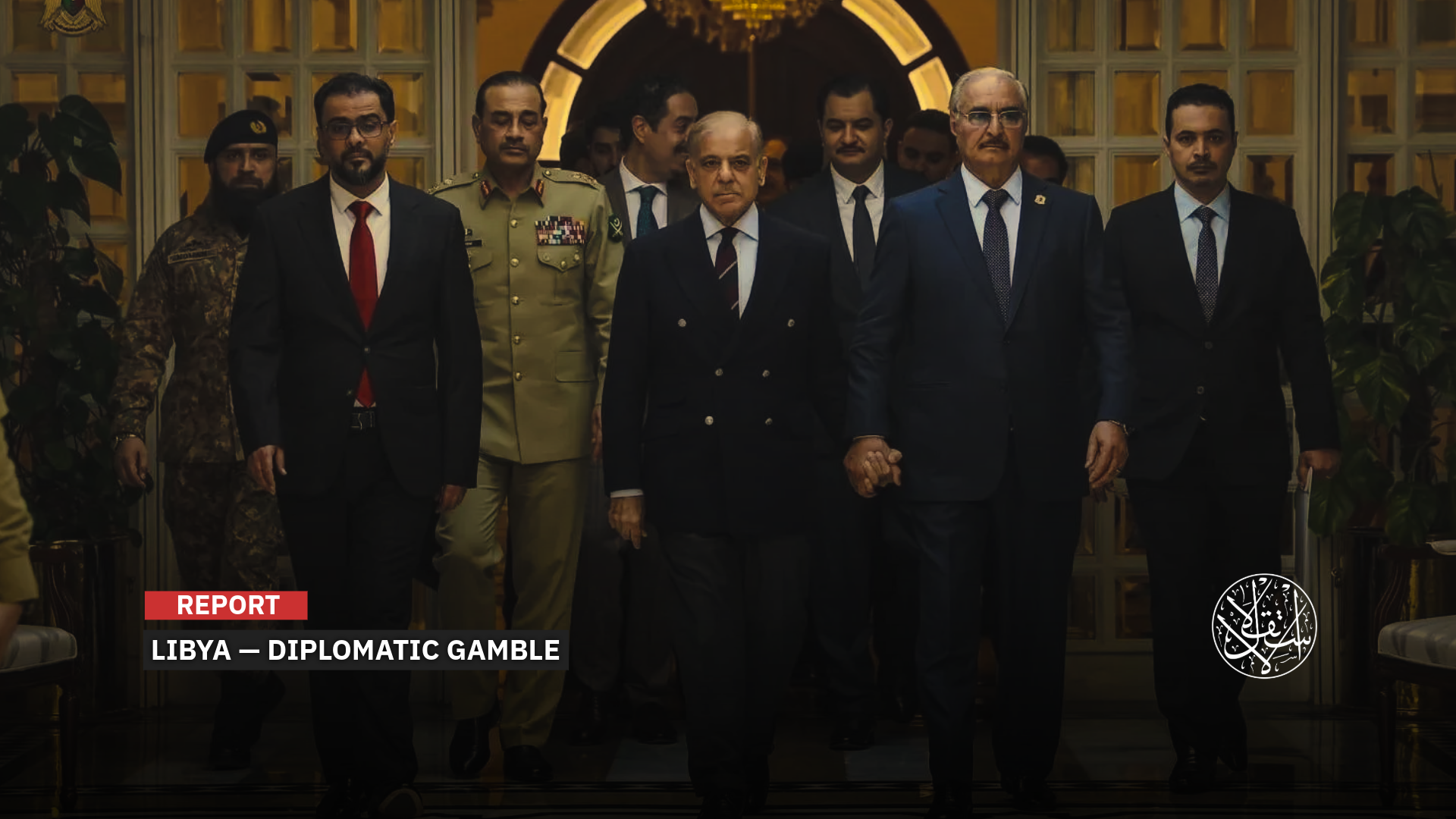
If Pakistan succeeds in narrowing the gap between the parties, it will enhance its standing as an international mediator.
The Libyan file continues to witness ongoing political momentum, as a number of regional countries and international powers remain involved in efforts and mediation initiatives aimed at bringing the Libyan parties closer together and reaching a settlement that would end the state of division and restore the unity of state institutions.
In this context, Pakistan has joined these efforts, as revealed by Reuters on July 7, 2026. According to two Pakistani sources, Islamabad has begun mediating between Libya’s two rival administrations: one based in the west, which is the internationally recognized legitimate government, and the other in the east.
The sources said that this Pakistani initiative comes after observers had followed for months U.S.-led efforts to find a diplomatic solution in Libya, following the outbreak of the civil war in the years after the 2011 popular uprising that toppled the late leader Muammar Gaddafi.
Pakistan has also played another key mediatory role in facilitating dialogue between the United States and Iran, an effort that was repeatedly praised by the administration of U.S. President Donald Trump.
One of the Pakistani sources said that the United States is “fully aware” of Islamabad’s efforts regarding Libya.
The sources explained that the initiative has also received support from Saudi Arabia, which signed a mutual defense agreement with Pakistan in 2025 and has long sought to maintain influence in Libya.
They stressed that the efforts began in late 2025 and that both Libyan sides requested Pakistan’s involvement. However, it remains unclear to what extent Pakistan is coordinating its efforts with other concerned parties in the region.
Set Out the Details
The agency explained that the success of any plan to unify Libya would require balancing the vastly different interests of foreign actors and resolving disputes over key issues such as government positions, election rules, and oil revenues, issues that have hindered previous attempts to reach a settlement.
A summary of a proposed plan for unifying Libya, reviewed by Reuters, sets out a 36-month power-sharing arrangement under the umbrella of a body known as the Government of National Accord and the Presidential Council.
The proposal, which a Pakistani source said is still under detailed discussion, establishes a transitional phase in which the current head of the Government of National Unity, Abdul Hamid Dbeibah, would remain in office.
Figures close to Khalifa Haftar, including his son Saddam Haftar and the commander of the self-styled Libyan National Army, control many of Libya’s largest oil fields and critical infrastructure. The proposed plan would grant him authority over budgetary control.
A Pakistani source said that Islamabad would play an “active role in ensuring the continuation and resilience of the entire arrangement,” adding that work was “still ongoing to finalize the details.”
Two informed Pakistani sources said that Qatar, as well as Turkiye, one of the biggest supporters of the Government of National Unity, were among the parties that encouraged Pakistan to participate in the mediation efforts.
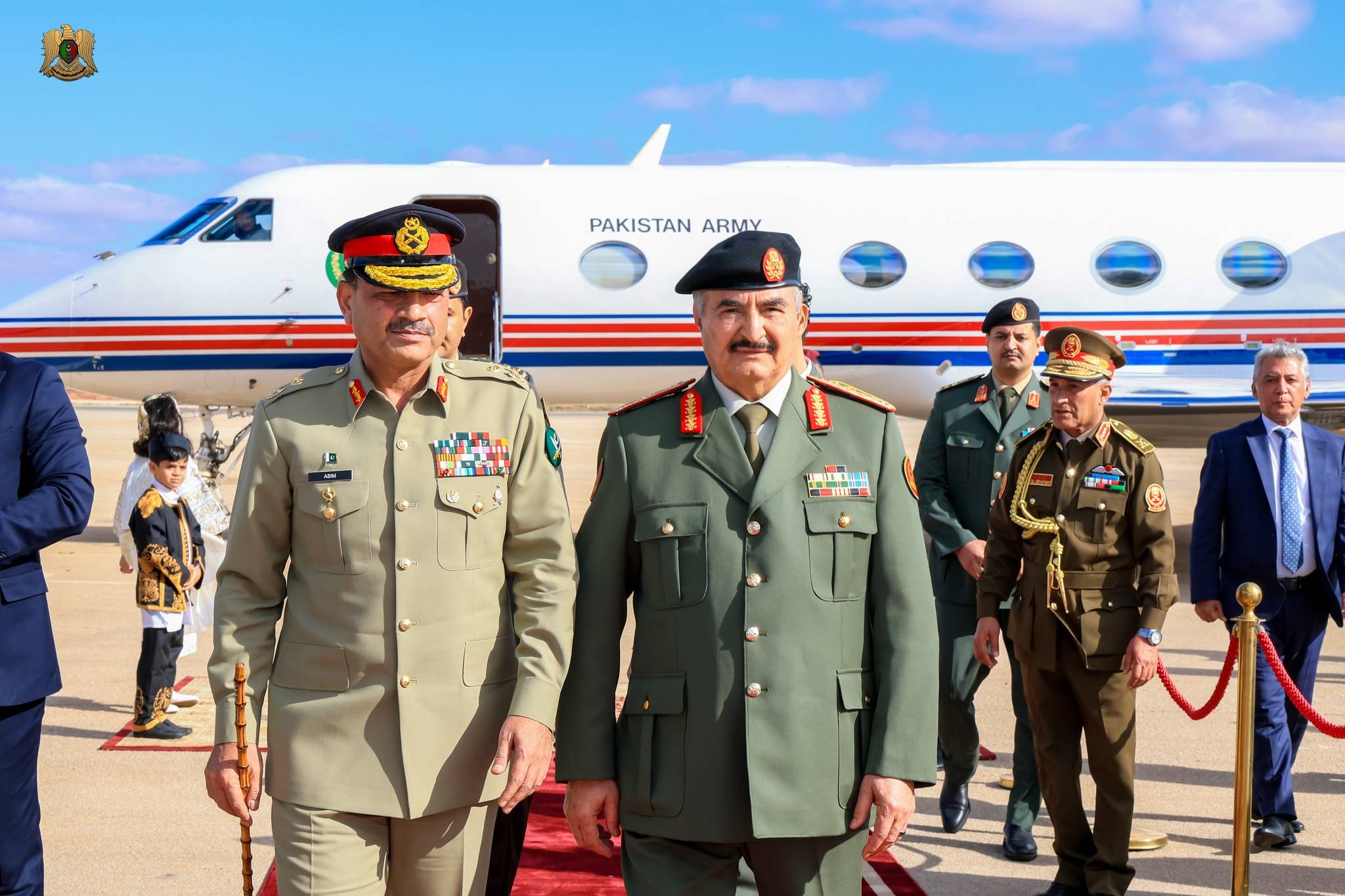
Pakistan’s army chief, Asim Munir, met with Saddam Haftar in Rawalpindi in June 2026. The meeting was followed days later by Haftar’s visit to Washington, where he met with U.S. Secretary of State Marco Rubio.
The U.S. State Department said at the time that Rubio welcomed the efforts of Libyan leaders to overcome divisions, while reaffirming U.S. support for Libya’s unity.
Although analysts view Pakistan as a “secondary player” in Libya, where the United States, the United Arab Emirates, Turkiye, and Egypt have competed for influence for years, Islamabad has maintained relations with both sides, a position that gives it an advantage over other actors.
Libya has been divided for years between two rival governments: the first is the Government of National Unity, headed by Abdul Hamid Dbeibah in Tripoli and internationally recognized; the second is a government appointed by parliament, headed by Osama Hammad, which administers the east and parts of the south with the backing of Khalifa Haftar.
Genuine Efforts
In his assessment of this new initiative, Libyan political analyst Ibrahim al-Asaifer said that talk of a Pakistani initiative regarding the Libyan file is no longer merely leaks or political speculation, but has become an indication of a genuine diplomatic move aimed at exploring a new opportunity to break the state of deadlock that has gripped the country for years.
Al-Asaifer told Al-Estiklal that the details of the initiative may not yet be clear, but what is certain is that Pakistan’s entry into the crisis reflects a belief among several parties that traditional tracks have reached a point of exhaustion, and that searching for a new mediator has become an option on the table.
He said that the importance of this initiative “does not lie in the identity of the country leading it, but rather in the circumstances in which it emerged.”
He noted that the Libyan issue has witnessed a large number of initiatives, conferences, and dialogue processes in recent years, but most of them have stalled because the dispute was not primarily about the form of governance, but rather about influence, guarantees, and the mechanisms for implementing any agreement reached.
Therefore, the political analyst said, Pakistan may be able to play a different role if it succeeds in maintaining equal distance from all parties and uses its regional and international relations to push everyone toward a realistic settlement.
He stressed that Pakistan’s lack of direct involvement in the history of the Libyan conflict may give it room to maneuver that is unavailable to other mediators whose names have been associated with previous positions or alignments.
However, al-Asaifer cautioned that optimism alone is not enough, as the success of any initiative will remain dependent on the willingness of Libyan forces to make mutual concessions and on the existence of international consensus to protect any agreement from collapsing at the first disagreement.
He pointed out that “this is the dilemma that has confronted all previous initiatives, not a lack of ideas or the absence of mediators.”

Political Interpretation
Media figure and political analyst Idris Ahmid said that discussion of a potential Pakistani role in mediating between the Libyan parties comes amid ongoing U.S. and UN efforts to reach a settlement that would end the division and unify state institutions.
In an analysis published on the Libya24 website on July 13, 2026, Ahmid stressed that the current moves remain within the framework of consultations and exploring opportunities for rapprochement, without the announcement of any formal negotiation track.
He noted that Pakistan has not been a direct party to the Libyan issue since 2011, but it has maintained a position supporting Libya’s unity, sovereignty, and a political solution, which could give it room to act as a mediator with a degree of acceptance among the various parties.
He added that Pakistan should not be viewed as a marginal state, as it is a nuclear power and possesses a military establishment and security institutions with extensive experience. It also maintains balanced relations with a number of international and regional powers, giving it the ability to communicate with different sides in international crises.
According to Ahmid, the more realistic scenario is that any Pakistani role would be more effective if it complements international efforts aimed at achieving stability and preserving Libya’s unity, rather than competing with them.
He continued, “Especially since the Libyan crisis has become part of complex regional and international balances, and any new initiative needs to align with existing tracks rather than create parallel ones that could further complicate the situation.”
The political analyst highlighted that Pakistan’s success in helping bridge differences among Libyans would strengthen its standing as an international mediator and demonstrate that emerging regional powers are capable of playing influential roles in supporting stability.
He added that Pakistan’s balanced relations with several countries, along with its affiliation with the Islamic world, could provide it with a degree of trust, provided that it respects Libya’s sovereignty and makes the Libyan national interest the foundation of any action it takes.
Long-Term Outlook
Libyan Renewal Party leader Suleiman al-Bayoudi believes that “the Pakistani move came to rescue the American initiative that was announced to resolve the Libyan crisis.”
Al-Bayoudi told the Akhbar Libya website on July 12 that bringing in a regional heavyweight such as Pakistan was intended to address the situation after growing popular and societal opposition to the initiative, despite the pressure and promotional campaigns surrounding it.
He ruled out Pakistan’s continued involvement in the Libyan mediation effort, attributing this to “the complexities of the crisis and the widespread rejection faced by the moves of U.S. presidential adviser Massad Boulos in western Libya, particularly in Tripoli and Misrata.”
The “American initiative” is based on unifying state institutions and paving the way for elections, amid reports that Saddam Haftar would be granted the presidency of a new Presidential Council, in exchange for keeping Abdul Hamid Dbeibah as head of a unified government. The proposal has sparked opposition from some quarters, who have described it as a deal for “power sharing.”
Looking ahead, political analyst al-Asaifer said that the chances of success for the Pakistani initiative “exist, but they are not guaranteed.”
Speaking to Al-Estiklal, al-Asaifer stressed that if Pakistan succeeds in building common ground among the Libyan parties and providing genuine guarantees for implementing what is agreed upon, it could mark the beginning of a new political process.
However, he cautioned, “If it is limited to bringing viewpoints closer without addressing the real causes of the crisis, it will face the same fate as many initiatives that came before it.”
He continued, “Ultimately, I do not believe Libya needs a new mediator as much as it needs genuine Libyan consensus. A mediator can help narrow differences, provide guarantees, and facilitate dialogue, but it cannot create a missing political will.”
For this reason, al-Asaifer said, “the success of the initiative will be measured by its ability to transform understandings into practical steps on the ground, not by the number of meetings held or statements issued.”